
Ultimate Citrus Bourbon Turkey Jerky Recipe: Your Festive 4th of July Snack
As the nation gears up for the spirited celebration of the 4th of July, what better way to honor American independence than with a truly authentic American snack? Forget the ordinary and prepare to elevate your taste buds with a homemade jerky recipe that embodies the spirit of the U.S.A. – Citrus Bourbon Turkey Jerky. And when we talk about a truly American treat, that can only mean one key ingredient: Bourbon.
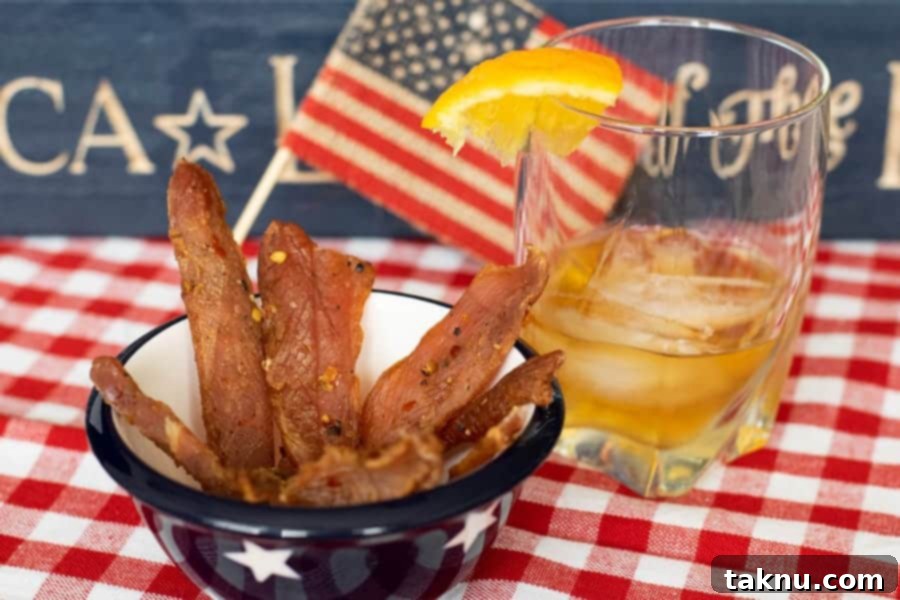
Just a couple of weeks ago, I acquired a fine bottle of Bourbon to share with friends, and it immediately sparked an idea: this rich, distinctly American liquor would be the perfect base for an extraordinary jerky. The concept of blending the smoky sweetness of Bourbon with bright citrus notes for a chewy, flavorful meat snack for America’s birthday was simply irresistible.
So, why Bourbon, and why is it so inherently linked with celebrations like the 4th of July? The answer lies in its unique origin: Bourbon can ONLY be produced within the United States. This strict regulation means that any spirit labeled “Bourbon” is a product of American craftsmanship and agriculture. If it’s crafted anywhere else in the world, it simply cannot bear the name Bourbon. This makes it an ideal ingredient to highlight in a patriotic snack, symbolizing American ingenuity and tradition.
Preparing Your Meat: The Foundation of Great Jerky
For this particular recipe, I’ve chosen lean turkey breast, but this flavor profile would also be exceptionally delicious with beef. Turkey breast is readily available at most local grocery stores, making it a convenient and healthy choice for homemade jerky enthusiasts.
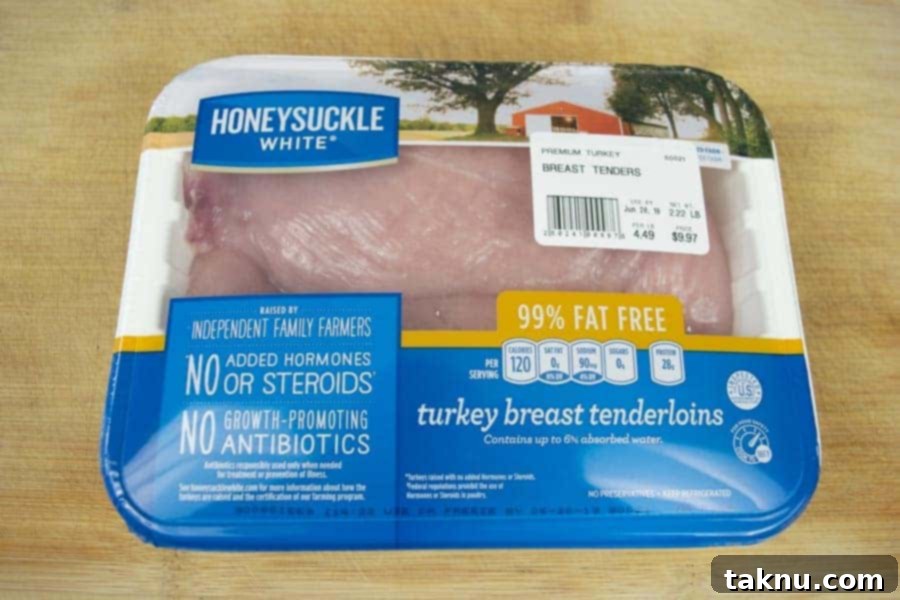
Turkey breast is renowned for being extremely lean, which is precisely why it performs so well in jerky making. The absence of significant fat content is crucial for a long-lasting and shelf-stable product. Begin by meticulously slicing the turkey breast into uniform ¼-inch wide strips. As you slice, be diligent in trimming away any visible fat. Fat spoils much faster than meat, and removing as much of it as possible now is a critical step that will significantly extend the shelf life and quality of your finished jerky.
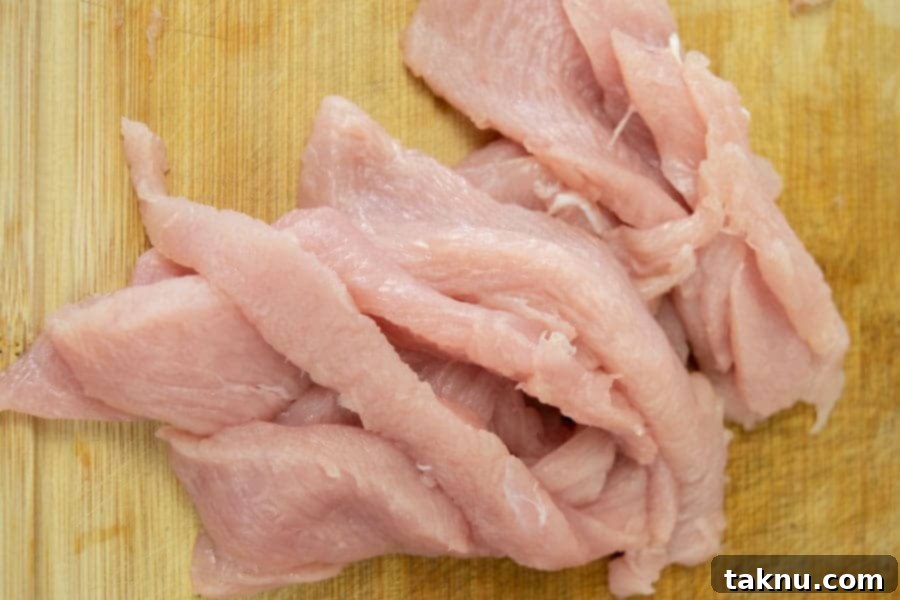
Consistency in thickness is paramount. Ensure all your meat strips are of the same ¼-inch thickness. This uniformity guarantees that every piece of jerky will dehydrate at roughly the same rate, preventing some pieces from becoming over-dried and brittle while others remain under-dried and potentially unsafe. A helpful “pro tip” for achieving perfectly even slices is to wrap the turkey breast tightly in plastic wrap and partially freeze it for 1-2 hours. This semi-frozen state will firm up the meat, making it much easier to slice consistent, thin strips.
Crafting the Signature Citrus Bourbon Marinade
Preparing this marinade is an enjoyable part of the jerky-making process, especially because it involves an ingredient you might want to sample yourself! No, I’m not referring to the orange juice; I’m talking about the exquisite Legent Bourbon.

Bourbon’s role in American history is vast and significant, from its origins in Kentucky to its place in countless traditions. Therefore, a recipe designed for the United States’ birthday truly deserves a central ingredient that is exclusively American. The Legent Bourbon I selected for this recipe is particularly noteworthy; it’s a unique blend created by a master distiller from Jim Beam in collaboration with a Japanese blender, offering a fascinating depth of flavor that complements the other ingredients beautifully without overpowering them.
While Bourbon is undoubtedly the star, a symphony of other fantastic ingredients contributes to this jerky’s incredible taste. Fresh orange juice and lemon juice provide a vibrant, tangy citrus kick that brightens the entire profile. Worcestershire sauce adds a savory, umami depth, while a touch of red pepper flakes introduces a subtle warmth and a hint of spice, balancing the sweetness from the brown sugar and the richness of the bourbon. Together, these components create a marinade that transforms simple turkey breast into an unforgettable gourmet snack.
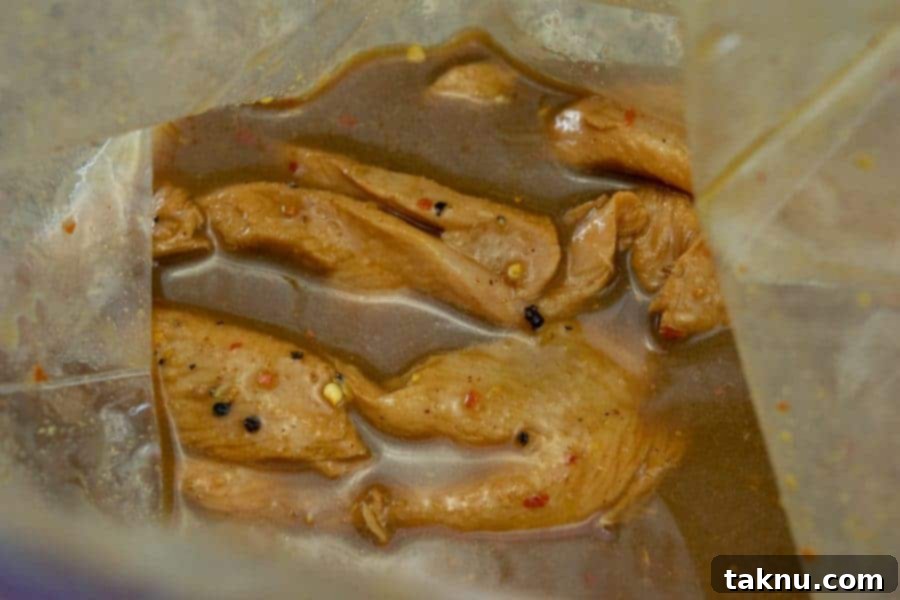
To prepare the marinade, simply combine all the liquid and dry ingredients in a large bowl or a sealable ziplock bag and mix them thoroughly until well incorporated. Since this particular recipe doesn’t call for any whole or chunky vegetables like peppers, there’s no need to use a blender; a good whisking will suffice to combine everything perfectly.
Related Page: Explore Dozens of Great Tasting Jerky Recipes – Click Here
Once your marinade is ready, add the previously sliced turkey strips to the mixture. Ensure every strip is completely submerged and evenly coated by mixing them around well. Allow the meat to marinate in the refrigerator for a minimum of 6 hours, ideally for 20-24 hours. The longer the marinating period, the more deeply the flavors will penetrate the meat, resulting in a more intense and complex final product. It is absolutely crucial to always marinate the meat in the refrigerator to prevent bacterial growth and ensure food safety; never marinate at room temperature.
The Art of Drying Your Homemade Jerky
Once the marinating process is complete – I let my turkey marinate for a full 20 hours for maximum flavor infusion – it’s time to prepare the meat for drying. Carefully remove the meat from the refrigerator and place it in a colander to strain off any excess marinade. While you want the flavor to be intense, too much liquid can prolong the drying time and affect the texture. Remember, a longer marinade typically translates to a more robust flavor in your finished jerky!
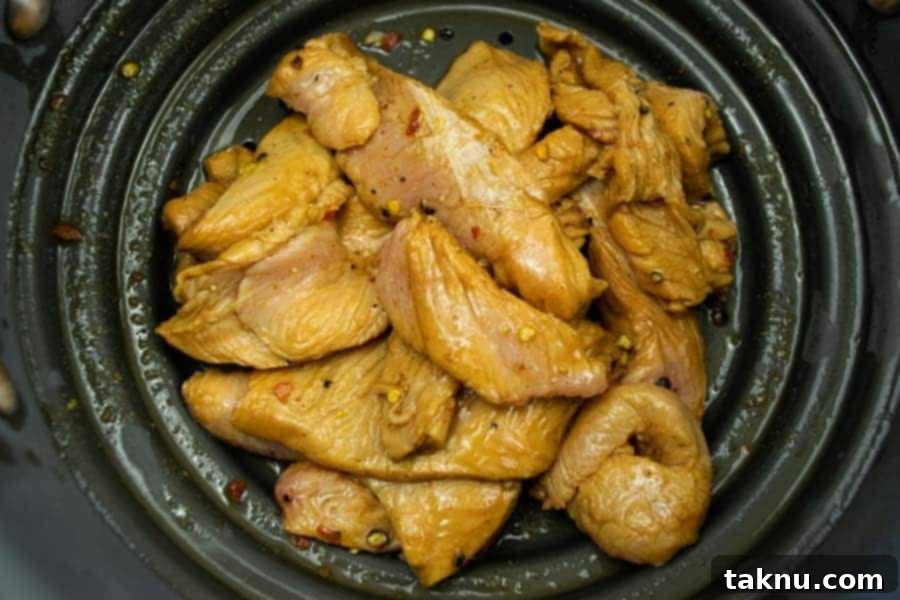
Before transferring the meat to your dehydrator, oven, or smoker, an essential step is to pat the strips dry. Lay out several layers of paper towels, arrange the meat strips on top, and then gently pat them with more paper towels to remove even more surface moisture. This critical step serves multiple purposes: it helps to significantly speed up the drying process and prevents the jerky from developing an undesirable “sticky” texture once it’s finished drying, ensuring a perfectly cured consistency.
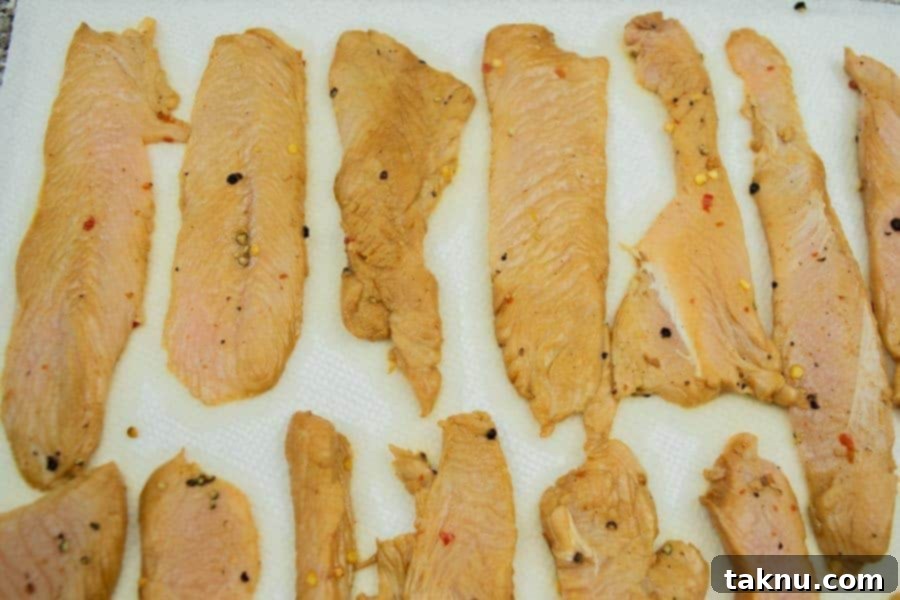
For food safety, especially when working with poultry, it’s advisable to pre-heat the meat to an internal temperature of 165°F (74°C) to eliminate any potential bacteria. If your dehydrator is unable to reach 165°F, pre-heating the meat in your oven is a necessary step to ensure the jerky is safe for consumption.
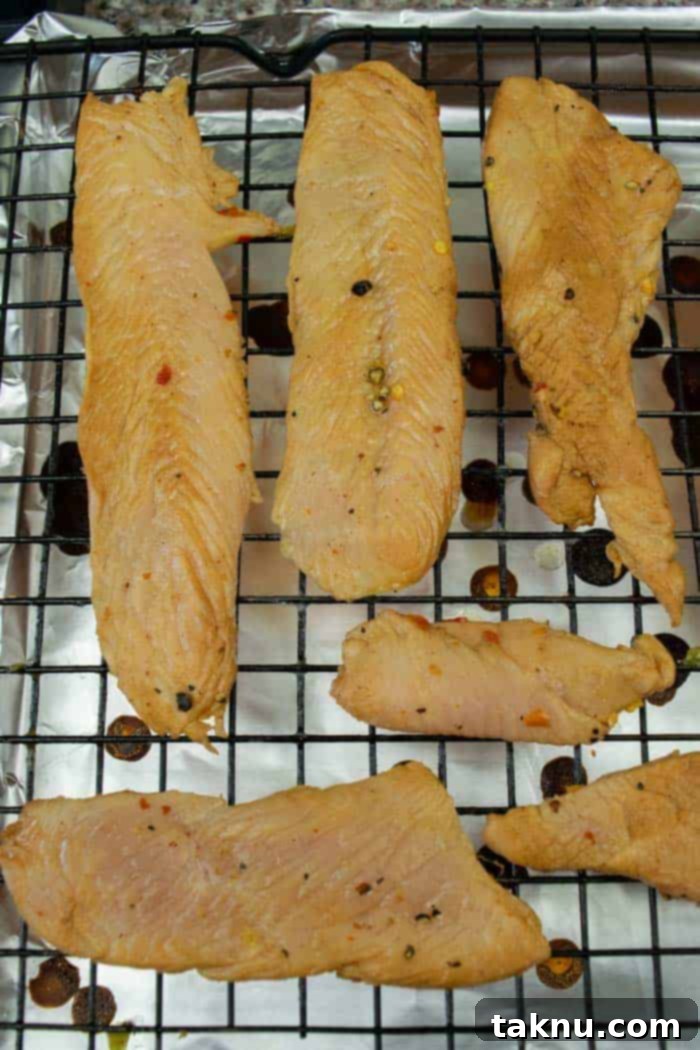
I pre-heated my turkey strips in the oven, arranging them on an oven rack for even airflow. It took approximately 20 minutes at 300°F (150°C) to reach the safe internal temperature of 165°F (74°C). If you place the turkey strips directly on a baking pan, the cooking time will be reduced, closer to 10 minutes. Be aware that this pre-heating step can slightly alter the final consistency of the jerky, potentially making it a little firmer and less tender than jerky dried without pre-heating.
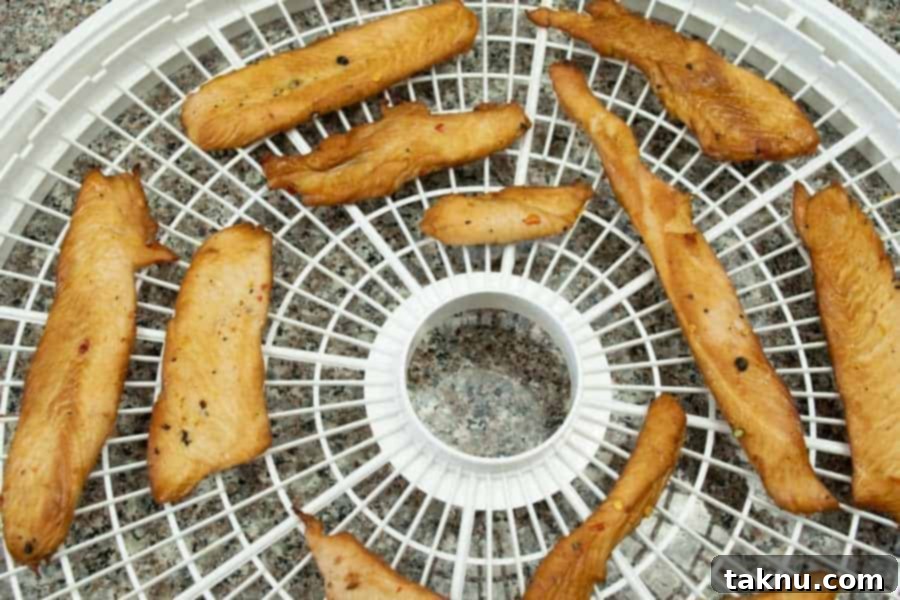
After the crucial pre-heating phase, I transferred the strips to the trays of my reliable Nesco Dehydrator. I dehydrated these strips for a total of 4 hours at a consistent temperature of 145°F (63°C). Throughout the drying process, it’s a good practice to periodically remove a piece of jerky, allow it to cool to room temperature, and then perform the bend test to assess its doneness. For these particular pieces, four hours in the dehydrator proved to be just about perfect.
Don’t have a dehydrator? No problem! You can achieve excellent results using your oven or even a smoker. For more detailed, in-depth instructions on various methods for drying your jerky, be sure to visit my comprehensive Jerky Making Methods Page.
Related Page: Discover the Best Dehydrators for Making Beef Jerky – Click Here
Mastering the Jerky “Bend Test”: Knowing When It’s Ready
Determining the perfect point of doneness for jerky is a skill that comes with practice, but the “bend test” is your most reliable guide. You should start testing your jerky around the 3 to 4-hour mark of the drying process. To perform the test, carefully remove a single piece of jerky from your dehydrator, oven, or smoker, and let it cool down to room temperature for about 5 minutes. Cooling is essential because jerky feels softer when warm and will firm up as it cools.
Once cooled, bend the jerky strip in half. A perfectly dried piece of jerky should bend significantly, and you should see white fibers in the meat as it cracks, but it should not cleanly break in two. The presence of those white fibers, particularly visible when you tear a piece in half, indicates that the meat has been properly dehydrated while retaining enough internal structure.
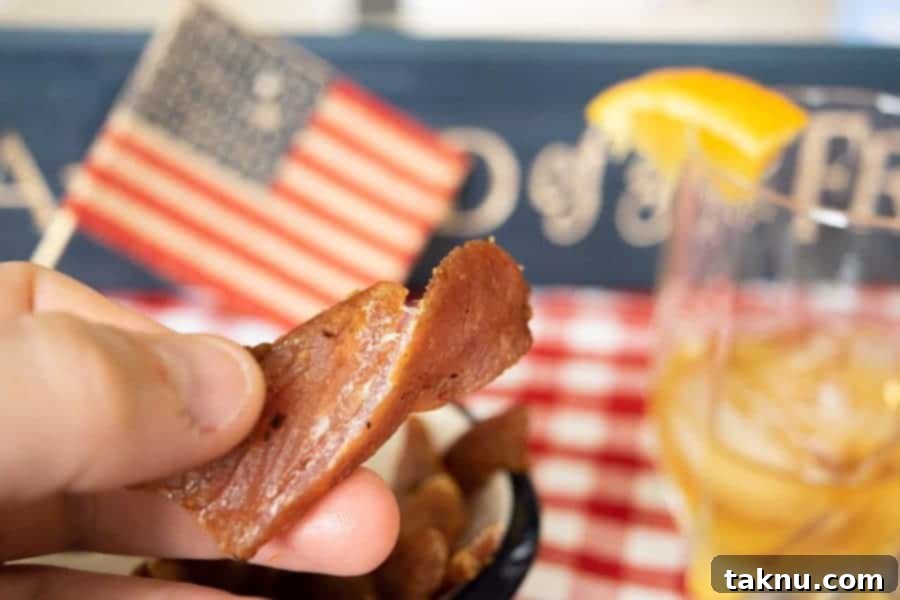
If your jerky bends without cracking, it likely needs more drying time. Return it to your appliance and continue drying for another hour, then repeat the bend test. Continue this process until you achieve the desired texture. If it snaps cleanly in half with no give, it’s likely over-dried, which can happen if left for too long. In my experience, approximately 90% of the jerky I make using a dehydrator or oven is finished within 4-6 hours. If using a smoker, the process typically takes a bit longer, usually 6-9 hours. For jerky that has been pre-heated in the oven, the drying time can be as short as 2.5 hours, thanks to the head start.
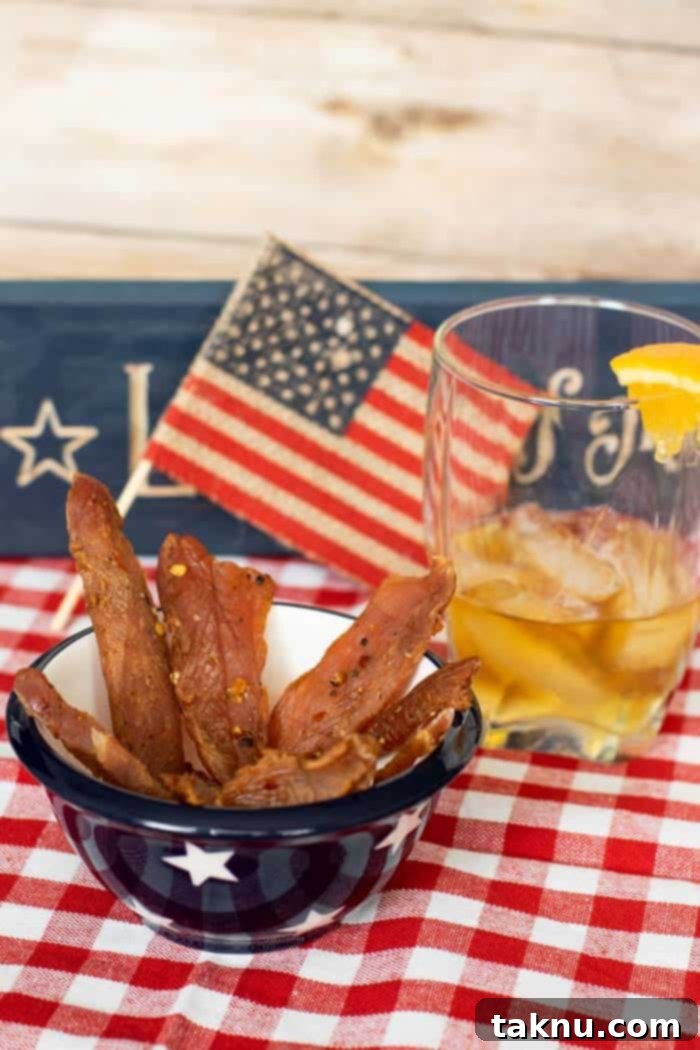
This particular Citrus Bourbon Turkey Jerky turned out exceptionally well. The intense citrus notes from the lemon and orange juice truly shine through, providing a refreshing and tangy counterpoint to the rich meat. The Bourbon flavor is beautifully subtle, offering a sophisticated warmth without being overly intense or overpowering the other components. This light, subtly sweet, and vibrant citrus jerky is an absolute must-make for your upcoming 4th of July celebration, guaranteed to be a crowd-pleaser!
Ensuring Longevity: Proper Jerky Storage
Once you’ve invested the time and effort into making delicious homemade jerky, you’ll want to ensure it lasts as long as possible. Proper storage is key to maintaining its freshness and preventing spoilage. While curing salt (or celery juice powder) is an optional ingredient in the marinade that significantly aids in preservation, the method of storage after drying is equally important. To maximize shelf life, always store your finished jerky in airtight containers. This prevents exposure to air and moisture, which are the primary culprits behind spoilage. For even longer preservation, consider vacuum sealing. I have compiled a comprehensive guide on how long jerky stays good and effective steps you can take to extend its shelf life. Be sure to check it out for more detailed information!
Expert Pro Tips:
- For the longest-lasting jerky, always trim every bit of visible fat from the meat before marinating and drying.
- To significantly extend your jerky’s shelf life and enhance safety, consider using curing salt (also known as pink curing salt or Prague Powder #1) or celery juice powder.
- For the most intense and deeply infused flavor, aim to marinate your meat for closer to the maximum 24 hours.
- Experiment with your favorite Bourbon brand to fine-tune the distinct taste of this jerky to your personal preference. Each Bourbon offers unique notes that can subtly alter the final flavor.

For more detailed, step-by-step guidance on how to dry your jerky using various methods, visit my dedicated page: Jerky Making Methods, or simply click on the illustrative pictures below to explore different techniques.

Citrus Bourbon Turkey Jerky
Pin Recipe
Ingredients
Lean Turkey Breast
- 1 lb Turkey Breast
Marinade
- ½ cup orange juice
- ¼ cup apple cider vinegar
- ¼ cup bourbon
- 3 tablespoon worcestershire sauce
- 1 tablespoon spicy brown mustard
- 1 tablespoon lemon juice
- 3 tablespoon brown sugar
- 1 teaspoon sea salt
- ½ teaspoon black pepper (freshly cracked)
- ½ teaspoon red pepper flakes
- ½ teaspoon garlic powder
- ¼ teaspoon curing salt (Optional)
Equipment
Instructions
- Combine all of the marinade ingredients in a large bowl or a sealable ziplock bag and mix well to ensure everything is thoroughly incorporated.
- Carefully trim all visible fat from the turkey breast, then slice it into uniform ¼-inch wide strips. For easier slicing, partially freeze the turkey breast for 1-2 hours first.
- Add the sliced turkey breast strips to the prepared marinade in the ziplock bag or bowl. Ensure all meat is evenly coated and marinate in the refrigerator for 8-24 hours. The longer the marinating time, the richer the flavor.
- Once the meat has finished marinating, remove it from the refrigerator and strain off any excess marinade using a colander. This step helps prevent stickiness and speeds up drying.
- Pre-heat your oven to 300°F (150°C). This is a crucial step for food safety, especially with poultry.
- Arrange the turkey strips on a baking rack placed over an aluminum foil-lined baking sheet. This setup allows for even air circulation around the meat.
- Bake in the pre-heated oven for approximately 20 minutes, or until the thickest strips of turkey reach an internal temperature of 165°F (74°C) as measured by a meat thermometer.
- Remove the turkey from the oven and prepare to dry it using your preferred jerky making method. For this recipe, I used my Nesco Dehydrator and dried the strips for 4 hours at 145°F (63°C).
- Test for doneness: the jerky is finished when it bends and cracks, but does not break completely in half. Allow the jerky to cool completely to room temperature for at least an hour before storing it in an airtight container to preserve freshness.
Pro Tips
Expert Tips for Perfect Jerky:
- For a jerky that lasts longer and stays fresh, always trim every piece of visible fat from your meat before it enters the marinade.
- Consider incorporating curing salt or celery juice powder into your marinade. These ingredients are excellent for extending the shelf life and adding a layer of safety to your homemade jerky.
- To achieve the most intense and deeply infused flavor, aim to marinate your meat for a duration closer to the 24-hour mark.
- Don’t be afraid to experiment! Use your personal favorite Bourbon to customize the taste of this jerky to your exact liking. Different bourbons offer unique flavor nuances.
Nutrition
You Might Also Like: