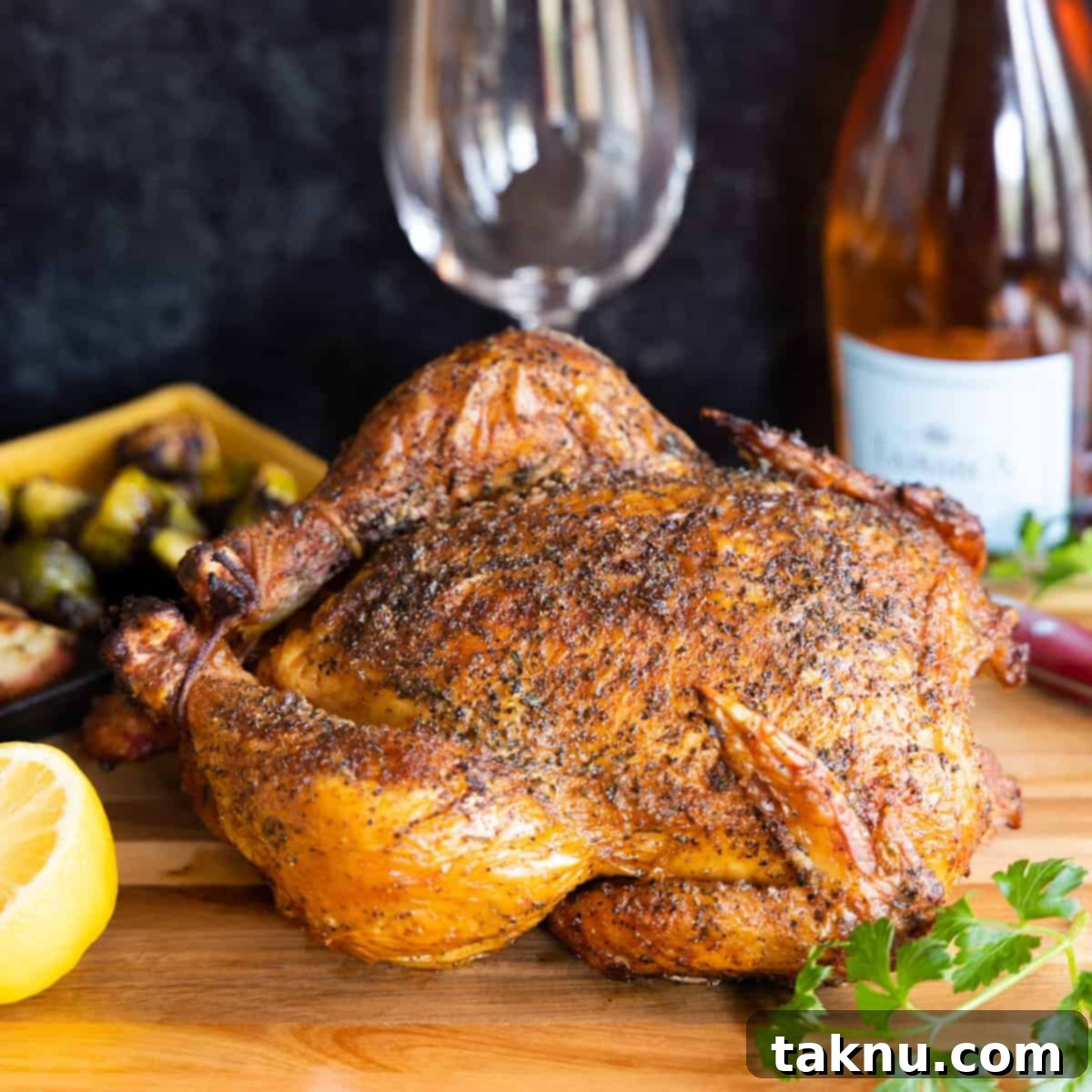
How to Smoke a Whole Chicken: Achieve Perfect Juicy Meat & Crispy Skin Every Time
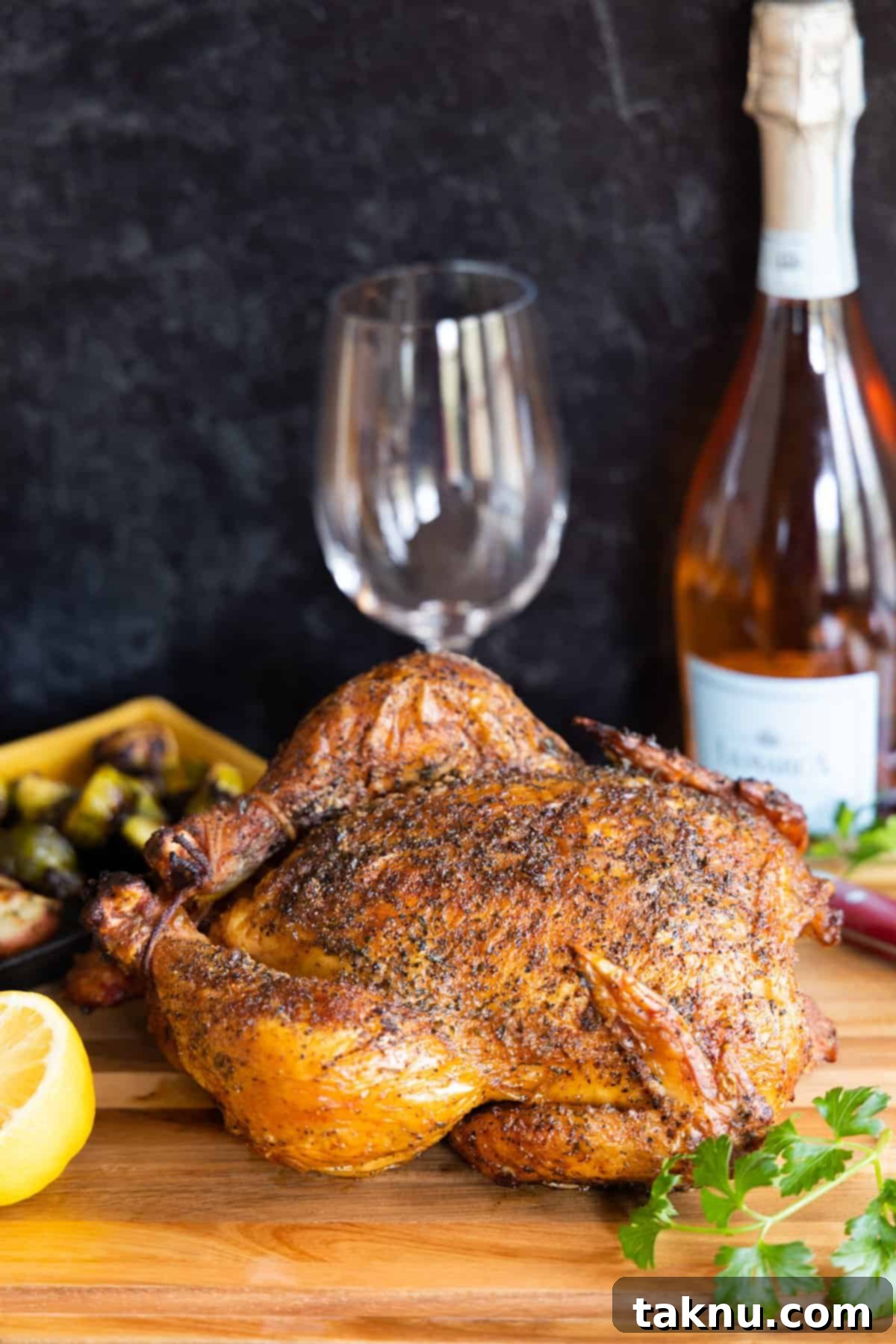
Prepare to elevate your grilling game with this incredible recipe for a smoky, tender, and incredibly juicy smoked whole chicken, crowned with irresistible crispy skin. This isn’t just another chicken recipe; it’s a culinary journey that transforms a simple bird into a show-stopping centerpiece for any BBQ, family gathering, or weeknight dinner. We’ll guide you through a proven method that combines the deep flavor infusion of a low-and-slow smoke with a final blast of heat to achieve that coveted, perfectly crispy skin.
Once you experience the unparalleled taste and texture of a perfectly smoked whole chicken, you’ll understand why many consider it the only way to truly cook a bird. Forget dry, bland chicken – this method guarantees a succulent, flavorful meal that will have everyone asking for seconds. Get ready to impress your guests and delight your family with the best smoked chicken you’ve ever made!
[feast_advanced_jump_to]
Video Guide: How to Smoke a Whole Chicken
Sometimes, seeing is believing, especially when it comes to mastering smoking techniques. Watch our detailed video tutorial to visually walk through each step of smoking a whole chicken. From brining to seasoning and the crucial two-stage smoking process, this video provides invaluable tips and ensures you achieve a flawless result every time. Get ready to turn theory into delicious reality!
Essential Ingredients & Equipment for Smoked Chicken
To embark on your smoked chicken adventure, gathering the right ingredients and tools is key. This recipe is designed to be accessible, using common items you can easily find at your local grocery store. Here’s what you’ll need to create a truly memorable meal:
- Whole Chicken – Opt for a fresh, high-quality 5-7lb whole chicken. This size is ideal for feeding 4-6 people and fits comfortably in most smokers. Don’t be shy – grab two! They’re usually quite inexpensive, and if you’re firing up the smoker, you might as well maximize your delicious output.
- Brine – A good brine is your secret weapon for a consistently moist and tender bird. Our simple yet effective brine mixture consists of fresh water, coarse kosher salt, sweet apple juice, and rich dark brown sugar. This combination not only adds flavor but also helps the chicken retain moisture during the long smoking process, preventing it from drying out.
- Seasoning – Flavor is paramount! We’ll explore two fantastic seasoning options, though your favorite rub will also work wonders. Basic yet powerful ingredients like salt, freshly ground black pepper, garlic powder, butter, & fresh parsley are excellent choices. These create a beautiful crust and infuse the meat with aromatic notes.
- Wood Chips – The type of wood you choose dramatically impacts the smoke flavor. For chicken, fruit woods are universally recommended as they provide a mild, sweet smoke that complements without overpowering. Cherry wood or apple wood chips are the best options, imparting a lovely subtle smokiness and a beautiful reddish hue to the skin. Avoid strong woods like mesquite or hickory for poultry, as they can be too intense.
- Potatoes, Carrots, & Brussel Sprouts – While not strictly for the chicken itself, selecting your favorite side dishes is crucial for a complete meal. These hearty vegetables are fantastic choices that can often be cooked alongside your chicken or prepared separately to complement its rich flavor.
- Smoker – Whether it’s a pellet grill, an offset smoker, or even a charcoal grill with some wood chips, having a reliable smoking apparatus is essential.
- Instant-Read Thermometer – This is non-negotiable for food safety and achieving perfect doneness. Accuracy is key when cooking poultry.
- Butcher Twine – For trussing the chicken, ensuring even cooking and moisture retention.
- Large Bucket or Container – Essential for brining your chicken thoroughly.
Prepping Your Chicken for Smoking Success
Proper preparation is the foundation of a truly magnificent smoked chicken. Before you even think about lighting your smoker or applying seasoning, we’ll take a few critical steps to ensure your finished bird is incredibly tender, juicy, and packed with flavor. This includes an optional but highly recommended brining process and careful seasoning.
Brine (Optional, but Highly Recommended)
Brining the chickens before seasoning and smoking is an optional step, but one that we strongly advocate for. This process introduces moisture and flavor deep into the chicken meat, helping it remain incredibly moist and tender even after hours in the smoker. While not strictly required, a brined chicken is noticeably superior in both texture and taste.
To prepare your brine, you’ll need a container large enough to fully submerge your chicken(s). A 5-gallon bucket, readily available at most hardware stores like Lowe’s or Home Depot, works perfectly. Ensure it’s clean and food-safe.
In a large pot, combine all the brine ingredients and bring the mixture to a low boil. Stir consistently until the salt and sugar are completely dissolved into the water. This ensures an even distribution of flavor and hydration properties throughout the brine.
- 3 gallons fresh water
- 3 cups kosher salt
- 4 cups apple juice
- 2 cups dark brown sugar
Once dissolved, remove the pot from the heat and allow the brine to cool down completely. This step is crucial for food safety; never add raw chicken to hot or warm brine. To speed up the cooling process, you can carefully add a generous amount of ice cubes to the brine once it’s removed from the heat, stirring until they melt and the mixture reaches refrigerator temperature.
Carefully place your chicken(s) into the 5-gallon bucket, ensuring they are fully submerged. Pour the cooled brine water over the chickens. Place the entire bucket, uncovered or loosely covered, in your refrigerator. Brine for a minimum of 4 hours, though brining overnight (up to 12-24 hours for larger birds) will yield even more flavorful and tender results. Do not brine for longer than 24 hours as the meat can become too salty.
Rinse and Dry Thoroughly
After the brining period, remove the chicken from the brine. Discard the used brine immediately; do NOT save it to brine chickens in the future, as it will contain raw poultry juices and bacteria. Always use a fresh brine solution for each use.
*Food Safety Reminder: Always practice proper food hygiene when handling raw poultry. Wash your hands thoroughly before and after handling the chicken, and sanitize all surfaces and utensils that come into contact with raw meat.
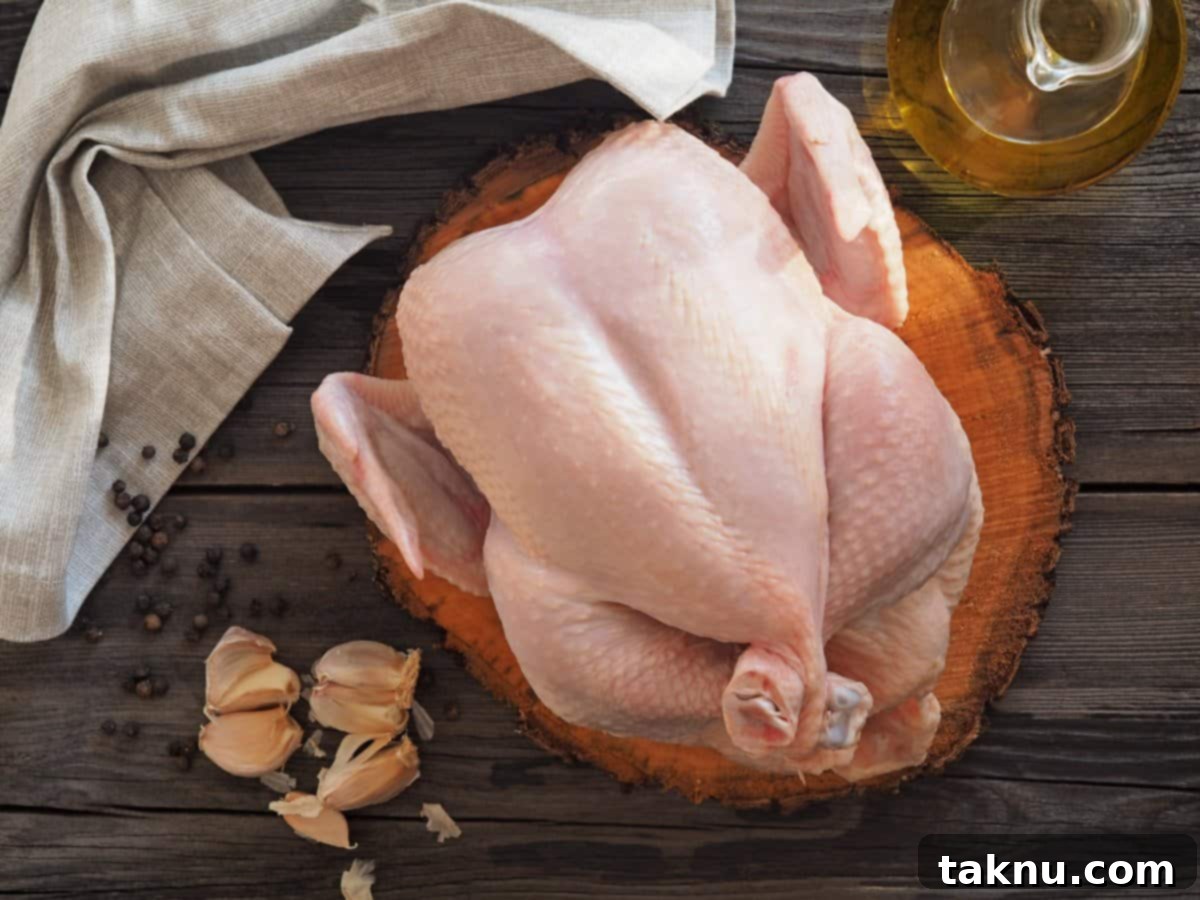
Rinse the entire chicken thoroughly with fresh, cold water, both inside and out. This helps remove any excess salt from the surface. Pat the whole chickens *completely dry* with paper towels. Pay special attention to getting around the legs, under the wings, and especially under the skin. A dry surface is absolutely critical for achieving that desirable crispy skin during the smoking process.
To ensure even cooking and prevent the breast meat from drying out faster than the legs and thighs, it’s recommended to tie the legs together with butcher’s twine. This technique, known as trussing, also helps the chicken maintain a compact shape, leading to a more appealing presentation and consistent temperature throughout.
Masterful Seasoning for Optimal Flavor
With your chicken rinsed and thoroughly dried, it’s time to apply the seasoning that will transform your bird into a flavor sensation. The goal is to create a delicious crust and infuse the meat with aromatic spices. Start by rubbing the entire exterior of the chicken with a thin layer of olive oil or softened butter. Don’t forget to use your fingers to gently separate the skin from the breast meat and apply some oil or butter underneath as well.
This oil/butter layer serves a dual purpose: it acts as a binder for your seasonings, ensuring they adhere well, and more importantly, it helps the skin crisp up beautifully in the smoker – arguably the best part of any roasted or smoked chicken!
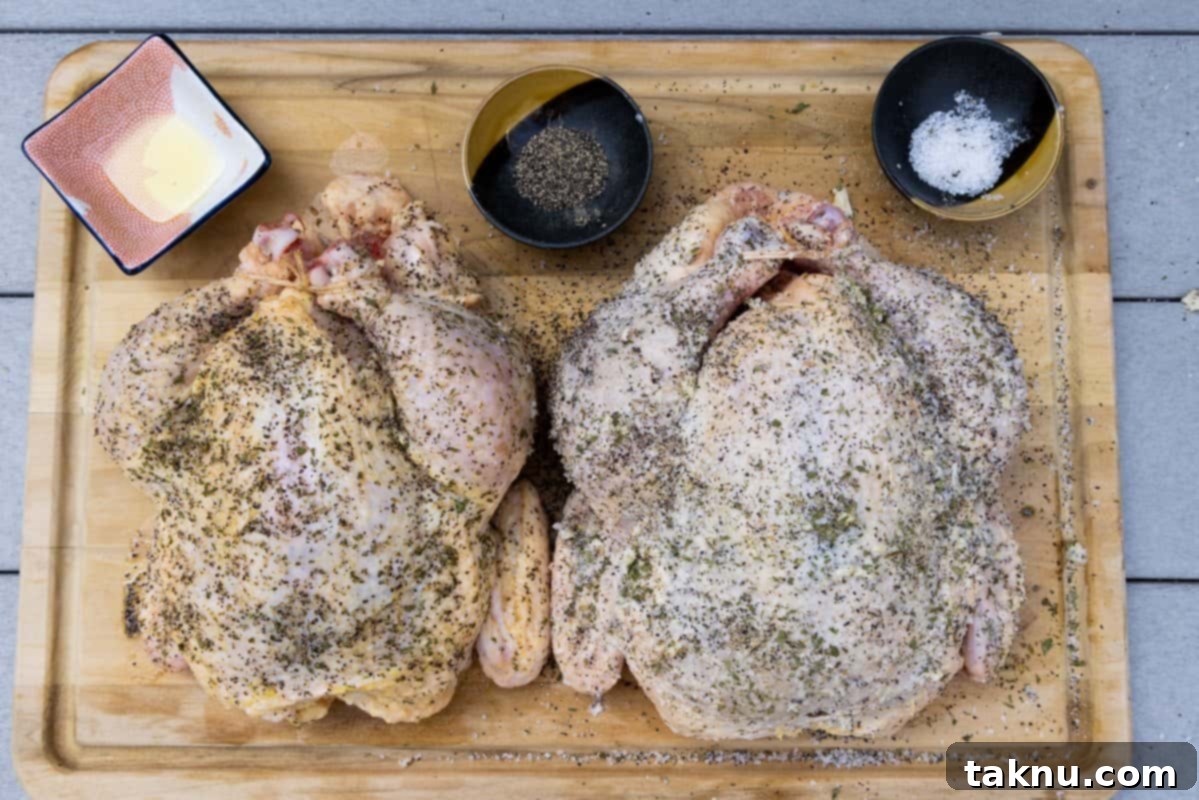
Now, season liberally with a classic combination: SPG (salt, fresh ground black pepper, & garlic powder). Don’t be shy; a generous coating helps form a flavorful bark. For additional aromatic depth, feel free to sprinkle on fresh or dried parsley and rosemary onto the chicken skin before cooking. These herbs release their fragrances as the chicken smokes, adding another layer of complexity to the final dish.
Do you have a favorite chicken rub that you swear by? This is the perfect opportunity to use it! Any one of your tried-and-true seasonings can be applied when smoking a whole chicken. Many enthusiasts have their go-to blends. Personally, I’m a big fan of the quality and flavor profiles from Meat Church’s seasonings. Their Honey Hog and VooDoo rubs are particularly fantastic for poultry, offering a delightful balance of sweet, savory, and a hint of spice. Feel free to experiment and find your perfect combination!

Mastering the Art of Smoking Whole Chickens
Now that your chicken is perfectly brined, dried, and seasoned to perfection, it’s time for the most exciting part: firing up your smoker and getting down to cooking! This two-stage smoking method ensures maximum flavor and that coveted crispy skin.
Phase 1: Smoke Low & Slow for Flavor Infusion
Begin by pre-heating your smoker to a consistent 225°F (107°C). For the best smoke flavor that complements chicken without overpowering it, load your smoker with fruit wood chips or chunks, such as cherry or apple wood. As mentioned earlier, these woods are the top choice for poultry, imparting a gentle sweetness and a beautiful color to the bird.
Once your smoker has reached and stabilized at 225°F, carefully place the whole chicken directly on the grill grates, breast side up. Ensure there’s adequate space around the chicken for smoke to circulate evenly. If you’re smoking multiple chickens, avoid overcrowding the grates.
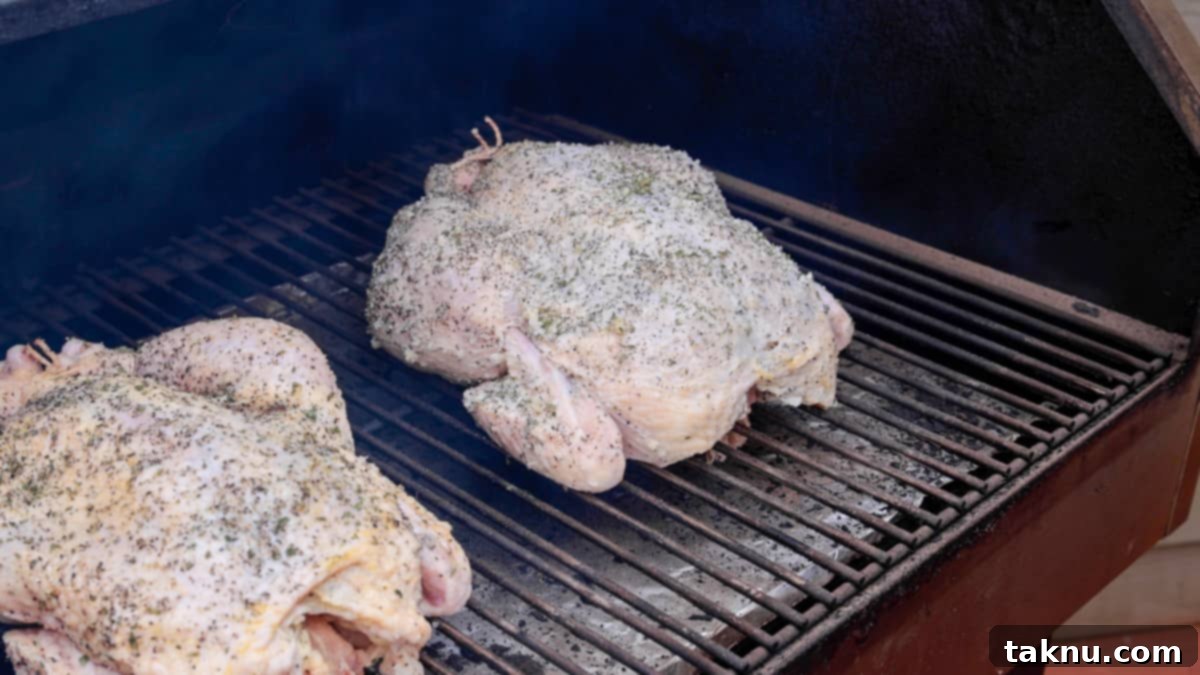
Allow the chicken to smoke at this low temperature for approximately 45 minutes to 1 hour. This initial low-and-slow period is crucial for imparting that deep, rich smoke flavor into the meat without overcooking. The chicken will begin to take on a beautiful color from the smoke and the seasoning will start to form a bark.
While you *could* technically continue to smoke the chicken at this low temperature until it reaches its final internal temperature of 165°F (74°C), we strongly advise against it if crispy skin is your goal. Smoking at low temperatures for an extended period often results in rubbery, unappetizing skin. To achieve that perfect, crisp texture, we’ll transition to the next phase.
Phase 2: Finish Hot & Fast for Crispy Skin
After the initial 45-minute to 1-hour low-and-slow smoking phase, it’s time to crank up the heat to achieve that irresistible crispy skin. Without removing the chicken from the smoker, simply increase the temperature of your smoker to a range of 350-400°F (175-200°C). Don’t worry about taking the chicken out while the smoker heats up; it will continue to cook and absorb residual smoke flavor during this transition.
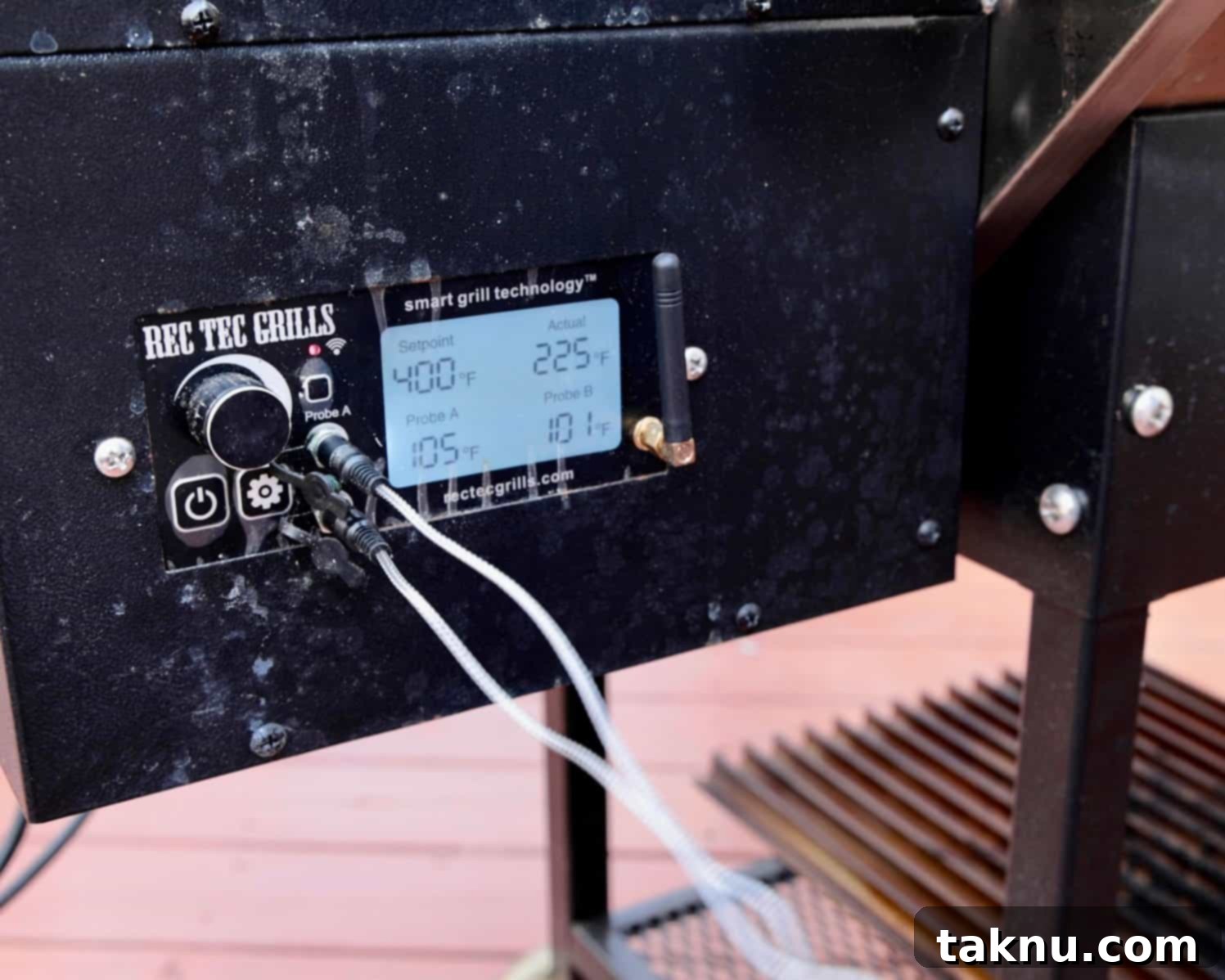
Continue cooking the whole chicken at this higher temperature. This phase typically takes another 45 minutes to 1 hour, but always rely on internal temperature rather than time. The chicken is done when an instant-read thermometer registers 165°F (74°C) in two critical areas: the thickest part of the breast and the area where the thigh meets the breast (without touching the bone). Checking both spots ensures the entire bird is cooked safely and thoroughly. At these higher temperatures, the skin will render its fat and crisp up beautifully, giving you that perfect textural contrast to the juicy meat underneath.
The Crucial Step: Resting the Bird
Once your whole chicken reaches the target internal temperature of 165°F (74°C), it’s tempting to carve into it immediately. However, this is one of the most critical steps for ensuring maximum juiciness. Carefully remove the smoked chicken from the smoker and place it on a clean cutting board.
Allow the bird to rest, uncovered, for 10-15 minutes. During this resting period, the internal temperature will continue to rise slightly (carryover cooking), and more importantly, the juices within the meat will redistribute throughout the chicken. This results in an incredibly tender, succulent, and juicy smoked whole chicken that simply melts in your mouth.
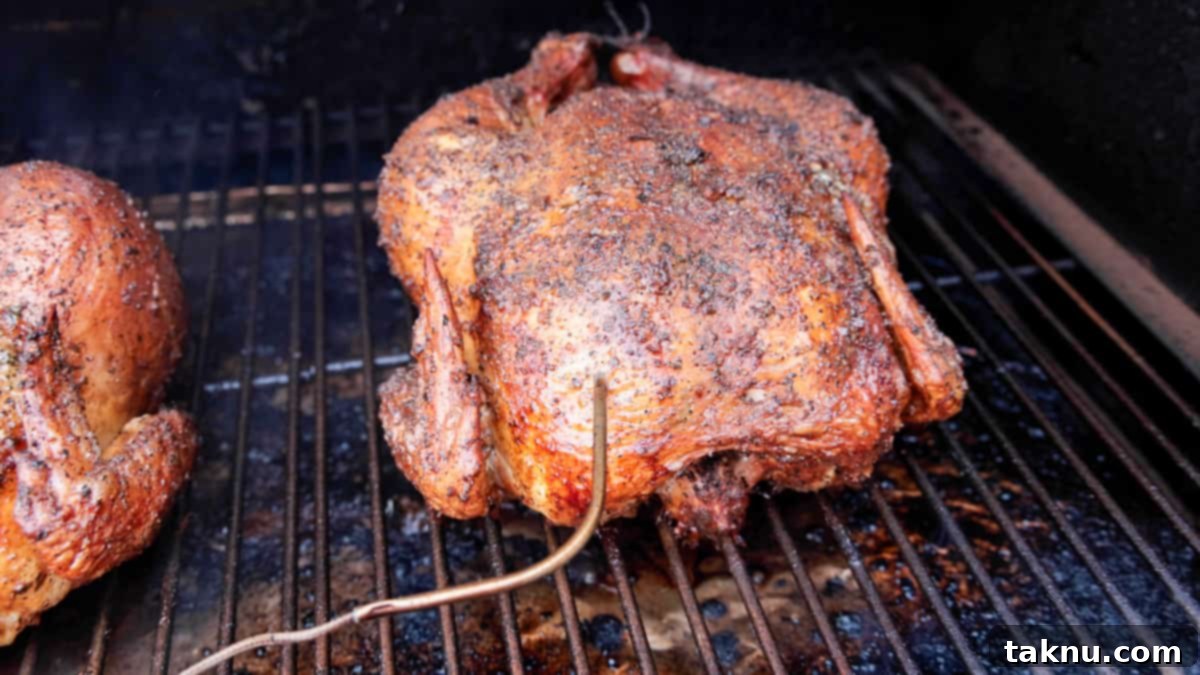
Important Tip: Do NOT cover the chicken in aluminum foil when resting. While this is common for other meats, covering a smoked chicken will trap steam and moisture against the skin, causing it to become soggy and rubbery. We definitely DON’T want that! You’ve worked hard to achieve that perfect crispy skin with the hot-and-fast finish, so let it remain exposed to the air to maintain its crispness while the meat rests. This small detail makes a significant difference in the final eating experience.
Serving Size: How Many Does One Smoked Chicken Feed?
A typical 4-5lb roaster chicken is generally sufficient to serve 4-6 people, depending on appetites and the number of side dishes you’re offering. For many, a portion includes a mix of white and dark meat, which a whole chicken provides generously.
However, if you’re going through the effort of firing up your smoker, enjoying a cold beer, and making a day out of the smoking process, I highly recommend maximizing your efforts. You might as well smoke two chickens at the same time! Not only does it not significantly increase your workload or fuel consumption, but you’ll be incredibly grateful for the extra servings. Whether for leftovers, unexpected guests, or simply because everyone will want more of this delicious smoked chicken, trust me – both birds WILL definitely get eaten!
Smoked chicken leftovers are fantastic for sandwiches, salads, quesadillas, or quick weeknight meals, making a second bird an excellent investment of your time.
Choosing the Right Smoker for Your Needs
When it comes to smoking, the best equipment is always the one you already own and are comfortable using. If you’re new to smoking or looking to upgrade, the market offers a fantastic range of options, each with its own advantages. The primary decision often boils down to a pellet grill versus a traditional offset smoker.
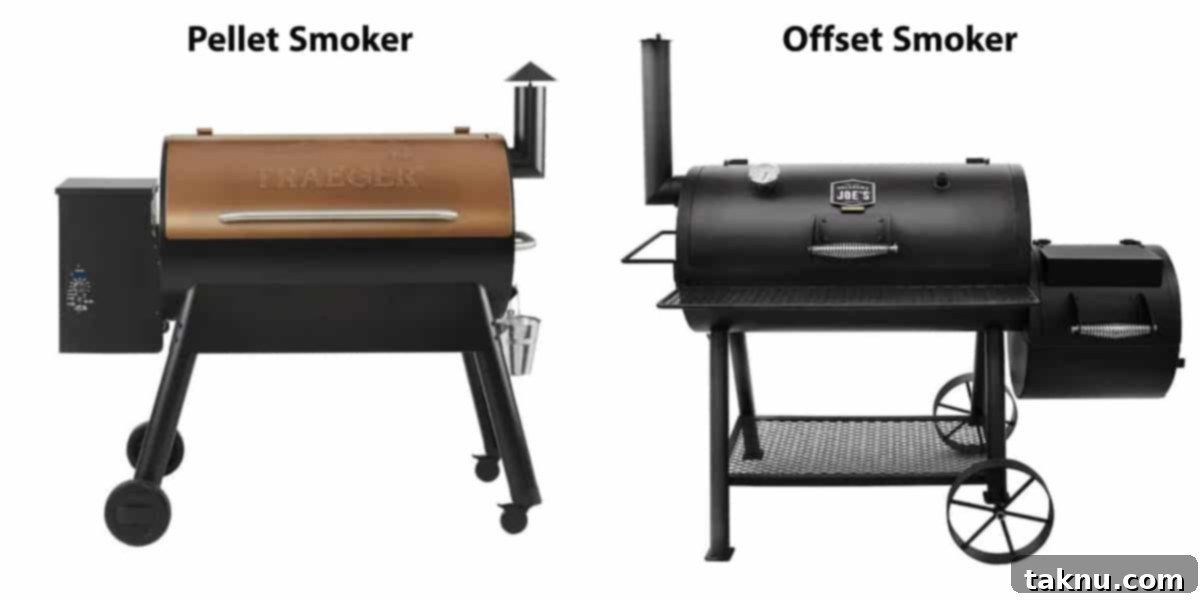
Pellet Smokers: Convenience Meets Flavor
For this smoked chicken recipe, I personally use my wood pellet grill. Popular models like the Camp Chef 36 smoker or the Traeger 780 are fantastic examples of this technology. Wood pellet smokers have revolutionized home smoking by combining ease of use with the ability to impart incredible smoke flavor.
These smokers operate on compressed wood pellets and are essentially outdoor convection ovens. They excel at holding a very steady and precise temperature, much like your indoor kitchen oven. This means minimal effort on your part – no constant tending, no worrying about wild temperature spikes or frustrating dips. Just set your desired temperature, load your pellets, and let the smoker do its magic, producing consistently delicious results with a clean, even smoke.
Offset Smokers: The Traditionalist’s Choice
A traditional offset smoker is another excellent choice for achieving authentic, deep smoke flavor. These smokers are known for their ability to reach very high temperatures, which is actually a fantastic attribute when you’re aiming for crispy chicken skin, as we do in this recipe. Offset smokers are often more budget-friendly than their pellet counterparts, making them an attractive option for many.
Models like the Oklahoma Joe’s Smoker offer a robust and reliable platform for smoking. While an offset smoker requires a bit more hands-on attention and temperature management compared to a pellet grill – involving regular tending of the firebox and careful airflow adjustments – the reward is a uniquely rich and complex smoky flavor that many pitmasters swear by. For those who enjoy the craft of barbecue, an offset smoker provides an incredibly rewarding experience.
Charcoal or Propane Grills: Versatility for Smoking
Even if you don’t own a dedicated smoker, you can still achieve fantastic results using a standard propane or charcoal grill. These versatile tools offer a great way to infuse your chicken with extra flavor that an indoor oven simply can’t match. You might not get the deep, consistent smoke of a dedicated smoker, but with a few tricks, you can certainly get a smoky essence.
For grilling, there’s no need to cook at low temperatures for extended periods. Instead, you’ll simply cook hot and fast, utilizing indirect heat and adding wood chips (in a foil packet or smoker box) to generate smoke. A classic and inexpensive charcoal grill like the Weber Kettle Grill is an absolute workhorse for this, capable of both grilling and indirect smoking with excellent results. For gas grills, simply turn off one or more burners and place wood chips over the active burner for smoke.
Regardless of the grill you possess, fire up the one you have! With proper technique, I guarantee your grilled chicken will turn out significantly better and more flavorful than any oven-roasted chicken, boasting a delightful char and a hint of smoke.
Perfect Pairings: Complementary Side Dishes
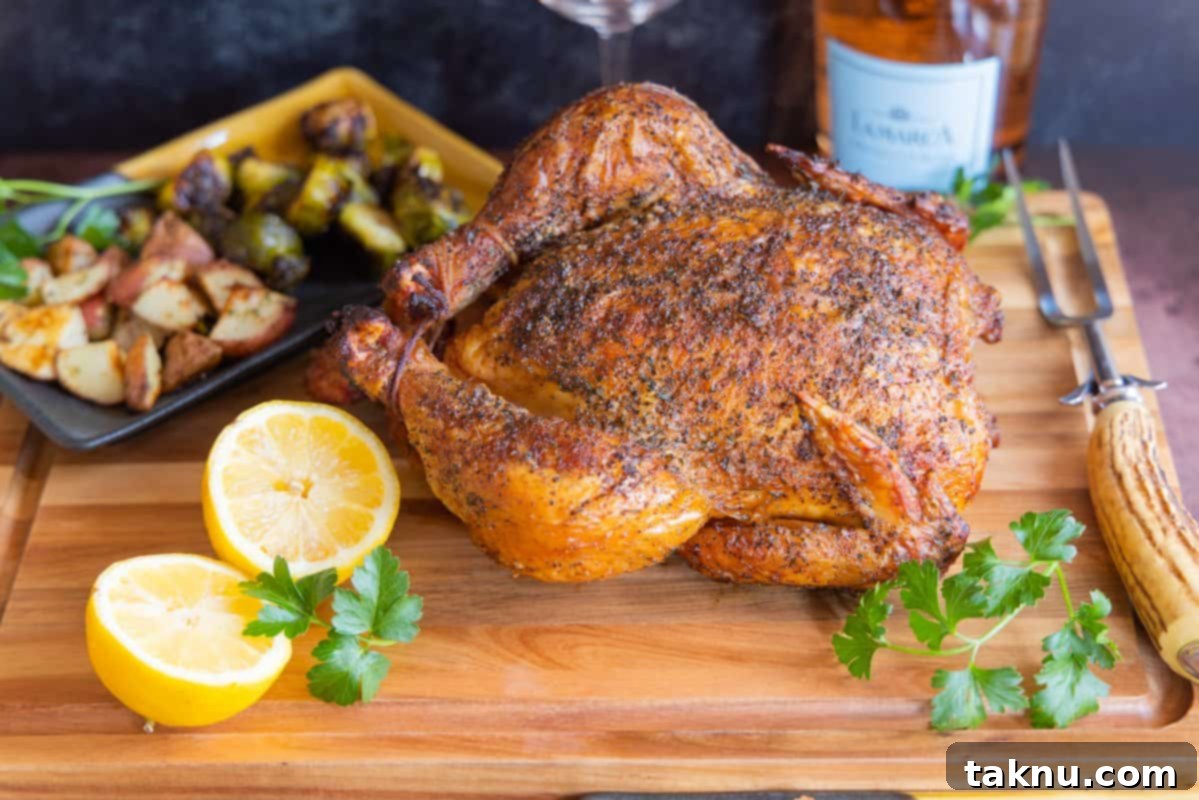
A perfectly smoked whole chicken deserves to be accompanied by equally exceptional side dishes. The rich, smoky flavor of the chicken pairs wonderfully with a variety of textures and tastes. Here are some of my favorite sides that elevate the entire meal and provide a delightful balance:
- Smoked Brussels Sprouts: Bringing another layer of smoky goodness, these tender yet slightly charred sprouts offer a fantastic earthy counterpoint to the chicken.
- Roasted Potatoes: Crispy on the outside, fluffy on the inside, roasted potatoes are a hearty and satisfying classic that soaks up any delicious chicken juices.
- Smoked Vegetables: A medley of smoked seasonal vegetables (like bell peppers, onions, or zucchini) can add vibrant color, texture, and additional smoky depth to your plate.
- Classic Potato Salad: The creamy, tangy freshness of a good potato salad provides a refreshing contrast to the richness of the smoked chicken, a true BBQ staple.
- Smoked Mac and Cheese: For the ultimate comfort food experience, a rich and gooey smoked mac and cheese is an undeniable crowd-pleaser that perfectly complements the chicken.
Feel free to experiment with your own favorite sides, but these suggestions are guaranteed to create a balanced and memorable feast alongside your magnificent smoked chicken.
Frequently Asked Questions About Smoking Whole Chicken
When following our recommended method of smoking low-and-slow for 45 minutes to an hour, followed by finishing hot-and-fast at 350-400°F, you can expect the total cooking time for a 5-7lb whole chicken to be around 2 to 2.5 hours. If you choose to smoke the chicken entirely low and slow at a consistent 225°F, be prepared for a longer cook time, typically ranging from 3 to 5 hours, depending on the size of the bird and your smoker’s efficiency. Always rely on internal temperature for doneness.
Spritzing is a popular technique to keep the surface of the chicken moist and help develop a nice bark. A simple mixture of apple juice works wonderfully, adding a subtle sweetness. Alternatively, a 50:50 mixture of apple cider vinegar and water is also excellent, contributing a slight tang that enhances the savory flavors of the chicken. Spritz every 45 minutes to an hour during the low-and-slow smoking phase.
No, generally you should avoid wrapping chicken in foil when smoking, especially if you’re aiming for crispy skin. Wrapping traps steam, which will make the skin soft and rubbery rather than crisp. It also prevents smoke from penetrating the meat, resulting in less smoky flavor. Keep your chicken unwrapped to achieve that delicious, smoky bark and crispy skin.
For smoking chicken, fruit woods are overwhelmingly considered the best choice. These include cherry wood, apple wood, or even peach wood. They provide a mild, sweet, and aromatic smoke that beautifully complements the delicate flavor of chicken without overpowering it. Avoid heavier woods like mesquite or hickory, which can be too strong and leave a bitter taste on poultry.
The only reliable way to determine if a smoked chicken is done is by checking its internal temperature with an instant-read thermometer. The bird is safely cooked when it reaches an internal temperature of 165°F (74°C). Take readings in the thickest part of the breast (without touching bone) and in the deepest part of the thigh, where it connects to the body. Both areas should read 165°F.
My favorite and most practical way to store leftovers from a whole smoked chicken is to pull all the meat off the bones by hand. This is easiest when the chicken is still warm. Use clean gloves for this task. Once all the meat is shredded or pulled, store it in an airtight container (like Tupperware) in the refrigerator. This allows for easy access and versatility for future meals.
To reheat smoked chicken without drying it out, an oven or toaster oven is ideal. Set the temperature to 350°F (175°C) and reheat for 5-10 minutes, or until the chicken is thoroughly warmed through. This method helps retain moisture and can even help re-crisp the skin slightly if you’re reheating pieces with skin. While a microwave can be used if time is a critical issue, be aware that it may compromise the texture and can sometimes dry out the meat.
Expand Your Smoking Horizons: More Delicious Recipes!
If you loved smoking this whole chicken, you’re clearly ready to explore more incredible possibilities on your smoker or grill. There’s a whole world of smoky flavors waiting to be discovered. Here are some other fantastic recipes to try out that will continue to hone your pitmaster skills and delight your taste buds:
- Smoked Shrimp
- Grilled Sliced Potatoes
- Grilled Filet Mignon – The Perfect Steak
- Grilled Sausage and Peppers
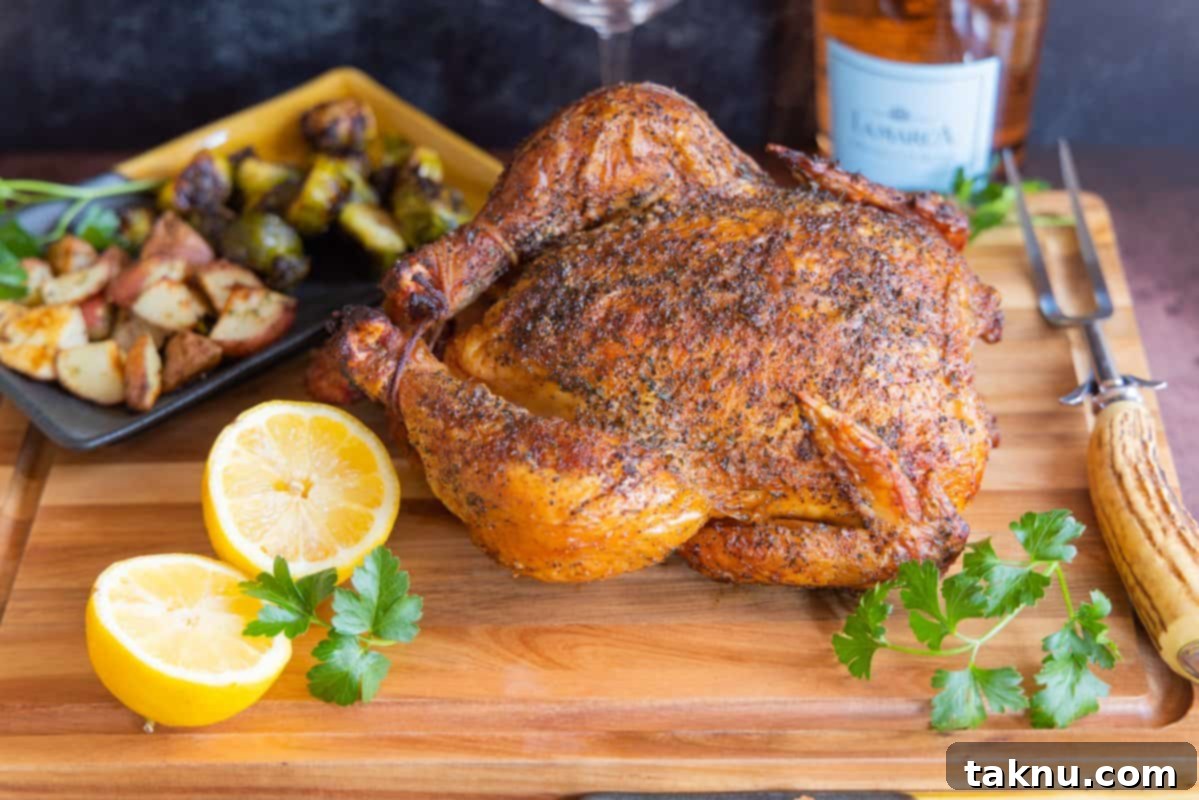
Whole Smoked Chicken Recipe: Juicy & Crispy
Pin Recipe
Ingredients
- 5 lb roaster chicken (giblets removed)
Brine Ingredients (Optional, for extra juiciness)
- 3 gallons fresh water
- 3 cups kosher salt
- 4 cups apple juice
- 2 cups dark brown sugar
Seasoning Rub #1 (Classic SPG)
- 2 tablespoons olive oil
- 1 tablespoon freshly ground black pepper
- 1 tablespoon sea salt
- 2 teaspoons garlic powder
- 2 teaspoons dried parsley (or fresh, chopped)
Seasoning Rub #2 (Garlic Butter Herb)
- ½ stick salted butter (softened)
- 2 cloves fresh garlic (minced)
- 2 teaspoons black pepper
- 1 teaspoon sea salt
- 2 teaspoons dried parsley (or fresh, chopped)
Equipment
Instructions
- Remove giblets from inside of the roaster chicken and thoroughly rinse the bird with fresh cold water, both inside and out. Pat completely dry with paper towels.
- For an exceptionally juicy result, prepare the brine: Combine water, kosher salt, apple juice, and dark brown sugar in a large pot. Bring to a low boil, stirring until salt & sugar are dissolved. Remove from heat and allow to cool COMPLETELY (you can add ice to speed this up). Submerge chicken(s) in the cooled brine for 4-24 hours in the refrigerator. After brining, remove chicken, discard brine, and rinse thoroughly with fresh cool water, then pat dry. If skipping the brine, simply pat the rinsed chicken thoroughly dry.
- Tie the chicken’s legs together with butcher twine to ensure even cooking. Coat the entire bird generously with olive oil or softened butter, making sure to also apply it under the skin over the breast meat for extra moisture and crispy skin.
- Liberally season the bird with your chosen rub (Seasoning Rub #1 or #2, or your favorite blend) everywhere you applied oil or butter. Ensure good coverage for a delicious bark.
- Pre-heat your smoker to 225°F (107°C) with fruit wood (cherry or apple) for optimal smoke flavor.
- Once the smoker is at temperature, place the seasoned chicken directly on the grill rack, breast side up. Smoke for 45 minutes to 1 hour to infuse with deep smoke flavor.
- After the initial smoke, increase the smoker temperature to 375-400°F (190-200°C) without removing the chicken. Continue cooking hot and fast until the internal temperature reaches 165°F (74°C) in the thickest part of the breast and thigh when checked with an instant-read thermometer. This usually takes another 45 minutes to 1 hour, resulting in crispy skin.
- Remove the chicken from the smoker and let it rest, uncovered, on a cutting board for 10-15 minutes. This allows the juices to redistribute for maximum tenderness and keeps the skin crispy. Slice and serve immediately!
Pro Tips for the Best Smoked Chicken
- Trussing is Key: Tying the chicken’s legs together helps ensure that the breast meat cooks evenly and doesn’t dry out faster than the leg and thigh meat. This creates a more uniformly cooked and juicy bird.
- Choose Your Wood Wisely: Always use a fruit wood (like cherry or apple) when smoking chicken. These woods provide a mild, sweet smoke that enhances the chicken’s natural flavor without making it taste bitter or overly smoky.
- Perfect Leftovers: If you plan to use the smoked chicken meat for sandwiches, salads, or other dishes, it’s easiest to pull or shred the meat off the bones while the chicken is still warm. The meat will come off much more easily and cleanly than when it’s cold.
- Don’t Peek Too Often: Resist the urge to constantly open your smoker lid. Each time you open it, you lose heat and smoke, extending the cooking time and potentially affecting the smoke penetration. Trust your thermometer!
- Food Safety First: Always ensure your instant-read thermometer is calibrated and accurately measures the internal temperature of 165°F (74°C) in the thickest parts of the chicken to guarantee it’s safe to eat.