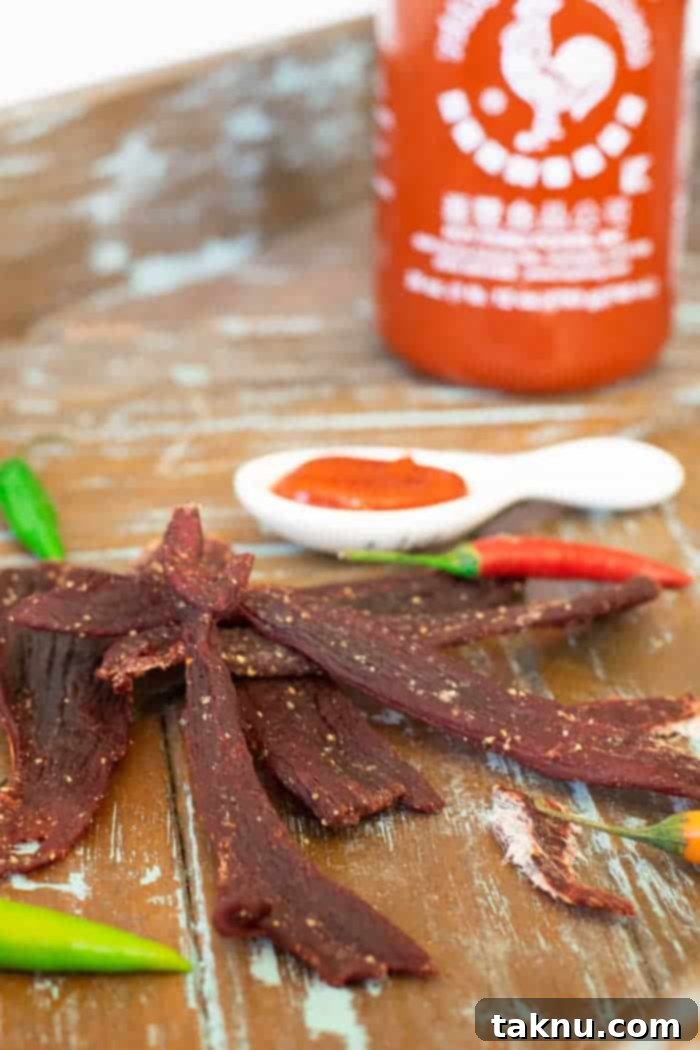
Mastering Sour & Spicy Sriracha Deer Jerky: An Irresistible Homemade Recipe
Prepare your taste buds for an extraordinary jerky experience! The bold, fiery kick of sriracha perfectly complements the tangy notes of apple cider vinegar in this truly unique deer jerky recipe. If you’ve ever doubted that sour and spicy could create a harmonious flavor profile, this homemade sriracha venison jerky is here to prove you wrong. Get ready to craft a batch of flavorful, chewy, and utterly addictive jerky that will become a new favorite snack in your household.
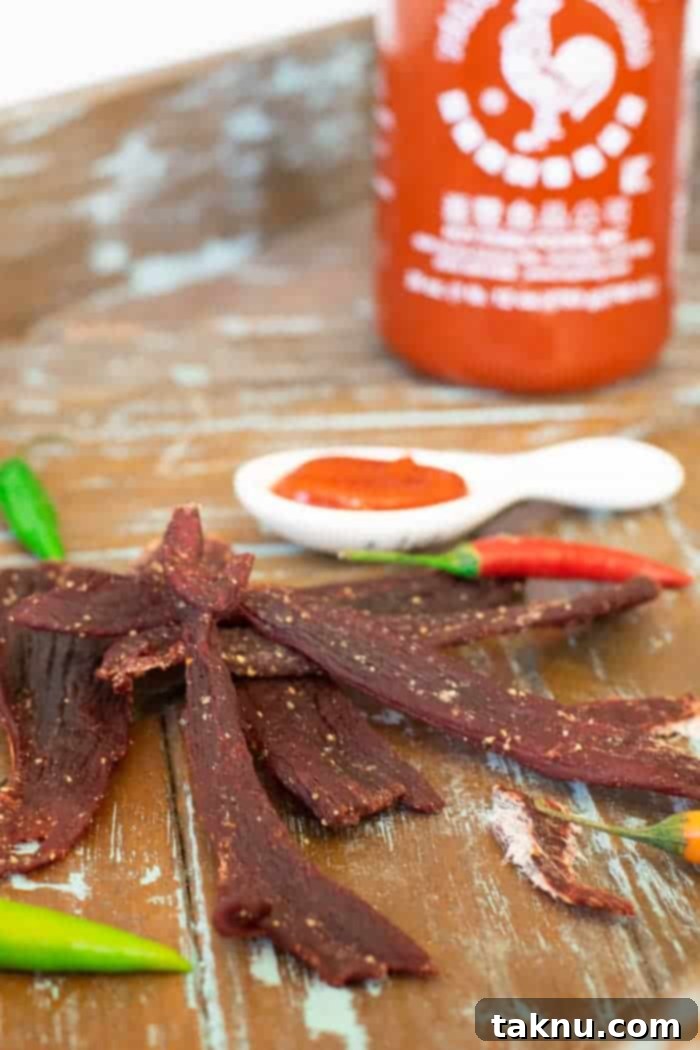
Preparing Your Meat: From Freezer to Slicer
The journey to perfect sour sriracha deer jerky begins with selecting and preparing your meat. While hunting season might have recently ended, leaving your freezer stocked with delicious venison, don’t despair if your luck wasn’t the best. High-quality venison roasts are readily available at many local butcher shops, or you can opt for lean beef roasts as an excellent alternative. Whichever you choose, proper preparation is key to a superior jerky.
Thawing and Trimming for Optimal Flavor and Shelf Life
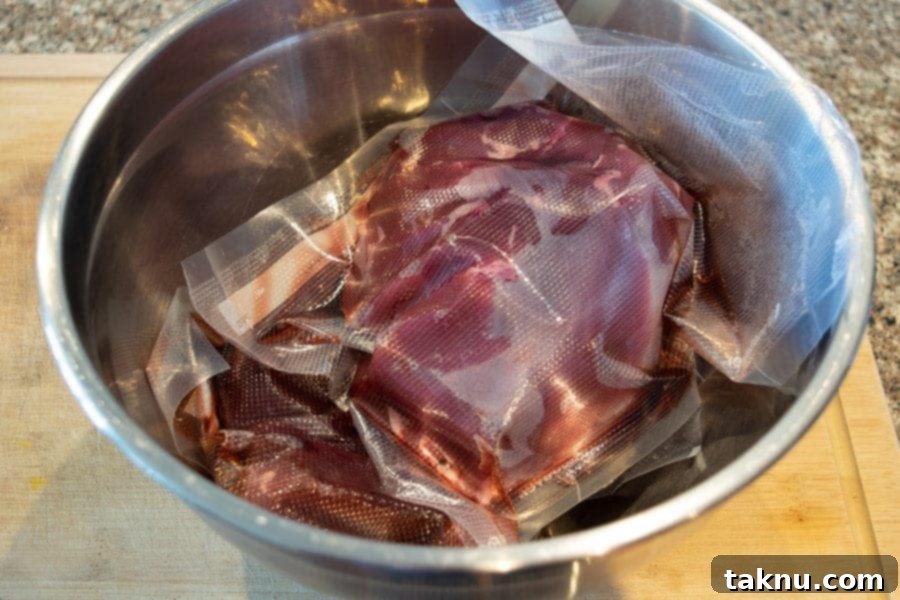
Begin by safely thawing your venison or beef roast. The best method is to place the frozen meat in a bowl of cold water and keep it in the refrigerator. This allows for rapid yet safe thawing. Avoid thawing meat on the kitchen counter at room temperature, as this can lead to bacterial growth. Submerging the roast in cold water significantly accelerates the thawing process, ensuring your meat is ready for the next steps sooner.
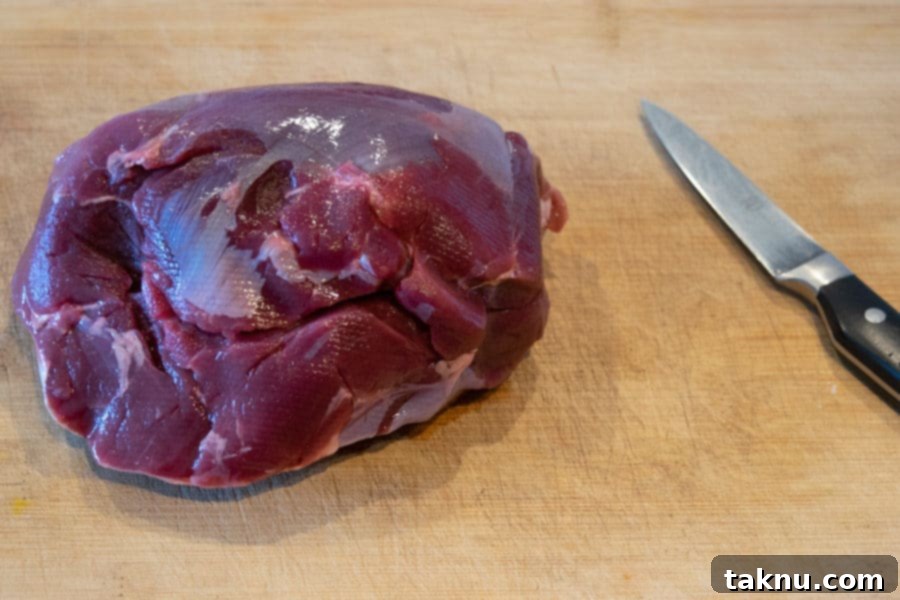
Once thawed, thoroughly rinse the deer roast under cold water. The next crucial step is meticulously trimming all visible fat and silver skin from the meat. This isn’t just for aesthetics; fat spoils much faster than lean meat and will drastically shorten the shelf life of your finished jerky. Silver skin, a tough connective tissue, will also make your jerky unpleasantly chewy. Investing time in this trimming process ensures a longer-lasting, more tender, and more enjoyable jerky.
Achieving Perfect Slices: Hand Cutting vs. Jerky Slicer
Slicing the meat evenly is paramount for uniform drying and consistent texture. While you can certainly slice the deer roast by hand, a very sharp knife is essential. If you do not have a really sharp knife, a helpful trick is to partially freeze the roast. Wrap the meat tightly in plastic wrap and place it back in the freezer for 1-2 hours. This semi-frozen state hardens the meat just enough to make slicing uniform strips much easier and safer. For an in-depth guide on different slicing techniques, including cutting with or against the grain for varying chewiness, be sure to visit our comprehensive how to slice jerky page.
For those who frequently make jerky, a dedicated jerky slicer can be a game-changer. Tools like the Weston Jerky Slicer significantly simplify the task of cutting beef and deer roasts into perfectly sized jerky strips. While this tool is not strictly needed, it makes the slicing process a lot easier, enhancing efficiency and consistency, especially for larger batches. It’s an investment that pays off in time saved and perfectly uniform jerky every time.
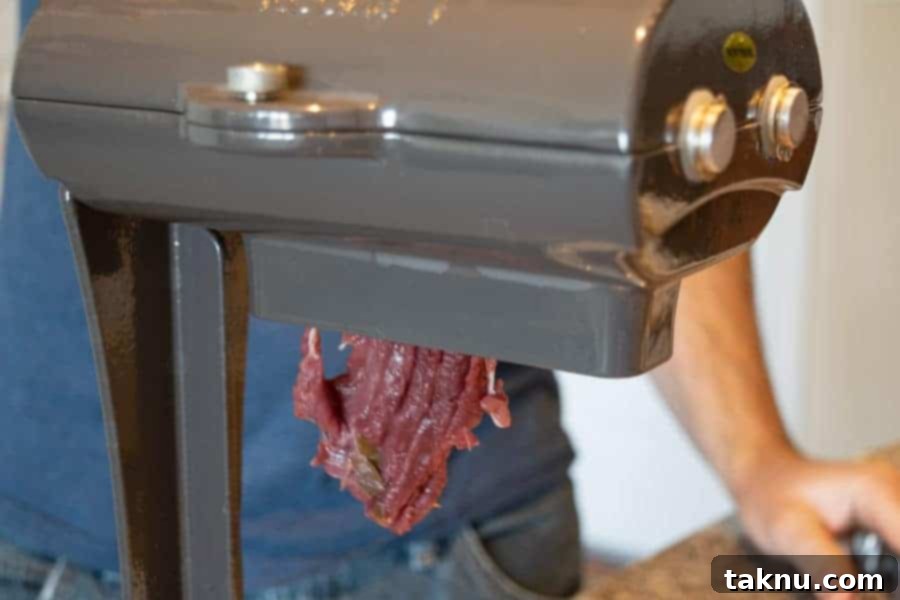
Eliminating Gamey Flavor from Venison
Some venison roasts, especially those from older deer or prepared without immediate field dressing, might carry a distinct ‘gamey’ aroma or flavor. If you notice this, a simple pre-soak can work wonders. Submerge the sliced meat in a cold water and salt solution for a couple of hours. Use 1 cup of salt and about 5 cups of water. This brining process helps to draw out excess blood and mellow out the strong gamey notes, leaving you with a cleaner, more palatable venison jerky.
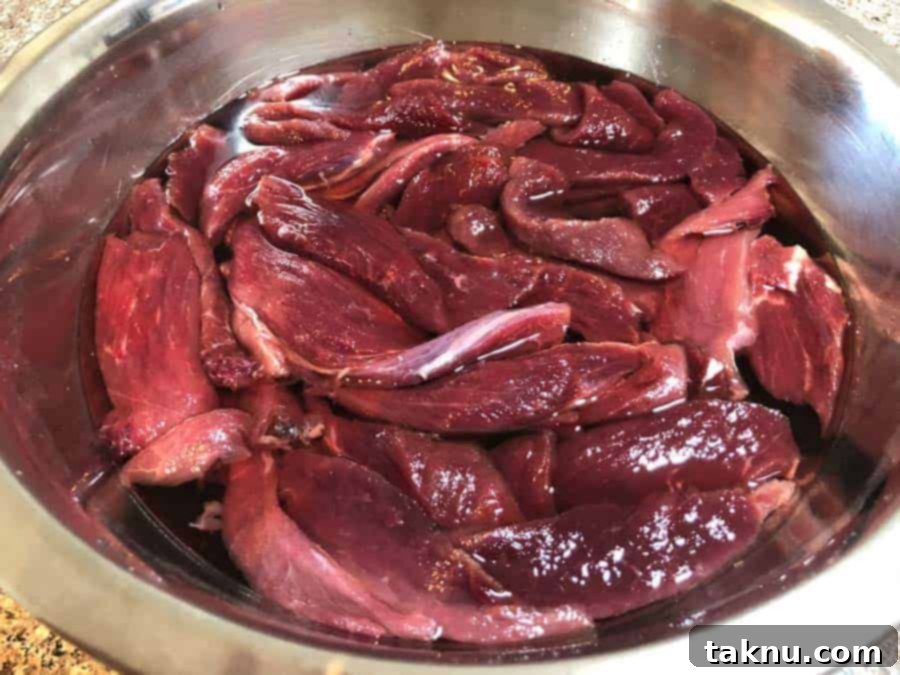
For more delicious and diverse jerky creations, explore our extensive collection of DOZENS OF JERKY RECIPES.
Crafting the Perfect Sour Sriracha Marinade
The marinade is where the magic happens, infusing your deer or beef with that irresistible sour and spicy sriracha flavor. This recipe keeps things simple and efficient – no need for fancy equipment like blenders. Simply add all of the ingredients into a bowl or a robust ziplock bag and mix together well. Don’t be shy about tasting the marinade at this stage; this is your opportunity to adjust the spice level. If you crave more heat, add a little more sriracha to give it more of a kick!
Marinating for Maximum Flavor Absorption
Once you have the marinade mixed together, add the deer or beef slices to the mixture and mix well, making sure all of the strips are thoroughly covered with marinade. This step is critical for even flavor distribution across all your jerky pieces. After coating, seal the bag or cover the bowl and place it in the refrigerator to marinate. A marinating time of 6 to 24 hours is ideal, mixing the strips in the bag every 4 hours or so to ensure even marination.
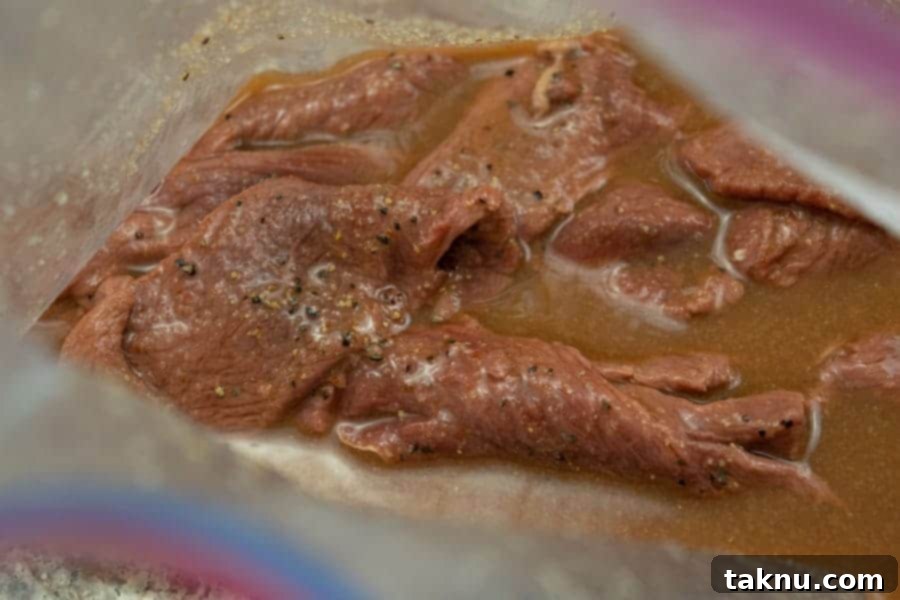
Preparing for Drying: Straining and Patting Dry
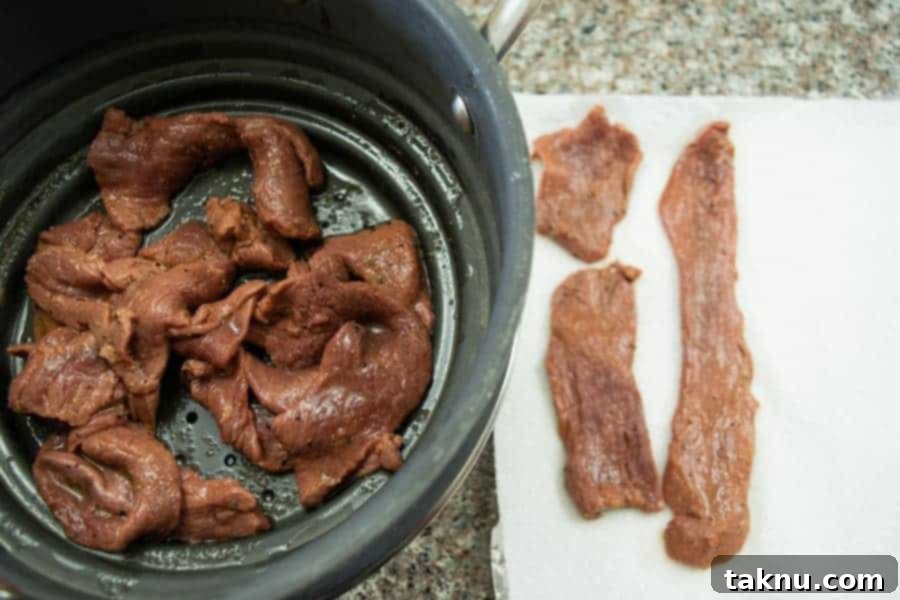
After the marinating period is complete, remove the meat from the refrigerator. Strain the strips in a colander, allowing any excess marinade to drip away. It is crucial to discard any leftover marinade; do not re-use marinade if wanting to make another batch, start with fresh ingredients, as it contains raw meat juices and could pose a food safety risk.
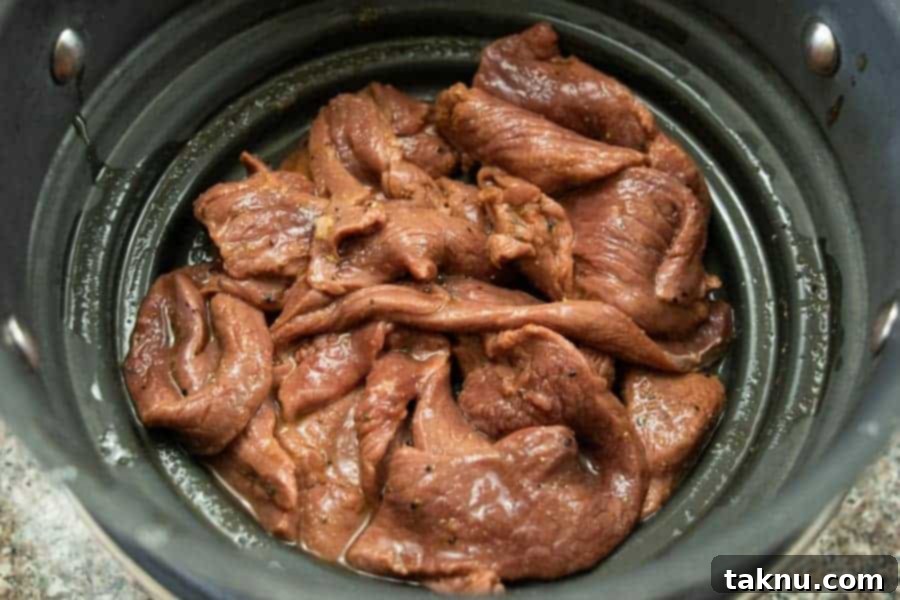
Following the straining, lay the jerky strips out on several layers of paper towels. Gently pat the strips dry to remove any lingering surface moisture and excess marinade. Doing this will help speed up the drying process significantly. Less surface moisture means the meat will dry more efficiently and consistently, contributing to a better jerky texture.
Drying Your Jerky: Dehydrator, Oven, or Smoker
Now it’s time to transform your marinated meat into delicious jerky. Carefully arrange the patted-dry strips onto the trays of your chosen drying apparatus – be it a dehydrator, oven, or smoker. Make sure the pieces of meat are not touching and have space for air to flow around each piece. Proper airflow is essential for even and efficient drying, preventing moisture pockets and ensuring uniform jerky texture.
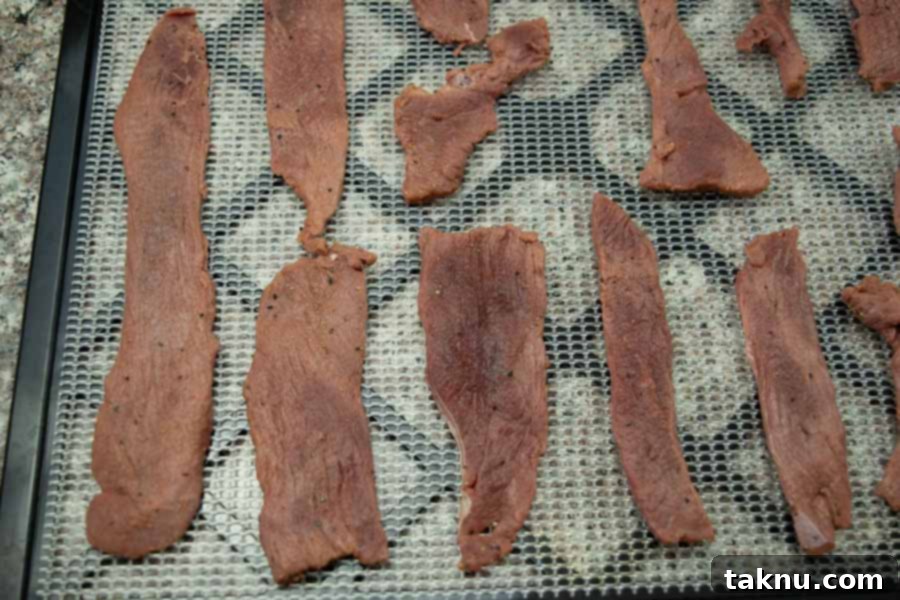
For this specific sour sriracha deer jerky recipe, I achieved excellent results using an Excalibur Dehydrator, drying the jerky at a consistent temperature of 165°F (74°C) for approximately 4 hours. The duration may vary slightly depending on your dehydrator model, meat thickness, and ambient humidity.
You can also use an oven or smoker to make this recipe. Each method imparts a slightly different character to the jerky. For comprehensive, step-by-step instructions on utilizing various drying methods – including detailed guidance for dehydrators, ovens, and smokers – please refer to our dedicated How to Make Jerky page. This resource will help you select the best method for your equipment and desired results.
Knowing When Your Jerky is Perfectly Done
Determining the exact moment your jerky is finished drying is crucial for both taste and safety. While drying the jerky, you want to start testing to see if it has finished at about the 3-4 hour mark, as drying times can vary based on meat thickness, humidity, and the specific equipment used. The key is to test a piece once it has cooled down.
The Bend Test: The Ultimate Indicator
To perform the bend test, carefully take a piece of jerky out of the dehydrator, oven, or smoker and allow it to cool for 5 minutes to room temperature. Cooling is essential because jerky will feel softer when warm and harden as it cools, giving you an accurate assessment of its final texture.
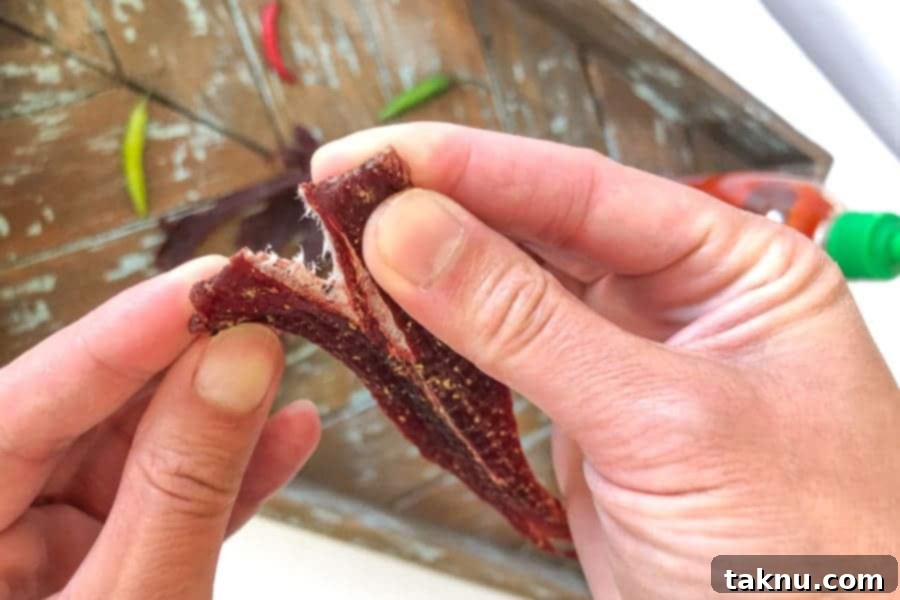
Once cooled, bend the jerky in half. It should bend and crack but not break in half. If it feels leathery and tears without any cracking, it likely needs more drying time. Conversely, if it’s overly brittle and breaks easily, it might be slightly over-dried, though still edible.
Visual Cues: The Appearance of White Fibers
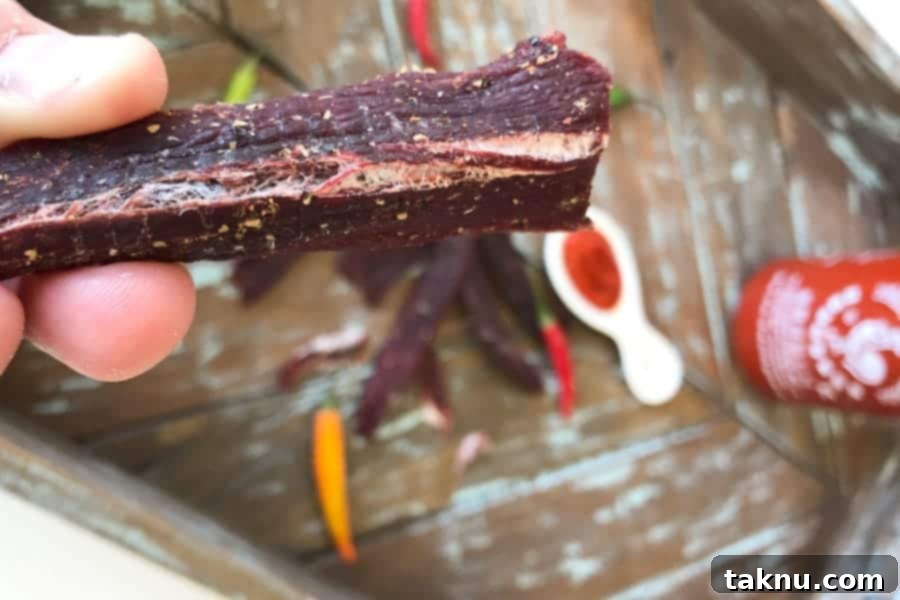
Another reliable indicator of properly dried jerky is the appearance of white fibers within the meat. You will also see white fibers in the meat. The fibers are really visible when a piece is ripped in half. This visual cue signifies that the moisture has been adequately removed, and the meat has achieved its characteristic jerky texture.
If the jerky is not finished, continue drying for another hour and repeat the same process until the jerky is finished. 90% of the jerky I make is finished within 4-6 hours when using a dehydrator or oven and 6-9 hours when using a smoker. If pre-heating the meat in the oven to a safe internal temperature, drying time can be as little as 2.5 hours.
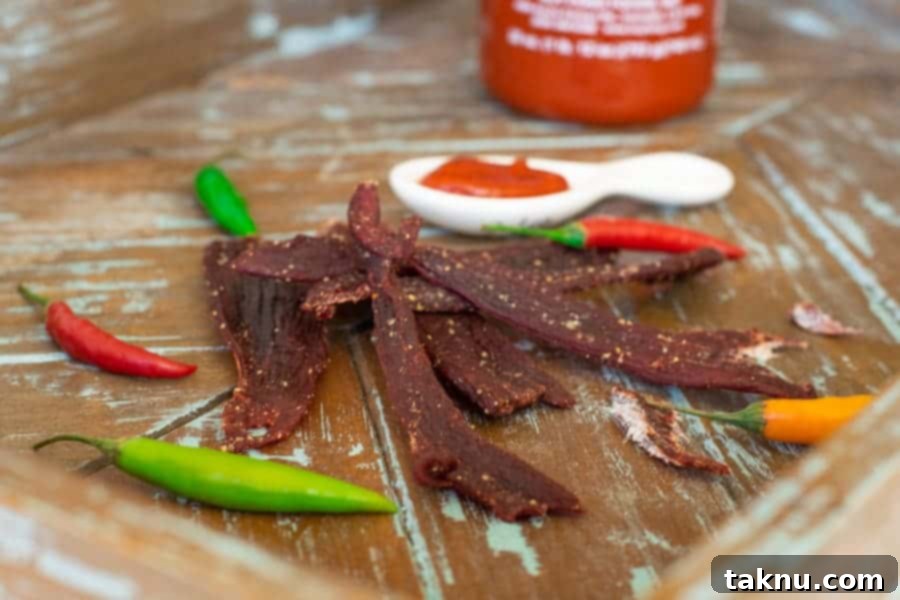
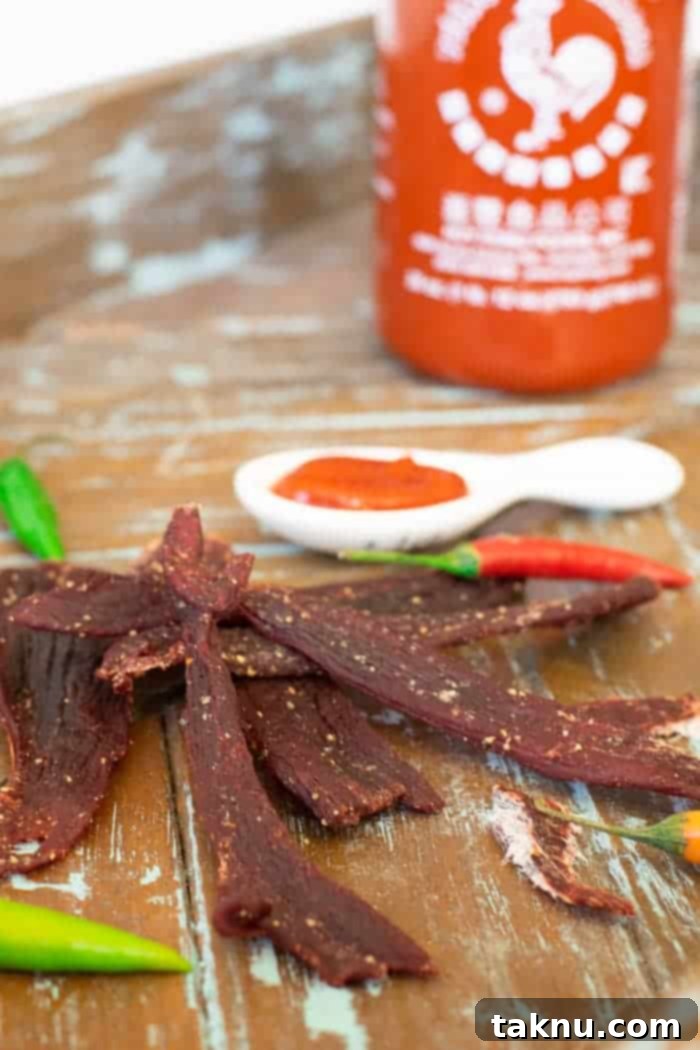
The jerky tasted fantastic! The apple cider vinegar gave the jerky that sour flavor, with the sriracha combating that with a nice spicy kick! I really enjoyed the flavors of this recipe and will definitely be making it again.
Maximizing Freshness: Storing Your Homemade Jerky
Once your delicious sour sriracha deer jerky is perfectly dried, proper storage is essential to maintain its quality and extend its shelf life. The primary enemies of jerky are moisture, oxygen, and heat. By minimizing exposure to these elements, you can enjoy your homemade snack for weeks, or even months.
Key Storage Practices:
- Airtight Containers: Always store jerky in airtight containers, such as sealed plastic bags (ziplock freezer bags work great), vacuum-sealed bags, or glass jars with tight-fitting lids. This prevents moisture reabsorption and oxidation.
- Cool, Dark Place: For short-term storage (a few weeks), keeping your jerky in a cool, dark pantry or cabinet is usually sufficient.
- Refrigeration: For an extended shelf life (up to a month or two), store airtight jerky in the refrigerator. The cooler temperatures further inhibit bacterial growth and slow down spoilage.
- Freezing: For long-term storage (several months to a year), freezing is your best option. Vacuum-seal the jerky before freezing to prevent freezer burn and maintain optimal flavor and texture.
- Curing Salt: To make the jerky last as long as possible, incorporating curing salt (like Prague Powder #1) or natural alternatives like celery juice powder into your marinade significantly enhances the safety and longevity of your jerky by inhibiting bacterial growth, particularly clostridium botulinum. This is a highly recommended practice for homemade jerky.
For more detailed information on best practices for preserving your homemade jerky, including specific shelf-life guidelines and advanced storage techniques, be sure to visit our comprehensive page on storing jerky. Check it out!
Expert Tips for Jerky Making Success
Achieving consistently excellent homemade jerky involves attention to a few key details. Here are some pro tips to help you master the craft:
- Trim All Fat: Trim all fat from the meat before marinating for longer lasting jerky once it’s finished drying, as fat shortens shelf life.
- Use Curing Agents: Use curing salt or celery juice powder to extend the life of the jerky and enhance food safety.
- Remove Gamey Flavor: Pre-soak venison for a couple hours in 5 cups water and 1 cup salt to remove ‘gamey’ flavor, if present.
- Customize Spice Level: Increase or decrease the sriracha to your liking to personalize the heat.
- Slice Evenly: Partially freeze meat before slicing to make even strips, which promotes uniform drying.
- Optimal Airflow: Always arrange jerky strips on drying racks or trays with ample space between them. Good airflow is critical for efficient and even dehydration.
For more in-depth directions on how to dry your jerky, visit our page on Jerky Making Methods.
Sour Sriracha Deer Jerky
Pin Recipe
Ingredients
Lean Meat
- 1 lb Venison or Beef Roast
Marinade
- 2 tablespoon sriracha sauce
- ½ cup apple cider vinegar
- ½ cup coca cola
- 1 teaspoon garlic powder
- 1 teaspoon onion powder
- 2 teaspoon kosher salt
- 1 teaspoon black pepper (freshly cracked)
- ¼ teaspoon curing salt (optional)
Instructions
- Trim all visible fat from the venison or beef and place in freezer for an hour or two to partially freeze.
- While the meat is in the freezer, combine marinade ingredients in a bowl or ziplock bag.
- Remove the meat from the freezer and slice ¼” strips against the grain for an easy chew. Cut with the grain for a more chewy jerky. Visit my page on slicing jerky for more information. You can also use a Weston Jerky Slicer when making this recipe.
- Add sliced venison or beef to the mixture in the ziplock bag or bowl and marinate for 6-24 hours in the refrigerator. Shake or mix the container every 4 hours so all the strips are evenly marinated.
- After the meat has finished marinating, remove from refrigerator and strain excess marinade in a colander and pat dry with paper towels.
- Dry with your favorite jerky making method. I used my Excalibur Dehydrator and dried for 4 hours at 165F.
- The jerky is finished when it bends and cracks, but does not break in half. White fibers will also be seen when the jerky is bent.
Pro Tips
Old Pro Tips:
- Trim all fat from the meat before marinating for longer lasting jerky once it’s finished drying
- Use curing salt or celery juice powder to extend the life of the jerky
- Pre-soak venison for a couple hours in 5 cups water and 1 cup salt to remove ‘gamey’ flavor
- Adjust sriracha to your liking
- Partially freeze meat before slicing for even strips
Nutrition
You Might Also Like:
- BEST CUTS OF BEEF FOR JERKY
- HOW TO MAKE BEEF JERKY WITH A DEHYDRATOR
- THE BEST DEHYDRATOR FOR MAKING BEEF JERKY
- SLICING MEAT FOR BEEF JERKY