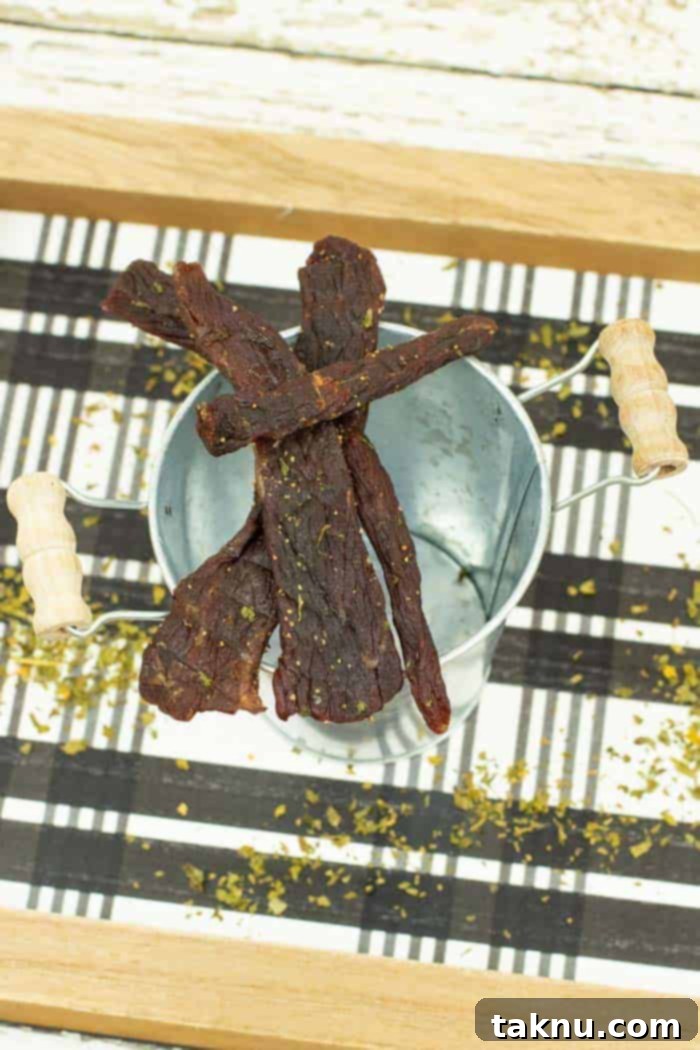
Smokey Joe’s Ultimate Homemade Beef Jerky: A Comprehensive Guide to Crafting Perfect Chewy Snacks
There’s an undeniable satisfaction that comes from creating something delicious with your own hands, especially when it’s a snack as universally loved as beef jerky. When a recipe perfectly marries flavors, transforming lean cuts of beef into a mouth-watering, savory treat, you know you’ve hit culinary gold. Smokey Joe’s beef jerky is precisely one of those exceptional recipes, delivering a consistently fantastic taste that simply must be at the top of your homemade jerky list. This guide will walk you through every essential step, from selecting the perfect cut of meat to the final savory bite, ensuring your jerky-making adventure is a resounding success.
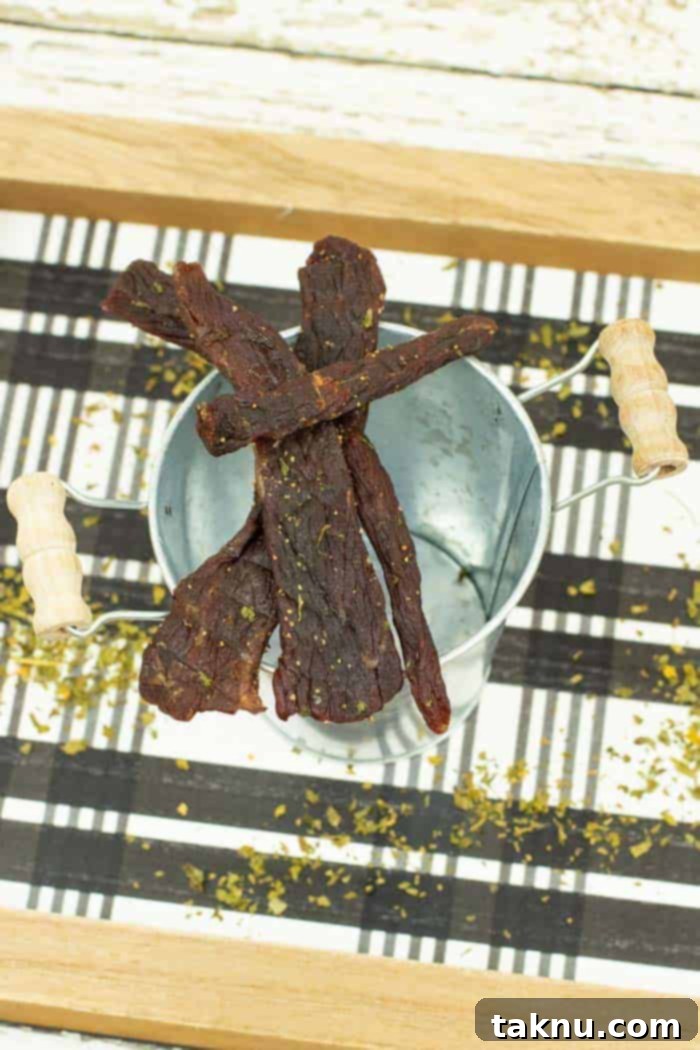
Choosing and Slicing Meat for Perfect Jerky
The foundation of outstanding beef jerky lies in the quality and preparation of your meat. The very first step is selecting a lean cut of beef. Fat not only detracts from the classic jerky texture but also significantly shortens its shelf life, as it spoils much faster than muscle tissue. For this delicious Smokey Joe’s beef jerky recipe, we highly recommend the beef bottom round, known for its excellent flavor and lean profile. While bottom round is fantastic, other popular choices include eye of round, flank steak, or even venison for a wild game twist. To explore a complete list of the best cuts of meat for making beef jerky, click here!
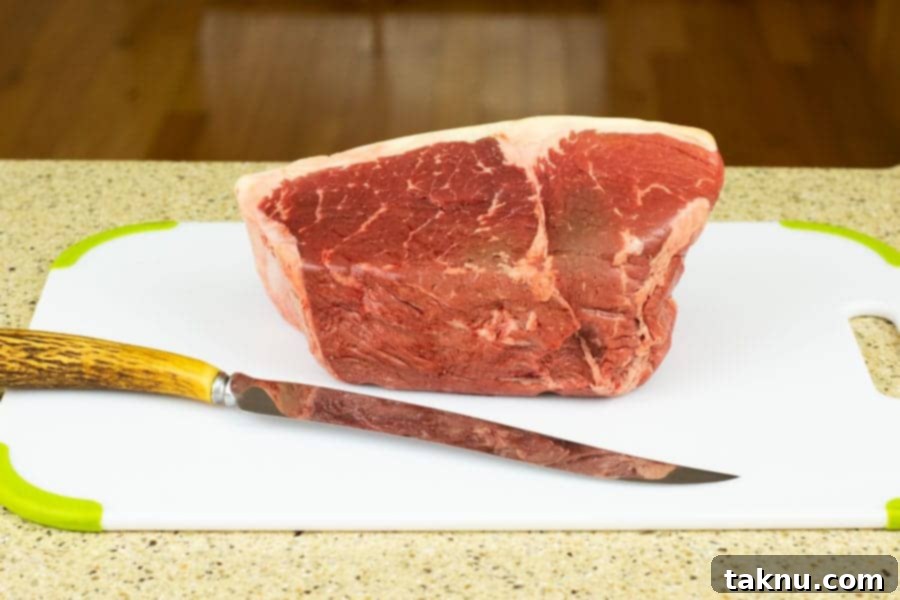
The crucial second step in preparing your meat is meticulously trimming all visible fat. This includes the thicker “fat cap” often found on roasts, as well as any smaller pockets or streaks of fat marbled within the muscle. Removing as much fat as possible is paramount for two reasons: it prevents rancidity, extending the jerky’s shelf stability, and it ensures a consistent, satisfying chew.
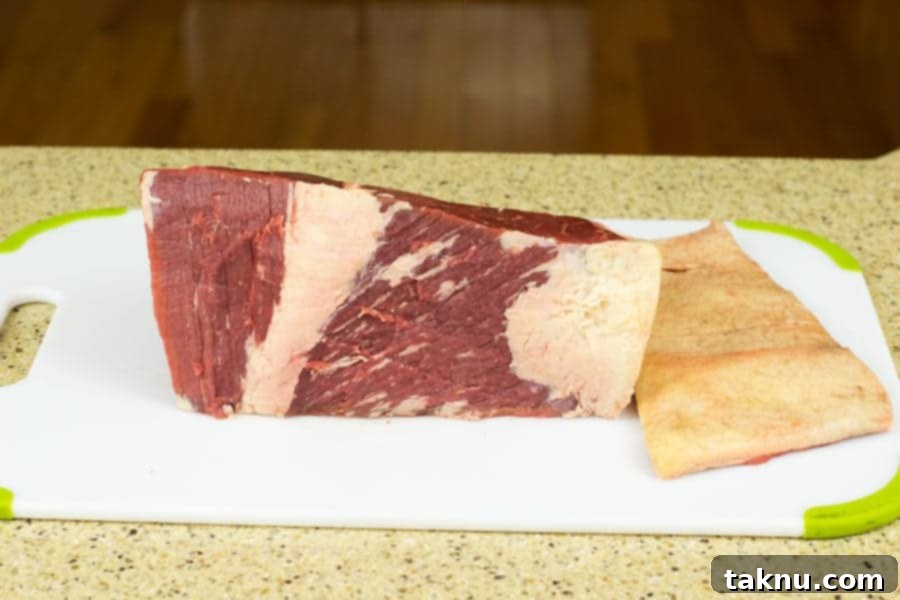
That distinctive white layer of fat is commonly referred to as the fat cap. Make sure to trim this off thoroughly before you even begin the slicing process. As mentioned, fat spoils much faster than lean meat, so the more diligently you remove it now, the longer your homemade jerky will remain fresh and delicious on the shelf.
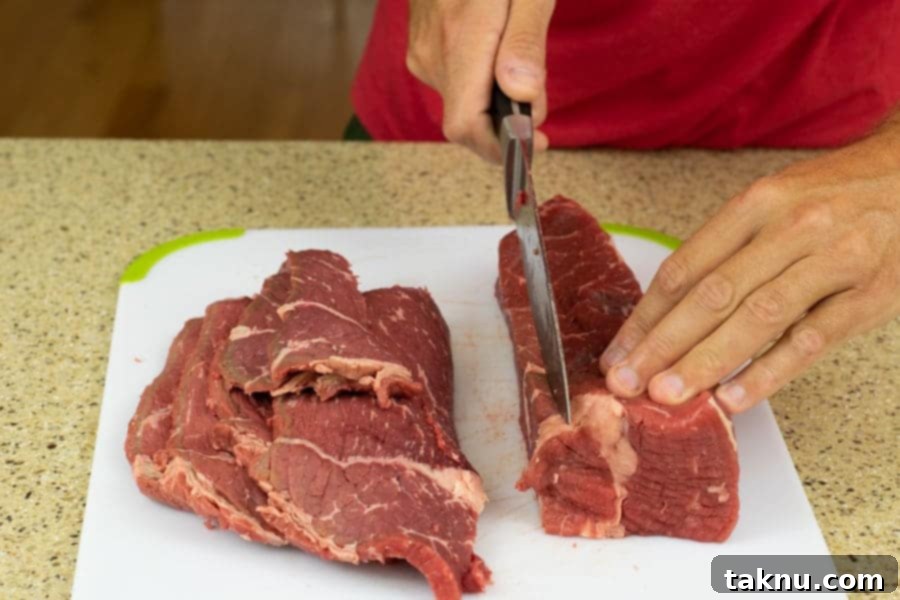
Once trimmed, you’re ready to slice the meat. Aim to slice the meat into uniform ¼-inch thick pieces. Achieving consistent thickness is vital for even drying. A pro tip for easier and more uniform slicing is to wrap your beef roast tightly in plastic wrap and place it in the freezer for about one to two hours. This firms up the meat, making it much simpler to cut clean, even strips. If you prefer not to freeze the meat, ensure your knife is exceptionally sharp – a dull knife makes uniform slicing a challenging and potentially unsafe task.
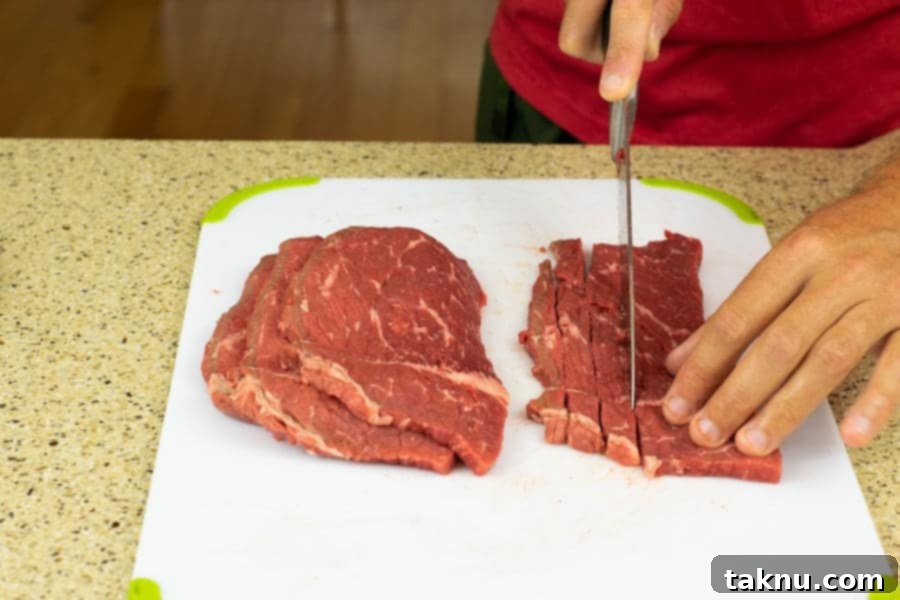
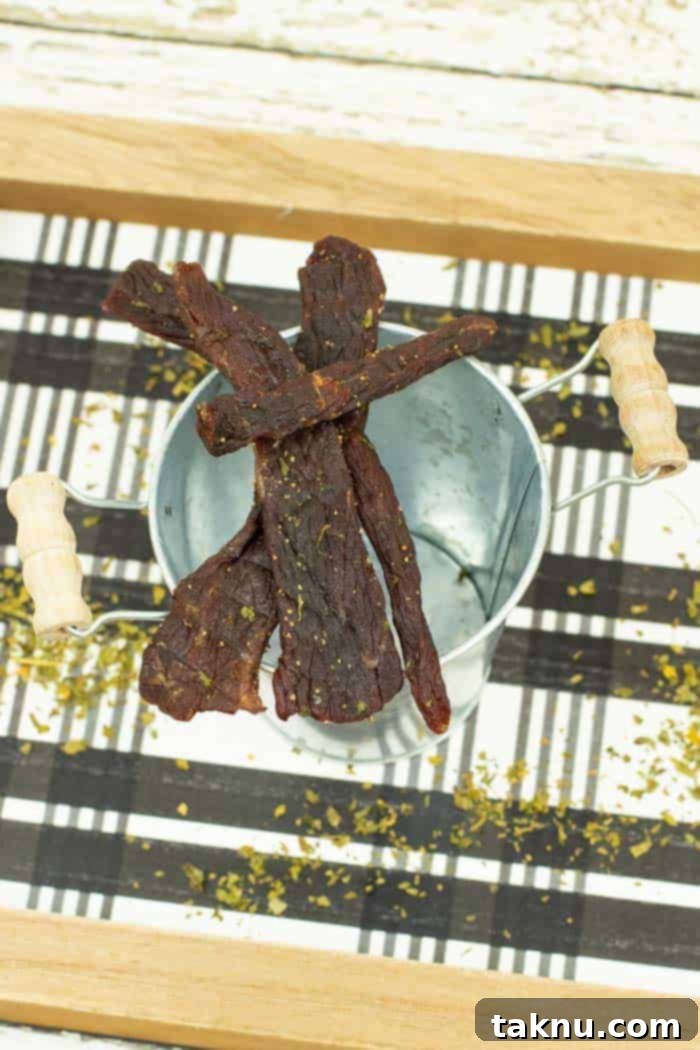
After slicing the beef into ¼-inch slabs, you’ll then cut these into strips according to your preference. For this particular jerky recipe, thinner strips sliced with the grain were used. Slicing with the grain yields a chewier jerky, offering a more traditional texture. Conversely, slicing against the grain will result in a more tender jerky that’s easier to chew. This decision is entirely based on your personal preference for jerky chewiness, so slice it exactly how you like it!
For more in-depth information and visual guidance on slicing meat specifically for jerky, be sure to check out my dedicated slicing jerky page, where everything is explained in meticulous detail.
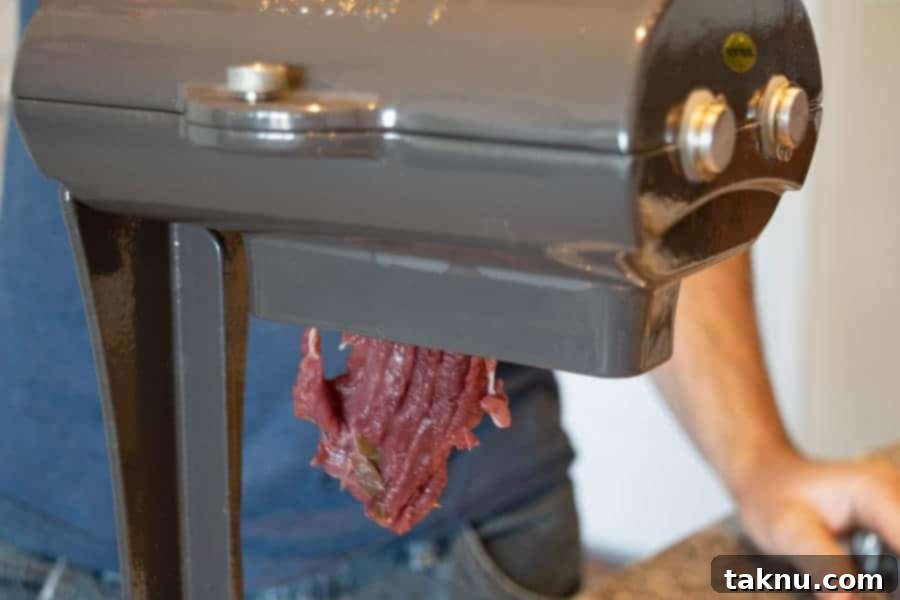
While I didn’t use one for this specific batch, a jerky slicer is an absolutely FANTASTIC piece of equipment. It can significantly simplify the process of achieving perfectly even strips, saving you time and effort.
Crafting the Flavorful Jerky Marinade
The third essential step is preparing a perfectly balanced and incredibly flavorful marinade. Smokey Joe’s Beef Jerky is celebrated for its super quick and easy marinade recipe, which boasts ingredients that blend harmoniously to create a wonderfully smooth and satisfying finished taste. The marinade is where your jerky truly develops its character, infusing the meat with depth and aroma.
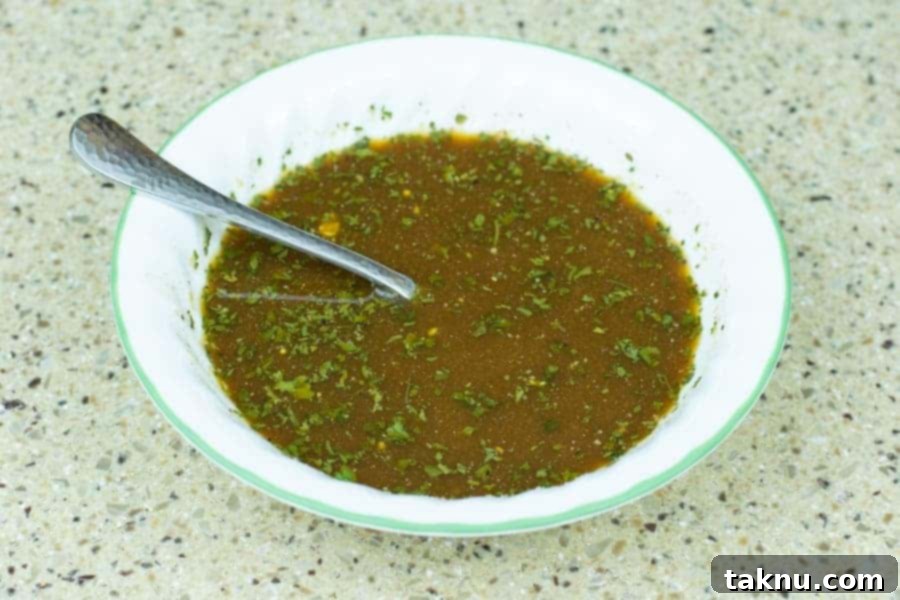
Begin by combining all the marinade ingredients in a large bowl or a sturdy ziplock bag. You’ll notice how the fresh parsley contributes a vibrant color to this particular marinade, hinting at the fresh flavors to come. For an even more intense and aromatic experience, we highly recommend using freshly chopped parsley and minced garlic instead of their dried counterparts. Fresh ingredients always elevate the flavor profile of your jerky.

Before introducing the beef, always make sure to taste the marinade. This crucial step allows you to adjust the seasoning to your liking. Feel free to tweak the amounts of salt, pepper, or other spices until the flavor profile is perfect for your palate! Once you’re satisfied, carefully place your previously sliced beef strips into the marinade. Ensure the bag is mixed thoroughly, or the bowl stirred vigorously, to guarantee that all the beef strips are evenly coated with the marinade. Proper coverage ensures every piece of jerky absorbs maximum flavor.
If you find yourself pressed for time but don’t want to compromise on flavor, a vacuum marinating machine is an invaluable tool. These ingenious devices significantly speed up the marinating process. In approximately half an hour, your jerky will absorb as much flavor as if it had marinated for a full 12 hours. That’s a serious time-saver without sacrificing taste! The Chef Elite is the model I personally own and trust for excellent results.

RELATED PAGE: DOZENS OF GREAT TASTING JERKY RECIPES – CLICK HERE
The Art of Drying Your Homemade Jerky
Once the meat has absorbed all the wonderful flavors of the marinade, it’s time to prepare it for drying. Carefully remove the marinated beef strips from the refrigerator, then strain any excess marinade using a colander. Following this, it’s critical to pat the strips thoroughly dry with paper towels. For this particular batch, the beef was marinated for a generous 23 hours, allowing for deep flavor penetration. Remember, the longer the marinating process, the more intense and developed the flavor of your finished jerky will be!
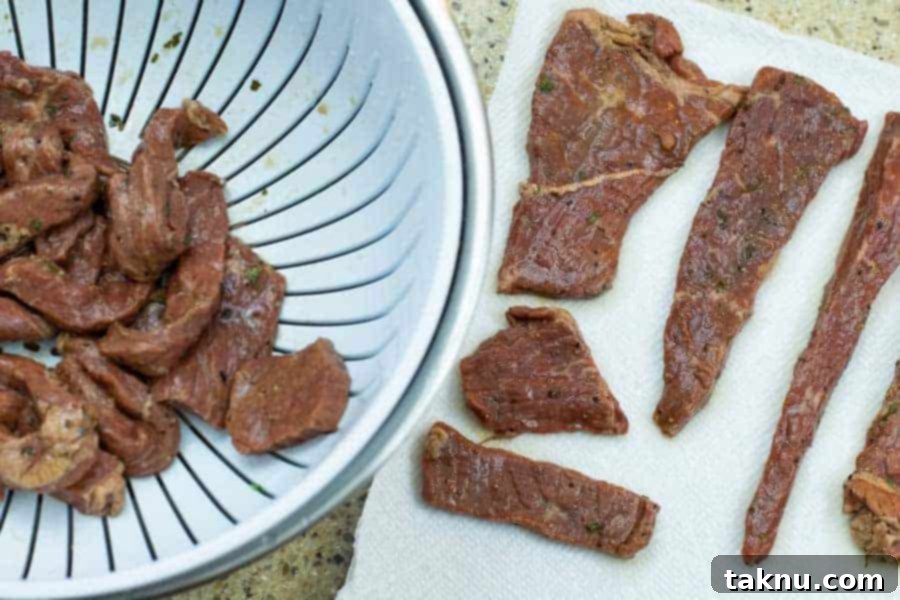
Patting the meat dry serves a dual purpose: it removes any superficial moisture and excess marinade, which significantly speeds up the overall drying process. Furthermore, it prevents the finished jerky from having an undesirable “sticky” texture once it has fully dehydrated. A dry surface allows for more efficient moisture evaporation.
For making this beef jerky recipe, a Nesco Gardenmaster Dehydrator was employed. I am a strong advocate for Nesco dehydrators. They are exceptionally effective, offer great value for their reasonable price, and are renowned for their durability and long lifespan! Whether you use a dehydrator, an oven, or a smoker, the principle remains the same: steady, low heat and good airflow.
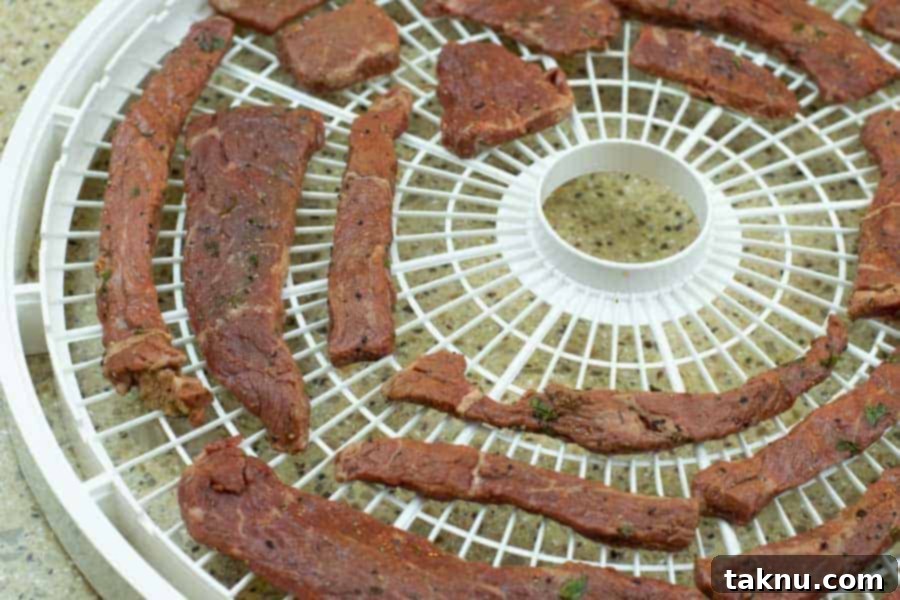
When arranging your jerky strips on the dehydrator trays, oven racks, or smoker grates, ensure there is ample space between each piece. The strips should not touch each other. This crucial spacing allows for consistent airflow around all sides of every jerky strip, promoting even drying and preventing moisture pockets, which could lead to spoilage.
Testing for Perfect Jerky Doneness
Monitoring your jerky’s progress is key to achieving that ideal texture. Begin testing for doneness at approximately the 3-4 hour mark of the drying process, regardless of whether you’re using a dehydrator, oven, or smoker. To test, carefully remove a piece of jerky and allow it to cool down to room temperature for about 5 minutes. This cooling period is vital, as jerky will firm up slightly as it cools. Testing a warm piece can be misleading and may lead you to over-dry the entire batch, resulting in overly brittle jerky.
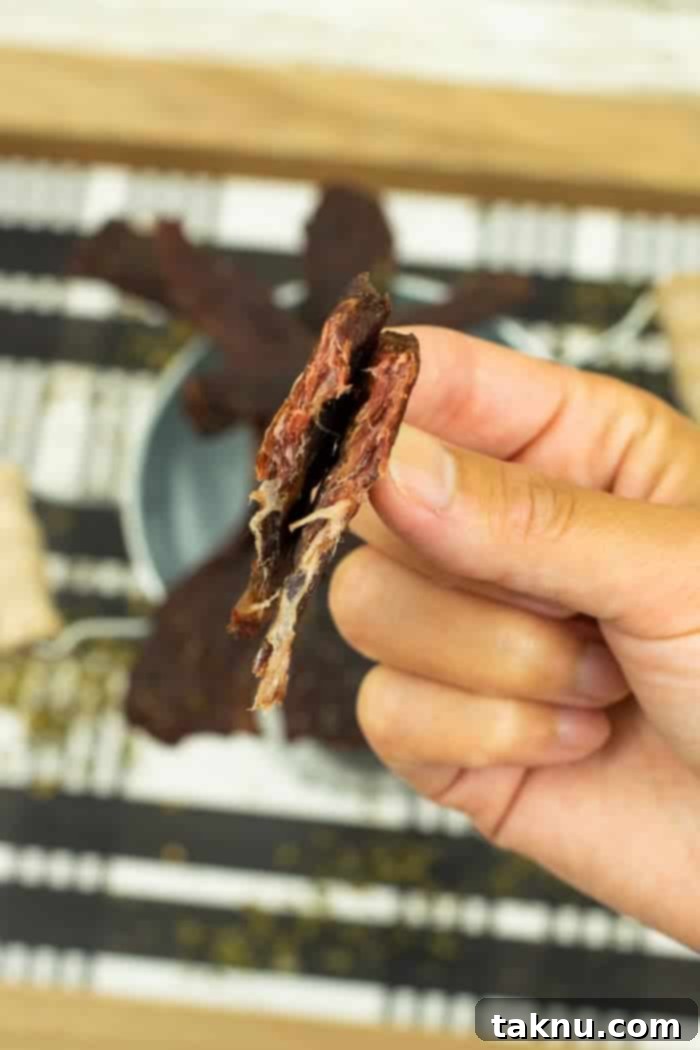
Once cooled, perform the “bend test.” Bend the jerky strip in half; it should bend significantly and show visible cracks or fissures, but it should not cleanly snap or break in half. Another indicator of perfectly finished jerky is the appearance of white fibers within the meat. These fibers become particularly prominent and visible when a piece is ripped or bent, signifying that the internal moisture has been sufficiently removed.
For this specific recipe, the jerky reached its perfect state of doneness in 5 hours. Based on my extensive experience, approximately 90% of the jerky I make finishes within 4-6 hours when utilizing a dehydrator or oven. When using a smoker, the drying time typically extends to 6-9 hours. It’s worth noting that if you pre-heat the meat in the oven before dehydrating, the total drying time can be significantly reduced, sometimes to as little as 2.5 hours.
Optimizing Beef Jerky Storage for Maximum Freshness
Proper storage is essential to ensure your homemade jerky lasts as long as possible while maintaining its delicious flavor and texture. Integrating curing salt into your recipe can significantly enhance its longevity, working in tandem with airtight storage. I’ve compiled a comprehensive guide on storing beef jerky, detailing various steps and techniques you can employ to achieve an extended shelf life for your savory snacks.
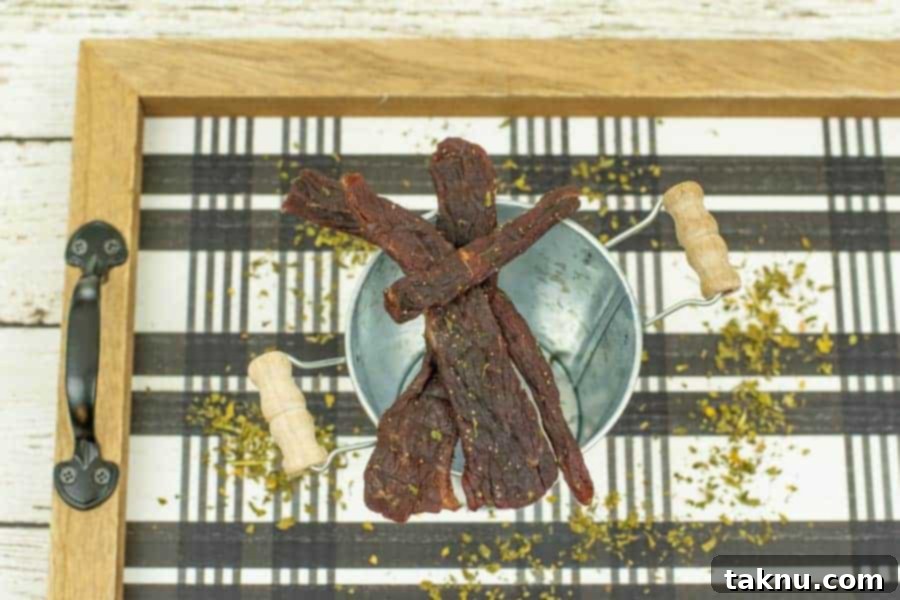
The final result of this Smokey Joe’s Beef Jerky recipe was truly exceptional – it turned out tasting GREAT! The carefully selected flavors melded together beautifully, creating a wonderfully smooth-tasting jerky with a distinctive and inviting smokey profile. The recommendation to use fresh garlic and parsley truly pays off, imparting a vibrant and fresh taste that elevates the jerky to an even higher level of deliciousness. This recipe is a testament to how simple ingredients, when combined with proper technique, can yield extraordinary results.
Pro Tips for the Best Beef Jerky:
- Enhance Flavor: Always opt for fresh garlic and parsley over dried varieties for a more intense, vibrant, and fresh flavor profile.
- Quality Liquid Smoke: When using liquid smoke, choose a brand that doesn’t include filler ingredients. Wright’s Liquid Smoke is consistently a top recommendation for its pure, authentic flavor.
- Accurate Doneness Test: Jerky is finished when it bends and develops cracks but does not break cleanly in half. Crucially, always test for doneness after a piece has cooled to room temperature for at least 5 minutes, as warm jerky feels softer than it actually is.
- Optimal Storage: For extended freshness and to prevent spoilage, store your finished jerky in ziplock bags or, even better, vacuum seal it. For more detailed information and advanced techniques on storage, refer to my comprehensive page on Storing Jerky.

For even more in-depth directions on various methods to dry your beef jerky, including using dehydrators, ovens, and smokers, please visit my dedicated page on Jerky Making Methods.
Smokey Joe’s Beef Jerky
Pin Recipe
Ingredients
Lean Meat
- 1 lb Beef Bottom Round or Venison
Marinade
- ¾ cup beef broth
- ¼ cup worcestershire sauce
- 1 ½ teaspoon kosher salt
- 1 teaspoon black pepper (fresh cracked)
- 1 tablespoon brown mustard
- 2 garlic cloves (or ½ teaspoon garlic powder)
- ¼ teaspoon parsley flakes (freshly chopped)
- ½ teaspoon chili powder
- 2 teaspoon liquid smoke (hickory)
Optional
- ¼ teaspoon Curing Salt (Prague Powder #1)
Instructions
- Trim all visible fat from the beef and place in freezer for an hour or two to partially freeze.
- While the meat is in the freezer, combine marinade ingredients in a bowl or ziplock bag and mix well.
- Remove the meat from the freezer and slice ¼” strips against the grain for an easy chew. Cut with the grain for a more chewy jerky. Visit my page on slicing jerky for more information. You can also use a Weston Jerky Slicer when making this recipe.
- Add sliced beef to the mixture in a ziplock bag or bowl and marinate for 6-24 hours in the refrigerator.
- After the meat has finished marinating, remove from refrigerator and strain excess marinade and pat dry the beef strips with paper towels
- Dry with your favorite jerky making method. I used my Nesco Dehydrator and dried for 5 hours at 165F.
- The jerky is finished when it bends and cracks, but does not break in half.
Pro Tips
Old Pro Tips:
- Using fresh garlic and parsley give the recipe more of an intense flavor
- Use liquid smoke that does not include filler ingredients, such as Wright’s Liquid Smoke is the best.
- When finished, jerky will bend and crack but not break in half. Test for doneness after a piece has cooled for 5 minutes, not while warm.
- Store in ziplock bags or vacuum seal for longer storage. Check out my page on Storing Jerky for more information.