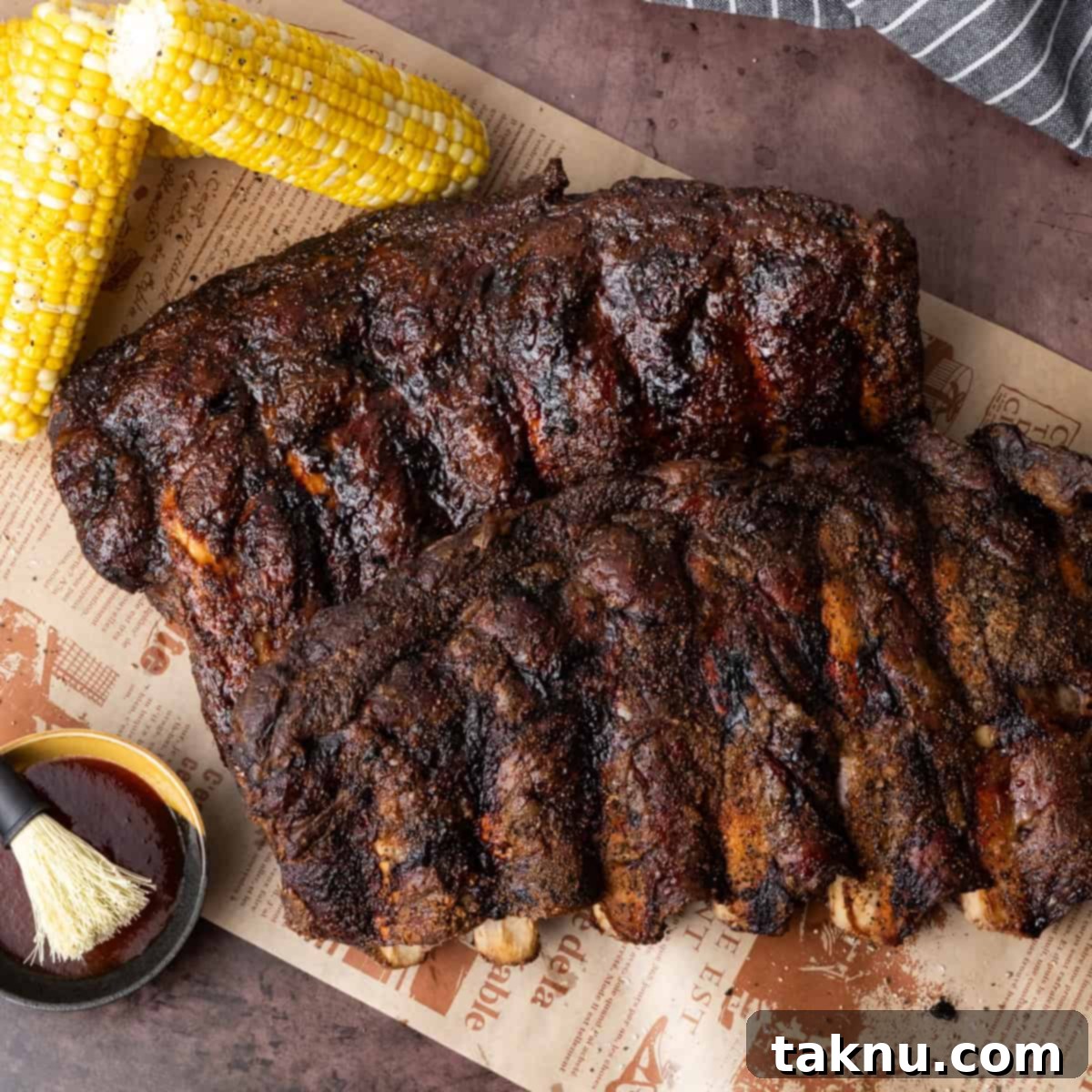
Ultimate Traeger Smoked Beef Ribs: Your Guide to Perfectly Tender, Flavorful Ribs
There’s nothing quite like the irresistible aroma and melt-in-your-mouth tenderness of perfectly smoked beef ribs. This recipe delivers just that: rich, succulent Traeger beef ribs, infused with deep smoky flavor and finished with a luscious mopping of delicious BBQ sauce. Forget tough, dry ribs – with this method, the juicy meat effortlessly glides off the bone, promising the best Traeger beef ribs you will ever experience. Ideal for a backyard cookout, a game day feast, or simply a relaxed weekend, these ribs are a true showstopper that will impress every time.
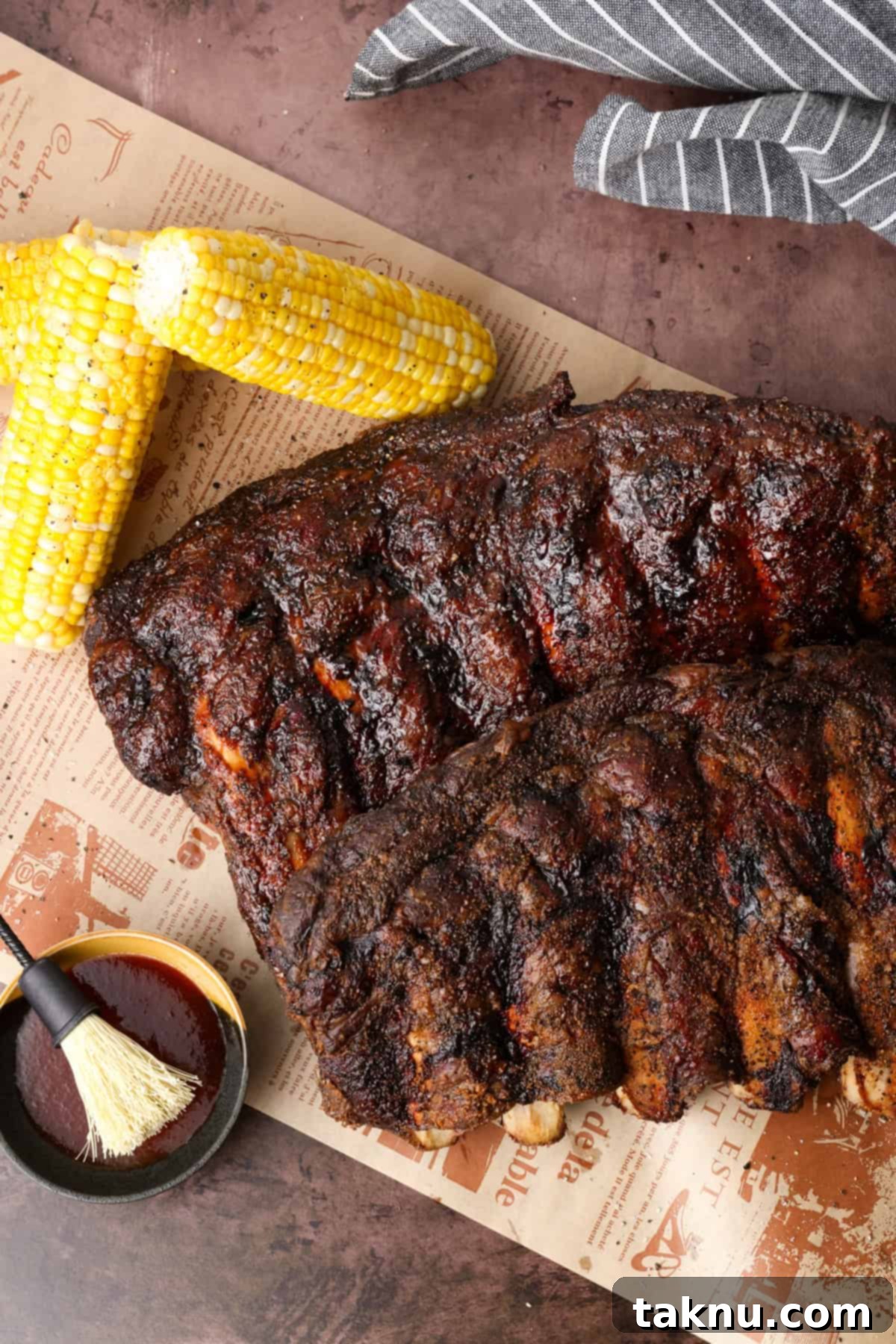
For me, there’s a unique satisfaction in smoking ribs all day long, whether I’m casually watching a golf tournament or engrossed in a football game. They are a true ‘low and slow’ marvel, requiring minimal fuss once on the smoker, yet rewarding you with an incredible depth of flavor that only a long smoke can achieve. The beauty of beef back ribs, in particular, lies in their ability to absorb that rich smoky essence, creating a culinary masterpiece that feels both gourmet and incredibly comforting. While often associated with pork, beef ribs offer a distinctively robust, beefy taste that stands on its own.
These smoked beef back ribs are not only incredibly flavorful but also generally more economical than premium cuts like Dino Ribs. They make an excellent centerpiece for any meal and pair wonderfully with classic BBQ sides such as creamy smoked mac n cheese and sweet, buttery smoked corn on the cob. Get ready to elevate your BBQ game and create unforgettable memories around the smoker!
[feast_advanced_jump_to]
Essential Ingredients for Traeger Beef Ribs
Crafting these phenomenal Traeger beef ribs doesn’t require an arsenal of exotic ingredients or hours spent making homemade BBQ sauce from scratch. We’re keeping things straightforward and delicious! This recipe leverages the fantastic flavor of Traeger Sweet & Heat BBQ Sauce, simplifying your prep and ensuring a consistent, crowd-pleasing taste.
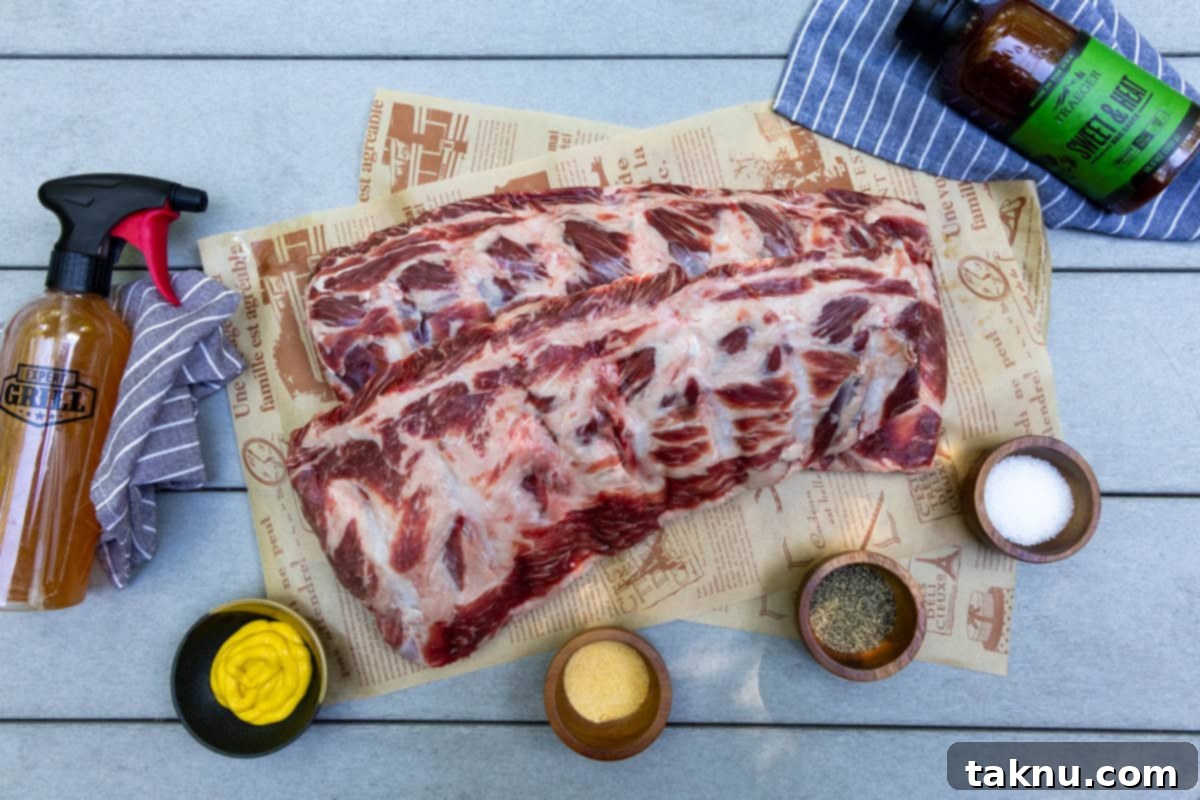
- Beef Back Ribs: The star of our show! Look for racks with a good amount of meat on them. These are typically less meaty than short ribs but offer exceptional flavor when smoked properly.
- Yellow Mustard: Don’t worry, you won’t taste it in the final product! Yellow mustard acts as an excellent binder, helping your dry rub adhere evenly to the ribs and creating a fantastic bark.
- Salt, Pepper, Garlic (SPG) Rub: This classic combination is the foundation of many great BBQ recipes. Use a coarse grind for pepper and salt for better texture and flavor during a long smoke. You can use a pre-made SPG rub or mix your own.
- Apple Cider Vinegar (for Spritzing): A crucial element for maintaining moisture throughout the long smoking process. Spritzing with apple cider vinegar also helps tenderize the meat and contributes to that desirable crispy bark.
- Traeger BBQ Sauce (Sweet & Heat): This sauce adds a wonderful balance of sweetness and a hint of spice, complementing the rich beef flavor perfectly. Feel free to use your favorite BBQ sauce if you have one you love, but the Traeger Sweet & Heat is highly recommended for its excellent profile.
Refer to the complete recipe card at the bottom of this page for precise quantities and additional details.
Step-by-Step Instructions for Smoking Traeger Beef Ribs
Achieving perfectly tender and flavorful smoked beef ribs on your Traeger is a rewarding process. Follow these detailed steps to ensure a fantastic outcome:
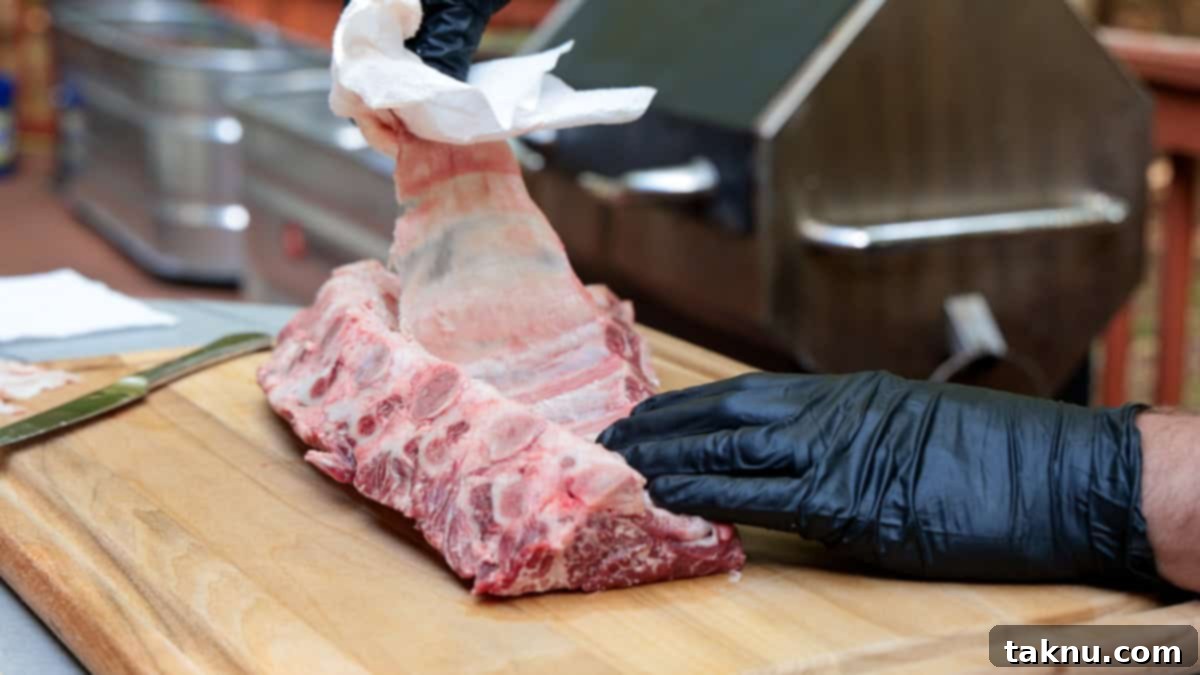
- Step 1: Prepare the Ribs by Removing the Membrane. Before applying any rub, it’s essential to remove the tough membrane from the bone-side of the ribs. Use a butter knife or the handle of a spoon to gently lift an edge of the membrane. Once you have a grip, use a paper towel for better traction and firmly pull the membrane completely off the rack. This step is crucial for tender ribs and allows the smoke and rub to penetrate the meat more effectively. (More detailed guidance below)
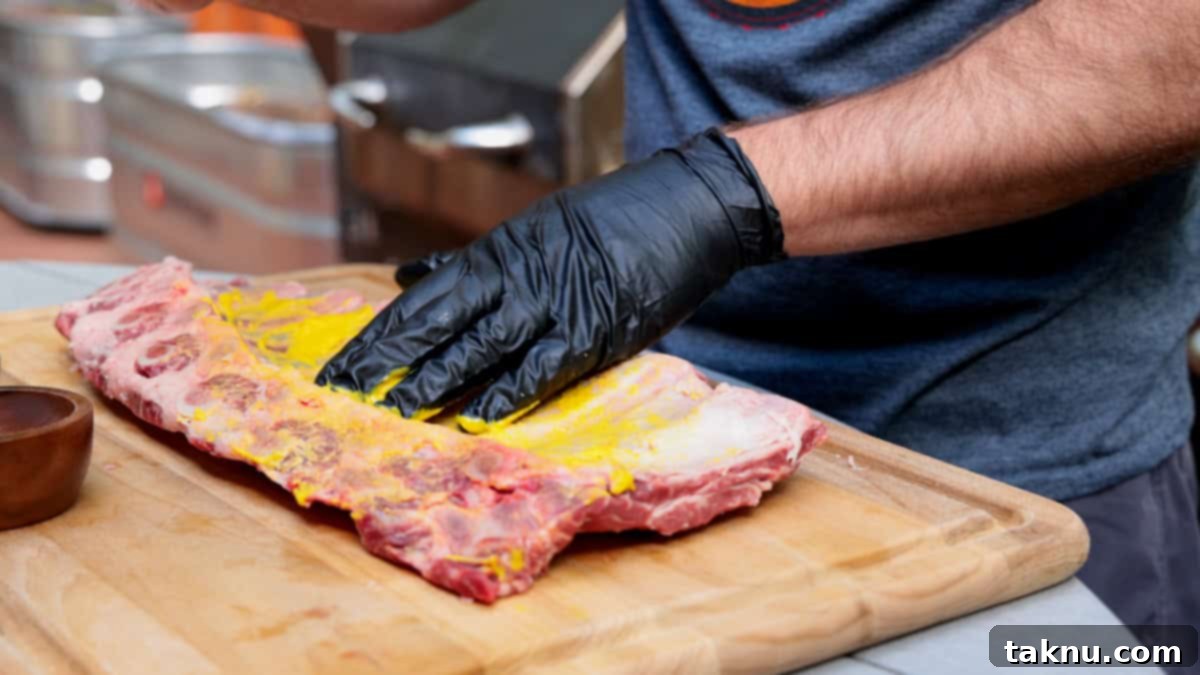
- Step 2: Apply the Mustard Binder. Once the membrane is removed, lightly slather both sides of the beef ribs with a thin, even layer of yellow mustard. This isn’t for flavor; it acts as a perfect binder, helping the dry rub adhere beautifully to the meat and form a fantastic bark during the smoking process.
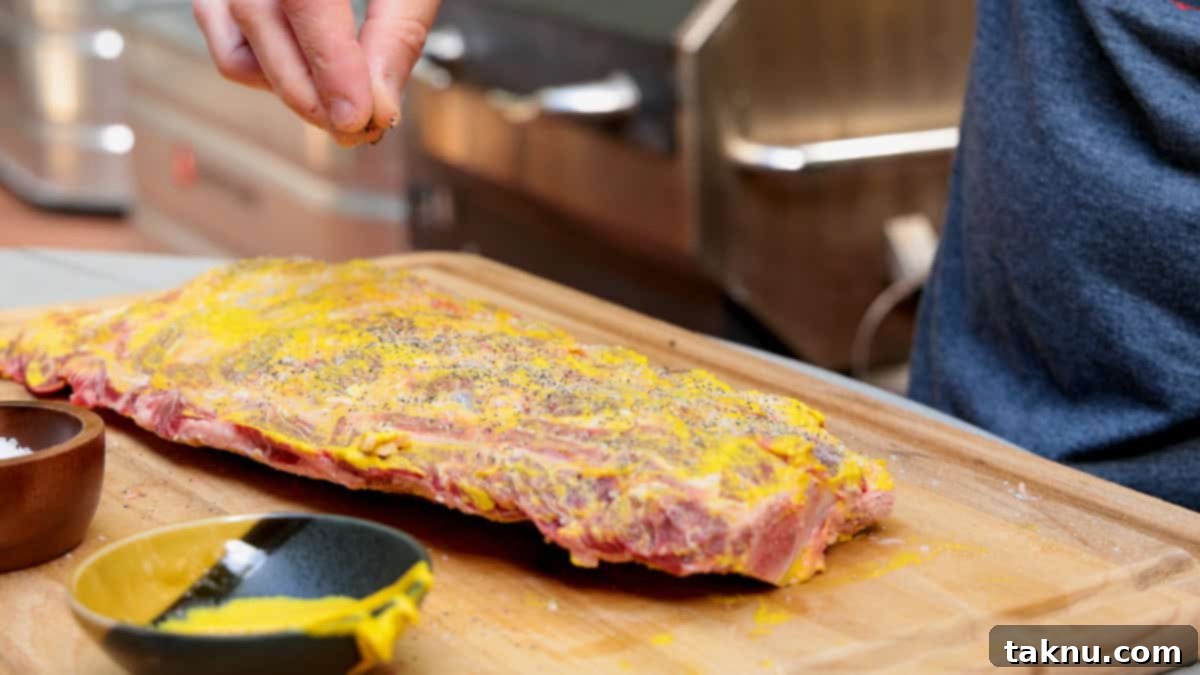
- Step 3: Season Generously with SPG. After applying the mustard, generously sprinkle your Salt, Pepper, Garlic (SPG) rub over all surfaces of the ribs. Ensure an even coating, pressing the rub gently into the meat. The mustard will help the rub stick and create a rich, flavorful crust.
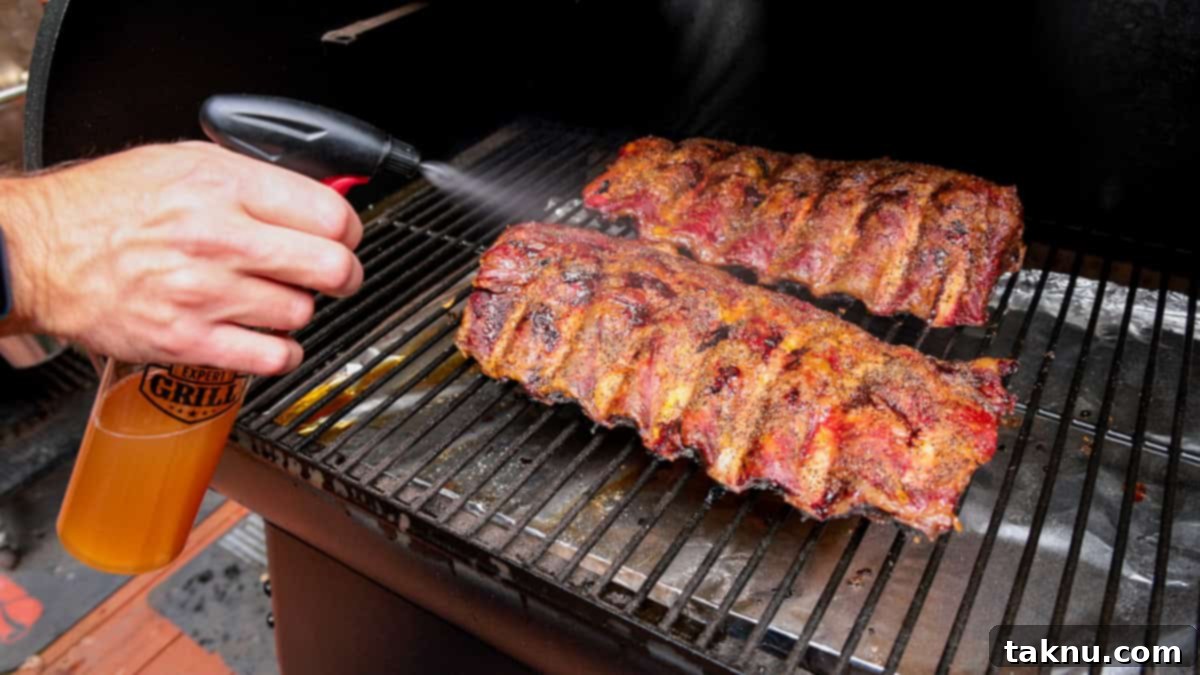
- Step 4: Begin the Smoking Process with Spritzing. Preheat your Traeger smoker to a consistent 220°F (105°C). Once it reaches temperature, place the seasoned beef ribs directly on the grill grates, bone-side down. This position helps protect the meat from drying out. Throughout the smoking process, spritz the ribs every 45 minutes with apple cider vinegar. This step is vital for keeping the ribs moist and contributing to the formation of that beautiful, flavorful bark.
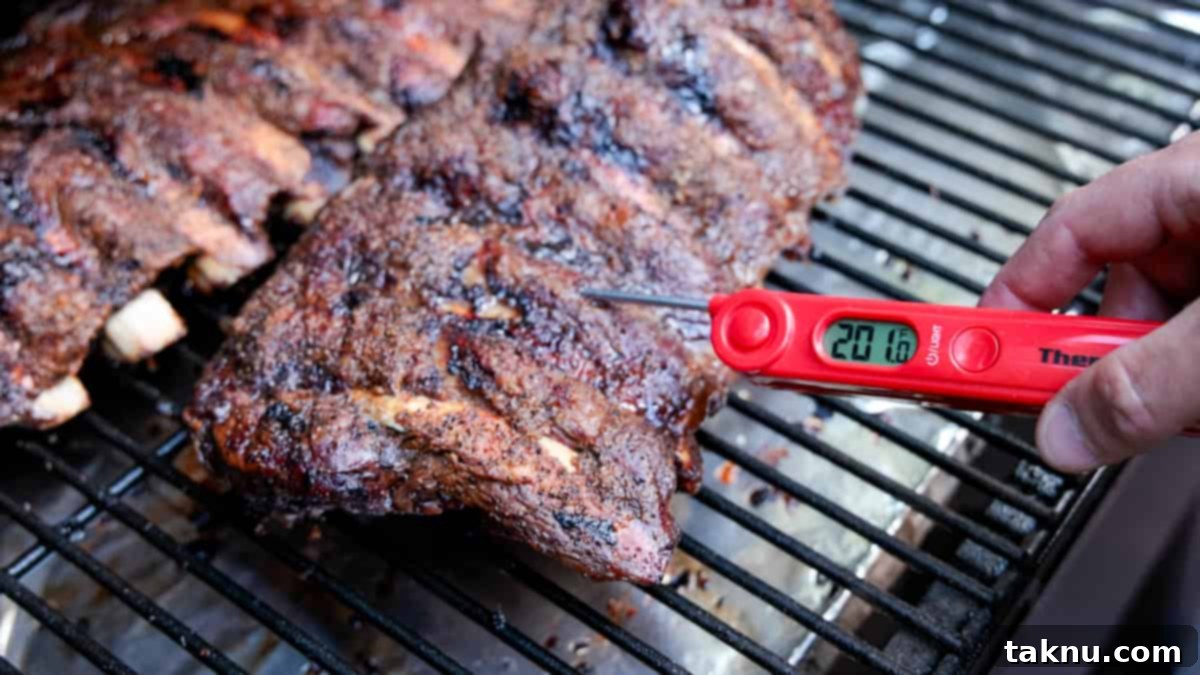
- Step 5: Smoke Until Optimal Internal Temperature. Continue smoking the ribs at 220°F (105°C) for approximately 7 hours. The exact cooking time can vary, so the most reliable indicator of doneness is the internal temperature. Use a reliable meat thermometer to check the thickest part of the meat, avoiding the bone. The ribs are ready when they reach an internal temperature of 200°F (93°C). At this point, they should also be “probe tender,” meaning a skewer or thermometer slides into the meat with very little resistance.
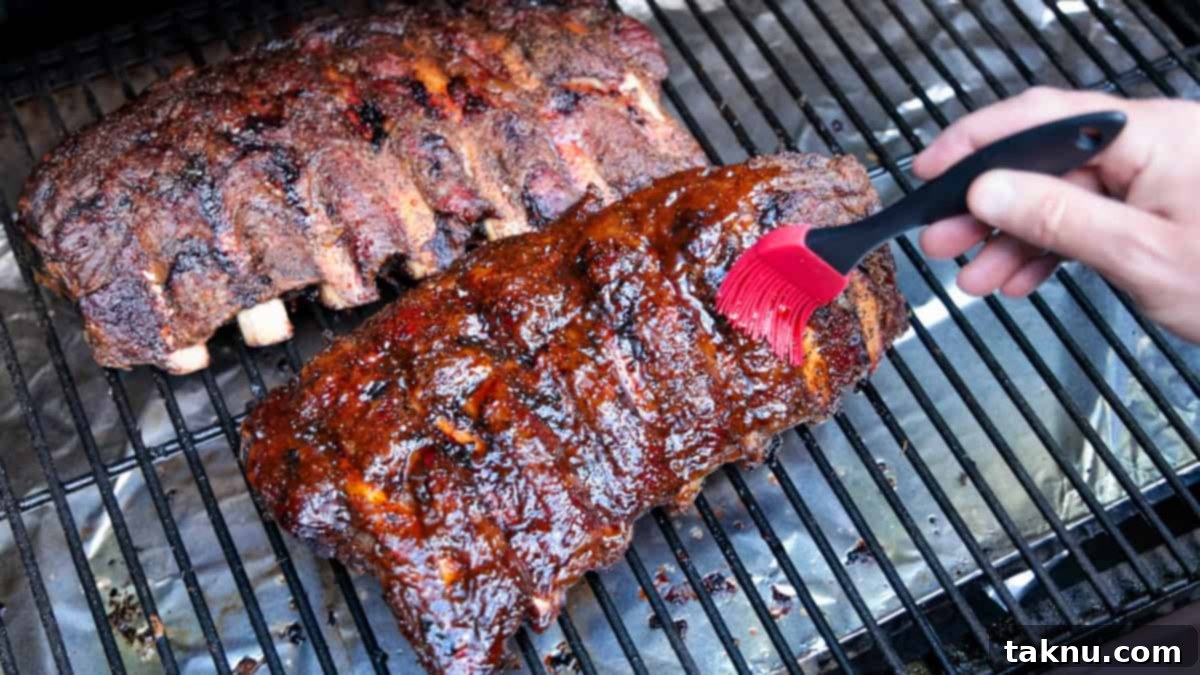
- Step 6: Apply BBQ Sauce and Set. Once your ribs have reached the desired internal temperature and tenderness, it’s time for the final touch. Generously brush your favorite Traeger BBQ sauce (or your preferred brand) over both sides of the ribs. Increase the smoker temperature slightly if desired, or simply continue to smoke for an additional 20 minutes to allow the sauce to caramelize and set, forming a beautiful, sticky glaze.
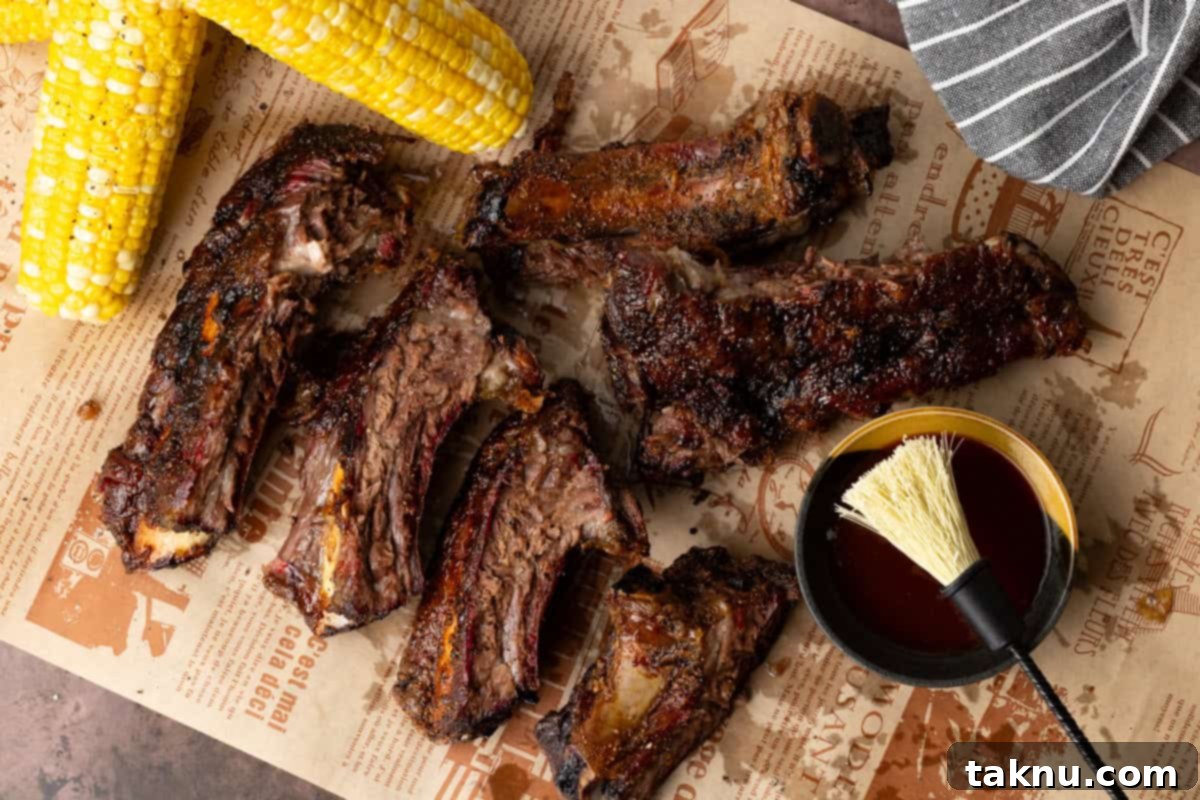
- Step 7: Rest, Slice, and Serve. After the sauce has set, carefully remove the ribs from the smoker. Tent them loosely with foil and allow them to rest for at least 15-20 minutes. This resting period is crucial as it allows the juices to redistribute throughout the meat, ensuring maximum tenderness and flavor. Finally, using a sharp knife, slice the ribs into individual portions by cutting between each bone. Serve immediately with your chosen side dishes and prepare for a truly delicious experience!
Hint: Finding high-quality beef back ribs can sometimes be a challenge. If your local grocery store doesn’t carry them, don’t despair! You can often ask your butcher to special order them for you, or consider using beef short ribs as an alternative (note: cooking times and tenderness might vary slightly). Another excellent option is to order from reputable online meat markets like Meat n’ Bone. This is where I sourced the delicious beef back ribs featured in this very recipe, ensuring top-notch quality for a perfect smoke.
The Secret to Tender Ribs: Removing the Membrane
While some might consider it an optional step, taking the time to remove the membrane from your ribs is a game-changer that will significantly enhance the final product. It’s not strictly a “must” in terms of food safety, but it will undeniably produce superior ribs – so, let’s get it done!
This critical preparation applies to almost all ribs you’ll ever cook, regardless of whether they are beef or pork baby back ribs. Ignoring this step can lead to a less enjoyable eating experience for two main reasons:
- Enhanced Flavor Penetration: Removing the membrane allows your chosen spices and rubs to directly penetrate the meat, infusing it with maximum flavor and helping to form that coveted crispy bark.
- Improved Texture: The membrane, also known as the silverskin, is a tough, chewy layer of connective tissue. If left on, it can make the ribs feel stringy and unpleasant to eat, potentially getting stuck in your teeth. Removing it ensures a consistently tender, fall-off-the-bone (or at least pull-off-the-bone) texture.
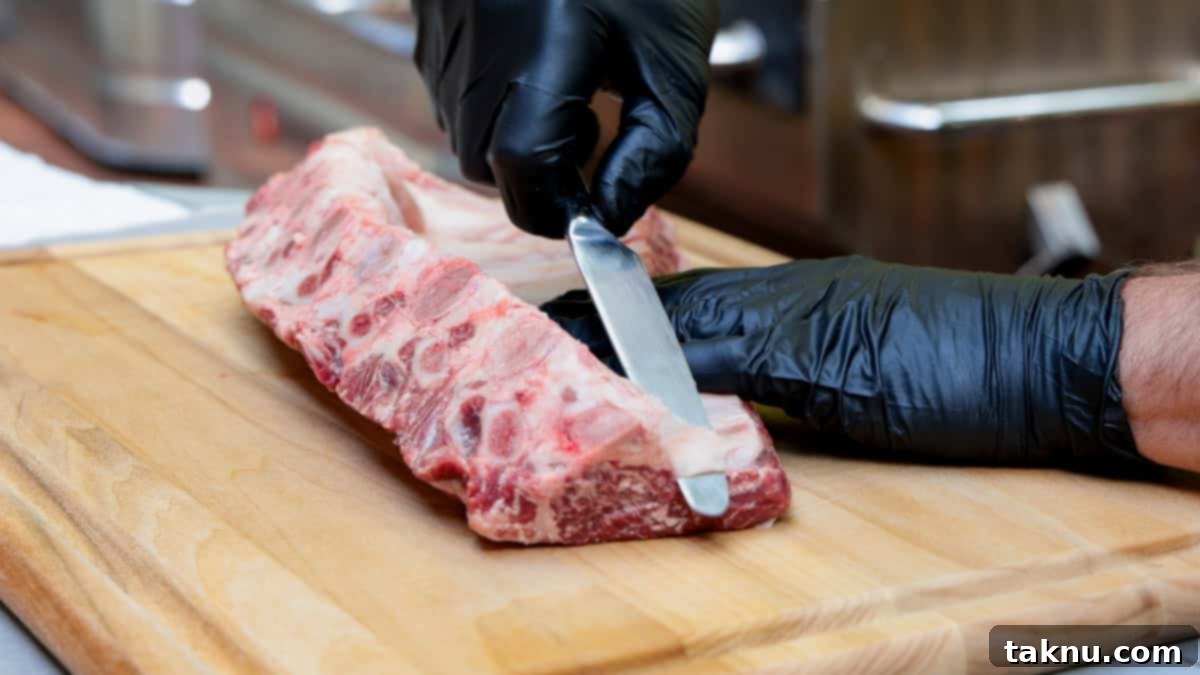
How to Easily Remove the Rib Membrane:
- Gather Your Tools: You’ll need a dull utensil like a butter knife, the handle of a spoon, or even a sturdy dinner fork, along with a couple of paper towels.
- Locate and Lift: Place the ribs on your cutting board with the meatier side facing down, so the bones curve upwards towards you. Starting at one end of the rack, carefully slide your dull knife or utensil underneath the thin membrane that covers the entire bone side. Wiggle it gently until you can lift up a small section of the membrane, creating a flap.
- Grip and Pull: This membrane can be quite slippery. For a secure grip, use a paper towel to firmly grab the lifted flap of the membrane. The paper towel provides the necessary traction.
- Peel Away: With a strong, steady pull, tear the membrane in the direction opposite from where you started. It should peel off in one (or a few large) piece(s). If it tears prematurely, simply re-grip and continue pulling. Discard the membrane in the garbage; it serves no culinary purpose.
Once the membrane is gone, your ribs are ready to be seasoned and smoked to perfection!
Flavor Variations and Serving Suggestions
While the classic BBQ sauce finish is a favorite, these smoked beef ribs are incredibly versatile and can be customized to suit your taste preferences. Whether you prefer them saucy, savory, or ‘naked’, there’s a delicious way to enjoy them. Experiment and find your perfect rendition!
- Dry Rub Delights: For those who love a robust, savory crust, consider using a specialized dry rub instead of or in addition to the simple SPG. Apply your favorite rub generously at the beginning of the cook. Brands like Meat Church offer a fantastic range of dry rubs specifically formulated for beef, providing complex layers of flavor that create an amazing bark.
- Explore BBQ Sauces: The Traeger Sweet & Heat BBQ sauce used in this recipe is fantastic, but the world of BBQ sauces is vast and delicious! Experiment with different styles: a tangy Carolina vinegar-based sauce, a spicy Texas-style sauce, or a rich, smoky Kansas City sauce. Choose your favorite, as that will always taste best to you and your guests.
- “Naked” Ribs: For purists who want the unadulterated flavor of beef and smoke, try serving the ribs “naked.” This means you still use the mustard binder and SPG rub at the start, but simply omit the final barbecue sauce application. The result is a savory, beef-forward experience with a pronounced smoky bark.
- Pork Rib Possibilities: Don’t limit this incredible smoking method to just beef! The same techniques can be applied to pork ribs, which are generally more inexpensive and equally delicious. If you’re looking for an easy and highly rated pork rib recipe, be sure to try my super simple Smoked 3-2-1 Pork Ribs recipe on my website. It’s a fantastic entry point into the world of smoked pork ribs!
Choosing Your Smoker: The Traeger Advantage
For making these tender beef ribs, I rely on my trusty Traeger 780 Grill. The beauty of a pellet smoker like the Traeger is its incredible ease of use and consistent temperature control. You simply set the desired temperature, and the grill does the rest, feeding pellets automatically to maintain a steady smoke and heat. This means you don’t have to constantly babysit a fire all day long, allowing you to relax and enjoy your day while your ribs slowly transform into perfection.
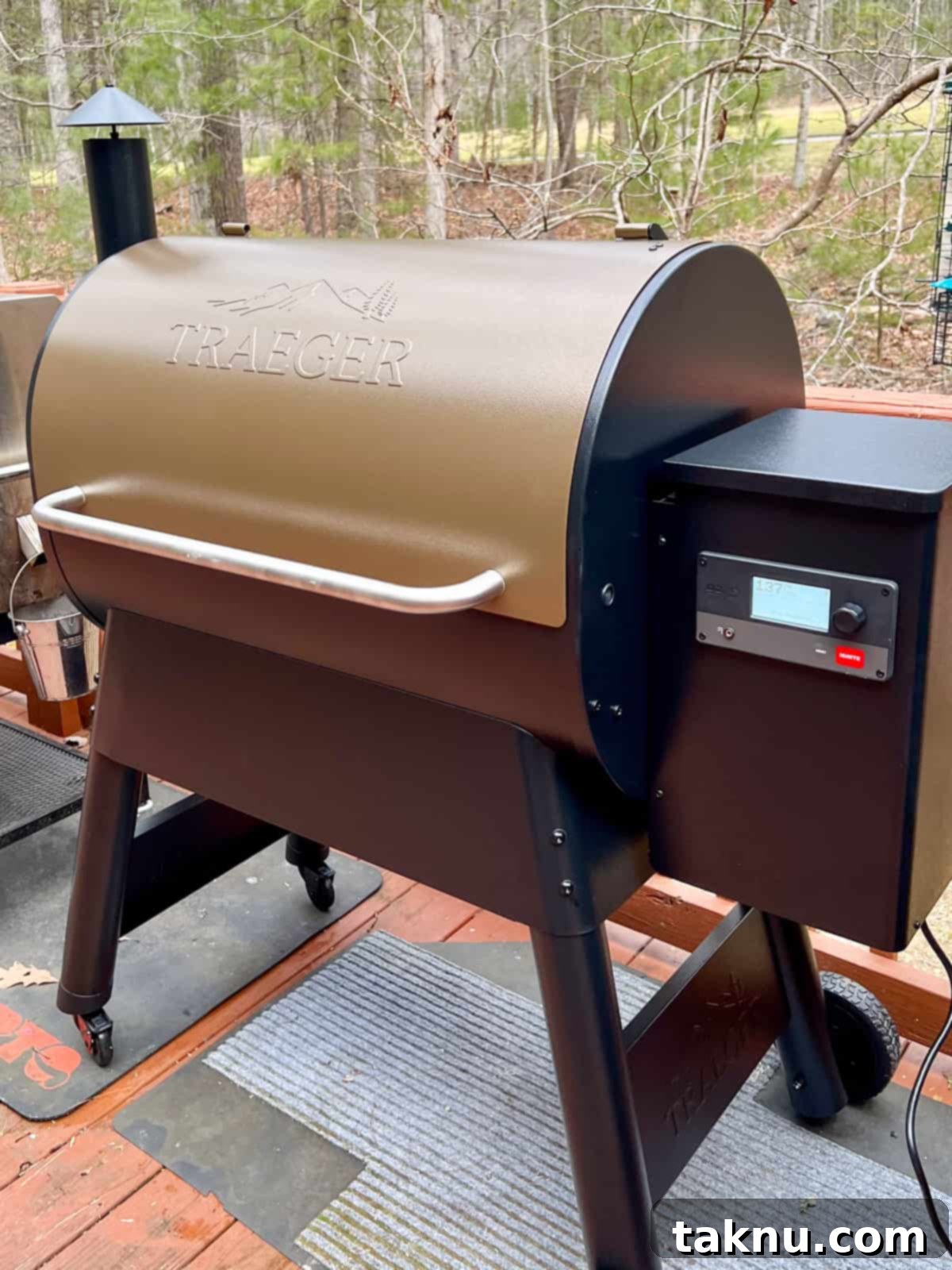
While pellet grills offer unparalleled convenience, you can absolutely achieve fantastic results using a traditional offset smoker or even a charcoal grill with a smoke box. If you’re using a different type of smoker, just be sure to monitor your temperatures carefully to maintain a consistent low heat. For beef ribs, my absolute favorite wood choice for smoking is hickory. Hickory wood imparts a strong, savory smoke flavor that complements the rich taste of beef exceptionally well. Other great options include oak or pecan for a slightly milder but still robust smoke profile. Avoid lighter woods like fruitwoods if you want that classic, bold beef BBQ flavor.
Traeger Beef Ribs: Step-by-Step Video Guide
Sometimes seeing is believing, and watching the process unfold can make all the difference! To help you visualize each step and ensure your Traeger beef ribs turn out perfectly, we’ve created a comprehensive video guide. This step-by-step video walks you through everything from membrane removal and seasoning to the smoking process and final saucing.
Watch closely as we demonstrate the techniques for achieving those tender, rich-flavored smoked Traeger beef ribs with that irresistible BBQ sauce glaze. It’s the perfect companion to this written recipe, guaranteeing a truly delicious dinner!
Storage and Reheating Tips for Smoked Ribs
If you’re lucky enough to have any leftover smoked beef ribs (which is rare, as they’re usually devoured quickly!), proper storage and reheating are key to maintaining their delicious flavor and texture.
Storing Leftovers:
Allow the ribs to cool completely to room temperature before storing. Place any leftover ribs in an airtight container or wrap them tightly in aluminum foil. Store them in the refrigerator, where they will remain fresh and delicious for 2-3 days after cooking. For longer storage, you can freeze the ribs for up to 2-3 months. Wrap them individually in plastic wrap, then again in foil, and place them in a freezer-safe bag or container.
Reheating for Best Results:
The best way to reheat smoked ribs is in an oven or toaster oven, as this method helps retain moisture and texture. Avoid the microwave, as it can often lead to dry, chewy meat!
- Oven Method: Preheat your oven to 300-350°F (150-175°C). Place the ribs on a baking tray lined with aluminum foil, adding a tablespoon or two of water or apple cider vinegar to the bottom of the foil packet to create some steam. Wrap the ribs tightly in the foil.
- Toaster Oven Method: For individual ribs, a toaster oven works perfectly. Set it to 350°F (175°C) and place the ribs on a tray lined with foil, again, adding a splash of liquid if desired.
Heat until the rib meat is thoroughly warm and hot all the way through, typically 10-20 minutes depending on the size and quantity of ribs. The goal is to gently warm them without overcooking, preserving that tender, smoky goodness.
Top Tip for Unforgettable Ribs
For truly next-level Traeger beef ribs that are tender, flavorful, and boast a beautiful bark, there are two non-negotiable steps: meticulously removing the membrane before cooking and regularly spritzing with apple cider vinegar while they smoke. Do NOT skip these crucial steps when preparing your beef ribs! The membrane removal ensures a pleasant texture and maximum flavor absorption, while the spritzing keeps the meat moist and aids in developing that desirable crispy crust. These two techniques make all the difference between good ribs and truly unforgettable ones.
Frequently Asked Questions About Smoked Beef Ribs
For this particular recipe, my favorite type of ribs are beef back ribs. They offer a great balance of meat and bone, and their fat content renders beautifully over a long smoke. You can often find them in your local grocery store’s meat department, or source them from a specialty butcher or an online meat market. Beef short ribs are also a fantastic choice, though they are meatier and typically require a slightly longer cook time to reach optimal tenderness.
The key to achieving truly tender ribs is the “low and slow” cooking method. Smoking at a low temperature (around 220°F / 105°C) for an extended period, typically 5-7 hours, allows the tough connective tissues in the meat to slowly break down into gelatin. This process results in incredibly tender, juicy meat that practically falls off the bone. Consistent temperature monitoring and regular spritzing also contribute significantly to tenderness and moisture.
The primary reason beef ribs are less popular than pork ribs often comes down to cost. Beef ribs tend to be significantly more expensive, typically costing 2-3 times the price of their pork counterparts. Additionally, pork ribs have historically been more widely available and featured in traditional BBQ regions. However, in terms of flavor, many argue that beef ribs offer a richer, more profound beefy taste that sets them apart from pork, making the investment well worth it for a special occasion or a true BBQ enthusiast.
While a meat thermometer is always the most accurate method, you can also check for “probe tender” doneness. Insert a skewer, toothpick, or even a butter knife into the thickest part of the meat between the bones. If it slides in with very little resistance, much like pushing it through soft butter, your ribs are likely ready. Another visual cue is when the meat starts to pull back from the ends of the bones, exposing about a quarter to half-inch of bone.
Absolutely! If you’re using a traditional charcoal or gas smoker, wood chips or chunks are essential for imparting that delicious smoke flavor. For beef ribs, I highly recommend using hickory, oak, or pecan wood for a robust, complementary smoke. Soak wood chips for about 30 minutes before adding them to your charcoal or smoker box to prolong their smoke output. Chunks can be added directly to the coals without soaking.
Expand Your BBQ Repertoire: Try These Next!
Loved these Traeger smoked beef ribs? If you’re looking to explore more delicious smoked and grilled recipes to broaden your culinary horizons, here are some fantastic suggestions:
- Smoked Shrimp: A Quick & Flavorful Appetizer
- Grilled Sliced Potatoes: The Ultimate Side
- Grilled Filet Mignon – The Perfect Steak
- Grilled Sausage and Peppers: A Classic Combo
Perfect Pairings: What to Serve with Smoked Traeger Beef Ribs
A rack of perfectly smoked Traeger beef ribs deserves equally delicious accompaniments. Here are some of my all-time favorite side dishes that complement the rich, smoky flavor of the ribs and round out any BBQ feast:
- Buttery Smoked Corn on the Cob: Sweet & Smoky
The sweetness of corn perfectly balances the savory richness of beef ribs, and smoking it adds another layer of flavor. It’s a classic for a reason!
- Smoked Mac and Cheese (with video): Creamy Comfort
Creamy, cheesy, and with a hint of smoky goodness, smoked mac and cheese is the ultimate comfort food side dish that pairs effortlessly with ribs.
- Smoked Hasselback Potatoes: Crispy & Tender
These beautifully sliced potatoes get crispy edges and a tender interior, absorbing that wonderful smoky flavor. They’re both elegant and hearty.
- Smoked Baked Beans (with Bacon!): Sweet & Savory
No BBQ spread is complete without a generous helping of baked beans. Smoking them with bacon adds an incredible depth of flavor that’s simply irresistible.
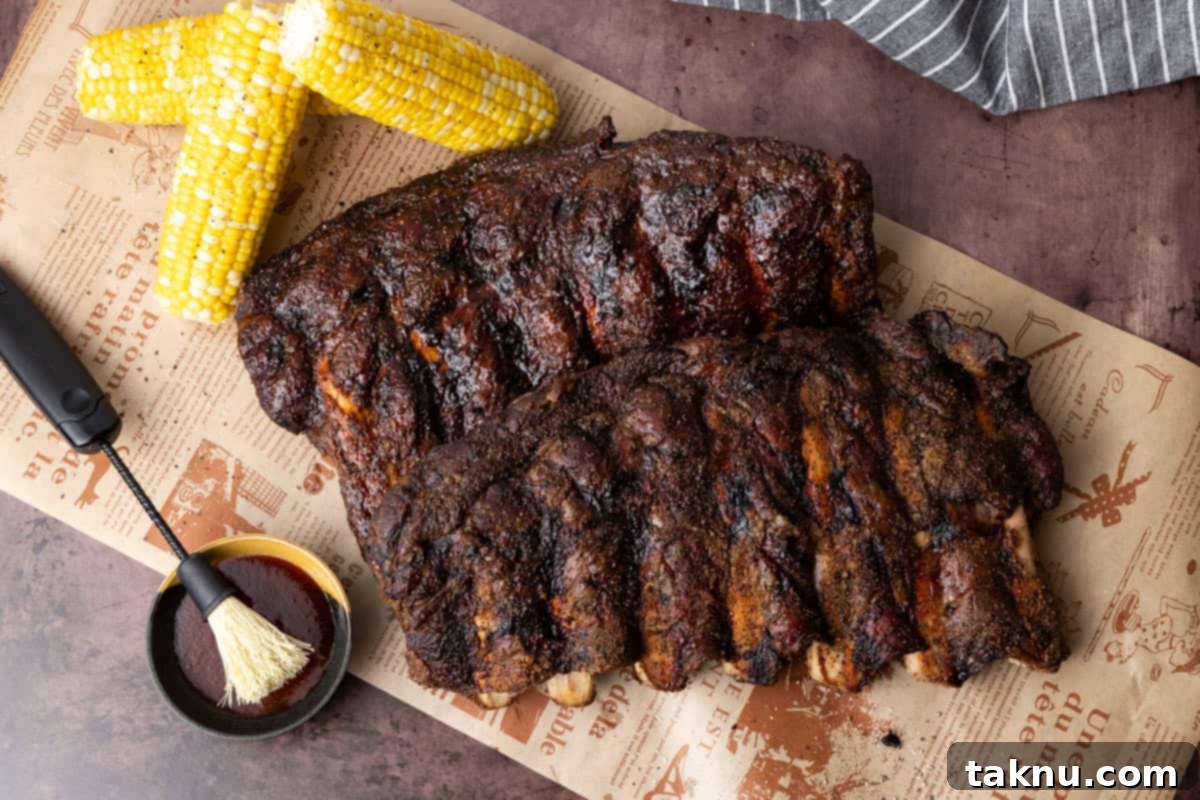
Traeger Smoked Beef Back Ribs
Pin Recipe
Ingredients
- 2 racks beef back ribs
Binder & Dry Rub
- 3 tablespoon yellow mustard
- 1 tablespoon sea salt
- 1 tablespoon black pepper
- 1 tablespoon garlic powder
BBQ Sauce
- ½ cup bbq sauce (Traeger Sweet & Heat recommended)
Equipment
Instructions
- Rinse your beef ribs under fresh water and pat them completely dry with paper towels. This helps the binder and rub adhere better.
- Crucially, remove the tough membrane from the bone-side of each rack of ribs. Use a dull knife or spoon handle to pry up an edge, then use a paper towel to grip and pull the membrane off completely. Discard the membrane.
- Evenly rub yellow mustard over both sides of the ribs – this acts as your binder, not for flavor. Then, generously season both sides with your SPG dry rub, pressing it gently into the meat. Preheat your Traeger or preferred smoker to 220°F (105°C).
- Place the prepared ribs directly on the smoker grates, meat side up, maintaining the 220°F temperature. Smoke for 5-7 hours, or until the internal temperature reaches 200°F (93°C) and the ribs are probe tender. To keep the meat moist and help form a good bark, spritz the ribs with apple cider vinegar every 30-45 minutes throughout the smoking process.
- Once the ribs hit 200°F IT and are tender, brush a generous layer of your favorite BBQ sauce (like Traeger Sweet & Heat) over all surfaces of the ribs. Continue smoking for another 20 minutes to allow the sauce to caramelize and set.
- Remove the finished ribs from the grill and let them rest, loosely tented with foil, for at least 15 minutes. This allows the juices to redistribute for maximum tenderness. Then, slice between each rib bone to create individual portions.
- Serve your perfectly smoked beef ribs with your preferred side dishes for a truly memorable meal. Enjoy every tender, smoky bite!
- If you’ve enjoyed making this recipe, please leave a comment and a star rating below. Your feedback is greatly appreciated and helps others discover this delicious recipe! Thanks!
Pro Tips for Perfect Ribs
- Don’t Skip the Membrane: Always make sure to remove the membrane from the back of the ribs. This prevents that chewy, stringy texture that can get stuck in your teeth and ensures better rub penetration.
- Aim for “Pull-Off-the-Bone,” Not “Fall-Off-the-Bone”: If your ribs are literally falling off the bone, they are likely overcooked. While they’ll still taste good, the ideal texture for smoked ribs is when the meat pulls cleanly off the bone with a gentle tug. Target an internal temperature of 200°F (93°C) and check for probe tenderness for perfect results.
- Maximize Smoker Space: When cooking multiple racks of ribs, especially if space is limited, consider using a rib rack. This clever tool allows you to stand the ribs on their end, significantly increasing the capacity of your smoker.
- Apple Juice Alternative: If you don’t have apple cider vinegar for spritzing, apple juice makes an excellent substitute. Both liquids work wonderfully to keep the meat moist and contribute to a fantastic bark.
Nutrition Information
Important Food Safety Guidelines for Smoking Meat
While many of us have years, or even decades, of cooking experience under our belts, it’s always a good idea to revisit essential food safety practices, especially when dealing with raw meat and slow-cooking methods like smoking. Ensuring your meal is not only delicious but also safe to eat is paramount. Please keep the following health and safety tips in mind:
- Minimum Internal Temperature: Always cook meat to a safe minimum internal temperature. For beef, a general safe eating temperature is 145°F (63°C) with a three-minute rest, but for tender ribs where connective tissue needs to break down, we cook well beyond that (to 200-205°F / 93-96°C) for optimal texture. Always use a reliable meat thermometer to verify doneness.
- Prevent Cross-Contamination: Never use the same utensils, cutting boards, or platters on cooked food that previously touched raw meat without thoroughly washing them in hot, soapy water first. Designate separate tools for raw and cooked items if possible.
- Hand Washing is Key: Wash your hands thoroughly with soap and warm water for at least 20 seconds before and after handling raw meat, and any time you switch tasks during cooking.
- Avoid the “Danger Zone”: Do not leave cooked food sitting out at room temperature (between 40°F / 4°C and 140°F / 60°C) for extended periods. This temperature range is where harmful bacteria can multiply rapidly. Refrigerate leftovers promptly within two hours of cooking.
- Never Leave Cooking Unattended: Especially when using a smoker, always keep an eye on your food and equipment. Smokers involve heat and fuel, and while modern pellet grills are often very safe, it’s crucial to be present in case of flare-ups, mechanical issues, or any potential fire hazards.
For more comprehensive guidelines and detailed information on safe food handling and preparation, please refer to authoritative sources like the USDA.gov Food Safety Basics.