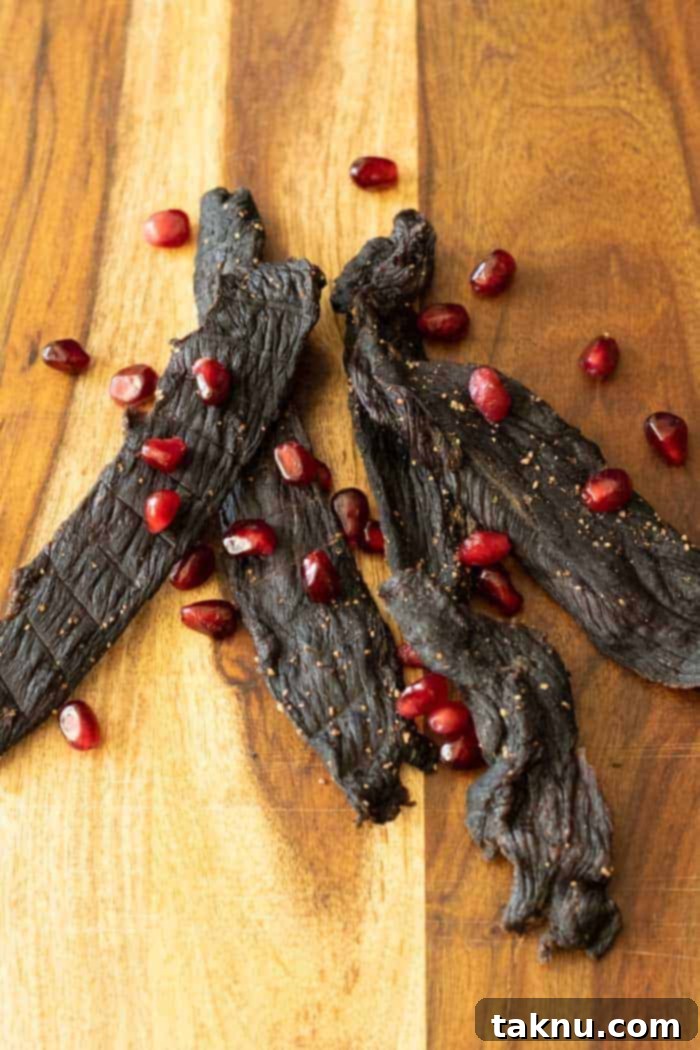
Homemade Pomegranate Deer Jerky: A Sweet, Tangy, and Unforgettable Venison Treat
There’s something incredibly satisfying about transforming wild game or a simple cut of beef into a delicious, long-lasting snack. Recently, I’ve been captivated by the vibrant and complex flavor of pomegranate juice. Its unique blend of sweet and tart, coupled with a refreshing quality, immediately sparked an idea: what if I could infuse this distinctive taste into homemade jerky? The result, I’m thrilled to share, is a truly fantastic pomegranate deer jerky recipe that perfectly balances the rich flavor of venison with a bright, fruity tang.
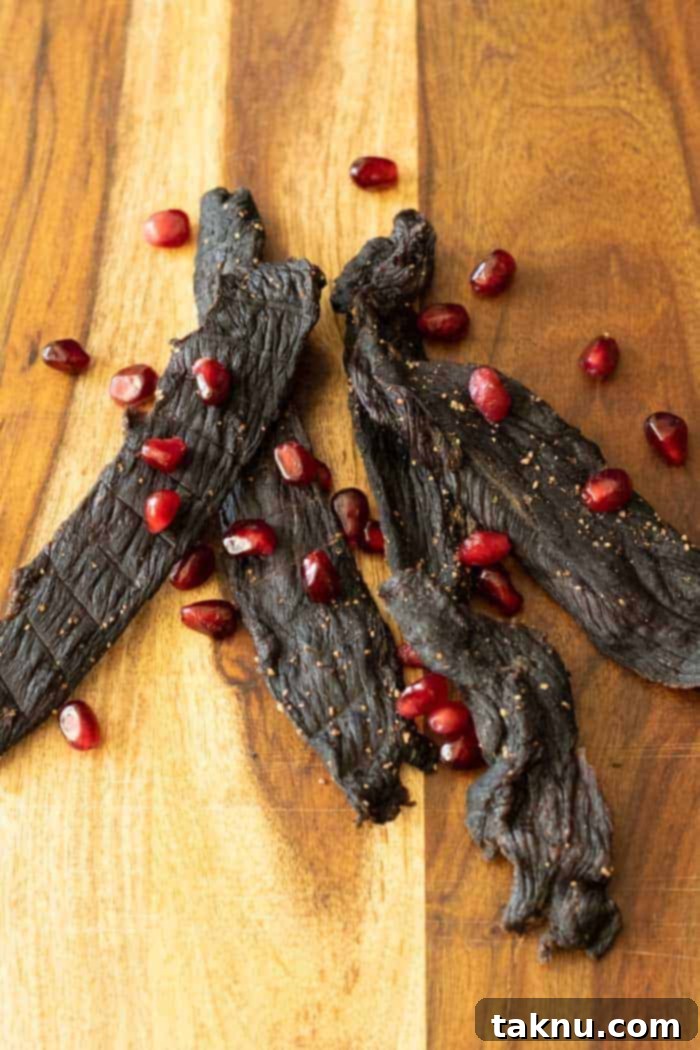
Before diving into the recipe, let’s appreciate the star ingredient. Did you know that pomegranates, scientifically known as Punica granatum, grow on spiny, shrub-like trees? These ancient fruits trace their origins back to regions of the Middle East, Asia, and North Africa. Historically cherished for their medicinal properties and culinary versatility, pomegranates have been cultivated for thousands of years. Today, they’ve found a thriving home in the United States, particularly in the sunny climates of Arizona and California, where many of the finest pomegranates are grown. The juice I personally use for this recipe is proudly sourced from California pomegranates – a great way to support local agriculture and enjoy high-quality produce.
Preparing the Meat for Pomegranate Jerky
Whether you’ve just returned from a successful hunting season with a freezer full of venison or you’re simply looking for an exciting new way to prepare beef, this pomegranate jerky recipe is an excellent choice. Venison, with its lean profile and robust flavor, is an ideal candidate for jerky, readily absorbing marinades and developing a wonderfully chewy texture. However, if venison isn’t available, don’t hesitate to use a lean cut of beef, such as top round, bottom round, or flank steak – it will yield equally delicious results!
Thawing and Trimming Your Meat
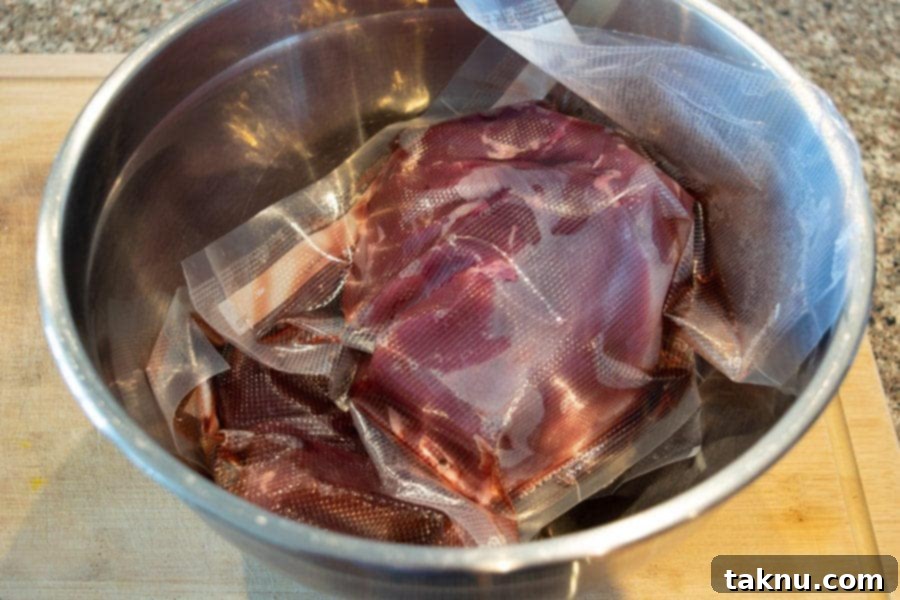
The first step is properly thawing your meat. For safety and optimal texture, always defrost venison roasts (or beef) in a bowl of cold water placed inside your refrigerator. Never thaw meat on the kitchen counter at room temperature, as this can lead to bacterial growth. Submerging the meat in cold water and changing the water every 30-60 minutes significantly speeds up the thawing process while keeping the meat at a safe temperature.
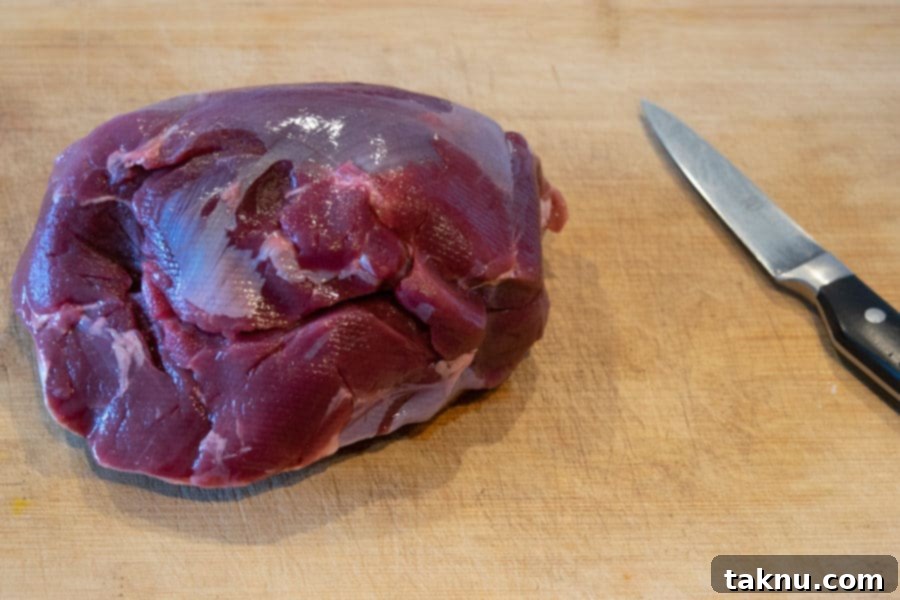
Once your meat is thawed and rinsed, it’s crucial to meticulously trim away all visible fat and silver skin. This step is non-negotiable for producing high-quality jerky. Fat spoils much faster than meat, and even small amounts can significantly reduce the shelf life of your finished jerky, potentially causing it to become rancid quickly. Silver skin, a tough, fibrous membrane, will result in unpleasantly chewy and difficult-to-eat jerky. Take your time with this process; a clean trim makes all the difference in the final product’s texture and longevity.
Slicing for the Perfect Jerky Texture
Achieving uniformly sliced strips is key to consistent drying and a great jerky texture. I prefer to slice my venison roasts by hand with a very sharp knife. If your knife isn’t exceptionally sharp, a useful trick is to partially freeze the roast. Wrap the meat tightly in plastic wrap and place it back in the freezer for 1-2 hours until it’s firm but not frozen solid. This semi-frozen state makes it much easier to cut even, consistent strips. Aim for slices about ¼-inch thick. You can slice against the grain for a more tender, easy-to-chew jerky, or with the grain for a chewier, more traditional texture. For comprehensive guidance on meat slicing techniques, you can explore my detailed how to slice jerky page.
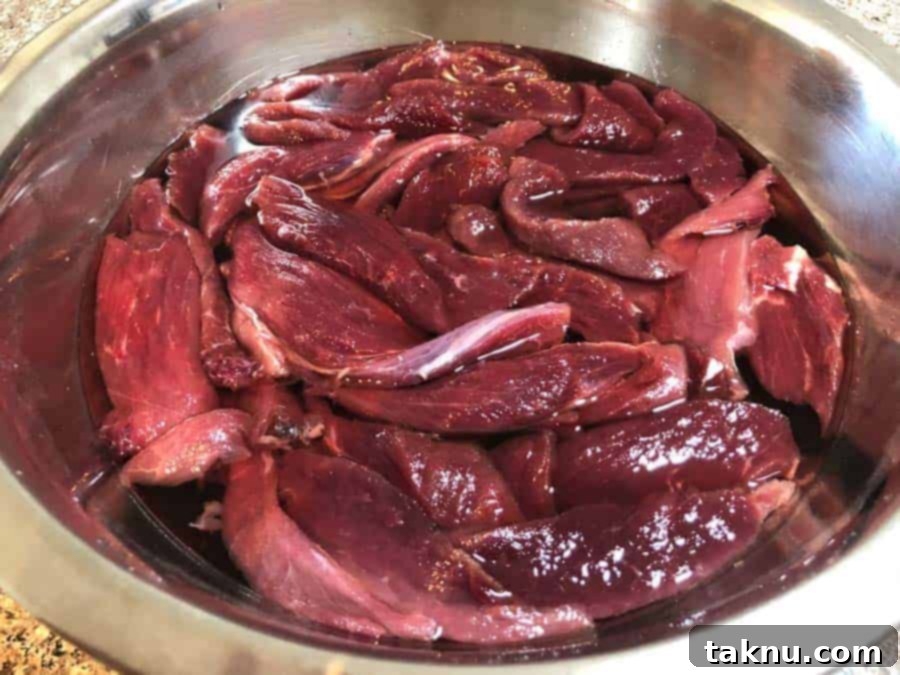
For venison that has a strong “gamey” aroma or appears to have a good amount of blood in its packaging, an optional but highly recommended step is pre-soaking. Prepare a cold water and salt solution using 1 cup of salt to about 5 cups of water. Submerge your sliced venison strips in this solution for a couple of hours in the refrigerator. This process helps to draw out some of the stronger game flavors, resulting in a cleaner, more palatable jerky that allows the pomegranate marinade to truly shine.
While hand-slicing is effective, a dedicated jerky slicer can dramatically simplify the process, especially if you make jerky frequently or in large batches. Tools like the Weston Jerky Slicer are designed to cut uniform strips quickly and efficiently, saving you time and effort. While not strictly necessary, it’s a worthwhile investment for serious jerky enthusiasts.
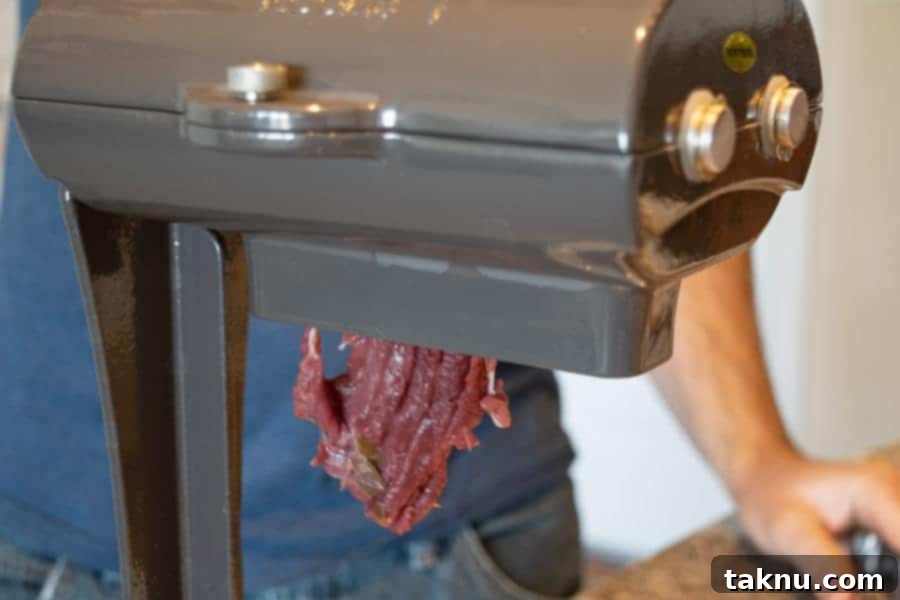
Though not essential, a jerky slicer can transform the task of preparing your meat, making it significantly easier and ensuring consistently sized strips for optimal drying.
RELATED PAGE: DOZENS OF JERKY RECIPES – CLICK HERE!!!
Crafting the Flavorful Pomegranate Marinade
The heart of this recipe lies in its vibrant marinade, with pomegranate juice as the undeniable star. Its complex sweet-tart profile provides an exceptional base that complements the richness of deer or beef beautifully. I often use POM Wonderful juice for its consistent quality and robust flavor. Beyond the pomegranate, the other marinade ingredients are fairly common and likely already stocked in your pantry.
Begin by combining all the marinade ingredients in a large resealable plastic bag or a non-reactive plastic container. This method ensures easy mixing and allows for thorough coating of the meat. Each ingredient plays a vital role: apple cider vinegar and lemon juice add additional tang and help tenderize the meat; brown sugar balances the tartness with sweetness, contributing to a desirable glaze; ginger powder introduces a warm, aromatic note that pairs wonderfully with fruit and meat; and sea salt and black pepper provide the fundamental seasoning. The optional curing salt is highly recommended for extending shelf life and enhancing food safety, particularly with game meats.
Once your marinade is well mixed, add the prepared deer or beef slices. It’s crucial to mix everything thoroughly, ensuring every single strip of meat is completely coated with the marinade. This guarantees even flavor penetration throughout all your jerky pieces.
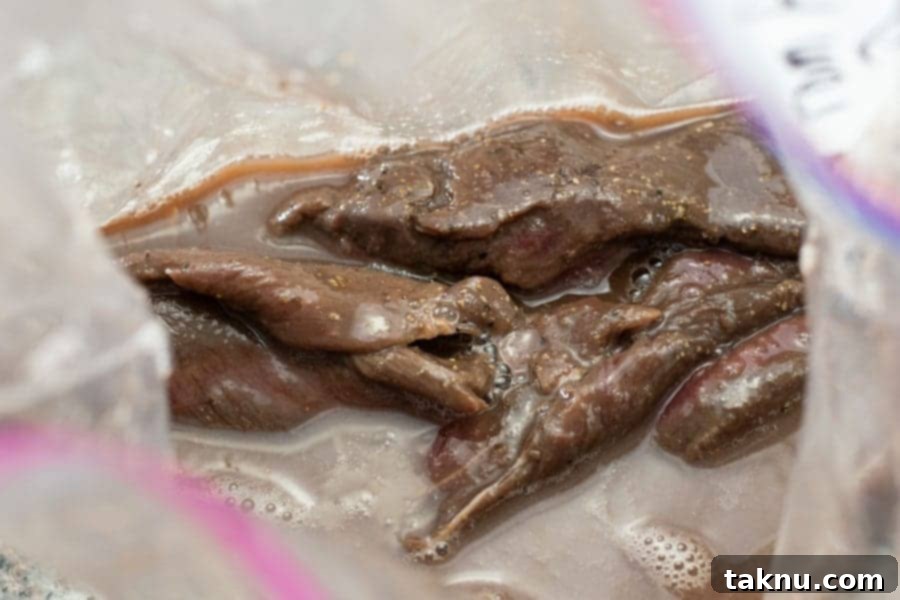
Allow the meat to marinate in the refrigerator for 6 to 24 hours. For best results, mix or shake the bag/container every 4 hours or so. This simple action helps redistribute the marinade, ensuring that all strips are evenly saturated and absorb the maximum amount of flavor. Skipping this step can lead to some pieces being less flavorful than others, as I’ve occasionally experienced myself when neglecting to mix the meat during marination.
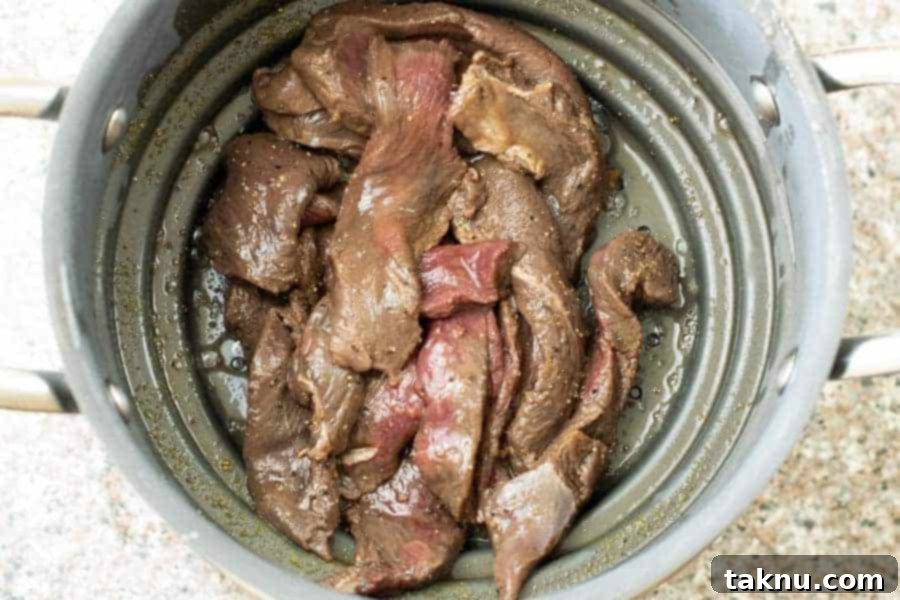
After the marination period, remove the meat from the refrigerator and strain the strips in a colander, allowing any excess marinade to drip off. It is absolutely vital to discard any leftover marinade. Never reuse marinade, as it has been in contact with raw meat and could harbor harmful bacteria. Always start with fresh ingredients for subsequent batches.
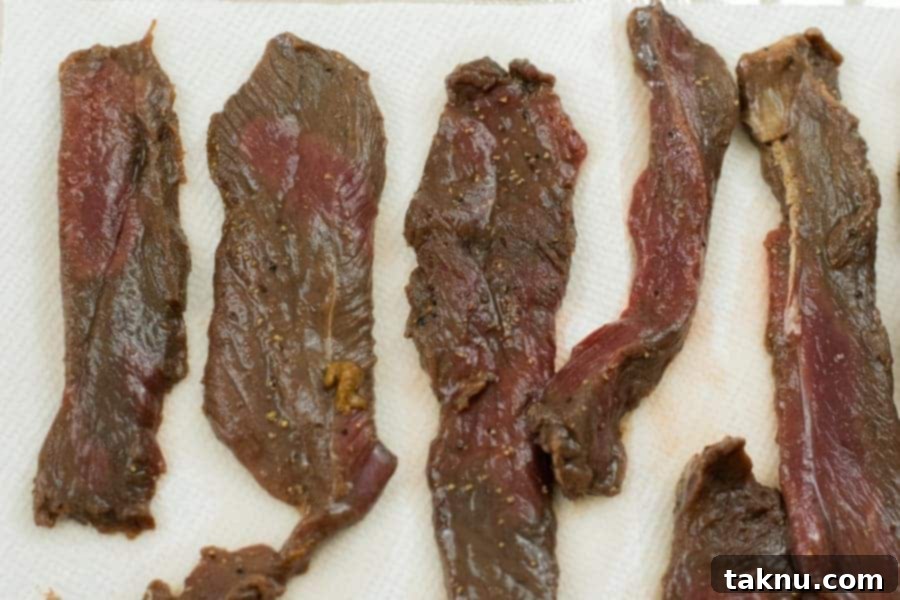
Following the straining, lay the jerky strips on several layers of paper towels and pat them thoroughly dry. This step is often overlooked but is incredibly important. Removing excess surface moisture significantly speeds up the drying process, reducing the overall time required in your dehydrator, oven, or smoker. It also helps prevent a sticky texture and promotes a more desirable chewy consistency in the final jerky.
Drying Your Pomegranate Deer Jerky
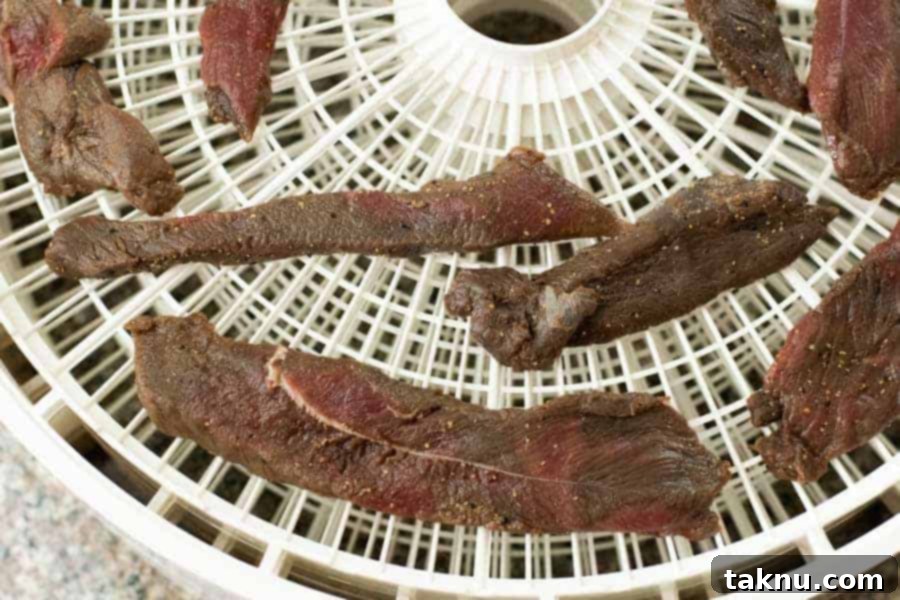
With your strips prepped and patted dry, it’s time to begin the drying process. You can use a food dehydrator, a conventional oven, or a smoker. For this particular recipe, I achieved excellent results using my Nesco Dehydrator, drying the jerky at 160°F for approximately 4½ hours. Regardless of the method you choose, always ensure that the pieces of meat are not touching each other on the drying racks. Adequate space between strips allows for proper air circulation, which is essential for even and efficient drying.
- Dehydrator: Dehydrators offer precise temperature control and consistent airflow, making them an excellent choice for jerky. Set your dehydrator to 160°F (71°C).
- Oven: If you don’t have a dehydrator, your oven can work too. Set your oven to its lowest temperature, typically around 170°F (77°C), and prop the oven door open slightly with a wooden spoon to allow moisture to escape. You might need to rotate trays periodically for even drying.
- Smoker: For an added smoky flavor, a smoker is a fantastic option. Maintain a temperature between 160-175°F (71-79°C). The smoke adds another layer of complexity that beautifully complements the pomegranate.
My “Spiny POM Deer Jerky” dried perfectly at 160°F in 4½ hours, yielding a fantastic, perfectly chewy texture. The drying time can vary based on the thickness of your meat slices, the humidity of your environment, and the specific equipment you’re using. For detailed, step-by-step instructions on how to use each of these methods to make jerky, be sure to visit my comprehensive How to Make Jerky page.
Testing for Jerky Doneness
Knowing exactly when your jerky is perfectly done is a skill that comes with practice, but there are clear indicators to guide you. Start checking your jerky around the 3-4 hour mark, regardless of your drying method. Select a piece from the dehydrator, oven, or smoker and allow it to cool to room temperature for about 5 minutes. Cooling is crucial because jerky will firm up considerably as it cools, giving you an accurate assessment of its final texture.
Once cooled, bend the jerky strip in half. The ideal jerky should bend significantly and show some cracks or white fibers, but it should not snap or break completely in half. It should feel firm, dry to the touch, and chewy, yet still pliable. If it’s too soft or feels raw in the middle, it needs more drying time. If it snaps cleanly without much resistance, it might be over-dried, though some prefer a crispier jerky.
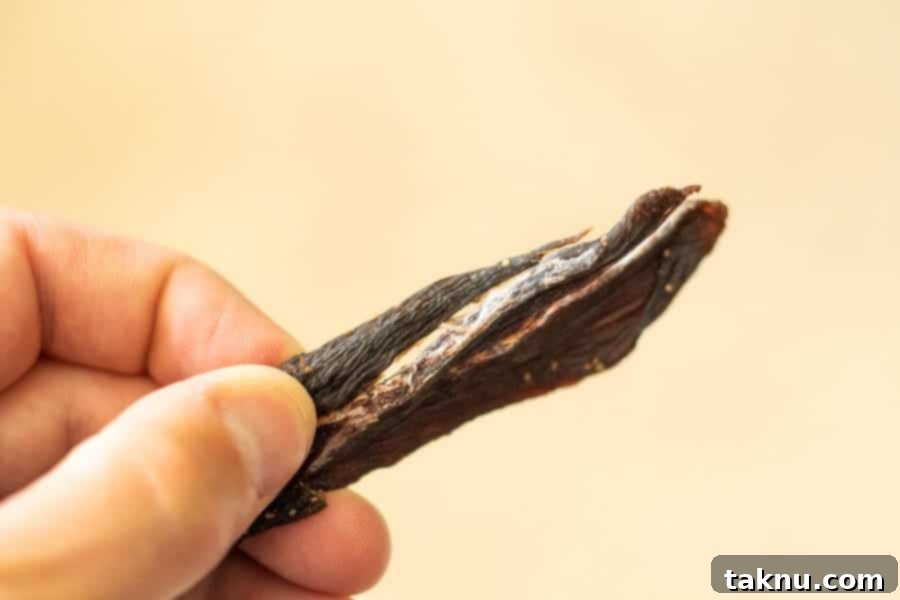
As you bend the jerky, you should also observe white fibers appearing within the meat. These white fibers are a clear visual cue that the muscle tissue has properly dried out and the jerky is finished and ready to enjoy. If the jerky doesn’t exhibit these characteristics, simply return it to your drying apparatus for another hour, then retest. Most jerky batches using a dehydrator or oven are typically finished within 4-6 hours, while a smoker might take 6-9 hours due to lower internal temperatures. If you pre-heat the meat in the oven to an internal temperature of 160°F (71°C) before drying, the overall drying time can be significantly reduced to as little as 2.5 hours.
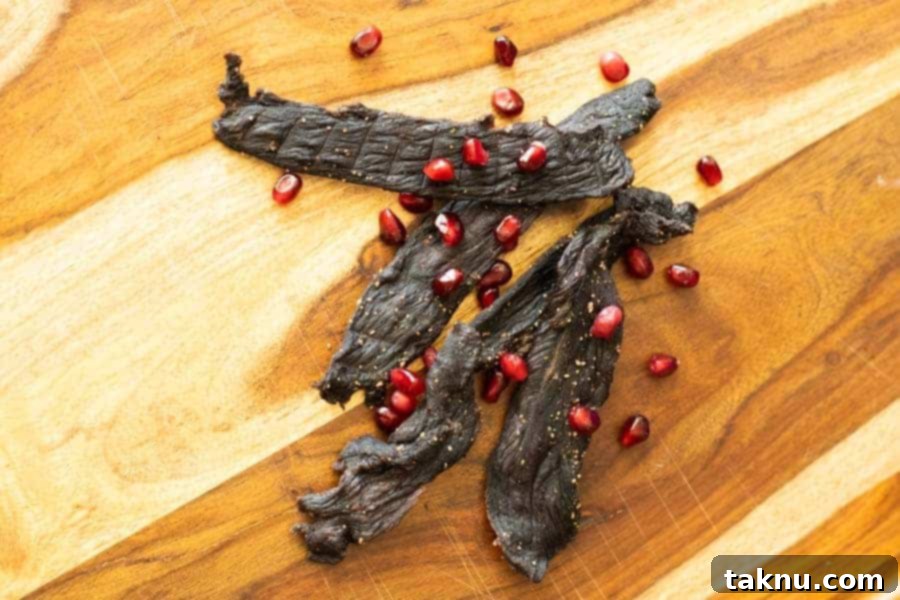
This Pomegranate deer jerky exceeded all expectations. The delicate balance of fruity sweetness and tartness from the pomegranate juice perfectly complements the natural, earthy richness of the deer meat. It’s a truly refreshing departure from traditional savory or spicy jerky flavors, offering a unique taste experience that is both sophisticated and incredibly satisfying. If you’re accustomed to making predominantly spicy jerky, this fruity variation is a delightful change of pace that will invigorate your palate.
Storing Your Homemade Jerky Properly
To ensure your delicious pomegranate deer jerky remains fresh and flavorful for as long as possible, proper storage is essential. The inclusion of curing salt in the marinade not only enhances food safety but also plays a significant role in extending the jerky’s shelf life. After the jerky has fully cooled to room temperature, store it in airtight containers. Glass jars with tight-fitting lids, vacuum-sealed bags, or resealable plastic bags are all excellent options. Storing jerky in a cool, dark place away from direct sunlight and humidity will help maintain its quality for several weeks. For even longer storage, homemade jerky can be refrigerated for a few months or frozen for up to a year. For more in-depth guidance on various storage methods and tips to maximize the shelf life of your jerky, be sure to visit my dedicated page on storing jerky.

For more in depth directions on how to dry your jerky, visit my page Jerky Making Methods.
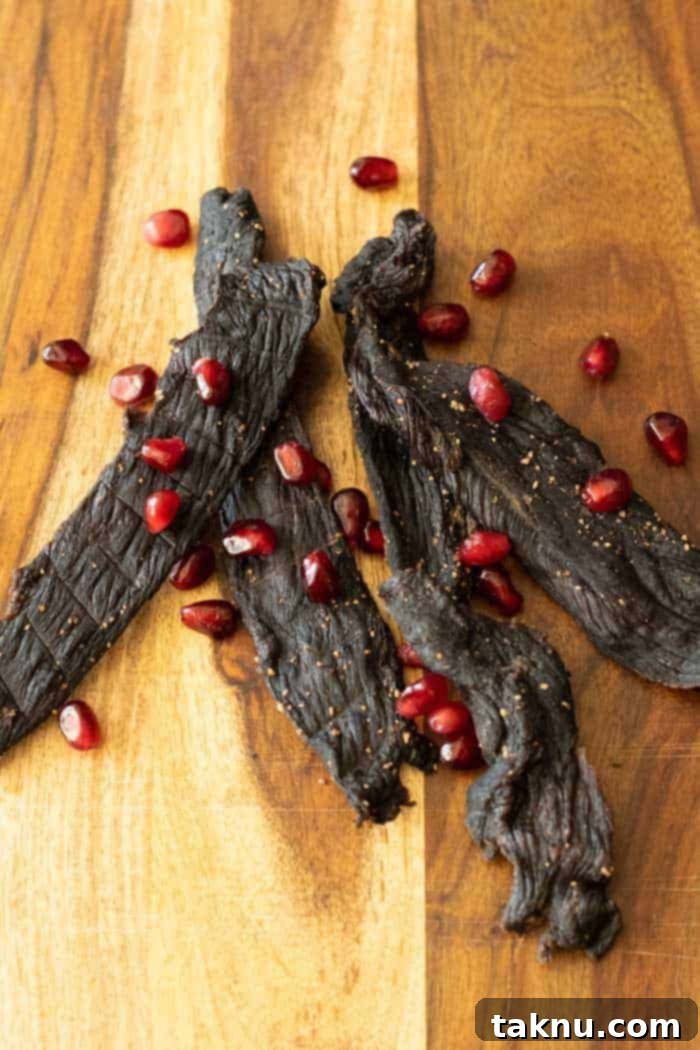
Spiny POM Deer Jerky
Pin Recipe
Ingredients
Lean Meat
- 1 lb Venison or Beef Roast
Marinade
- ½ cup pomegranate juice
- ¼ cup apple cider vinegar
- 2 tablespoon lemon juice
- 3 tablespoon brown sugar
- ½ teaspoon ginger powder
- 1 ½ teaspoon sea salt
- 1 teaspoon black pepper (freshly cracked)
- ¼ teaspoon curing salt (optional)
Instructions
- Trim all visible fat and silver skin from the venison or beef roast. For easier, uniform slicing, place the roast in the freezer for an hour or two to partially freeze it.
- While the meat is in the freezer, combine all marinade ingredients in a large bowl or a resealable ziplock bag.
- Remove the partially frozen meat from the freezer and slice into ¼-inch thick strips. Slice against the grain for a more tender chew, or with the grain for a chewier jerky. For additional information on slicing, visit my page on slicing jerky. Alternatively, use a Weston Jerky Slicer for effortless, consistent cuts.
- Add the sliced venison or beef strips to the marinade mixture in the ziplock bag or bowl. Ensure all strips are thoroughly coated by mixing well. Marinate in the refrigerator for 6-24 hours. To ensure even flavor distribution, shake or mix the container every 4 hours.
- After marinating, remove the meat from the refrigerator, strain the strips in a colander to remove excess marinade, and then pat them thoroughly dry with paper towels to speed up the drying process.
- Dry the jerky using your preferred jerky making method (dehydrator, oven, or smoker). For this recipe, I used my Nesco Dehydrator and dried the strips for 4 ½ hours at 160°F (71°C). Ensure strips are spaced evenly for proper air circulation.
- The jerky is finished when it bends without breaking, showing white fibers in the bent area, and feels dry yet pliable. If not ready, continue drying in 1-hour increments and retest.
Pro Tips
Old Pro Tips:
- Trim all fat and silver skin from the meat before marinating for longer-lasting jerky once it’s finished drying.
- Use curing salt or celery juice powder to extend the life of the jerky and for added safety.
- Pre-soak venison for a couple hours in 5 cups water and 1 cup salt solution to effectively remove any ‘gamey’ flavor.
- Partially freeze meat for 1-2 hours before slicing to achieve perfectly even strips.