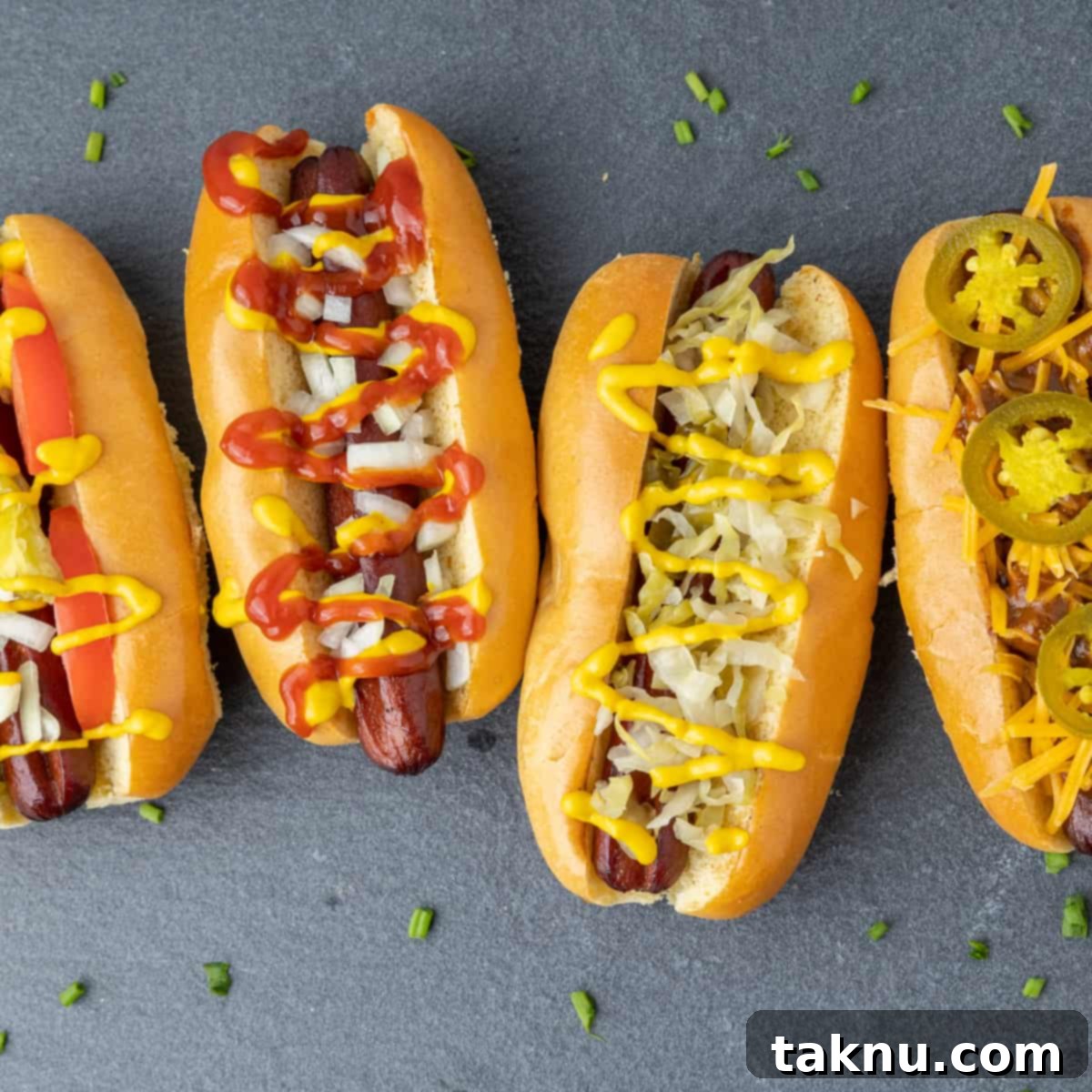
The Ultimate Guide to Smoked Hot Dogs: Recipes, Toppings, and Techniques for Perfect Flavor
There’s nothing quite like a perfectly cooked hot dog to satisfy a craving, and when you add the rich, irresistible flavor of smoke, you elevate it to an entirely new level. These smoked hot dogs, complete with ideal topping combinations, are guaranteed to transform your backyard BBQ or simple weeknight meal into a memorable feast. Get ready to fire up your smoker and prepare for a hot dog experience like no other!
[feast_advanced_jump_to]
How-To Video: Mastering Smoked Hot Dogs
Why Choose Smoked Hot Dogs? The Unbeatable Flavor and Texture
As a passionate hot dog enthusiast, I’ve made it my mission to sample the best hot dogs from every stand, shop, restaurant, and ballpark imaginable. This culinary quest has revealed a simple truth: smoking hot dogs is the ultimate way to unlock their full potential and achieve a flavor profile that stands head and shoulders above other cooking methods.
Unlike boiling or pan-frying, which can leave hot dogs feeling bland or rubbery, smoking infuses them with a deep, complex smokiness that complements the savory beef perfectly. But it’s not just about the flavor; the smoking process also delivers an incredible texture. You get that satisfying ‘snap’ when you bite into the casing, followed by a juicy, flavorful interior. This signature snap is something you simply won’t achieve with any other cooking method, making smoked hot dogs a truly unique culinary delight.
Imagine serving these sensational smoked dogs alongside some mouth-watering smoked burgers at your next gathering. It’s the perfect combination for an epic backyard BBQ! Over the years, I’ve experimented with countless toppings and combinations, probably consuming thousands of hot dogs in the process. My all-time favorite? The classic New York style. (More on that delightful creation later in the article.)
The gentle, low heat of the smoker allows the hot dogs to slowly absorb the aromatic smoke, transforming them into succulent links bursting with flavor. This slow-cooking method also helps to render some of the fat, ensuring a tender and juicy result without drying out the meat. Whether you’re a seasoned pitmaster or a beginner, smoking hot dogs is a simple yet incredibly rewarding endeavor that will impress everyone.
A Brief History of the Beloved Hot Dog
Despite my deep love for hot dogs, I must admit I was once largely unaware of their fascinating origins. After a quick dive into History.com, I uncovered some intriguing facts about this iconic food.
The concept of the hot dog is believed to have roots in the Roman era, but it truly began to gain popularity about 500 years ago in Germany. The modern hot dog, as we largely know it today, made its way to the United States with German immigrants in the 1860s. They brought their beloved Frankfurter sausages, which quickly found a new home in American cuisine.

The hot dog’s popularity in the United States exploded around 1915 with the establishment of Nathan’s Famous hot dogs. Nathan Handwerker’s venture on Coney Island quickly became a sensation, cementing the hot dog’s status as a quintessential American food. Nathan’s remains one of my personal favorite brands to cook with today, a testament to its enduring quality and taste.
From bustling street carts to iconic ballparks, hot dogs have become a staple of American culture, embodying convenience, comfort, and tradition. Their adaptability to various toppings and regional styles only adds to their widespread appeal, making them a truly versatile and beloved food item.
Selecting the Best Hot Dogs for Smoking
To truly achieve the best tasting smoked hot dog, your journey begins with selecting quality ingredients. Always opt for 100% beef high-quality hot dogs. While it might be tempting to save a few dollars on less expensive pork or chicken mixture wieners, the difference in flavor and texture is substantial. Investing in premium all-beef hot dogs will yield a much richer, more satisfying result.
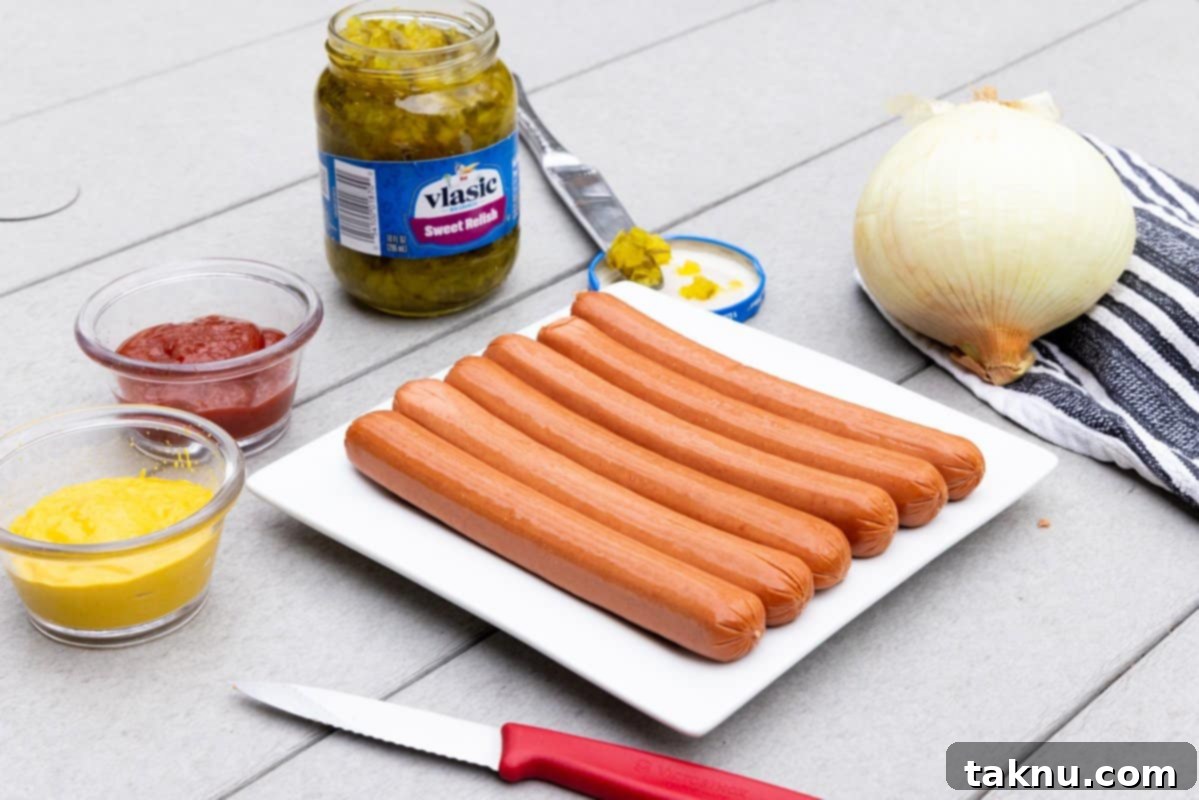
Most hot dog aficionados have their go-to brands. My personal top two favorites are Nathan’s Famous and Hebrew National. These brands consistently deliver on flavor and provide that desirable “snap” when cooked. However, the world of hot dogs is vast and includes endless brands, from nationally recognized names to fantastic local companies that craft exceptional wieners and sausages. Don’t hesitate to explore and experiment! The best approach is to try various brands, local butcher’s offerings, and specialty varieties to discover which ones truly excite your taste buds the most. Look for natural casing hot dogs for an even better snap and a more traditional experience.
The Ideal Cooking Equipment: Smoker or Grill
Hot dogs can be cooked in a multitude of ways: smoking, grilling, pan-frying, boiling, steaming, and even under a heat lamp. However, if you’re aiming for unparalleled flavor and texture, smoking and grilling stand out as by far the BEST options. These methods impart a depth of flavor and a satisfying exterior that other techniques simply cannot match.
Let’s delve into the equipment you’ll need to create the most incredibly delicious hot dogs you’ve ever tasted.
Smokers: For Deep, Infused Flavor
For these recipes, I primarily use my pellet smoker, similar to popular models like the Camp Chef 36 smoker or a Traeger 780. Electric pellet smokers are an incredibly easy and efficient way to infuse fantastic smoke flavor into hot dogs and a wide array of other meats. Their “set it and forget it” convenience means you don’t have to constantly monitor a firebox, allowing for a relaxed cooking experience with consistent results.
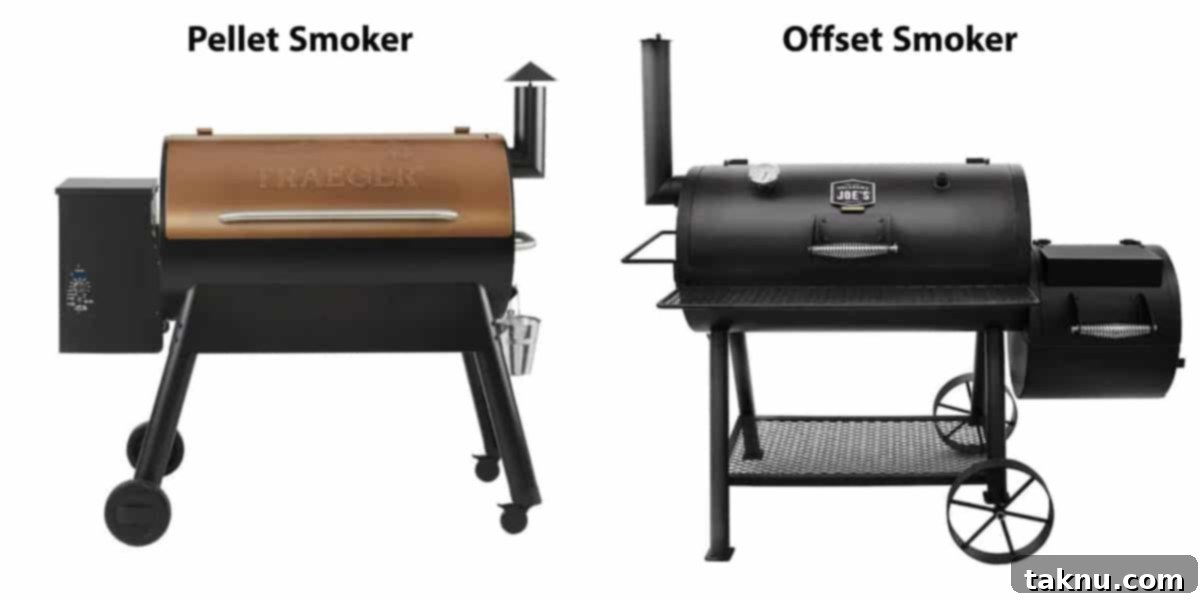
If you prefer a more traditional and hands-on smoking experience, an offset smoker, such as an Oklahoma Joe’s Smoker, is also an excellent choice for smoking hot dogs. While it requires more attention to maintain temperature, it offers a classic smoky flavor that many purists adore. The key is consistent, low heat to allow the smoke to penetrate the hot dogs fully.
Gas or Charcoal Grill: For Quick, Charred Perfection
While smoking delivers a unique flavor, you can absolutely achieve amazing results using a gas grill or a charcoal grill for hot dogs. The cooking time will be significantly faster, and the grill temperature will be much higher. Grilling is the most common method for cooking hot dogs and will impart a delicious char and caramelization that contributes to an AMAZING flavor and texture.
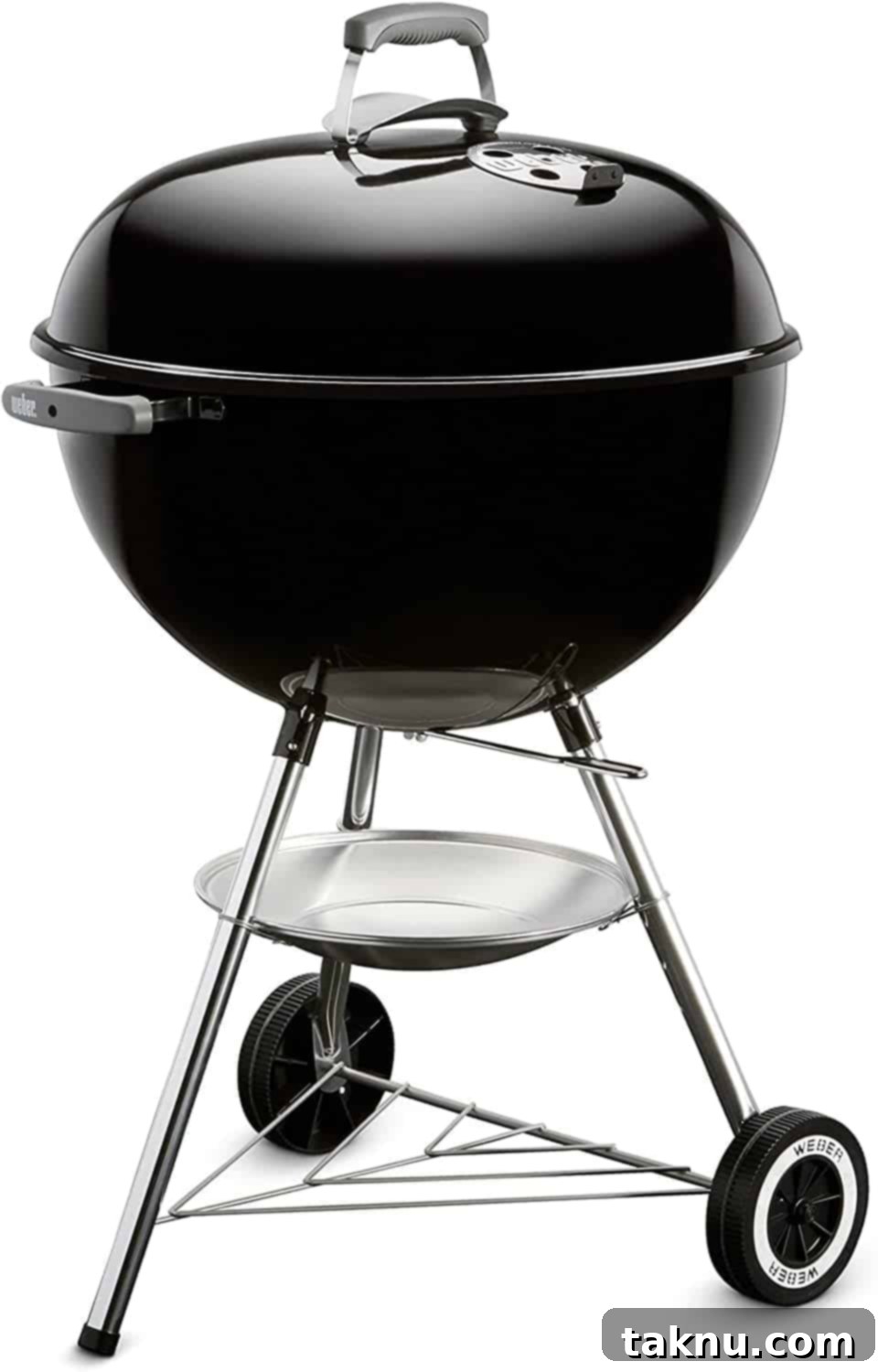
For charcoal grilling, a Weber kettle grill is a timeless and excellent choice. These iconic grills have maintained their effective design for decades, consistently delivering great flavor to meats. They embody the spirit of a traditional backyard BBQ, bringing to mind classic cookout memories.
When grilling, instead of the low 250°F used for smoking, pre-heat your grill to a higher temperature, typically around 400 degrees Fahrenheit. This higher heat allows for quick cooking and provides that desirable crispy exterior. For best results, use a two-zone cooking method on a charcoal grill, searing over direct heat and moving to indirect heat if they need more time without burning.
Choosing the Best Wood Chips / Wood Pellets for Flavor
When smoking hot dogs, you have the flexibility to choose almost any type of smoking wood. However, certain woods enhance the hot dog’s natural flavors beautifully. My top choices for wood chips or pellets are oak, pecan, hickory, or applewood.
- **Oak:** Offers a medium, balanced smoke flavor that pairs well with most meats.
- **Pecan:** Provides a milder, nutty, and slightly sweet smoke, making it very versatile.
- **Hickory:** A classic choice, giving a strong, bacon-like smoke flavor. Use sparingly if you prefer a lighter smoke.
- **Applewood:** Imparts a sweet, fruity, and very mild smoke, perfect for those who want just a hint of smokiness.
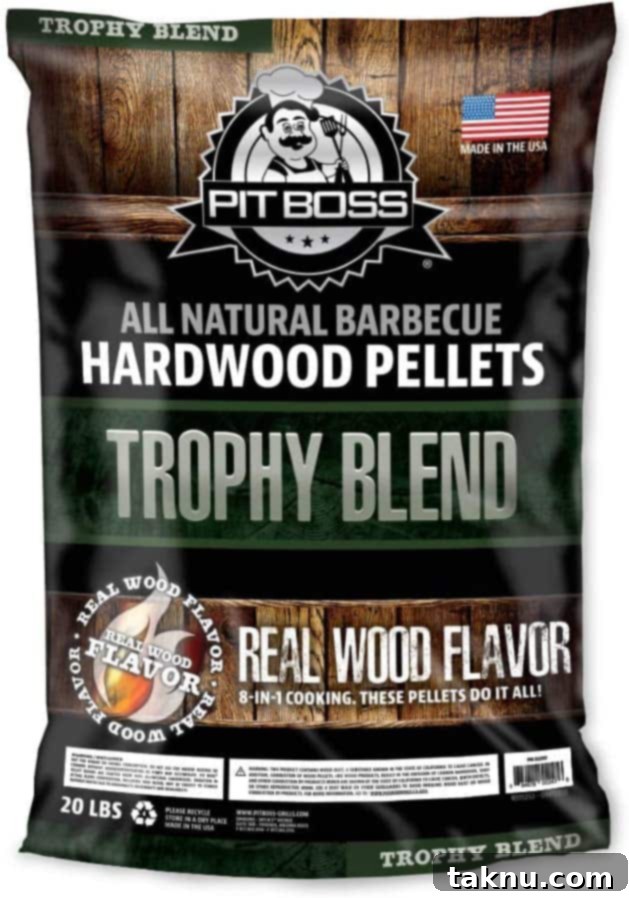
A “competition” or trophy blend of pellets can also be a fantastic option. These blends are typically a mixture of several different types of hardwood designed to deliver a well-rounded, smooth, and pleasant smoke flavor that isn’t overpowering, making them excellent for hot dogs and various other smoked dishes.
Step-by-Step Guide: How to Smoke Hot Dogs to Perfection
It’s important to remember that hot dogs are already fully cooked when you purchase them, meaning they only need to be heated to a safe and enjoyable temperature. However, the method we choose for heating them dramatically influences their flavor and the ultimate texture of the finished product. One of my absolute favorite ways to cook hot dogs, for flavor and texture, is undoubtedly in a smoker.
Smoked hot dogs acquire a delicious, deep smoke flavor, along with that coveted “snap” when you bite into them. This unique combination of taste and texture is simply not achievable with most other cooking methods, setting smoked hot dogs apart as a superior culinary experience.
Preparation and Heat: Maximizing Smoke Flavor
First, pre-heat your smoker or pellet grill to a consistent 250°F (120°C). This low and slow temperature is crucial for allowing the hot dogs to absorb ample smoke flavor without overcooking or bursting prematurely. While your smoker is heating up, prepare your hot dogs for optimal smoke absorption.
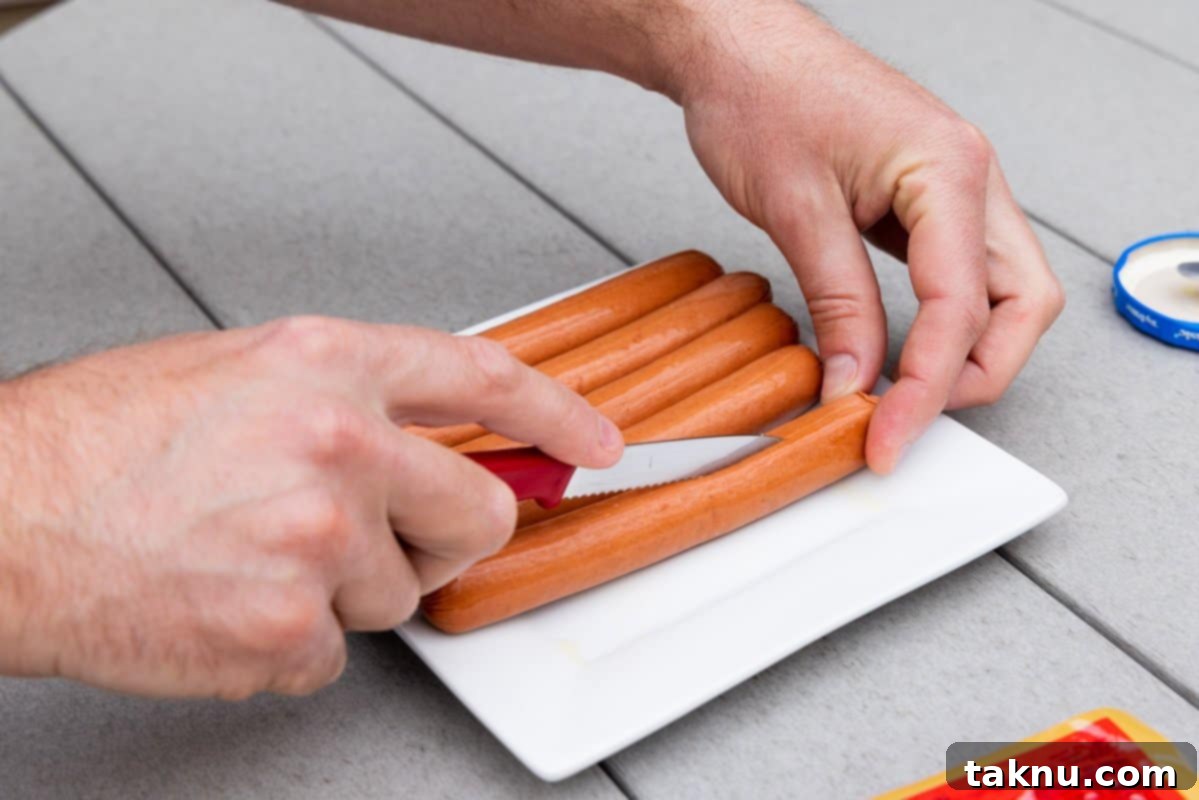
Using a sharp knife, carefully cut a slit lengthwise down the middle of each hot dog. Make sure to cut about halfway through the meat, being careful not to slice them into two separate halves. This strategic cut serves two important purposes: it opens up the surface area of the hot dog, allowing it to absorb significantly more smoke flavor, and it helps them to cook more evenly and slightly faster.
Once the smoker reaches temperature, place the prepared hot dogs directly on the grill grate. Arrange them so they have good airflow around them. Smoke the hot dogs for approximately 45-60 minutes. There’s no need to rotate them during this cooking process; the ambient heat and smoke will cook them evenly. As they smoke, you’ll notice them taking on a beautiful darker, reddish-brown color, and the slits you cut will expand wider, indicating they are absorbing that delicious smoky goodness.
Achieving the Perfect Internal Temperature
As mentioned, hot dogs are already fully cooked when you purchase them. This means there isn’t a strict minimum internal temperature they *must* reach for health and safety reasons, as long as they are heated through. However, for the best eating experience – a truly “hot” hot dog – I recommend heating them to at least 160°F (71°C) internal temperature.
The only reliable way to confirm this temperature is by using an instant-read thermometer. This essential tool should already be a trusted companion for grilling and smoking all your meats. Insert the thermometer into the thickest part of the hot dog to get an accurate reading.
When it comes to cooking any meat to perfection, the golden rule is always to cook to temperature, not merely to time. External factors like the ambient temperature, the type of hot dog, and how often you open your smoker can all affect cooking duration. Using a meat thermometer ensures your hot dogs are perfectly heated and ready to serve.
Grilling Hot Dogs: A Faster Alternative
If you opt to use a grill instead of a smoker, the cooking process will be considerably different and much quicker. For grilled hot dogs, the cooking temperature should be around 400°F (200°C), significantly higher than the 250°F (120°C) used for smoking. This higher heat will drastically reduce the cooking time to a rapid 5-10 minutes, as opposed to the 45-60 minutes required for smoking.
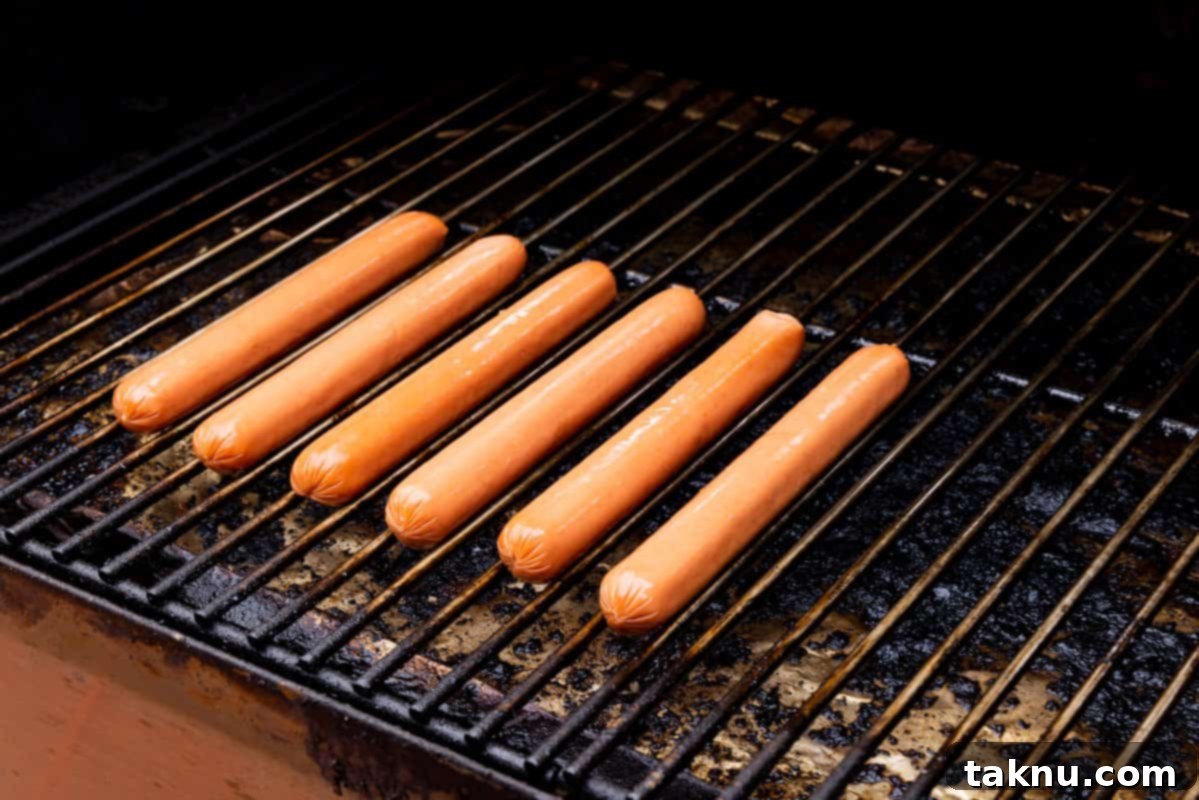
When grilling, it is crucial to continuously rotate the hot dogs throughout the process to ensure even cooking and to prevent them from burning on the bottom or one side. Keep a close eye on them, flipping every minute or two, until they are beautifully browned, heated through, and have that characteristic grilled snap. While grilling provides a different flavor profile than smoking, it still delivers an amazing hot dog experience, especially when you crave that classic charred taste.
The Ultimate Hot Dog Toppings: Creative Combinations
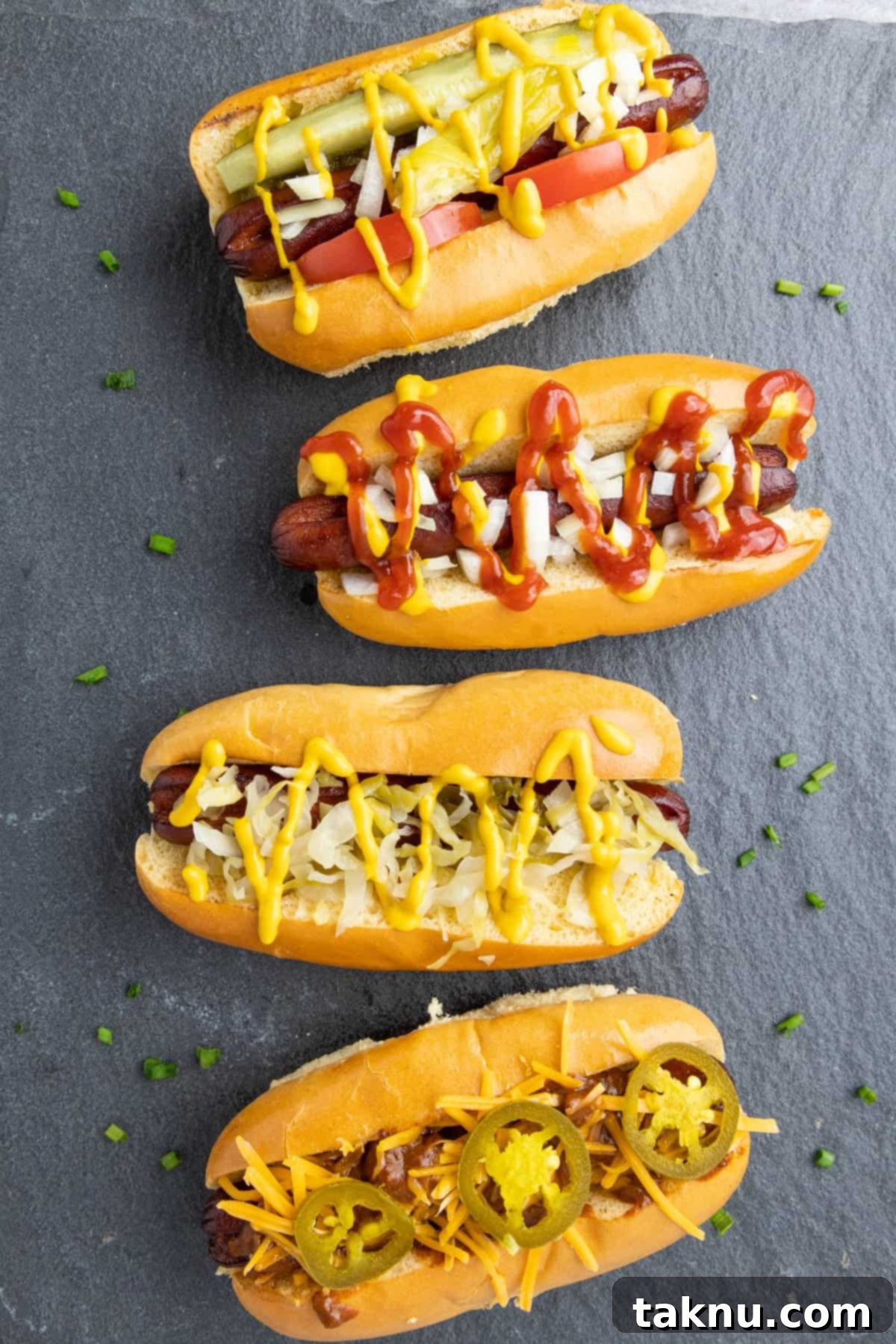
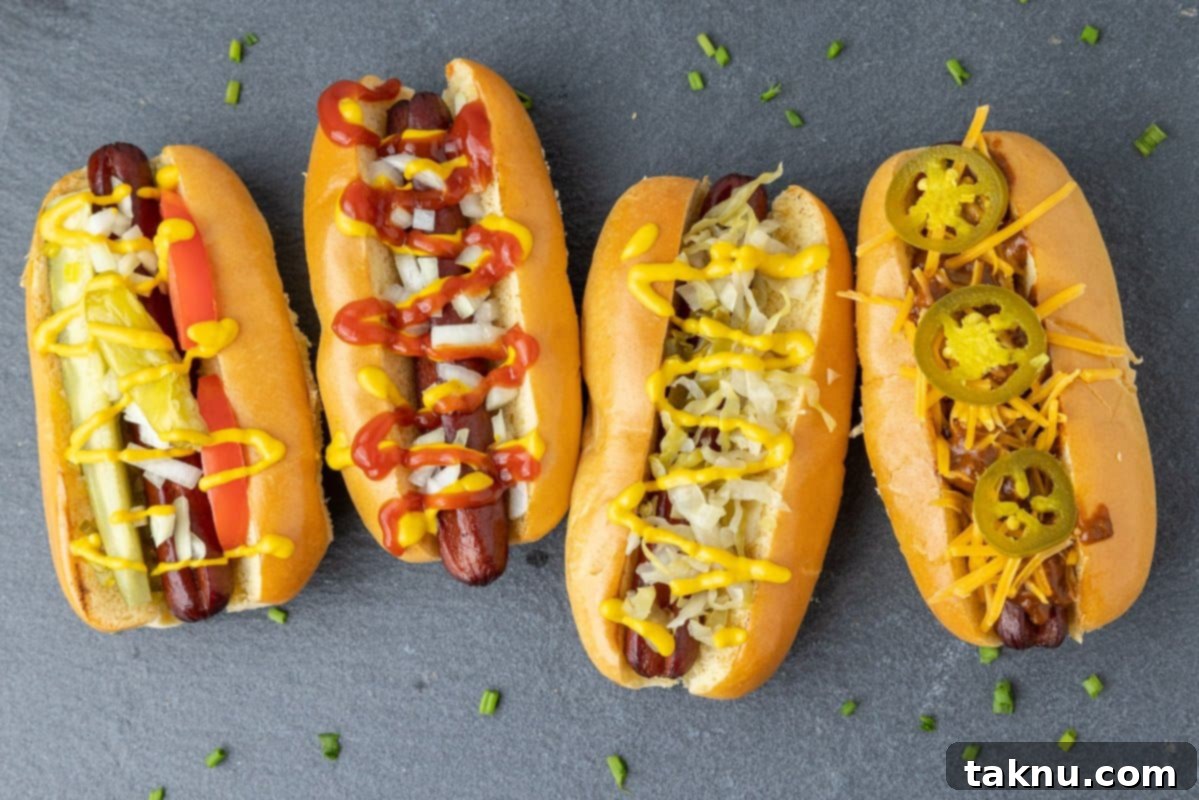
Once your hot dogs are perfectly cooked, whether smoked or grilled, it’s time for the fun part: toppings! There are SO MANY incredible and diverse toppings that can transform a simple hot dog into a culinary masterpiece. While the possibilities are endless, here are my top three favorite topping combinations, guaranteed to tantalize your taste buds. If you’re not big on elaborate condiments, a classic dog with just mustard or ketchup is always a winner!
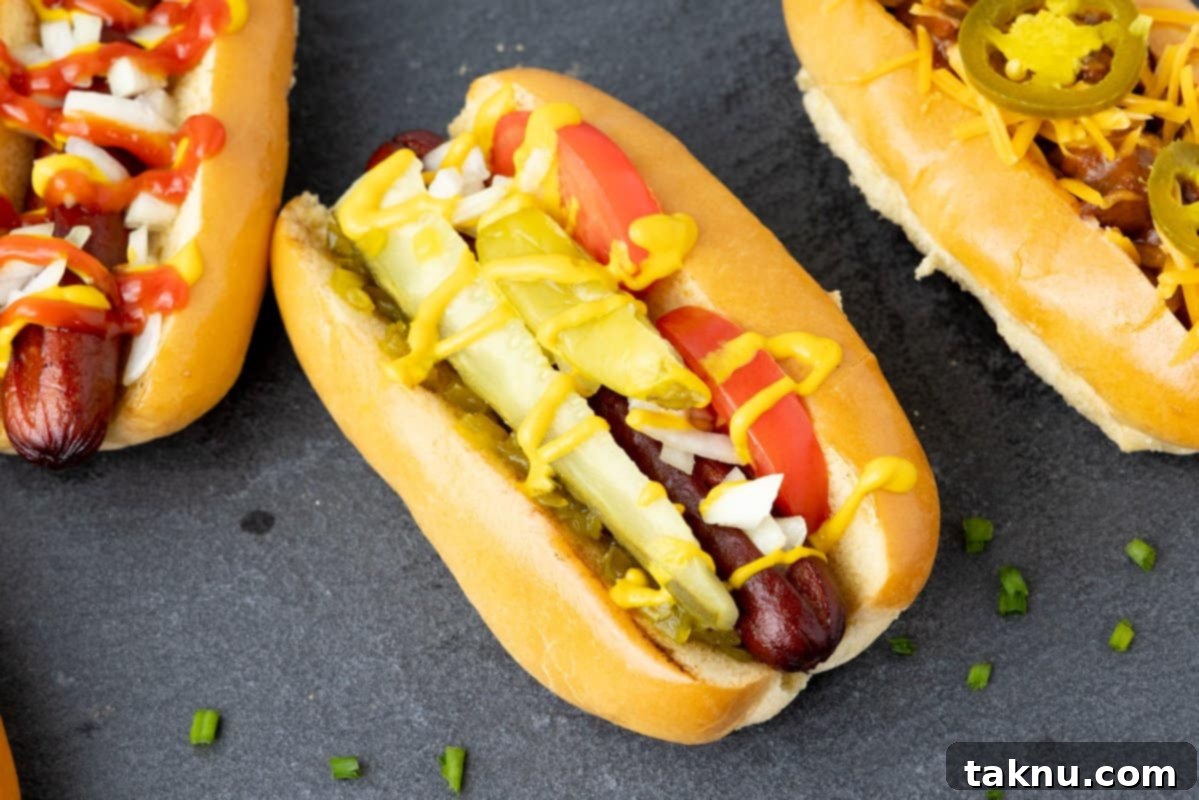
1. The Iconic Chicago Style Hot Dog
The Chicago dog is a vibrant, colorful, and flavor-packed experience, a true symphony of textures and tastes. It features a specific array of ingredients, some of which might be a little harder to find outside of the Midwest. Most standard grocery stores, for instance, typically do NOT carry poppy seed buns, so you might have to substitute with a regular hot dog bun when crafting this type of smoked hot dog. But don’t let that deter you; the combination of flavors is still outstanding.
- 100% beef hot dog (preferably natural casing)
- Poppy seed bun (or a high-quality regular bun, lightly steamed)
- Dill pickle spear
- Fresh tomato wedges or slices
- Diced white onions
- Sport peppers or pepperoncini (whole or sliced)
- Sweet pickle relish (often neon green)
- Classic yellow mustard
- A dash of celery salt (the secret ingredient!)
2. The Classic NY Style Hot Dog (My Personal Favorite!)
This is undeniably my all-time favorite type of smoked hot dog recipe. Every time I visit New York City, grabbing a street dog is an absolute must-do ritual, right alongside enjoying a delicious slice of pepperoni pizza. The NY dog is considerably simpler than its Chicago counterpart, yet it delivers an equally powerful and satisfying punch of flavor through its humble, yet perfectly balanced ingredients.
- 100% beef hot dog
- Soft hot dog bun (lightly toasted)
- Sautéed or diced onions (often cooked in a tomato-based sauce, sometimes called “onion sauce”)
- Tangy sauerkraut
- Spicy brown mustard (or yellow mustard if you prefer a milder kick)
3. The Indulgent Chili Cheese Hot Dog
The chili cheese dog is a glorious, messy, and utterly delicious masterpiece of comfort food. For convenience and consistency, I often opt for canned chili specifically formulated for hot dogs. The choice of chili – with beans or no beans – is entirely up to your personal preference; both ways are incredibly tasty! Pile on a generous amount of shredded cheese, and you’ve got yourself an amazing, decadent chili cheese dog that’s perfect for a hearty meal.
- 100% beef hot dog
- Sturdy hot dog bun
- Hearty chili (with or without beans, homemade or canned)
- Generous shredded cheddar cheese (or a melty cheese sauce)
- Sliced jalapeños (fresh or pickled, for an added kick and brightness)
- Optional: A dollop of sour cream or a sprinkle of chopped green onions for garnish
Pro Tips for the Best Smoked Hot Dogs
Unlock the secrets to truly exceptional smoked hot dogs with these seasoned tips:
- Always Choose 100% Beef: As emphasized earlier, the quality of your hot dog makes a huge difference. Opt for all-beef hot dogs, ideally with natural casings, for the best flavor and that satisfying snap.
- Score for Maximum Flavor: Don’t skip slicing the dog lengthwise about halfway through with a sharp knife. This technique significantly increases the surface area, allowing the hot dog to absorb more of that desirable smoke flavor and preventing bursting.
- Explore Local Butchers: Support local businesses and discover hidden gems! Many local butchers craft their own incredible hot dogs and sausages that often surpass mass-produced brands in quality and taste.
- Toast Your Buns: A perfectly cooked hot dog deserves a perfectly prepared bun. Lightly toast your hot dog buns on the grill or in a dry pan just before serving. This adds an extra layer of texture and flavor, preventing them from getting soggy.
- Don’t Overcook: Hot dogs are pre-cooked, so your goal is to heat them through and infuse smoke, not to “cook” them. Overcooking can lead to a dry, rubbery texture. Use a thermometer!
- Experiment with Smoke: Try different wood types to see how they subtly change the hot dog’s flavor. Applewood for a sweeter note, hickory for something bolder, or a competition blend for a balanced profile.
Frequently Asked Questions About Smoked Hot Dogs
At a consistent smoking temperature of 250°F (120°C), regular-sized hot dogs should take approximately 45-60 minutes to reach an optimal internal temperature of 160°F (71°C) and develop a rich smoky flavor. Jumbo hot dogs might take slightly longer.
When grilling at a higher temperature of 400°F (200°C), regular-sized hot dogs cook much faster, typically taking about 5 minutes, with regular rotation to ensure even cooking and prevent burning. Jumbo hot dogs will require closer to 7-10 minutes to heat through.
While hot dogs are not typically categorized as a “healthy” food, you can make more nutritious choices. Opting for 100% all-beef hot dogs is generally a better option than those made with pork and chicken mixtures. Additionally, choosing lower-sodium or nitrate-free varieties can improve their health profile. As with any food, moderation is key.
No, it is not recommended to smoke hot dogs directly from frozen. For best results in both flavor absorption and even cooking, always thaw your hot dogs completely in the refrigerator before placing them in the smoker. Smoking frozen hot dogs can lead to uneven cooking and a less desirable texture.
More Delicious Smoked and Grilled Recipes You’ll Love
- Smoked Shrimp
- Grilled Sliced Potatoes
- Grilled Filet Mignon – The Perfect Steak
- Grilled Sausage and Peppers
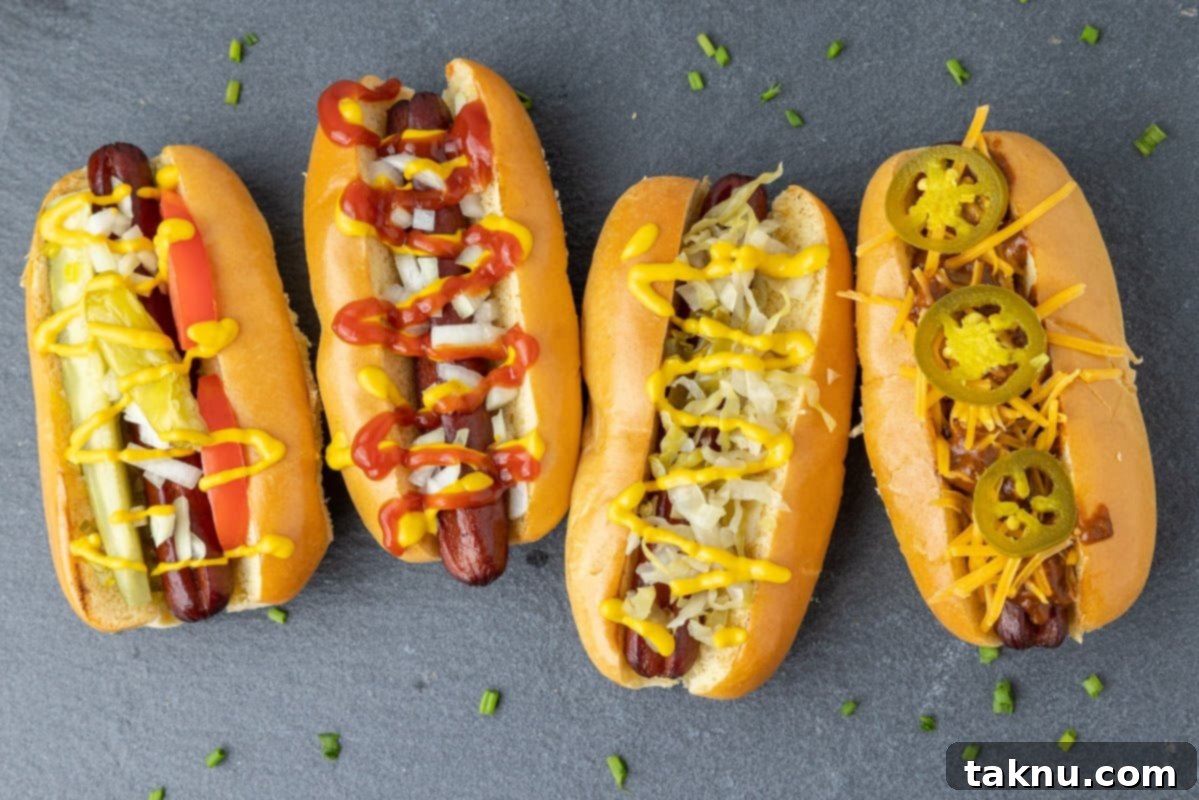
Perfect Smoked Hot Dogs with Delicious Toppings!
Pin Recipe
Ingredients
For the Hot Dogs & Buns
- 6 hot dogs (100% Beef, high quality)
- 6 hot dog buns
Chicago Style Toppings
- 2 tomatoes (sliced into wedges)
- 6 dill pickle spears
- ½ white onion (diced)
- 12 sport peppers or pepperoncini
- ½ cup sweet pickle relish (preferably neon green)
- ¼ cup yellow mustard
- celery salt (dash)
NY Style Toppings
- ½ onion (diced, or onion sauce)
- ½ cup sauerkraut
- ¼ cup brown mustard (or yellow if preferred)
Chili Cheese Dog Toppings
- 1 cup chili (with or without beans)
- ½ cup shredded cheddar cheese (or other melting cheese)
- ½ cup jalapenos (sliced, fresh or pickled)
Equipment
Instructions
- Pre-heat your smoker to 250°F (120°C) with your preferred wood chips or pellets.
- Carefully slice each hot dog lengthwise down the middle, about halfway through the dog, ensuring you don’t cut it into two separate halves. This helps absorb more smoke flavor.
- Place the prepared hot dogs directly on the grill grate of the smoker. Smoke for 45-60 minutes, or until they reach an internal temperature of at least 160°F (71°C) using an instant-read thermometer. You will see them darken and the slit expand.
- Remove the hot dogs from the smoker and place them into warm, toasted hot dog buns. Top with your desired combinations (Chicago, NY, Chili Cheese, or your own favorites!) and enjoy immediately!
Pro Tips
- Choose 100% beef hot dogs with natural casings for the best flavor and “snap.”
- Slice the hot dogs lengthwise (about halfway) with a sharp knife before smoking to maximize smoke flavor absorption and prevent bursting.
- Don’t be afraid to try hot dogs from local butchers; they often offer exceptional quality and unique flavors.
- Always lightly toast your hot dog buns before serving to add texture and prevent sogginess.
- Monitor internal temperature with an instant-read thermometer to ensure perfectly heated hot dogs without overcooking.
- Experiment with different wood types like applewood, pecan, or hickory for varied smoke profiles.