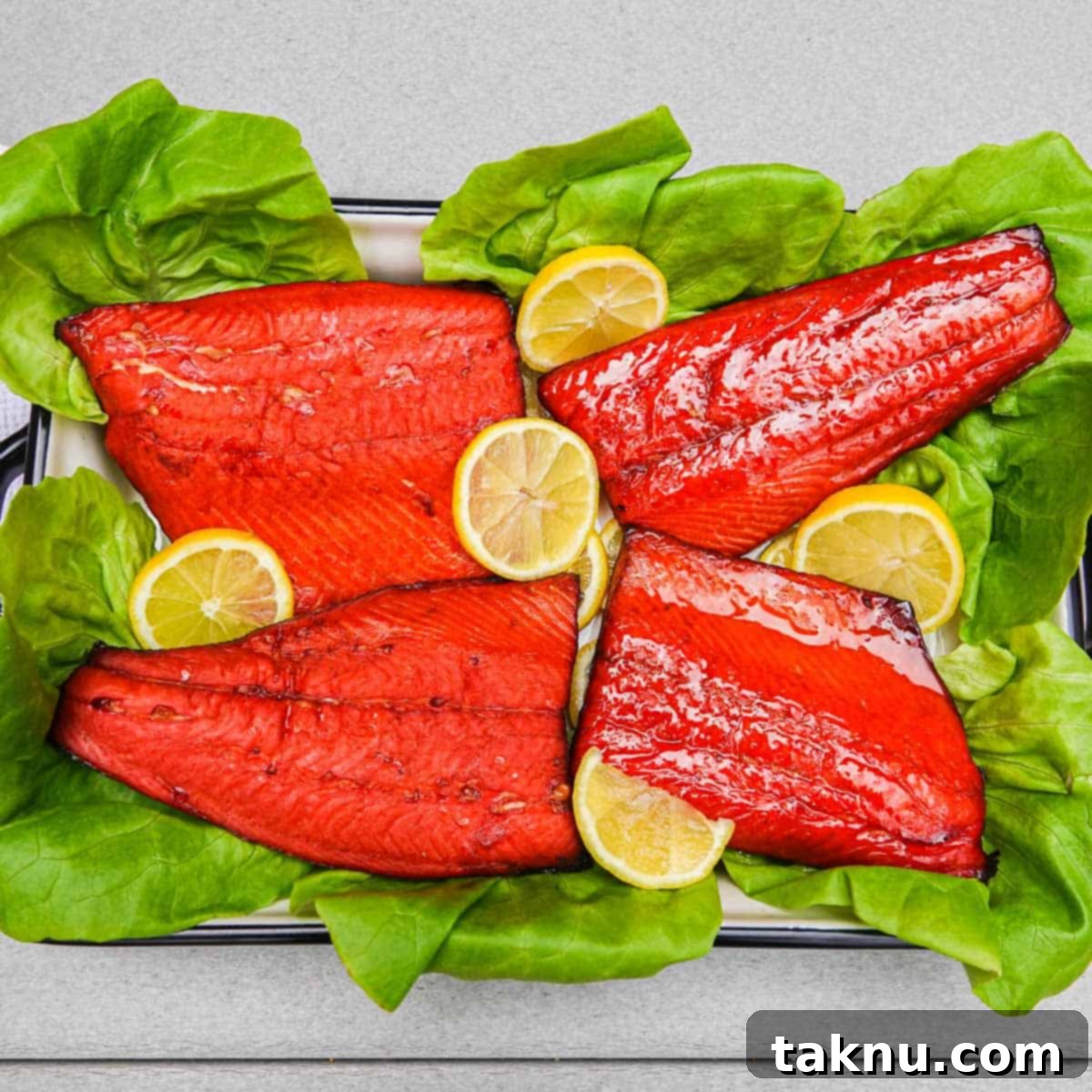
Mastering Homemade Smoked Salmon: A Sweet, Smoky, and Irresistible Recipe
Unlock the secret to incredibly delicious and perfectly smoked salmon right in your own backyard! Forget expensive store-bought options; making your own is surprisingly simple, far more flavorful, and remarkably cost-effective. This comprehensive guide will walk you through every step to achieve sweet, smoky, and tender salmon that will impress everyone. Let’s get that smoker fired up and create some culinary magic!
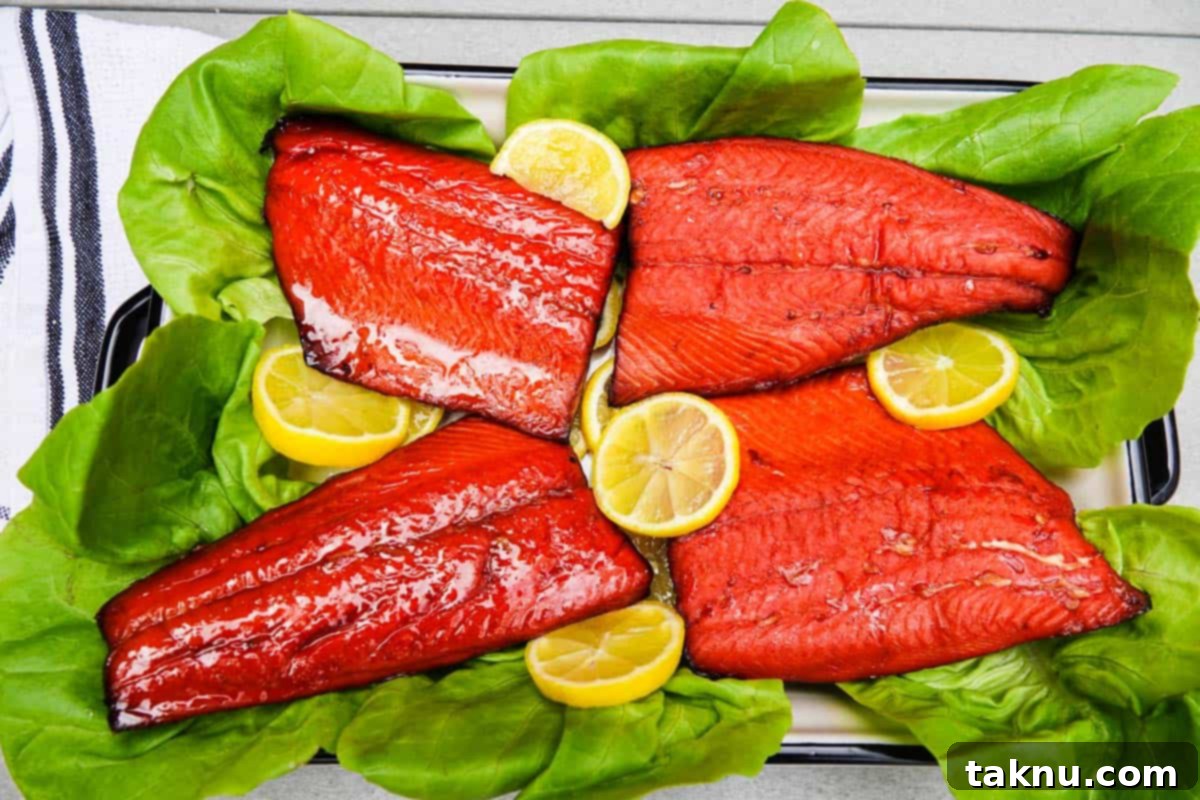
[feast_advanced_jump_to]
Video – Step by Step Guide
Why You Should Make Your Own Smoked Salmon
If you’ve ever savored a creamy salmon dip, enjoyed a classic bagel with lox, or simply appreciate the rich flavors of expertly prepared fish, then you already know the allure of smoked salmon. But if you’ve never tried homemade, prepare to be amazed! Smoking your own salmon is not only incredibly delicious but also surprisingly easy and significantly more affordable than buying it pre-made. The difference in taste and texture between homemade and store-bought is monumental, making it a truly rewarding culinary endeavor.
This recipe offers versatility, allowing you to customize your salmon to your preference. We’ll explore options for both a delectable sweet glaze and a simpler, savory preparation, all achieved on a pellet smoker like a Traeger. Whether you prefer a hint of sweetness or a more traditional salty profile, this recipe ensures fantastic results. So, get ready to ignite your smoker and embark on a journey to create the most flavorful smoked salmon you’ve ever tasted.
Choosing the Best Salmon for Smoking
The foundation of great smoked salmon begins with selecting the right fish. While this recipe works beautifully with nearly any salmon variety, my personal preference leans towards wild-caught salmon. It’s readily available at most local grocery stores and offers a superior flavor profile. For this particular recipe, I used wild-caught sockeye salmon, known for its vibrant color and firm texture.
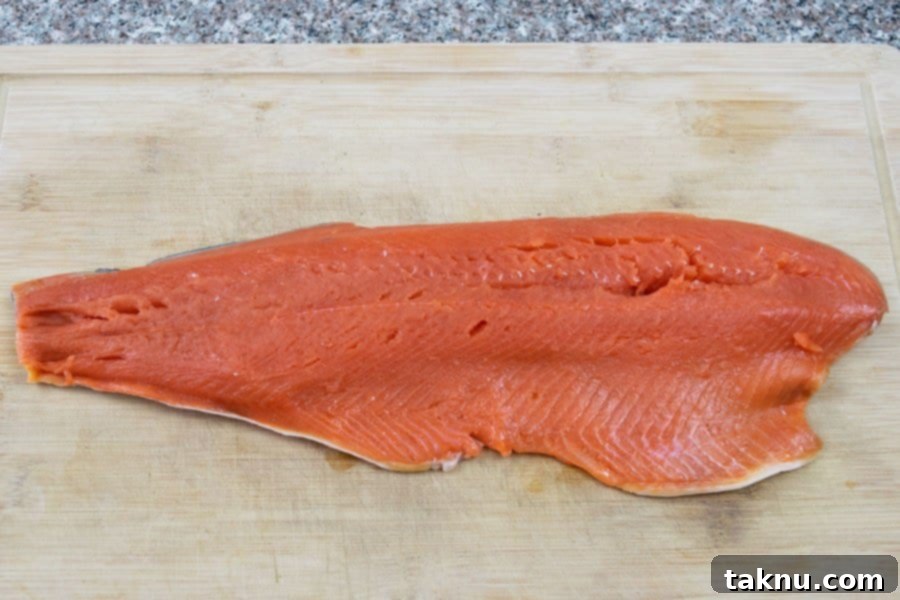
While sockeye is excellent, feel free to use whatever fresh salmon you can find. Here are some common types you’ll encounter in stores, with King and Sockeye often being top choices for their rich flavor and fat content:
- King Salmon (Chinook): Known for its high fat content, rich flavor, and buttery texture, making it a luxurious choice for smoking.
- Sockeye Salmon: Distinguished by its deep red flesh and robust, distinct flavor. It’s leaner than King salmon but still excellent for smoking.
- Atlantic Salmon: Primarily farm-raised, it’s widely available and has a milder flavor and softer texture compared to wild varieties.
- Coho Salmon (Silver): Offers a delicate flavor and firm, orange-red flesh, great for a milder smoked product.
- Pink Salmon: Smaller and milder, often used for canning or pre-packaged smoked salmon due to its softer texture.
- Chum Salmon (Keta): Leaner with a lighter color, frequently used for jerky or a less oily smoked product.
When choosing between wild-caught and farm-raised, wild salmon often boasts a more intense, cleaner flavor and a darker, richer color due to its natural diet. Farm-raised salmon typically has a higher fat content and a milder flavor, making it a good, more accessible option. For the absolute best taste, always opt for wild-caught if your budget and availability allow.
Detailed Steps: How to Smoke Salmon to Perfection
I’m excited to share my exact method for smoking the best salmon, taking you from raw fillet to a perfectly finished product. This process is straightforward and results in salmon that far surpasses anything you can buy in a package. Let’s dive into the details!
Step 1: Preparing the Salmon – Removing Pin Bones
My journey to fantastic smoked salmon always begins with a fresh wild-caught sockeye salmon fillet. As mentioned, I consistently choose wild-caught for smoking, as well as for making my popular salmon jerky, because the superior flavor is undeniable. The deep, vibrant red hue of the flesh is a clear indicator of wild-caught salmon, differentiating it from the paler, sometimes fattier, farm-raised varieties.
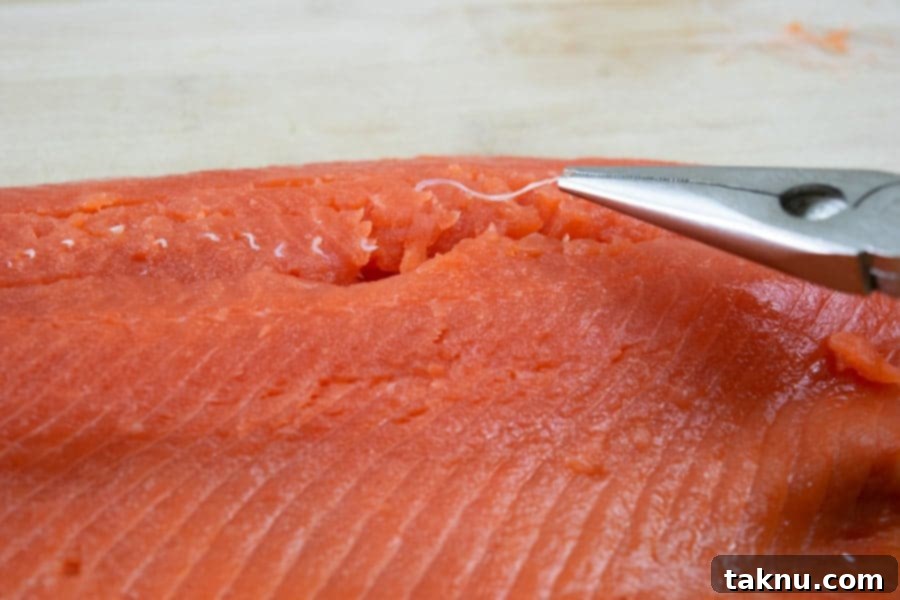
Before moving on, take a moment to gently run your fingers across the flesh of the salmon, feeling for any small, rigid pin bones. Some fillets might have several, while others are bone-free, but it’s crucial not to skip this step. These tiny bones are typically white and can be felt as hard points along the centerline of the fillet.
To remove them, I use a pair of standard needle-nose pliers. Grip each bone firmly and pull it out with a gentle wiggling motion. They should come out quite easily. Ensuring all pin bones are removed guarantees a smooth, enjoyable eating experience. Trust me, no one appreciates encountering bones in their perfectly smoked salmon!
Step 2: Brining for Flavor and Texture
The next critical step in preparing your salmon for the smoker is brining. This process involves submerging the fish in a salt and sugar solution, which plays several vital roles: it draws out excess moisture, helping to firm the flesh; it acts as a mild preservative; and most importantly, it infuses the salmon with incredible flavor. For this recipe, we’re doing something a little different and incredibly delicious: a Dr. Pepper wet brine!
The carbonation and unique blend of flavors in Dr. Pepper, combined with a touch of salt, create a beautifully balanced brine that imparts a subtle sweetness and a complex undertone to the salmon. The sugar from the soda helps to tenderize the fish and aids in creating a desirable caramelized crust during smoking.
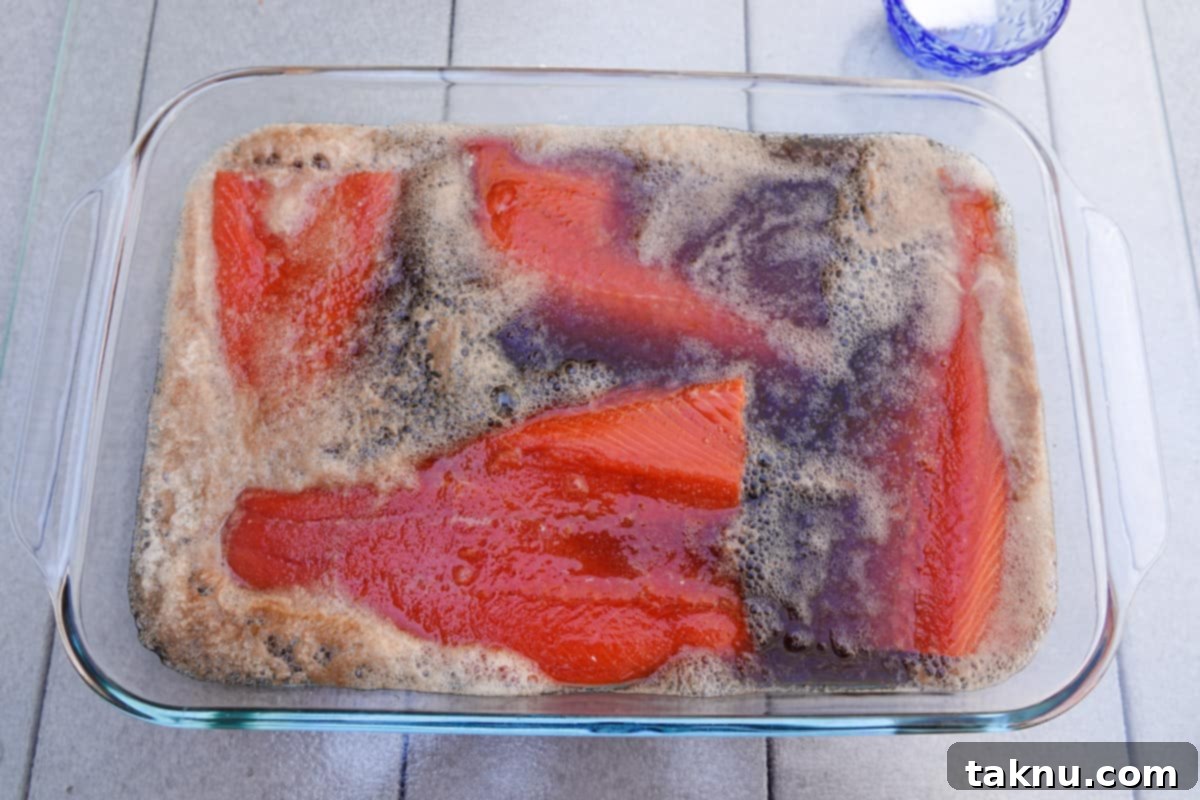
Dr. Pepper Brine Recipe
- Pour 24oz of Dr. Pepper soda into a deep 9×13″ baking dish.
- Add ¼ cup of kosher salt and stir with a whisk until the salt is fully distributed and dissolved.
- Carefully place the salmon fillet into the dish, ensuring it is skin-side up and fully submerged in the brine.
- Cover the dish tightly with plastic wrap and place it in the refrigerator. Allow it to brine for 8 hours, or ideally, overnight (up to 15 hours) for maximum flavor absorption.
Typically, after brining, many recipes call for rinsing the fish under cold water. However, for this Dr. Pepper brine, I intentionally use a moderate amount of salt to preserve that distinctive sweet soda flavor. Therefore, there’s no need to rinse this salmon. Simply remove the fillet from the brine and thoroughly pat it dry on both sides with paper towels.
Alternatively, for a Dry Brine: If you prefer a dry brine or don’t have Dr. Pepper on hand, you can mix ¼ cup kosher salt, ¼ cup brown sugar, and 1 tablespoon of paprika. Rub this mixture generously over the entire salmon fillet, then place it uncovered in the refrigerator for the same duration. The pellicle formation step will follow just as with the wet brine.
Step 3: Forming the Pellicle – The Secret to Smoky Flavor
Before your salmon ever touches the smoker, an essential step is to form a pellicle. A pellicle is a thin, slightly tacky, translucent film that develops on the surface of the fish’s flesh. This layer is crucial for several reasons: it acts as a binder, allowing the smoke to adhere more effectively to the fish, ensuring a richer smoky flavor; and it helps to seal in moisture while slowing down the cooking process, resulting in a more evenly cooked and tender product.
There are two effective methods to create a perfect pellicle:
- Fan Method (Faster): Place the brined and dried salmon fillets on a cooling rack and position them in front of a fan in a cool room. Allow them to air dry for 3-5 hours. The circulating air accelerates the drying process, forming the pellicle more quickly.
- Refrigerator Method (Convenient): Arrange the salmon fillets on a cooling rack, uncovered, and place them in the refrigerator. Let them air dry for 6-8 hours, or even overnight. The cool, dry air in the fridge works wonders to develop the pellicle.
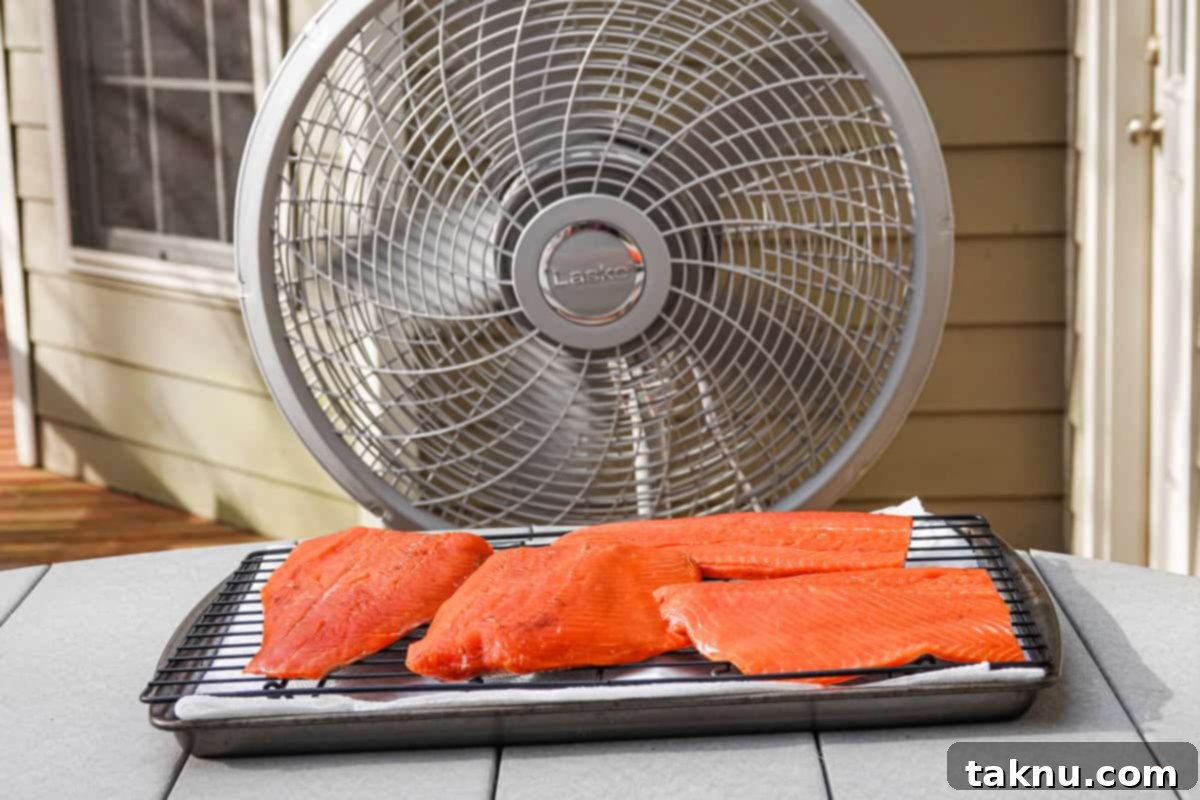
Both methods will successfully create a pellicle; your choice simply depends on the time you have available. I often prefer using the fan method for its speed and efficiency. You’ll know the pellicle has properly formed when the surface of the fish develops a noticeably shiny, slightly sticky sheen or film. Once this distinctive film is visible, your salmon is perfectly primed and ready for the smoker.
Step 4: Selecting Your Smoker
The type of smoker you use significantly impacts the smoking experience and final flavor profile. For this recipe, I’m utilizing my reliable pellet smoker, similar to the Traeger 780. Pellet smokers are an excellent choice for beginners and seasoned pros alike, offering exceptional ease of use and consistent results. They infuse salmon, and indeed many other meats, with fantastic smoke flavor without the constant attention typically required by other smoker types. Simply set the temperature, add your pellets, and let it work its magic.
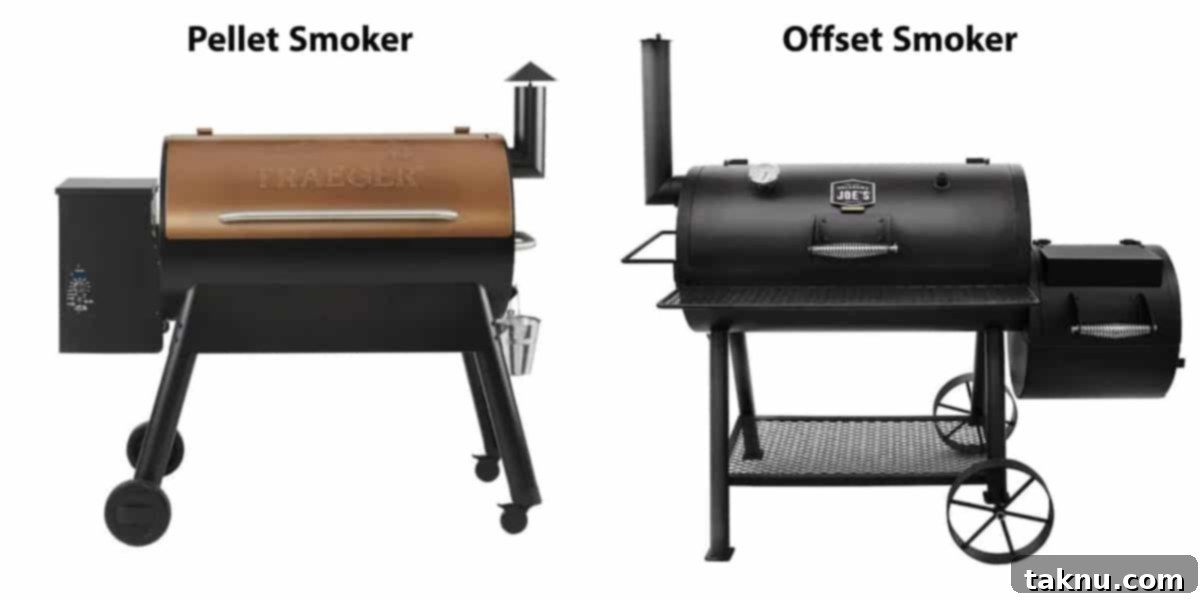
Alternatively, a traditional offset smoker, like the Oklahoma Joe’s Smoker, can also be employed for smoking salmon. These smokers demand a bit more skill and attention to maintain a consistent temperature, but they are renowned for producing a deep, rich smoke flavor that many purists adore. If you’re comfortable managing a firebox, an offset smoker can deliver truly exceptional results. Electric smokers are another viable option, offering steady temperatures and easy operation, albeit with a generally milder smoke flavor. Whichever smoker you choose, ensure it can maintain a low, consistent temperature for optimal smoked salmon.
Step 5: Choosing the Right Wood Pellets or Chips
The type of wood you use for smoking salmon plays a crucial role in its final flavor. The goal is to impart a delicate, complementary smoke rather than an overpowering one. Therefore, lighter woods, particularly fruit woods, are ideal for fish.
Fruit Woods: Cherry or apple wood chips (or pellets for a pellet smoker) are my top recommendations when smoking salmon. They offer a sweet, mild, and fruity smoke that perfectly enhances the natural richness of the fish without dominating it. Other excellent fruit wood choices include pecan or even a light hickory, used sparingly.
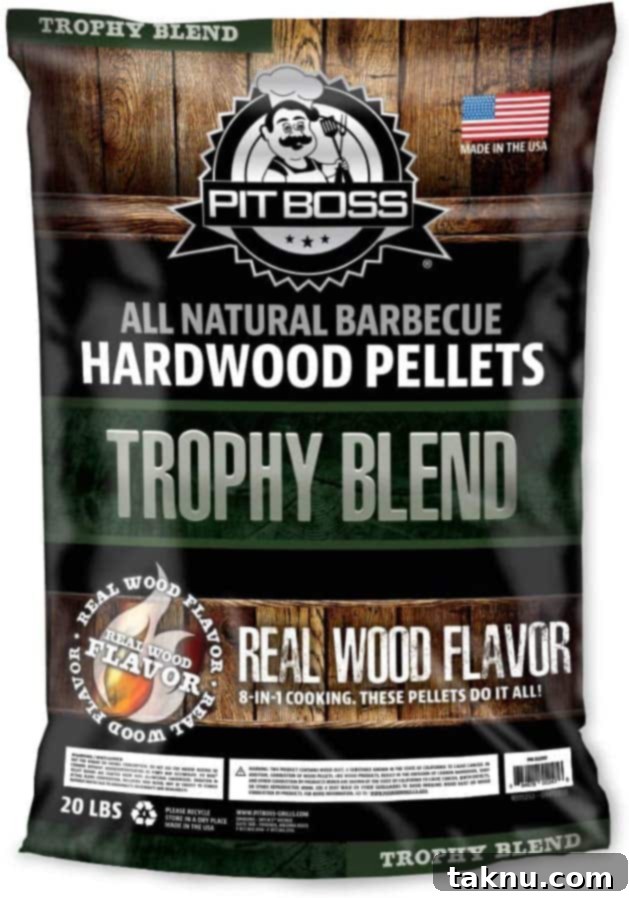
Blended Pellets: If fruit wood pellets aren’t readily available, a competition or trophy blend is a fantastic alternative. These blends are typically a mixture of several hardwoods (often including oak, hickory, and cherry) designed to provide a balanced smoke profile that pairs well with a wide variety of meats and fish. They offer a reliable and versatile option for consistent smoke flavor.
Once you’ve selected your favorite wood, load your pellet hopper, or prepare your wood chips/chunks for your offset smoker, and get your grill preheated. The right wood sets the stage for a truly exceptional smoked salmon experience.
Step 6: The Smoking Process – Low and Slow
The key to perfectly smoked salmon is a “low and slow” approach. For hot smoking, I set my pellet smoker to its lowest smoke setting, typically around 180°F (82°C). This temperature is ideal for infusing maximum smoke flavor without overcooking the delicate fish. If you have a dedicated smoke box and prefer a true cold smoke, you could technically go even lower, but 180°F is perfect for a delicious hot-smoked result.
Maintaining Temperature: A consistent temperature of 180°F (82°C) will be maintained throughout the entire smoking process. Place your salmon fillets directly on the smoker grill grates, skin-side down. There’s no need to oil the skin beforehand; the skin typically won’t stick to the grates and will act as a natural barrier to protect the fish from direct heat.
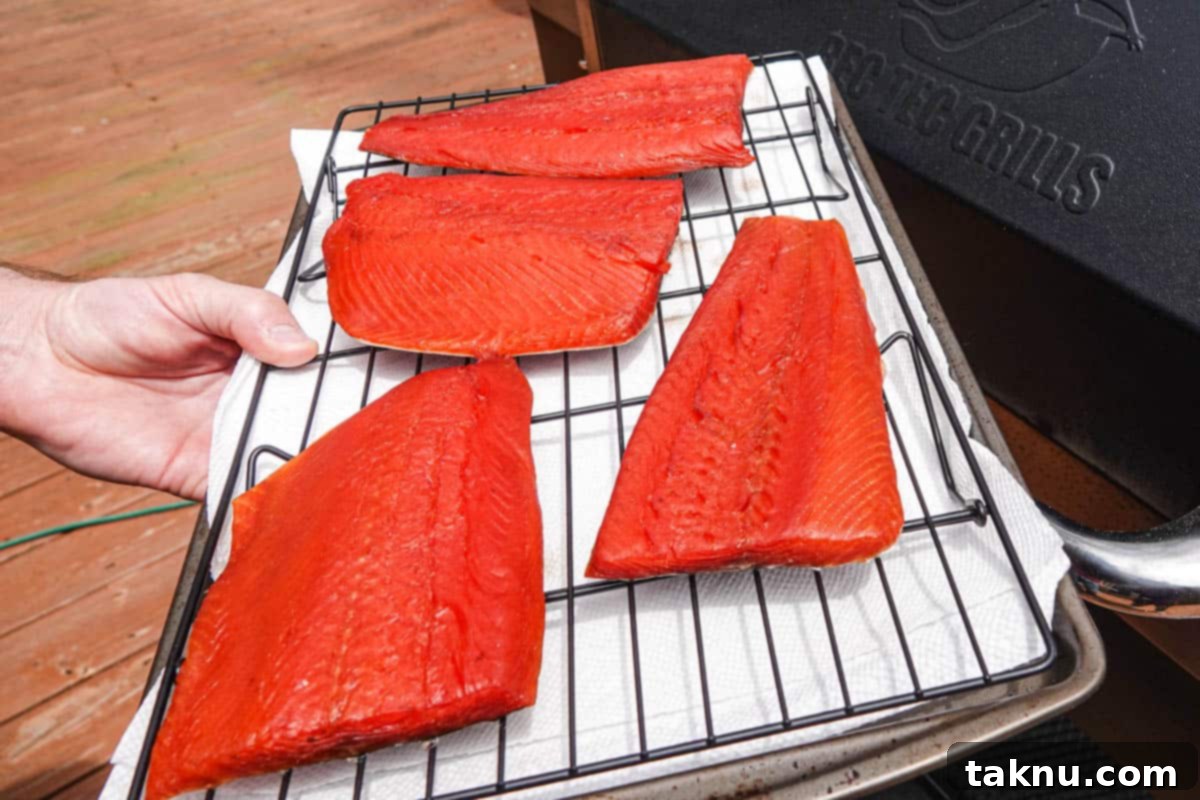
Initial Smoke: Close the grill lid and allow the salmon to smoke for the first hour without any interruption or additional coatings. This initial phase is crucial for the pellicle to fully absorb the smoky goodness from your chosen wood pellets. After this first hour, you’ll have a decision to make: do you prefer a milder, more subtly flavored salmon, or do you want to enhance it with a sweet glaze? Both options are delicious, depending on your palate.
Optional Step: Applying a Sweet Glaze
For those who love a beautifully sweet and sticky smoked salmon, brushing on a glaze is an absolute must. My go-to glaze is incredibly simple yet incredibly effective: equal parts high-quality honey and pure maple syrup. Combining 2 tablespoons of each ingredient is usually plenty for a single salmon fillet, providing a rich, natural sweetness that complements the smoky notes perfectly.
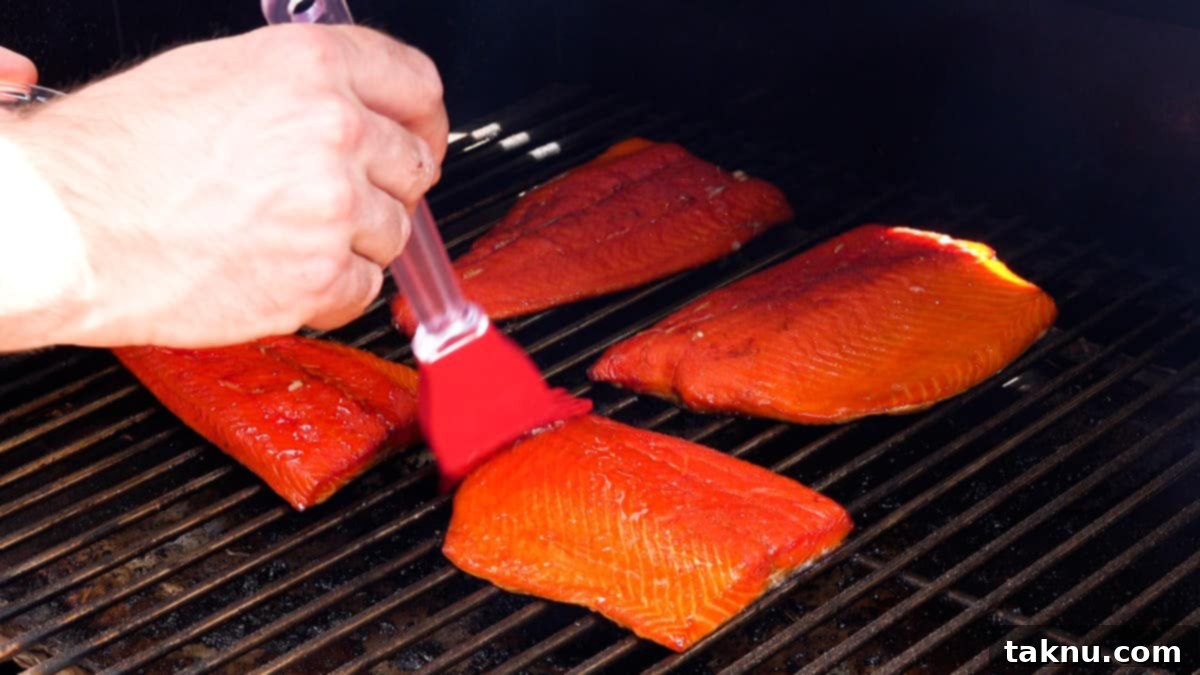
Glaze Application: After the first hour of smoking, open your smoker and begin to gently pat or brush the glaze onto the top surface of the salmon. Repeat this process every 20 minutes or so. The entire smoking process for salmon typically takes about 2 hours, which allows for 2-3 coats of glaze. This layering builds up a wonderfully sticky, flavorful crust that is truly irresistible. Continue smoking until the fish reaches its target internal temperature.
Step 7: Knowing When Your Smoked Salmon is Done
Determining when your smoked salmon is perfectly cooked is crucial for optimal taste and texture. Relying solely on time can be misleading, as the thickness of your salmon fillets will directly impact the cooking duration. Therefore, the most accurate and reliable method is to check the internal temperature of the fish using an instant-read thermometer.
Target Temperature: Begin checking the internal temperature after approximately 1.5 hours of smoking. Insert the thermometer into the thickest part of the fillet, ensuring it does not touch the skin. Our target internal temperature for perfectly smoked salmon is 145°F (63°C). Once your salmon reaches this temperature, it is safely cooked and ready to be removed from the smoker. This temperature ensures the salmon is flaky, moist, and flavorful.
Golden Rule: Cook to Temperature, Not Time. While this smoking process generally takes about 2 hours at 180°F (82°C), remember that your thermometer is your best friend. Always prioritize reaching the target internal temperature over a specific time frame to guarantee perfectly cooked salmon every single time. Remove the salmon promptly once it hits 145°F to prevent it from drying out.
Delicious Ways to Enjoy Your Smoked Salmon
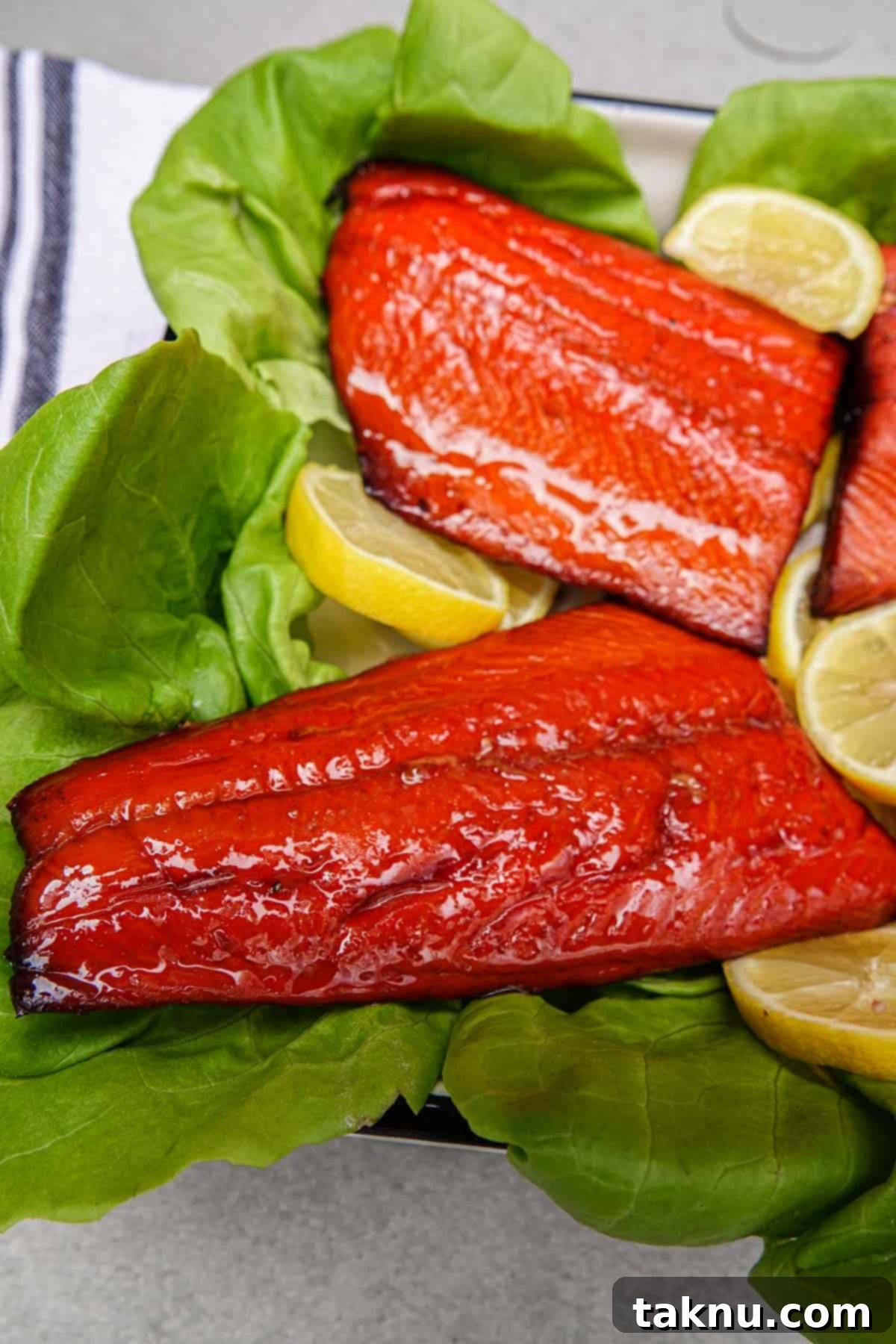
Once your homemade smoked salmon has cooled slightly, a world of culinary possibilities opens up. The beauty of this Traeger smoked salmon is its incredible versatility. While you might be tempted to eat it straight off the smoker with just a fork (and honestly, that’s a perfectly valid and delicious option!), it also shines when incorporated into a variety of dishes or transformed into savory spreads.
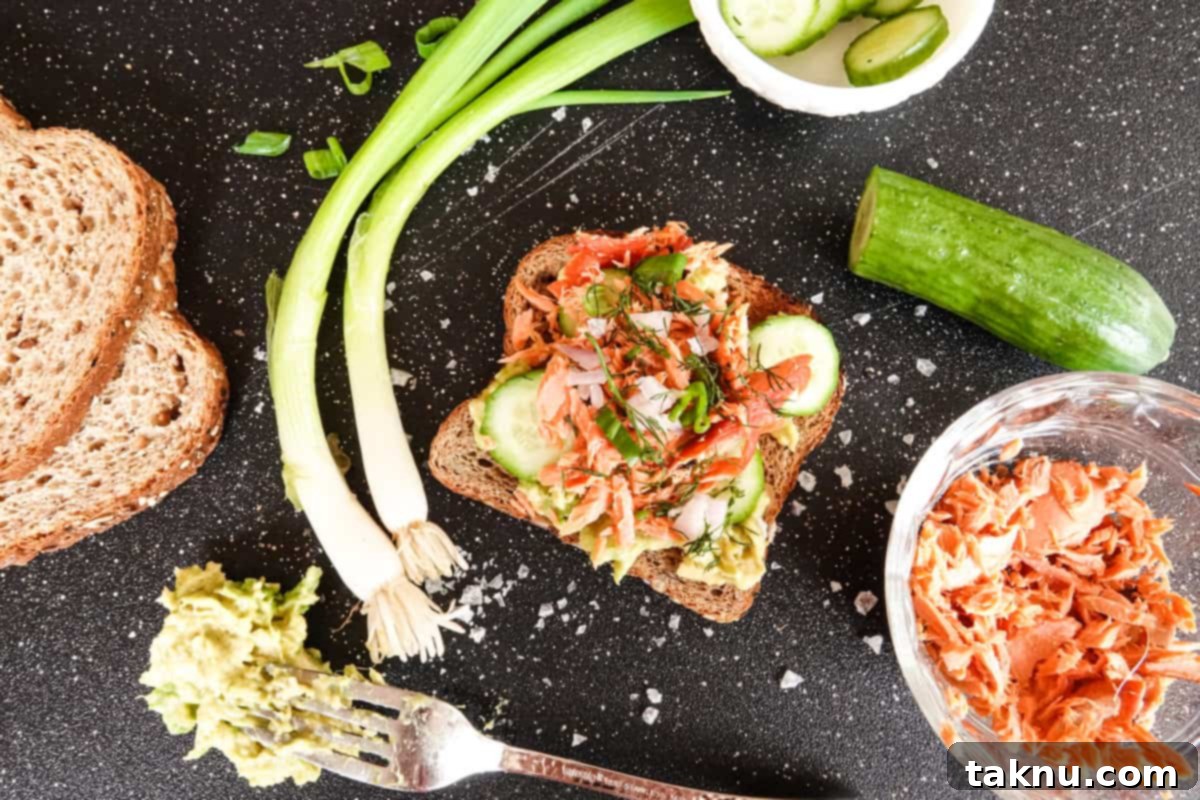
Here are some of my favorite ways to savor this smoky delicacy:
- Classic Bagel & Cream Cheese: The quintessential way to enjoy smoked salmon. Spread a generous layer of cream cheese on a toasted bagel, top with slices of your homemade smoked salmon, and add a sprinkle of capers and fresh dill.
- Smoked Salmon Dip: Flake the cooled salmon and mix it with cream cheese, fresh herbs (dill, chives), a squeeze of lemon juice, and a touch of Worcestershire sauce for an irresistible appetizer.
- Salmon Avocado Toast: A modern brunch favorite. Mash avocado on toast, top with flaked smoked salmon, a dash of red pepper flakes, and a drizzle of olive oil.
- Salads & Bowls: Add chunks of smoked salmon to your favorite green salads, grain bowls, or pasta dishes for a burst of flavor and protein.
- Scrambled Eggs or Omelets: Elevate your breakfast by folding small pieces of smoked salmon into scrambled eggs or an omelet with some goat cheese or cream cheese.
- Canapés & Appetizers: Serve thinly sliced smoked salmon on cucumber rounds, crackers, or blinis with a dollop of créme fraîche or a squeeze of lemon.
No matter how you choose to enjoy it, your homemade smoked salmon is guaranteed to be a hit. Get creative and explore the many ways this sweet and smoky treat can enhance your meals!
Frequently Asked Questions About Smoked Salmon
No, when hot smoking salmon as described in this recipe, the fish is fully cooked to an internal temperature of 145°F (63°C). This is above the safe cooking temperature for fish, ensuring it is not raw.
The total smoking time varies based on your smoker’s temperature and the thickness of the salmon fillet. At a consistent 180°F (82°C), you can estimate approximately 2 hours. However, always smoke until the internal temperature reaches 145°F (63°C), rather than strictly adhering to a timer.
Store-bought smoked salmon can be costly due to processing, packaging, and distribution. Making it at home significantly reduces this cost. While wild-caught salmon can be pricier, you can save money by choosing farm-raised salmon, which still yields delicious results when smoked yourself.
Essential Pro Tips for Perfect Smoked Salmon
Follow these expert tips to ensure your homemade smoked salmon is always a resounding success:
- Opt for Wild-Caught Salmon: For the most vibrant flavor and appealing texture, choose wild-caught salmon whenever possible. Its natural diet contributes to a richer taste profile.
- Utilize an Instant-Read Thermometer: Never guess when your salmon is done. An instant-read thermometer is indispensable for accurately checking the internal temperature and achieving perfect doneness at 145°F (63°C).
- Don’t Skip the Glaze: If you enjoy a touch of sweetness, applying a honey and maple syrup glaze during the last hour of smoking will elevate the flavor and create a delightful caramelized crust.
- Proper Pellicle Formation: Ensure the pellicle forms properly by air-drying the fish before smoking. This thin, sticky film is vital for smoke adhesion and a superior final product.
- Maintain Low & Slow Temperature: Consistency is key. Keep your smoker at a steady 180°F (82°C) throughout the process to infuse maximum smoke without overcooking.
- Smoked Shrimp
- Grilled Sliced Potatoes
- Grilled Filet Mignon – The Perfect Steak
- Grilled Sausage and Peppers
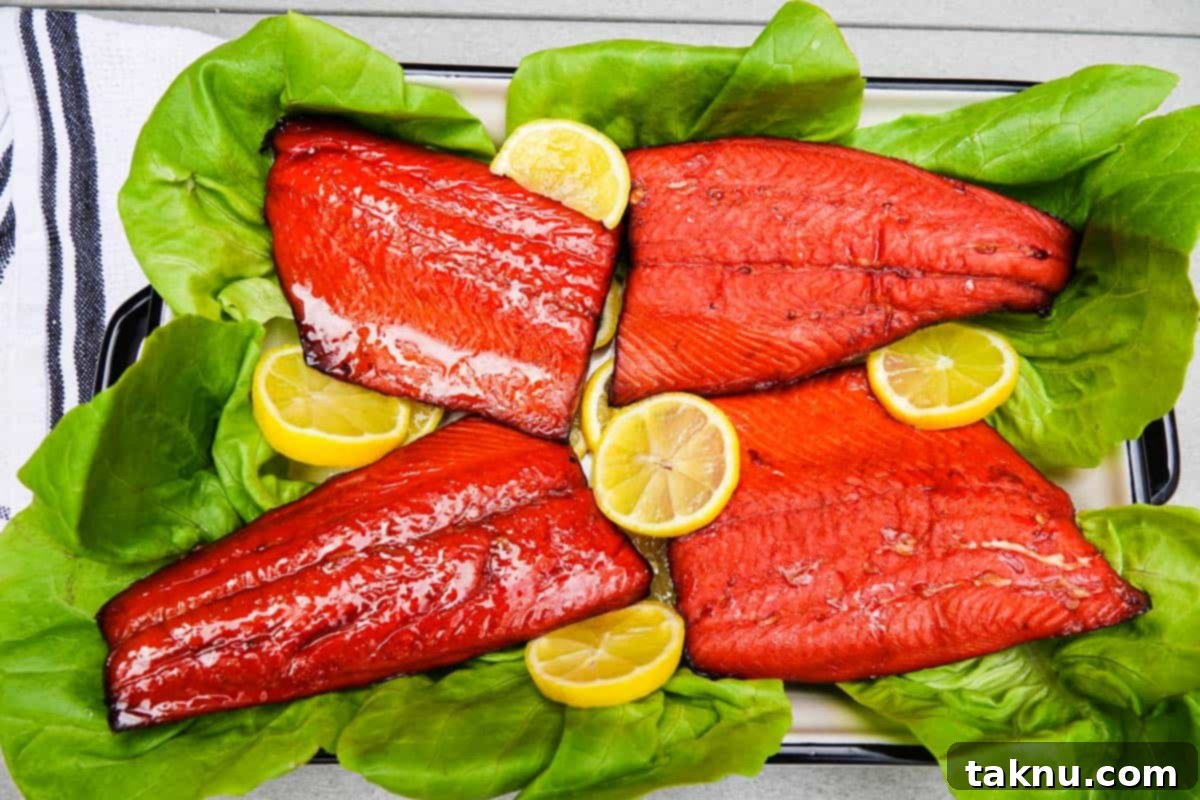
Smoked Salmon Recipe
Pin Recipe
Ingredients
- 1 filet salmon (sockeye)
Brine
- 24 oz Dr. Pepper
- ¼ cup kosher salt
Glaze
- 2 tablespoon honey
- 2 tablespoon maple syrup
Equipment
Instructions
- In a deep 9×13″ dish, combine Dr. Pepper and kosher salt for the brine. Stir until salt is fully dissolved. Place the salmon fillet skin side up into the brine, cover with plastic wrap, and refrigerate for 8-15 hours.
- After brining, remove the salmon fillet from the brine (do not rinse) and pat it thoroughly dry with paper towels on all sides.
- To form a pellicle, place the dried salmon fillets on a cooling rack in front of a fan for 3-5 hours, or uncovered in the refrigerator for 5-8 hours, until a shiny, tacky film forms on the surface.
- Once the pellicle has formed, pre-heat your pellet smoker (or other smoker type) to a consistent 180°F (82°C).
- Place the salmon fillet skin side down directly on the smoker rack and smoke for 1 hour without opening the lid.
- After the first hour, if desired, begin brushing the salmon with the honey and maple syrup glaze every 20 minutes. Continue smoking until the salmon reaches an internal temperature of 145°F (63°C) in its thickest part.
- Carefully remove the finished smoked salmon from the smoker and allow it to cool slightly before serving or storing.
Pro Tips
- Buy wild caught salmon for the best flavor
- Use an instant read thermometer to test the fish
- Glaze the fish for better flavor
- Always form a pellicle for optimal smoke absorption
- Maintain a consistent low temperature for even cooking and smoke infusion