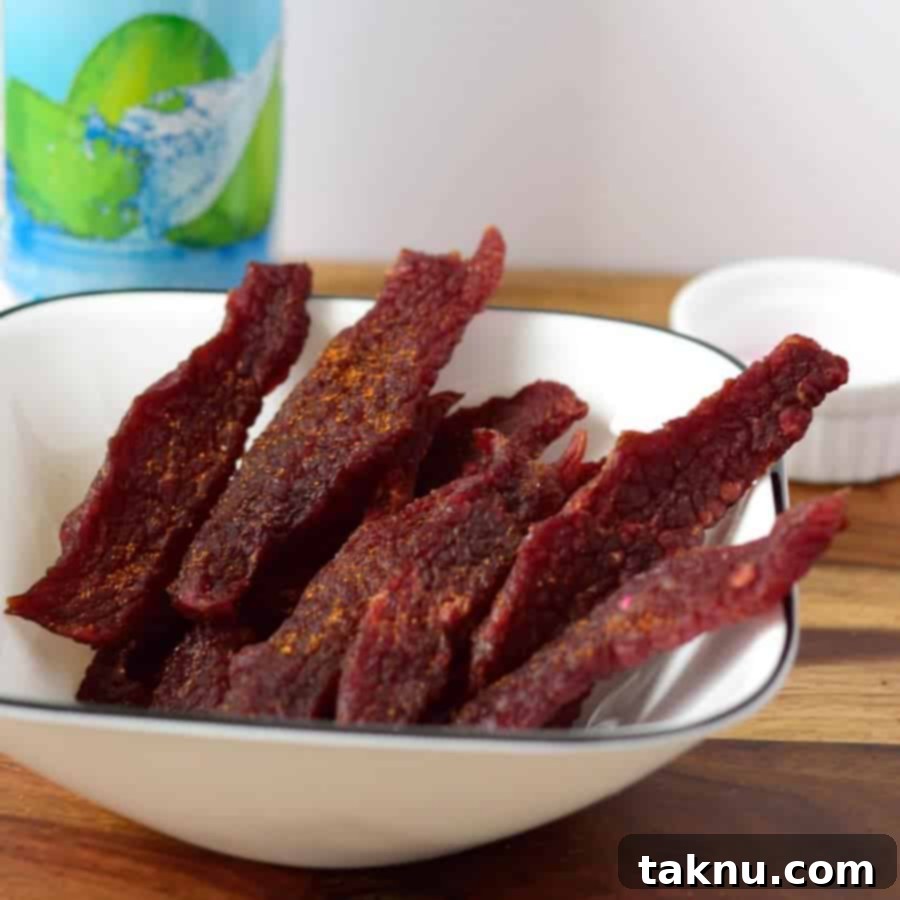
Escape to Paradise: The Ultimate Tropical Island Beef Jerky Recipe for a Taste of Vacation
Do you ever find yourself wishing you were lounging on a pristine beach, the sun warming your skin, with the gentle sound of waves in the background? Me too! While a spur-of-the-moment trip to a tropical paradise might not always be feasible, this incredible Tropical Island Beef Jerky recipe offers the next best thing. It’s a truly unique snack that captures the essence of an exotic getaway, right in your own home.
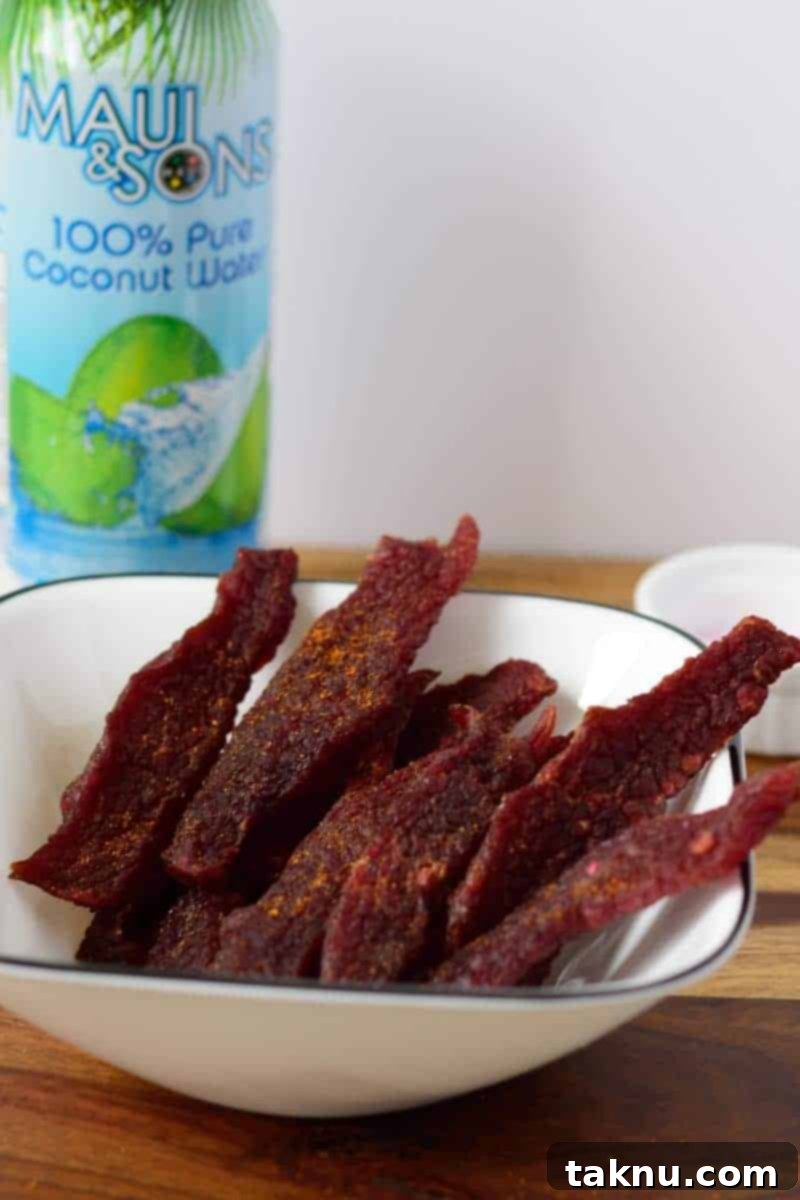
Just the other day, my wife was reminiscing about our last sun-drenched escape, asking when we could next dip our toes into crystal-clear turquoise waters and sip on refreshing Mai Tai’s. The thought instantly brought a smile to my face, but alas, winning the lottery wasn’t on my agenda this week, making an immediate tropical adventure a bit out of reach. Yet, the longing for that distant island vibe sparked an idea. How could I bring a little piece of that paradise to her, and to our snack drawer? The answer, I realized, lay in crafting a beef jerky that could transport her senses straight to the tropics.
This culinary experiment was the birth of Tropical Island Beef Jerky. I envisioned a flavor profile that balanced the natural sweetness of the islands with a subtle spice and savory depth. It turned out that a blend of coconut water for its distinct tropical notes, a touch of brown sugar for sweetness, and a hint of ginger and cayenne for that perfect warmth and kick, created a marinade that truly captured the desired essence. The result? A surprisingly delightful jerky that, while it won’t physically place you on a white sand beach, definitely offers a delicious, sun-kissed flavor experience. It’s a wonderful way to indulge in those vacation daydreams, one delicious bite at a time.
Crafting Your Tropical Island Beef Jerky: Ingredients and Preparation
Making delicious homemade beef jerky starts with the right ingredients and careful preparation. For this tropical rendition, we focus on lean cuts of beef and a thoughtfully balanced marinade.
Selecting the Perfect Cut of Beef
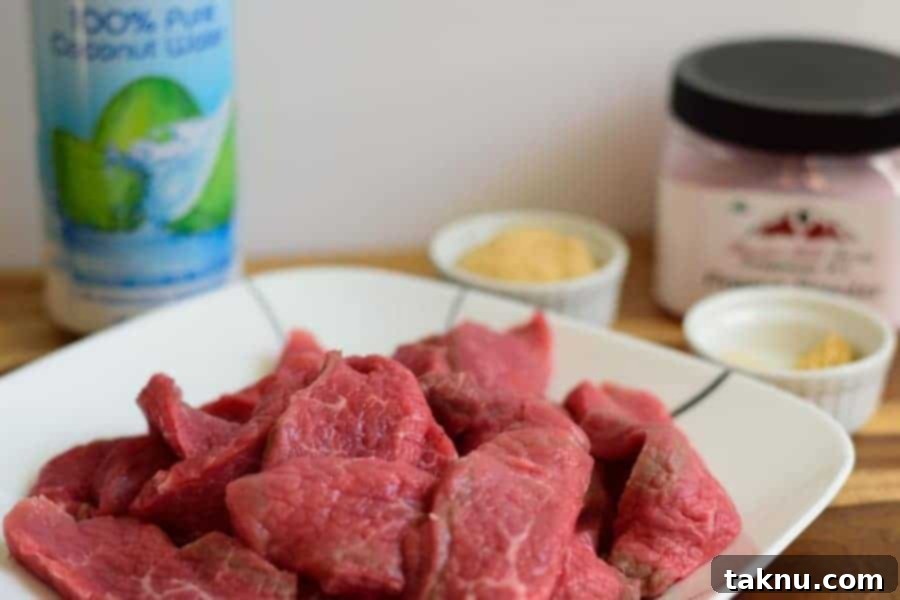
For this recipe, I highly recommend using beef eye of round. This cut is exceptionally lean, which is crucial for making good jerky. Excess fat can spoil quickly, leading to a shorter shelf life and an undesirable texture. When preparing your eye of round, trim off all visible fat meticulously. For an optimal chew, I typically slice the beef against the grain, resulting in more tender strips. However, if you prefer a chewier jerky, slicing with the grain is the way to go. To make slicing easier and more consistent, place the meat in the freezer for an hour or two until it’s partially frozen – it firms up just enough for perfect, uniform ¼-inch strips. For those who make jerky frequently, a jerky slicer can be a fantastic investment for consistent results every time.
The Essential Marinade: Tropical Flavors Unveiled
The magic of this jerky truly lies in its marinade. The combination of ingredients creates a unique tropical profile that sets it apart from traditional jerky flavors. Here’s a closer look at what goes into it:
- Coconut Water: This is the star ingredient that infuses the beef with a light, refreshing, and unmistakably tropical sweetness. It’s naturally hydrating and provides a fantastic base for our island-inspired marinade.
- Brown Sugar: Adds a rich, caramelized sweetness that complements the coconut water and balances the savory notes of the beef and spices. It also helps with the beautiful sheen and slight stickiness of the finished jerky.
- Garlic Powder & Ginger: These aromatic spices provide a foundational layer of savory warmth and a hint of exotic zest, preventing the flavor from being overly sweet. They contribute to the overall complexity of the “island” experience.
- Cayenne Pepper: For that essential kick! A touch of cayenne adds a pleasant heat that awakens the palate and makes the jerky even more addictive. You can adjust the amount to suit your spice preference – add more for an extra fiery bite, or less for a subtle warmth.
- Prague Powder #1 (Curing Salt): I opted to include curing salt in this recipe. While optional, it plays a vital role in food safety, especially for longer storage. It inhibits bacterial growth, enhances the jerky’s distinct cured flavor, and helps maintain its appealing reddish color. If you choose to omit it, ensure your jerky is thoroughly dried and stored properly for immediate consumption or shorter periods.
Combine all marinade ingredients in a bowl and whisk until well blended. Then, add your perfectly sliced beef strips to the marinade in a resealable bag or a non-reactive bowl. Ensure all the meat is fully coated. Marinate in the refrigerator for a minimum of 8 hours, and up to 24 hours, for the flavors to deeply penetrate the meat. The longer it marinates, the more intense the tropical taste will be.
The Drying Process: Transforming Marinated Beef into Delicious Jerky
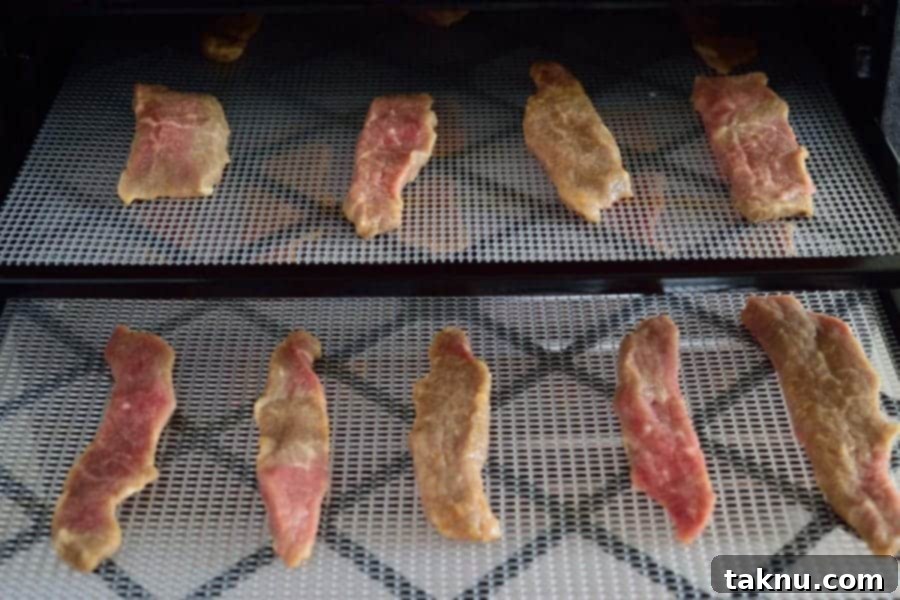
Once your beef has soaked up all that tropical goodness, it’s time for the dehydration stage. This is where the magic truly happens, transforming tender marinated strips into resilient, flavorful jerky.
Preparing for Dehydration
After marinating, remove the beef strips from the refrigerator and drain off any excess marinade. It’s crucial to pat the strips thoroughly dry with paper towels. Removing surface moisture helps to speed up the drying process and prevents steaming, ensuring a perfectly chewy (or tender, depending on your slice) texture. Lay the strips on your dehydrator trays without overlapping, allowing for optimal air circulation. Evenly spaced strips will ensure uniform drying, preventing some pieces from becoming over-dried while others remain too moist.
Dehydrating Your Jerky
For this recipe, my trusty Excalibur Dehydrator consistently delivers excellent results. I typically dry the beef strips at 160 degrees Fahrenheit (approximately 71 degrees Celsius) for about 5 hours. However, drying times can vary significantly based on your dehydrator model, the thickness of your beef strips, and the humidity in your environment. It’s always best to monitor your jerky closely after the initial few hours.
If you don’t own a dehydrator, you can also make jerky in a conventional oven. Set your oven to the lowest possible temperature, ideally around 170°F (77°C), and prop the oven door open slightly with a wooden spoon to allow moisture to escape. Drying in an oven will typically take longer than a dehydrator, often 6-10 hours, and requires more vigilant monitoring.
How to Check for Doneness: The jerky is finished when it is firm, bends without breaking, and cracks slightly, but doesn’t snap cleanly in half. There should be no signs of moisture or sliminess. It should also have a leathery, pliable texture. If it breaks too easily, it’s over-dried; if it’s still soft or moist, it needs more time.
Enjoying Your Tropical Creation
Once your Tropical Island Beef Jerky has reached its perfect texture, remove it from the dehydrator and let it cool completely at room temperature before storing. Cooling allows the jerky to firm up and reach its final consistency. Store your homemade jerky in an airtight container or a vacuum-sealed bag at room temperature for several weeks, or in the refrigerator for even longer. The unique blend of coconut, brown sugar, and a hint of spice makes this jerky an ideal snack for any occasion.
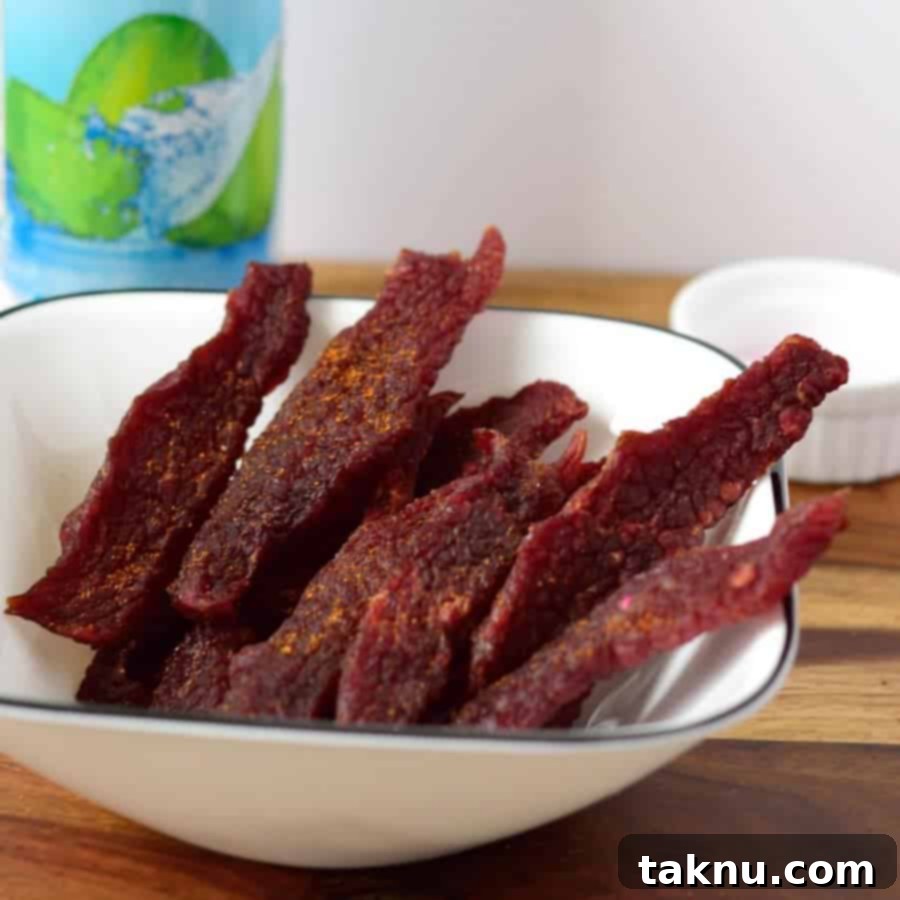
For those who love an extra kick, consider dusting the jerky with a little more cayenne pepper after it’s dried, or even a sprinkle of red pepper flakes for an added textural and flavor dimension. This extra layer of spice perfectly complements the underlying sweetness and tropical notes. Whether you’re hiking, working, or simply dreaming of your next vacation, this Tropical Island Beef Jerky is a wholesome, flavorful snack that’s sure to satisfy.
For more in-depth guidance on various techniques for drying your beef jerky, be sure to visit my comprehensive page on Jerky Making Methods.
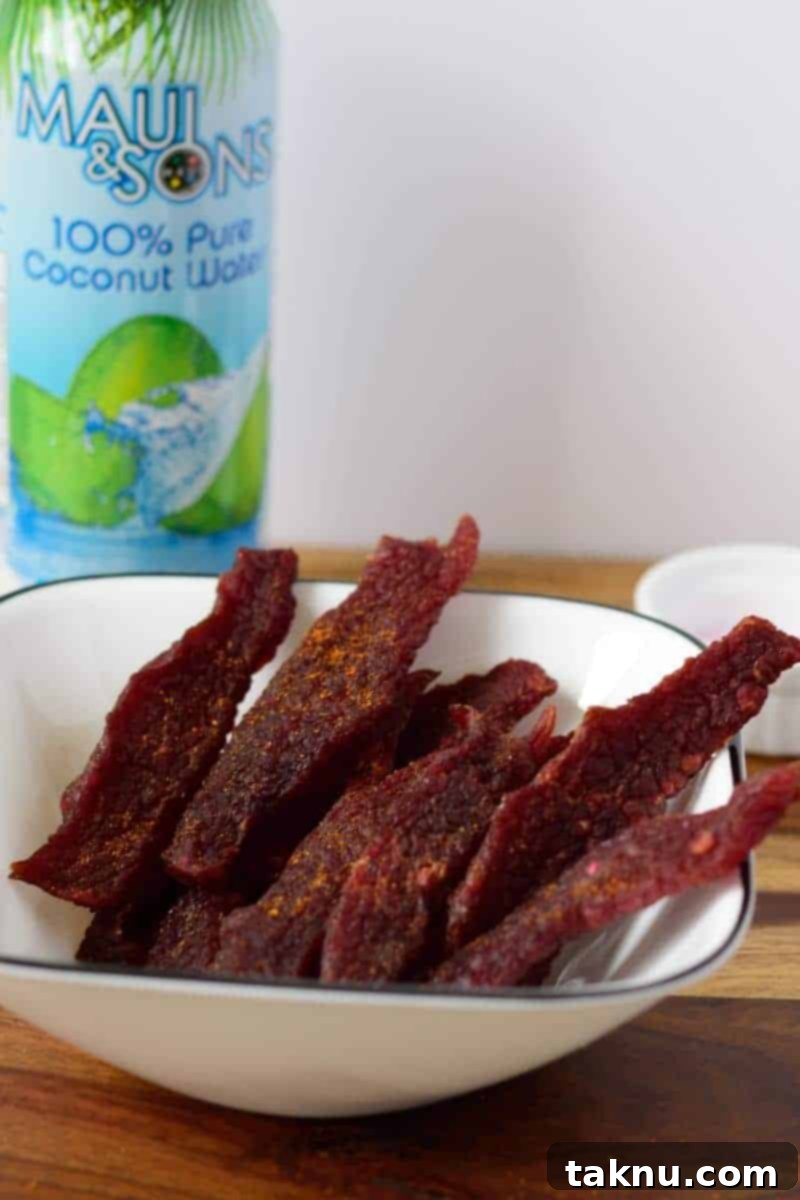
Tropical Island Beef Jerky
Pin Recipe
Ingredients
Lean Meat
- 1 lb Beef Eye of Round or Venison
Marinade
- ¾ cup coconut water
- ¼ teaspoon Prague Powder #1 (curing salt, optional but recommended for preservation)
- ½ teaspoon garlic powder
- ½ teaspoon ground ginger
- 2 tablespoons brown sugar
- ½ teaspoon cayenne pepper (adjust to taste)
Instructions
- Prepare the Beef: Trim all visible fat from the beef eye of round. Place the meat in the freezer for 1-2 hours until it’s partially frozen, making it easier to slice thinly and evenly.
- Mix the Marinade: While the meat is chilling, combine the coconut water, Prague powder (if using), garlic powder, ground ginger, brown sugar, and cayenne pepper in a bowl. Whisk everything thoroughly until the sugar is dissolved and the ingredients are well integrated.
- Slice the Meat: Remove the partially frozen meat from the freezer. Using a sharp knife or a jerky slicer, slice the beef into uniform ¼-inch strips. Slice against the grain for a more tender chew, or with the grain for a chewier texture.
- Marinate: Add the sliced beef to the prepared marinade in a large ziplock bag or a non-reactive bowl. Ensure all the meat strips are fully coated. Seal the bag or cover the bowl and marinate in the refrigerator for 8 to 24 hours. The longer the marination, the deeper the flavor will penetrate.
- Drain & Pat Dry: After marinating, remove the beef from the refrigerator. Strain off any excess marinade. Lay the strips out on paper towels and pat them thoroughly dry. This step is important for efficient drying and optimal texture.
- Arrange for Drying: Arrange the dried beef strips on your dehydrator trays in a single layer, making sure they do not overlap. This ensures even airflow and consistent drying.
- Dehydrate: Dry the beef using your preferred jerky making method. I used my dehydrator at 160 degrees Fahrenheit (71°C) for approximately 5 hours. Drying times can vary, so check regularly. For oven drying, set to the lowest temperature, prop the door open, and dry for 6-10 hours, flipping occasionally.
- Check for Doneness: The jerky is ready when it bends and cracks but does not break cleanly in half. It should feel leathery and firm, with no signs of moisture.
- Cool and Store: Once dried, let the jerky cool completely at room temperature before storing it in an airtight container or vacuum-sealed bags. It will keep for several weeks at room temperature or longer in the refrigerator.
Nutrition
For more in-depth directions on how to dry your beef jerky, visit my page Jerky Making Methods