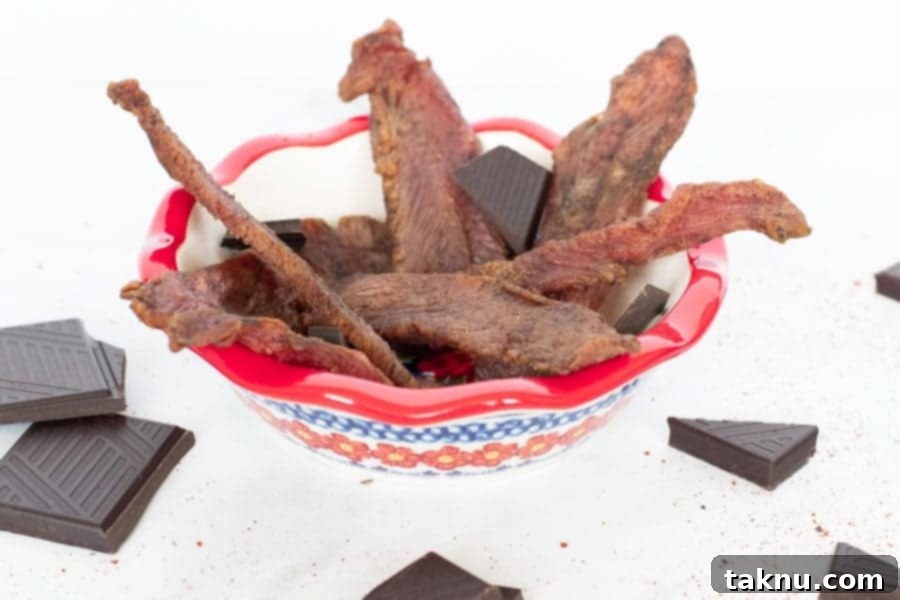
Homemade Mole Turkey Jerky: A Rich & Savory Chocolate-Infused Snack Adventure
When you hear “mole,” you might first think of the small, burrowing animal. But in the culinary world, particularly Mexican cuisine, Mole (pronounced MOH-lay) refers to a rich, complex sauce, often dark in color, that boasts an unexpected star ingredient: cocoa. That’s right, chocolate! While it might sound unusual for a savory dish, cocoa powder contributes a deep, earthy bitterness and a unique depth of flavor that is truly transformative. For those who love the intriguing blend of sweet, savory, and a hint of spice, this Mole Turkey Jerky recipe is an absolute game-changer. It’s a deliciously innovative way to enjoy jerky, offering a gourmet twist on a classic snack.
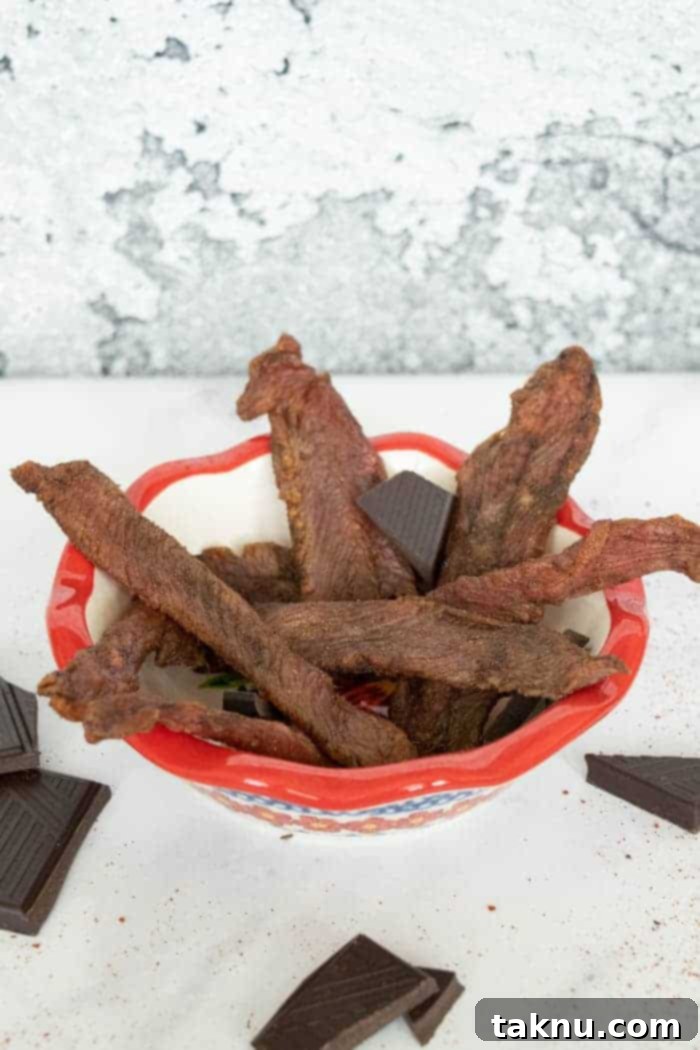
Just looking at that picture makes my mouth water for a taste of this unique jerky. It’s a testament to how well the rich, savory notes of mole, with its subtle chocolate undertones, can elevate even a simple turkey jerky. This recipe isn’t just a snack; it’s an experience, a journey into flavors you might not expect to find together, yet they harmonize perfectly. Prepare to impress your taste buds and any adventurous eaters you share it with!
Preparing the Turkey Breast for Optimal Jerky Texture
While this Mole Jerky recipe is crafted with lean turkey breast, the robust flavors of the marinade would also pair exceptionally well with beef. Turkey breast is an excellent choice for jerky due to its inherently low-fat content, which is crucial for extending the shelf life of your homemade snack. Excess fat spoils much faster than meat, leading to rancidity and significantly shortening your jerky’s freshness. Therefore, the preparation of your meat is a foundational step in creating high-quality, long-lasting jerky.
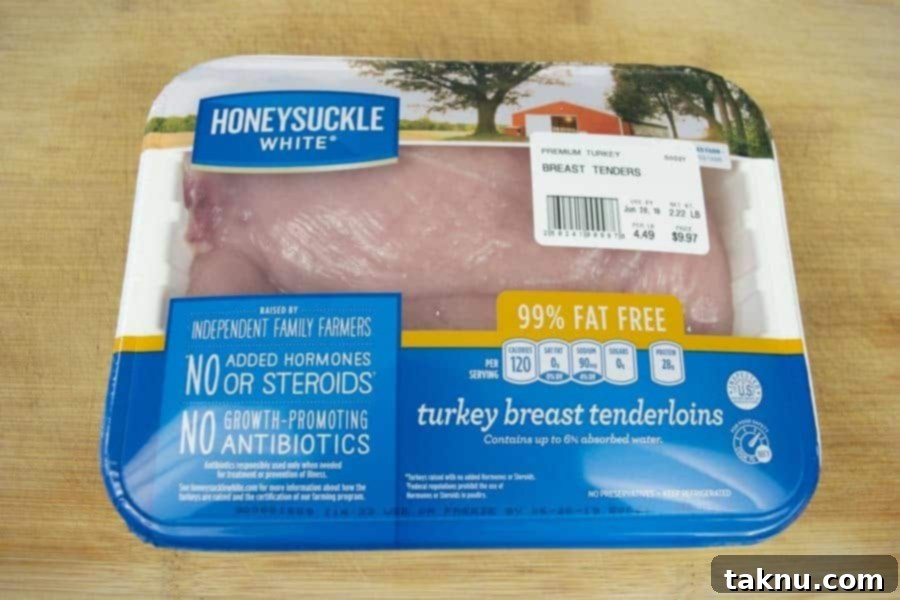
Start with a fresh turkey breast, readily available at most local grocery stores. The goal is to slice the meat into uniform strips, approximately ¼ inch thick. This consistency is vital because it ensures that all your jerky pieces dehydrate at roughly the same rate, preventing some pieces from becoming over-dried and brittle while others remain too moist and prone to spoilage. As you slice, meticulously trim away any visible fat or silver skin from the meat. This step cannot be overstated: the less fat, the longer your jerky will stay fresh and delicious.
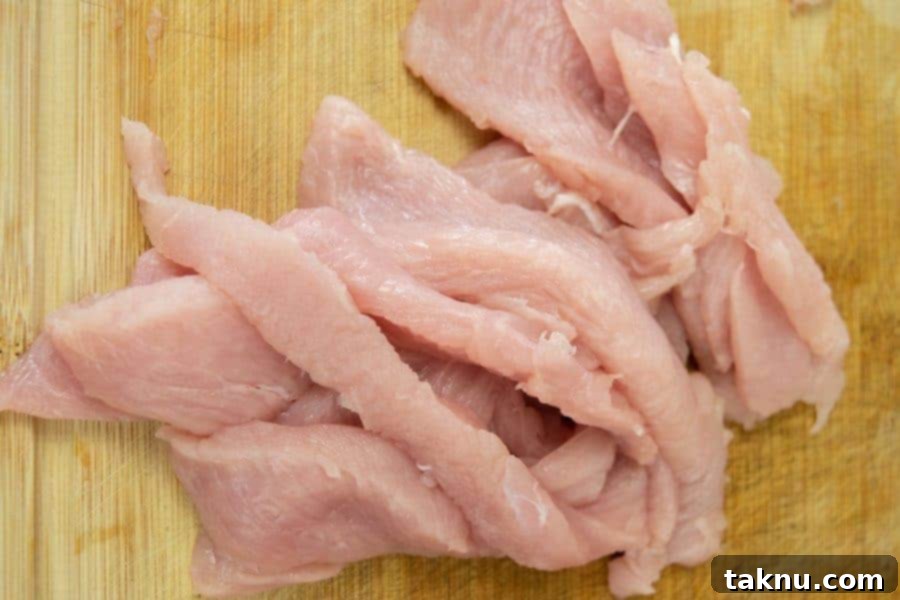
Achieving consistent, thin slices can be challenging, especially with raw poultry. Here’s a professional tip that makes the process much easier: wrap the turkey breast tightly in plastic wrap and place it in the freezer for 1 to 2 hours, or until it is partially frozen. This semi-frozen state hardens the meat just enough to allow for cleaner, more precise cuts, making it significantly simpler to get those perfectly uniform ¼-inch strips. For a chewier jerky, slice with the grain; for a more tender bite, slice against the grain. Either way, uniformity is key for even drying.
Crafting the Unique Mole Marinade
The heart of this recipe lies in its distinctive mole marinade. Unlike traditional mole sauces that often require complex preparations and blending of solid chocolate, this jerky marinade simplifies the process by utilizing cocoa powder. This means you won’t need a blender, making the preparation quick and effortless. Simply gather all the marinade ingredients and add them to a large resealable plastic bag or a non-reactive bowl.
The combination of spices—cinnamon, cumin, garlic powder, ancho chili, and allspice—with the cocoa powder, chicken broth, vinegar, and a touch of sugar creates a marinade that is both rich and perfectly balanced. Cinnamon adds warmth, cumin provides an earthy depth, ancho chili offers a mild, smoky heat, and allspice contributes a complex, sweet-peppery note. The cocoa powder isn’t meant to make the jerky taste like dessert; instead, it provides a deep, slightly bitter foundation that elevates the savory and spicy elements, giving it that authentic mole character. Whisk or mix these ingredients thoroughly until they are well combined, ensuring the cocoa powder is fully dissolved and integrated.
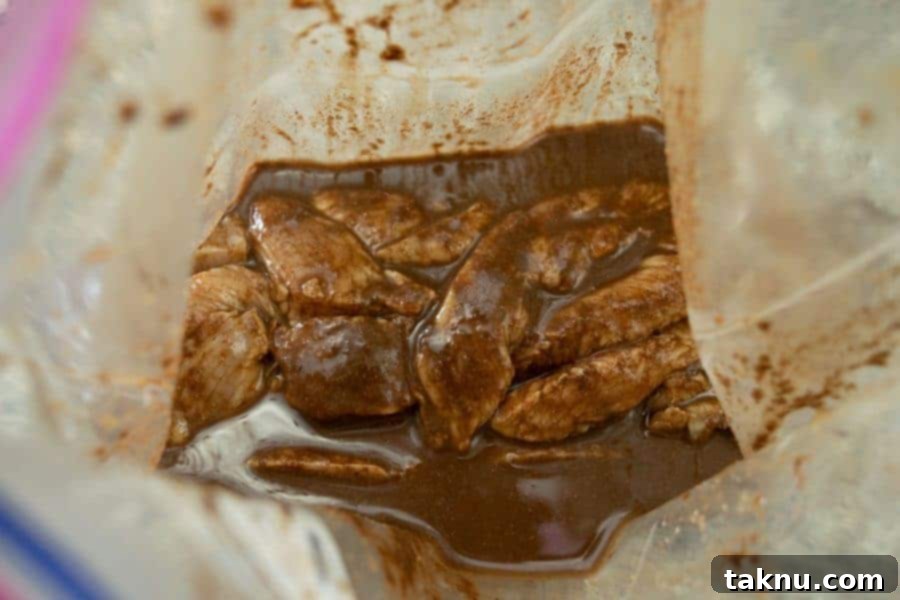
Once your turkey slices are ready, add them to the bag with the marinade. Seal the bag (or cover the bowl) and massage it gently to ensure that every single strip of meat is thoroughly coated. The marinade needs to penetrate the meat deeply to impart its incredible flavors. Place the marinating turkey in the refrigerator for a minimum of 6 hours, and ideally for 18 to 24 hours. The longer the meat marinates, the more intense and nuanced the mole flavor will be in the final jerky product. Patience truly pays off in this step. Remember, for food safety, always marinate meat in the refrigerator; never at room temperature, as this can lead to bacterial growth and spoilage.
Related Page: Explore Dozens of Great Tasting Jerky Recipes – Click Here
Mastering the Drying Process for Perfect Jerky
Once your turkey strips have absorbed all the wonderful flavors of the mole marinade, it’s time for the drying stage. This is where the magic happens, transforming tender marinated meat into firm, flavorful jerky. After the recommended marinating time (I find 20-24 hours to be ideal for maximum flavor infusion), remove the meat from the refrigerator. The first crucial step is to drain off any excess marinade. Place the marinated turkey strips in a colander and let them sit for a few minutes, allowing any liquid that hasn’t been absorbed by the meat to drip away.
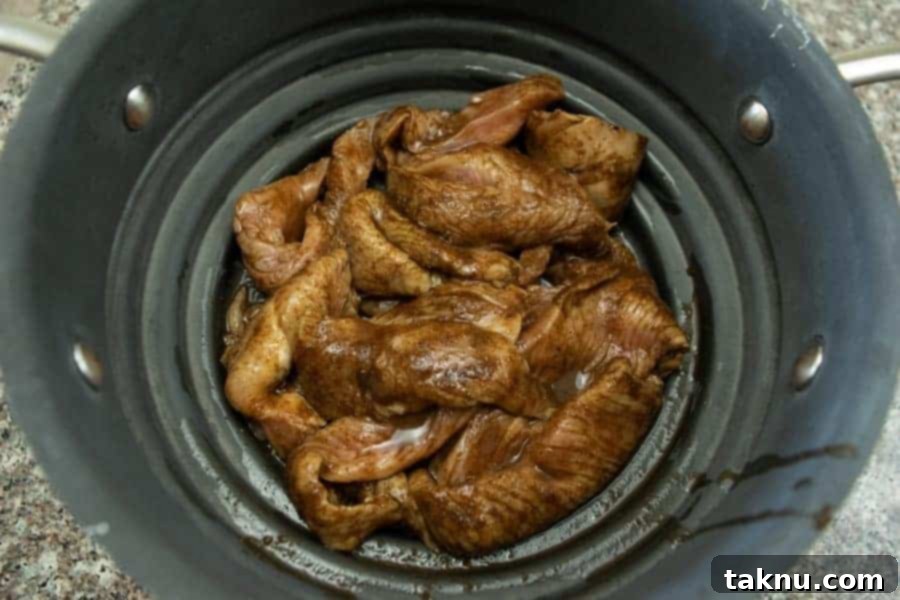
Following the straining, lay the individual turkey strips on several layers of paper towels. Then, use more paper towels to thoroughly pat the top of each strip dry. This step, while seemingly minor, is incredibly important. Removing as much surface moisture as possible will significantly speed up the drying process. More importantly, it helps prevent the jerky from becoming undesirably sticky once it’s fully dehydrated, ensuring a better texture and handling experience.
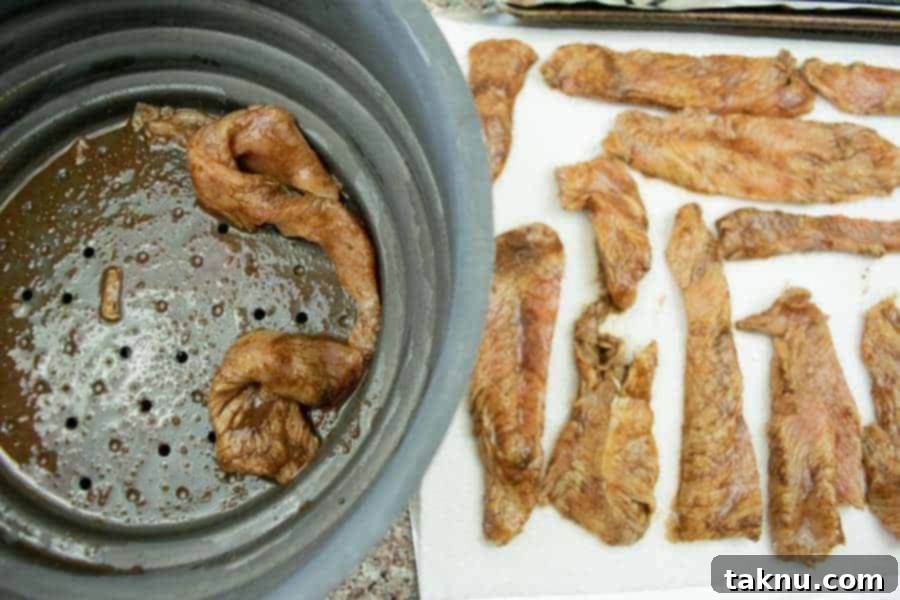
Before beginning the actual dehydration, it’s essential to address food safety, especially when making jerky at home. If your dehydrator does not reach a temperature of 165°F (74°C) to effectively kill any potential bacteria, it is highly recommended to pre-heat the meat in a conventional oven. This critical step ensures that your jerky is safe to consume without compromising its texture too much.
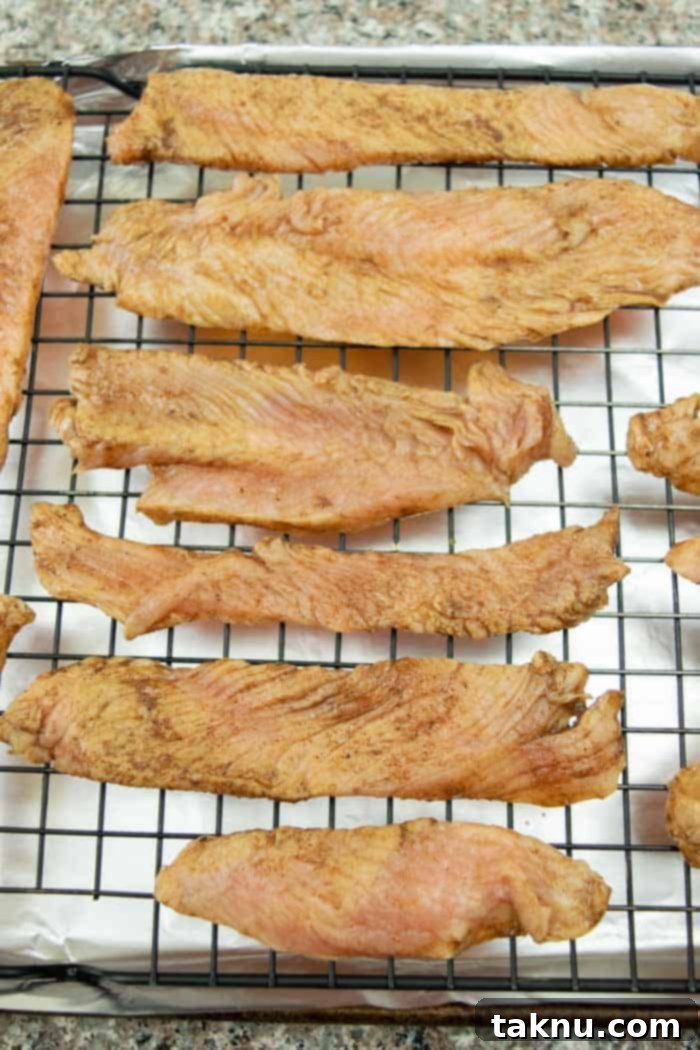
For this mole turkey jerky, I pre-heated the strips in my oven. I placed them on an oven rack to allow for even heat circulation. At 300°F (150°C), it took approximately 20 minutes for the turkey strips to reach an internal temperature of 165°F (74°C). If you place the meat directly on a baking sheet, the cooking time might be slightly shorter, closer to 10 minutes. However, be aware that pre-heating directly on a solid surface can lead to a slightly harder and less tender jerky, as the heat is more intense on one side. Using a rack helps maintain a more desirable texture.
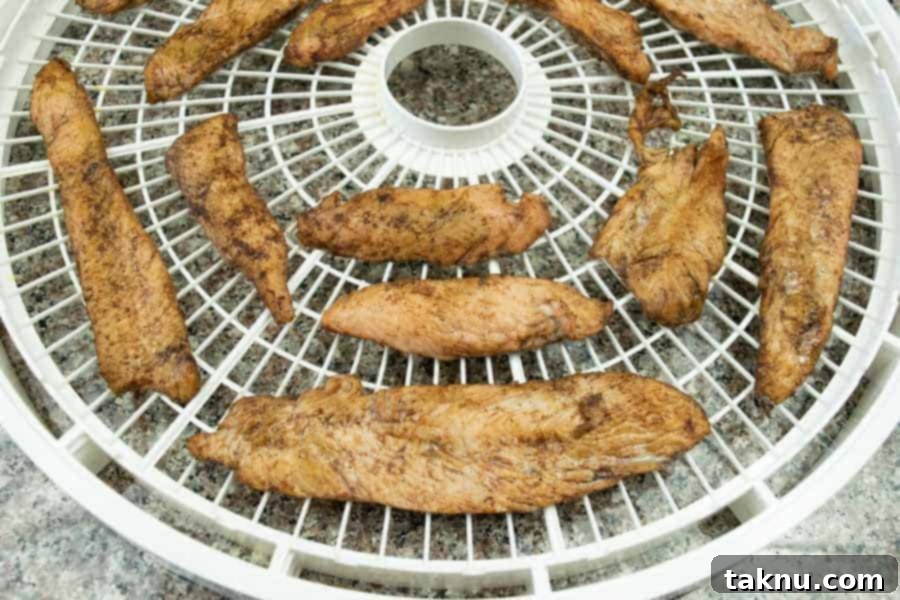
After the pre-heating phase, I transferred the turkey strips to my Nesco Dehydrator. I set the temperature to 145°F (63°C) and dehydrated them for a total of 4 hours. Dehydrating times can vary depending on your specific machine, the thickness of your meat, and environmental humidity. To ensure your jerky is perfectly done, I recommend checking for doneness frequently, starting around the 3-hour mark. Remove a piece, let it cool completely to room temperature, and then perform the bend test. Four hours proved to be just right for these specific pieces of mole turkey jerky, resulting in a perfectly pliable yet firm texture.
While a dehydrator is often preferred for its efficiency and control, you can also successfully make this mole jerky using your oven or a smoker. Each method offers slightly different results in terms of texture and flavor depth. For more comprehensive, in-depth instructions on various jerky drying techniques, I encourage you to visit my dedicated Jerky Making Methods Page.
Related Page: Discover the Best Dehydrators for Making Beef Jerky – Click Here
The Bend Test: Knowing When Your Jerky Is Perfectly Done
Determining when your homemade jerky has reached the ideal stage of dryness is crucial for both taste and longevity. As the jerky dries, you’ll want to start testing its readiness, usually beginning around the 3-4 hour mark, depending on your chosen drying method and meat thickness. To perform the test accurately, select a piece of jerky from your dehydrator, oven, or smoker and allow it to cool completely for about 5 minutes to reach room temperature. This cooling period is important because jerky will feel softer when warm and will firm up as it cools.
Once cooled, bend the jerky piece in half. A perfectly dried piece of jerky should bend significantly, showing some resistance, and will crack or splinter across the bend line, but it should not break completely in half. This “bend and crack, but not break” characteristic indicates that enough moisture has been removed for preservation, while still retaining a desirable chewiness. Another visual cue of readiness is the appearance of white fibers in the meat when you gently tear a piece apart. These fibers become really visible when the meat is properly dehydrated, signaling the internal structure of the lean meat has tightened up.
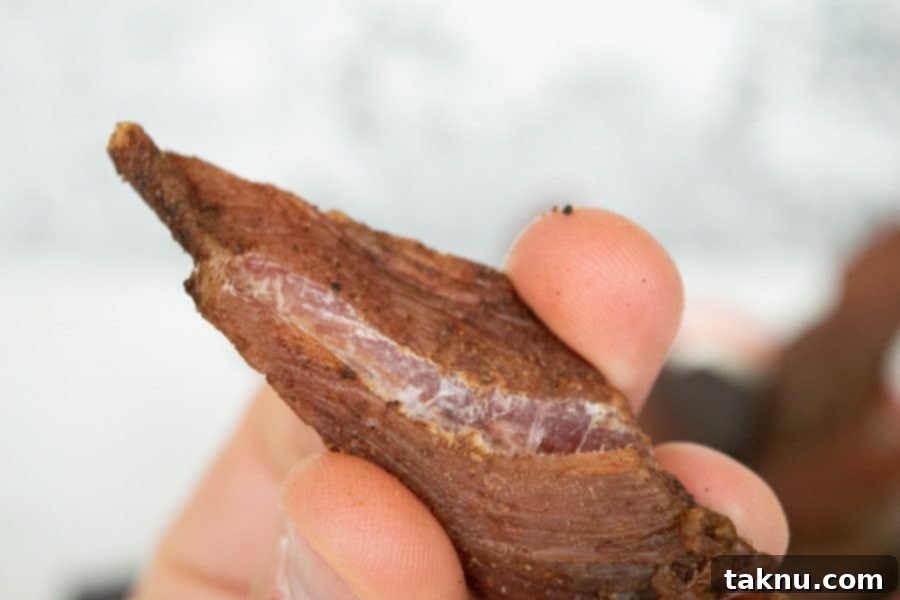
If your jerky feels too soft, pliable, or breaks cleanly in half without any fibrous resistance, it needs more drying time. Continue drying for another hour, then repeat the cooling and bend test until you achieve the desired consistency. Generally, when using a dehydrator or oven, about 90% of the jerky I make is finished within 4-6 hours. If you’re using a smoker, the process typically takes a bit longer, ranging from 6-9 hours due to lower drying temperatures and often higher humidity. However, if you pre-heat the meat in the oven to 165°F before dehydrating, the overall drying time can be significantly reduced to as little as 2.5 hours, as a substantial amount of moisture is already removed and the internal temperature has been safely reached.
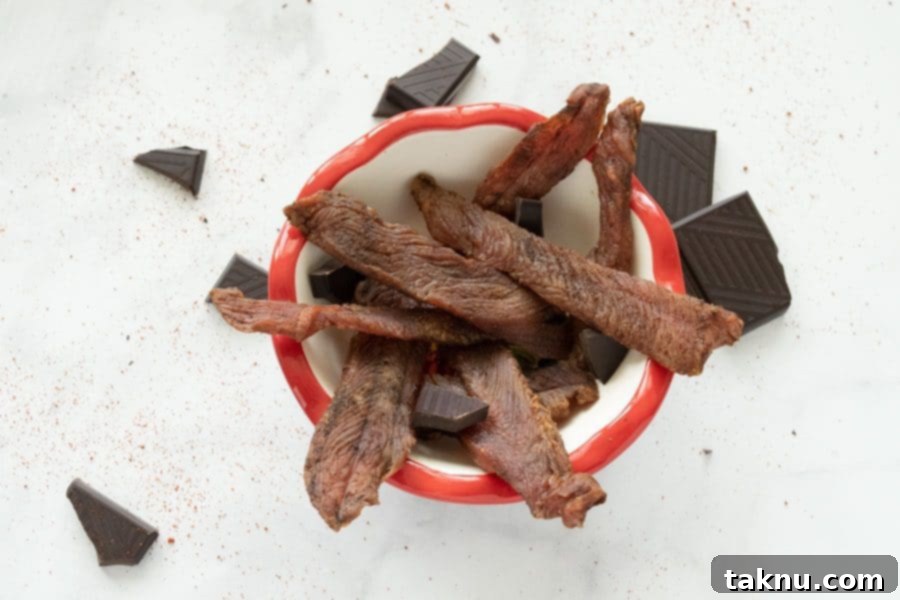
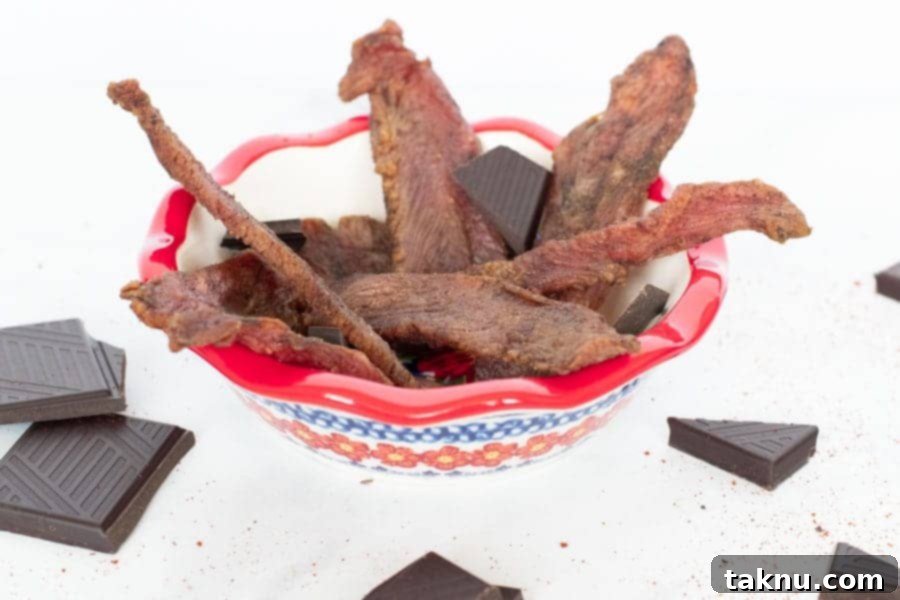
This batch of mole turkey jerky was an absolute delight! The intricate blend of cumin and allspice truly stood out, creating a warm, earthy base. The cocoa powder wasn’t overtly sweet but lent a profound, dark chocolate nuance that perfectly complemented the other spices, delivering an authentic mole flavor. It strikes a beautiful balance: not too sweet, yet with a gentle, satisfying kick of spice. These small turkey jerky pieces are packed with so many harmonious flavors, your taste buds will be on an unforgettable adventure!
Proper Storage for Extended Jerky Freshness
Once your delicious mole turkey jerky is perfectly dried and cooled, proper storage is paramount to maintain its quality and extend its shelf life. The primary goal is to protect the jerky from moisture and air, which are the main culprits behind spoilage. While this recipe includes an optional ¼ teaspoon of curing salt in the marinade, which significantly aids in preservation, there are several other steps you can take to maximize your jerky’s freshness.
Always store homemade jerky in airtight containers. Glass jars with tight-fitting lids, heavy-duty resealable plastic bags (with as much air squeezed out as possible), or, ideally, vacuum-sealed bags are excellent choices. Store these containers in a cool, dark, and dry place, such as a pantry or cupboard. Avoid direct sunlight or areas with fluctuating temperatures, as these can accelerate spoilage. For even longer storage, consider adding oxygen absorbers to your airtight containers, which will further remove any residual oxygen and inhibit bacterial growth. If you plan to keep your jerky for several months, refrigeration or freezing in vacuum-sealed bags can extend its life even further. I’ve compiled a comprehensive guide on how long jerky stays good and best storage practices to help you keep your jerky delicious for as long as possible. Be sure to check it out for all the essential tips!
Essential Pro Tips for Your Mole Turkey Jerky:
- **Lean Turkey Breast:** Opt for boneless, skinless turkey breast for the best results, as its lean nature is ideal for jerky.
- **Curing Salt or Celery Juice Powder:** To significantly extend the shelf life of your jerky and enhance safety, consider using curing salt or celery juice powder as directed in the recipe.
- **Extended Marination:** For the most profound and intense mole flavor, aim to marinate the turkey strips closer to the 24-hour mark.
- **Adjust Spice Level:** If you prefer a spicier kick, feel free to increase the amount of ancho chili powder in the marinade to suit your taste.
- **Uniform Slicing:** Partially freezing the turkey breast for 1-2 hours makes slicing uniform ¼-inch strips much easier, ensuring even drying.
- **Pat Dry Thoroughly:** Always pat the marinated meat strips very dry with paper towels before drying. This reduces stickiness and speeds up dehydration.

For more detailed instructions on various methods for drying your jerky, including comprehensive guides for dehydrators, ovens, and smokers, be sure to visit my comprehensive page: Jerky Making Methods. You can also click on the pictures below to explore specific techniques for making beef jerky with different equipment.
Rich Mole Turkey Jerky
Pin Recipe
Ingredients
Lean Turkey Breast
- 1 lb Turkey Breast
Marinade
- ½ cup chicken broth
- ½ teaspoon cinnamon
- ½ teaspoon cumin
- 1 teaspoon garlic powder
- 1 ½ teaspoon sea salt
- 1 tablespoon cocoa powder
- ¼ cup vinegar
- 1 teaspoon ancho chili
- ½ teaspoon allspice
- 2 tablespoon granulated sugar
- ¼ teaspoon curing salt (Optional)
Instructions
- Combine all of the marinade ingredients (chicken broth, cinnamon, cumin, garlic powder, sea salt, cocoa powder, vinegar, ancho chili, allspice, granulated sugar, and optional curing salt) in a large bowl or a resealable plastic bag and mix well until thoroughly combined.
- Trim all visible fat and silver skin from the turkey breast. For easier slicing, partially freeze the turkey breast for 1-2 hours. Then, slice the turkey breast into uniform ¼-inch wide strips.
- Add the sliced turkey breast to the marinade in the ziplock bag or bowl. Ensure all meat strips are evenly coated by massaging the bag or stirring the bowl. Marinate in the refrigerator for 8-24 hours. The longer the marination, the richer the flavor.
- After the marinating period, remove the meat from the refrigerator and place it in a colander to strain off any excess marinade for a few minutes.
- Lay the strained turkey strips on paper towels and pat them thoroughly dry to remove as much surface moisture as possible. This helps speed up drying and prevents stickiness.
- Pre-heat your oven to 300°F (150°C). If your dehydrator reaches 165°F, you can skip this step.
- Arrange the turkey strips on a baking rack placed over an aluminum foil-lined baking sheet.
- Bake in the pre-heated oven for approximately 20 minutes, or until the thickest strips reach an internal temperature of 165°F (74°C). This step is crucial for food safety.
- Remove the turkey strips from the oven. Now, proceed with your preferred jerky making method. For example, using a Nesco Dehydrator, I dried them for 4 hours at 145°F (63°C).
- The jerky is finished when it bends and cracks but does not break completely in half, and white fibers are visible when torn. Allow the jerky to cool for at least an hour to room temperature before storing it in an airtight container to preserve its freshness.
Pro Tips
- Turkey breast works best due to its lean nature, which helps prevent spoilage and creates a desirable jerky texture.
- Using curing salt or celery juice powder in the marinade will significantly extend the shelf life of your homemade jerky.
- Marinating the turkey for closer to 24 hours will result in the most intense and complex mole flavor.
- If you prefer a spicier jerky, feel free to increase the amount of Ancho chili powder in the marinade to taste.
- Always store finished jerky in airtight containers in a cool, dry place to maintain freshness.