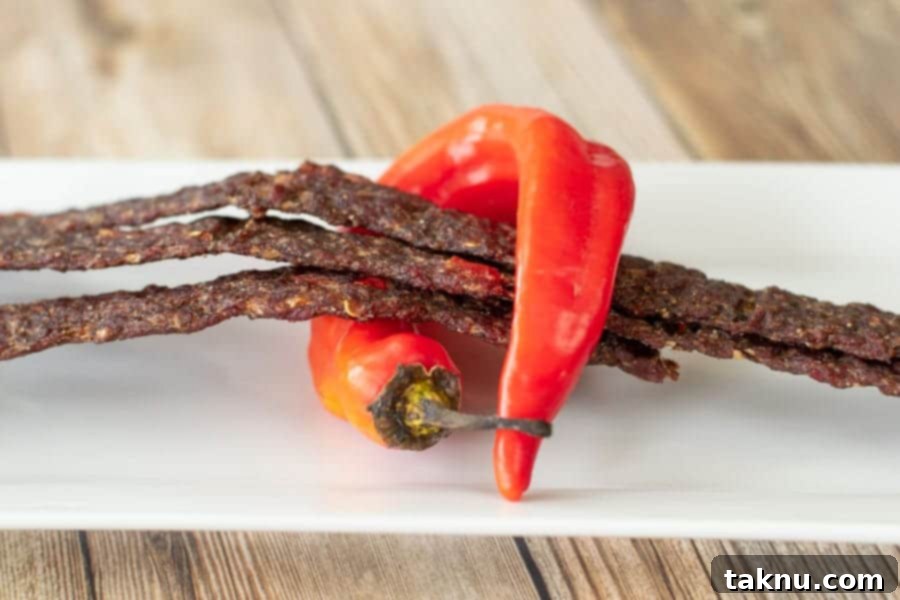
Ultimate Fiery Homemade Spicy Ground Beef Jerky: A Step-by-Step Recipe
Do you crave that irresistible spicy kick in your snacks? If you’re a fan of bold flavors and easy-to-chew treats, then this homemade spicy ground beef jerky recipe is about to become your new obsession. Forget tough, chewy jerky – this tender ground beef version is infused with a wicked fiery heat that will have you reaching for an ice-cold drink, but still coming back for more. It’s an incredibly satisfying snack, perfect for adventurers, busy professionals, or anyone who appreciates a powerful punch of flavor.
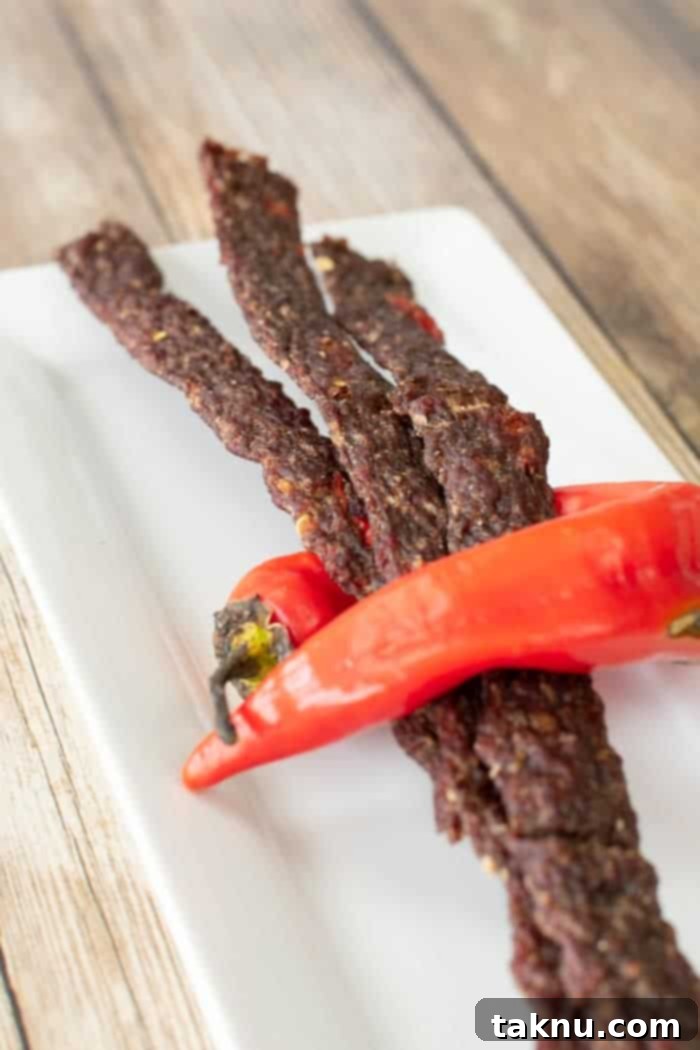
Ground beef jerky offers a wonderfully tender texture that’s a refreshing change from traditional whole-muscle jerky. It’s perfect for those who prefer a less strenuous chewing experience or have sensitive teeth, without compromising on the robust, savory flavor that makes jerky so popular. This recipe proves that you can achieve both incredible taste and a desirable texture with the right approach.
Choosing The Right Meat for Your Fiery Jerky
The foundation of any great ground beef jerky is, of course, the meat itself. For this spicy recipe, it’s crucial to start with high-quality ground meat that has a lean-to-fat ratio of 90/10 or, ideally, even leaner, such as 93/7. I personally prefer 93/7 grass-fed beef because it offers a superb balance. You need some fat to help bind the jerky mixture together and contribute to its flavor and moisture, but too much fat can significantly reduce the jerky’s shelf life and make it prone to spoilage.
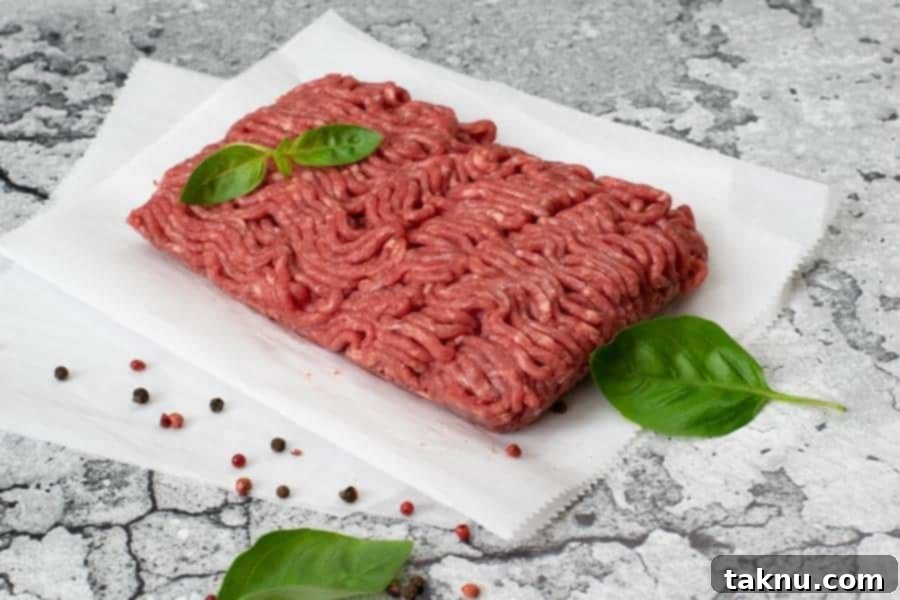
While beef is a classic choice, don’t limit your options! This recipe is incredibly versatile and can be adapted beautifully to other ground meats. For an adventurous twist, consider using ground bison, which is naturally lean and offers a slightly sweeter, richer flavor. Ground deer meat is another fantastic alternative, especially if you’re a hunter looking to utilize your harvest. Imagine a batch of this fiery jerky made with venison after a successful hunting season – it’s a game-changer! Regardless of your choice, ensuring the meat is fresh and of good quality is paramount for the best-tasting and safest jerky.
Crafting The Fiery Seasoning Blend
One of the best aspects of this recipe is its simplicity. You don’t need a pantry full of exotic spices to achieve a phenomenal flavor profile. Most of the ingredients are kitchen staples, making this spicy ground beef jerky accessible to almost everyone. The magic lies in the careful selection and combination of these few, yet potent, components.
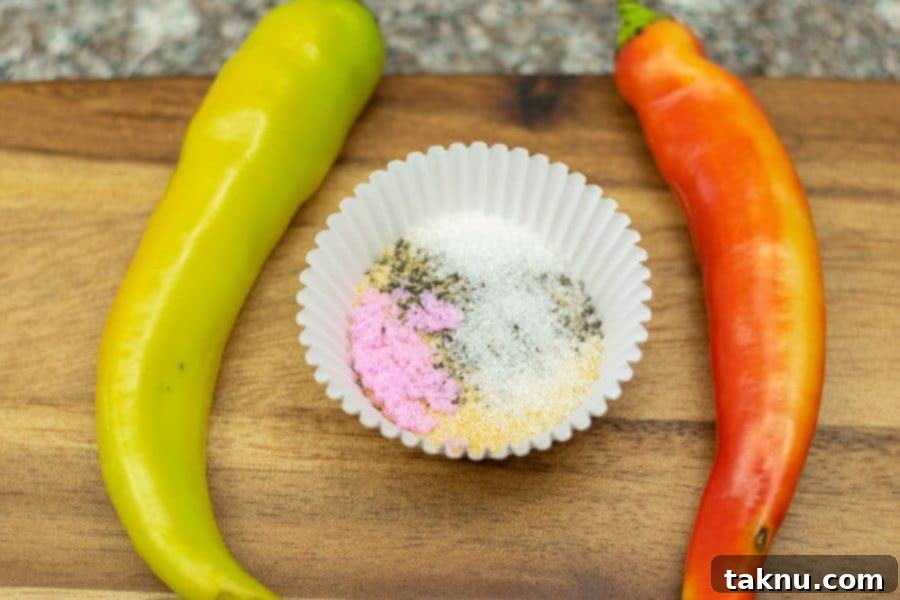
Our star ingredient for heat in this recipe is the banana pepper. I recently found some exceptionally vibrant banana peppers at the supermarket, and they did not disappoint in delivering a fantastic spicy kick. These peppers offer a unique blend of heat and a subtle tang that complements the beef perfectly. It’s a flavor that grows on you, adding depth beyond just pure spice. While some banana peppers can be mild, others, especially younger ones, pack a surprising punch. For an even more intense heat, you can increase the quantity to two peppers.
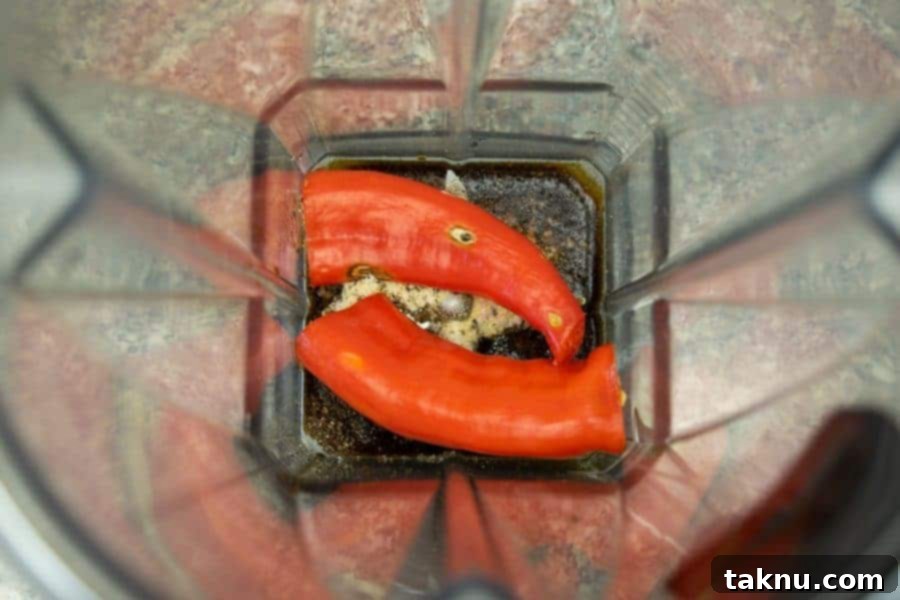
When preparing the peppers and other dry ingredients for blending, I encountered a common challenge: a standard blender, even a powerful one like a Vitamix, struggles with small amounts of dry ingredients and minimal liquid. The ingredients just don’t have enough volume or moisture to properly circulate and blend smoothly. To avoid this, I highly recommend finely dicing your banana pepper by hand first, then combining it with the Worcestershire sauce and dry spices in a dedicated food processor. A food processor with smaller blades is far more effective at achieving that perfectly uniform paste, ensuring even flavor distribution throughout your jerky.
Beyond the banana peppers, the blend includes essential flavor enhancers: rich Worcestershire sauce for umami, sea salt for seasoning and preservation, ground black pepper for a classic bite, and garlic and onion powders for aromatic depth. For added safety and that signature jerky color and flavor, curing salt is a recommended, though optional, ingredient. It’s a small addition that makes a big difference in both preservation and traditional taste.
Mixing and Marinating for Optimal Flavor and Texture
Once your seasonings are perfectly blended, it’s time to marry these incredible flavors with your chosen ground beef. This step is crucial for ensuring every bite of your jerky is consistently delicious and packed with that fiery kick.
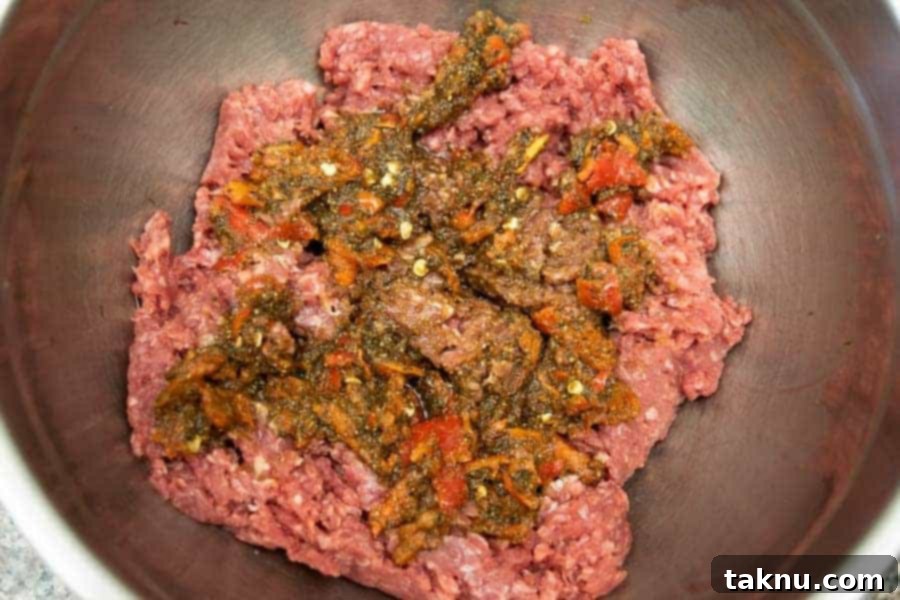
In a large mixing bowl, combine your 1 pound of lean ground beef with the finely chopped banana pepper and the rest of your seasoned mixture. This is where using curing salt truly shines. Not only does it act as a crucial antimicrobial agent, enhancing the safety and shelf life of your jerky, but it also contributes to the distinctive reddish color and savory flavor profile that jerky enthusiasts love. It’s a small investment for a significant impact.
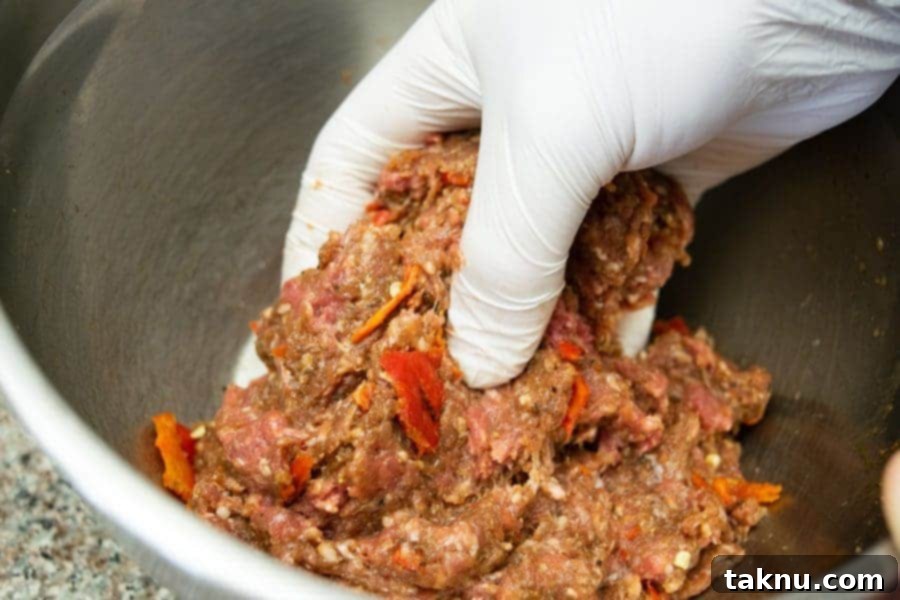
To ensure even distribution of flavor and spices, don a pair of food-safe gloves and thoroughly mix the ingredients into the ground beef by hand. Knead and fold the mixture until you can see the banana pepper pieces and other seasonings are uniformly incorporated throughout the meat. This isn’t just about mixing; it’s about developing the texture that will hold together during the drying process. Those vibrant flecks of banana pepper are a visual promise of the delicious heat to come! Yum.
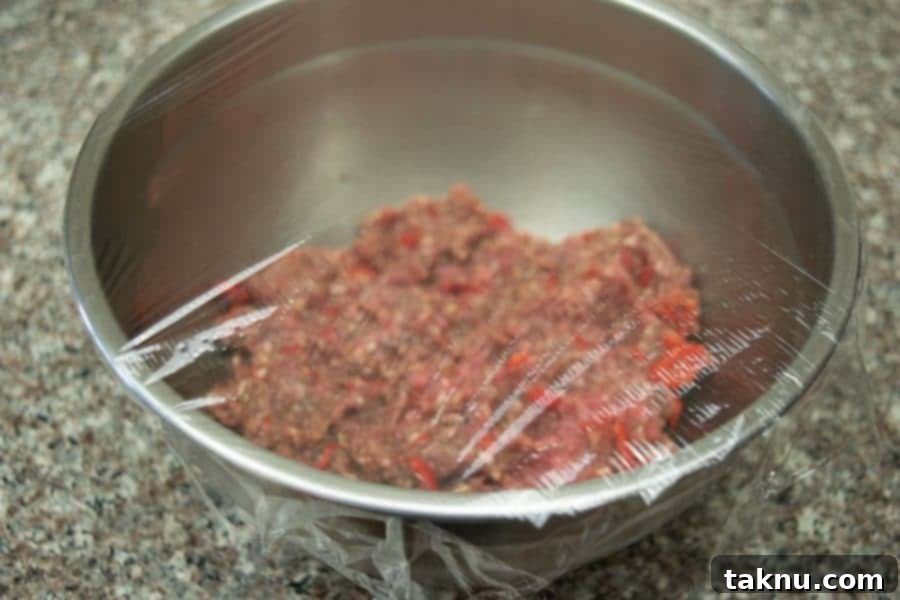
While ground beef jerky technically doesn’t require an extensive marinade to infuse flavor (as the seasonings are already mixed throughout), a short refrigeration period is highly beneficial. After mixing, cover the bowl tightly with plastic wrap and place it in the fridge for at least an hour, or even up to 2-3 hours. This chilling process helps the fat in the meat solidify slightly, which in turn helps the ground beef mixture bind together much more effectively. A firmer, colder mixture is significantly easier to handle, particularly in the next step when forming your jerky strips. It also allows the flavors to meld and deepen, resulting in a more harmonious and delicious final product.
Related Page: Explore Dozens of Great Tasting Jerky Recipes – Click Here
Forming Perfectly Uniform Jerky Strips
Once your seasoned ground beef has chilled sufficiently, it’s time to transform it into the ideal strips for drying. There are a few methods for this, but for consistent results and ease, a jerky gun is highly recommended.
My Jerky Cannon is an invaluable tool for this process. It simplifies the task of shaping ground meat into uniform strips, ensuring that each piece dries evenly and has a consistent texture. The uniformity is key to preventing some pieces from over-drying while others remain under-dried.
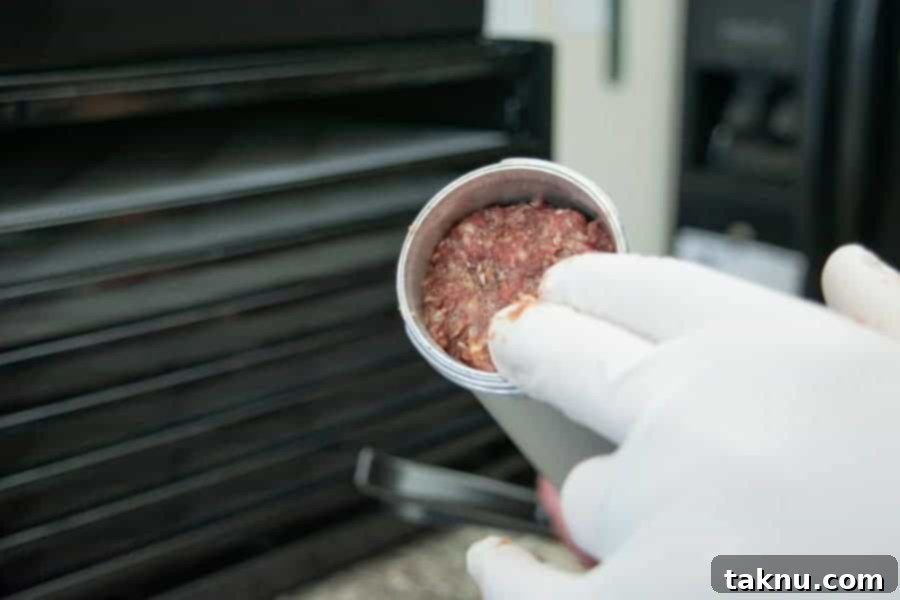
To load the jerky cannon effectively, add the meat mixture in small batches, pressing it down firmly as you go. The most important tip here is to eliminate any air pockets inside the tube. To do this, use the lever by the handle to push the piston almost all the way to the front, leaving about 3 inches of space from the opening. Fill this space completely with the jerky mixture, then pull the lever back another 3 inches to create more room. Continue this process, filling and pulling back, until the entire pound of ground jerky mixture is packed into the cylinder without any trapped air.
Once loaded, screw your preferred jerky nozzle onto the end of the jerky cannon. Then, systematically shoot continuous strips of jerky onto your dehydrator trays. For ground jerky, I prefer using my Excalibur Dehydrator. Its square trays are a significant advantage over round models, as they allow for more efficient use of space and easier arrangement of strips, making it my top choice for preparing ground beef jerky.
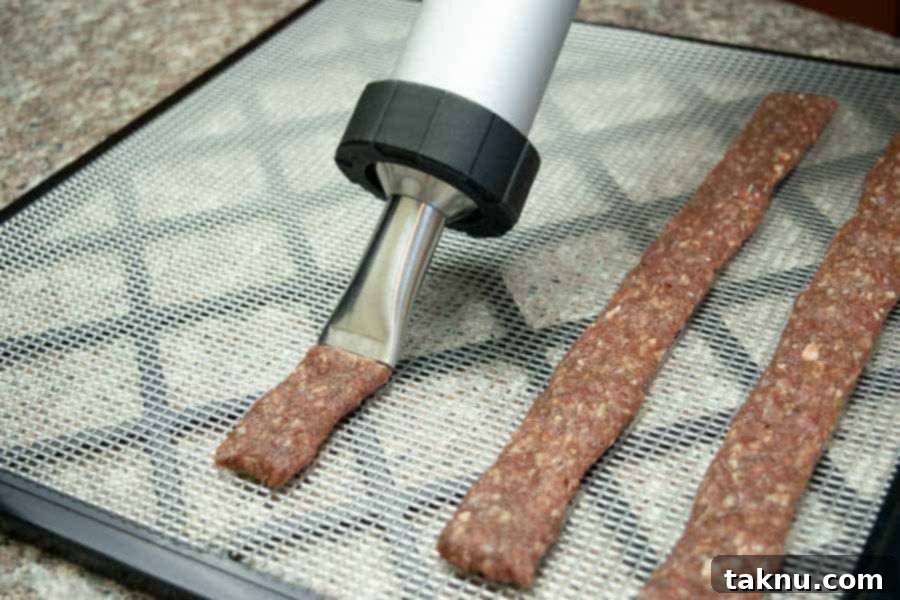
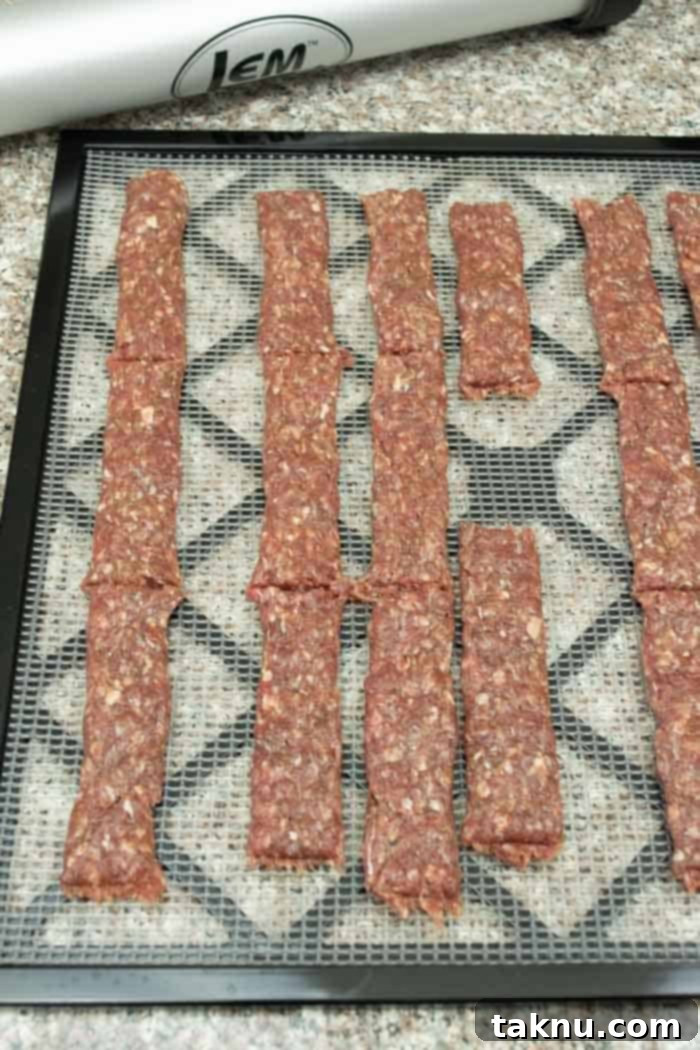
Keep a butter knife or small spatula handy as you work. After extruding a long strip onto the dehydrator tray, use the knife to cleanly cut the meat from the nozzle. Then, use that same knife to gently score the long strips into your desired individual jerky lengths. I typically aim for pieces about 4-5 inches long, which are perfect bite-sized snacks.
No jerky gun or dehydrator? No problem at all! You can still make fantastic ground beef jerky. For strip formation, simply place the chilled meat mixture between two sheets of parchment paper and use a rolling pin to flatten it to an even ¼-inch thickness. Then, use a knife or pizza cutter to slice the flattened meat into strips of your desired size. As for drying, your conventional oven can work wonders. For detailed, step-by-step instructions on how to use these alternative methods, refer to my comprehensive guide on How to Make Ground Jerky.
The Art of Drying Your Fiery Jerky
Drying is perhaps the most critical stage in jerky making, as it determines both the safety and the final texture of your product. As mentioned, I rely on my trusty Excalibur Dehydrator for this process, which provides consistent heat and excellent airflow.
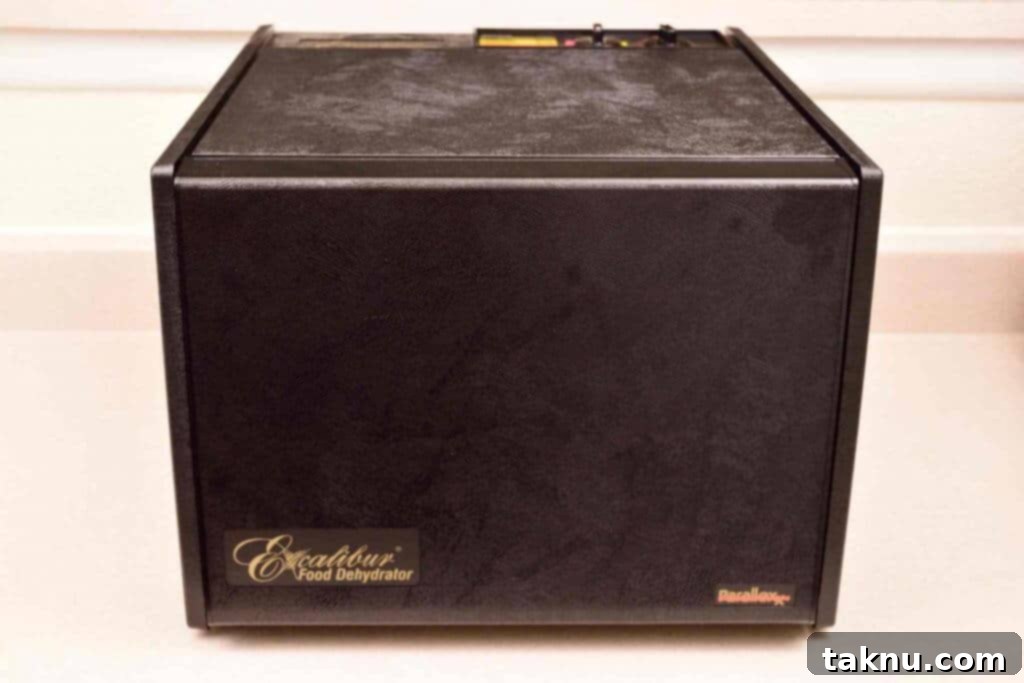
For this spicy ground beef jerky, I used a two-stage drying approach: 3 hours at 165°F, followed by 1 hour at 145°F. The initial higher temperature (165°F) is crucial for quickly reducing the moisture content and ensuring the meat reaches a safe internal temperature to eliminate potential bacteria. Following this with a slightly lower temperature (145°F) helps to gently finish the drying process, preventing the jerky from becoming overly brittle while still achieving the desired dryness. It’s important to monitor your jerky closely during this final stage, as dehydrator performance can vary, and environmental factors like humidity can affect drying times. In my case, this batch was perhaps dried for about 30 minutes too long, but despite that, it still tasted absolutely amazing!
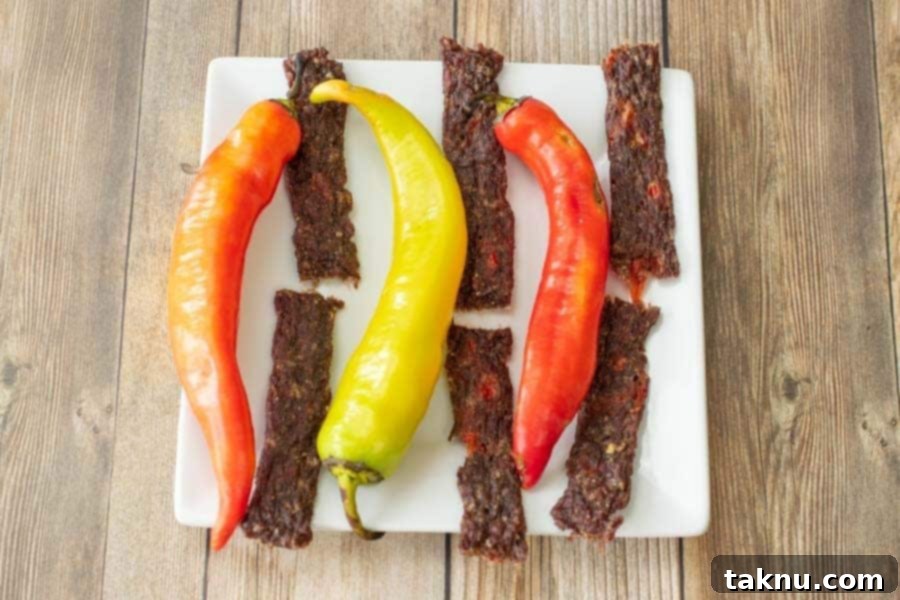
The banana peppers truly delivered a fantastic kick, creating a dynamic flavor experience. You get that initial, satisfying beef jerky flavor, which then gracefully transitions into a strong, warming heat as you continue to chew. It’s a delightful slow burn that enhances, rather than overwhelms, the savory notes. Remember that the spiciness of banana peppers can vary; generally, younger peppers tend to be spicier. Adding one whole pepper provided a good level of heat for this recipe, but if you’re a true chili head, don’t hesitate to add two for a truly fiery experience!
If you find that your banana peppers aren’t quite spicy enough, or if you’re looking to elevate the heat significantly, you can substitute them with a more potent pepper. A Habanero is an excellent choice for a serious spice upgrade. Just be mindful: habaneros are considerably hotter than banana peppers, so start with just one small habanero to avoid overdoing it. I particularly like habaneros as a substitute because they offer intense heat without dramatically altering the core flavor profile, unlike a jalapeño, which has a distinct grassy note that might change the taste more profoundly.
Testing for Perfection: When is Your Jerky Done?
Knowing exactly when your jerky is perfectly dried is a skill developed through practice, but there’s a reliable test you can use to ensure it’s just right. The “bend test” is your best friend here.
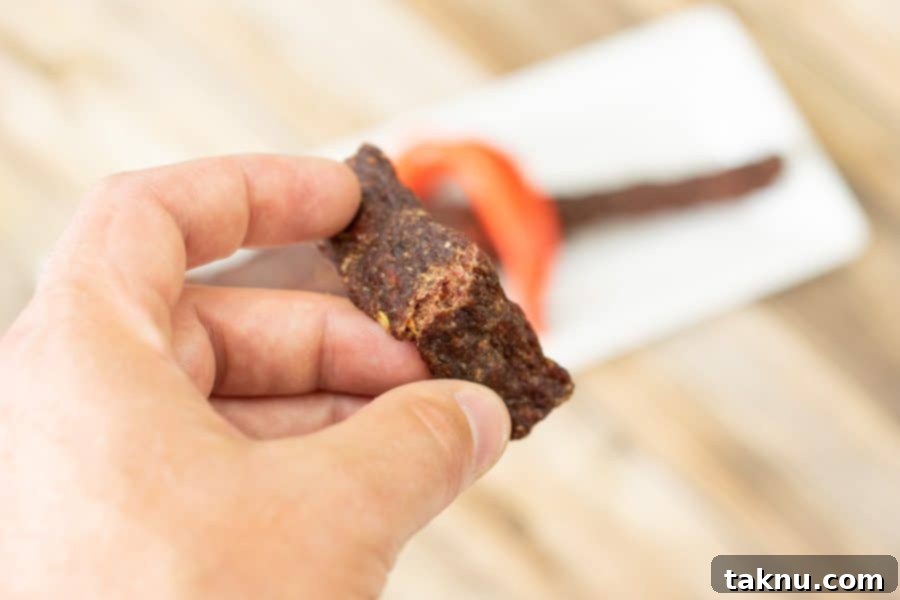
To perform the bend test, take a strip of jerky, let it cool to room temperature (as warm jerky can feel softer than it truly is), and bend it with your fingers. Properly dried ground beef jerky should be firm, yet pliable. It should bend significantly without snapping cleanly in half. You might see some white fibers appear as it bends, which is a good sign, indicating that the meat is dry but still has some internal give. If the jerky cracks or breaks into two distinct pieces with minimal bending, it’s likely overdone. Conversely, if it feels soft, spongy, or leaves any moisture on your fingers, it needs more drying time. Even if it’s slightly over-dried, like this batch was (it cracked a little more than I usually prefer), it can still be incredibly flavorful and enjoyable.
For those looking to achieve a more consistently pliable and cohesive texture in their ground jerky, incorporating Corn Syrup Solids (also known as dried corn syrup) into your recipe is an excellent optional step. While not a required ingredient, corn syrup solids act as a binding agent and humectant, helping the meat particles stick together better and retaining a touch more moisture, which contributes to a chewier, less brittle finished product. If you’re a regular ground jerky maker, adding this to your arsenal of ingredients is a worthwhile consideration for enhancing texture.
Storing Your Delicious Homemade Jerky
Once you’ve perfected your batch of fiery ground beef jerky, proper storage is key to maintaining its freshness and extending its shelf life. The efforts you put into making it will pay off even more if you store it correctly.
The use of curing salt, as discussed earlier, plays a significant role in preservation. Beyond that, keeping your jerky in airtight containers is paramount. Exposure to air is the primary culprit behind spoilage and loss of flavor. Mason jars with tight-fitting lids, heavy-duty zip-top bags with as much air removed as possible, or vacuum-sealed bags are all excellent options. For the longest possible shelf life, vacuum sealing is generally the most effective method, as it removes almost all oxygen.
While homemade jerky, especially with curing salt, can last several weeks at room temperature in an airtight container, refrigerating it can further extend its freshness, often for several months. For truly long-term storage, freezing your jerky is an option, where it can last six months to a year or more. Simply thaw it at room temperature or in the refrigerator before enjoying. I’ve compiled a detailed guide on how long does beef jerky stay good, which offers comprehensive steps and tips to ensure your homemade jerky remains delicious and safe to eat for an extended period. Don’t let your hard work go to waste – check it out for all the best storage practices!
Old Pro Tips for Ground Jerky Success:
- Always use lean ground beef, ideally no more than 90/10 fat ratio, for better shelf life and texture.
- Incorporate curing salt (also known as pink curing salt #1 or Prague Powder #1) or celery juice powder to enhance safety, preservation, and traditional jerky flavor and color.
- Refrigerate the mixed ground beef for at least 1 hour before forming strips; this helps bind the meat together, making it easier to work with and preventing crumbling.
- For improved pliability and a more uniform texture, consider adding corn syrup solids to your mixture.
- Customize your spice level: if your banana peppers aren’t delivering enough heat, don’t hesitate to substitute with or add a small amount of a hotter pepper like a habanero for an extra kick.
- Jerkyholic’s Original Ground Beef Jerky
- Beef Jerky Recipes (75+ Homemade Jerky Recipes)
- 6 Steps To Making Safe Jerky

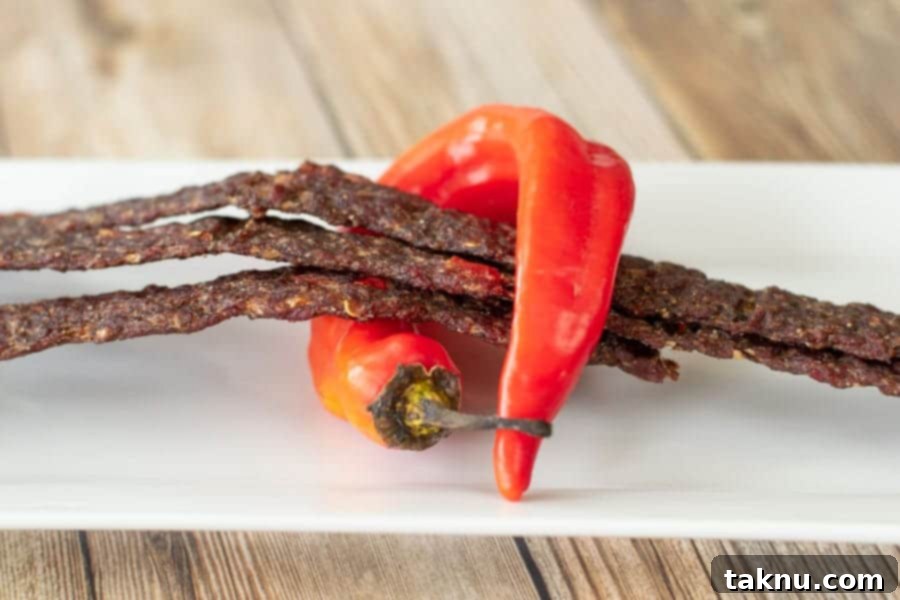
Wicked Fiery Ground Beef Jerky
Pin Recipe
Ingredients
Lean Beef
- 1 lb Lean ground beef (10% fat or less)
Marinade
- 1 banana pepper (finely chopped)
- 2 tablespoon worcestershire sauce
- 2 teaspoon sea salt (finely ground)
- 1 teaspoon ground black pepper
- 1 teaspoon garlic powder
- 1 teaspoon onion powder
- ¼ teaspoon curing salt (optional)
- ½ teaspoon corn syrup solids (optional)
Instructions
- Finely chop banana pepper and add to other ingredients. Pulse in food processor to mix well.
- In a bowl, combine the 1lb of ground beef with the previously mixed ingredients.
- Mix the ground beef and seasonings thoroughly.
- If using a jerky gun, load the gun with the ground beef mixture & shoot 3-4″ long strips onto a dehydrator tray or on a baking sheet.
- If not using a jerky gun, spread the ground meat on a baking sheet, cover with wax paper, and roll with a rolling pin until meat is ¼” thick.
- Slice the pan of beef into jerky strips 4-5″ long and 1″ thick.
- Dry with your favorite jerky making method. I used a dehydrator at 165F for 4 hours and 145F for 1 hour.
- Ground jerky is finished when it first starts becoming dry to the touch. It should bend without breaking in half. If it cracks in half when bent a little bit, it was over dried.
Pro Tips
- Use no more than 90/10 ground beef.
- Use curing salt or celery juice powder to extend the life of the jerky.
- Refrigerate for 1 hour to bind the meat together.
- Use corn syrup solids for better texture.
- Substitute with habanero if your banana peppers aren’t that spicy.