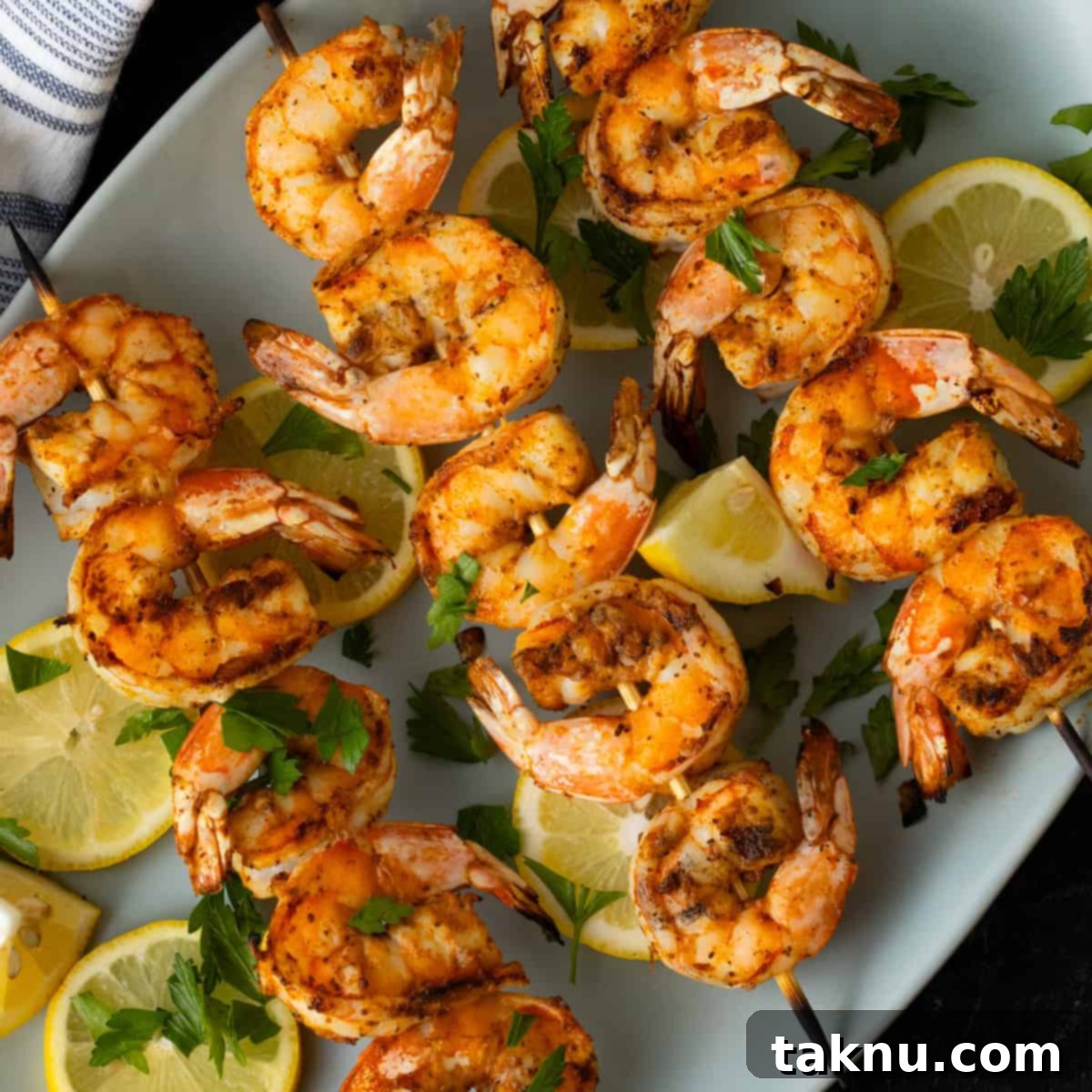
How to Grill Shrimp Perfectly: An Easy Guide for Juicy, Flavorful Skewers Every Time
Embark on a culinary journey to master the art of grilling shrimp with this comprehensive and easy-to-follow guide. Learn how to transform simple, fresh shrimp into succulent, smoky delights, perfectly seasoned and cooked to tender perfection over an open flame. Whether you’re a seasoned grill master or a novice looking to impress, this recipe will equip you with all the tips and tricks to achieve mouth-watering grilled shrimp every single time. Get ready to elevate your outdoor cooking and savor the irresistible taste of perfectly charred, juicy shrimp!
[feast_advanced_jump_to]
Choosing the Perfect Shrimp for Grilling
Selecting the right shrimp is the first crucial step towards a fantastic grilled dish. The quality and type of shrimp can significantly impact the final flavor and texture. In the United States, brown and white shrimp are among the most commonly harvested varieties, each with its seasonal availability. Brown shrimp are typically in season from May through August, offering a slightly more robust flavor profile, while white shrimp grace our markets from September through December, known for their sweeter taste and tender texture. Both types are excellent choices for grilling, offering a delicate sweetness that pairs beautifully with smoky char.
If you don’t reside near the coast or fresh shrimp are out of season, don’t despair! High-quality frozen shrimp are readily available at most meat and seafood stores, both online and in brick-and-mortar locations. When purchasing frozen shrimp, always opt for those labeled “IQF” (Individually Quick Frozen) to ensure the best texture and flavor upon thawing. Exploring other shrimp varieties from around the world, such as colossal tiger prawns or Argentine red shrimp, can also add an exciting twist to your grilling adventures, offering unique flavors and impressive presentations.
Understanding Shrimp Sizes for Optimal Grilling
Shrimp sizes are typically categorized by the number of individual shrimp it takes to make one pound. This “count per pound” system helps you understand how large or small the shrimp are. Here’s a common breakdown:
- Small (21-25 count): These are smaller, faster-cooking shrimp, often used in pasta dishes or salads. While delicious, they can be challenging to grill as they cook very quickly and are prone to falling through grates.
- Medium (16-20 count): A versatile size, these shrimp are a good option for grilling. They offer a decent bite and are easier to handle on skewers than smaller varieties.
- Large (10-15 count) – Often labeled “Jumbo” or “Colossal”: This is hands down the best size for grilling! Larger shrimp provide a substantial, satisfying bite and are less likely to overcook quickly. Their size makes them much easier to skewer and turn on the grill, ensuring even cooking and a beautiful presentation. If you can find shrimp in the 10-15 count range, you’ve found the ideal choice for this grilled shrimp recipe. The 16-20 count is also an excellent alternative if jumbo shrimp are not available.
Using larger shrimp ensures that they remain plump and juicy on the inside while developing a desirable char on the exterior. This prevents them from drying out, which is a common pitfall when grilling smaller shrimp.
This grilled shrimp recipe perfectly complements other incredible outdoor dishes. It was inspired by another fantastic crustacean recipe on this site, my smoked lobster tail recipe, and makes for an incredible side when paired with this amazing smoked corn recipe or a vibrant summer salad. Together, they create a memorable barbecue feast!
Simple Ingredients for Flavorful Grilled Shrimp
One of the beauties of grilling shrimp is that they require very little fuss to taste absolutely incredible. Their natural sweetness and delicate texture shine through with just a few well-chosen ingredients. The goal is to enhance, not overpower, their inherent flavor.
For this recipe, we’ll start with a light coating of olive oil. This not only helps the seasonings adhere to the shrimp but also aids in achieving that beautiful, crisp char on the grill while preventing sticking. Following the oil, we’ll dust the shrimp generously with one of two classic seafood seasonings:
- Fresh Shrimp: Opt for high-quality Pink, Brown, or White shrimp, ideally in a large (10-15 count) or medium (16-20 count) size. If using frozen, ensure they are fully thawed and patted dry.
- Olive Oil: A good quality extra virgin olive oil provides a light, fruity base and helps the seasonings stick.
- Blackening Seasoning: For those who love a bold, spicy kick and a beautiful dark crust, blackening seasoning is an excellent choice. It typically contains paprika, cayenne pepper, garlic powder, onion powder, and various herbs.
- Old Bay Seasoning: A timeless classic, Old Bay offers a savory, slightly spicy, and herbaceous flavor profile that is synonymous with seafood. Its blend includes celery salt, paprika, black pepper, and other secret spices.
- Lemon Wedges: Essential for serving, a squeeze of fresh lemon juice brightens the flavors and adds a zesty finish.
These simple ingredients are all you need to create grilled shrimp that are bursting with flavor. The detailed quantities for each ingredient can be found in the comprehensive recipe card below, ensuring you have the precise measurements for perfect results.
Preparation and Seasoning: Getting Your Shrimp Ready for the Grill
Proper preparation is key to ensuring your grilled shrimp are perfectly cooked and bursting with flavor. Before you even touch the shrimp, ensure your grill is preheating to a high temperature, ideally between 400-450°F. While the grill heats, take a moment to clean the grates thoroughly with a sturdy grill brush or a halved onion. This removes any leftover food particles, preventing sticking and imparting a clean flavor to your shrimp.
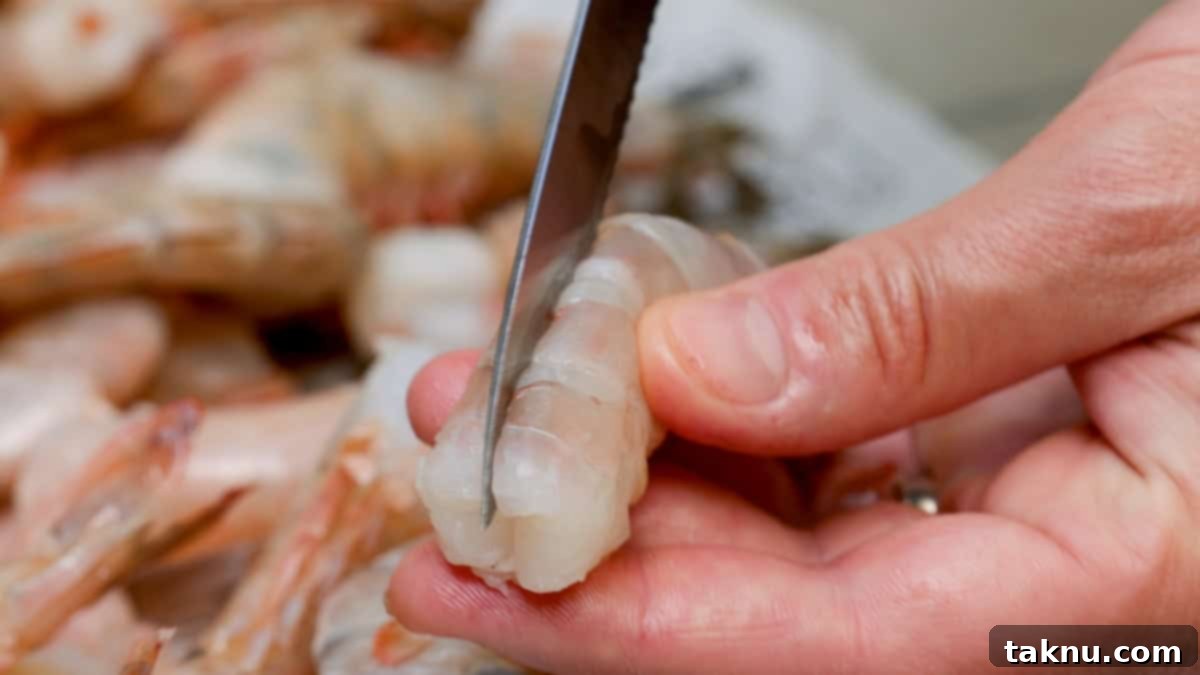
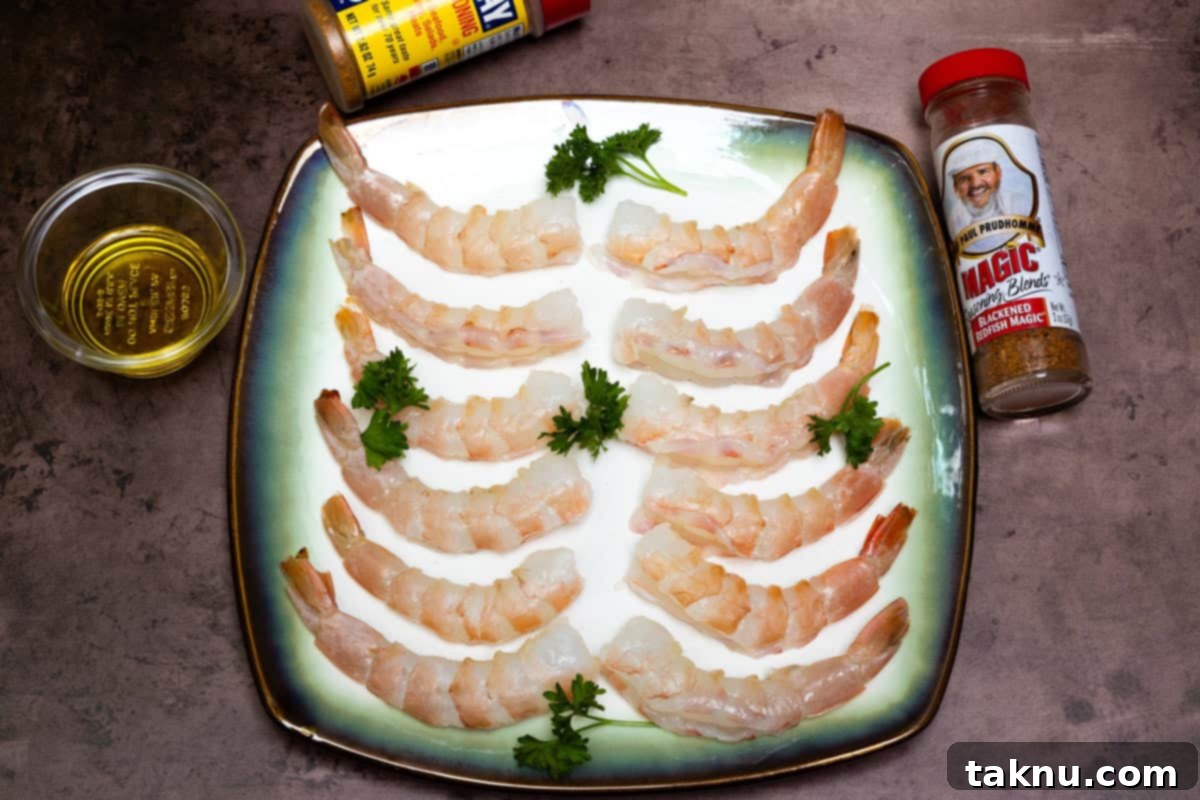
Begin by peeling the shrimp. Gently remove the head and the outer shell, but make sure to leave the tail on. Keeping the tail intact not only makes for a more appealing presentation on your skewers and plate but also provides a convenient handle for eating. After peeling, carefully cut a shallow slit along the back of each shrimp with a sharp knife. This step is crucial for both deveining and butterflying.
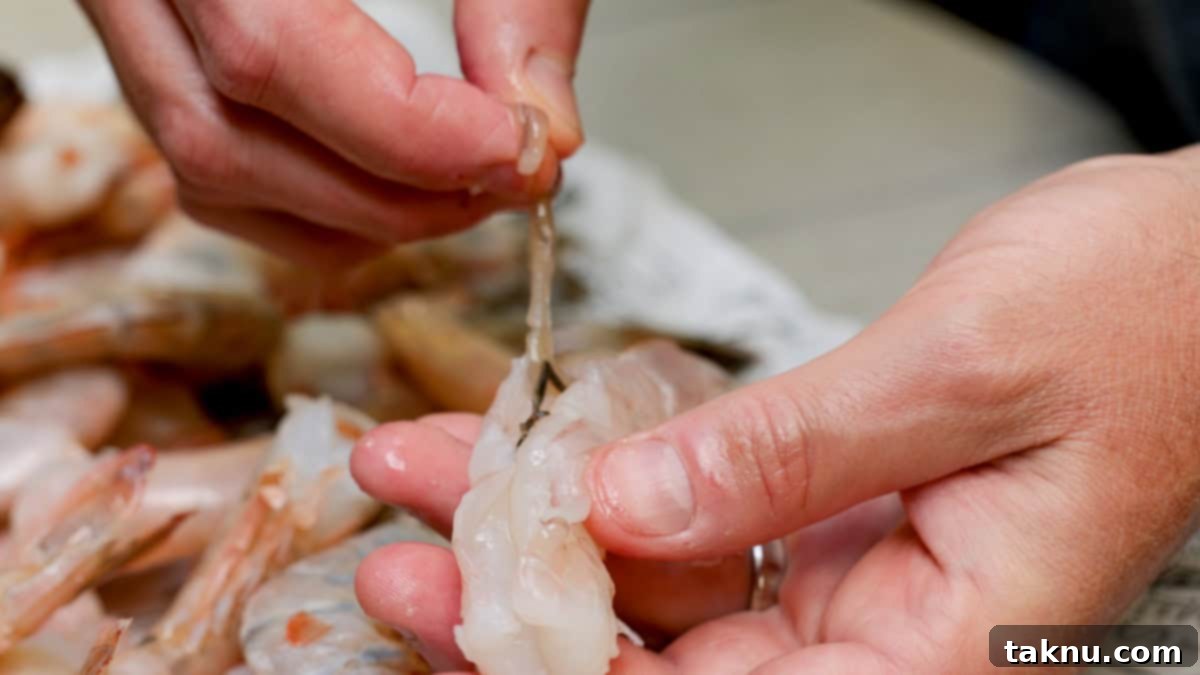
Once you’ve made the cut along the back, you’ll expose the shrimp’s intestinal tract, often referred to as the “vein” (though it’s not a true vein). This dark string is harmless to eat but can have a gritty texture and an unappetizing appearance. Use your fingers or the tip of your knife to gently pull out and discard this vein. This process is called deveining. Butterflying the shrimp by gently opening it up along the cut also helps it cook more evenly, absorb more seasoning, and presents beautifully once grilled.
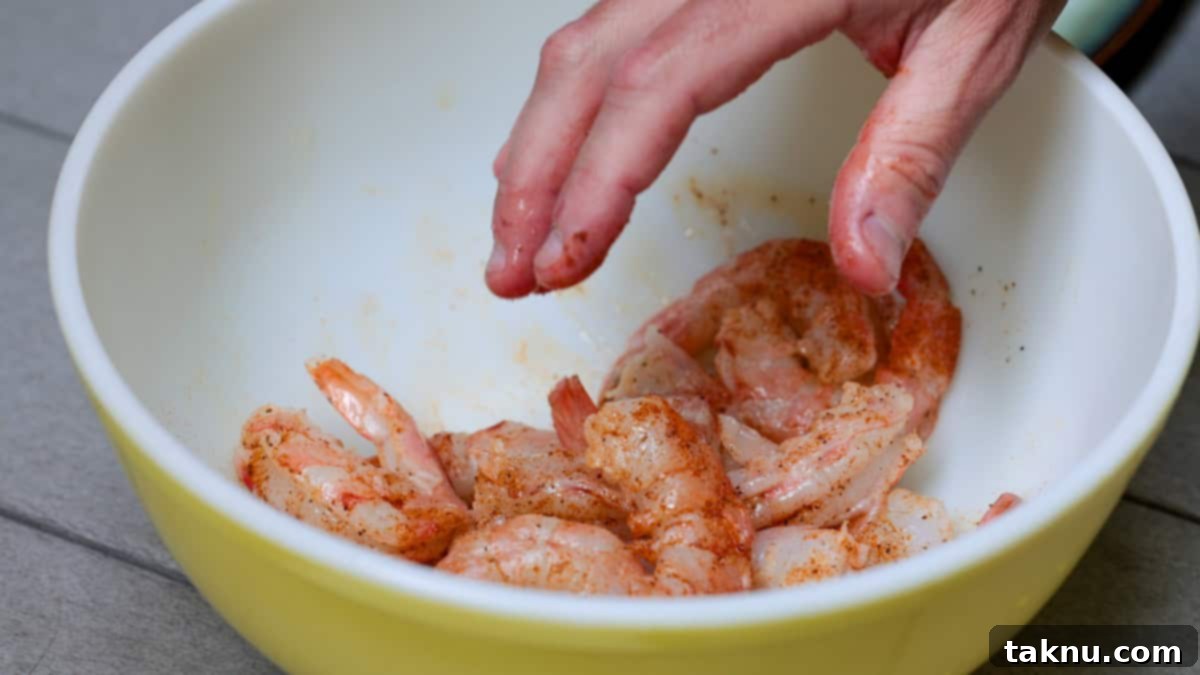
Now it’s time to season your shrimp. Place all the peeled and deveined shrimp into a large bowl. Drizzle them with olive oil, ensuring each shrimp is lightly coated. Then, sprinkle your chosen seasoning (Blackening or Old Bay) generously over the shrimp. Toss everything together thoroughly with your hands or a spoon, making sure every piece of shrimp is evenly coated. This even distribution of seasoning is crucial for maximum flavor in every bite.
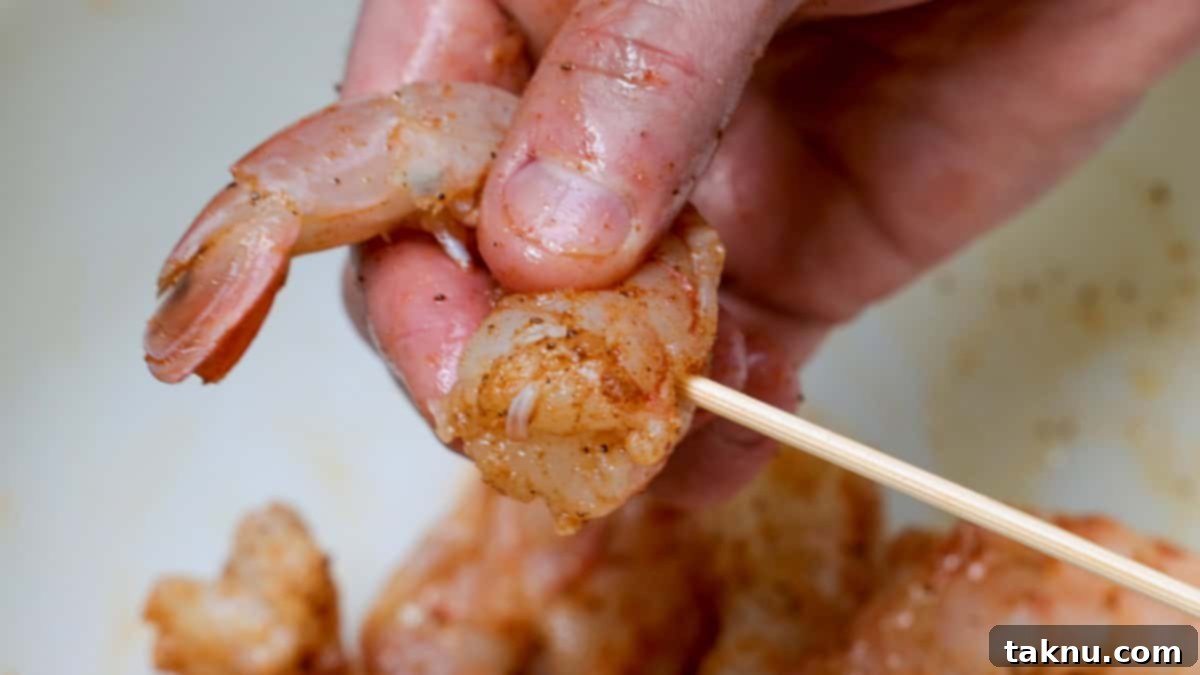
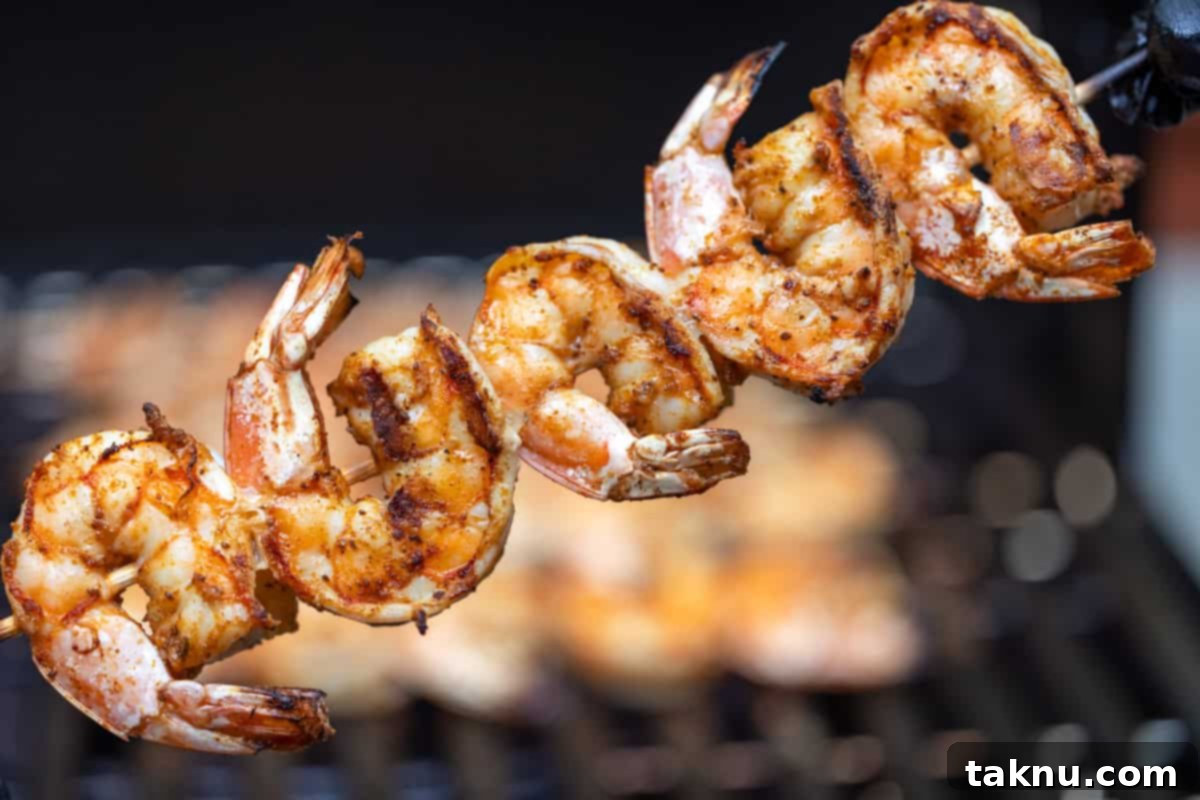
For easier handling on the grill, thread the seasoned shrimp onto pre-soaked wooden skewers. Aim for 4-6 shrimp per skewer, depending on their size, piercing them through both the tail end and the thicker part of the body. This helps keep them secure and prevents them from spinning when you flip them. When skewering, try to arrange them in a gentle ‘C’ or ‘U’ shape to ensure they cook evenly. This also creates a visually appealing presentation.
Pro Tip for Skewers: Don’t forget to soak those wooden skewers in water for at least 30 minutes (or ideally an hour) before threading the shrimp. This crucial step prevents them from catching fire or burning excessively while on the hot grill, ensuring your shrimp cook evenly without any unwanted smoky flavor from burning wood.
Grilling Shrimp to Perfection: The Art of the Flame
With your shrimp prepped and seasoned, it’s time for the magic to happen on the grill. Ensure your grill is preheated to a consistent 400-450°F. A clean, hot grill is paramount for preventing sticking and achieving those desirable grill marks. For this recipe, I often use my reliable Weber gas grill, which provides consistent heat and easy temperature control.
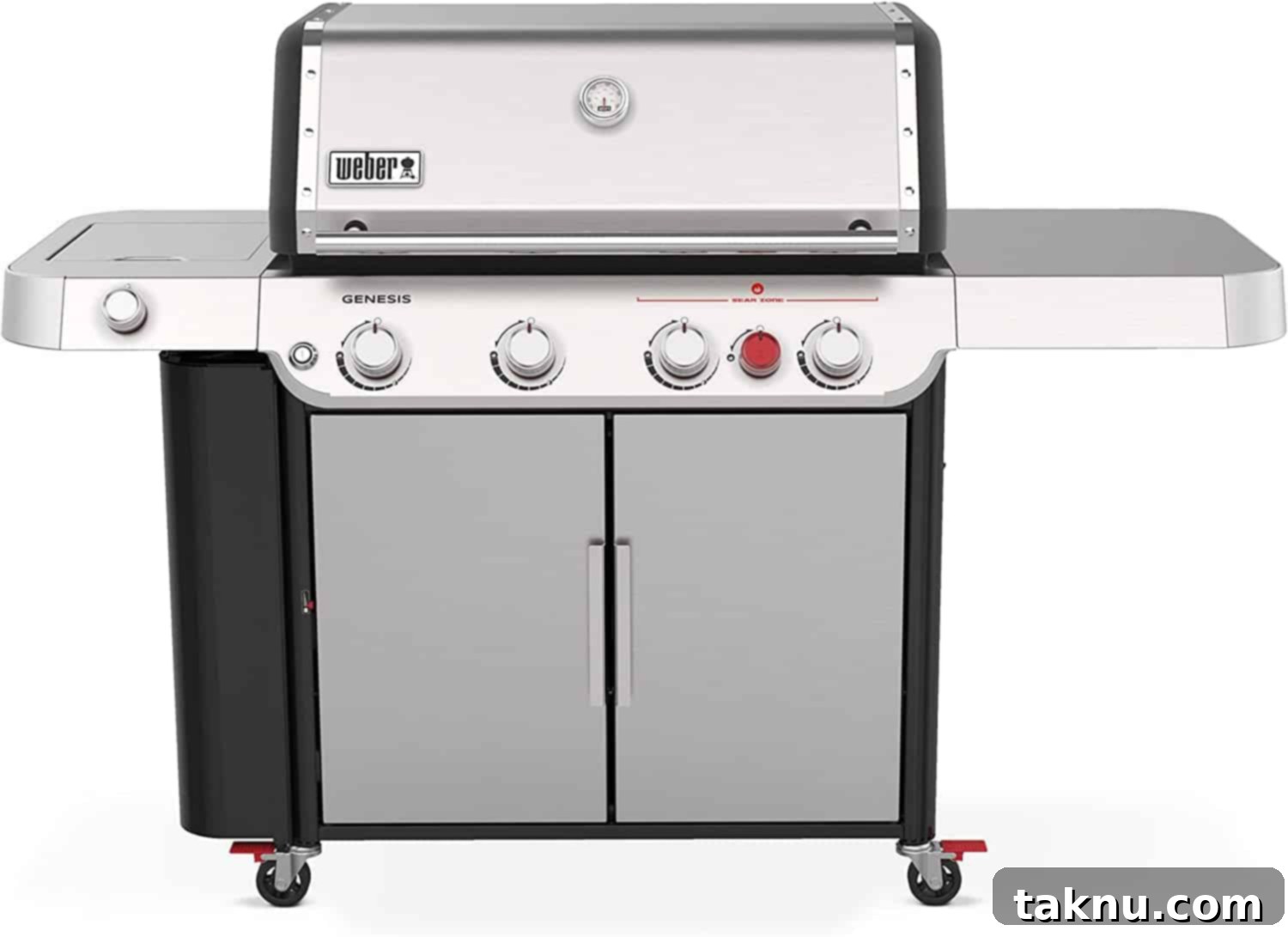
Regardless of your setup, whether you’re using a charcoal grill for that authentic smoky flavor, a convenient propane grill like mine, or a versatile pellet grill, they will all deliver perfectly cooked shrimp. The key is to manage the heat and keep a close eye on your delicate seafood. For charcoal grills, aim for a medium-high direct heat zone. For gas grills, preheat all burners to medium-high and let them get hot before placing the shrimp. Pellet grills should be set to a higher temperature to ensure a quick sear.
Precise Cooking Time for Tender Shrimp
Shrimp cook incredibly fast, so speed and attentiveness are your best friends here. Once your grill is hot and clean, carefully place the shrimp skewers directly onto the grill grates. Close the lid to allow the heat to circulate and cook the shrimp evenly.
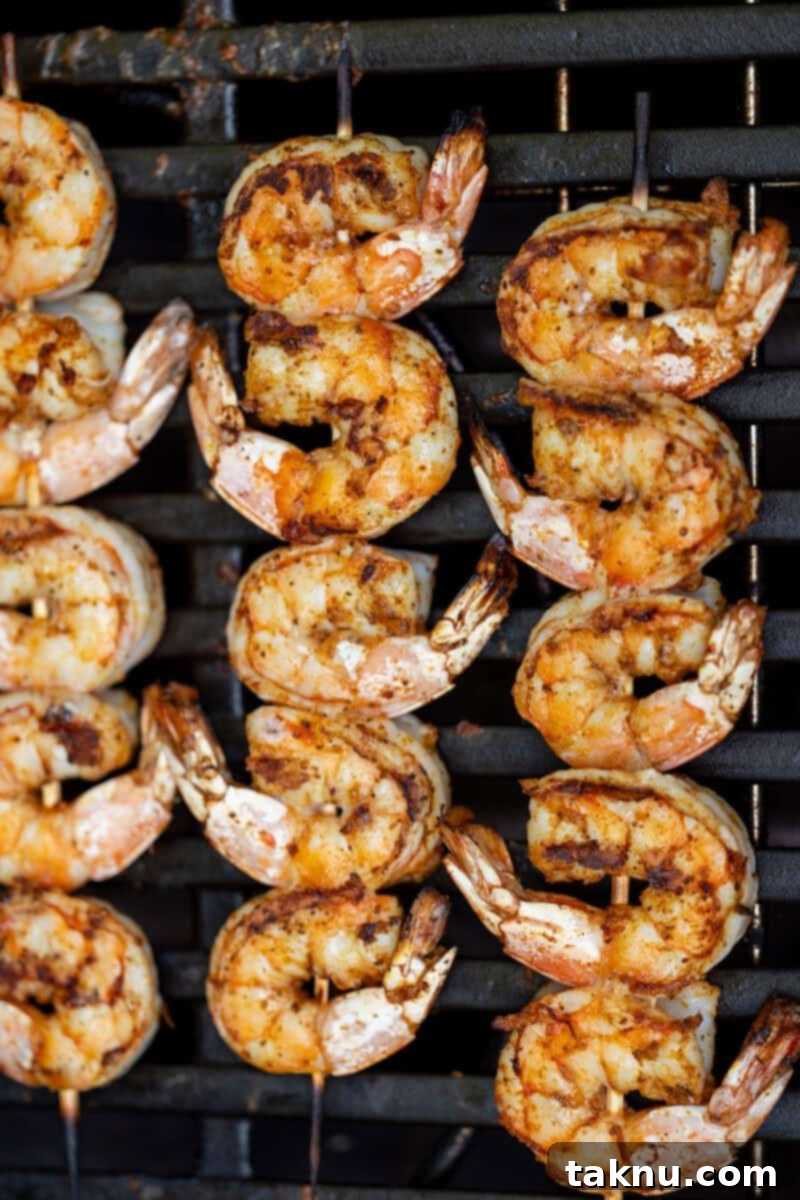
Grill the shrimp for approximately 1.5 to 2 minutes per side. Because shrimp transition from raw to cooked so quickly, it’s essential not to stray far from your grill. After the initial 1.5-2 minutes, use tongs to carefully flip the skewers over. Cook for another 1.5-2 minutes on the second side. You’ll notice the shrimp turning from a translucent grey to an opaque pink as they cook.
How to Tell When Grilled Shrimp are Done
The most accurate way to ensure your shrimp are perfectly cooked and safe to eat is to test them with an instant-read thermometer. Insert the thermometer into the thickest part of a shrimp, avoiding the skewer. The shrimp are finished cooking when they reach an internal temperature of 145°F. At this point, they should be immediately pulled off the grill to prevent overcooking.
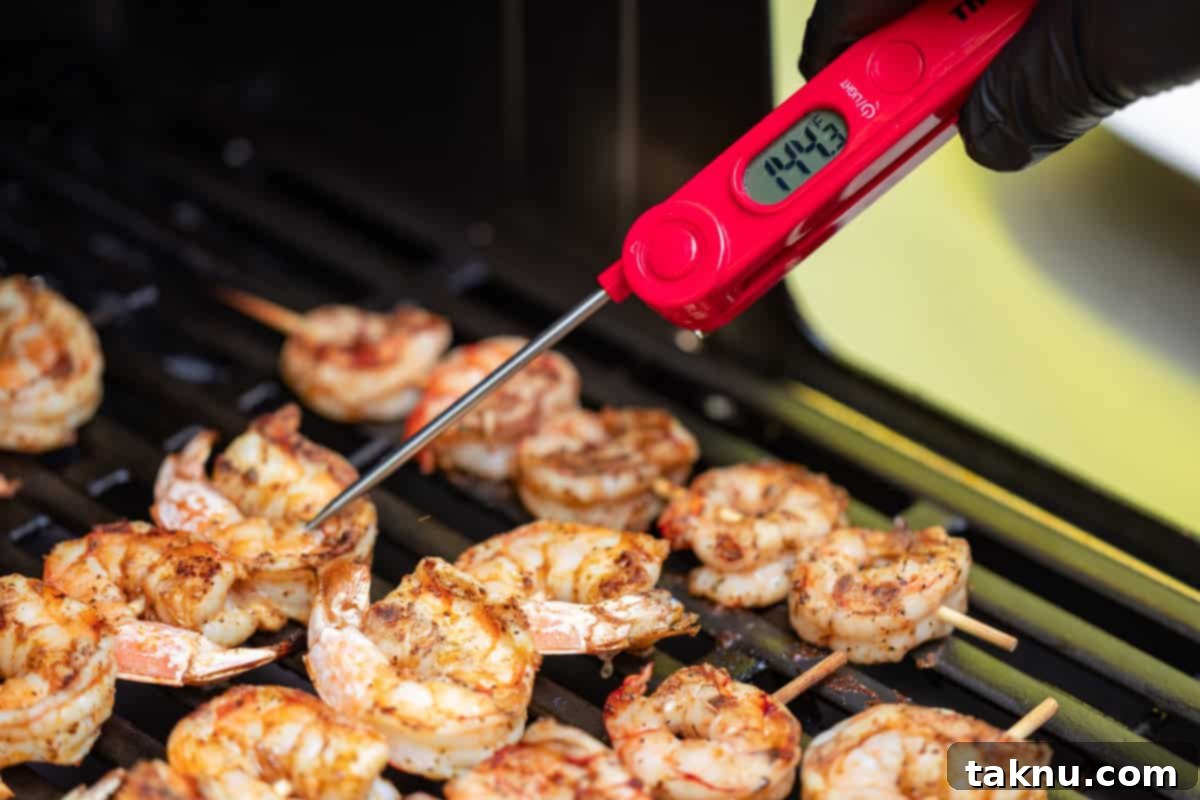
Don’t have an instant-read thermometer? No worries! There are reliable visual cues. Cooked shrimp will no longer appear translucent inside; instead, they will be entirely opaque and firm to the touch. They will also curl into a gentle “C” shape and develop a vibrant pinkish-orange hue. If they curl tightly into an “O” shape, they are likely overcooked. The goal is a tender, succulent texture, not rubbery.
Hint: After grilling, let your grill run for another 4-5 minutes at 400-450 degrees Fahrenheit. This will help burn off any lingering food remnants. Once cooled slightly, give it a good clean. I highly recommend using a sturdy grill brush (affiliate link) or, for a natural and effective cleaner, an onion cut in half. Rub the cut side of the onion along the hot grates to remove residue and impart a fresh scent.
Finishing Touches and Serving Suggestions
Once your beautifully grilled shrimp skewers are off the heat, a few simple finishing touches can elevate their flavor and presentation, making them truly irresistible.
Always make sure to cut up several lemons into generous wedges. As soon as the shrimp come off the grill, a squeeze of fresh lemon juice over them is essential. The bright acidity of the lemon cuts through the richness of the shrimp and the smokiness from the grill, enhancing all the flavors. Encourage your guests to add more lemon juice to their liking.
For an added touch of freshness and visual appeal, finely chop some fresh parsley and sprinkle it generously over the plated grilled shrimp. The vibrant green color of the parsley provides a beautiful contrast to the pinkish-orange shrimp, and its herbaceous notes complement the seafood perfectly. A light dusting of flaky sea salt, like Maldon, can also add a delightful texture and burst of flavor.
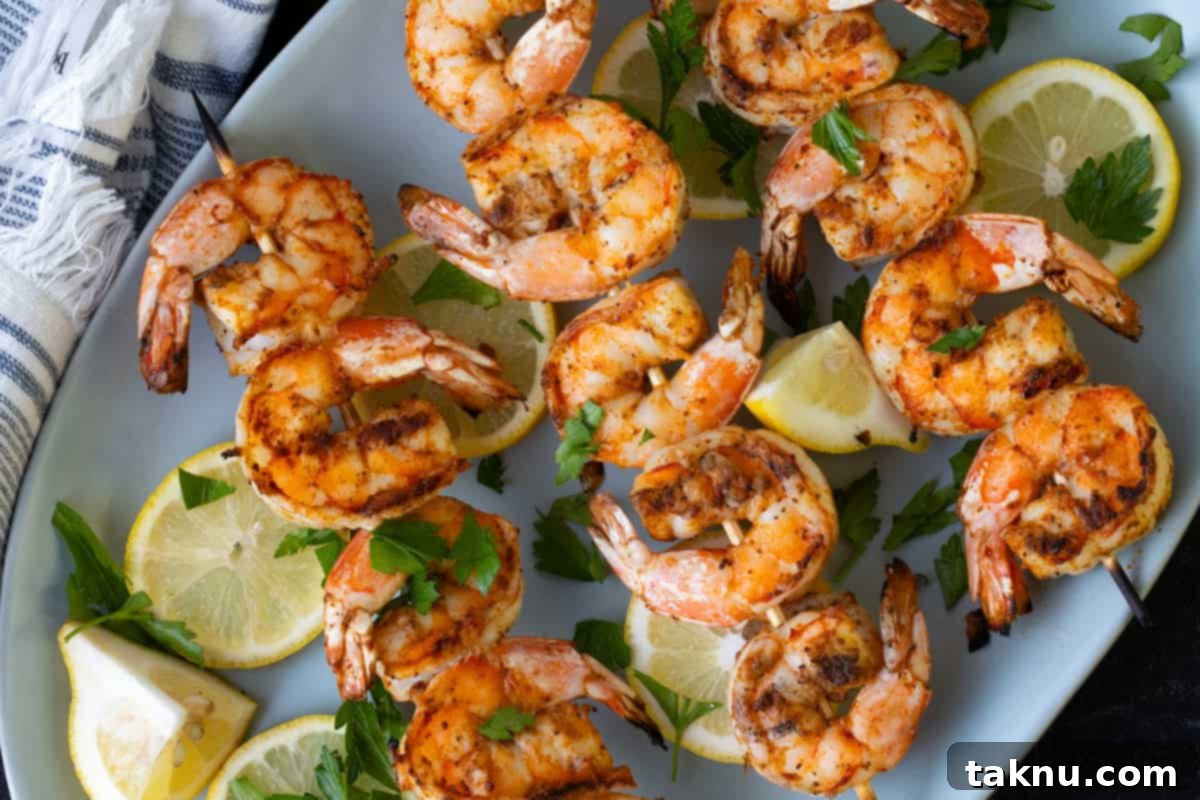
Serve these grilled shrimp immediately as a fantastic appetizer, a light lunch, or the star of a main course alongside your favorite sides. They are incredibly versatile and always a crowd-plepleaser.
Flavorful Seasoning Substitutions and Alternatives
While Blackening and Old Bay seasonings are fantastic choices for classic grilled shrimp, don’t hesitate to experiment with different flavor profiles. If you’re looking for a less spicy barbecue shrimp recipe, or simply want to try something a little different, coating the shrimp with a simple butter and garlic mixture before grilling can create an irresistibly rich and aromatic alternative.
This buttery garlic variation delivers a succulent, savory flavor that appeals to a wide range of palates. It’s perfect for those who prefer a milder taste or simply adore the classic combination of butter and garlic with seafood. Here’s what you’ll need for this delicious alternative:
- Salted Butter: Melted, it provides a rich coating and helps achieve a golden-brown finish.
- Black Pepper: Freshly cracked black pepper adds a subtle spice and aromatic depth.
- Garlic: You can use either finely minced fresh garlic for a pungent kick or garlic powder for a more evenly distributed, milder garlic flavor. About 1-2 cloves of minced fresh garlic per pound of shrimp, or 1 teaspoon of garlic powder.
- Parsley: Freshly chopped parsley, stirred into the butter mixture or sprinkled on top after grilling, adds a pop of color and herbaceous freshness.
To prepare: Simply melt the butter, then stir in the black pepper and garlic. Toss the peeled and deveined shrimp in this mixture until thoroughly coated before skewering and grilling. This creates a wonderfully tender, flavorful shrimp that’s hard to resist.
Video (Step-by-Step)
Storage and Reheating Tips
If you happen to have any glorious grilled shrimp leftovers (a rare occurrence!), proper storage is essential to maintain their freshness and flavor. Allow the grilled shrimp to cool completely to room temperature before transferring them to an airtight container. Store this container in the refrigerator, where the shrimp will remain fresh and delicious for up to 2 days.
When you’re ready to enjoy them again, you have several options for reheating or repurposing. For a quick reheat, a brief stint in the microwave on a low setting can warm them through without drying them out. Alternatively, you can gently heat them in a preheated oven at a low temperature (around 275-300°F) for 5-10 minutes, or until just warmed. Be careful not to overheat, as this can make the shrimp rubbery.
However, some of the best ways to enjoy leftover grilled shrimp don’t even require reheating! Chilled grilled shrimp are fantastic additions to a vibrant summer salad, providing a boost of protein and delicious smoky flavor. They are also incredibly versatile for making quick and easy shrimp tacos, or as a topping for cold pasta salads. Their firm texture and robust flavor hold up well when served cold, offering a refreshing twist on your original meal.
The Ultimate Top Tip for Grilling Shrimp
Do NOT overcook shrimp! This is the golden rule for grilling truly delicious shrimp. Overcooked shrimp quickly become dry, rubbery, and lose their delicate sweetness – a culinary disappointment that NO ONE enjoys. If you’re new to cooking shrimp or simply want to ensure perfect results, always use an instant-read thermometer to confirm they are done. Pull them off the grill immediately once they reach an internal temperature of 145°F. Remember, a perfectly cooked shrimp is tender, juicy, and has a slight snap to it, while an overcooked one is tough and chewy. Prioritizing this tip will guarantee succulent grilled shrimp every single time.
Frequently Asked Questions About Grilling Shrimp
Shrimp cook incredibly fast, so precision is key. On a grill preheated to 400-450°F, shrimp typically only need 1.5 to 2 minutes per side. The exact time can vary slightly depending on the size of your shrimp and the intensity of your grill’s heat. Watch them closely – they’ll turn opaque and pink when done. Avoid leaving them on for too long, as even an extra minute can lead to overcooked, rubbery shrimp.
Yes, absolutely! Grilled shrimp are an excellent source of lean protein and are naturally low in calories and fat. When prepared with simple seasonings and a light touch of olive oil, they are a very healthy and nutritious meal choice. The health benefits primarily come from the shrimp itself. It’s when you drench them in excessive amounts of butter, heavy creamy sauces, or unhealthy marinades that they can become less healthy. Sticking to fresh ingredients and light seasonings keeps them a wholesome option.
While a quick seasoning toss with oil and spices works wonders, I definitely prefer marinating shrimp before cooking whenever possible. Allowing the marinade or dry spices to soak into the shrimp for at least 15-30 minutes (but no more than an hour for delicate shrimp) helps the flavors penetrate deeper and adhere better to the surface. If you simply brush a sauce on afterwards, it’s more likely to drip off the shrimp and not integrate as deeply into the flesh, resulting in a less intense flavor. Pre-marinating creates a more robust and satisfying flavor profile.
No problem at all! If you don’t have skewers, you have a couple of great alternatives. For larger shrimp (jumbo or colossal), you can place them directly on the clean, hot grill grates. Be sure to turn them frequently with tongs. Another excellent option is to use a grilling basket, which allows you to cook a batch of shrimp without them falling through the grates, and you can easily shake or stir them for even cooking. Just ensure your shrimp are well-oiled to prevent sticking, regardless of the method.
More Grilled & Smoked Recipes You’ll Love
If you enjoyed this grilled shrimp recipe, you’re sure to love these other fantastic grilling and smoking recipes. Expand your outdoor cooking repertoire and try these delectable dishes:
- Smoked Shrimp
- Grilled Sliced Potatoes
- Grilled Filet Mignon – The Perfect Steak
- Grilled Sausage and Peppers
Perfect Pairings for Grilled Shrimp
Grilled shrimp are incredibly versatile and pair wonderfully with a variety of side dishes and other main courses. Here are some of my favorite dishes that complement the delicate flavor and smoky char of grilled shrimp, creating a truly memorable meal:
- Buttery Smoked Lobster Tails
- Flame Grilled Mahi Mahi
- Fire Grilled T-Bone Steak
- Perfectly Cooked Tomahawk Steak
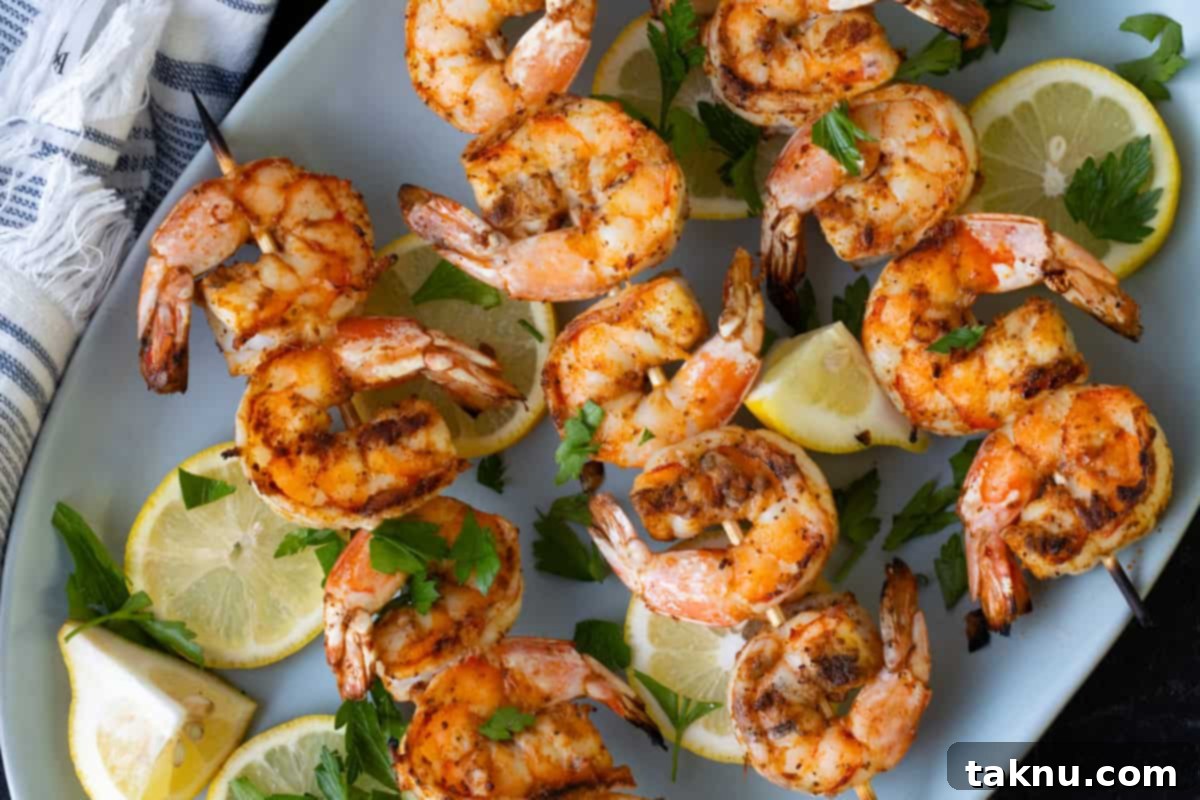
How to Grill Shrimp
Pin Recipe
Ingredients
- 1 lb large white or brown shrimp (10-15 count recommended)
- 1 tablespoon olive oil
- 2 tablespoons Old Bay Seasoning (or Blackening Seasoning)
- Lemon wedges for serving
- Fresh parsley, chopped for garnish (optional)
- Wooden skewers (soaked in water for 30+ minutes)
Instructions
- If using frozen shrimp, ensure they are fully thawed. Remove the shell from the shrimp, but consciously leave the tail intact for aesthetic appeal and ease of handling. Place your wooden skewers in a bowl or shallow dish of water to soak for at least 30 minutes.
- Using a sharp paring knife, carefully slice along the back of each shrimp from the head end towards the tail, creating a shallow cut that almost butterflies the shrimp. This action will expose the dark intestinal “vein.” Gently remove this vein with your fingers or the tip of your knife and rinse the shrimp under cold water to ensure it’s completely clean. Repeat this deveining process for all shrimp.
- Place the cleaned shrimp in a large mixing bowl. Drizzle with olive oil, ensuring each shrimp is lightly coated. Then, generously sprinkle with your chosen seasoning – Old Bay seasoning for a classic taste, or Blackening seasoning for a bolder, spicier kick. Toss thoroughly to ensure an even distribution of flavor. If you prefer a more buttery profile, you can substitute the dry seasoning with melted butter, freshly cracked black pepper, minced garlic, and chopped parsley as outlined in the “Seasoning Substitutions” section above.
- Carefully pierce 4-6 shrimp onto each of your water-soaked wooden skewers. Thread them through both the tail and the thickest part of the body to secure them. Aim for a gentle “C” or “U” shape to ensure even cooking and prevent them from spinning on the skewer.
- Preheat your grill to a consistent 400-450°F. Once hot, clean the grill grates thoroughly with a wire brush to remove any residue from previous cooks. For an extra clean and seasoned surface, you can rub a halved onion along the hot grates.
- Place the prepared shrimp skewers directly on the hot grill grates. Close the lid and grill for 1.5 to 2 minutes on the first side. Open the lid, flip the skewers over, and grill for another 1.5 to 2 minutes on the second side. Shrimp are finished cooking when their internal temperature, measured with an instant-read thermometer inserted into the thickest part, reaches 145°F.
If you do not have a thermometer, visual cues are key: the shrimp will turn opaque pink, firm to the touch, and curl into a gentle “C” shape. It is crucial to monitor them closely as shrimp cook very quickly; overcooking will result in a dry, rubbery texture.
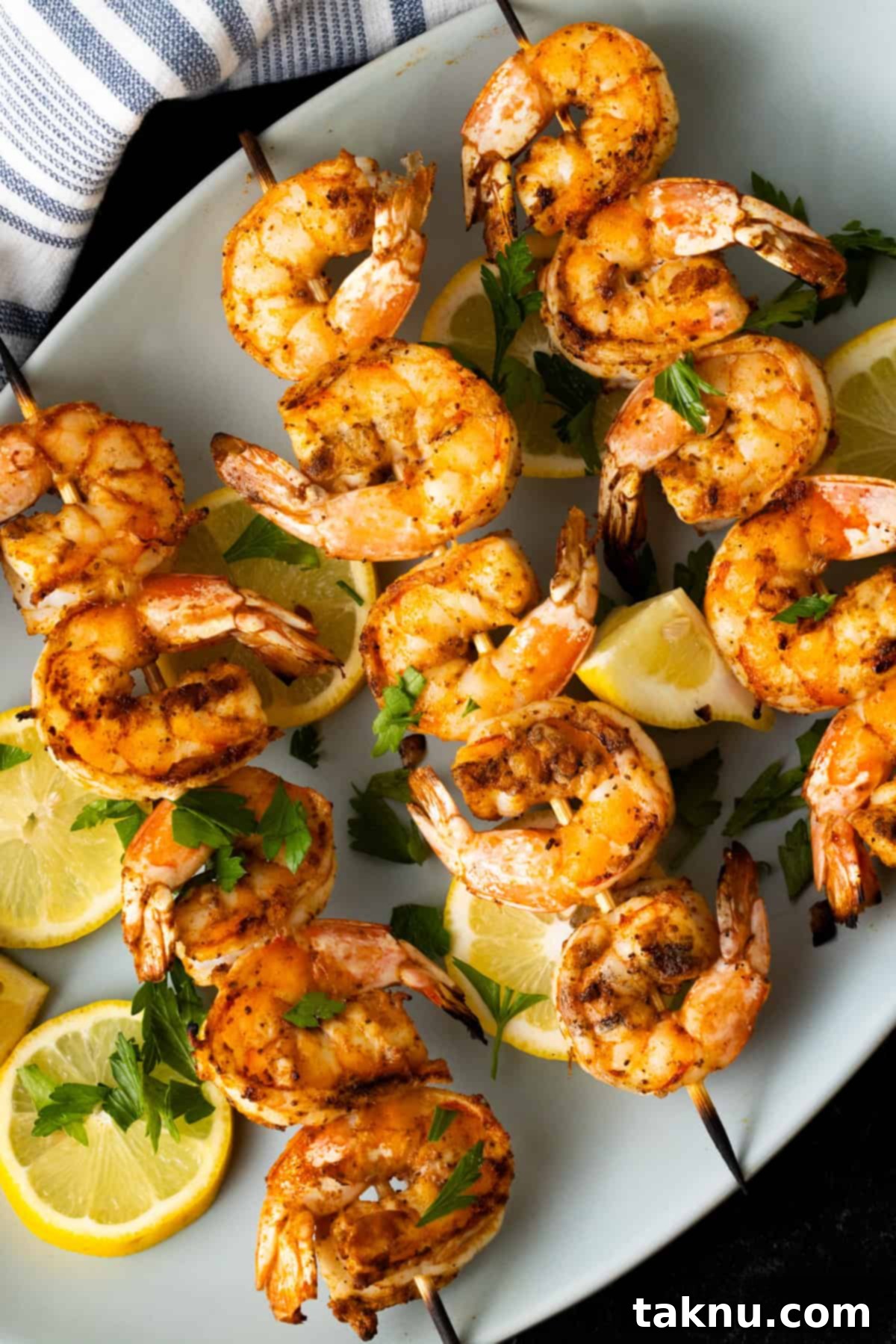
- Remove the grilled shrimp from the heat immediately and arrange them on a serving platter. Garnish with fresh lemon wedges and chopped parsley for a vibrant presentation and burst of flavor. Serve hot and enjoy your perfectly grilled shrimp! If you made these grilled shrimp, please consider leaving a review. Your feedback truly helps me out. Thanks!
Pro Tips for Grilling Shrimp
- Leave the tail on: This is a simple trick that significantly enhances the visual appeal of your grilled shrimp when presented on a platter. It also provides a convenient little handle for your guests, and many people actually enjoy eating the crispy tail!
- Choose large shrimp for grilling: Opt for shrimp in the 10-15 count range (jumbo or colossal). Larger shrimp are much easier to handle on skewers, less prone to falling through the grill grates, and offer a more satisfying, juicy bite compared to smaller shrimp which can dry out quickly.
- Soak wooden skewers thoroughly: This step is non-negotiable! Submerge wooden skewers in water for at least 30 minutes, or ideally an hour, before threading the shrimp. Dry wooden skewers will easily catch fire and burn on a hot grill, potentially ruining your shrimp and causing a safety hazard.
- Always devein your shrimp: While not harmful, the dark intestinal tract (the “vein”) can be gritty and unappetizing. Removing it drastically improves the appearance and overall dining experience of your finished grilled shrimp. Nobody likes un-deveined shrimp!
- Don’t overcrowd the grill: Place shrimp skewers with enough space between them to allow for proper airflow and even cooking. Overcrowding can lower the grill temperature and result in steamed rather than perfectly grilled shrimp.
Nutrition Information
Essential Food Safety Practices for Grilling Seafood
Ensuring food safety is paramount when grilling any type of seafood, especially shrimp, to prevent foodborne illnesses. By following these straightforward guidelines, you can enjoy your delicious grilled shrimp with complete peace of mind:
- Cook to a Safe Internal Temperature: Always cook shrimp to a minimum internal temperature of 145°F (63°C). Use an instant-read thermometer inserted into the thickest part of the shrimp to verify doneness. This temperature ensures that any harmful bacteria are destroyed.
- Prevent Cross-Contamination: Never use the same utensils, plates, or cutting boards on cooked food that previously touched raw meat or seafood. Always use separate equipment or thoroughly wash and sanitize them in between uses.
- Thorough Handwashing: Wash your hands thoroughly with soap and warm water for at least 20 seconds after handling raw shrimp or any raw meat. This simple step is critical in preventing the spread of bacteria.
- Proper Thawing: Do not leave frozen shrimp sitting out at room temperature for extended periods to thaw, as this can allow harmful bacteria to multiply rapidly. Always thaw frozen shrimp safely in the refrigerator overnight, or by placing them in a sealed bag under cold running water for a quicker method.
- Never Leave Food Unattended: Whether it’s raw shrimp thawing or cooked shrimp cooling, do not leave food sitting out at room temperature for more than two hours (or one hour if the ambient temperature is above 90°F / 32°C). For cooking, always supervise your grill, as unattended food can quickly overcook or pose a fire hazard.
For more detailed and comprehensive food safety guidelines, always refer to trusted resources such as the USDA.gov website. Your health and enjoyment are worth the extra precaution!