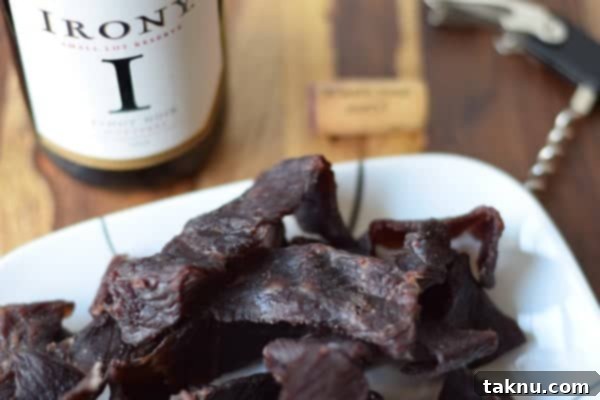
Red Wine and Fish Sauce Jerky: An Unforgettable Homemade Beef Jerky Adventure
The very idea of combining red wine and fish sauce in a jerky recipe might raise an eyebrow or two, sparking curiosity and perhaps a touch of apprehension. Indeed, Red Wine & Fish Sauce Jerky presents a flavor profile that is truly unique, stepping far outside the traditional jerky experience. While the combination might sound peculiar at first blush, it promises an adventure for the palate that seasoned jerky enthusiasts and culinary explorers alike will appreciate. This distinct recipe challenges conventional notions of what beef jerky can be, inviting you to discover a surprising and intriguing taste.
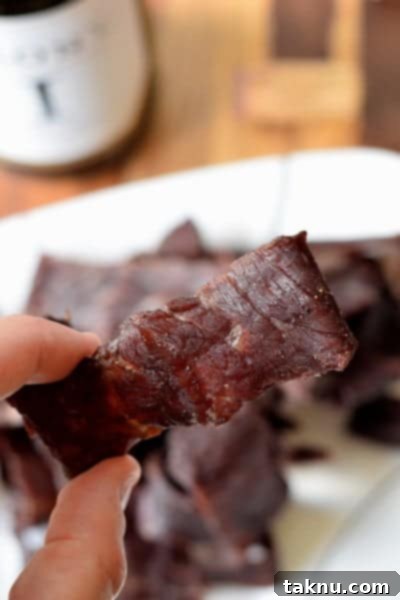
My Personal Journey with Fish Sauce and the Inspiration for This Jerky
My initial encounter with fish sauce, roughly three years ago, was far from love at first taste. In fact, I distinctly recall disliking it intensely. However, fate, or rather, my soon-to-be Vietnamese wife who adores fish sauce, had other plans. Living with someone who cherishes this fundamental ingredient in their cuisine meant I had no choice but to keep trying it. Fast forward three years, and my perspective has completely transformed. What was once an acquired taste has become a genuinely enjoyable one. While I wouldn’t go as far as to douse every meal in it, specific Vietnamese dishes, such as succulent sliced pork served with steamed rice, truly shine with a generous coating of this flavorful condiment.
It was this evolving appreciation that sparked my interest when I stumbled upon this distinctive jerky recipe on the Vietworldkitchen.com blog. The moment I saw “Red Wine & Fish Sauce Jerky,” I knew I had to try it. The sheer audacity of the flavor combination captivated me, promising an experience unlike any other jerky I had made before. To my delight, I already had all three primary ingredients readily available in my kitchen. Within merely 30 minutes of reading through the instructions, I had a pound of lean London Broil marinating, ready to embark on this culinary experiment. The ease of preparation, coupled with the intriguing concept, made it an irresistible project.
Selecting the Perfect Red Wine for Your Jerky
For my initial attempt at this unique recipe, I opted for a Pinot Noir, as my fiancée conveniently had a bottle on hand. Pinot Noir is generally characterized by its lighter body and fruitier notes compared to some other red wines. While it imparted a pleasant undertone, if I were to recreate this jerky, I would lean towards a more robust and full-bodied red wine, such as a hearty Cabernet Sauvignon. A Cabernet offers a richer, more complex flavor profile that I believe would complement the pungent fish sauce more effectively, creating a deeper, more balanced marinade. When selecting a wine for jerky, it’s not necessary to break the bank; a good yet inexpensive Cabernet, perhaps from a brand like Robert Mondavi, would be an excellent choice. The wine not only contributes to the flavor but also helps tenderize the meat and, as I discovered, provides a beautiful, deep red hue to the finished jerky that is typically associated with cured varieties.
The Art of Oven-Drying Your Beef Jerky
Crafting jerky at home, especially in a standard oven, is a straightforward process once you understand the basic principles. For this Red Wine & Fish Sauce Jerky, my oven was set to a consistent 180 degrees Fahrenheit, and the drying process spanned a total of five hours. A crucial step for oven drying is to ensure proper air circulation to allow moisture to escape. This is easily achieved by propping the oven door slightly ajar with a wooden spoon. This simple trick prevents steam from building up and keeps the air moving, which is essential for uniform drying and preventing the meat from cooking instead of dehydrating. If you’re new to making jerky in an oven, there’s a wealth of information available to guide you through the process, ensuring your jerky turns out perfectly. For more detailed instructions, you can refer to guides on making jerky in an oven.
The Verdict: An Intriguing Taste and an Unforgettable Aroma
So, how did this experimental jerky turn out? The flavor itself was surprisingly good – mild, savory, and with a pleasant depth from the red wine. However, the experience was profoundly influenced by an unexpected factor: the aroma. For my personal taste, and especially my sense of smell, there was a touch too much fish sauce in the marinade. It wasn’t the flavor that truly deterred me; it was the faint, yet persistent, smell of rotting fish that accompanied each piece as I brought it to my mouth. Despite the enjoyable taste, the aroma created a mental hurdle every single time. It was a fascinating lesson in how closely tied our senses of taste and smell are, and how one can significantly impact the other, even if the flavor itself is appealing. This particular batch taught me a valuable lesson about the delicate balance required when incorporating such potent ingredients.
Lessons Learned and Future Jerky Innovations
While Red Wine & Fish Sauce Jerky, in its current formulation, might not earn a permanent spot as my all-time favorite jerky, the experience was incredibly valuable and inspiring. The most significant takeaway was the revelation of using red wine as a marinade ingredient. This discovery alone has opened up a whole new world of possibilities for future jerky endeavors. Beyond its contribution to the flavor profile, red wine also imparts a visually stunning deep red color to the beef, mimicking the rich hue typically seen in traditionally cured jerky. This aesthetic appeal is a fantastic bonus for homemade jerky. Trying new recipes, especially those with unconventional combinations, is precisely what makes the art of jerky making so exciting. I am constantly on the lookout for innovative ingredients and novel methods to elevate my beef jerky creations.
Even though this particular recipe won’t be a regular in my rotation, its impact is undeniable. The lessons learned about balancing bold flavors, managing powerful aromas, and the incredible potential of red wine in marinades will undoubtedly influence my approach to future recipes. It serves as a reminder that every culinary experiment, successful or not, contributes to a richer understanding of ingredients and techniques. This journey of discovery is truly what keeps the passion for making homemade jerky alive.
Who Should Embark on This Flavor Journey?
This Red Wine and Fish Sauce Beef Jerky recipe is undoubtedly for the adventurous palate. If you are a genuine connoisseur of fish sauce, someone who appreciates its umami depth and unique character in various dishes, then this recipe is an absolute must-try. You’ll likely find the bold and unconventional combination to be a delightful surprise. However, for those who are unacquainted with fish sauce, or perhaps have had less positive experiences with its strong aroma, a word of caution is in order. Its distinctive smell and flavor can be quite assertive, and for some, it might be an acquired taste that takes time to appreciate. If you’re a beginner to the world of fish sauce, or prefer more traditional jerky flavors, you might want to explore the many other fantastic recipes available on this blog that offer a different flavor adventure. But for the daring and the devoted, this recipe offers a truly singular jerky experience. Have fun experimenting and enjoy the process!
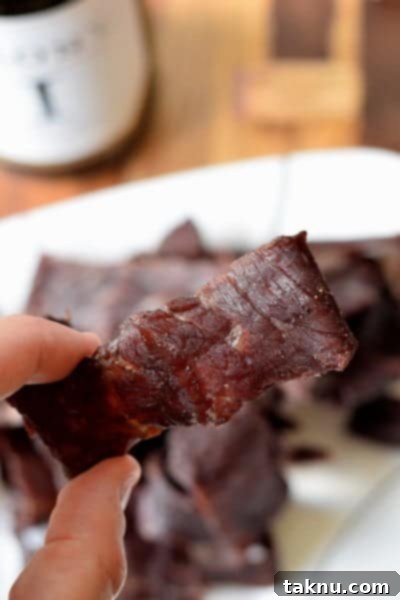
Red Wine & Fish Sauce Jerky
Pin Recipe
Ingredients
Lean Beef
- 1 lb London Broil
Marinade
- ½ cup red wine
- 3 tablespoon fish sauce
- ½ teaspoon black pepper
Optional
- ¼ teaspoon Curing Salt (Prague Powder #1)
Instructions
- Choose your preferred cut of lean beef, such as London Broil, and meticulously trim away all visible fat. Place the meat in the freezer for 1-2 hours to achieve a partially frozen state. This semi-frozen consistency significantly aids in slicing the meat thinly and uniformly, ensuring consistent thickness for even drying.
- In a container or a large zip-lock bag, combine the red wine, fish sauce, and black pepper. Stir or shake well to ensure the marinade ingredients are thoroughly mixed. If using, now is the time to add the optional curing salt to this mixture.
- Remove the beef from the freezer. Using a sharp knife, slice the beef against the grain into strips between ⅛-inch to ¼-inch thick. Aim for consistency in thickness for best results.
- Add the sliced beef strips to the container or bag with the marinade. Ensure all the meat is thoroughly coated by shaking or tossing it well. Place the container in the refrigerator and allow the beef to marinate for a minimum of 6 hours, or up to 24 hours for deeper flavor penetration.
- After the marinating period, remove the beef strips from the marinade and pat them thoroughly dry with paper towels. This step is crucial for efficient drying. Arrange the dried beef strips on a wire rack, ensuring they are not overlapping, and place the rack in the middle of your oven.
- Preheat your oven to its lowest possible temperature setting (ideally around 170°F, but no higher than 200°F). To facilitate air circulation and allow moisture to escape, prop the oven door slightly open with a wooden spoon or similar heat-proof utensil.
- Allow the jerky to dry in the oven for 4-12 hours. The precise drying time will vary depending on the thickness of your jerky strips and your oven’s efficiency. Begin checking for doneness around the 4-hour mark.
- Your jerky is finished when it is firm, bends easily without breaking completely in half, and has a leathery texture. There should be no signs of moisture or stickiness. Once done, remove the jerky from the oven and let it cool completely for several hours at room temperature before transferring it to an airtight container for storage. Proper cooling prevents condensation and keeps the jerky fresh.
Nutrition