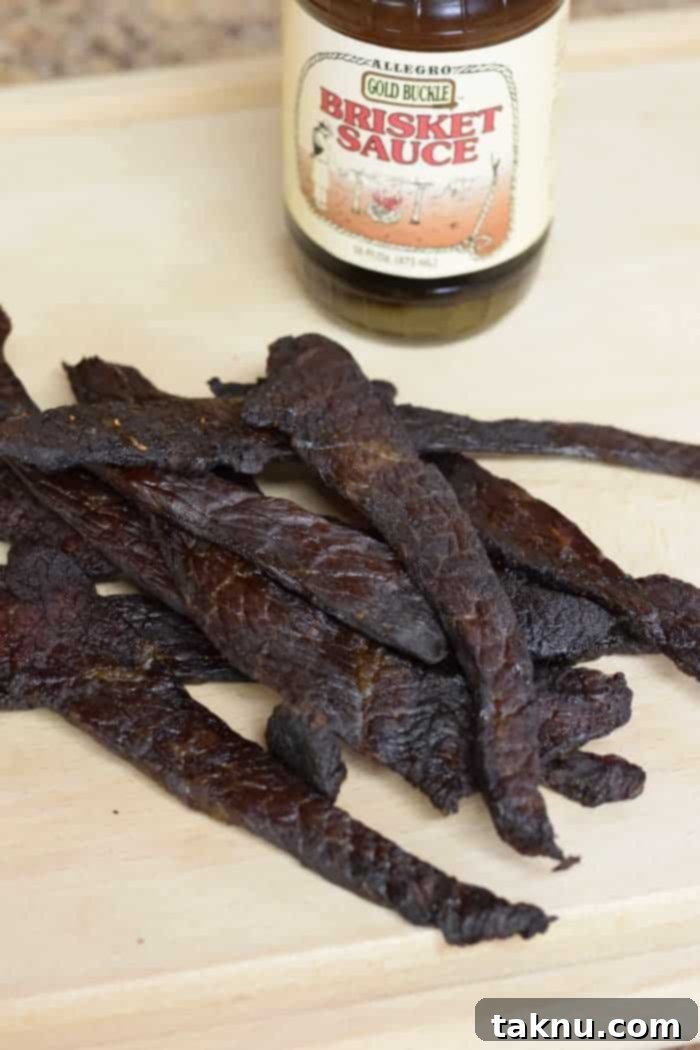
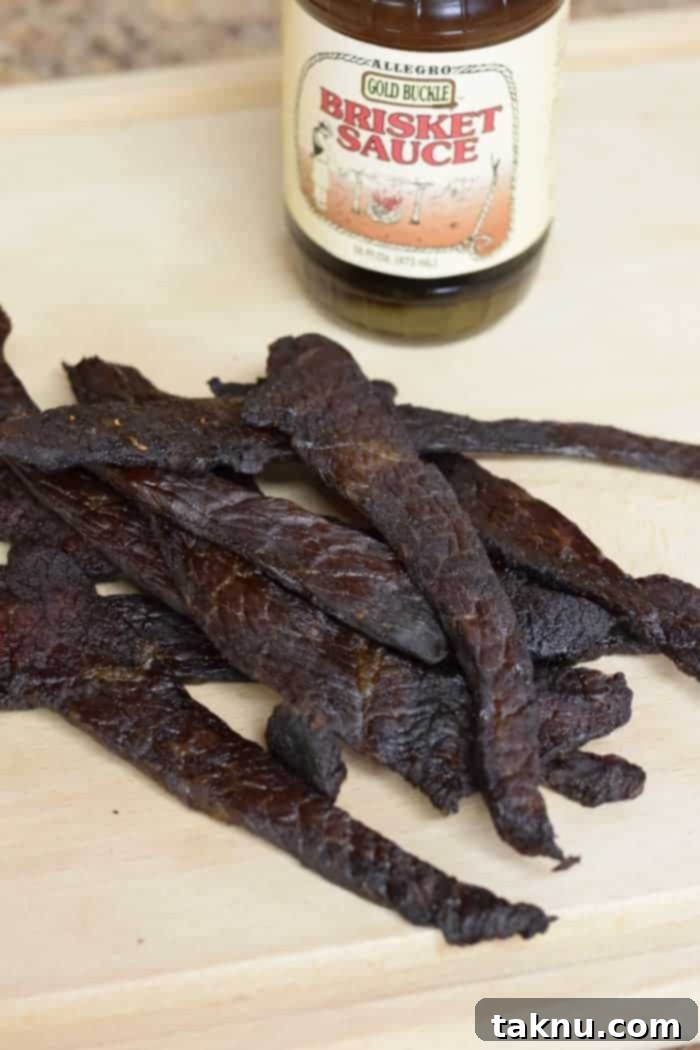
Mastering Simplicity: Crafting Delicious Allegro Gold Buckle Brisket Beef Jerky
There’s nothing quite like the satisfaction of homemade beef jerky. It’s a snack that perfectly combines robust flavor with a satisfying chew, making it ideal for everything from hiking trips to everyday snacking. Having successfully experimented with Allegro products in the past, I was eager to create an incredibly straightforward recipe using their renowned Gold Buckle Brisket Marinade. The results were truly outstanding, reminiscent of the delicious Allegro Teriyaki jerky I crafted some months ago, proving that simplicity often yields the most flavorful outcomes.
Choosing the Perfect Cut: The Foundation of Flavorful Jerky
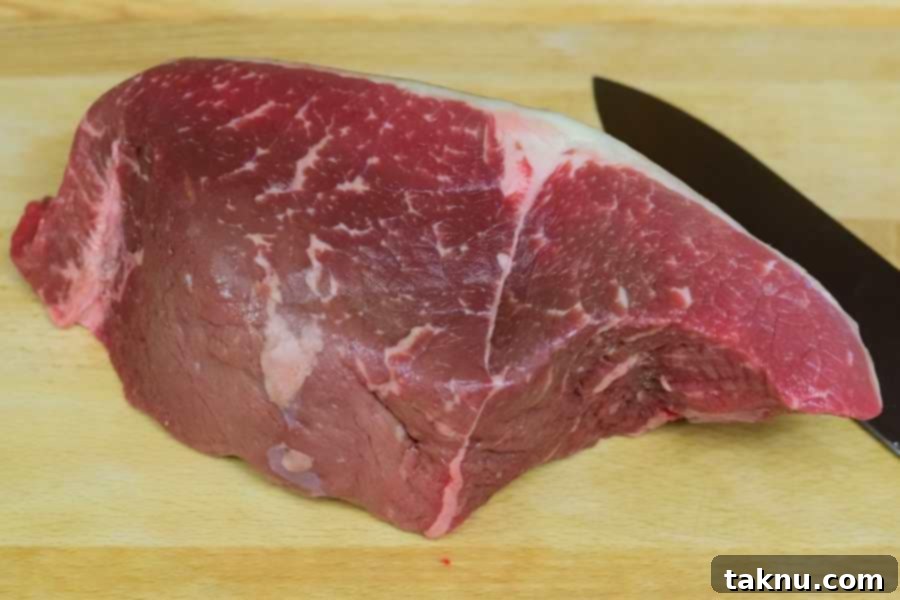
The journey to exceptional beef jerky begins with selecting the right cut of meat. While many jerky enthusiasts prioritize lean cuts like top round or eye of round, sometimes you have to work with what’s available. For this particular recipe, I used a rump roast, which happened to have a bit more fat than ideal. Don’t worry if your chosen cut isn’t perfectly lean; with a few careful steps, you can still achieve fantastic results. The key is thorough fat trimming and proper preparation. Lean cuts generally yield longer-lasting jerky, as fat can reduce shelf life, but a well-managed fattier cut can also be incredibly tender and flavorful. Always aim to trim as much visible fat as possible, as this not only enhances the texture but also prevents spoilage during the drying process.
The Star of the Show: Allegro Gold Buckle Brisket Marinade
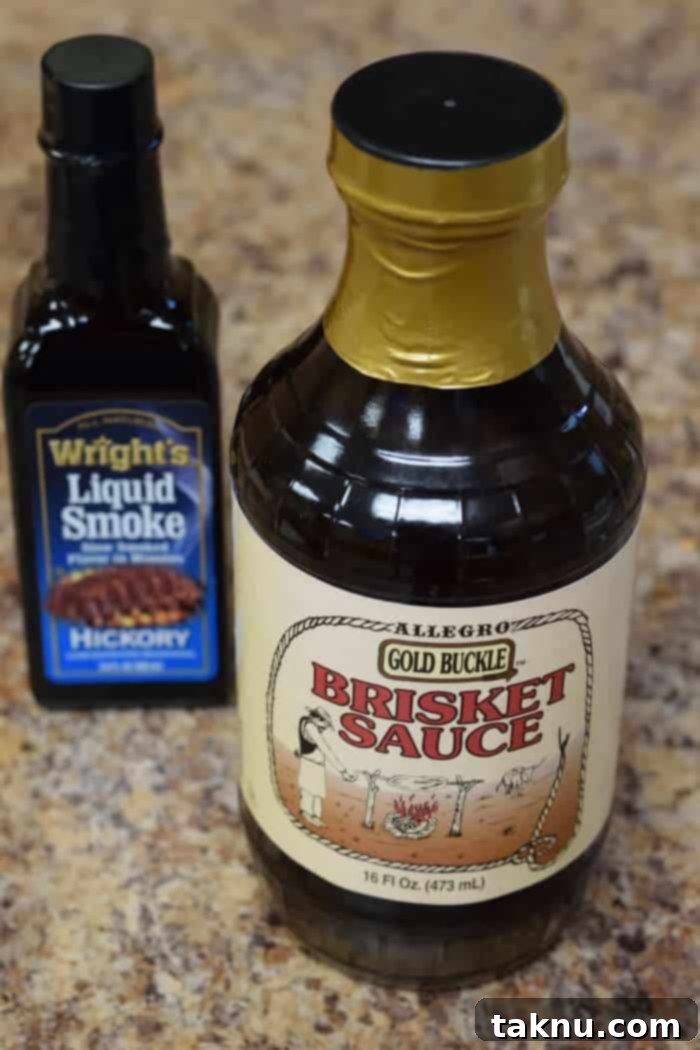
What makes this Allegro Gold Buckle Brisket Beef Jerky recipe so effortless yet incredibly tasty? It comes down to just two core ingredients for the marinade, alongside your choice of beef. The primary component is the exquisite Allegro Gold Buckle Brisket Marinade itself, a blend celebrated for its savory depth and authentic brisket flavor profile. Complementing this is hickory liquid smoke, which infuses the jerky with that unmistakable smoky aroma and taste. If you’re fortunate enough to be using a smoker for your jerky, you can easily omit the liquid smoke and instead leverage the natural smoky goodness imparted by hickory wood chips. This flexibility allows you to tailor the smokiness to your preference and available equipment. This minimal ingredient list highlights the simplicity of this beef jerky recipe, making it approachable for even novice jerky makers. It truly is incredibly simple, making it a fantastic choice for anyone looking to dive into homemade jerky without complex preparations!
Preparing Your Meat for Maximum Flavor Absorption
Once you’ve selected and trimmed your beef, the next crucial step is preparing it for slicing. To achieve uniform slices, which are essential for even drying, I recommend placing your trimmed meat in the freezer for about an hour or two. This partial freezing firms up the meat, making it much easier to cut into consistent ¼-inch strips. When slicing, you have a choice: cut with the grain for a chewier jerky, or against the grain for a more tender bite. The Allegro Gold Buckle Brisket Marinade works its magic best on evenly sliced pieces, ensuring every strip absorbs the rich flavors deeply. After slicing, the beef strips are ready to be combined with the marinade, ensuring each piece is thoroughly coated for optimal flavor infusion.
Marination: The Heart of Jerky Flavor
With your beef perfectly sliced, it’s time for the marinade to work its magic. Place the beef strips into a large ziplock bag or a non-reactive bowl, pour in the Allegro Gold Buckle Brisket Marinade and liquid smoke, and ensure all the meat is thoroughly coated. For best results and maximum flavor penetration, allow the meat to marinate in the refrigerator for 8 to 24 hours. A longer marination period typically results in a more intense and deeply flavored jerky. After the marinating time, it’s important to drain any excess marinade. I usually strain the jerky through a colander to remove as much liquid as possible, then pat the strips dry with paper towels. This step is critical as it helps the jerky dry more efficiently in the dehydrator and prevents a sticky, overly wet texture.
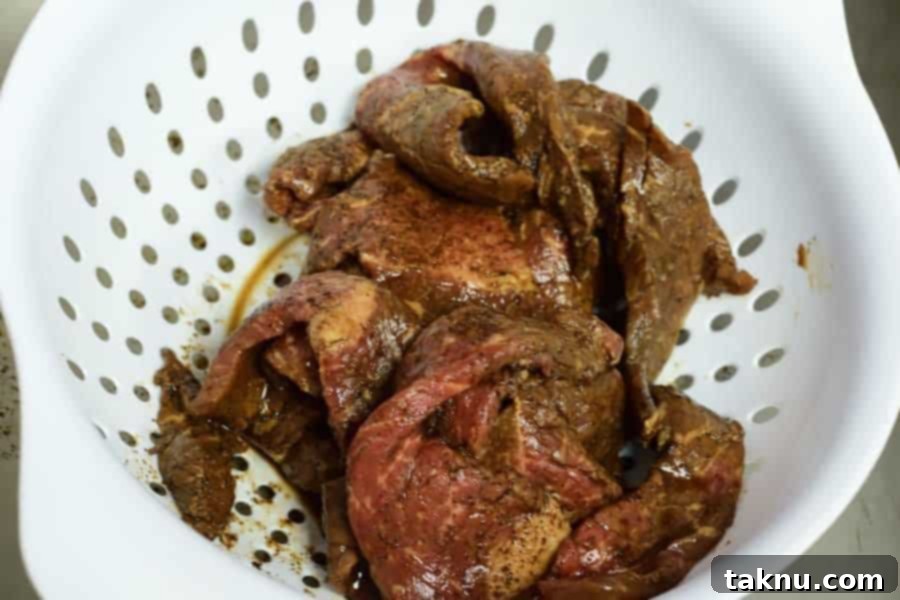
Dehydrating to Perfection: Tips for a Flawless Finish
The drying process is where your marinated beef transforms into delicious jerky. I relied on my trusty Nesco Dehydrator, arranging the seasoned strips on its trays with adequate space for air circulation. I dried these Allegro Gold Buckle Brisket jerky strips in my Nesco Snackmaster Pro Dehydrator for approximately 6 hours at a consistent temperature of 160°F. The exact drying time can vary depending on your dehydrator, the thickness of your meat, and your desired level of dryness. It’s always a good idea to monitor the jerky periodically.
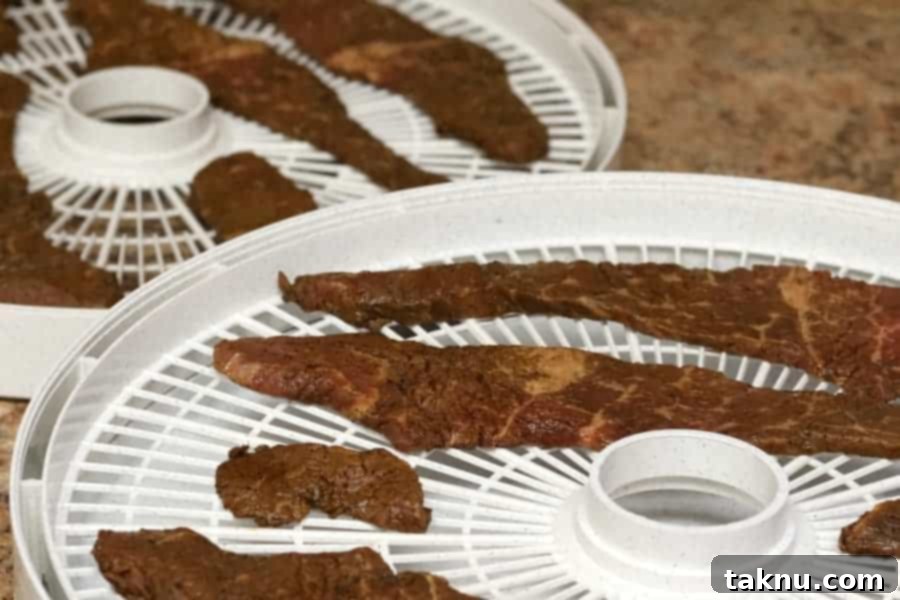
A vital tip, especially if you’re using a fattier cut of beef like I did: fatty meat releases more liquid during drying. To ensure optimal texture and prevent the jerky from becoming rancid, I highly recommend blotting the jerky strips dry with paper towels every hour. This simple step helps absorb any liquid fat that renders out, resulting in a cleaner, less greasy product with an improved shelf life. If you’re drying your jerky in an oven, set it to the lowest possible temperature, prop the oven door open slightly to allow moisture to escape, and flip the strips periodically. For smokers, maintain a low temperature (around 160-170°F) and use your preferred wood chips to infuse that authentic smoky flavor.
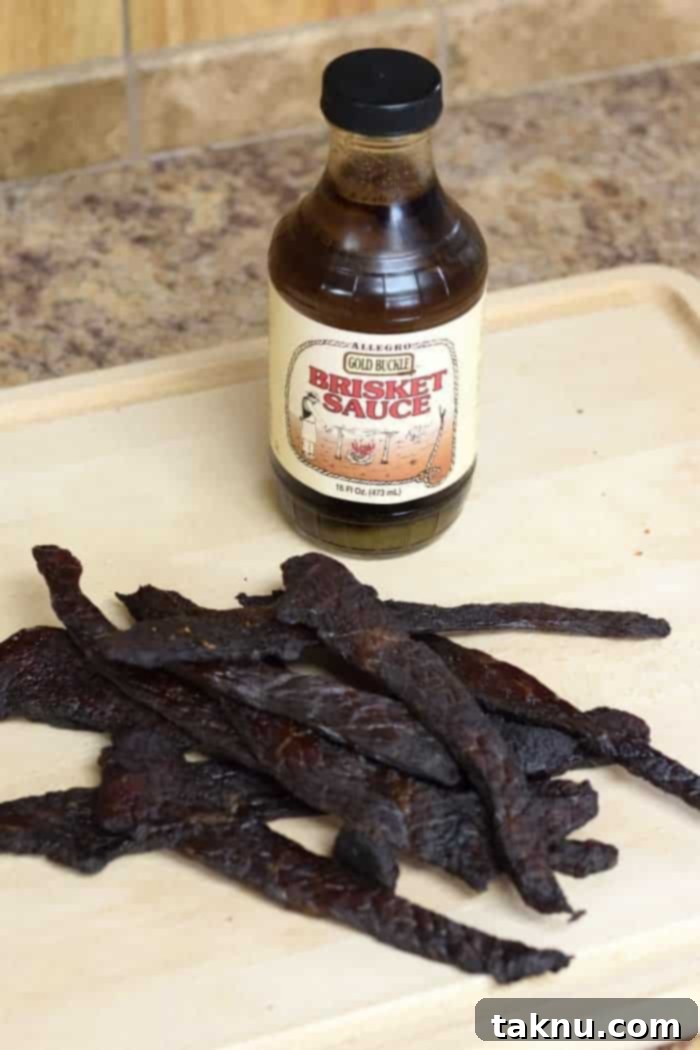
The Delicious Verdict and Storage Tips
The finished Allegro Gold Buckle Brisket Beef Jerky tasted absolutely fantastic. The hickory liquid smoke provided a delightful smokey undertone, perfectly balanced by the savory and slightly salty notes from the brisket marinade. Each strip offered a satisfying chew, packed with a deep, rich flavor that makes it incredibly addictive. If you’re seeking a truly simple yet incredibly flavorful jerky marinade recipe, this one is an absolute winner and a must-try! So, get that dehydrator warmed up or your smoker ready, and prepare to make some truly exceptional homemade jerky.
Once your jerky is done, allow it to cool completely before storing. Proper cooling and storage are key to maintaining freshness and texture. Store your finished jerky in airtight containers or resealable bags at room temperature for several weeks, or in the refrigerator for even longer. Always ensure the jerky bends and cracks without breaking in half – this indicates it’s perfectly dried.
For more in-depth directions on how to dry your beef jerky and explore different methods, visit my page Jerky Making Methods, or simply click on the pictures below for specific guides.
Discover detailed instructions for various jerky making techniques, including oven, dehydrator, and smoker methods. Each guide provides valuable tips to ensure your homemade jerky is a success, regardless of the equipment you use.
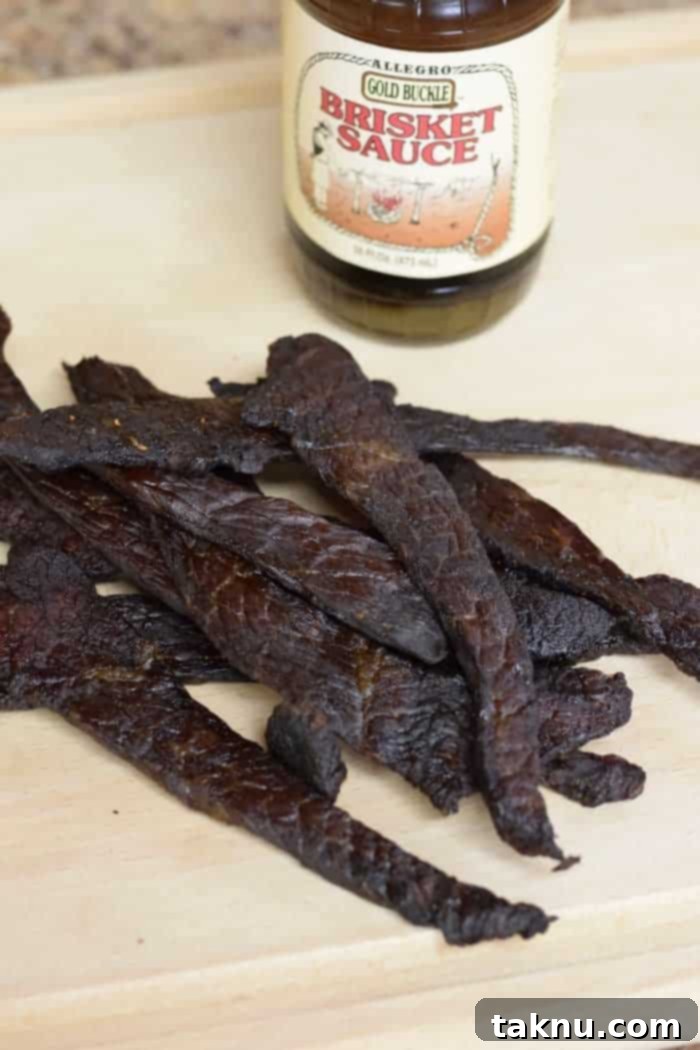
Gold Buckle Brisket Beef Jerky
Pin Recipe
Ingredients
Lean Meat
- 1 lb Lean Beef or Venison (Best Cuts of Beef for Jerky)
Marinade
- 1 cup Allegro Brisket Sauce
- 2 teaspoon Liquid Smoke (Hickory)
Optional
- ¼ teaspoon Curing Salt (Prague Powder #1)
Equipment
Instructions
- Trim all visible fat from the beef and place in freezer for an hour or two to partially freeze. This helps with easier and more even slicing.
- While the meat is in the freezer, combine the Allegro Brisket Sauce and liquid smoke (and curing salt, if using) in a bowl or ziplock bag and mix well to create your savory marinade.
- Remove the meat from the freezer and slice into consistent ¼” strips. Cut with the grain for a chewy jerky, or against the grain for a more tender texture.
- Add the sliced beef to the marinade mixture in a ziplock bag or bowl. Ensure all meat is thoroughly coated and marinate for 8-24 hours in the refrigerator.
- After the meat has finished marinating, remove from refrigerator and strain excess marinade in a colander. Pat the strips dry thoroughly with paper towels.
- Dry with your favorite jerky making method. I used my Nesco Dehydrator and dried for 6 hours at 160°F. Remember to blot any rendered fat from fattier cuts hourly.
- The jerky is finished when it bends and cracks, but does not break in half. It should be dry to the touch and firm, but still flexible.
Nutrition
You Might Also Like:
Best Cuts of Beef for Jerky: A Comprehensive Guide
Delve deeper into selecting the ideal meat for your jerky. This guide covers various cuts, their characteristics, and how each can influence the final texture and flavor of your homemade beef jerky.
How to Make Beef Jerky with a Dehydrator: Step-by-Step
Unlock the secrets to perfectly dehydrated jerky. This article offers a detailed, easy-to-follow guide on using a food dehydrator, covering everything from temperature settings to troubleshooting common issues, ensuring your jerky comes out just right.
The Best Dehydrator for Making Beef Jerky: Expert Picks
Looking to invest in a dehydrator or upgrade your current one? This guide provides insights into the top dehydrators on the market, helping you choose the best model for your jerky-making adventures.
Slicing Meat for Beef Jerky: Techniques for Success
Master the art of slicing beef for jerky. Learn about the importance of consistent thickness, how grain direction affects chewiness, and practical tips for achieving perfect slices every time, whether by hand or with a slicer.