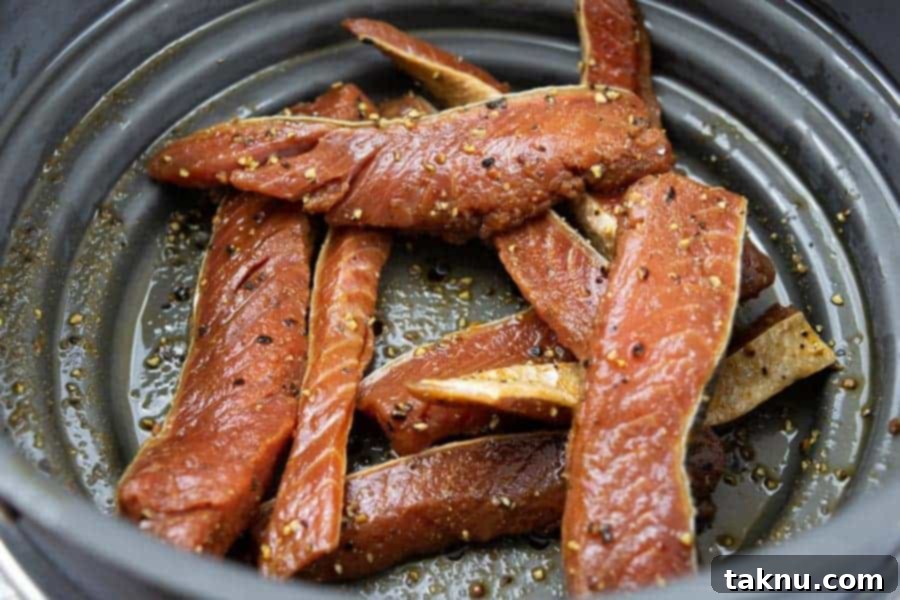
Delicious Homemade Salmon Jerky: A Step-by-Step Guide to the Perfect Smoky, Salty Snack
Craving a savory, satisfying snack that’s packed with flavor and wholesome goodness? Look no further than homemade salmon jerky! If you love salmon, you are truly going to adore this recipe. Our salmon jerky boasts a delightful, light fish flavor beautifully complemented by a rich, smoky essence and a perfectly balanced salty finish. It’s the ideal protein-packed treat for outdoor adventures, a healthy snack at work, or simply to enjoy at home.
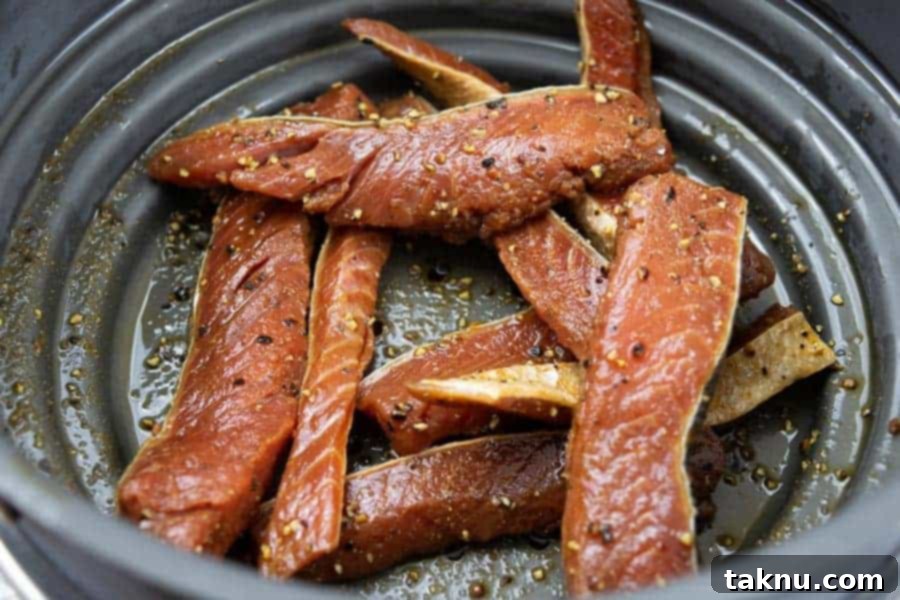
You might be wondering about making jerky from salmon, given its naturally higher fat content compared to leaner meats typically used for jerky. While it’s true that excess fat can reduce the shelf life and alter the texture of jerky, salmon is a fantastic exception! With the right preparation and drying techniques, salmon transforms into an incredibly delicious and surprisingly firm jerky. The natural oils in salmon contribute to its rich flavor and provide those beneficial Omega-3 fatty acids, making it a healthier jerky option.
Forget the often bland and overpriced store-bought varieties. This guide will walk you through every step to create salmon jerky that surpasses anything you’ll find on supermarket shelves. Prepare to impress your taste buds and discover your new favorite snack!
Essential Ingredients for Your Salmon Jerky
Crafting the perfect salmon jerky begins with selecting high-quality ingredients. Here’s what you’ll need for this incredibly flavorful marinade that delivers a smoky, savory, and slightly sweet profile to your salmon:
- Wild caught sockeye salmon
- Soy sauce
- Lemon juice
- Brown sugar
- Black pepper
- Liquid smoke
- Garlic powder
- Curing salt
Each ingredient plays a crucial role. The soy sauce provides a deep umami and salty base, while lemon juice adds a bright acidity that cuts through the richness of the salmon and enhances its natural flavor. Brown sugar balances the saltiness with a touch of sweetness, contributing to a more complex flavor profile and aiding in the caramelization during drying. Black pepper and garlic powder offer aromatic depth, and liquid smoke is key for that desirable campfire-smoked taste without needing a smoker. Curing salt, while optional, is highly recommended for enhanced food safety and a longer shelf life, especially with fattier fish like salmon.
How to Prepare Delicious Salmon Jerky at Home
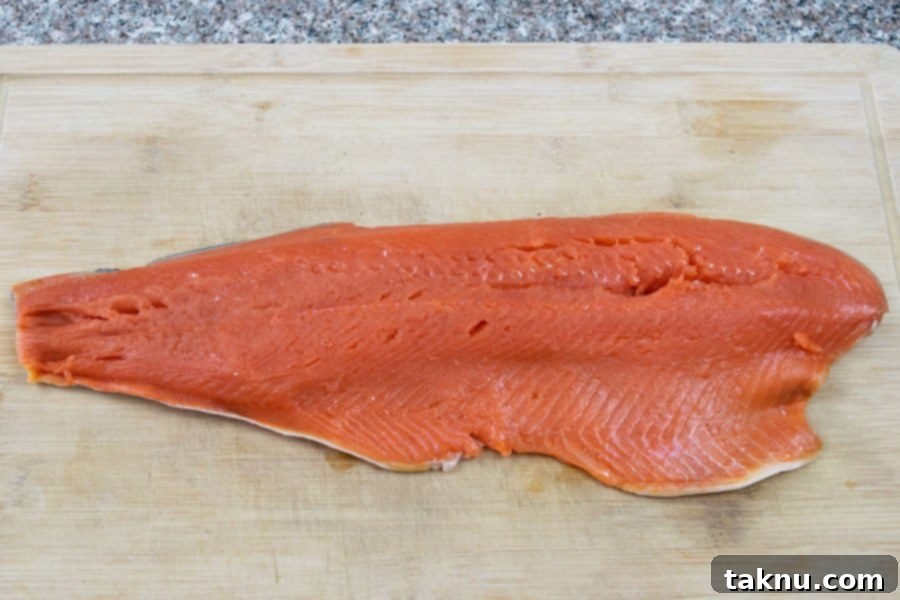
The journey to fantastic salmon jerky starts with the right fish. For this recipe, I always opt for a wild-caught sockeye salmon fillet, typically purchased from my local grocery store or fish market. The difference in taste and quality between wild-caught and farm-raised salmon is significant, especially when it comes to jerky. Wild-caught salmon, particularly sockeye, is known for its vibrant, deep red color and firm texture, a testament to its natural diet and active lifestyle in the open ocean. This distinct color and flavor profile translates into a far superior jerky experience compared to the paler, often fattier, and milder-tasting farm-raised varieties. Whether I’m making dehydrated salmon jerky or smoked salmon, the choice for wild-caught is always clear.
The richer, more concentrated flavor of wild salmon shines through even after marinating and dehydrating, offering a robust and authentic fish taste that is simply unparalleled. This careful selection of salmon is the first crucial step towards making jerky that truly stands out.
Step 1: Thoroughly Remove Pin Bones
Before you begin slicing, it’s essential to prepare your salmon fillet by removing any pin bones. These small, needle-like bones can be a nuisance and detract from the enjoyment of your jerky. To find them, gently run your fingertips along the length of the salmon fillet. You’ll feel small, hard protrusions, often white or translucent in color, particularly in the middle section of the fillet. The number of pin bones can vary greatly; some fillets have many, while others have none at all.
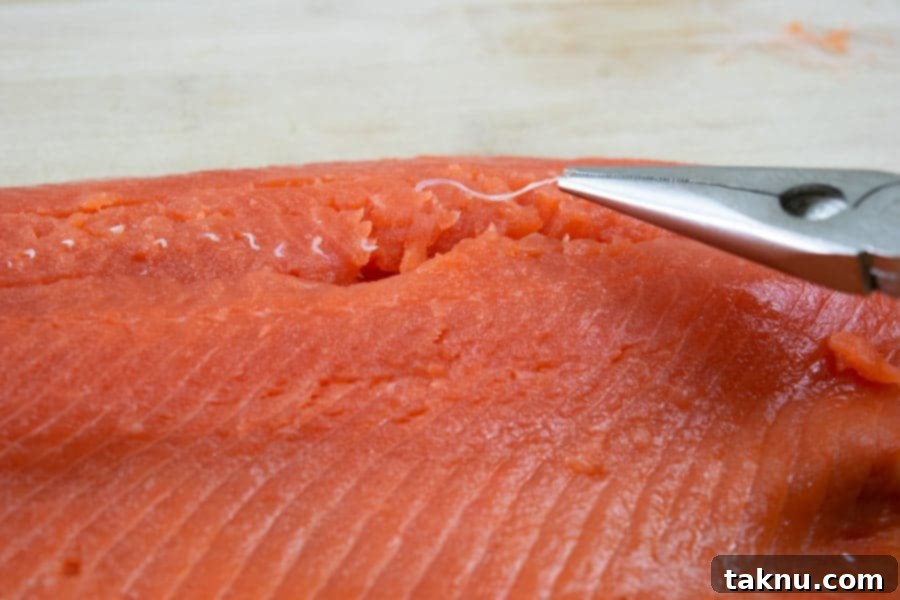
I find that a pair of standard needle-nose pliers or specialized fish bone tweezers work perfectly for this task. Grip each pin bone firmly and pull it out with a slight wiggling motion in the direction it enters the flesh. They should come out relatively easily. This seemingly small step is incredibly important; nobody wants an unexpected bone in their delicious jerky! Taking the time now ensures a safe and pleasant snacking experience later.
Step 2: Precisely Slice Your Salmon into Strips
Once the pin bones are removed, it’s time to slice your salmon. An important decision here is whether to remove the skin from the fillet or leave it on. For salmon jerky, I strongly recommend leaving the skin on during the initial preparation and drying process. The skin provides structural integrity, helping to keep the salmon strips intact and preventing them from breaking apart or becoming too fragile during the marinating and handling stages. This is especially useful as salmon can be quite delicate when thinly sliced.
Don’t worry about the skin affecting the final product; once the jerky is fully dried, the skin will peel off incredibly easily, almost effortlessly, right before you eat it. This method ensures your jerky strips maintain their shape and integrity, resulting in a much better final texture.
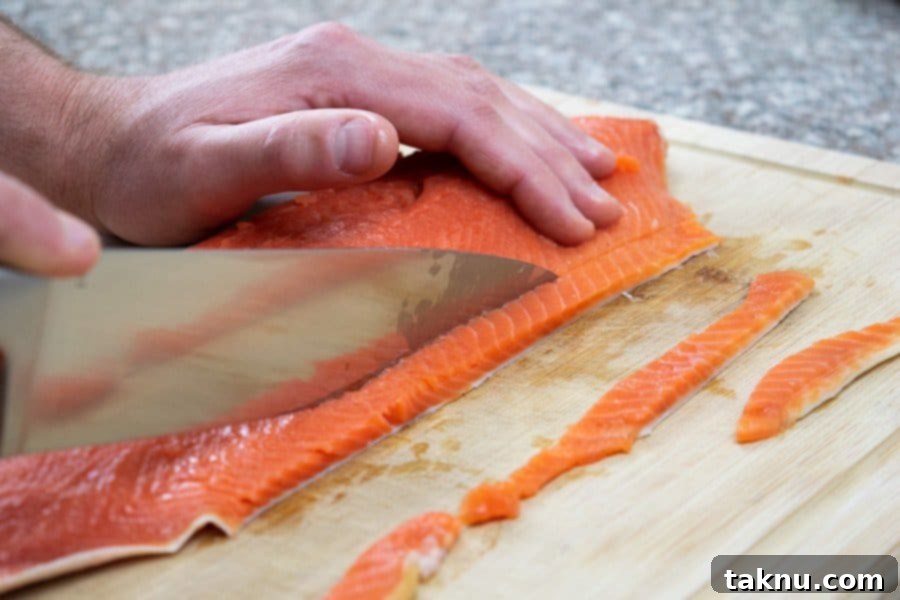
Using a very sharp knife, begin slicing the salmon fillet into strips. Aim for a thickness of ¼ inch to ½ inch. Slice down the entire length of the fillet, moving from what would be considered the “head” end towards the “tail” end. Slicing with the grain (the direction the muscle fibers run) will generally result in a chewier jerky, which is often preferred for salmon. Consistency in thickness is key here, as it ensures that all your jerky strips dry evenly at the same rate, preventing some pieces from becoming over-dried and brittle while others remain too moist.
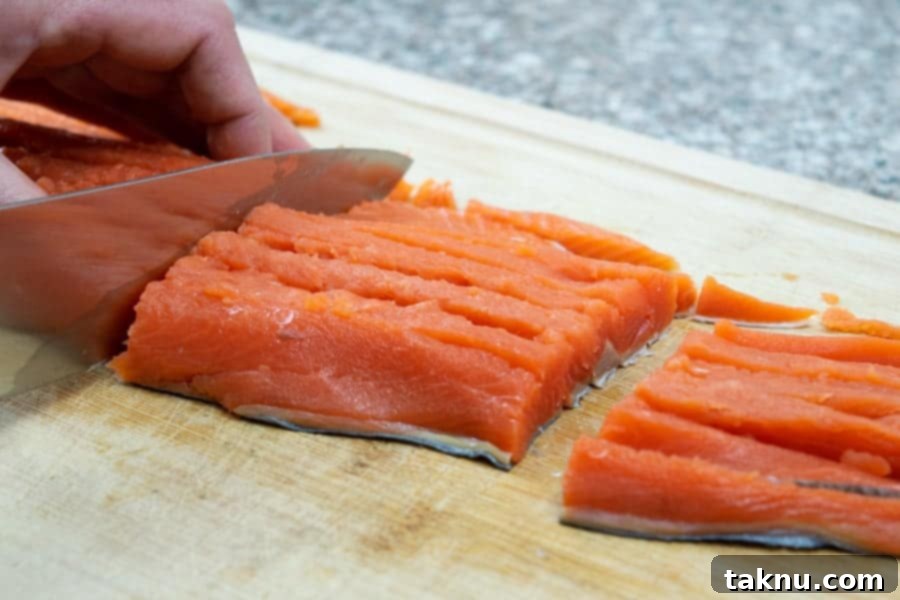
After all the salmon has been sliced lengthwise, you’ll then cut across these longer strips to achieve your desired individual jerky piece length. For this particular salmon jerky recipe, I typically cut mine into pieces that are between 3 to 4 inches long. This size is ideal for snacking, easy handling, and fits well on dehydrator trays. Taking the time for precise slicing will greatly contribute to the overall quality, appearance, and enjoyability of your homemade salmon jerky.
Step 3: Marinate for Flavor Infusion
Marination is where your salmon strips truly absorb the incredible flavors that will define your jerky. In a large ziplock bag or a non-reactive bowl, combine all the marinade ingredients: soy sauce, lemon juice, brown sugar, black pepper, liquid smoke, garlic powder, and the optional but recommended curing salt. Mix these ingredients thoroughly until the brown sugar is dissolved and everything is well combined.
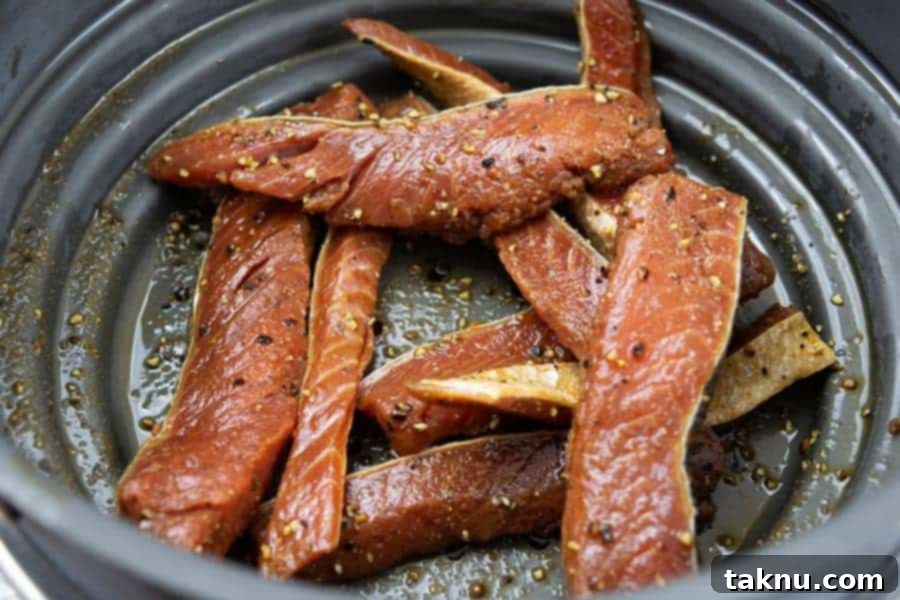
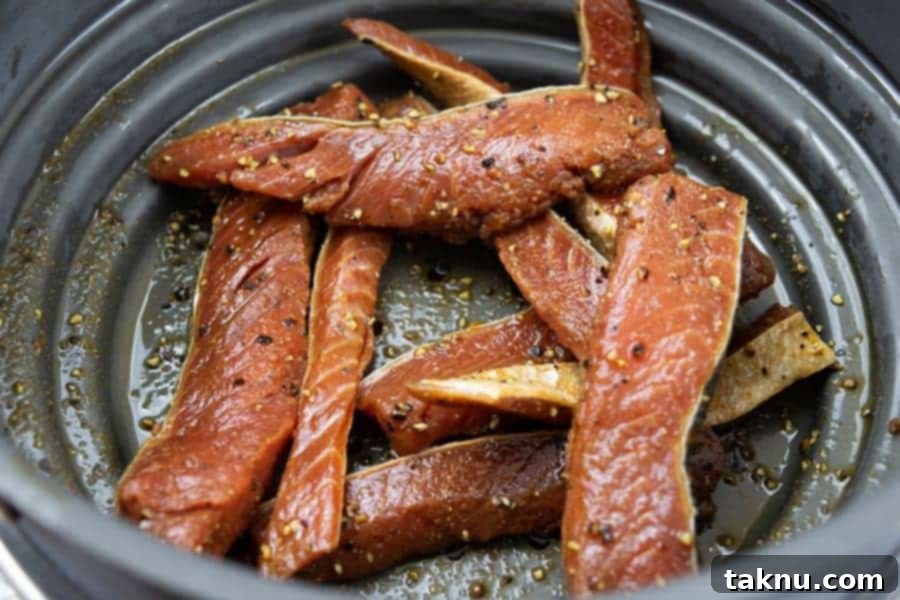
Carefully add your sliced salmon strips to the marinade, ensuring they are fully submerged and coated. Seal the bag, pressing out as much air as possible, or cover the bowl tightly with plastic wrap. Place the marinating salmon in the refrigerator. For this salmon jerky recipe, I marinated my strips for a full 18 hours. This extended marination time allows the salmon to deeply absorb all the savory, smoky, and sweet notes, resulting in a more intensely flavored jerky.
Throughout the marinating period, it’s crucial to mix or gently massage the bag every few hours. This ensures that all the salmon strips are evenly coated with the marinade, guaranteeing consistent flavor development across every piece. Adequate marination is vital for both taste and the initial tenderization of the fish, setting the stage for perfectly delicious jerky.
Step 4: Strain and Dehydrate to Perfection
After the marination period, it’s time to prepare the salmon for drying. First, strain the salmon strips in a colander to remove any excess liquid marinade. Then, lay the strips out on paper towels and gently pat them dry. This step is crucial for two reasons: it removes any pooling marinade that could lead to a sticky finish, and it helps kickstart the drying process by eliminating surface moisture, which can significantly reduce overall drying time.
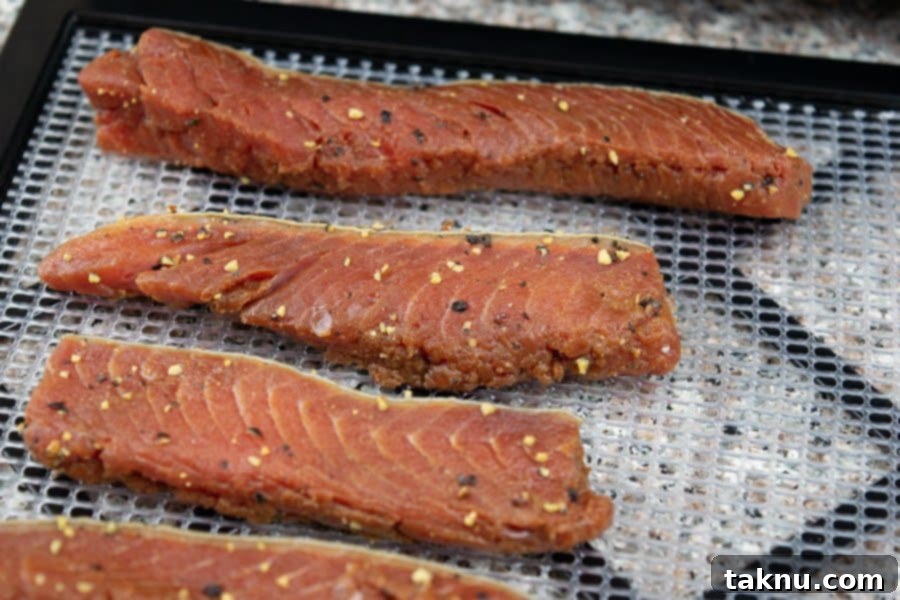
Next, arrange the salmon strips on your dehydrator trays. If you’re using a conventional oven for drying, place them on a cooling rack positioned over a baking sheet to catch any potential drippings. The key here is to ensure that none of the pieces are touching and there is ample room in between for proper air circulation. Good airflow is paramount for efficient and even dehydration. For this recipe, I utilized my reliable Excalibur Dehydrator, which offers excellent air distribution.
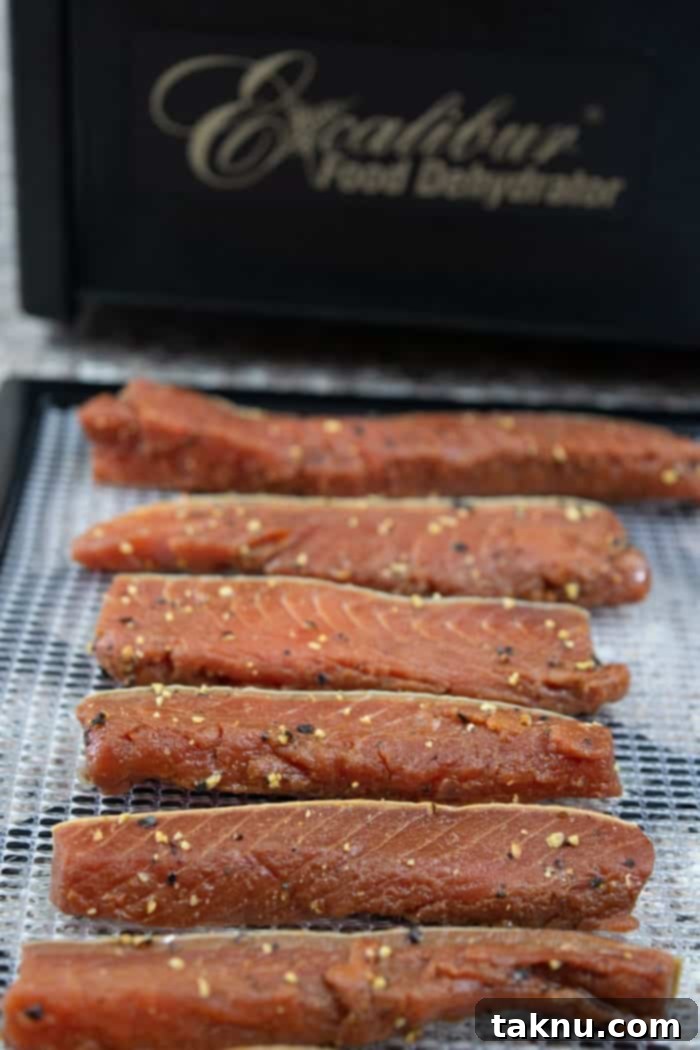
Set your dehydrator to 150°F. If you’re using an oven, set it to its lowest possible temperature, often around 150-170°F, and keep the oven door slightly ajar to allow moisture to escape. Drying time will vary depending on the thickness of your salmon strips and the efficiency of your dehydrator or oven. Since salmon is higher in fat content than many other types of meat used for jerky (like my trout jerky recipe), I prefer to dry salmon jerky a bit longer to ensure stability and reduce the risk of spoilage. You want the strips to be flexible but not brittle, and completely dry to the touch without any moisture or stickiness. For this particular batch, it took approximately 9 hours to reach that perfectly finished state. Always check your jerky frequently towards the end of the drying process to achieve your desired texture.
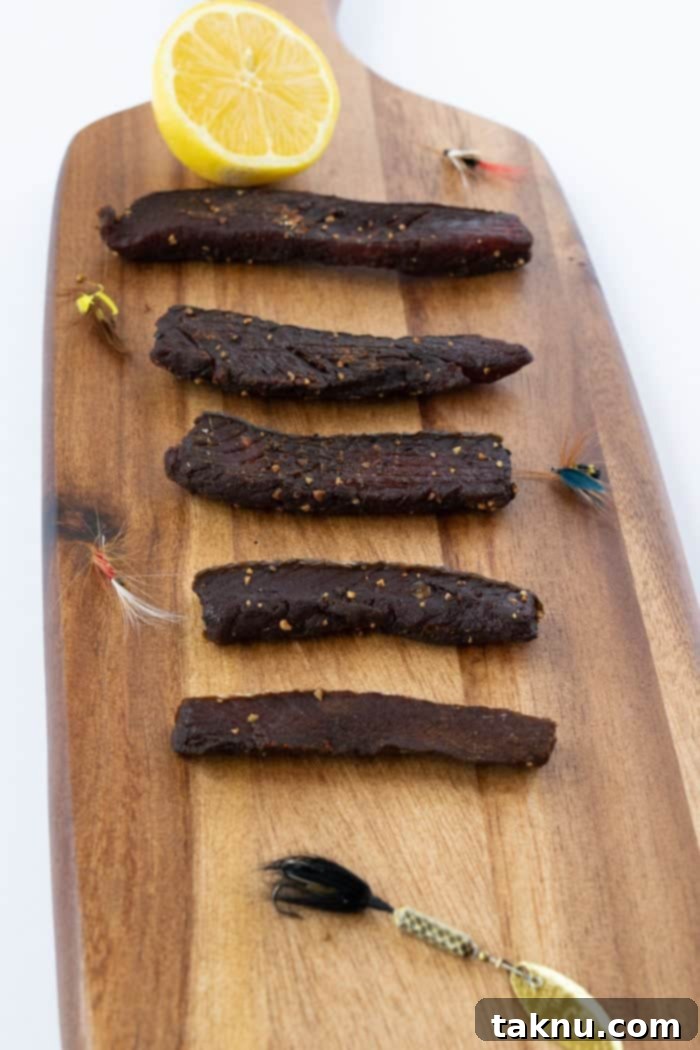
The final result of this salmon jerky recipe was absolutely outstanding! The harmonious blend of flavors—the deep smokiness from the liquid smoke, the savory saltiness of the soy sauce, and the subtle sweetness of the brown sugar—truly makes this salmon jerky an incredible treat. Each bite offers a satisfying chew and an explosion of well-balanced taste that will leave you reaching for more.
If you have a fondness for salmon, making this jerky is an absolute must. It’s a rewarding culinary project that yields a gourmet-quality snack, far superior in taste and texture to anything mass-produced. Once your jerky is ready, all that’s left to do is simply peel off the skin (if you left it on during drying, which we recommend!) and savor every delicious piece. Enjoy your homemade, perfectly crafted salmon jerky!
Explore More Delicious Jerky Recipes:
- Chicken Jerky
- Jumpin’ Trout Jerky
- The Ultimate Beef Jerky Marinade
- Jerkyholic’s Original Ground Beef Jerky
Homemade Smoky Salmon Jerky
Pin Recipe
Ingredients
Fish
- 1 lb Wild Caught Sockeye Salmon (can use any salmon)
Marinade
- ½ cup soy sauce
- 1 tablespoon lemon juice
- 1 tablespoon brown sugar
- 2 teaspoon black pepper
- 2 teaspoon liquid smoke
- ½ teaspoon garlic powder
- ¼ teaspoon curing salt (optional)
Equipment
Instructions
- Carefully remove any pin bones from the fish fillet using needle-nose pliers or specialized tweezers. Keep the skin on the fillet.
- Using a very sharp knife, slice the fillet lengthwise into strips ¼-inch to ½-inch thick, cutting from the “head” to the “tail” end.
- Cut these longer strips across into smaller, bite-sized pieces, roughly 3-4 inches in length.
- In a bowl or large ziplock bag, combine all the marinade ingredients and mix them thoroughly.
- Add the salmon strips to the marinade, ensuring they are well coated. Marinate in the refrigerator for 6-24 hours. Gently mix the strips several times during marinating for even flavor absorption.
- After marinating, strain the jerky strips in a colander, then pat them completely dry with paper towels to remove any excess marinade.
- Arrange the strips on dehydrator trays or an oven cooling rack (placed on an oven pan to catch drippings), ensuring pieces do not touch to allow for optimal airflow.
- Dry at 150°F (65°C) if using a dehydrator, or at the lowest possible temperature your oven can maintain (e.g., 150-170°F / 65-77°C) with the door slightly ajar.
- The jerky is done when it is firm, dry, and has reached your desired chewy texture. It took approximately 9 hours to dry this batch in my Excalibur Dehydrator.
- Once dried, peel the skin off the jerky strips and enjoy your delicious homemade salmon jerky!