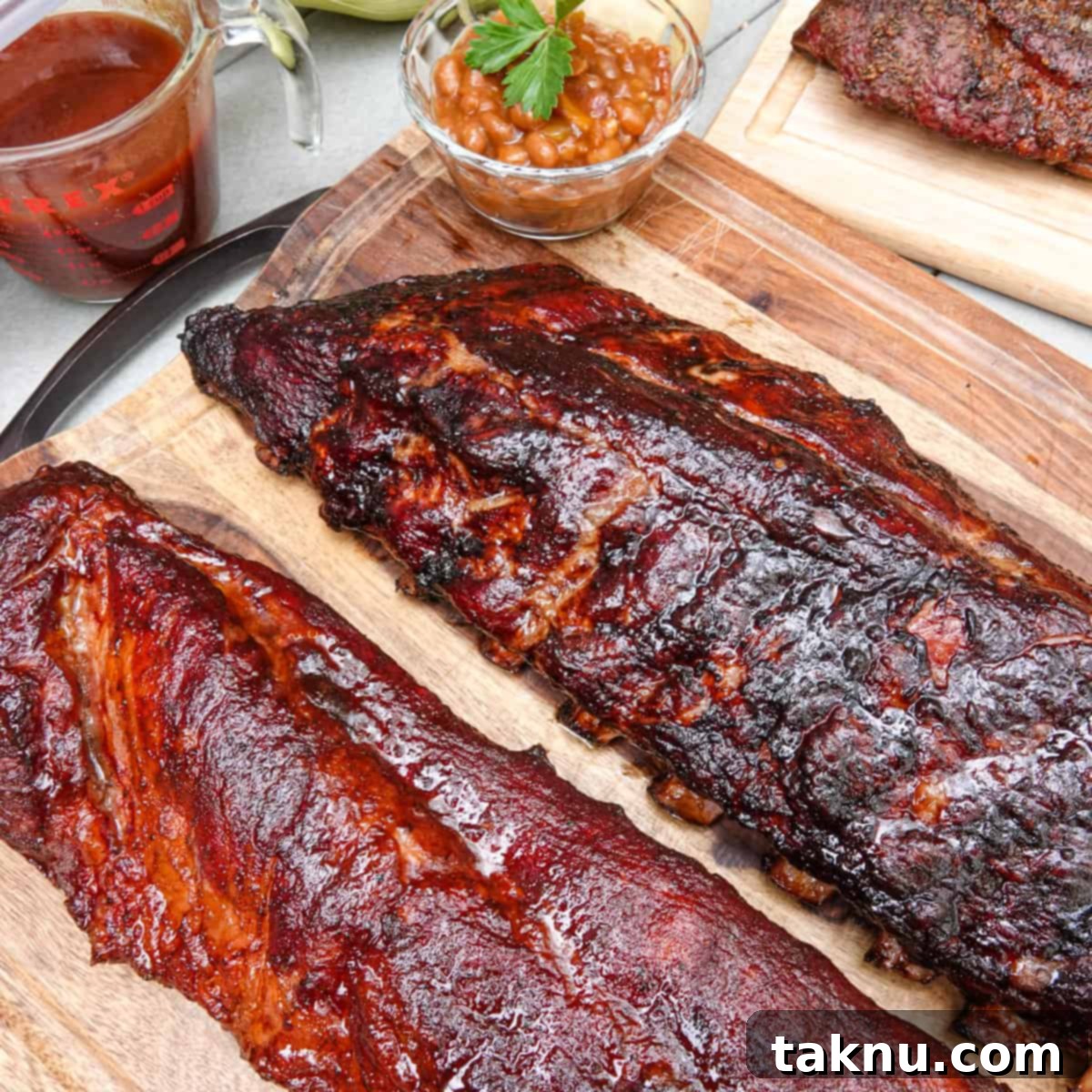
Mastering Smoked Baby Back Ribs: Your Ultimate Guide to Tender Perfection
There’s arguably no cut of meat more universally loved or more satisfying to smoke than a rack of tender, flavorful baby back ribs. Often considered the pinnacle of backyard barbecue, smoked baby back ribs offer a delightful combination of sweet, savory, and smoky notes that are simply irresistible. This comprehensive guide will walk you through every step of the process, ensuring you achieve succulent, perfectly cooked ribs that will impress everyone at your next cookout. Get ready to roll some smoke and create a barbecue masterpiece!
[feast_advanced_jump_to]
Understanding Baby Back Ribs: The Perfect Cut for Smoking
Baby back ribs, often simply called “back ribs,” are a popular cut of pork ribs derived from the loin area of a pig. They are located along the spine, specifically where the rib bones meet the backbone after the loin muscle has been removed. The term ‘baby’ in their name refers to their size – they are shorter and more curved than spare ribs, not because they come from a juvenile pig. Each rack typically contains between 10 to 13 ribs and offers lean, tender meat that’s exceptionally juicy when prepared correctly.
Distinguishing them from their larger counterparts, spare ribs, is important. Spare ribs are cut from the belly section of the pig, extending from where the baby backs end, wrapping around towards the breast bone. They are larger, flatter, and generally fattier, requiring a longer cooking time. Baby back ribs, with their leaner profile and delicate texture, are ideal for smoking as they cook relatively faster and absorb smoke flavor beautifully, resulting in a tender, bite-off-the-bone experience that is truly unparalleled. This unique combination of ease and incredible taste makes smoking baby back ribs a favorite among barbecue enthusiasts.
Selecting and Purchasing Your Ribs
When planning your next barbecue, knowing how much meat to buy is key. A standard rack of baby back ribs typically weighs between 1.5 to 2 pounds and contains 10-13 bones. A good rule of thumb is to count on one full rack of baby back ribs to feed approximately two people generously, especially when accompanied by a selection of delicious side dishes. For larger gatherings, it’s always wise to err on the side of caution and buy an extra rack or two – leftovers are never a problem when it comes to smoked ribs!
Baby back ribs are widely available and can be found at most local grocery stores, butcher shops, or even bulk stores. Look for racks that have a consistent, bright pink color with good marbling (small streaks of fat) throughout the meat. Avoid ribs with excessive fat caps or those that look dry or discolored. While usually more affordable than other premium cuts of meat, baby back ribs offer fantastic value, making them a perfect choice for casual backyard BBQs, special summer dinners, or any occasion where you want to serve truly exceptional smoked pork.
Step 1: Essential Rib Preparation for Optimal Flavor
Proper preparation is the foundation for outstanding smoked baby back ribs. Once you’ve purchased your ribs, they will typically come sealed in thick plastic packaging. Carefully remove the ribs from their packaging and give them a thorough rinse under cold running water to remove any bone fragments or debris. After rinsing, it’s crucial to thoroughly pat the entire surface of the ribs dry with paper towels to remove any excess moisture. A dry surface is essential for achieving that beautiful, flavorful bark during the smoking process.
While rinsing and drying are straightforward, a key step that many beginners overlook, but which significantly enhances the final product, is removing the membrane from the bone side of the ribs. This thin, silverskin layer can prevent your delicious seasonings from penetrating the meat and results in a chewy, undesirable texture once cooked. Taking the time to remove it will elevate your ribs from good to extraordinary.
Removing the Membrane: A Simple Step for Superior Ribs
Removing the membrane, often referred to as the “silverskin,” from the back of your baby back ribs isn’t strictly mandatory, but it is a highly recommended step that will undeniably yield a superior product. This tough, sinewy layer prevents your carefully applied rubs and marinades from fully penetrating the meat, hindering flavor development. More importantly, when cooked, the membrane becomes unpleasantly chewy and stringy, making for a less enjoyable eating experience as pieces get stuck in your teeth. Skipping this step means sacrificing tenderness and flavor absorption – something no true barbecue enthusiast wants!
The only exception where I might consider leaving the membrane on is for certain beef ribs, like Beef Dino Ribs, where the membrane can sometimes help hold the much larger meat together during a very long cook. For pork baby back ribs, always remove it.

Follow these simple steps for easy membrane removal:
- To begin, lay your rack of ribs meat-side down on your cutting board, so the bones are facing upwards and the ribs curve towards you. You want to expose the thin, white membrane covering the back of the bones.
- Locate a corner or an edge of the membrane. Using a dull knife, such as a butter knife, or even the tip of a spoon, gently slide it under the membrane, starting at one end of the rack. Work the knife just under the silverskin, separating it from the bone, until you can lift a small corner.
- Once you have a small flap of membrane lifted, grab it firmly with your fingers. This membrane can be quite slippery, so using a paper towel to grip it is highly recommended and makes the process much easier. The paper towel provides excellent traction.
- With a firm grip, slowly and steadily pull the membrane towards the opposite end of the rack. It should peel off in one continuous strip. If it tears, simply find another edge and repeat the process until the entire membrane is removed.
- Once the membrane is completely removed, discard it in the garbage. It serves no culinary purpose after removal. Your ribs are now ready for seasoning, allowing those wonderful flavors to truly sink in.
Step 2: Mastering the Art of Seasoning Your Ribs
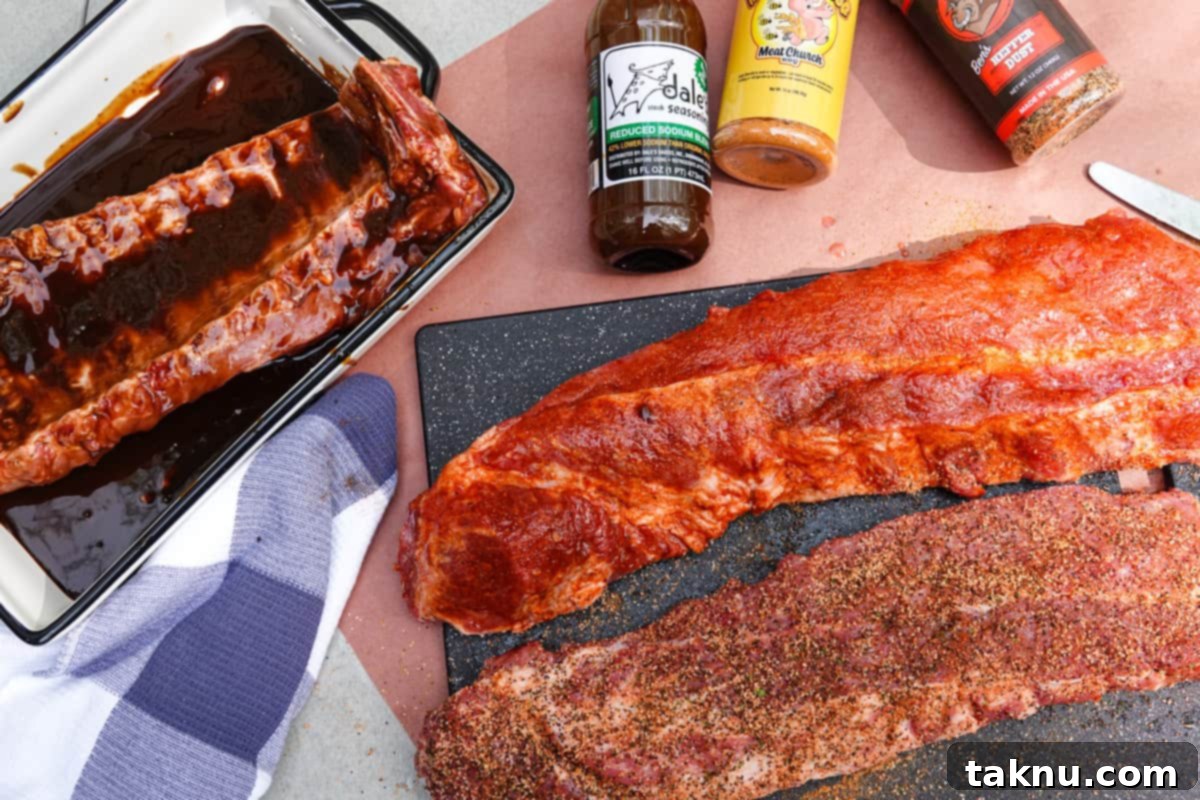
Seasoning is where you infuse your baby back ribs with the incredible flavors that will set them apart. There’s no single “right” way to season ribs, as personal preference plays a huge role. I enjoy experimenting with different flavor profiles to cater to varying tastes. For instance, my wife prefers ribs glazed with a sweet and sticky BBQ sauce, while my father favors a zesty marinade, and I often lean towards a robust dry rub that highlights the natural pork flavor.
Regardless of your final flavor goal, a general rule for smoking ribs is to start with a generous and even layer of dry rub. This foundation builds incredible flavor and contributes to the formation of a delicious “bark” on the exterior of the ribs. The primary exception to this rule is when you’re using a very thin, liquid marinade as your sole seasoning, in which case the rub might be omitted or applied very lightly after marinating.
Marinade Method for Smoked Ribs
If you prefer a deeper, savory flavor infused directly into the meat, a marinade can be an excellent choice for your baby back ribs. When selecting a thin liquid marinade, pay close attention to its sugar content. Marinades with high sugar levels can easily burn or caramelize too quickly on the smoker’s surface, leading to a bitter taste or an overly dark crust long before the ribs are fully cooked. Opt for marinades that are more savory or salty, as these will penetrate the meat without the risk of burning. For example, a soy-based or a vinegar-based marinade, like Dale’s Marinade, can provide a fantastic salty depth.
To marinate your ribs, place them in a large, sealable bag or a non-reactive dish, ensuring they are fully coated. Allow the ribs to marinate for a minimum of 30 minutes, or for up to 3 hours in the refrigerator, to allow the flavors to properly infuse into the pork before they hit the smoker. For added moisture and flavor throughout the smoking process, you can periodically brush the ribs with extra marinade every hour or so during the cook, carefully monitoring for any signs of burning as the cook progresses.
Finishing with BBQ Sauce: The Classic Rib Experience
For those who love that quintessential sticky, sweet, or tangy finish, finishing your smoked baby back ribs with BBQ sauce is the way to go. Even when using BBQ sauce, it’s beneficial to start with a good base of dry rub. This initial seasoning layer not only adds a foundational flavor but also helps to develop the prized bark on the ribs before the sauce is applied. Liberally season both sides of your ribs with your chosen dry rub.
The key to perfect BBQ-sauced ribs is selecting a dry rub that complements your chosen sauce. If you plan to finish with a sweet BBQ sauce, like a honey-based or brown sugar variety, consider a sweet dry rub such as Meat Church’s Honey Bee to enhance those sugary notes. Conversely, if you’re opting for a spicy BBQ sauce with a kick, a more peppered or chili-forward dry rub will ensure your flavors remain consistent and harmonious.
Crucially, the BBQ sauce should only be applied towards the end of the smoking process. Apply the sauce during the final hour of cooking, using a silicone basting brush or a dedicated mop brush. This allows the sauce to caramelize and thicken beautifully without burning. Mop on a generous layer, let it set for about 30 minutes, and then you can apply a second layer if you desire a thicker, stickier glaze. This method ensures maximum flavor and a gorgeous finish.
The Simplicity and Richness of a Dry Rub
Sometimes, the most exquisite flavors come from the simplest preparations. Not every rack of ribs needs to be sticky or wet with sauce; a perfectly executed dry rub can yield some of the best, most authentic smoked baby back ribs you’ll ever taste. A good dry rub enhances the natural flavors of the pork while creating a beautiful, savory crust, known as “bark.” I can confidently guarantee you’ll savor every bite of smoked baby back ribs prepared with an excellent dry rub, such as the highly acclaimed Ben’s Heffer Dust – it truly transforms ribs!
The beauty of a dry rub lies in its versatility and ease. You can use a store-bought blend, or create your own signature mix. A fantastic homemade dry rub typically balances sweet, savory, and spicy elements. Essential ingredients often include sweet brown sugar for caramelization, bold paprika for color and earthy flavor, kosher salt and black pepper for seasoning, and garlic and onion powder for aromatic depth. A touch of cayenne pepper can be added for a subtle kick. My included dry rub recipe below, featuring these classic components, is a definite must-try.
The primary advantage of the dry rub method is its simplicity once applied. There’s no need for additional basting, mopping, or saucing during the cook. Once the initial coat is applied generously to all surfaces of the ribs before they go into the smoker, your seasoning work is essentially done. This “one and done” approach allows the smoke to do its magic, slowly penetrating the meat and mingling with the rub to create complex, mouth-watering flavors and a crisp, savory bark. It’s a purist’s approach that truly lets the smoked pork shine.
Video Guide: How to Smoke Baby Back Ribs
Seeing is believing, especially when it comes to barbecue. To complement these detailed instructions, we’ve prepared a comprehensive video guide demonstrating each step of smoking perfect baby back ribs. From membrane removal to seasoning and the crucial bend test, this video will provide visual clarity and confidence for your smoking journey. Watch how effortlessly delicious smoked baby back ribs can be!
Step 3: The Smoking Process for Tender Ribs
With your baby back ribs prepped and seasoned, it’s time to introduce them to the magic of the smoker. For this recipe, the ribs should be smoked as a single, whole rack. There’s generally no need to cut the rack of ribs in half before smoking, as keeping them whole helps maintain moisture and makes it easier to monitor doneness later on.
Unlike some other rib methods, such as the specific “3-2-1” technique used for 321 smoked ribs, this recipe focuses on a more intuitive approach, where internal temperature and feel (the bend test) determine doneness rather than strict timing. Smoking baby back ribs whole allows for consistent heat and smoke exposure across the entire rack, contributing to an even cook. This method prioritizes achieving the perfect texture over adhering to a rigid schedule, ensuring your smoked baby back ribs are always tender and delicious.
Choosing Your Smoker for Baby Back Ribs
The world of barbecue offers a variety of smokers, each with its unique advantages. For this recipe, I primarily use a pellet smoker, specifically a model similar to this Traeger Pellet Grill. Pellet smokers are fantastic for their “set it and forget it” convenience and consistent temperature control, producing beautifully smoked ribs with minimal effort. This consistency is why you might often hear me refer to these as “Traeger baby back ribs.”
However, pellet smokers are not your only option. An offset smoker, known for its ability to produce a deep, authentic smoke flavor by burning wood or charcoal in a separate firebox, can also be used to achieve incredible results. Charcoal smokers, such as a Weber Smokey Mountain, also deliver fantastic ribs, offering excellent heat retention and a traditional smoky taste. Regardless of whether you opt for the convenience of a pellet grill, the classic flavor of an offset smoker, or the robust performance of a charcoal smoker, all types of smokers can yield wonderfully tender and flavorful baby back ribs when managed correctly.

Selecting the Best Wood for Smoking Baby Back Ribs
The type of wood you choose for your smoker plays a pivotal role in the final flavor of your baby back ribs. Different woods impart distinct smoke profiles, and selecting the right one can significantly enhance the pork. For smoked baby back ribs, I highly recommend using robust woods like hickory or pecan wood chips/pellets. Hickory provides a strong, bacon-like smoky flavor that pairs wonderfully with pork, while pecan offers a slightly milder, nutty, and sweet smoke that is also a fantastic complement.
If you prefer a lighter, sweeter smoke profile, fruity woods such as apple and cherry will also produce excellent results. Applewood imparts a delicate, subtly sweet, and fruity smoke that is very popular for pork, enhancing its natural sweetness. Cherry wood offers a slightly stronger fruit flavor with a beautiful reddish hue to the bark. Many grill and pellet companies also offer a competition blend, which is typically a mix of several different hardwoods designed to provide a balanced and universally appealing smoke flavor. These blends often consist of oak, hickory, and cherry, and they consistently produce fantastic tasting ribs. I also enjoy using these versatile pellets when making my smoked prime rib recipe, demonstrating their broad appeal for various meats.

Maintaining Optimal Smoking Temperature for Tenderness
The secret to incredibly tender, fall-off-the-bone (or rather, bite-off-the-bone) baby back ribs lies in the “low and slow” cooking method. Start your smoker and set it to a consistent temperature of 225°F (107°C) using your favorite wood. As previously mentioned, apple, hickory, or pecan wood chips or pellets are excellent choices for pork and will provide a delightful smoky essence. This low temperature is crucial because it slowly breaks down the tough connective tissues in the ribs over time, rendering the meat incredibly tender without drying it out.
It’s important to maintain this temperature as consistently as possible throughout the entire cooking process. Significant fluctuations can impact the cook time and the final texture of the ribs. Modern pellet smokers excel at holding a steady temperature, making them a great choice for this recipe. If you’re using an offset or charcoal smoker, invest in a good quality thermometer to monitor your smoker’s internal temperature closely and adjust vents or fuel as needed to keep it within the desired range. Patience and consistent heat are your best friends for perfectly smoked baby back ribs.
Proper Positioning for Even Cooking and Smoke Circulation
Once your smoker has reached the target temperature of 225°F and is producing clean, thin blue smoke, it’s time to load your seasoned baby back ribs. You have a couple of options for positioning them on the grates. The most straightforward method is to simply lay the ribs flat, meat-side up (bone-side down), directly on the smoker grates. This allows for excellent smoke exposure and even cooking.
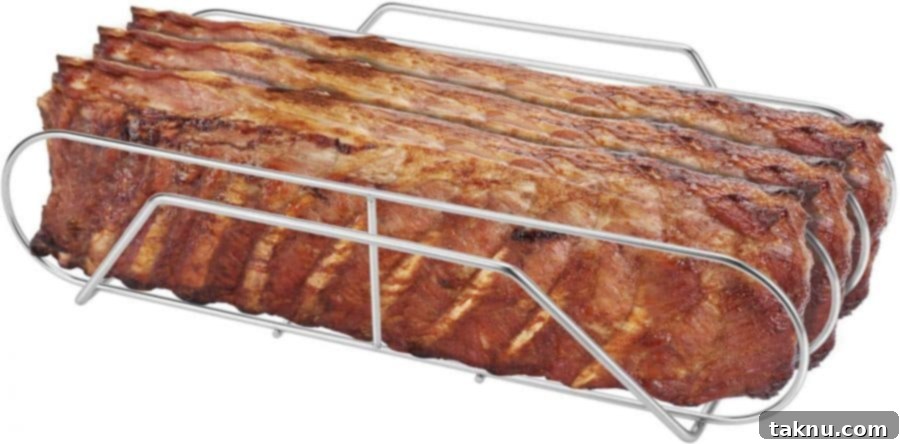
However, if you’re smoking multiple racks of ribs or have limited space, a rib rack can be an invaluable tool. A rib rack stands the individual racks on their ends, allowing you to fit more ribs onto your smoker while still ensuring good air circulation and smoke penetration around each one. This technique is particularly helpful for maximizing capacity on smaller smokers or when preparing for a large gathering. Regardless of the method, ensure there’s enough space between each rack for smoke and heat to circulate freely around all surfaces, promoting an even cook and consistent smoke ring development.
Smoking Time: Patience is a Virtue
One of the most common questions when smoking ribs is, “How long do smoked pork ribs take to cook?” For baby back ribs smoked low and slow at 225°F, they will typically take on average about 5-7 hours to smoke. However, it’s crucial to understand that this is an estimate, not an exact science. Barbecue is about cooking to doneness, not to a clock.
Several factors can influence the total smoking time, including the thickness of the ribs, the consistency of your smoker’s temperature, external weather conditions, and how often you open the smoker lid (every time you peek, you lose heat and extend the cook time). If you have particularly thick ribs with a lot of meat, anticipate that the cooking time could be a little longer, potentially pushing towards the 7-hour mark or even slightly beyond. Therefore, it’s essential to start your prep work early in the day, giving yourself ample time to achieve perfectly smoked ribs by your desired meal time without feeling rushed. Rely on visual cues and the bend test (discussed next) rather than strictly adhering to time.
Spritzing: Enhancing Moisture and Smoke Flavor
Spritzing is a popular technique among pitmasters to help keep ribs moist and to promote better smoke adhesion, particularly when using a dry rub. Many people like to spritz their ribs periodically with liquids like apple juice or apple cider vinegar. This practice helps prevent the surface of the ribs from drying out during the long smoking process and provides an additional layer of moisture, which in turn allows the smoke to adhere more effectively to the meat, building a richer smoke flavor and a more robust bark.
If you are planning to finish your ribs with a barbecue sauce, spritzing might not be as critical, as the sauce itself will provide moisture and form a protective layer. However, if you’re aiming for that classic dry-rubbed smoked flavor without a sauce glaze, spritzing is highly recommended. It genuinely contributes to a more tender and smoky outcome.
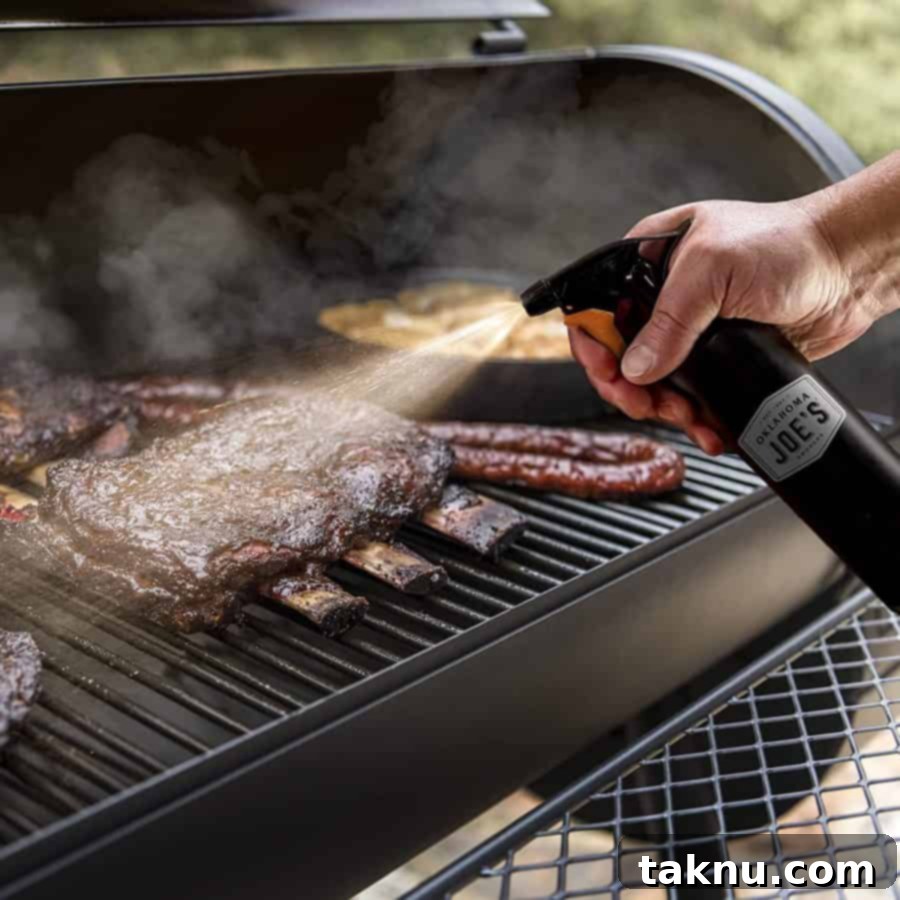
To implement this technique, simply fill a small, clean spray bottle – often available in the grilling section of stores, or even in the travel aisle where small toiletries are sold – with your chosen liquid. Apple juice or apple cider vinegar are classic choices, but you can also use water, beer, or a combination. Lightly spray the surface of the ribs every 45 minutes to an hour throughout the smoking process to maintain a moist environment and encourage that coveted smoke ring.
For those looking to upgrade their grilling tools, an innovative solution is available: Oklahoma Joe’s offers a fantastic 2-in-1 spray bottle that combines both injection and spray functions, allowing you to both spritz and inject flavor deep into your meat simultaneously!
Step 4: Knowing When Your Smoked Ribs Are Perfect
Determining the doneness of ribs can be a bit tricky because the bones make it difficult to get an accurate internal temperature reading with a standard thermometer. The bones can significantly throw off a probe, leading to false readings and potentially undercooked or overcooked ribs. Therefore, relying solely on internal temperature for ribs is not ideal. Instead, the most reliable and time-honored method to test if your smoked baby back ribs are finished is to perform the “bend test.” This tactile test will tell you exactly when your ribs have reached that coveted tender perfection.
The Bend Test: The Gold Standard for Rib Doneness
The bend test is an essential technique for any pitmaster smoking ribs. It involves a simple yet effective way to gauge the tenderness and doneness of your ribs without relying on an internal temperature that can be unreliable due to the bones. To perform the bend test, carefully pick up the rack of ribs from one end. You can use a pair of tongs, gripping about three or four ribs, or if you’re comfortable and protected with heat-resistant gloves with a liner, you can use your hands. Gently lift the ribs straight up, allowing the rack to bend under its own weight.
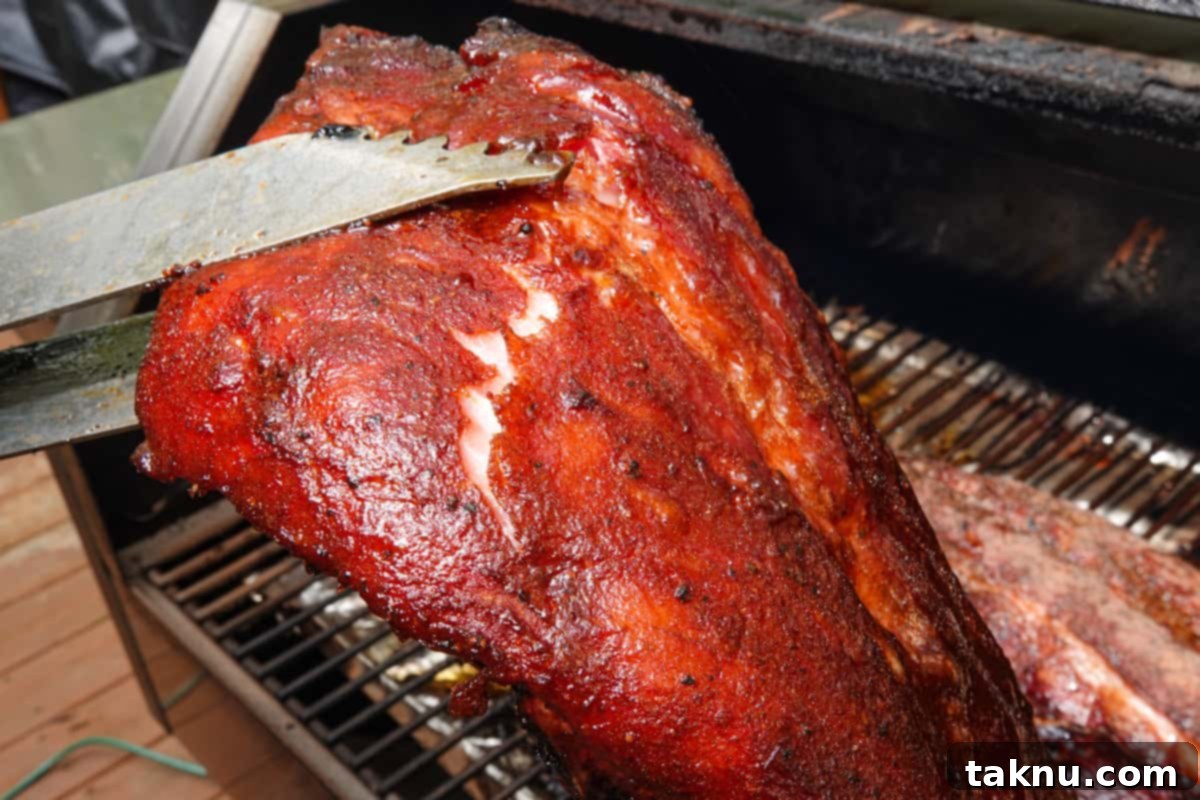
What you are looking for during the bend test is for the meat on the surface of the rack to visibly crack and begin to separate right where it’s bending. This cracking indicates that the connective tissues have broken down sufficiently, and the ribs have achieved optimal tenderness. When you see this distinct crack, your ribs are finished and ready to come off the smoker. At this point, the internal temperature will typically be in the range of 195°F to 205°F (90°C to 96°C), but again, the bend test is the most accurate indicator. If the ribs feel stiff and don’t crack easily, they need more time on the smoker. If they flop excessively and feel like they might fall apart completely, they might be slightly overcooked. Once finished, carefully remove the ribs from the smoker and allow them to rest for a crucial 15 minutes before slicing into individual ribs. This resting period allows the juices to redistribute, resulting in a more succulent and flavorful final product.
Achieving the Perfect Bite: Beyond “Fall-Off-The-Bone”
When you’re learning how to smoke ribs, it’s essential to understand that the ultimate goal for competition-style barbecue and many pitmasters is NOT to achieve ribs where the meat completely falls off the bone. While “fall-off-the-bone” is often marketed as the ideal, it typically signifies that the ribs are slightly overcooked. Instead, you are striving for ribs that have a perfect “bite” to them – meaning the meat is incredibly tender and easily pulls away from the bone with a gentle tug, but still requires a slight bite to release. Don’t worry, though; these perfectly cooked ribs will still be exceptionally juicy and moist!
You might find that some of the smaller, more delicate bones on the rack pull clean when you take a bite, and that’s perfectly fine. However, that satisfying bite, where you gently pull the meat away from the bone, leaving a clean bone behind, is the hallmark of expertly smoked baby back ribs. This texture demonstrates that the collagen and connective tissues have rendered beautifully, but the muscle fibers still retain just enough integrity to offer a pleasurable eating experience.
If, after performing the bend test and taking a bite, you find that all of the ribs are completely falling off the bone without any effort, it generally indicates that they were a little overcooked. While they will still be tasty (it’s hard to make bad smoked ribs!), they won’t have that ideal “bite.” If this happens, make a mental note to pull them off the smoker a little earlier next time to achieve that perfect texture you’re striving for. Mastering the “perfect bite” is a sign of true rib-smoking expertise.
Perfect Pairings: Complementary Side Dishes for Smoked Ribs
Smoked baby back ribs are a star attraction at any backyard BBQ or casual gathering, and the right side dishes can elevate the entire meal. The best accompaniments are often easy to prepare and complement the rich, smoky flavors of the ribs without overpowering them. Here are a couple of classic and highly recommended recipes that pair exceptionally well with tender smoked baby back ribs, whether you’re using a Traeger or any other smoker:
Smoked Corn on the Cob
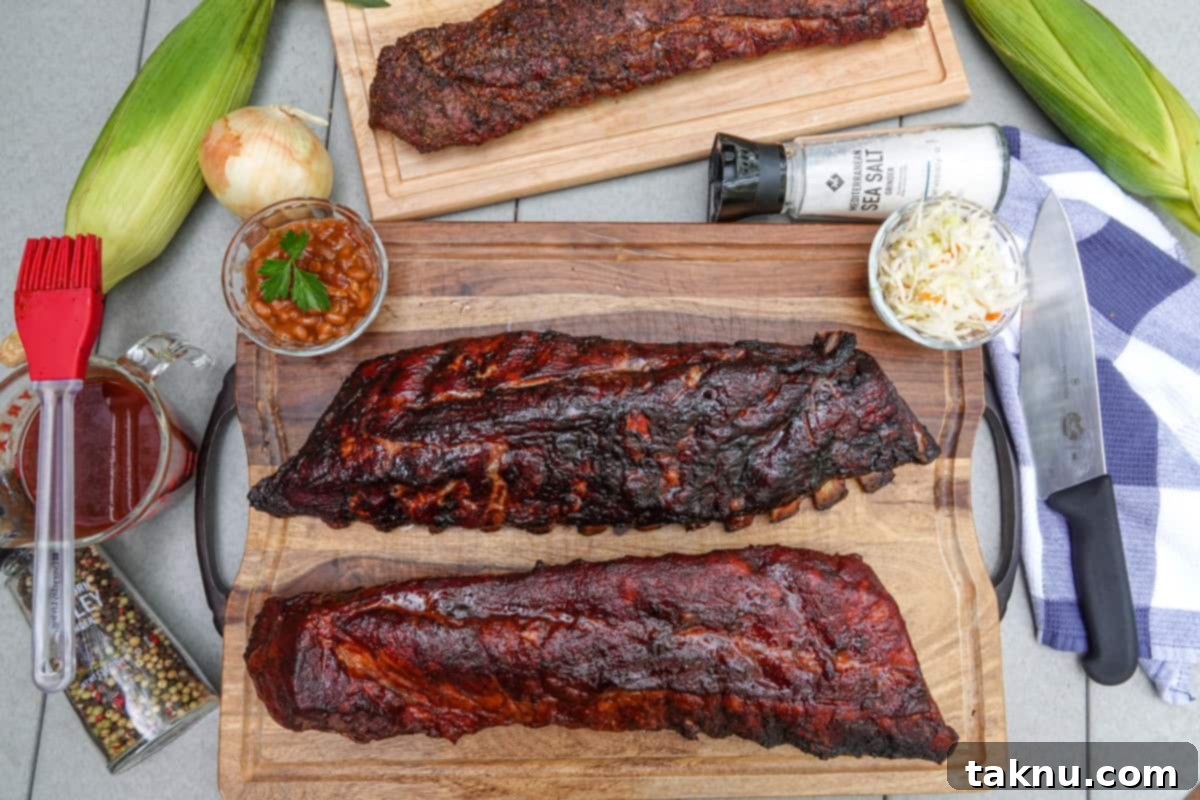
For a truly cohesive barbecue experience, I absolutely love making smoked corn on the cob to go along with ribs. It’s a match made in heaven! Smoking corn adds a subtle, sweet smokiness that perfectly complements the ribs, and it’s another fantastic dish that embraces the hands-on fun of barbecue – no fork required! Just a little butter, salt, and pepper, and the smoker does the rest. It’s an easy, flavorful side that always disappears quickly.
Hearty Smoked Baked Beans
Baked beans are a timeless and quintessential barbecue side dish, and they are an absolute must-serve with smoked baby back ribs. The sweet and savory depth of baked beans, especially when infused with a smoky flavor, creates a comforting and satisfying contrast to the richness of the pork. I truly LOVE baked beans and highly recommend checking out my incredible smoked baked beans with bacon recipe – it’s ridiculously good and adds another layer of smoky goodness to your feast!
Expand Your Smoking Skills: More Delicious Recipes to Try!
Once you’ve mastered the art of smoking baby back ribs, you’ll likely be hooked on the incredible flavors and satisfaction that home smoking brings. The possibilities are endless when it comes to what you can achieve with your smoker. If you’re looking to expand your barbecue repertoire and impress your friends and family with even more delectable smoked dishes, consider trying some of these fantastic recipes:
- Perfectly Smoked Steak (Ribeye)
- Perfectly Smoked Prime Rib Recipe
- Smoked Mac and Cheese (with video)
- Smoked Beef Ribs (Dino Ribs)
Frequently Asked Questions About Smoked Baby Back Ribs
Almost exclusively, when someone refers to baby back ribs, they are talking about pork ribs. These come from fully grown pigs, specifically from the loin area. While it’s technically possible to find “baby back beef ribs,” they are not common and are typically cut from the chuck primal, offering a different texture and flavor profile than their pork counterparts.
Baby back ribs and spare ribs are both pork ribs but come from different parts of the pig and have distinct characteristics. Baby back ribs are cut from the top of the rib cage, closest to the loin. They are shorter, more curved, leaner, and tend to be more tender. Spare ribs come from the belly section, extending from the baby backs. They are larger, flatter, and contain more fat and connective tissue, often requiring a longer cooking time to become tender.
While you don’t absolutely have to remove the membrane (also known as the silverskin), it is highly recommended. Removing it allows your seasonings and smoke to penetrate the meat more effectively, leading to a much more flavorful rib. More importantly, the membrane becomes tough and chewy when cooked, detracting from the overall eating experience. It’s a simple step that greatly improves the final product, as demonstrated in the video above.
Several common mistakes can hinder your rib-smoking success. These include smoking at too high a temperature, leading to dry ribs; not removing the membrane, which results in a tough bite; over-saucing too early in the cook, causing the sauce to burn; and relying solely on a timer instead of checking for doneness with the bend test. Patience and attention to detail, especially in temperature management and doneness testing, are crucial.
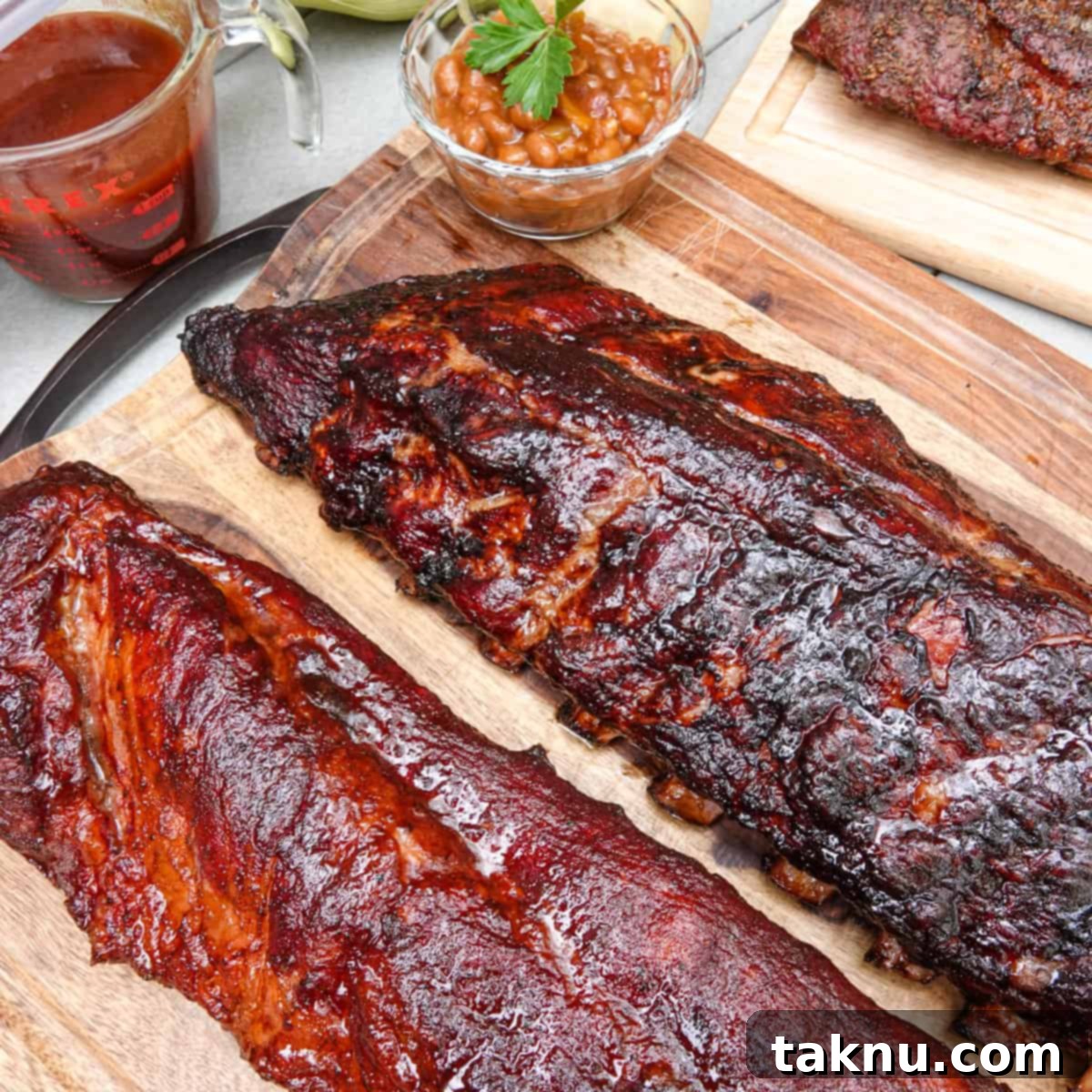
Smoked Baby Back Ribs
Pin Recipe
Ingredients
- 3 racks pork baby back ribs
Dry Rub
- ⅓ cup brown sugar
- 1 tablespoon paprika
- 1 tablespoon kosher salt
- 1 tablespoon black pepper
- 1.5 teaspoon garlic powder
- 1.5 teaspoon onion powder
- ½ teaspoon cayenne pepper
BBQ Sauce
- ½ cup bbq sauce (Your favorite)
Equipment
Instructions
- Wash and dry ribs with fresh water, ensuring all surfaces are thoroughly patted dry.
- Remove the membrane from the underside of the ribs by gently sliding a dull knife or spoon under the membrane at one end, gripping with a paper towel for traction, and pulling it off in a single strip. Discard the membrane.
- Season both sides of the ribs liberally and evenly with your chosen dry rub. Preheat your smoker to a consistent 225°F (107°C).
- Place the seasoned ribs meat-side up directly on the smoker grates or in a rib rack. Smoke for approximately 5-7 hours. If you desire a BBQ sauce finish, begin mopping on your favorite sauce during the final hour of cooking, applying every 30 minutes thereafter to build a nice glaze.
- Test for doneness using the “bend test.” Carefully pick up one end of the rack with tongs, allowing the ribs to bend. If the meat cracks and starts to visibly separate on the surface where it bends, they are finished and perfectly tender.
- Once finished, remove the ribs from the smoker and allow them to rest uncovered for 15 minutes. This resting period helps redistribute the juices, ensuring a more succulent result. Finally, cut between each rib bone to create individual rib pieces and serve immediately.
Pro Tips for Perfect Smoked Ribs
- The bend test, combined with observing the meat contracting and pulling back from the bones (making them more visible), is the most reliable way to determine if your ribs are perfectly finished.
- Remember the “perfect bite” philosophy: If all of your ribs completely fall off the bone, they are technically overcooked. They will still be delicious, but aim for that slight tug to achieve true BBQ perfection.
- When smoking a large quantity of ribs for a crowd, optimize your smoker space by using a rib rack. This allows you to stand the ribs on their ends, fitting more racks while ensuring excellent airflow and even smoke distribution.