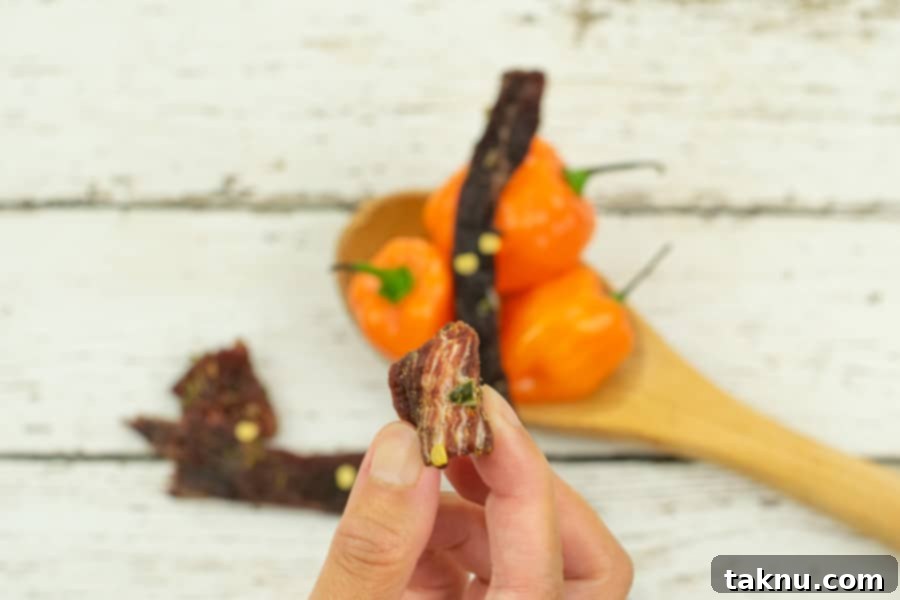
Ignite Your Taste Buds: The Ultimate Fireman’s Spicy Habanero Beef Jerky Recipe
Prepare for a culinary adventure that will set your taste buds ablaze with our Fireman’s Beef Jerky recipe! Crafted to deliver an unforgettable heat, this jerky is not for the faint of heart. It combines robust beef flavor with the fiery kick of habanero and the earthy undertones of poblano peppers, rounded out by a smoky finish. Get ready to embark on a thrilling journey of spice, and make sure to have a glass of milk on standby!
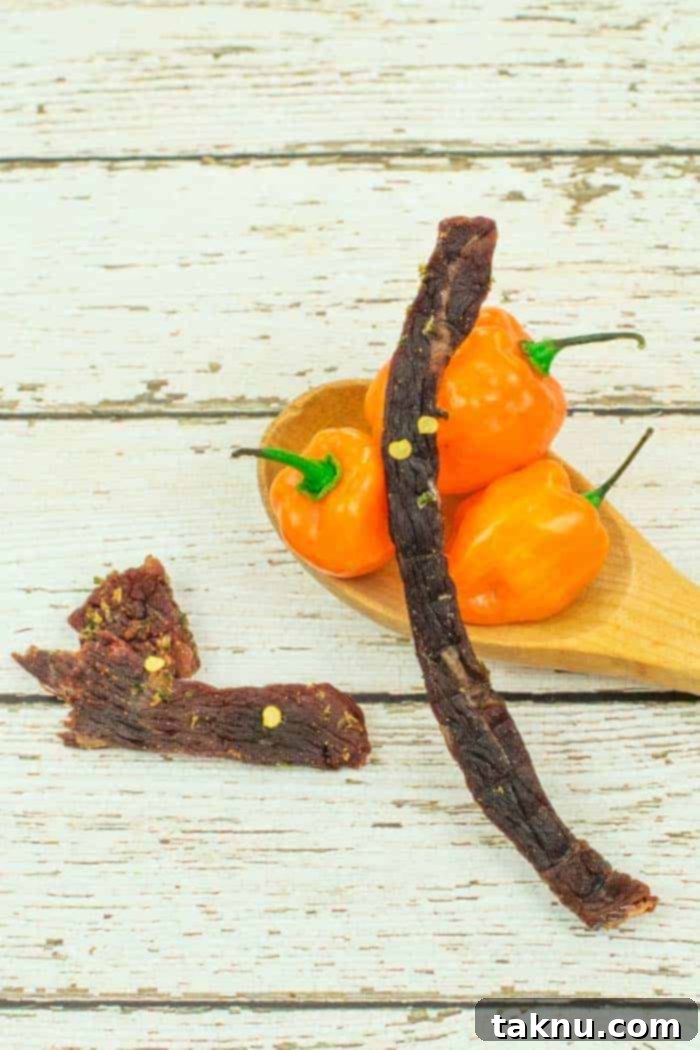
Selecting and Slicing Meat for Premium Beef Jerky
The foundation of exceptional homemade beef jerky lies in two critical steps: choosing the right cut of meat and preparing it perfectly. For this intensely flavorful Fireman’s Beef Jerky, we recommend a lean cut of beef to ensure optimal texture and shelf life. Our recipe proudly features the beef bottom round, renowned for its rich beefy flavor and ideal lean-to-fat ratio, making it a top contender for jerky production.
When selecting your beef, always prioritize a lean cut. Fat, while delicious in other preparations, is the enemy of shelf-stable jerky. It spoils much faster than muscle meat, significantly reducing the longevity of your homemade treat. Beyond the bottom round, other excellent choices include top round, flank steak, or even venison, all offering the low-fat content necessary for long-lasting jerky. For a comprehensive guide on the best cuts of meat for making beef jerky, click here!
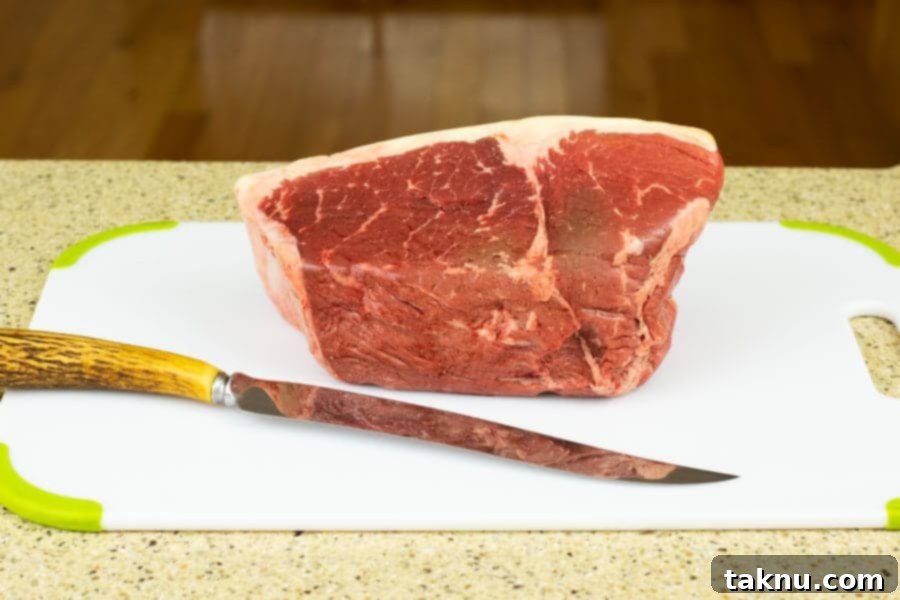
The second crucial step is meticulously trimming all visible fat from your chosen cut of meat. This includes any exterior fat caps and interior marbling. Take your time with this process. The cleaner your meat is from fat, the longer your delicious jerky will remain fresh and safe to eat. A sharp knife is your best friend here, allowing for precise and efficient trimming.
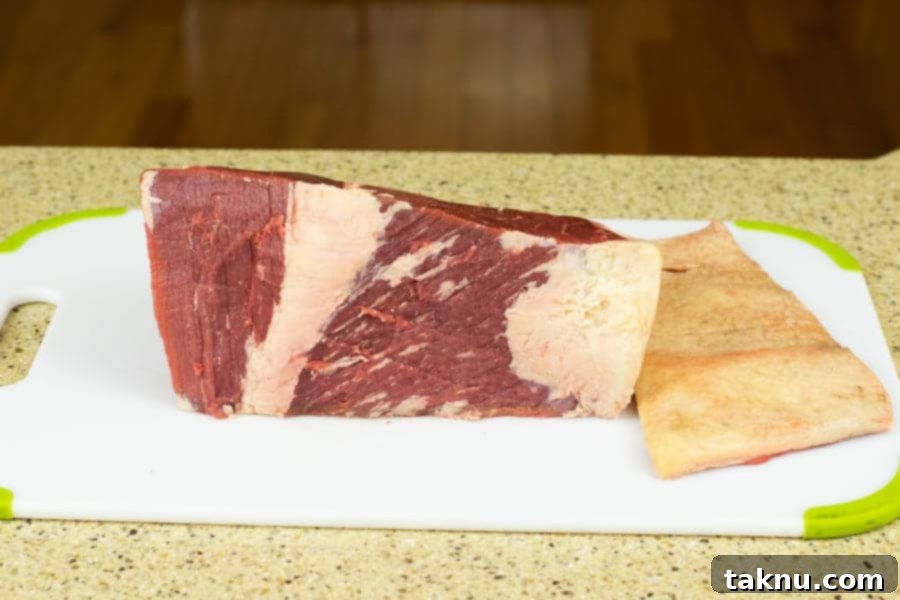
This white layer of fat is commonly referred to as the fat cap. Its removal is paramount for extending the shelf stability of your jerky. Fat oxidizes and goes rancid much faster than dehydrated meat, so by trimming it off thoroughly before you even begin slicing, you’re investing in a longer-lasting, higher-quality product. This diligence now will prevent premature spoilage and ensure every bite is as intended.
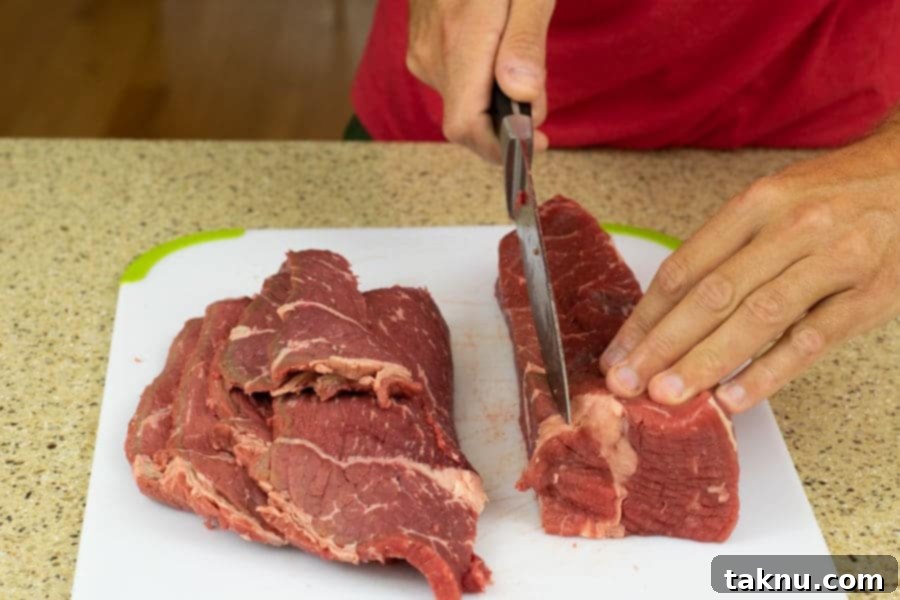
Next, prepare to slice your meat into consistent ¼-inch thick pieces. Uniform thickness is vital for even drying, preventing some pieces from becoming too brittle while others remain under-dried. A professional tip for achieving perfectly even slices is to partially freeze your roast. Wrap the meat tightly in plastic wrap and place it in the freezer for about one to two hours. It should be firm to the touch but not frozen solid, making it much easier to cut against the grain with precision. If you opt not to freeze, ensure your knife is impeccably sharp – a dull knife is not only less effective but also more dangerous.
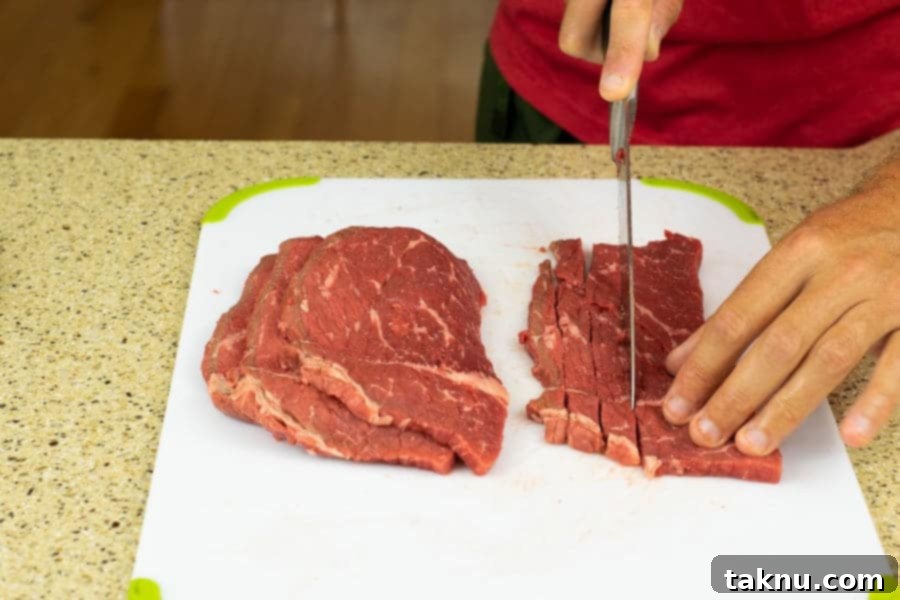
Once you have your ¼-inch thick slabs, it’s time to cut them into strips according to your preferred chewiness. For this particular Fireman’s jerky recipe, I opted for skinny strips cut with the grain. Slicing with the grain results in a chewier, more traditional jerky texture, requiring a bit more effort to tear and chew. Conversely, if you desire a more tender, easier-to-chew jerky, slicing against the grain will break down the muscle fibers, yielding a less resistant bite. This choice is entirely a matter of personal preference, so feel free to experiment and find what you like best!
For more in-depth guidance on achieving the perfect jerky slices, including visual aids and advanced techniques, be sure to consult my comprehensive slicing jerky page. It covers everything you need to know to master this essential step in jerky making.
While not used in this specific recipe, a dedicated jerky slicer is an invaluable piece of equipment for consistently even strips. It greatly simplifies the slicing process and ensures professional-looking results every time, especially if you plan on making jerky frequently.
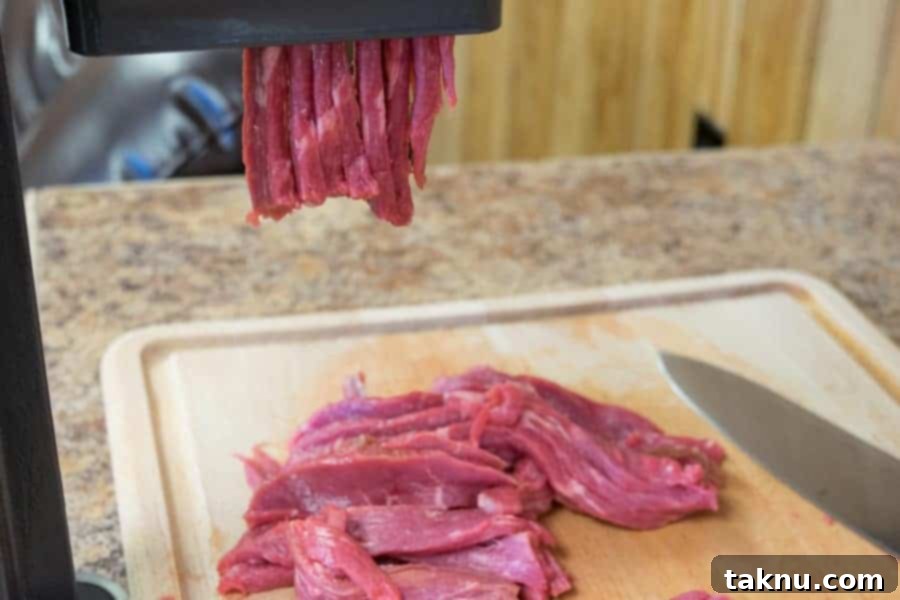
Reader Comment: “Invest in a Weston Jerky Slicer….Been using this unit for years. Makes great ¼” thick slices that look like nice thick bacon strips.” – Dan
Crafting the Fiery Jerky Marinade
The heart of our Fireman’s Beef Jerky lies in its bold, well-balanced, and undeniably spicy marinade. This isn’t just about heat; it’s about a complex flavor profile that tantalizes the palate. Our special blend features two distinct types of hot peppers – the earthy poblano and the intensely fiery habanero – complemented by a touch of liquid smoke to truly capture that “FIRE” flavor we’re aiming for.
Initially, I experimented with only poblano peppers for the marinade, hoping for a vibrant, mild heat. While the poblano offered a lovely depth, the overall spice level simply wasn’t enough to live up to the “Fireman’s” name. That’s precisely why I decided to introduce several habanero peppers, transforming this recipe into a truly HOT and memorable jerky. Habaneros bring a much higher Scoville rating and a fruity, floral undertone that perfectly complements the smoky beef.
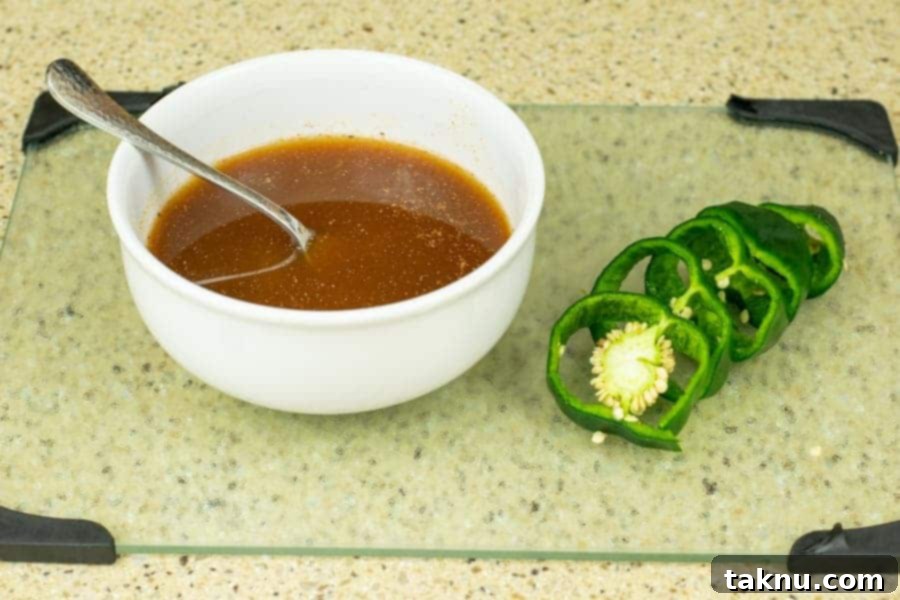
To begin, combine all the marinade ingredients, excluding the peppers initially, in a bowl or, preferably, a blender. Since this recipe calls for whole peppers, using a blender is the absolute best method to ensure they are fully incorporated and their flavors and heat are evenly distributed throughout the marinade. This step is crucial for achieving consistent spice in every piece of jerky.
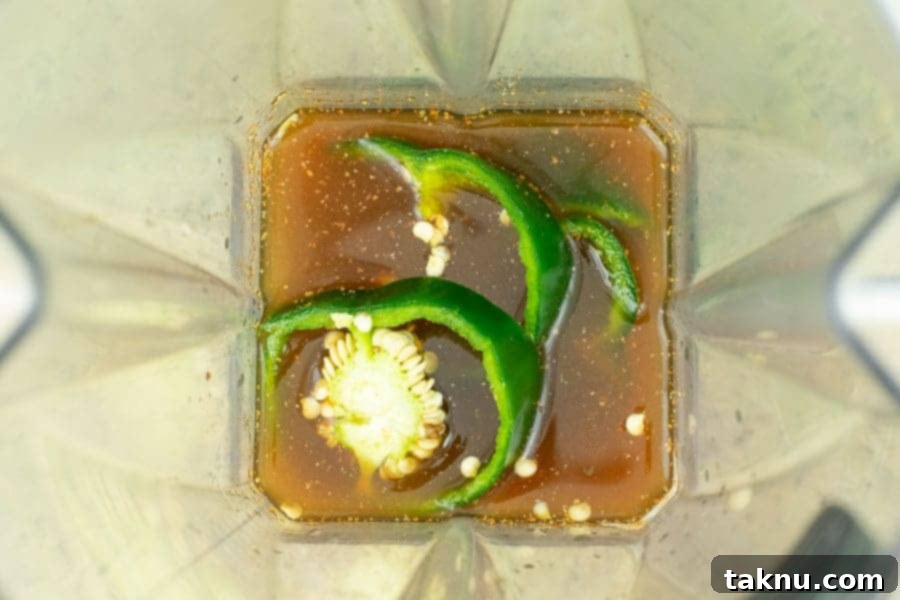
Carefully add the poblano and habanero peppers to the other marinade ingredients in your Vitamix blender (or similar powerful blender). Remember to remove only the stems; leave the seeds intact to maximize the heat and flavor. Blending these peppers thoroughly isn’t just about adding heat; it’s about extracting their full essence, making the jerky significantly more flavorful and intensely spicy! The high-speed blending emulsifies the marinade, ensuring every strip of beef will be perfectly coated and infused.
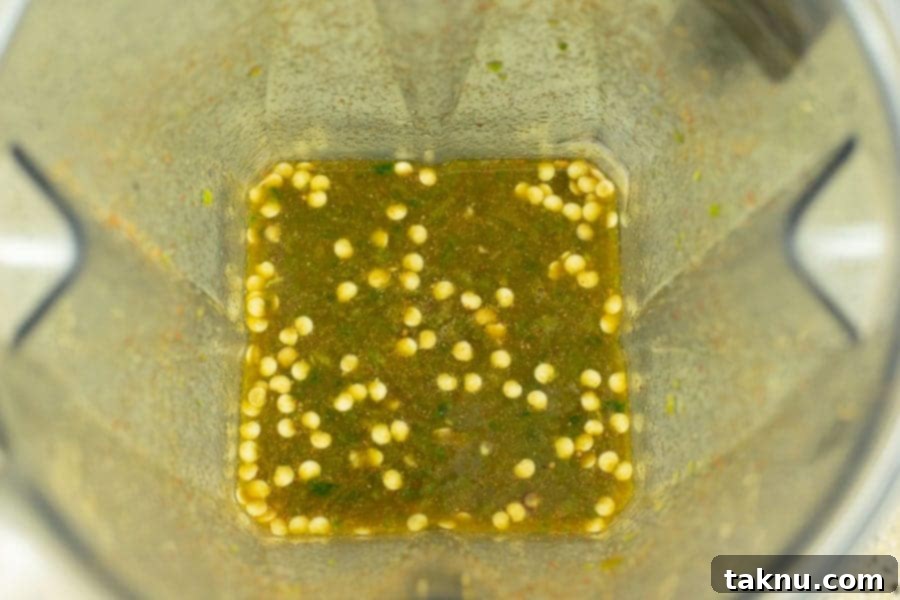
As mentioned, early tests with only poblano peppers revealed that the marinade needed a serious “kick up a notch.” The addition of habaneros proved to be the perfect remedy, injecting a vibrant and authentic spice that truly defines this Fireman’s Jerky. Their intense heat, balanced by the other savory components, creates a marinade that is both challenging and incredibly rewarding.
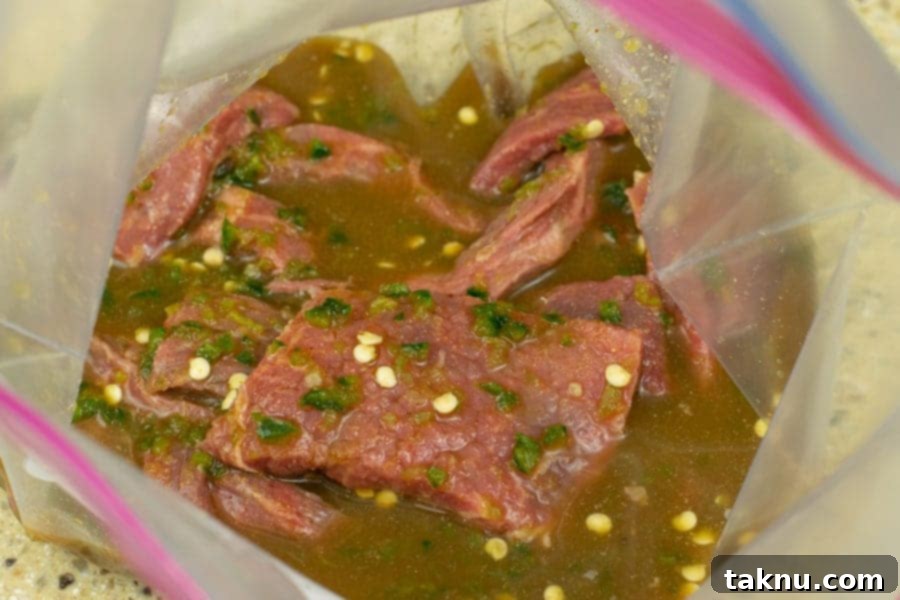
Once your marinade is perfectly blended, transfer it to a large ziplock bag or a non-reactive container. Add the previously sliced beef strips, ensuring every piece is submerged and thoroughly coated. Seal the bag or container and refrigerate for 6 to 24 hours. During this marinating period, periodically mix or flip the bag a few times to ensure the strips are evenly coated. This diligent marination process ensures that every single piece of finished jerky boasts a consistent, deep, and fiery flavor profile. The longer you marinate (within the recommended range), the more profound the flavor penetration will be.
If you’re pressed for time but still crave deeply marinated jerky, vacuum marinating machines are an excellent investment. These innovative devices use a vacuum to open up the meat fibers, allowing the marinade to penetrate much faster. In about half an hour, your jerky can achieve flavor penetration comparable to a 12-hour traditional marinade. That’s a game-changer for busy jerky enthusiasts!

DISCOVER MORE JERKY RECIPES: DOZENS OF GREAT TASTING JERKY RECIPES – CLICK HERE
Drying Your Fiery Jerky to Perfection
After your beef strips have soaked up all that amazing Fireman’s marinade, it’s time for the next critical phase: drying. Remove the meat from the refrigerator and place it in a colander to drain any excess marinade. Following this, lay the marinated strips out on several layers of paper towels and pat them thoroughly dry. For this particular batch, the beef marinated for a full 20 hours, achieving an incredibly intense flavor. Remember, the longer the marinade process, the more profound and intense the flavor of your finished jerky will be!
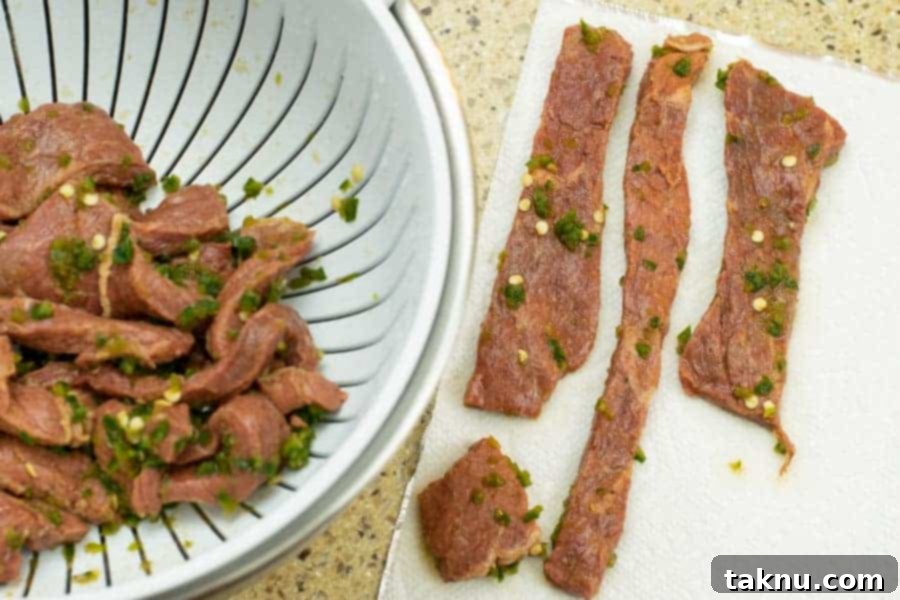
Patting the meat dry is a step you should never skip. It achieves several important goals: first, it removes any surface moisture and excess marinade, which significantly speeds up the initial drying process. Second, it prevents the jerky from developing a “sticky” or tacky texture once it’s fully dehydrated, resulting in a cleaner, more enjoyable bite. Finally, it helps create a better surface for the Maillard reaction, contributing to a richer flavor and appealing color.
For this beef jerky recipe, a reliable Nesco Gardenmaster Dehydrator was utilized. I am a huge advocate for Nesco dehydrators; they consistently deliver fantastic results, are budget-friendly, and are built to last for many years of jerky-making enjoyment! They offer excellent airflow and consistent temperature control, which are vital for successful dehydration.
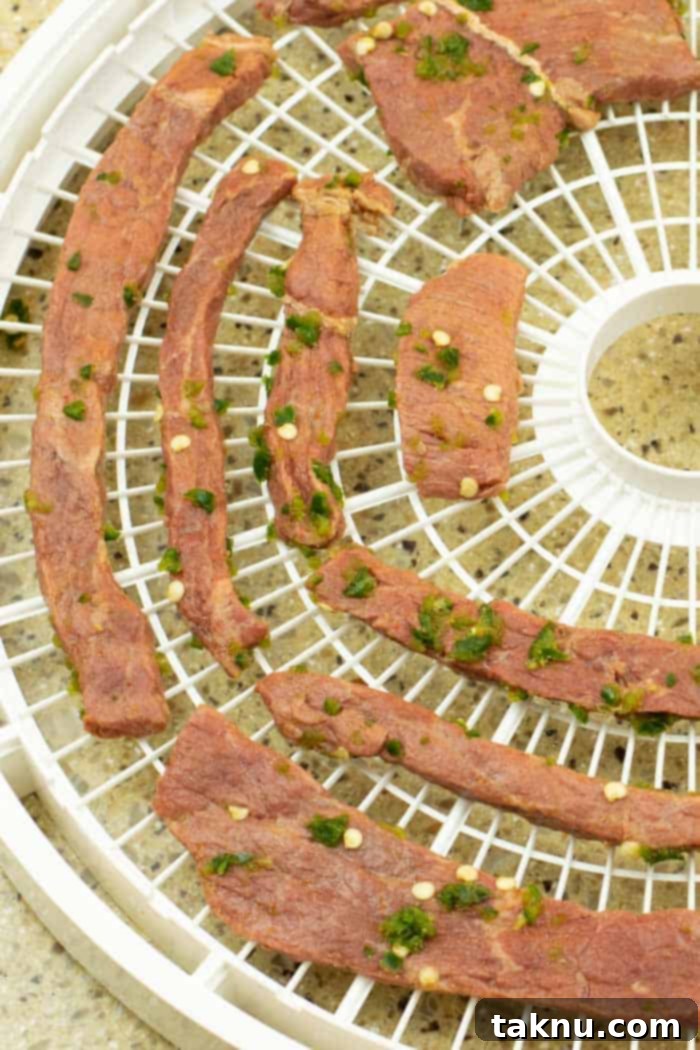
When loading your dehydrator trays (or oven racks, if using an oven), ensure there is adequate space between each strip of jerky. This allows for optimal air circulation, which is crucial for drying each piece evenly and efficiently. Overcrowding the trays will trap moisture and prolong the drying time, potentially leading to uneven results or even spoilage. Aim for a single layer with a slight gap around each piece.
The Bend Test: Knowing When Your Jerky is Perfectly Done
Determining the ideal doneness for beef jerky is a skill honed with practice, but there’s a reliable method to guide you. You’ll want to begin testing your jerky for doneness around the 3-4 hour mark, depending on your drying method, meat thickness, and ambient humidity. The key to accurate testing is patience: always take a piece of jerky out of the dehydrator, oven, or smoker and allow it to cool completely for at least 5 minutes to room temperature. This cooling period is crucial because jerky will harden slightly as it cools. Testing a warm piece can lead to prematurely removing it, resulting in under-dried jerky, or worse, over-drying if you continue until it feels “done” while still warm.
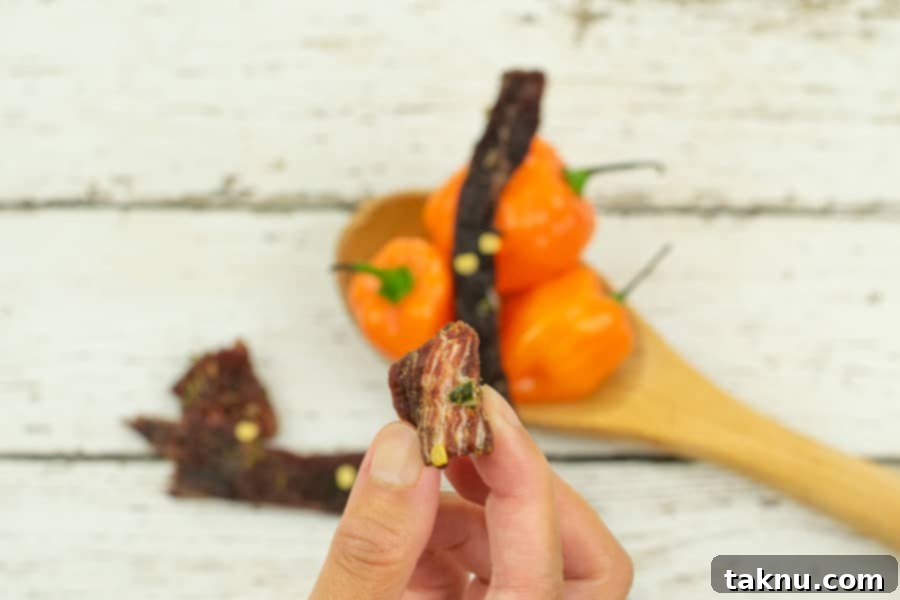
Once cooled, perform the “bend test.” Take a piece of jerky and bend it in half. It should bend and crack, but crucially, it should not break completely in half. This distinctive bend-and-crack without snapping indicates that enough moisture has been removed for preservation, yet the jerky retains some of its natural pliability and chew. As you bend or tear the jerky, you should also observe distinct white fibers within the meat. These visible fibers are another excellent indicator that the jerky has reached the optimal drying stage, signifying proper dehydration of the muscle tissue.
For this specific Fireman’s Beef Jerky recipe, the drying process took approximately 5 hours in the dehydrator. As a general guideline, about 90% of the jerky I make typically finishes within 4-6 hours when using a quality dehydrator or a conventional oven set to its lowest temperature. If you’re using a smoker, the process usually extends to 6-9 hours, as smokers often operate at lower temperatures for smoke infusion. Interestingly, if you opt to pre-heat your meat in the oven before transferring it to a dehydrator or smoker, the total drying time can be significantly reduced, sometimes to as little as 2.5 hours, speeding up your jerky production.
Maximizing Shelf Life: Storing Your Fireman’s Beef Jerky
Proper storage is just as important as the preparation and drying processes when it comes to homemade beef jerky. To ensure your delicious Fireman’s Beef Jerky remains fresh and safe for as long as possible, incorporating curing salt into your recipe is highly recommended, alongside storing it in airtight containers. Curing salt, often referred to as Prague Powder #1, contains sodium nitrite, which is vital for preventing the growth of harmful bacteria, including Clostridium botulinum, and also helps in retaining the jerky’s vibrant color and enhancing its flavor.
Once your jerky is perfectly dried and cooled, transfer it to airtight containers. Ziplock bags are suitable for short-term storage (a few weeks), but for extended shelf life, vacuum sealing is the gold standard. Vacuum-sealed jerky, especially when combined with oxygen absorbers, can last for months at room temperature. For comprehensive details on optimal storage techniques and steps you can take to significantly extend the shelf life of your homemade jerky, I have compiled a dedicated resource on storing beef jerky.
This Fireman’s Beef Jerky recipe truly delivers a powerful spicy kick, beautifully complemented by a robust, strong beef flavor. This exceptional taste profile is achieved through the careful selection of quality ingredients and the freshness of the peppers. The addition of liquid smoke is particularly crucial in this recipe, as it perfectly rounds out the “Fireman’s” theme, imbuing the jerky with that desirable hot, spicy, and distinctively smoky flavor that we aimed for. If you choose to smoke your jerky using a traditional smoker, you can certainly omit the liquid smoke from the marinade, as the natural smoke from your smoker will provide that authentic flavor.
Pro Tips for Fireman’s Jerky Success
- Adjust the Heat: Habaneros significantly amplify the spice. If you prefer a less intense heat, start with just one habanero pepper and adjust to your preference.
- Quality Liquid Smoke: Always opt for high-quality liquid smoke that is free from filler ingredients, such as Wright’s Liquid Smoke, for the purest smoky flavor.
- Accurate Doneness Test: Jerky will feel softer when warm. Always allow a test piece to cool for 5 minutes to room temperature before performing the bend-and-crack test to prevent over-drying.
- Maximize Shelf Life: For best results and extended freshness, store your finished jerky in ziplock bags or, even better, vacuum seal it. Explore our dedicated page on Storing Jerky for more expert advice.
- Even Slicing is Key: Consistent ¼” thick slices ensure uniform drying. Partially freezing the meat and using a sharp knife or a jerky slicer are highly recommended.
- Full Flavor Infusion: Don’t rush the marinating process. Allow at least 6-24 hours for the flavors to deeply penetrate the meat. For faster infusion, consider a vacuum marinating machine.
For more comprehensive guidance on various methods of drying your beef jerky, from dehydrators to ovens and smokers, be sure to visit my detailed page on Jerky Making Methods.
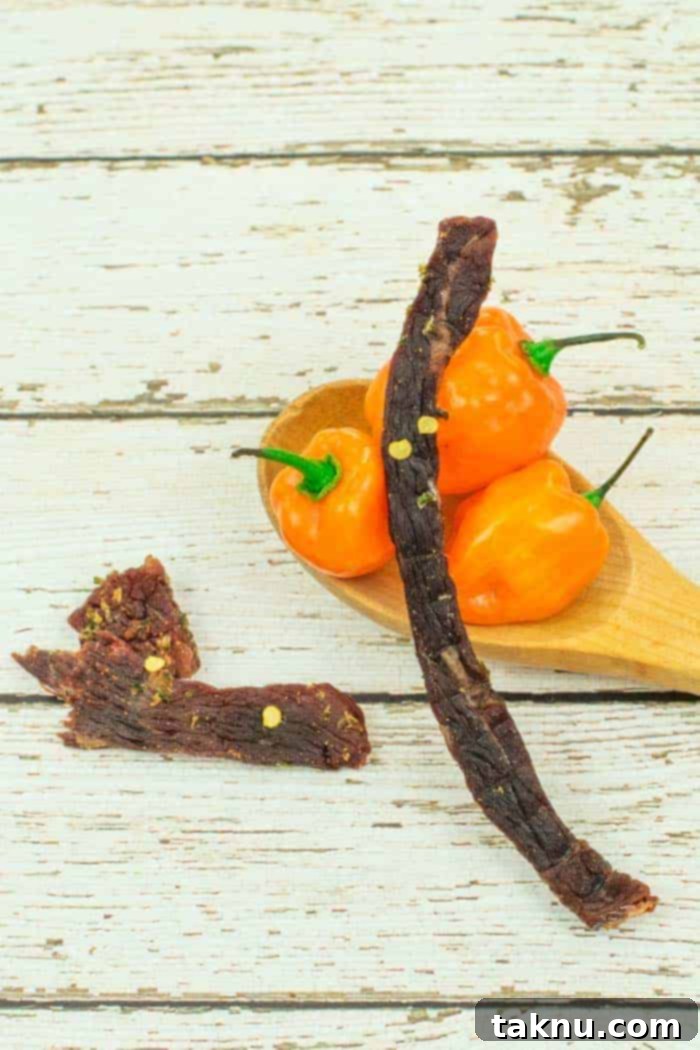
FIreman’s Beef Jerky
Pin Recipe
Ingredients
Lean Meat
- 1 lb Beef Bottom Round or Venison
Marinade
- 2 Habanero (stem removed)
- 1 Poblano Pepper (stem removed)
- 1 ½ teaspoon sea salt
- 1 teaspoon garlic powder
- 1 teaspoon onion powder
- ½ teaspoon chili powder
- ¼ teaspoon cumin
- 1 cup beef broth
- ¼ cup apple cider vinegar
- 1 teaspoon liquid smoke (hickory)
Optional
- ¼ teaspoon Curing Salt (Prague Powder #1)
Instructions
- Trim all visible fat from the beef. For easier slicing, wrap the meat in plastic and place it in the freezer for 1-2 hours until firm but not frozen solid.
- While the meat is chilling, combine all marinade ingredients (including the stemmed peppers) in a blender and blend until completely smooth and fully mixed. Transfer the marinade to a large bowl or ziplock bag.
- Remove the beef from the freezer. Using a very sharp knife or a Weston Jerky Slicer, slice the meat into consistent ¼-inch thick strips. Slice against the grain for a more tender chew, or with the grain for a chewier jerky. Refer to my slicing jerky page for detailed guidance.
- Add the sliced beef strips to the marinade, ensuring all pieces are thoroughly coated. Seal the bag or cover the bowl and marinate in the refrigerator for 6-24 hours, mixing occasionally to ensure even flavor distribution.
- Once marination is complete, remove the beef from the refrigerator, drain any excess marinade in a colander, and pat the beef strips thoroughly dry with paper towels.
- Arrange the strips on your dehydrator trays, oven racks, or smoker grates, ensuring space between each piece for optimal airflow. Dry using your favorite jerky making method. I used my Nesco Dehydrator and dried for 5 hours at 165°F (74°C).
- Test for doneness by allowing a piece to cool for 5 minutes, then bending it in half. The jerky is finished when it bends and cracks but does not break completely in half, revealing white fibers within.
Pro Tips
Expert Tips for Success:
- For less intense spice, begin with just one habanero. You can always add more heat next time!
- Choose high-quality liquid smoke, such as Wright’s Liquid Smoke, to avoid artificial flavors.
- Always cool your test piece of jerky for 5 minutes before bending to accurately check for doneness; warm jerky will feel softer than it truly is.
- For maximum shelf life, store your finished jerky in airtight containers, ideally vacuum-sealed, and consider using oxygen absorbers. Visit our Jerky Storage Guide for more information.
- Consistent slice thickness (¼”) is key for even drying. A partially frozen roast and a sharp knife or jerky slicer make this task much easier.
- Ensure ample space between jerky strips on drying racks to allow for proper air circulation, which is essential for uniform drying.