Smoked Poor Man’s Burnt Ends: The Ultimate Guide to Tender Chuck Roast Perfection
Discover the secret to incredibly tender, smoky, and flavorful “Poor Man’s Burnt Ends” – a culinary delight crafted from an unassuming chuck roast. This budget-friendly alternative to traditional brisket burnt ends delivers an equally rich and satisfying barbecue experience. Prepare for a melt-in-your-mouth texture and a deep smoke flavor that will have everyone reaching for more. These bite-sized meat nuggets are truly irresistible; once you start, you won’t want to stop! Perfect for gatherings, game days, or simply a fantastic backyard BBQ meal, this recipe proves that you don’t need expensive cuts to achieve barbecue greatness.
What are Poor Man’s Burnt Ends?
Traditionally, burnt ends are a highly sought-after delicacy in the world of barbecue, made from the point end of a beef brisket. This cut is slow-smoked until incredibly tender, then often cubed, sauced, and returned to the smoker for a final caramelization. However, a full brisket can be large, expensive, and intimidating for many home cooks. This is where Poor Man’s Burnt Ends enter the scene, offering an accessible and equally delicious alternative by utilizing a humble chuck roast instead of brisket.
While traditional burnt ends come from the fattier, more marbled point of a brisket, chuck roast provides a fantastic substitute. Chuck roasts are readily available at most grocery stores and butchers, typically in more manageable sizes ranging from 3-5 pounds. In contrast, a whole packer brisket often weighs 10 pounds or more, making it a larger investment in both cost and cooking time.
Though the price per pound for chuck roast and brisket might seem comparable, the smaller overall size of a chuck roast usually translates to a lower total cost. This affordability is precisely what earns these delightful bites their endearing “poor man’s” moniker. Despite the name, there’s nothing “poor” about the rich, beefy flavor and luscious tenderness these burnt ends deliver. It’s important to distinguish these from a simple smoked chuck roast intended as a pot roast; the process for burnt ends involves cubing and saucing for that signature sticky, caramelized exterior.
Crafting Perfect Poor Man’s Burnt Ends: A Step-by-Step Guide
One of the many reasons to love this recipe is its straightforward approach. These meat treats are not only incredibly inexpensive and taste absolutely delicious, but they are also surprisingly easy to prepare, even for novice smokers. Much like my popular Smoked Pork Butt recipe, this dish is a guaranteed crowd-pleaser that requires minimal fuss for maximum flavor payoff.
To begin your journey to chuck roast burnt ends perfection, you’ll want to start with a high-quality 3-4lb chuck roast. Look for a roast with good marbling – those streaks of fat throughout the meat will render down during the slow smoking process, contributing significantly to the final tenderness and juiciness. You can typically find excellent chuck roasts at your local butcher shop or even in the meat section of most well-stocked grocery stores.
Before you even think about seasoning, ensure your chuck roast is patted thoroughly dry with paper towels. This crucial step helps the seasoning adhere better and promotes the formation of a beautiful, flavorful bark during smoking.
Seasoning the Meat for Maximum Flavor
When it comes to seasoning these chuck roast burnt ends, the philosophy is truly “less is more.” While many barbecue recipes call for complex rubs with a multitude of spices, we’re aiming for the beef’s natural richness and the smoke flavor to be the stars of the show. Therefore, a simple yet incredibly effective approach is best: liberally sprinkle on a balanced 50:50 mixture of coarse sea salt and freshly cracked black pepper. You’ll want about two tablespoons of each, ensuring a generous coating on all surfaces.
There’s no need to overcomplicate things with binders like mustard or oil; the natural moisture on the surface of the beef will allow the salt and pepper to stick perfectly. The coarse grind of the salt and pepper is intentional here, as it helps create a fantastic “bark” – that crunchy, flavorful crust that forms on the exterior of slow-smoked meats. This simple seasoning allows the true essence of the chuck roast to shine through, complemented by the deep, smoky notes.
Place your thoroughly dried roast on a clean cutting board and season evenly on all sides. Don’t be shy; a good, even layer is key to building that incredible flavor profile. Flip and turn the roast to ensure every inch is covered, setting the stage for an unforgettable smoky experience.
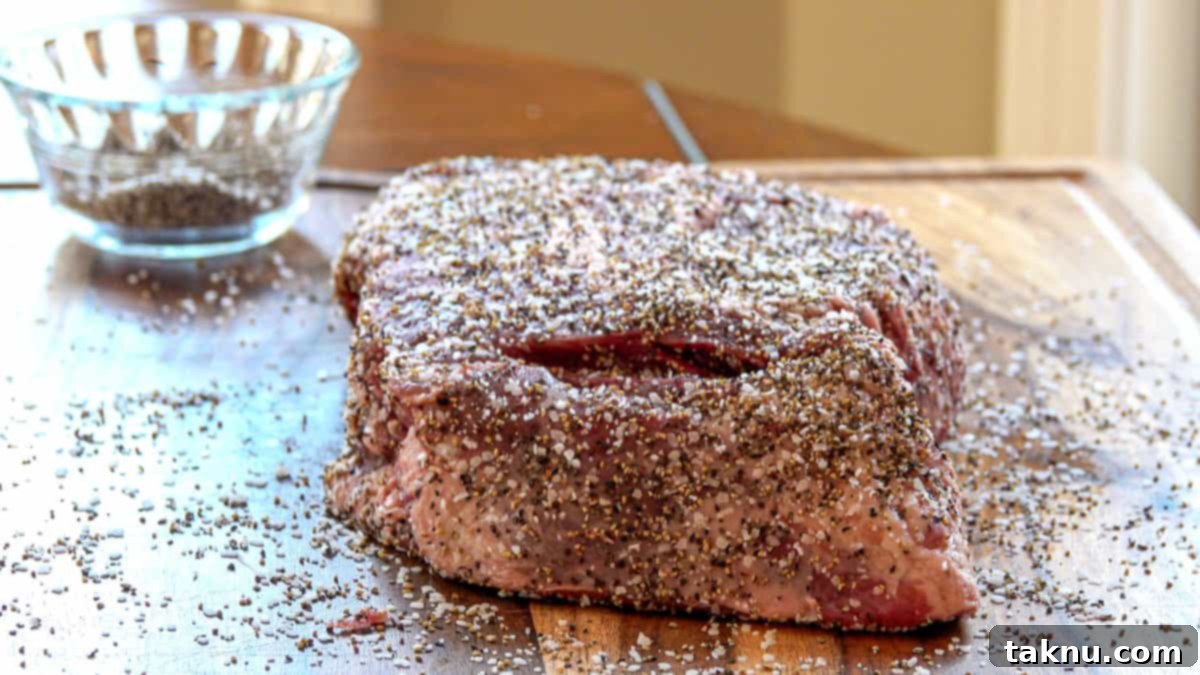
As mentioned, no need to coat the roast in oil or a binder, the salt and pepper will stick to it just fine and contribute to that fantastic crust.
Phase One: Initial Smoking of the Roast
Now it’s time to fire up your smoker! Preheat it to a consistent temperature of 275°F (135°C). For wood, hickory is an excellent choice for beef, providing a robust, classic smoke flavor. Alternatively, a blend of different wood types, or even mesquite if you prefer a stronger profile, will work wonderfully. Once your smoker is up to temperature and producing clean smoke, place the seasoned chuck roast directly on the grill grates. This initial phase of smoking is crucial for developing that flavorful bark and infusing the meat with deep smoky notes.
You’ll smoke the chuck roast until its internal temperature reaches 165°F (74°C). This typically takes approximately 5 hours, but remember that every piece of meat and every smoker is different. The key is to monitor the internal temperature diligently. For accuracy, use the built-in thermometer of your pellet smoker or a reliable probe meat thermometer if you’re using an offset smoker. An external probe thermometer allows you to track the temperature without repeatedly opening the lid, which can cause significant temperature fluctuations and prolong cooking time.
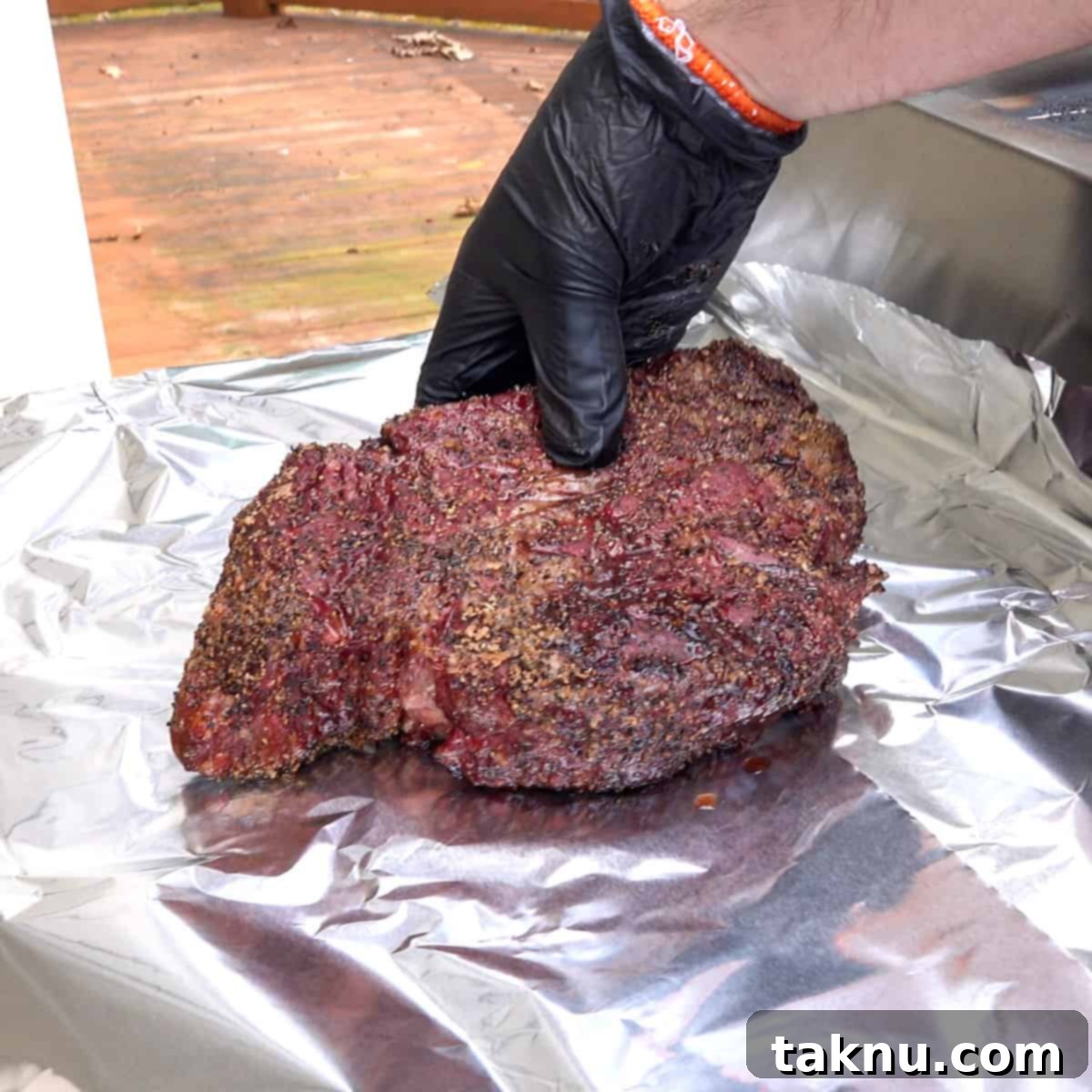
Once the chuck roast hits 165°F, it’s time for the “Texas Crutch” – the wrapping stage. This helps the meat power through the “stall” (where internal temperature plateaus) and renders it incredibly tender. Using heat-resistant gloves, carefully remove the roast from the smoker. Wrap it tightly in either two layers of heavy-duty pink butcher paper or aluminum foil. Butcher paper is often preferred for maintaining a crisper bark, while foil excels at trapping moisture for maximum tenderness. Both methods work great for this stage.
Choosing Your Smoker & Wood for Optimal Flavor
The world of smoking offers a variety of equipment, and thankfully, creating fantastic burnt ends isn’t exclusive to one type of smoker. Whether you’re a seasoned pitmaster or just starting out, there are two main types of smokers commonly used today: the convenient wood pellet smoker and the traditional offset smoker. Both are capable of producing wonderfully tender and flavorful burnt ends. The choice often comes down to personal preference, budget, and the level of hands-on involvement you prefer. So, pick your weapon of choice, and let’s get that smoke rolling!
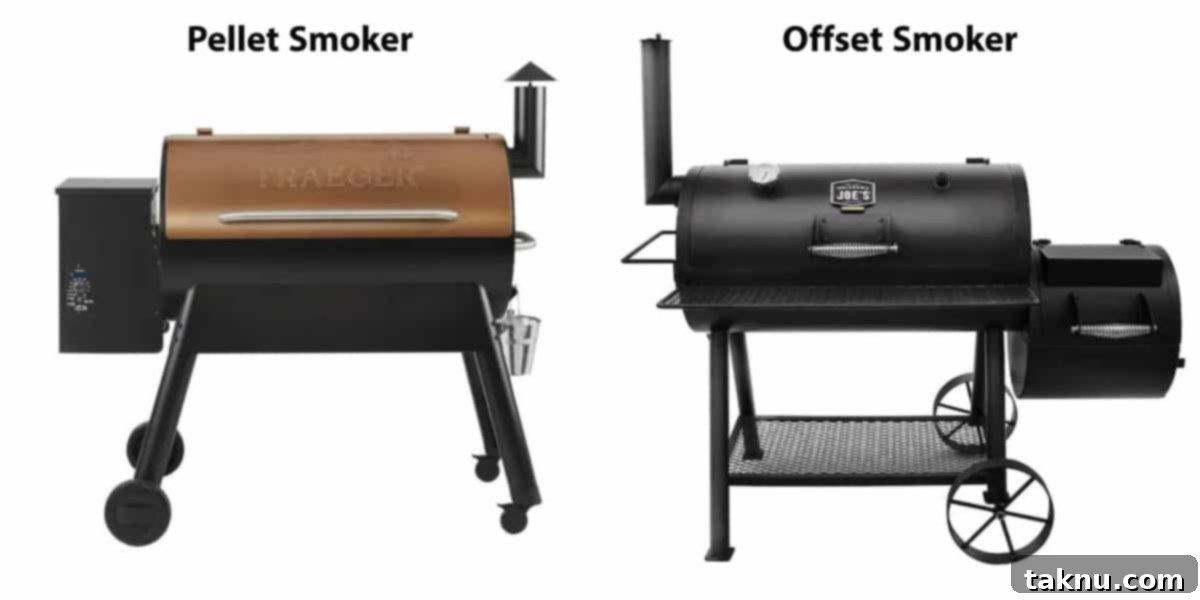
The Convenience of a Pellet Smoker / Pellet Grill
For those who appreciate modern convenience and precision, a pellet smoker (also known as a pellet grill) is an excellent choice. I frequently use my own pellet smoker, similar to the popular Camp Chef 36 smoker or a Traeger 780, for these burnt ends and countless other barbecue creations. Pellet smokers excel at imparting fantastic smoke flavor to beef, pork, poultry, and just about any other meat you can imagine, without the constant need to babysit a firebox all day.
These units operate by automatically feeding wood pellets into a firepot, maintaining a very steady and consistent temperature, much like a conventional oven. This “set it and forget it” functionality means you can achieve professional-level results without worrying about drastic temperature spikes or dips. They’re perfect for long smokes, allowing you to relax while your chuck roast slowly transforms into tender burnt ends.
Mastering the Traditional Offset Smoker
For the purists and those who enjoy a more hands-on approach, a traditional offset smoker is another fantastic tool for crafting delectable burnt ends. These smokers typically use wood chips or larger wood chunks for fuel, offering a different smoking experience compared to pellets. Generally, offset smokers can be a less expensive entry point into smoking than some high-end pellet grills.
A classic offset smoker, such as this reliable Oklahoma Joe’s Smoker, is a great option. While they demand a bit more attention and fire management expertise than a pellet smoker, the reward is an unparalleled depth of smoky flavor that many enthusiasts swear by. The ability to directly control the fire and airflow allows for a unique connection to the cooking process, producing amazingly flavored meat that truly embodies authentic low-and-slow barbecue.
Selecting the Best Wood for Your Burnt Ends
The choice of wood plays a significant role in the final flavor profile of your chuck roast burnt ends. My personal favorite and a highly recommended choice for beef is hickory wood. Hickory imparts a strong, bacon-like, and slightly sweet smoke flavor that beautifully complements the richness of the chuck roast. It’s a classic for a reason!
However, chuck roast is a versatile cut and can also stand up to other robust wood flavors. Mesquite, for instance, offers an even stronger, earthier, and more intense smoky flavor, which some pitmasters prefer for beef. If you’re looking for something a bit milder, oak provides a medium-strength smoke that’s still excellent with beef, while fruitwoods like apple or cherry can add a subtle sweetness and beautiful color to the bark.
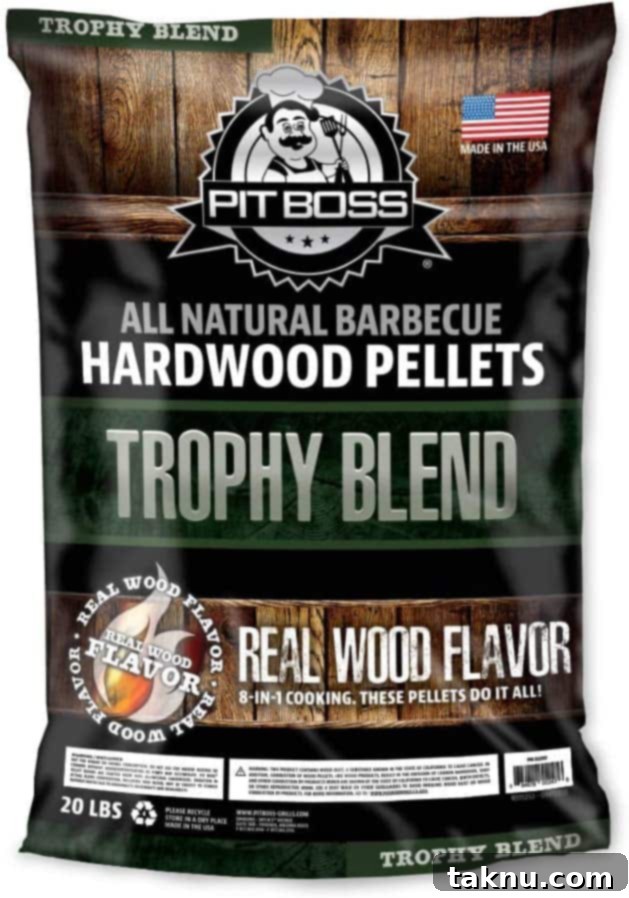
If you’re using a pellet smoker, consider using a high-quality competition blend or a “trophy blend” of wood pellets. These blends are often curated to combine the best attributes of different woods, resulting in a perfectly balanced and incredibly rich smoke flavor for these delicious meat snacks. Experimenting with different woods is part of the fun of smoking, so don’t be afraid to try what appeals to you most!
Phase Two: Achieving Probe Tender Perfection and Slicing
After the initial smoking and wrapping, it’s time for the chuck roast to reach its ultimate tenderness. Return the wrapped roast to the smoker rack and continue cooking. This phase focuses on breaking down the tough connective tissues in the chuck roast, transforming it into that signature fall-apart texture. You’ll continue to cook until the roast’s internal temperature reaches between 195°F – 202°F (90°C – 94°C) or, more importantly, until it is “probe tender.”
What does “probe tender” mean? It means that when you insert your meat thermometer probe into the thickest part of the roast, it should slide in with very little resistance, feeling like it’s going into warm butter. This indicates that the collagen has fully broken down. This final stage of cooking typically takes another hour or so, but always rely on tenderness over a specific time or temperature alone.
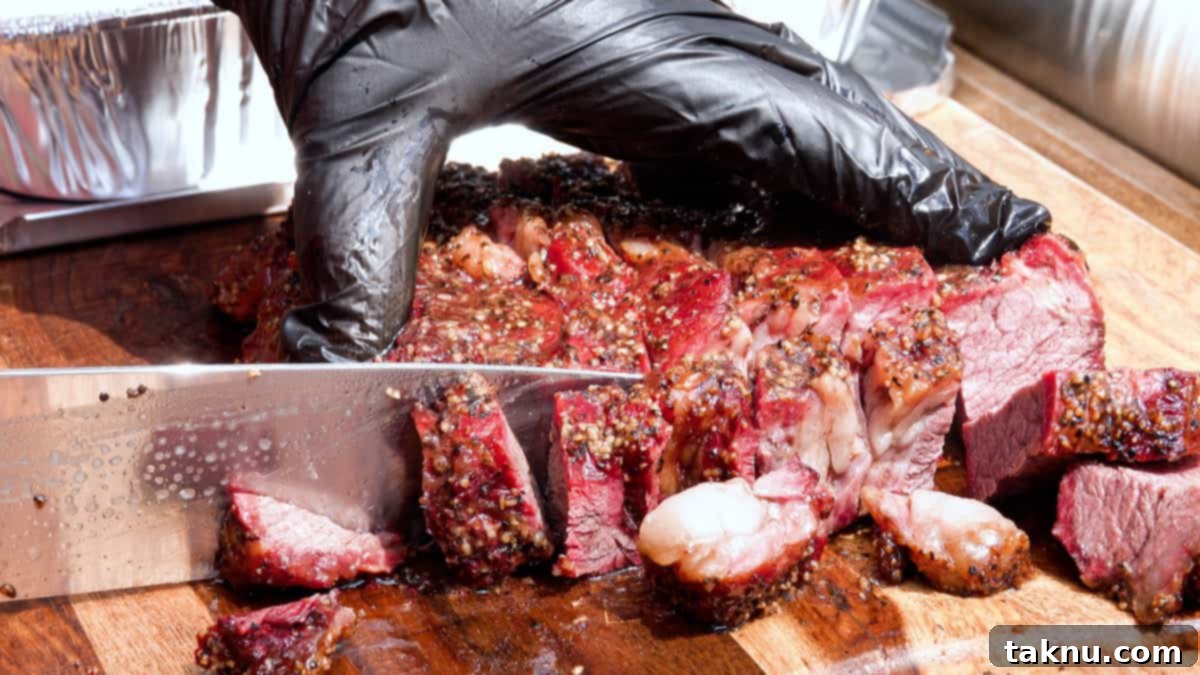
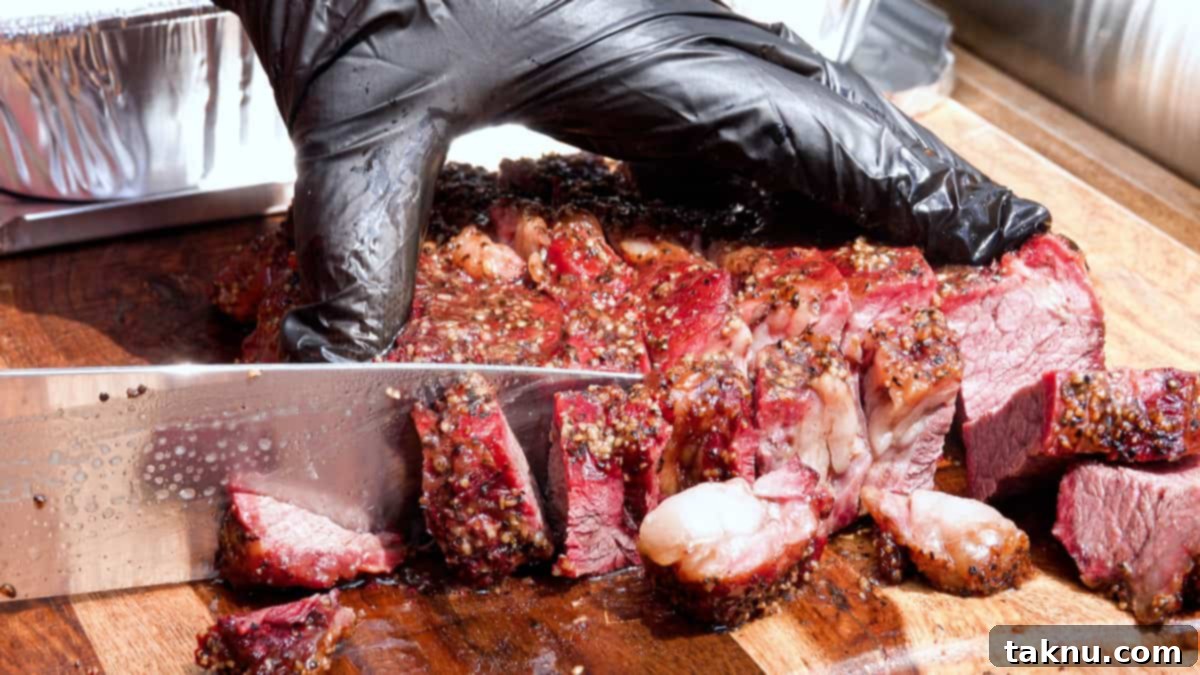
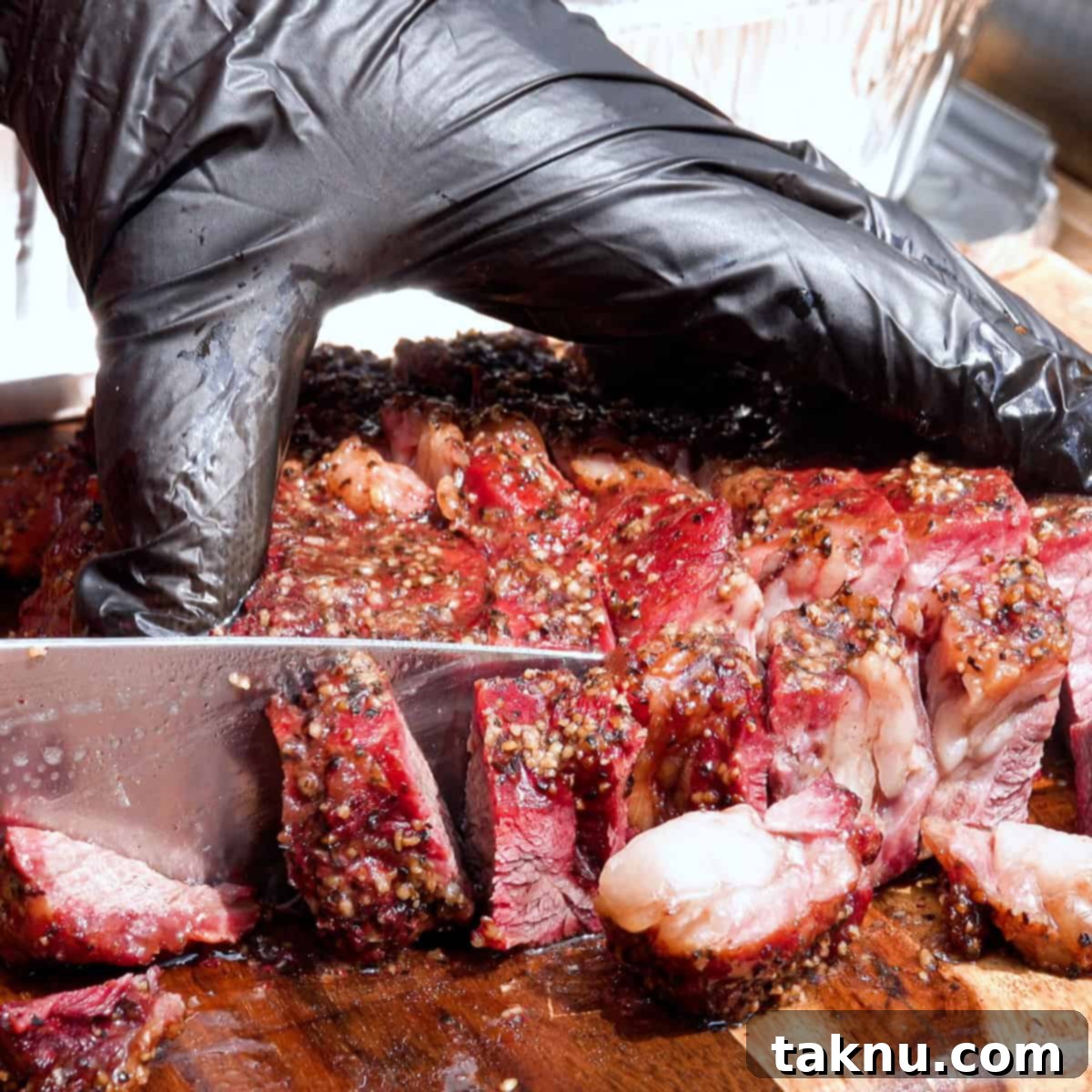
Once your chuck roast is perfectly probe tender, carefully remove it from the smoker. Unwrap the meat, discarding the butcher paper or aluminum foil. Place the roast on a cutting board and, using a sharp knife, slice it into uniform 1-inch cubes. These cubes are the raw form of your burnt ends, ready for their final transformation.
The Essential BBQ Sauce Glaze
The next step is to infuse these tender meat cubes with that classic barbecue tang and sweetness. Transfer the sliced chuck roast cubes into a sturdy aluminum pan. Now, generously cover them with your favorite BBQ sauce. The choice of sauce is entirely up to your preference – whether you like a sweet, tangy, spicy, or smoky profile. For this particular recipe, I enjoy using Jack Daniel’s Sweet and Spicy BBQ sauce, as it offers a fantastic and well-balanced flavor that complements the richness of the beef perfectly.
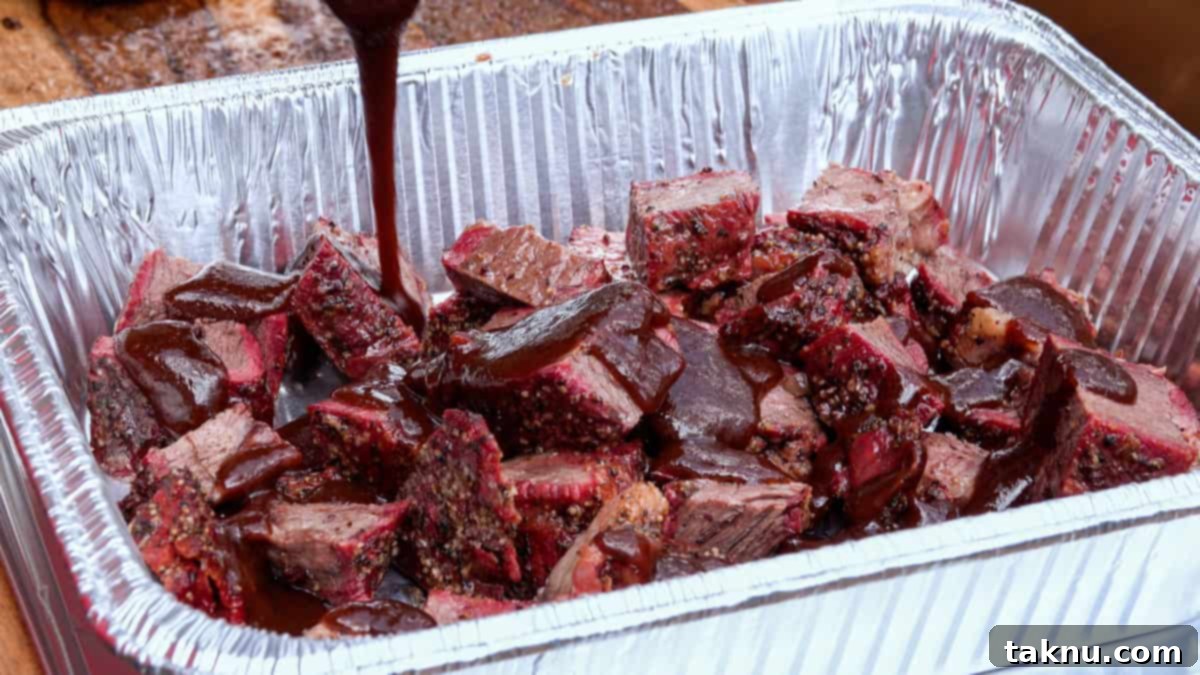
Using a gloved hand or a large spoon, gently mix the sauce around until every single piece of meat is thoroughly coated. The goal is to achieve a nice, even layer of barbecue sauce on all surfaces, not to drown the meat. A good coating ensures that each burnt end gets that sticky, caramelized exterior during the final smoke.
Pro Tip for Extra Sweetness: If you prefer your burnt ends with an even sweeter, more caramelized finish, consider sprinkling a little brown sugar over the meat cubes before you drizzle on the BBQ sauce. This extra touch of sugar will melt and caramelize beautifully, adding another layer of irresistible flavor and texture!
Phase Three: The Final Finish and Caramelization
With your chuck roast cubes coated in luscious BBQ sauce, it’s time for the final, magical step that transforms them into true burnt ends. Cover the aluminum pan tightly with a lid or another sheet of aluminum foil. Return the covered pan to the smoker, maintaining the temperature at 275°F (135°C). This last smoking phase will last for approximately one hour.
During this hour, a few critical things happen: the BBQ sauce warms through, infuses deeper into the meat, and most importantly, begins to reduce and caramelize, becoming wonderfully sticky and flavorful on the surface of each chuck roast cube. The low, steady heat allows the sauce to “set” perfectly without burning, creating that desirable glaze.
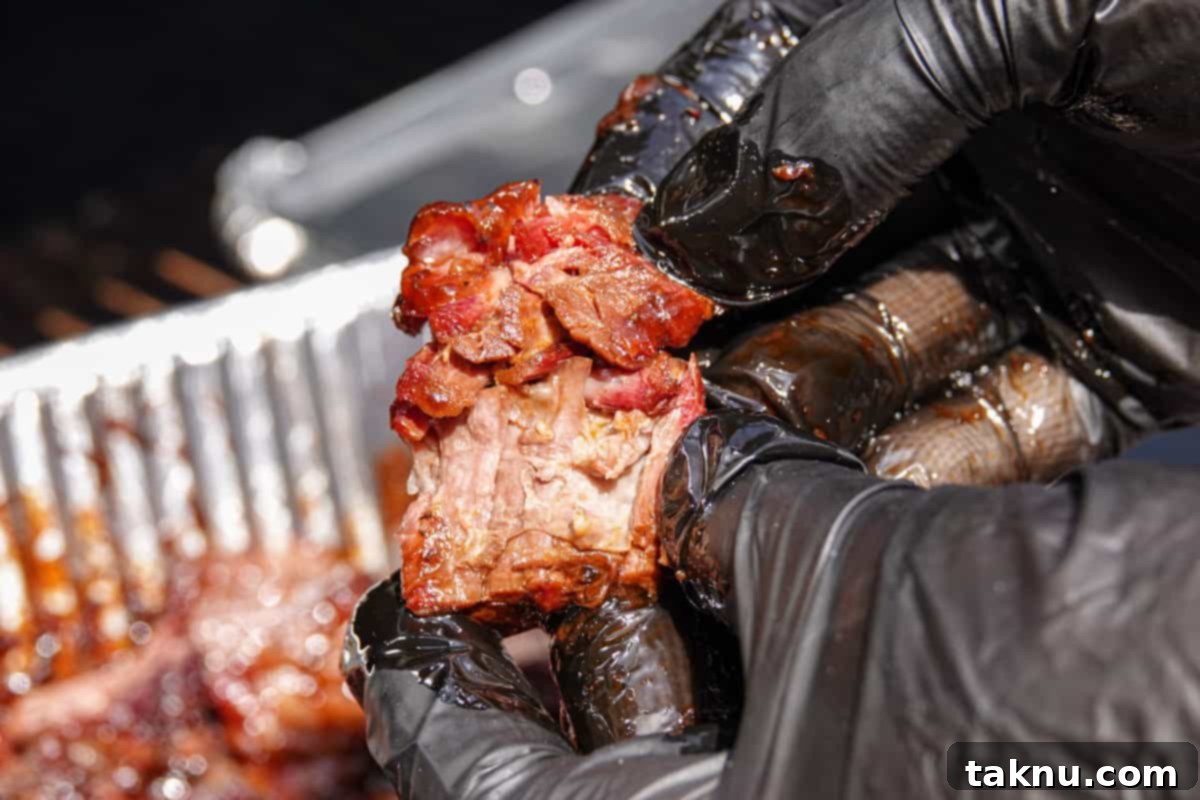
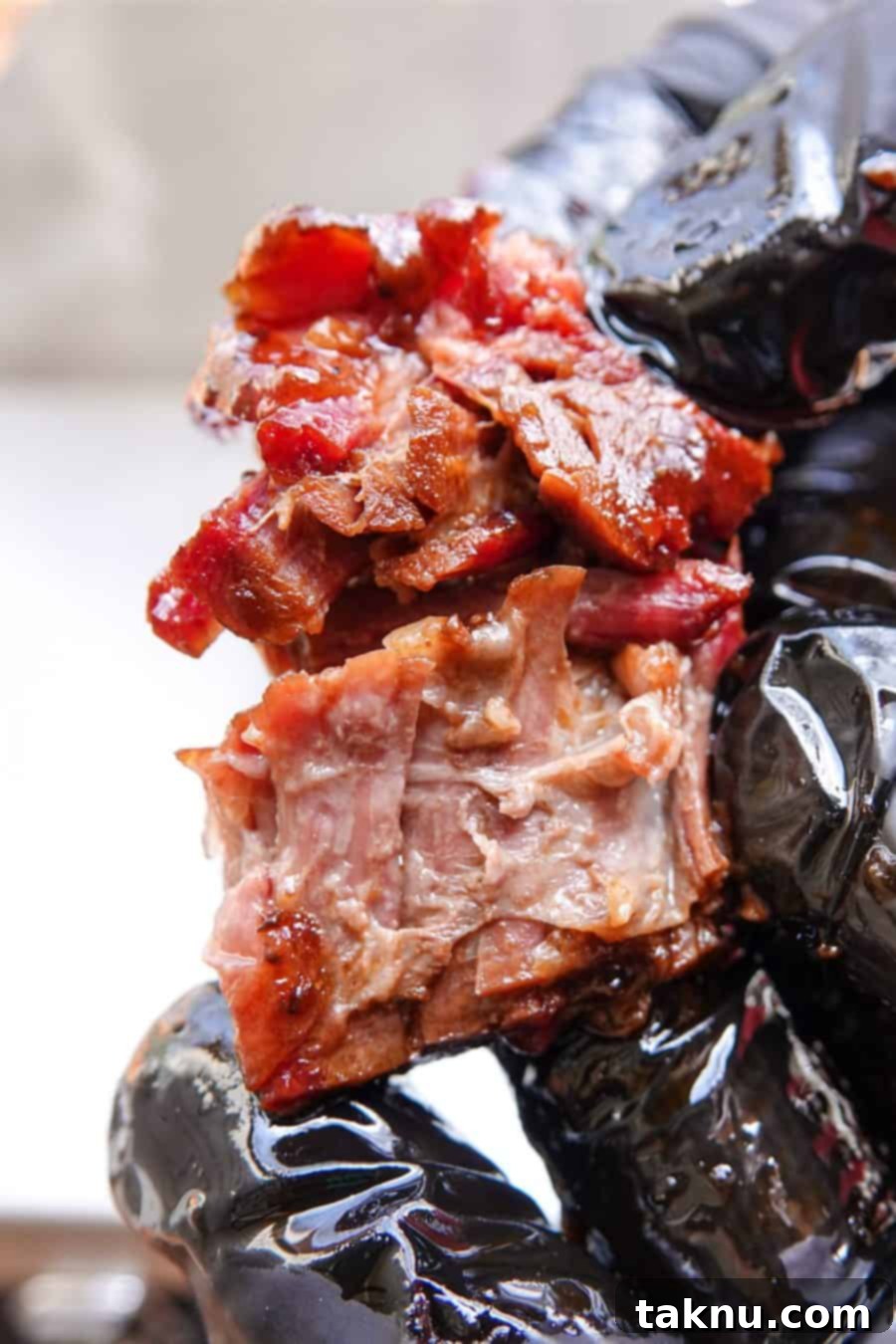
When you remove the pan from the smoker, your Poor Man’s Burnt Ends will be absolutely glorious. They will be EXTREMELY tender, easily pulling apart with a fork, and bursting with a harmonious blend of rich beef, smoky flavor, and sweet, tangy BBQ sauce. At this point, they are ready to serve immediately! Enjoy them as an irresistible appetizer, perhaps with toothpicks for easy grabbing, or plate them as a spectacular main course. These burnt ends pair exceptionally well with classic barbecue sides such as creamy smoked mac n’ cheese, savory smoked baked beans, or a fresh coleslaw. Get ready to ENJOY!
Frequently Asked Questions About Poor Man’s Burnt Ends
Poor man’s burnt ends are skillfully crafted from a beef chuck roast, a readily available and more budget-friendly cut. In contrast, traditional burnt ends, which are also incredibly delicious, are typically made from the fattier point end of a beef brisket.
Burnt ends are incredibly versatile! They can be enjoyed as a mouth-watering appetizer, perfect for sharing at parties or casual gatherings. Alternatively, they make a fantastic main course, especially when accompanied by classic barbecue side dishes such as creamy mac and cheese, savory baked beans, fluffy mashed potatoes, or fresh steamed vegetables. Their rich flavor also makes them a great addition to sandwiches or tacos.
Absolutely not! Burnt ends, whether from brisket or chuck roast, are renowned for their incredibly tender, almost melt-in-your-mouth texture. This is achieved through a slow, low-temperature cooking process that breaks down tough connective tissues. While they boast a nice, flavorful crust or “bark” on the outside, the interior remains wonderfully soft and juicy, never chewy.
To keep your delicious burnt ends fresh, the best way to store them is directly in the aluminum tray you used for smoking, or transfer them to an airtight container. Cover the tray tightly with a lid or aluminum foil. Once cooled, store them in the refrigerator, where they will remain fresh and flavorful for up to 3 days.
Reheating burnt ends is simple! Pull the container of burnt ends out of the fridge and allow it to come to room temperature for about 15-20 minutes. Then, place the covered dish (with aluminum foil still on top) into a pre-heated oven at 350°F (175°C) for approximately 20-30 minutes, or until thoroughly heated through. This gentle reheating method helps retain their moisture and tenderness.
Essential Pro Tips for Burnt Ends Success
- **Portion Planning:** When planning for your gathering, estimate about ½lb of pre-cooked weight per person. A standard 3lb chuck roast will generously serve 6 people, providing ample delicious burnt ends for everyone.
- **Invest in Quality Gloves:** Handling hot meat fresh off the smoker can be challenging. I highly recommend purchasing good BBQ gloves that feature a cotton liner glove underneath a durable nitrile outer glove. This combination offers excellent heat protection and dexterity, allowing you to comfortably handle piping hot roasts without burning your hands.
- **Superior Seasoning:** While simple, the quality of your seasoning matters. Using fresh cracked coarse-ground black pepper, rather than pre-ground fine pepper, provides a significantly better flavor profile and adds a satisfying textural element to the bark of the meat.
- **Patience is Key:** Smoking meat is a slow art. Don’t rush the process, especially during the “stall” or the final probe-tender phase. Trust your thermometer and the feel of the meat. Good barbecue is worth the wait!
- **Rest Your Meat (Briefly):** Even though these are cubed and sauced, allowing the whole roast to rest for 15-30 minutes after coming off the smoker (before cubing) can help redistribute juices, leading to an even juicier final product.