The Ultimate Guide to Making Basic Homemade Beef Jerky: A Simple Recipe for Everyone
Embark on your journey into the delicious world of homemade beef jerky with this classic and straightforward recipe. This “Basic Jerky” isn’t just a starting point; it’s a timeless favorite that captures the essence of what jerky should be: savory, satisfying, and incredibly easy to make. Free from overwhelming flavors or a long list of exotic ingredients, this recipe focuses on pure, unadulterated beefy goodness. It’s perfect for beginners, guaranteeing a fantastic-tasting jerky that appeals to almost every palate. If you’re looking for a reliably delicious snack that’s simple to prepare and widely loved, you’ve found your go-to recipe right here.
For this foundational beef jerky recipe, I chose to utilize the oven method, as it perfectly complements the simplicity of the ingredients and process. Drying jerky in the oven is one of the most accessible ways for anyone to get started, requiring minimal specialized equipment and delivering excellent results. This method makes the entire experience approachable, ensuring that even first-time jerky makers can achieve success. Once you’ve mastered this basic technique, you’ll be eager to share your perfectly chewy, flavorful jerky with friends and family, inviting them into the homemade jerky fan club!
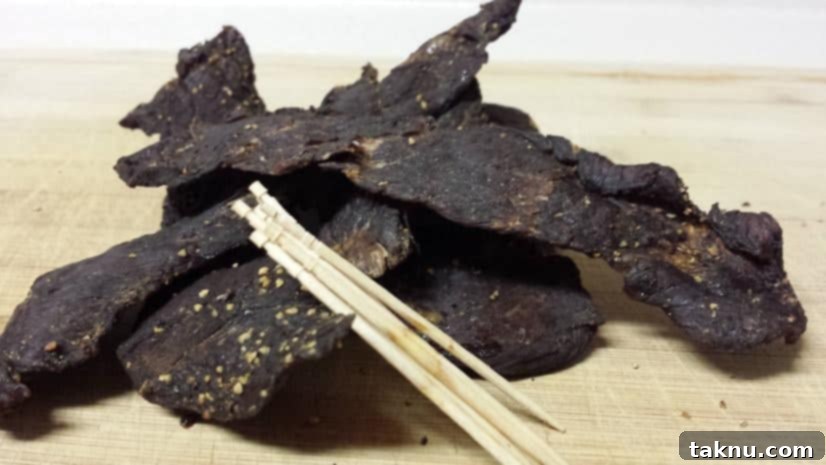
Classic Oven-Dried Basic Beef Jerky
Pin Recipe
Ingredients: The Foundation of Flavor
Lean Beef:
- 1 lb eye of round (a lean and tender cut, ideal for consistent jerky texture)
Marinade:
- 1 tablespoon soy sauce (for umami depth and saltiness)
- 3 tablespoon worcestershire sauce (adds a tangy, savory complexity)
- 1 teaspoon salt (enhances flavor and aids in preservation)
- 1 teaspoon black pepper (for a classic, subtle spice)
- 2 tablespoon liquid smoke (only use if NOT using a smoker; provides a rich, smoky flavor without a smoker)
Optional Ingredients for Enhanced Preservation:
- ¼ teaspoon Curing Salt (Prague Powder #1 – highly recommended for safety, especially with longer storage)
Instructions: Step-by-Step Jerky Perfection
- **Prepare the Meat:** Begin by meticulously trimming away all visible fat, including any fat cap, from your chosen cut of beef. Fat can become rancid during the drying process, significantly shortening your jerky’s shelf life. After trimming, place the lean meat in your freezer for approximately one hour. This partial freezing firm up the meat, making it much easier to slice thinly and consistently, which is key for uniform drying.
- **Craft the Marinade:** While your beef is firming up in the freezer, prepare the simple yet potent marinade. In a sturdy container with a tight-fitting lid, combine the soy sauce, Worcestershire sauce, salt, black pepper, and liquid smoke (if you’re not using a smoker). If opting for curing salt (Prague Powder #1), add it to the mixture now. Whisk all ingredients thoroughly to ensure they are well combined, creating a uniform flavor base for your jerky.
- **Slice the Beef:** After an hour, retrieve the beef from the freezer. It should feel quite firm, almost hard to the touch, but not completely frozen solid. Using a sharp knife, carefully slice the meat against the grain into strips approximately ⅛” to ¼” thick. Slicing against the grain ensures a more tender, less chewy jerky. Strive for consistency in thickness, as this is crucial for all pieces to dry evenly at the same rate, preventing some from being over-dried and others under-dried.
- **Marinate for Flavor Infusion:** Add the uniformly sliced beef strips to your prepared marinade mixture in the container. Secure the lid tightly and shake vigorously to ensure every single piece of meat is thoroughly coated. Place the container in the refrigerator to marinate for a minimum of 6 hours, or ideally, for 12 to 24 hours for deeper flavor penetration. Remember to shake the container several times throughout the marinating process to redistribute the liquid and ensure even seasoning.
- **Prepare for Drying:** Once marination is complete, remove the beef strips from the fridge. Lay them out on paper towels and pat them thoroughly dry. Removing excess moisture from the surface helps speed up the drying process and prevents a steamed texture. For oven drying, pierce one end of each strip with a toothpick. This allows you to easily hang the strips from your oven racks, promoting optimal airflow for even dehydration.
- **Oven Drying Process:** Preheat your oven to its lowest possible temperature, ideally around 170°F (77°C). If your oven runs hotter, you may need to prop the oven door open slightly with a wooden spoon to maintain a lower temperature and allow moisture to escape. Hang the jerky strips from the oven racks, ensuring they don’t touch each other. Dry for approximately 4 hours, then begin checking for doneness. Continue drying as needed, typically up to 6 hours or more, depending on your oven and desired texture. Jerky is done when it is firm, bends and cracks but does not easily break in half, indicating most moisture has been removed.
- **Cool and Store:** After the jerky reaches the desired texture, turn off the oven and allow the strips to cool completely at room temperature for several hours. This “conditioning” phase helps equalize any remaining moisture. Once fully cooled, store your homemade jerky in airtight ziplock bags or containers. For optimal freshness, consume within 7-10 days. If you wish to extend its shelf life to 1-2 months, vacuum package the jerky. For even longer storage, up to 6 months, consider refrigerating or freezing vacuum-sealed jerky.
Why Make Your Own Basic Beef Jerky?
There’s a special satisfaction that comes with making your own food, and beef jerky is no exception. Beyond the personal pride, crafting your own basic beef jerky offers numerous advantages over store-bought alternatives. Firstly, you gain complete control over the ingredients. This means no artificial preservatives, excessive sodium, or unwanted additives, allowing for a healthier and purer snack. You can select high-quality, lean cuts of beef and tailor the seasoning to your exact preferences, ensuring a fresh, wholesome product every time.
Economically, making jerky at home can be surprisingly cost-effective. While the initial investment in a good cut of meat might seem significant, the cost per ounce of homemade jerky is often much lower than premium store-bought varieties, especially when buying in bulk. Furthermore, the ability to customize flavors means you can experiment and develop signature jerky recipes that you and your loved ones will adore, far beyond what’s available on supermarket shelves.
Choosing the Perfect Cut for Your Jerky
The foundation of great jerky starts with the right cut of beef. For this basic recipe, we recommend eye of round due to its exceptionally lean nature and tender texture when sliced correctly. Leaner cuts are preferred for jerky because fat can go rancid over time, compromising the flavor and shelf life of your finished product. Other excellent choices for beef jerky include:
- **Top Round (London Broil):** Another lean and flavorful option, similar to eye of round.
- **Bottom Round:** A bit tougher than top round but still very lean and works well.
- **Flank Steak:** While slightly pricier, flank steak has a distinctive grain that makes it easy to slice and provides a satisfying chew.
- **Sirloin Tip:** Lean and tender, often a good value.
Regardless of the cut you choose, the key is to trim away as much visible fat, silver skin, and connective tissue as possible. This meticulous preparation ensures that your jerky has a consistent texture and a longer, more stable shelf life.
Essential Tips for Jerky Success
Achieving perfect homemade jerky is simple when you follow a few critical guidelines:
- **Consistent Slicing is King:** As mentioned in the instructions, uniformly thick slices are paramount. Inconsistent slices will dry at different rates, leading to some pieces being overly dry and brittle, while others might be under-dried and unsafe. Partial freezing makes this task significantly easier.
- **Don’t Rush the Marinade:** The marinating time is crucial for both flavor infusion and meat tenderization. While 6 hours is the minimum, allowing the meat to soak in the marinade for 12-24 hours truly develops a deeper, richer flavor profile that permeates every fiber of the beef.
- **Ensure Proper Airflow:** Whether you’re using an oven, dehydrator, or smoker, good airflow around each strip of jerky is vital for even and efficient drying. Overcrowding your drying racks will trap moisture and extend drying times, potentially leading to spoilage.
- **Check for Doneness Carefully:** The “bend and crack” test is the most reliable indicator. Your jerky should be firm, able to bend without breaking immediately, but should show white fibers and a slight crack when bent sharply. It shouldn’t be brittle, but also not soft or moist in the center.
- **Food Safety First:** If you plan on storing jerky for longer periods outside of refrigeration, the addition of curing salt (Prague Powder #1) is highly recommended. This ingredient contains nitrites that inhibit bacterial growth, particularly clostridium botulinum, enhancing safety. Always ensure proper hygiene throughout the preparation process.
Flavor Variations: Beyond the Basics
While this basic recipe is fantastic on its own, it also serves as an excellent canvas for future experimentation. Once you’re comfortable with the core process, consider adding other ingredients to customize your jerky:
- **Spicy Kick:** Add a pinch of cayenne pepper, red pepper flakes, or a dash of hot sauce to the marinade.
- **Sweet & Savory:** Introduce a tablespoon of brown sugar, honey, or maple syrup for a touch of sweetness that balances the savory flavors.
- **Garlic & Onion:** Garlic powder and onion powder are classic additions that deepen the aromatic profile.
- **Herbal Notes:** A touch of dried thyme or rosemary can add an unexpected layer of sophistication.
- **Asian Flair:** A splash of sesame oil, ginger powder, or a hint of sriracha can transform the basic flavor.
Remember to start with small amounts of new ingredients and adjust to taste, keeping notes so you can replicate your favorite combinations.
Understanding the Drying Process
The science behind making jerky is fascinatingly simple: it’s all about dehydration. By slowly removing moisture from the meat, we create an environment where spoilage-causing bacteria, yeasts, and molds cannot thrive. This process not only preserves the meat but also concentrates its flavors, leading to that rich, umami-packed snack we all love. The low and slow heat of the oven, combined with adequate airflow, gently dries the beef, transforming it from raw slices into chewy, flavorful jerky.
Storing Your Homemade Jerky for Maximum Freshness
Proper storage is just as important as the drying process itself to ensure your homemade jerky remains delicious and safe to eat for as long as possible. After your jerky has cooled completely (this “conditioning” phase is crucial for even moisture distribution), here are the best ways to store it:
- **Airtight Containers/Bags:** For short-term storage (7-10 days), simply place your cooled jerky in an airtight container or a heavy-duty ziplock bag at room temperature, away from direct sunlight or heat.
- **Vacuum Sealing:** For extended freshness (1-2 months), vacuum sealing is your best friend. Removing all air significantly slows down oxidation and prevents moisture reabsorption.
- **Refrigeration:** While not strictly necessary for properly dried and cured jerky, refrigerating vacuum-sealed jerky can extend its shelf life even further, up to 2-3 months.
- **Freezing:** For long-term storage (up to 6 months or more), freezing vacuum-sealed jerky is an excellent option. Simply thaw at room temperature when you’re ready to enjoy it.
Always inspect your jerky before consumption. Any signs of mold, off-smells, or unusual sliminess indicate it should be discarded.
Nutrition Information
Calories: 178kcal | Carbohydrates: 2g | Protein: 25g | Fat: 6g | Saturated Fat: 2g | Cholesterol: 70mg | Sodium: 812mg | Potassium: 290mg | Sugar: 1g | Vitamin C: 1.3mg | Calcium: 16mg | Iron: 2.8mg
There you have it—a comprehensive guide to making delicious, basic beef jerky right in your own kitchen. This recipe is more than just a snack; it’s an introduction to a rewarding culinary skill that provides endless opportunities for customization and enjoyment. Happy jerky making!