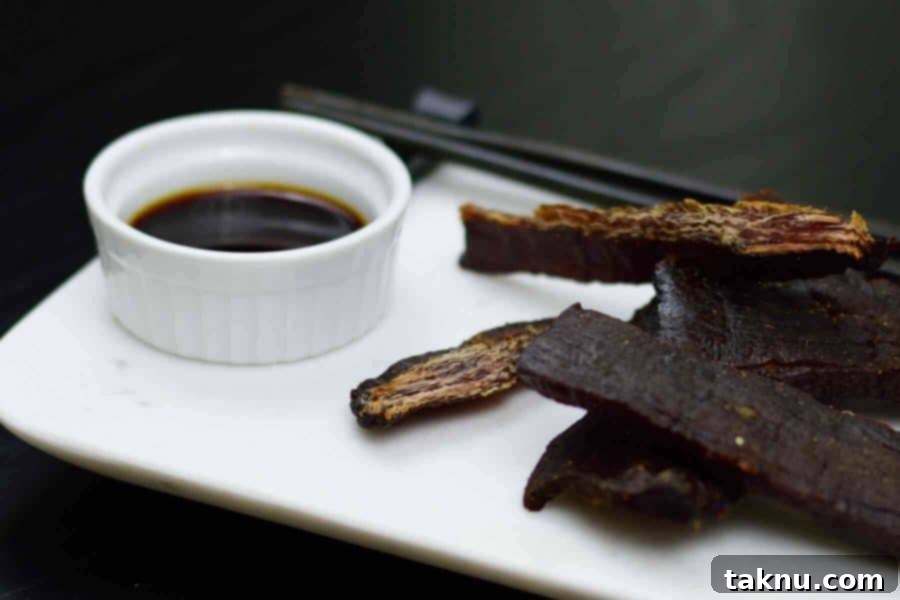
Mastering Homemade Teriyaki Beef Jerky: The Ultimate Sweet & Savory Recipe Guide
Teriyaki sauce stands as an undisputed champion among flavor profiles for beef jerky, offering a delightful balance of sweet, savory, and umami notes. While store-bought teriyaki jerky can be a quick fix, nothing quite compares to the rich, authentic taste and satisfying chew of a homemade batch. This recipe for homemade teriyaki beef jerky is designed to elevate your snacking experience, promising a flavor far superior to anything you’ll find on a supermarket shelf. Get ready to create a truly unforgettable jerky that bursts with classic teriyaki goodness, perfectly infused into every tender strip of beef.
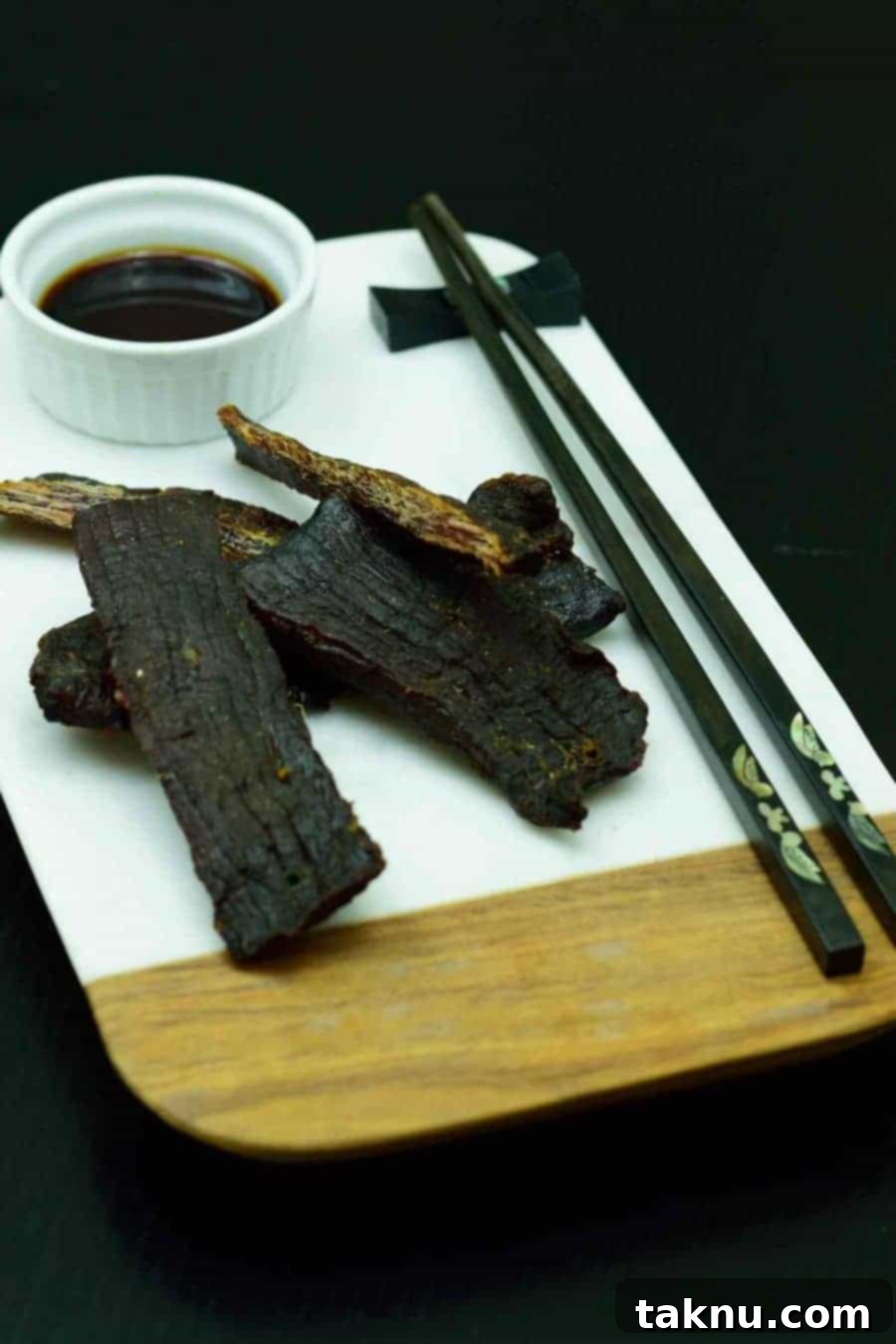
Essential Ingredients for Perfect Teriyaki Jerky
Crafting exceptional teriyaki beef jerky starts with selecting high-quality ingredients that build a harmonious flavor profile. Each component plays a crucial role in achieving that signature sweet and savory taste, complemented by aromatic spices. Here’s what you’ll need for this incredibly flavorful marinade:
- **Beef (Eye of Round):** The foundation of your jerky. Eye of round is a lean cut, ideal for jerky as fat can spoil quickly. Its fine grain holds the marinade well.
- **Soy Sauce:** Provides the essential umami, saltiness, and a deep savory base characteristic of teriyaki. Opt for a good quality soy sauce for the best flavor.
- **Rice Vinegar:** Adds a subtle tang and brightness, cutting through the richness and balancing the sweetness of the marinade.
- **Honey:** Contributes natural sweetness and a slight viscosity, helping the marinade adhere to the meat and creating a beautiful glaze during drying. Using local honey can add unique depth.
- **Brown Sugar:** Offers a deeper, more complex sweetness with molasses notes, enhancing the traditional teriyaki flavor.
- **Sesame Oil:** A small touch goes a long way. Sesame oil imparts a distinctive nutty aroma and flavor, which is a hallmark of authentic Asian cuisine and elevates the teriyaki profile.
- **Spices – Garlic Powder & Dried Ginger:** These aromatics are indispensable. Garlic powder adds a pungent, savory kick, while dried ginger provides a warm, slightly spicy undertone, rounding out the flavor blend.
The combination of these ingredients creates a marinade that penetrates the meat deeply, ensuring every bite of your homemade teriyaki jerky is packed with an irresistible, balanced flavor.
Mastering the Art of Slicing Beef for Jerky
Properly slicing your beef is one of the most critical steps in making excellent jerky. The thickness and grain direction of your meat strips directly impact the final texture and drying time. For this teriyaki jerky recipe, I highly recommend using beef eye of round due to its lean nature and consistent texture. However, many other cuts work wonderfully for jerky. You can explore a comprehensive guide to the best cuts of beef for jerky here to broaden your choices.
Step 1: Trim All Visible Fat
Before you begin slicing, it’s crucial to meticulously trim all visible fat from the beef. Fat spoils much faster than lean meat, which can significantly reduce your jerky’s shelf life and introduce undesirable flavors. Look for any white or yellowish streaks and carefully remove them with a sharp knife. The picture below illustrates the type of fat you need to eliminate.
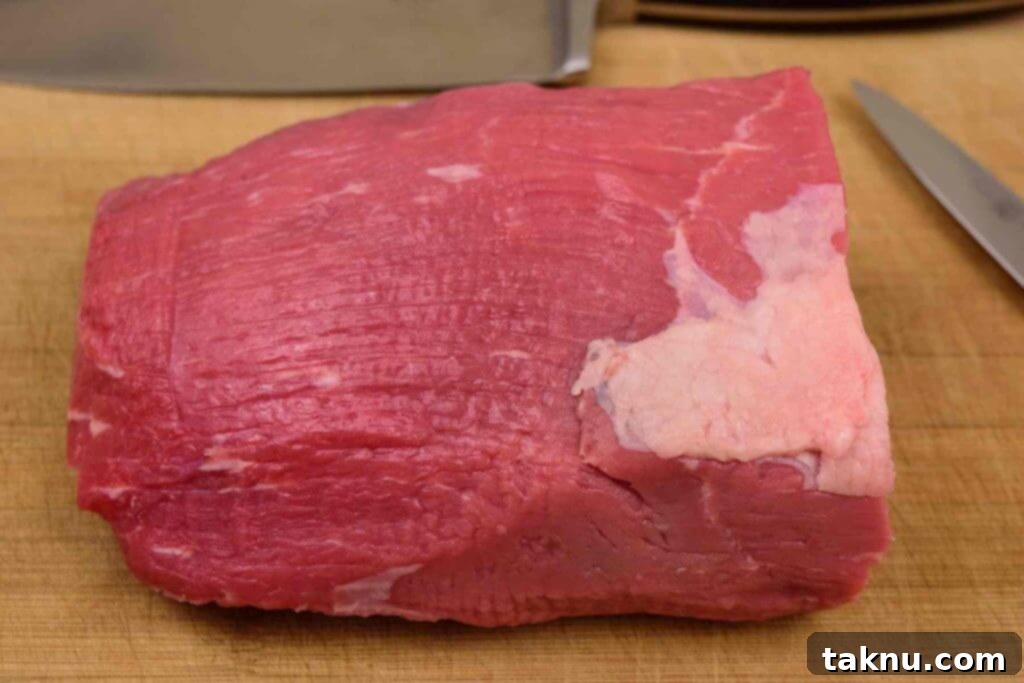
For easier and more uniform slicing, consider placing your trimmed beef in the freezer for about 1 to 2 hours until it is partially frozen. This firms up the meat, allowing for cleaner, more precise cuts, which is particularly helpful if you don’t have a dedicated jerky slicer.
Step 2: Slice Against or With the Grain
Once your beef is trimmed and firm, it’s time to slice. The direction you slice in will determine the chewiness of your finished jerky:
- **Against the Grain:** Slicing against the grain breaks down the muscle fibers, resulting in a more tender jerky that’s easier to chew. This is often preferred for those who enjoy a less strenuous snack.
- **With the Grain:** Slicing with the grain leaves the muscle fibers intact, producing a much chewier jerky. This option is popular among traditional jerky enthusiasts who appreciate a good tug.
Aim for a thickness of approximately ¼ inch. Consistency is key here; uniformly sliced strips will dry more evenly, preventing some pieces from being over-dried while others are still moist. Use a very sharp knife and maintain a steady hand for the best results. A ruler can be helpful if you’re new to this to gauge the correct thickness.
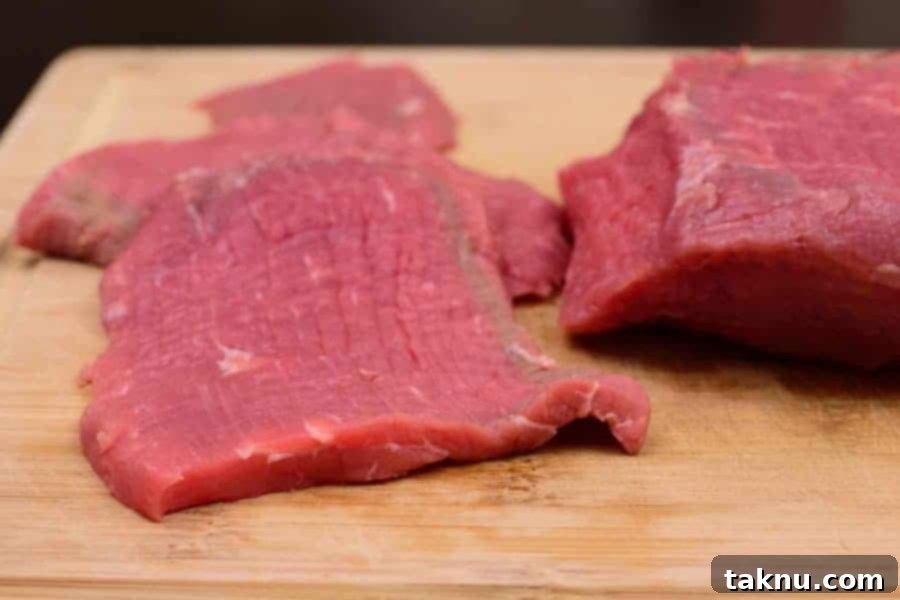
While I didn’t use one for this particular recipe demonstration, a jerky slicer is an invaluable piece of equipment for achieving perfectly even strips with minimal effort. If you plan on making jerky frequently, it’s a worthwhile investment that saves time and improves consistency.
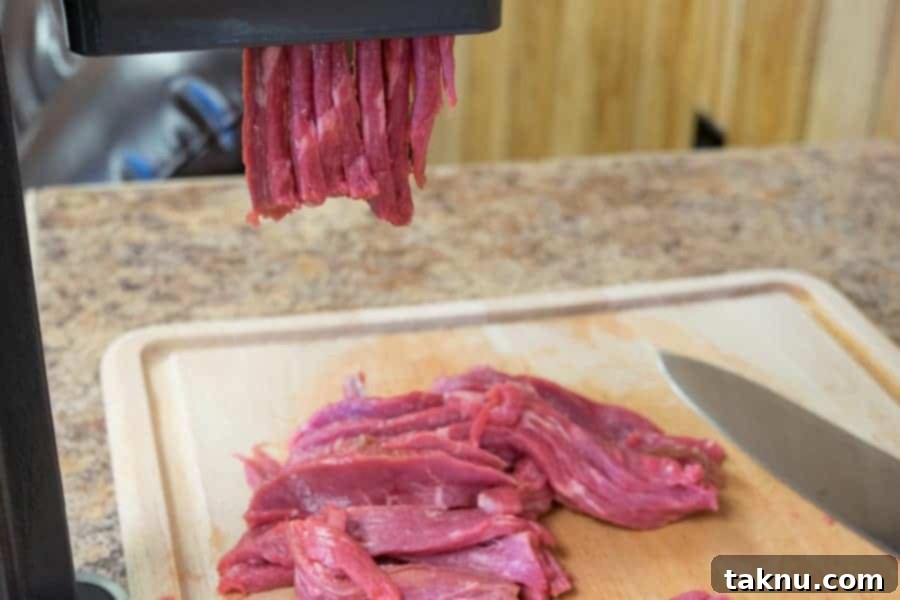
If you’re unsure about the grain direction or need more detailed guidance on preparing your meat, I’ve compiled a dedicated resource on Slicing Meat for Jerky. This page covers everything you need to know to ensure your meat is perfectly prepared for the drying process.
Crafting the Irresistible Teriyaki Marinade
The marinade is where the magic truly happens, infusing your beef strips with the vibrant, classic teriyaki flavor. This simple yet incredibly effective recipe relies on the synergy of its ingredients, particularly the local honey for sweetness and just the right amount of sesame oil for an aromatic depth that defines a great teriyaki. This blend ensures your jerky will be bursting with a balanced, delicious taste.
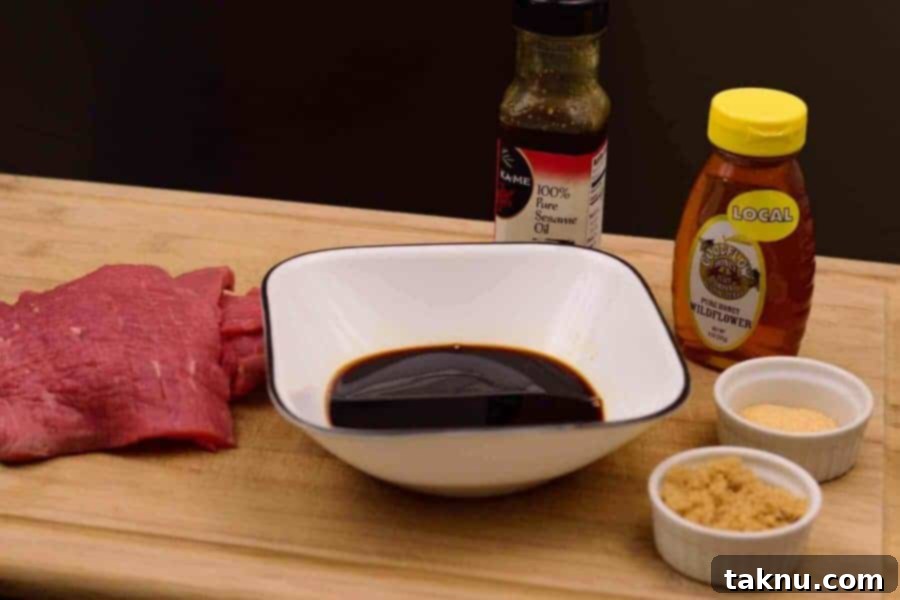
Step 1: Combine Marinade Ingredients
In a medium-sized bowl or a large, resealable freezer bag, combine all the marinade ingredients: soy sauce, rice vinegar, honey, brown sugar, sesame oil, garlic powder, and dried ginger. Whisk thoroughly until all the ingredients are well incorporated and the sugars have dissolved. A resealable bag is often preferred as it allows for easy mixing and ensures maximum contact between the meat and marinade.
Step 2: Add Beef Strips to the Marinade
Carefully add your thinly sliced beef strips into the bowl or ziplock bag containing the marinade. Ensure that every single strip of beef is thoroughly coated. If using a bag, gently massage the bag to distribute the marinade evenly. This step is crucial for consistent flavor development across all your jerky pieces.
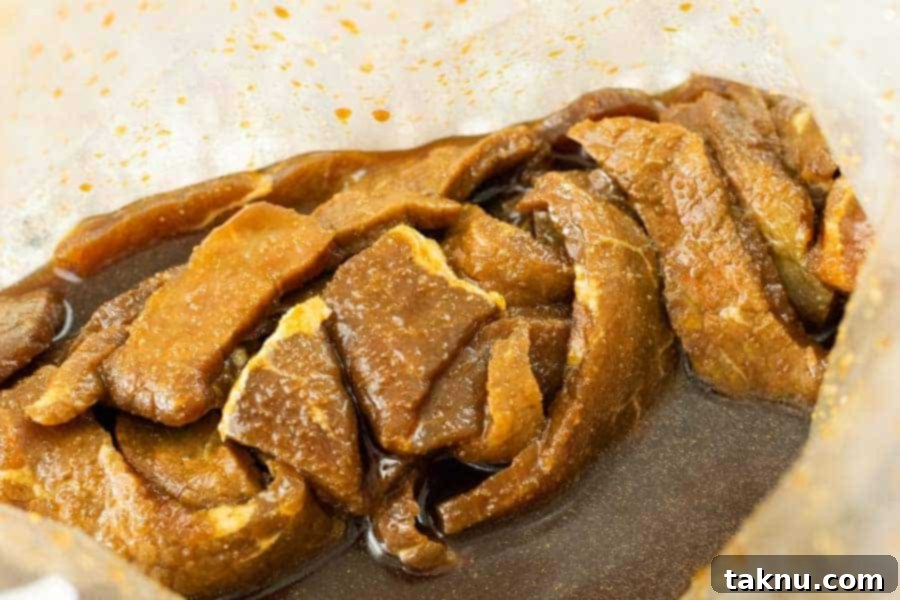
Step 3: Marinate in the Refrigerator
Seal the bag or cover the bowl and place it in the refrigerator to marinate for a minimum of 6 hours, and ideally up to 24 hours. The longer the meat marinates, the deeper and more intense the flavor will be. During this time, periodically mix or flip the bag a few times. This ensures all surfaces of the beef strips are continuously exposed to the marinade, promoting even absorption and robust flavor. Avoid marinating for longer than 24 hours, as the meat can begin to break down too much from the acids in the marinade.
RELATED PAGE: Explore DOZENS OF GREAT TASTING JERKY RECIPES to expand your jerky-making repertoire!
Drying the Jerky: Achieving the Perfect Texture
Once your beef has absorbed all the delicious teriyaki flavors, it’s time to transform it into jerky. There are several reliable methods for drying jerky: using a dehydrator, an oven, or a smoker. Each method offers slightly different results, particularly in terms of flavor and texture. For this specific recipe, I utilized a smoker to infuse the jerky with an incredible smoky depth, but the steps below cover general preparation applicable to all methods.
Step 1: Remove Excess Marinade
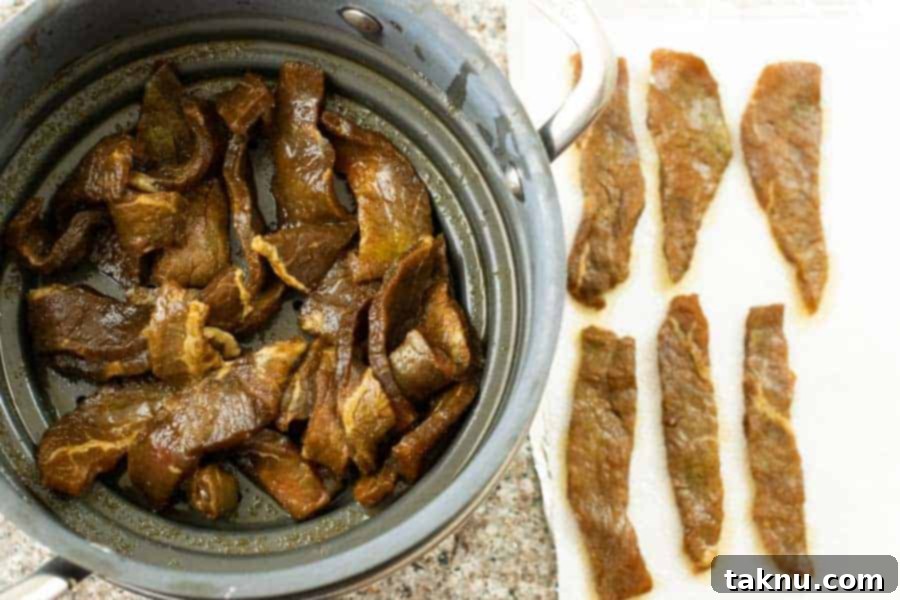
After the marinating period is complete, take the meat out of the refrigerator. The first crucial step before drying is to remove any excess marinade. Strain the beef strips in a colander, allowing the liquid to drain away. This helps prevent the jerky from becoming sticky and also speeds up the drying process by reducing initial moisture content.
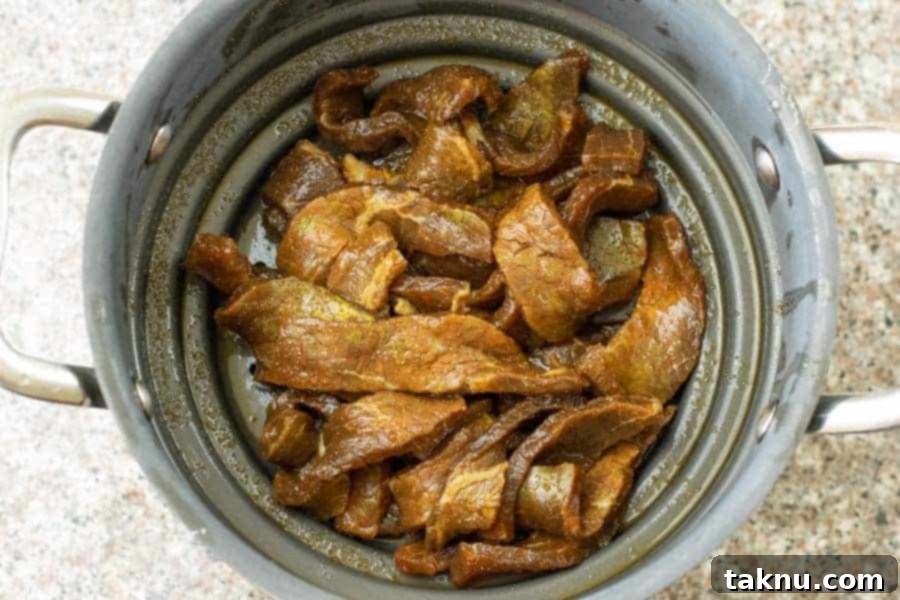
For an even drier start, lay the strained meat strips out on several layers of paper towels. Then, gently pat them dry with more paper towels. This extra step is highly recommended as it further removes surface moisture, which directly contributes to a quicker drying time and a less sticky final product. A sticky jerky often indicates too much residual marinade, which can also lead to uneven drying and a less desirable texture.
Step 2: Drying/Dehydrating Process
Once the strips are sufficiently patted dry, arrange them on your smoker racks, dehydrator trays, or oven rack. Ensure there is adequate space between each piece for proper air circulation, which is vital for even drying. Overcrowding the racks can lead to longer drying times and inconsistent results.
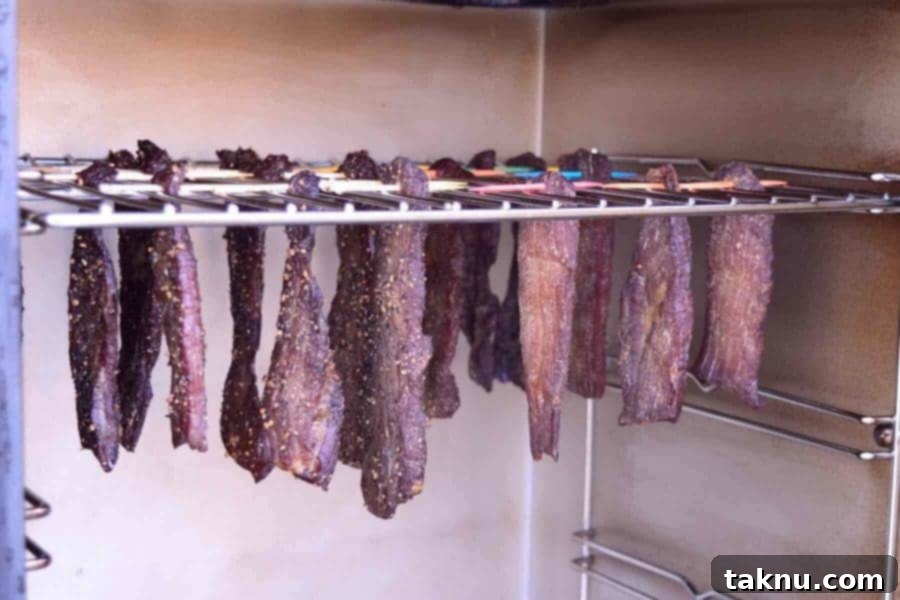
If you’re using an oven or a smoker, a neat trick is to pierce one end of each strip with a toothpick. You can then hang these strips from the racks, which allows for excellent airflow around the entire surface of the meat and prevents any sticking to the grates.
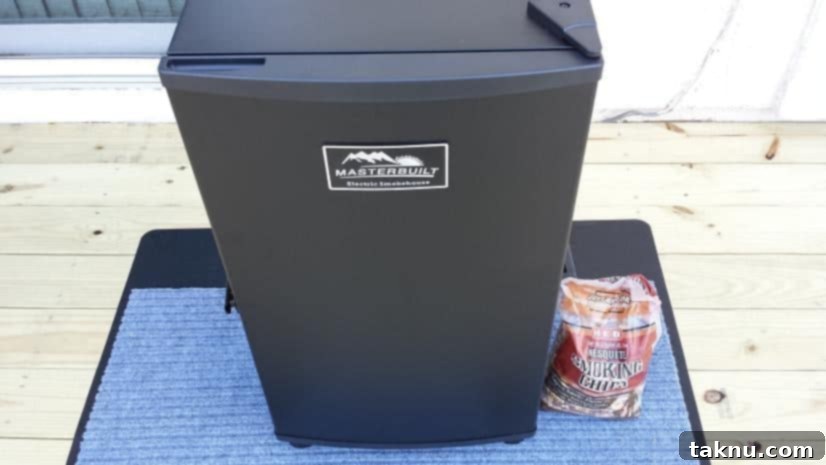
For this recipe, I fired up my trusty Masterbuilt Smoker to impart a genuine smoky flavor to the teriyaki jerky. Smokers provide a distinct depth of flavor that can’t quite be replicated by other methods. If you’re using a dehydrator or oven, don’t fret! You can still achieve a fantastic smokey essence. A fantastic tip is to add 1 teaspoon of liquid smoke to your marinade in the earlier steps. This concentrated flavoring delivers that amazing smoky taste without the need for a smoker.
Tip for Non-Smoker Users: If you’re drying your jerky in a dehydrator or oven, incorporating liquid smoke into your marinade will provide a wonderful, authentic smoky flavor. Add about 1 teaspoon to your marinade mixture to mimic the deep, rich notes of smoked jerky.
My smoking process involved an initial phase of drying at 160°F for 1.5 hours, followed by increasing the temperature to 200°F for 1 hour. During this higher temperature phase, I added a handful of hickory wood chips to the smoker. Just one handful is typically sufficient for infusing jerky with a robust smoke flavor; too much can make the jerky taste acrid. After receiving that delicious smoke, the temperature was lowered back down to 160°F to finish the drying process. For my batch, this final stage took an additional 8 hours, bringing the total time in the smoker to approximately 10.5 hours. Keep in mind that drying times can vary significantly based on your specific appliance, meat thickness, and ambient humidity, so constant monitoring is key.
Knowing When Your Jerky is Perfectly Done
Determining when jerky is fully dried is crucial for both taste and safety. You should begin testing for doneness around the 3 to 4-hour mark of the drying process, regardless of whether you’re using a dehydrator, oven, or smoker. Jerky can go from perfectly done to over-dried very quickly, so frequent checks are recommended.
To test, carefully remove a piece of jerky from your drying appliance and allow it to cool to room temperature for about 5 minutes. Cooling is important because warm jerky will feel softer and more pliable than it actually is when fully dried.
Once cooled, bend the jerky in half. A perfectly finished piece of jerky should bend significantly, exhibiting a “bend and crack” characteristic, but it should not cleanly snap or break in half. When you bend it, you should see white fibers in the meat begin to tear or pull apart, particularly when you try to rip a piece in half. These visible white fibers are a clear indication that the moisture content is low enough for proper preservation and the texture is correct. If it snaps cleanly, it’s likely over-dried. If it feels too soft, rubbery, or doesn’t show these fibers, it needs more drying time.
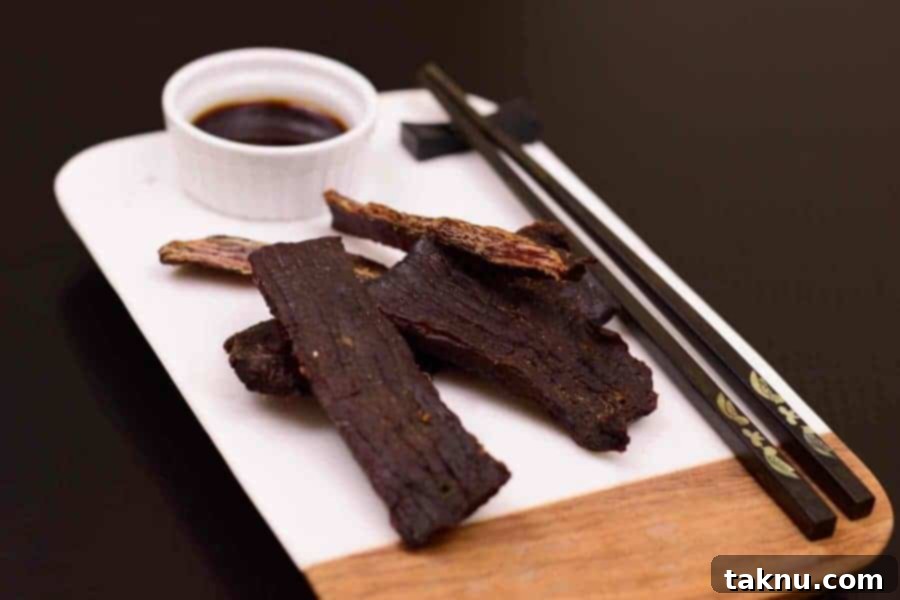
In my experience, jerky made in a dehydrator or oven typically reaches this perfect state around the 4 to 5-hour mark. When using a smoker, the process can take longer, usually closer to 6-8 hours, or even up to 10.5 hours as noted in this recipe, due to lower initial temperatures and the added moisture from the smoke itself. Always trust the bend test over a specific timeframe, as conditions can vary.
Properly Storing Your Homemade Teriyaki Jerky
Once your delicious teriyaki beef jerky is perfectly dried and cooled, proper storage is key to maintaining its freshness and extending its shelf life. To make your jerky last as long as possible, especially without refrigeration, incorporating curing salt (like Prague Powder #1) into your marinade is highly recommended. Curing salt helps inhibit bacterial growth and adds an extra layer of safety for shelf-stable jerky.
The best way to store jerky is in airtight containers or vacuum-sealed bags. This prevents exposure to oxygen and moisture, which are the primary culprits for spoilage. For short-term storage (a few weeks), a ziplock bag or airtight jar in a cool, dark pantry is usually sufficient. For longer storage (several months), vacuum sealing is the superior method. You can also refrigerate or freeze jerky for even longer preservation, especially if you didn’t use curing salt or prefer a softer texture.
For an in-depth guide on all aspects of jerky preservation, including detailed tips and techniques to maximize shelf life, be sure to check out my comprehensive page on storing jerky.
Explore More Jerky Content & Recipes
If you’ve enjoyed making this teriyaki beef jerky, there’s a whole world of jerky knowledge and flavors waiting for you to discover. Dive into more of our guides and recipes to hone your jerky-making skills and explore new tastes.
- How to Make Beef Jerky in a Dehydrator
- How to Make Beef Jerky in a Smoker
- Beef Jerky Recipes (75+ Homemade Jerky Recipes)
- Easy Beef Jerky Recipe (Classic Original Flavor)
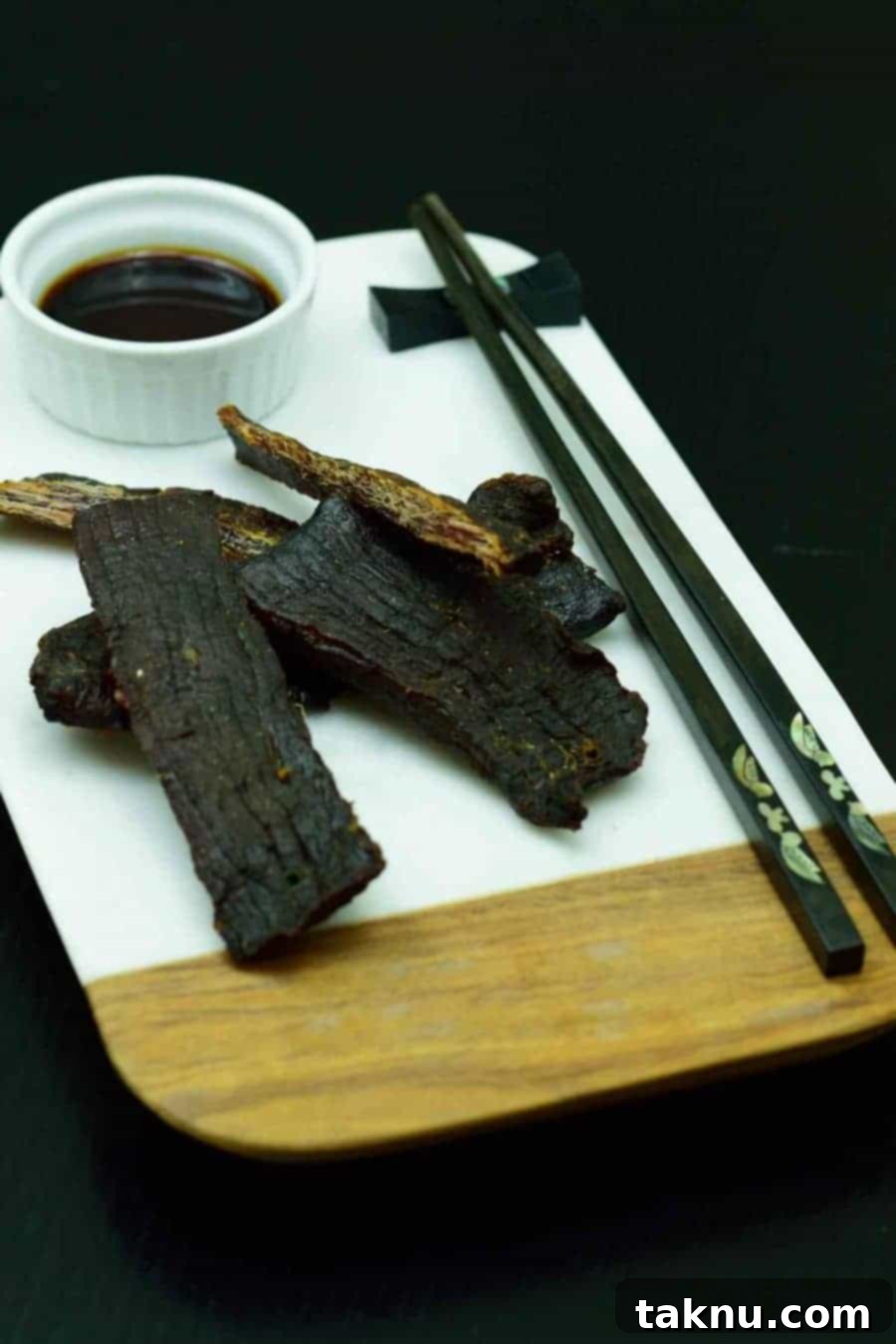
Irresistible Teriyaki Beef Jerky
Ingredients
Lean Meat
- 1 lb Beef Eye of Round Roast or Venison
Marinade
- ½ cup soy sauce
- 1 tablespoon rice vinegar
- 2 tablespoon honey
- 2 tablespoon brown sugar
- 1 teaspoon sesame oil
- 1 teaspoon garlic powder
- 1 teaspoon dried ginger
Optional
- ¼ teaspoon Curing Salt (Prague Powder #1)
Equipment
Instructions
- Trim all visible fat from the beef. For easier slicing, wrap the beef in plastic wrap and place it in the freezer for 1 to 2 hours until partially frozen.
- While the meat is chilling, combine soy sauce, rice vinegar, honey, brown sugar, sesame oil, garlic powder, and dried ginger in a bowl or resealable ziplock bag. Mix thoroughly until well combined.
- Remove the beef from the freezer. Slice it into ¼-inch thick strips. Slice against the grain for a tender chew or with the grain for a chewier texture. For consistent strips, consider using a jerky slicer.
- Add the sliced beef to the marinade, ensuring all strips are evenly coated. Marinate in the refrigerator for 8-24 hours, mixing occasionally.
- Once marinating is complete, remove the beef from the refrigerator and strain off any excess marinade using a colander.
- Lay the strips on paper towels and pat them thoroughly dry to remove additional surface moisture. This helps speed up drying and prevents stickiness.
- Arrange the jerky strips on dehydrator trays, oven racks, or smoker racks, ensuring good airflow between them. For a smoker (recommended): Smoke at 160°F for 1.5 hours, then increase to 200°F for 1 hour while adding a handful of hickory wood chips for smoke. Reduce temperature to 160°F and continue drying for another 8 hours, or until done. For dehydrator/oven: Dry on high (approx. 160°F) for 4-5 hours.
- Begin testing for doneness after 3-4 hours. Remove a piece, let it cool for 5 minutes, then bend it. It should bend and crack but not break in half, showing white fibers in the meat.
- Continue drying until all jerky strips are finished. Some thicker pieces may require additional drying time.
Pro Tips for Perfect Jerky
- When smoking jerky, ensure your smoker is hot before adding wood chips. Burning chips at too low a temperature can result in a sour or unpleasant smoke flavor in your jerky.
- If using a dehydrator or oven, consider adding 1 teaspoon of liquid smoke to your marinade for a delicious smoky essence.
- For enhanced food safety and extended shelf life, especially for unrefrigerated jerky, incorporate Prague Powder #1 (curing salt) into your marinade.
- Aim for a ¼-inch thickness when slicing your beef. This provides an ideal balance for drying consistency and a satisfying jerky texture.