Authentic Jamaican Jerk Beef Jerky Recipe: A Taste of the Tropics
Prepare your taste buds for an unforgettable culinary journey! While everyone adores the smoky, spicy, and savory notes of classic Jerk Chicken, we’re taking those beloved island flavors and transforming them into something equally irresistible: Jamaican Jerk Beef Jerky. This recipe promises to deliver that signature Caribbean zest, marrying the vibrant spice blend with the satisfying chewiness of homemade beef jerky. Get ready to infuse your next batch of jerky with the tantalizing heat and aromatic richness of the islands.
The Inspiration: A Serendipitous Culinary Discovery in Austin
The genesis of this incredible jerky recipe began on an ordinary day near downtown Austin, Texas. My wife and I set out on a gastronomic quest, eager to sample the famed Arepas from a Venezuelan food truck named Four Brothers ATX – a local favorite known for its authentic flavors. However, as fate would have it, our culinary compass was about to be delightfully re-routed.
Upon arriving at our intended destination, an intoxicating aroma wafted through the air, completely captivating our senses. Right beside Four Brothers ATX stood another vibrant food truck, emblazoned with the striking colors of the Jamaican flag. Its name, ATX Jamaican Grill, was as inviting as the heavenly scent emanating from its windows. The irresistible fragrance of freshly cooked jerk chicken was a siren’s call I simply couldn’t ignore.
With genuine apologies to the Arepa lady – whose food I’m sure is spectacular – the allure of that Jamaican jerk chicken was simply too strong. The smoky, spicy, and perfectly seasoned chicken, served with a generous helping of rice and sweet fried plantains, was an absolute revelation. It was a flavor explosion that left an indelible mark, sparking an immediate desire to recreate that magic in my own kitchen, albeit with a unique jerky twist. This experience ignited my passion to capture those authentic island flavors in a form that could be enjoyed anywhere, anytime: Jamaican Jerk Beef Jerky.
Crafting the Perfect Jamaican Jerk Beef Jerky: From Chicken to Cured Meat
That day’s extraordinary meal provided the ultimate inspiration: to translate the complex, fiery, and aromatic profile of Jamaican jerk chicken into a delectable beef jerky. The challenge was to capture the essence of those island spices while ensuring the beef jerky maintained its signature texture and flavor depth, creating a snack that’s both authentic in taste and satisfying in chew.
Choosing the Ideal Cut of Beef for Jerky
For any jerky enthusiast, selecting the right cut of meat is paramount. I opted for my perennial favorite, Beef Eye of Round. This cut is perfect for jerky due to its lean nature and consistent texture, which allows it to absorb marinades beautifully and dry evenly. Its minimal fat content is crucial for preventing spoilage and ensuring a long-lasting, quality product. The uniformity of the eye of round also ensures that each strip of jerky dries at a similar rate, leading to a consistent final product. For those seeking alternatives, venison also makes an excellent choice, offering a similar lean profile and robust flavor that stands up well to bold seasonings like jerk spice.
The Heart of the Flavor: Authentic Jerk Spice Blend
Replicating the iconic jerk flavor required a careful balance of spices. My goal was to evoke the same delicious notes I experienced at the food truck. The classic Jamaican jerk seasoning relies on a unique blend of sweet, savory, and intensely spicy elements. For this beef jerky, I gathered a symphony of island-inspired spices, each playing a vital role in building that unmistakable jerk profile:
- Dried Thyme: Provides an earthy, slightly minty, and aromatic base that is instantly recognizable in Caribbean cuisine. Its herbaceous notes are a cornerstone of jerk seasoning.
- Allspice: This spice is fundamental to jerk, lending notes of clove, nutmeg, and cinnamon all in one, hence its name. It truly embodies the “taste of Jamaica.”
- Cayenne Pepper: Delivers the characteristic heat and fiery kick that jerk is famous for. While I truly wished for fresh Scotch Bonnet peppers – the cornerstone of authentic jerk heat and a personal favorite – cayenne served as an excellent and readily available substitute, providing a robust warmth without overpowering the other aromatic flavors. You can adjust the amount to suit your preferred spice level.
- Ground Black Pepper: Adds a sharp, pungent kick and contributes to the overall spice complexity, enhancing the overall heat and depth.
- Onion Powder: Offers a savory depth and aromatic foundation, complementing the other spices without adding moisture.
- Granulated Sugar: A touch of sweetness helps to balance the intense heat and enhance the savory notes, contributing to a well-rounded and addictive flavor profile.
- Sea Salt: Essential for seasoning the meat and acting as a natural preservative, crucial for safe and delicious jerky.
- Ground Cinnamon: Provides a warm, subtly sweet, and woody undertone that complements the allspice beautifully, adding another layer of complexity.
- Smoked Paprika: Adds a hint of smoky flavor and a beautiful reddish hue, enhancing the visual appeal and depth of taste, mimicking the char of grilled jerk chicken.
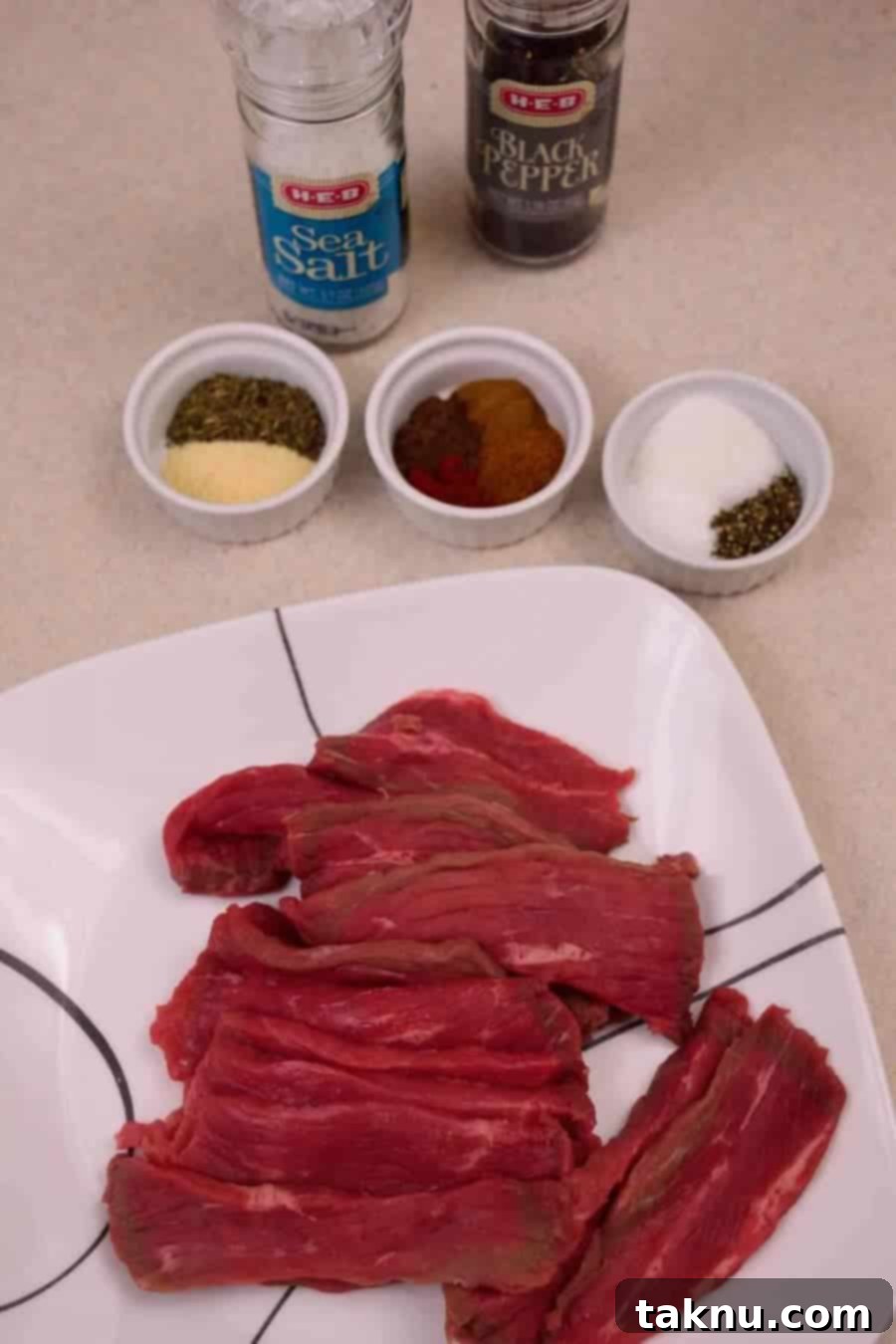
Each of these spices was carefully measured and combined with a small amount of cold water to create a marinade that would thoroughly penetrate the beef, ensuring every strip of jerky was infused with that unmistakable Jamaican essence. The optional curing salt (Prague Powder #1) adds an extra layer of safety and helps preserve the vibrant color of the meat, especially for longer storage.
The Art of Marination: Infusing Island Flavors Deeply
With my chosen beef cut thinly sliced and custom spice blend ready, the next critical step was marination. After meticulously crafting the perfect blend – always wishing I had some fresh Scotch Bonnet peppers to truly elevate the heat to authentic island levels – the thinly sliced beef strips were submerged into the aromatic marinade. They rested patiently in the refrigerator for a generous 18 hours. This extended marination period is crucial for not only tenderizing the meat but, more importantly, for allowing ample time for the beef to soak up every vibrant drop of that Jamaican flavor, ensuring a deep, consistent taste throughout the jerky. A good marination is the secret to jerky that truly delivers on its flavor promise.
The Drying Process: Achieving Perfect Jerky Texture and Longevity
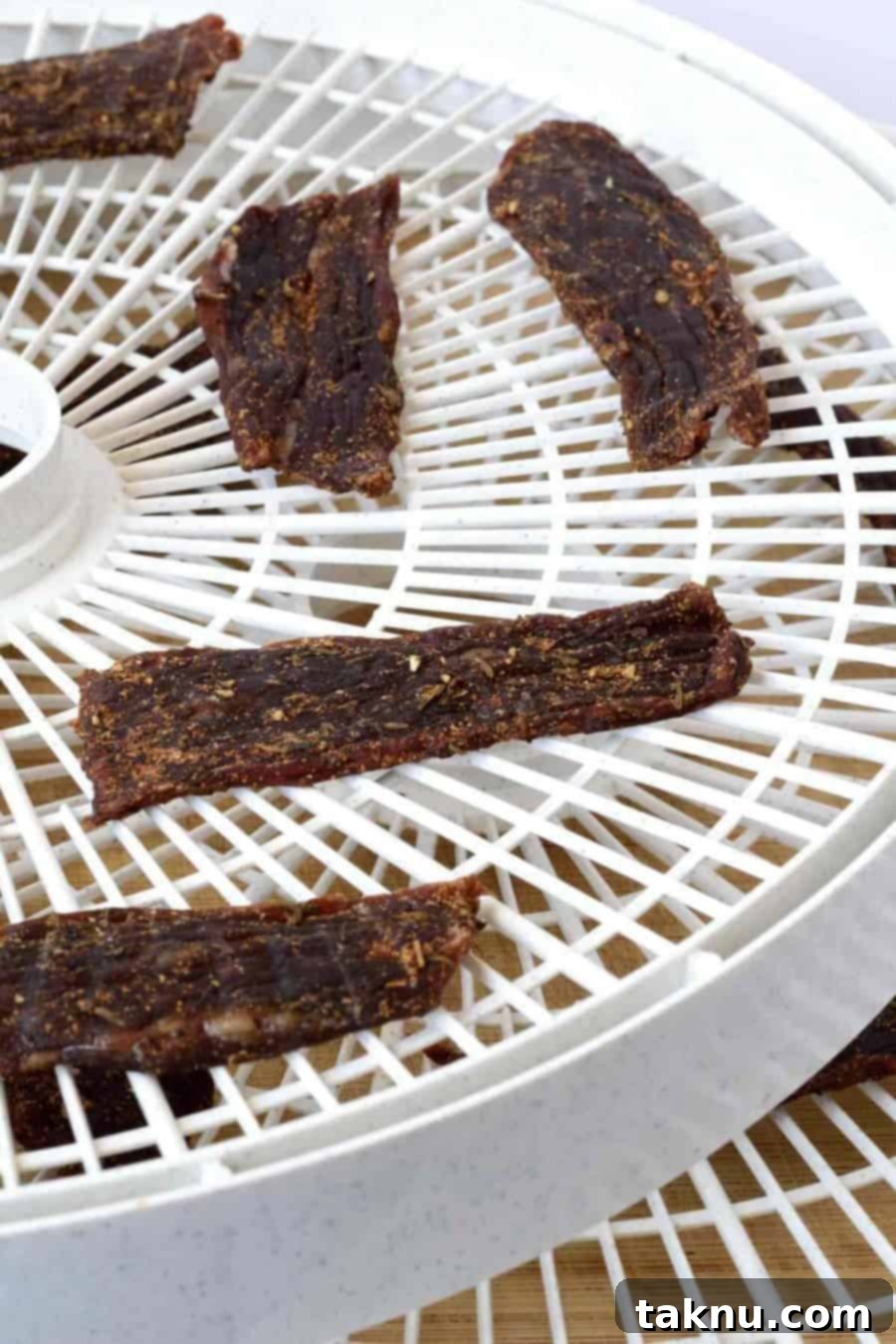
Once the beef had fully absorbed the rich flavors of the jerk marinade, it was time to transform it into jerky. I utilize my trusty Nesco Dehydrator for this step, a reliable tool that consistently delivers excellent results. The dehydrating process took approximately 5 hours, carefully balancing temperature and airflow to achieve the desired chewy-yet-firm texture. The precise temperatures (160F for the initial period, then 140F) help to both safely dry the meat and retain its flavor. The wait was well worth it, as the jerky turned out absolutely fantastic, boasting a texture that was firm but still pliable, with no hint of rubberiness.
Understanding the Flavor Profile: A Dance of Spices
The flavor journey of this Jamaican Jerk Beef Jerky is a delightful experience. The earthy and slightly floral notes of the thyme are the first to greet your palate, establishing a warm and inviting foundation that immediately conjures images of the Caribbean. A few seconds later, the distinctive kick of the cayenne pepper follows, delivering a satisfying heat that perfectly complements the aromatic spices. It’s a harmonious blend that captures the spirit of Jamaican cuisine in a portable, snackable form, offering a balanced taste that’s both invigorating and comforting.
Knowing When Your Jerky is Done: The Bend Test
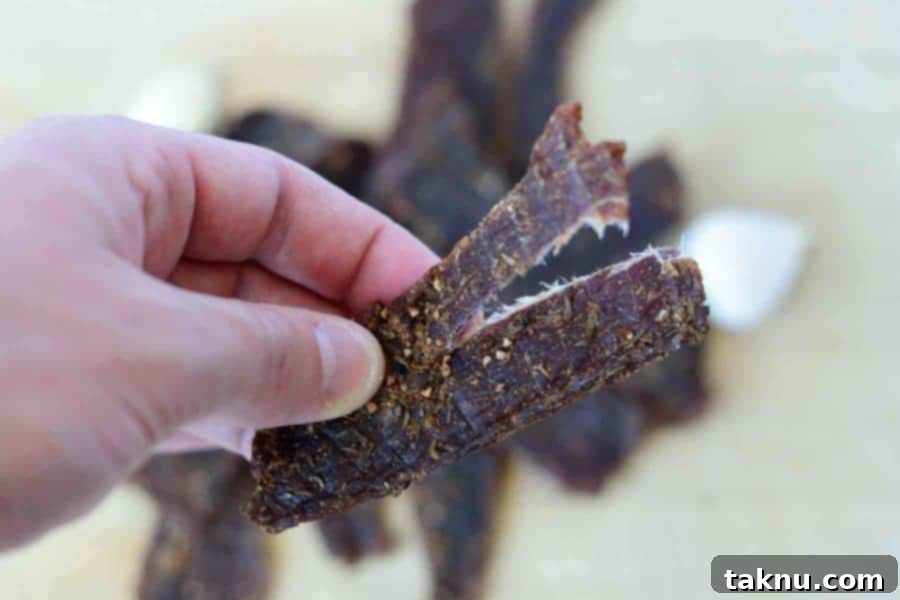
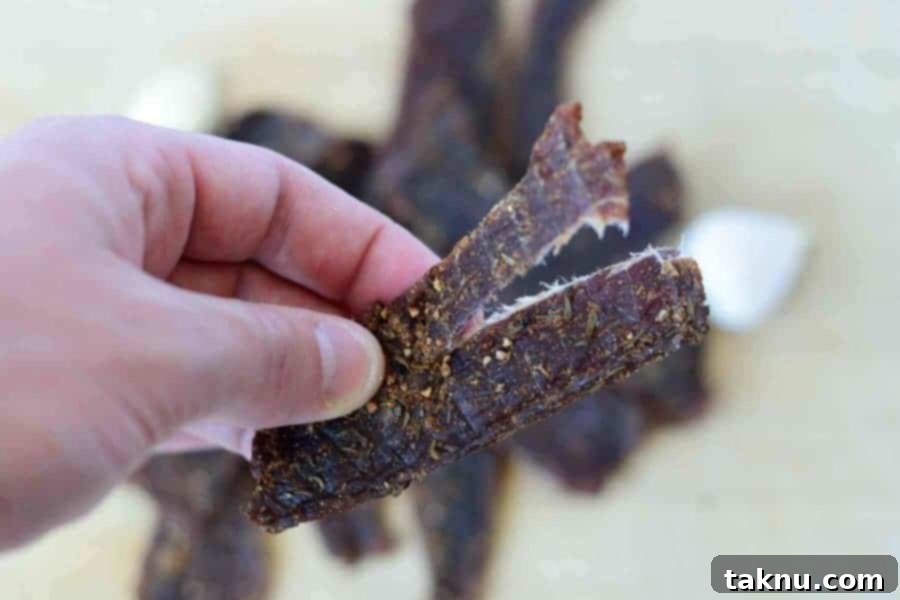
Determining when your jerky has reached optimal dryness is key to both texture and shelf-life. A reliable indicator is the “bend test.” When a piece of jerky is properly finished, it will bend and crack, but it should not snap cleanly in half. This pliability indicates that enough moisture has been removed for preservation, but not so much that it becomes brittle. You should also observe white fibers appearing within the meat when it is torn or bent, which signifies that the moisture content is sufficiently low and the drying process is complete. This ensures your jerky is safely preserved and deliciously chewy, ready for storage and enjoyment.
The Verdict: Damn Good Jerky with an Island Soul!
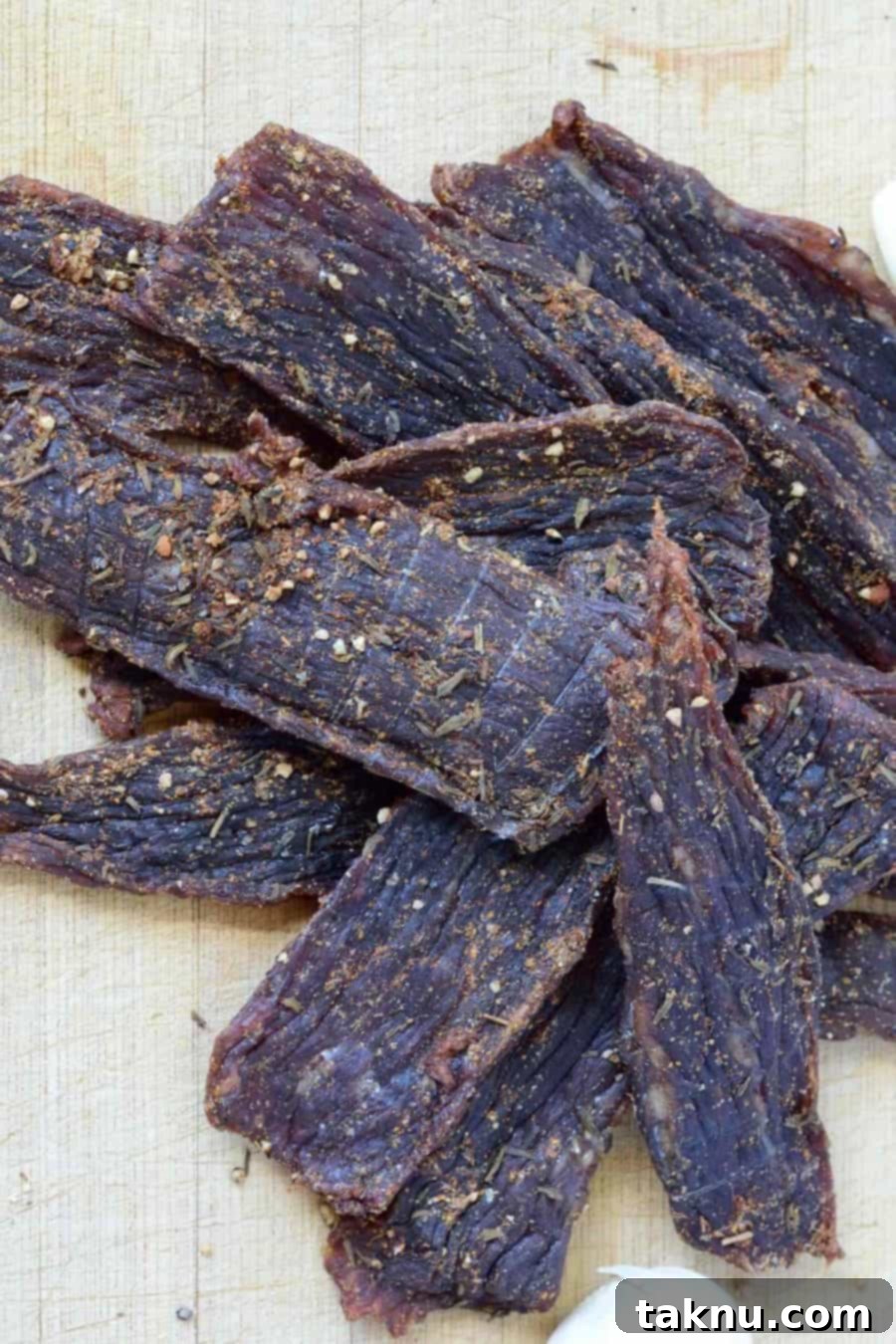
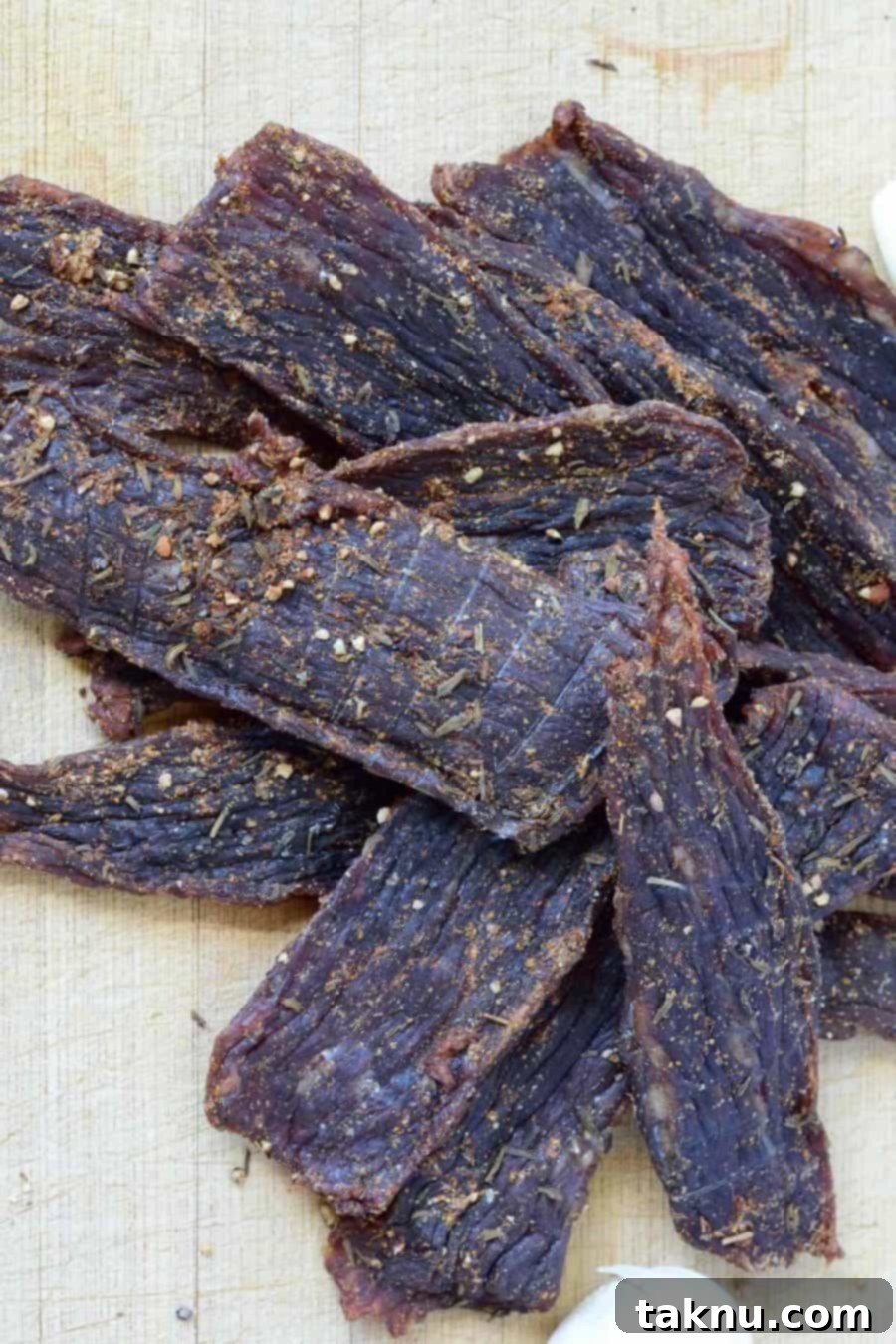
I was absolutely thrilled with the outcome of this Jamaican Jerk Beef Jerky. While I can’t definitively claim it achieved the exact authentic flavor profile of the jerk chicken I devoured at that Austin food truck – a flavor forged over generations, no doubt – I can confidently declare it to be “Damn Good!” It’s a unique and incredibly satisfying snack that brings a taste of the Caribbean islands right to your fingertips. The blend of robust spices, savory beef, and just the right amount of heat makes this jerky a standout. It’s a testament to how versatile beef jerky can be, easily adapting to bold international flavors.
Essential Tips for Successful Jerky Making at Home
Making your own beef jerky at home is a rewarding experience, offering control over ingredients and flavors. A few key practices can ensure consistently excellent results and help you master the art of jerky making:
- Meat Preparation is Key: Always trim all visible fat from your beef. Fat can go rancid quickly, significantly reducing the shelf life of your jerky. Partially freezing the meat for an hour or two makes it much easier to slice thinly and uniformly, which is crucial for even drying.
- Slicing Consistency: Aim for ¼-inch thick strips. Slicing against the grain will result in a more tender, easier-to-chew jerky, while slicing with the grain produces a more traditional, chewier texture. A specialized jerky slicer can make this task effortless and ensure perfect, consistent strips every time.
- Marination Time Matters: Don’t rush this step. An overnight marination (8-24 hours) allows the flavors to fully penetrate and tenderize the meat. For bold flavors like jerk, longer marination is often better.
- Choose Your Drying Method Wisely: Whether you use a dehydrator, oven, or smoker, maintain a consistent low temperature to safely dry the meat. Dehydrators offer excellent control and efficiency, but ovens and smokers are viable alternatives. For comprehensive instructions on different methods, explore my guides on various jerky making methods.
- Checking for Doneness: The bend test and observing the white fibers are crucial indicators. Over-drying can make jerky brittle, while under-drying can lead to spoilage and a shorter shelf life. Always err on the side of slightly drier if unsure.
- Proper Storage: Once cooled completely, store your homemade jerky in airtight containers or vacuum-sealed bags to maintain freshness for longer periods. Properly stored jerky can last for weeks, if not months.
For more in-depth directions on how to dry your beef jerky and explore various techniques, visit my comprehensive guide on Jerky Making Methods, or simply click on the images below to learn about specific methods.

Jamaican Jerk Beef Jerky
Pin Recipe
Ingredients
Lean Meat
- 1 lb Beef Eye of Round or Venison
Marinade
- ¼ cup cold water
- 1 teaspoon onion powder
- 1 teaspoon dried thyme
- 1 ½ teaspoon granulated sugar
- 1 teaspoon ground black pepper
- 1 teaspoon sea salt
- ½ teaspoon allspice
- ¼ teaspoon ground cinnamon
- ½ teaspoon cayenne pepper
- ¼ teaspoon smoked paprika
Optional
- ¼ teaspoon Curing Salt (Prague Powder #1)
Equipment
Instructions
- Trim all visible fat from the beef. For easier, more uniform slicing, place the beef in the freezer for about one to two hours to partially freeze, making it firm enough to slice thinly and evenly.
- While the beef is chilling in the freezer, prepare your marinade. Combine all the marinade ingredients (cold water, onion powder, dried thyme, granulated sugar, ground black pepper, sea salt, allspice, ground cinnamon, cayenne pepper, smoked paprika, and optional curing salt) in a bowl or a large resealable plastic bag. Mix them thoroughly until well combined, ensuring there are no dry clumps of spice.
- Remove the partially frozen beef from the freezer. Slice it into ¼-inch thick strips. To achieve an easy-to-chew jerky, slice against the grain of the meat. If you prefer a more traditional, chewier jerky, slice with the grain. Alternatively, you can bypass the freezing step and use a specialized Jerky Slicer for perfect, consistent strips with minimal effort.
- Add the sliced beef to the prepared marinade in the ziplock bag or bowl, ensuring all strips are fully coated. Seal the bag or cover the bowl and marinate in the refrigerator for 8 to 24 hours. The longer the marination, the deeper the flavor will be absorbed by the beef, resulting in a more intense jerk taste.
- Once marination is complete, remove the beef strips from the refrigerator. Strain off any excess marinade and then thoroughly pat each beef strip dry with paper towels. This step is crucial for efficient drying and helps prevent a gummy texture.
- Arrange the beef strips on your dehydrator trays without overlapping, allowing for proper airflow. Dry using your preferred jerky making method. For my Nesco Dehydrator, I dried the jerky for 2 ½ hours at 160F (71°C), then reduced the temperature to 140F (60°C) for another 2 ½ hours. Adjust drying times based on your specific dehydrator model and your desired jerky texture.
- Your jerky is finished when it is firm, pliable, and bends without breaking completely in half. When you tear a piece, you should see white fibers, indicating that most of the moisture has been removed. Allow the jerky to cool completely at room temperature before storing it in an airtight container for optimal freshness and longevity.
Nutrition