
Homemade Bourbon Beef Jerky: A Bold & Savory Recipe for Jerky Fanatics
For those who crave a truly robust and flavorful beef jerky experience, look no further. This homemade bourbon beef jerky recipe delivers an unparalleled taste that combines the rich, smoky notes of quality bourbon with the satisfying chew of perfectly dried beef. It’s a snack that stands out, crafted for the true jerky enthusiast who appreciates a bold, complex flavor profile.
Forget generic store-bought jerky; this recipe offers a superior snack that’s both incredibly beefy and packed with fantastic flavor. The bourbon isn’t just an ingredient; it’s a key player, infusing the meat with a distinctive warmth and a subtle, irresistible sweetness that sets this jerky apart. As a self-proclaimed bourbon aficionado, I can attest to the magic it works here!

Original Post Date – November 4th, 2015
Making your own beef jerky at home is a rewarding process, allowing you to control the quality of ingredients, customize flavors, and achieve the perfect texture. This comprehensive guide will walk you through every step, from selecting the ideal cut of beef to the final drying process, ensuring your bourbon beef jerky is nothing short of perfection.
[feast_advanced_jump_to]
Choosing the Best Cut of Beef for Jerky
The foundation of great beef jerky is undoubtedly the meat itself. While many different cuts of beef can be used, the key is to select lean cuts with minimal fat. Fat tends to go rancid quickly, significantly reducing the shelf life of your jerky. High-quality beef is readily available at your local grocery store, and choosing the right cut is crucial for both flavor and longevity.
You have two primary options when it comes to the type of beef: whole muscle cuts or ground beef. Each method yields a slightly different texture and requires minor adjustments to the recipe, but both can produce delicious bourbon jerky.
Whole Muscle Jerky: The Traditional Choice
When you envision classic beef jerky, you’re likely thinking of whole muscle jerky. This involves slicing thin strips of meat from a larger, solid piece of beef, which are then marinated and dried. The result is a chewy, satisfying snack that truly showcases the texture of the beef.
There are several excellent whole muscle cuts ideal for jerky making due to their leanness and flavor. Popular choices include Top Round, Bottom Round, Sirloin Tip, and Eye of Round. For a more detailed breakdown and comparison of these options, check out my dedicated guide on the best meats for beef jerky.
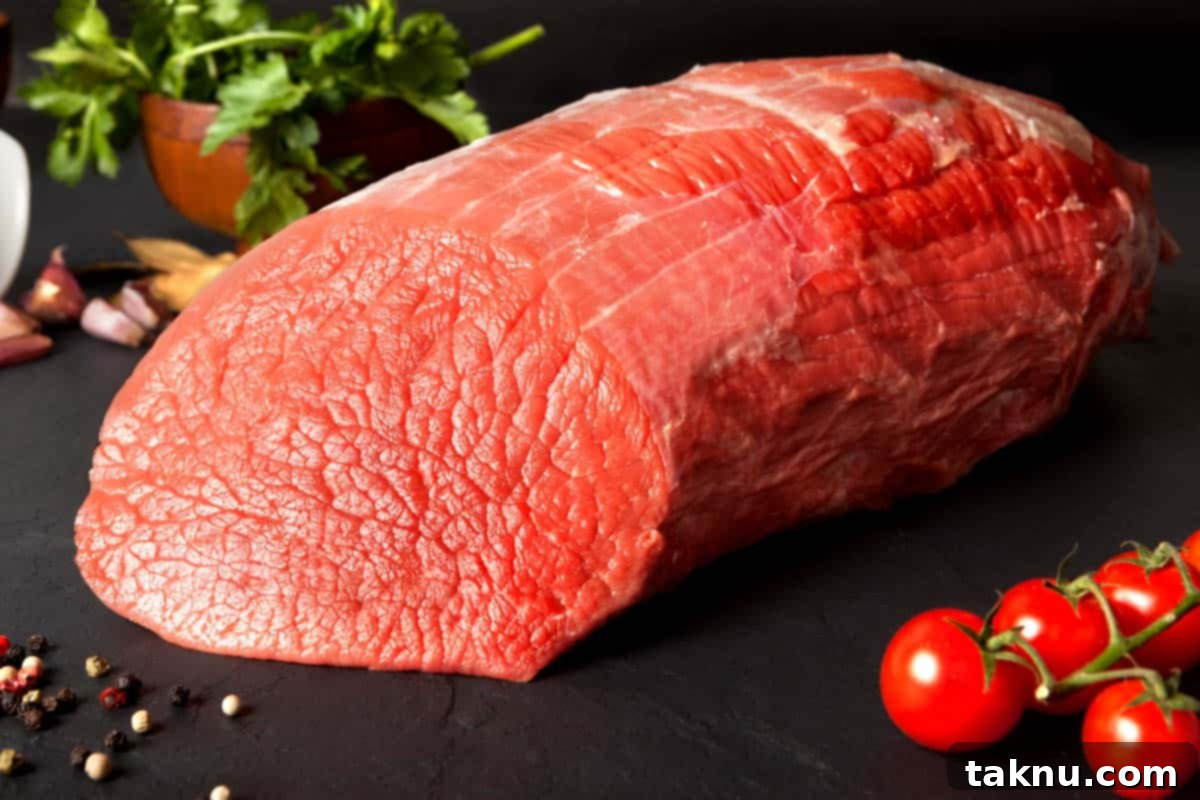
My personal favorite for this bourbon beef jerky recipe is the Beef Eye of Round. It’s exceptionally lean, relatively tender, and holds up beautifully during the slicing and drying process. Its uniform shape makes it easy to slice consistently, leading to a great-tasting, evenly textured jerky every time.
Ground Beef Jerky: A Versatile Alternative
If you prefer a softer, more uniform jerky texture, or simply find slicing whole muscle cuts intimidating, this bourbon beef jerky recipe can also be adapted for ground beef. Ground beef jerky is made by mixing the marinade directly into ground meat, then forming it into strips using a jerky gun or by hand. This method results in a consistent texture that’s often easier to chew.
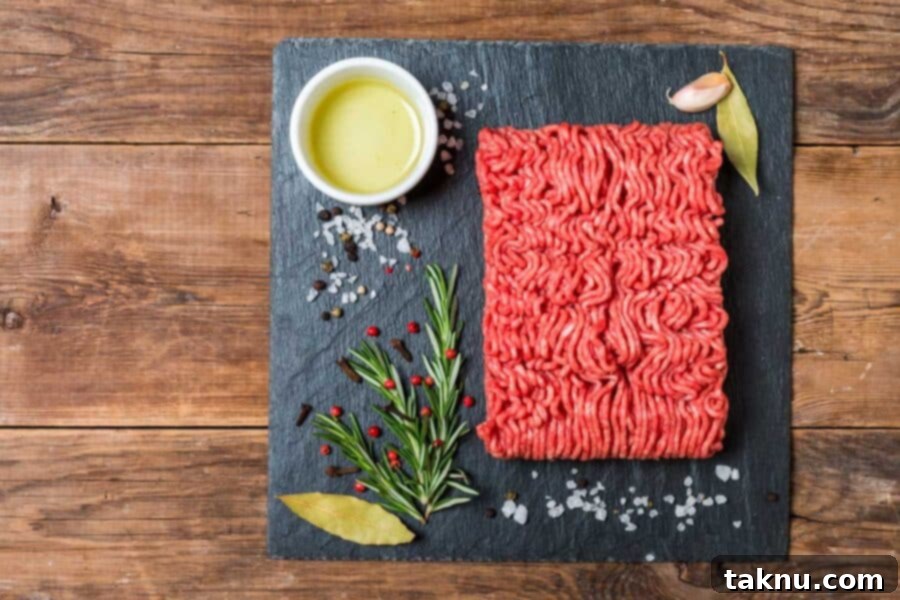
To convert this recipe for ground beef, simply halve the amount of all liquid ingredients and thoroughly mix them into 1 pound of lean ground beef. For instance, if the recipe calls for ¼ cup of bourbon, you would use only 2 tablespoons. The key is to use ground beef with 10% fat or less to prevent the finished jerky from becoming greasy. Lower fat content also contributes to a longer shelf life, as fat is the primary culprit for spoilage.
For more in-depth instructions and specific tips on this method, explore my guide on how to make ground beef jerky.
Mastering the Art of Slicing Beef for Jerky
Don’t let the idea of slicing meat deter you from making fantastic homemade jerky. It’s a straightforward process, especially with a few helpful techniques. If you’re opting for ground beef jerky, you can confidently skip this section and move directly to the marinade preparation.
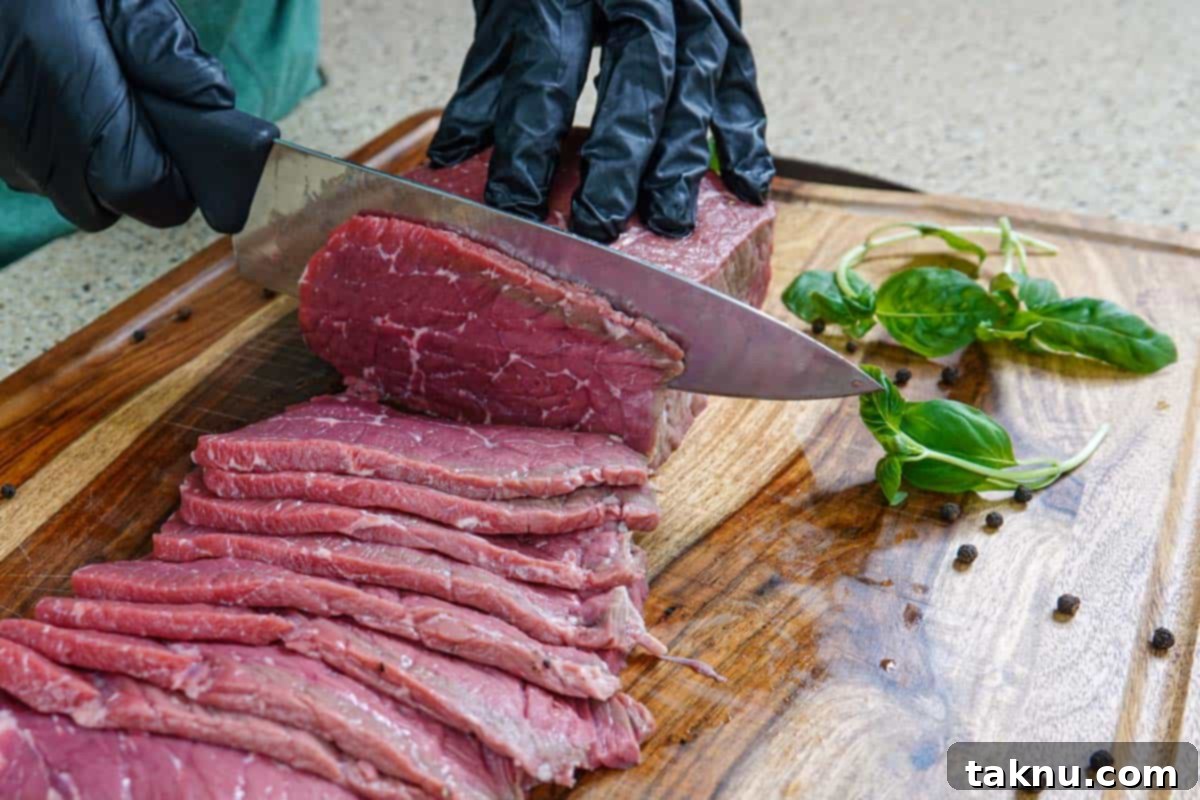
Key Tips for Perfectly Slicing Meat for Jerky:
- Partial Freezing: Place your beef roast in the freezer for about 1 to 2 hours before slicing. This firms up the meat, making it much easier to slice into uniform, thin strips. The meat should be firm but not completely frozen solid.
- Ideal Thickness: Aim for jerky strips that are consistently ⅛” to ¼” thick. This range is optimal for drying evenly and achieving the desired jerky texture – not too tough, not too flimsy.
- Sharp Knife is Essential: A very sharp knife makes all the difference. A dull knife will tear the meat and make slicing difficult and unsafe. My go-to is the Victorinox 8″ chef knife for its excellent edge retention and balance.
- Slice With the Grain for Chewy Jerky: Cutting parallel to the muscle fibers (with the grain) will result in a tougher, more traditional chewy jerky texture, requiring more effort to tear and chew.
- Slice Against the Grain for Tender Jerky: Cutting perpendicular to the muscle fibers (against the grain) will break down those fibers, yielding a more tender, easier-to-chew jerky. Choose based on your preference!
For a more comprehensive guide, including detailed video demonstrations on how to perfectly slice beef for jerky, visit my dedicated slicing meat for jerky page. It covers everything you need to know to achieve perfectly prepared meat strips.
Crafting the Irresistible Bourbon Beef Jerky Marinade
The heart of this recipe is its flavorful marinade, with bourbon taking center stage. This blend of ingredients works synergistically to tenderize the meat, preserve it, and infuse it with a complex sweet, savory, and smoky profile that’s utterly addictive.
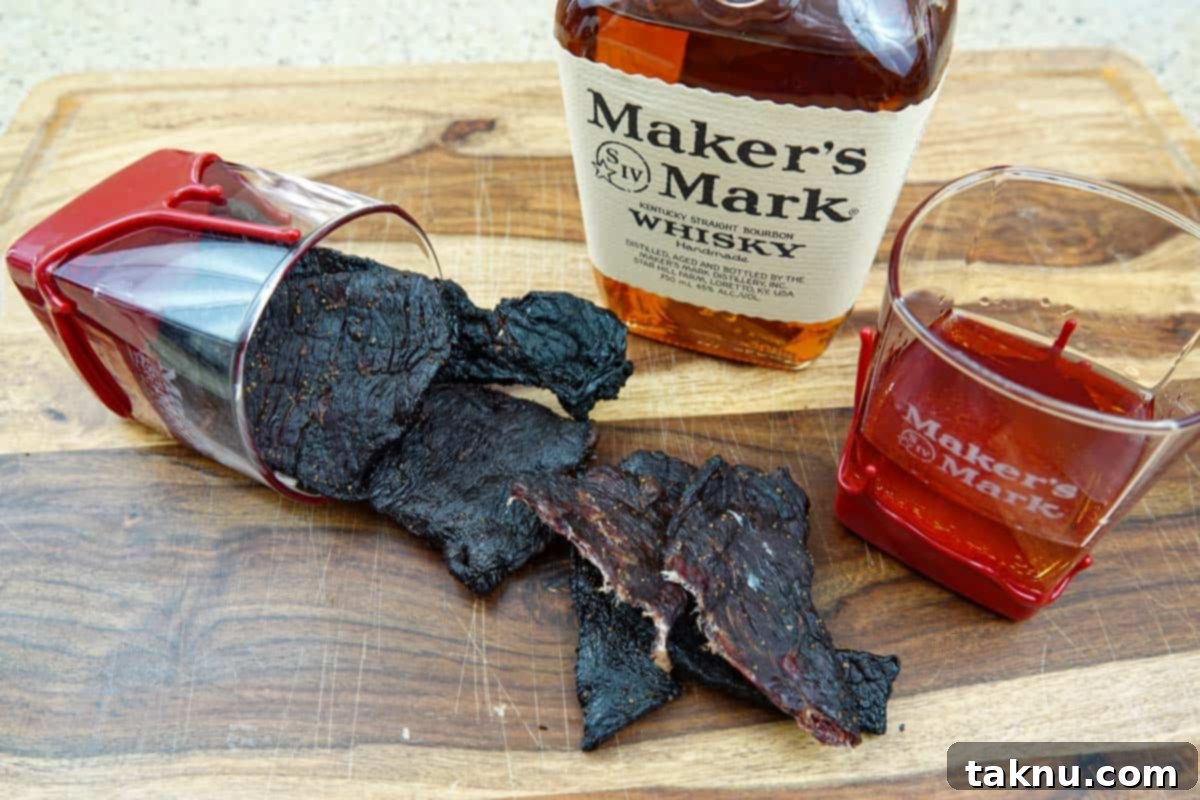
While any bourbon can be used, selecting a quality bourbon will undoubtedly elevate the final flavor of your jerky. Maker’s Mark, with its distinct vanilla and caramel notes, is a popular and excellent choice that many people already have on hand. Its bold character stands up well to the other strong flavors in the marinade.
Selecting Your Bourbon
The beauty of using bourbon in jerky is that much of the alcohol cooks off during the drying process, leaving behind its rich flavor essence. Feel free to experiment with different bourbons to find your favorite flavor profile. Here are some other bourbons I highly recommend:
- Woodford Reserve: Known for its balanced notes of vanilla, caramel, and spice.
- Buffalo Trace: Offers a sweet, complex flavor with hints of vanilla, mint, and molasses.
- Elijah Craig: Features a prominent oak flavor with rich caramel and butterscotch.
- Basil Hayden’s: A lighter, spicier bourbon with hints of peppermint and tea.
Mixing the Marinade for Maximum Flavor
Once you’ve chosen your preferred bourbon, the next step is to combine all the marinade ingredients thoroughly. This recipe is carefully balanced to deliver a jerky that’s both sweet and robust, with layers of savory depth. You’ll find a medley of flavors including hickory liquid smoke for that BBQ essence, molasses and brown sugar for sweetness, black pepper for a kick, and soy sauce and Worcestershire sauce for umami and savory richness.
While you can certainly mix this by hand, using a blender is highly recommended. A blender ensures that the brown sugar and molasses are fully dissolved and perfectly incorporated into the liquid, creating a smooth and uniform marinade that adheres better to the meat and distributes flavor more effectively.
*Important Note on Curing Salt: If you plan to use curing salt (such as Prague Powder #1) for enhanced preservation and safety, ensure you include it at this stage. Mix it thoroughly with all other liquid ingredients to ensure even distribution throughout the marinade.
Marinating for Deep Flavor Infusion
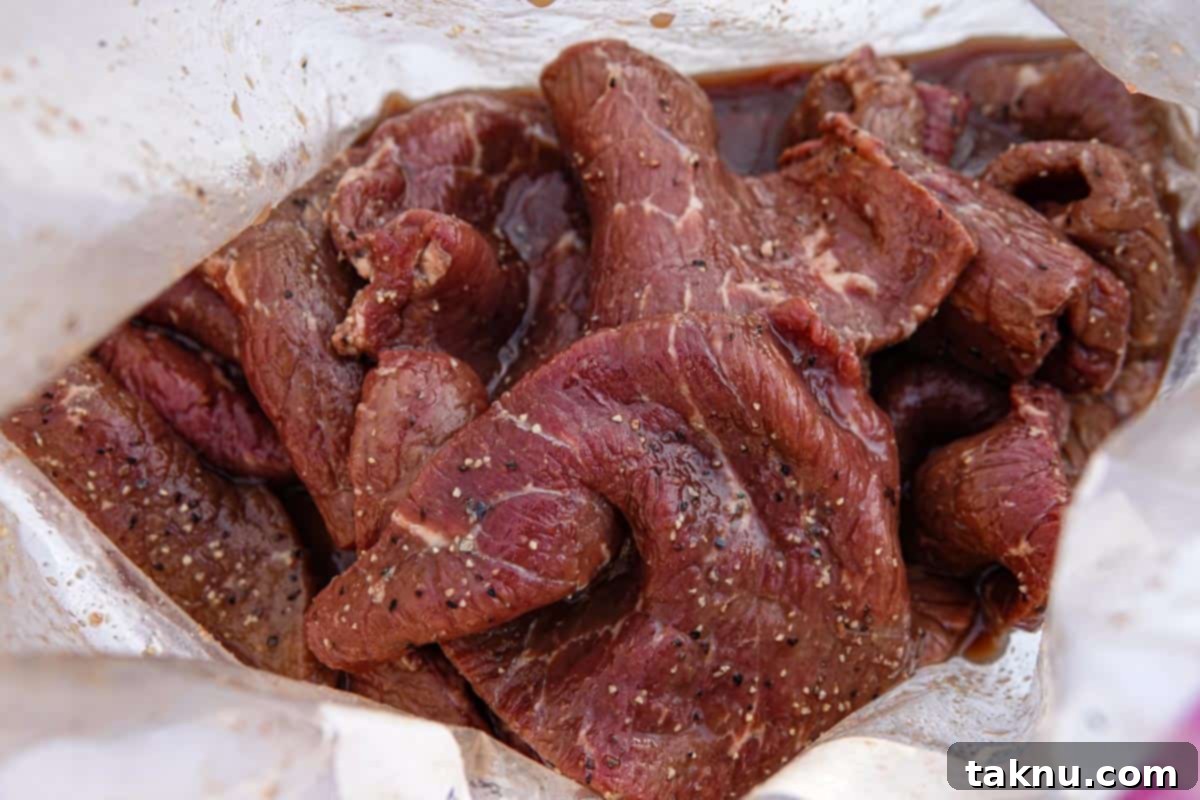
After preparing your marinade and slicing your beef, it’s time for the flavors to meld. Place your carefully sliced jerky strips into a 1-gallon freezer-safe ziplock bag or a non-reactive container. Pour the bourbon beef jerky marinade over the meat, ensuring every piece is thoroughly coated.
Seal the bag, squeezing out as much air as possible, or cover your container tightly. Refrigerate the meat for a minimum of 6 hours, and ideally up to 24 hours. This extended marination period is crucial, allowing the beef to fully absorb the incredible flavors of the bourbon and spices, resulting in a deeply infused and tender jerky.
Straining for Optimal Drying
Once the marination process is complete, remove the meat from the refrigerator. It’s essential to strain the meat in a colander to remove any excess liquid marinade. This step prevents the jerky from becoming soggy during drying and ensures a more even and efficient dehydration process. Gently pat the strips dry with paper towels for even better results. Now, your meat is perfectly prepped and ready for dehydration!
Dehydrating Your Bourbon Beef Jerky
The drying phase is where your marinated beef transforms into delicious jerky. You have several effective methods at your disposal: a food dehydrator, a smoker, or even your home oven. Each method has its own advantages and produces slightly different results in terms of texture and flavor.
Using a Food Dehydrator for Consistent Results
Food dehydrators are one of the most popular and easiest ways to make beef jerky at home, offering consistent results and precise temperature control. They are designed to circulate warm, dry air around the food, effectively removing moisture without cooking it. This method reliably produces great-tasting jerky and ensures the meat reaches a safe internal temperature of 160°F, killing any potential bacteria for food safety.
My top recommendation for dehydrators, especially for serious jerky makers, is the Excalibur 9 Tray Dehydrator, known for its large capacity and efficient drying capabilities.
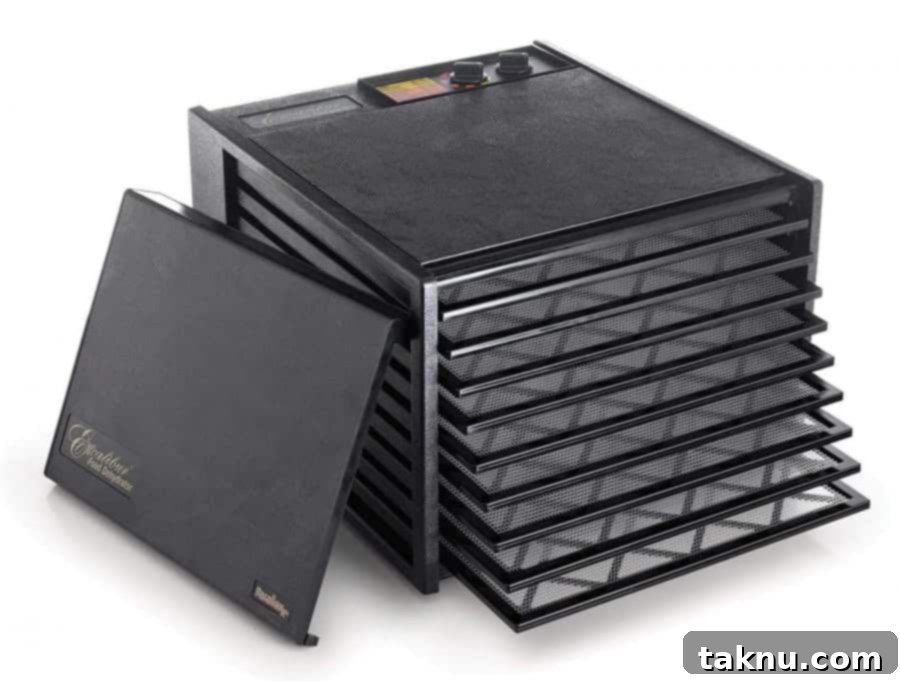
To use a dehydrator, simply arrange your marinated beef strips on the trays, making sure to leave ample space between each piece for proper air circulation. Dehydrate at a consistent temperature of 160°F for approximately 4 to 6 hours. The exact drying time will vary depending on the thickness of your meat slices, the leanness of the beef, and the humidity in your environment.
For more detailed instructions and tips on using this method, refer to my guide on how to make beef jerky in a dehydrator.
Smoking Your Jerky for Unmatched Flavor
For those who love a smoky depth in their jerky, using a smoker is an outstanding option. Smoking imparts an incredible flavor that complements the bourbon beautifully, resulting in a truly extraordinary jerky experience. Both pellet smokers and traditional offset smokers work well.
When selecting your wood, opt for lighter, fruitier woods such as hickory, apple, or cherry. These woods provide a pleasant, mild smoke flavor that enhances the beef and bourbon without overpowering them. Avoid very harsh woods like mesquite, which can impart an overly strong, sometimes bitter, flavor to jerky.
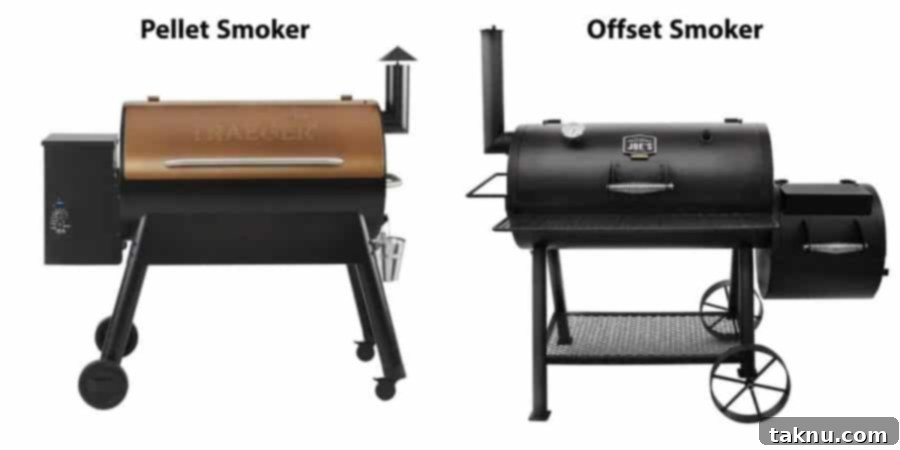
Smoke your jerky at a temperature range of 180°F to 200°F for 2 to 5 hours. Be vigilant, as it’s easy to overcook or over-smoke jerky, especially in a smoker where temperatures can fluctuate. The main challenge often comes when testing for doneness. To prevent over-drying, remove a piece from the smoker and let it cool for about 5 minutes before bending and testing its texture. This cooling period is crucial for an accurate assessment.
Discover more advanced techniques and troubleshooting tips in my guide on how to make beef jerky in a smoker.
Making Jerky in Your Home Oven: An Accessible Method
For beginners or those without specialized equipment, using a standard home oven is the most accessible and inexpensive way to make jerky. Most people already have an oven, making it a perfect starting point to explore jerky making before investing in dehydrators or smokers. It’s a great way to ensure you enjoy the process before committing to more gear.

Making jerky in an oven is similar to dehydrating. Set your oven to its lowest possible temperature, typically around 170°F. Arrange the jerky strips on oven racks, ensuring they don’t overlap, and let them dry for 4 to 6 hours. A crucial tip for oven drying is to prop the oven door open slightly with a wooden spoon or heat-safe utensil. This small gap allows moisture to escape from the oven, facilitating the drying process rather than just baking the meat.
For a detailed walkthrough of this method, visit my guide on how to make beef jerky in an oven.
Ensuring Perfect Texture: Testing for Doneness
Achieving your desired jerky texture is all about knowing when to stop the drying process. Begin checking your jerky for doneness roughly 3 hours into the drying process, regardless of the method you are using. This proactive approach prevents over-drying and ensures your jerky has the perfect chew.
Step 1: Allow to Cool to Room Temperature
This is a critical first step. Always remove a piece of jerky from your dehydrator, oven, or smoker and let it cool completely to room temperature for about 5 minutes before testing. Warm jerky is much more pliable than cool jerky. If you test it while it’s still warm, it will feel softer and more under-dried than it actually is, leading you to over-dry the entire batch.
Step 2: The Bend and Crack Test
Once cooled, bend the jerky strip in half. Perfectly dried jerky should bend significantly before showing a “crack” along the bend, but it should not break completely in half. If the jerky snaps cleanly into two pieces, it’s over-dried and will be brittle. If it merely folds without any sign of cracking, it needs more drying time.
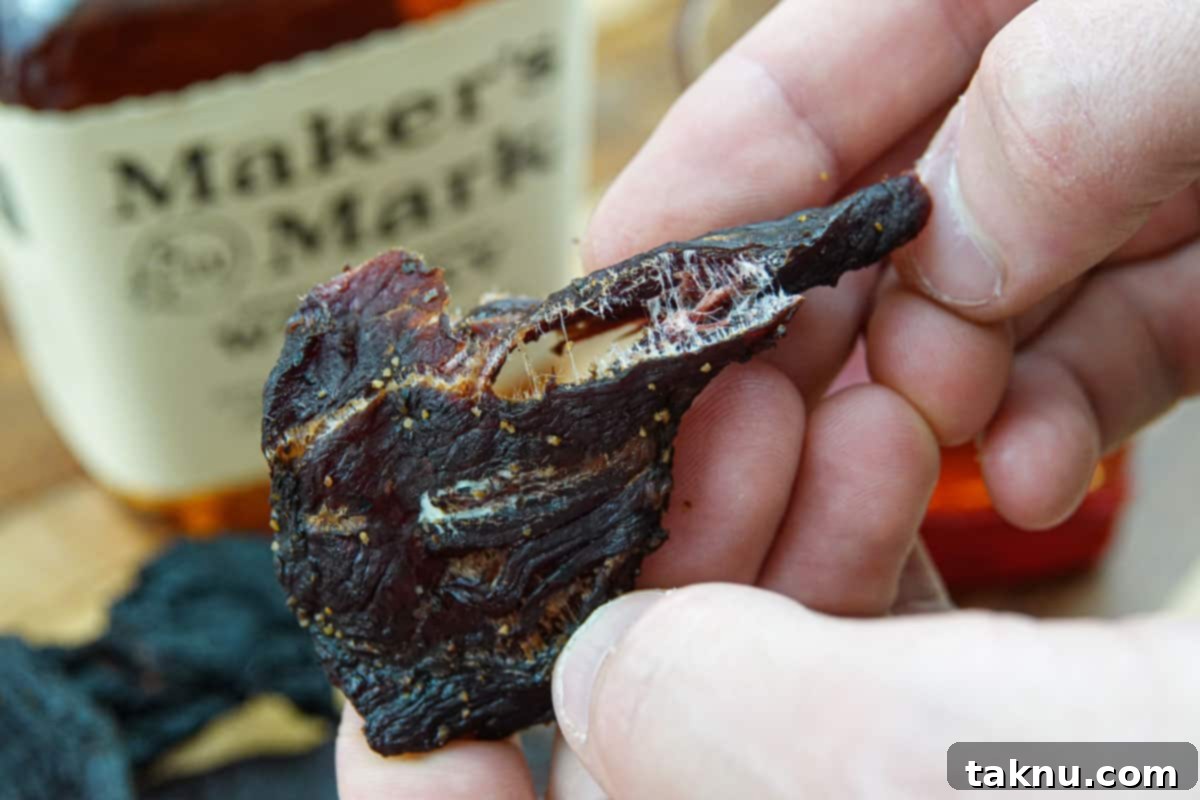
Step 3: The Rip Test (Checking for White Fibers)
Another reliable indicator of finished jerky is the “rip test.” Tear a piece of the cooled jerky in half. If you see fine white fibers where the meat has torn, your jerky is perfectly dried and ready to be packaged. These fibers indicate that the internal moisture has been sufficiently removed, leaving behind the lean muscle tissue.
Properly Storing Your Homemade Bourbon Beef Jerky
Proper storage is essential to maintain the freshness, flavor, and shelf life of your homemade bourbon beef jerky. The duration your jerky will last depends heavily on how you package it and whether you used curing salt. Personally, I tend to make jerky in smaller batches and consume it quickly, so long-term storage isn’t always my primary concern. However, if you’re making a larger batch or want it to last, follow these guidelines:
Decide on your desired storage duration, then choose the appropriate packaging and storage method:
- For up to 1 Week: Store your jerky in airtight ziplock bags. Keep it in a cool, dark place away from direct sunlight, such as a pantry or cabinet.
- For up to 1 Month: For extended freshness, store your jerky in airtight ziplock bags or, ideally, vacuum-seal it. Ensure you used curing salt in your marinade for added safety and preservation. Store the packaged jerky in the refrigerator.
- For 2 Months or Longer: For maximum shelf life, vacuum seal your jerky. Using curing salt is highly recommended for any long-term storage. Store vacuum-sealed jerky in the refrigerator or, for even longer preservation, in the freezer. Freezing can extend its quality for several months without compromising flavor or texture significantly.
For more comprehensive information on safe and effective methods for storing beef jerky, including the science behind it, visit my detailed guide on how long beef jerky stays good.
Frequently Asked Questions About Bourbon Beef Jerky
No, you don’t have to use bourbon if you prefer an alcohol-free alternative. A great substitute for bourbon in this recipe is apple juice. It will provide a similar sweetness and a hint of fruitiness that complements the other savory ingredients well.
Absolutely! This recipe is adaptable for ground beef jerky. Simply cut all liquid ingredients in half for every pound of ground beef you use. Remember to choose ground beef that has 10% fat or less to prevent greasiness and extend shelf life.
No, you will not get drunk from eating this jerky. During the dehydration process, most of the alcohol content from the bourbon evaporates, leaving behind only the rich, distinct flavor of the bourbon. So, you can enjoy this flavorful snack without worrying about any intoxicating effects.
Pro Tips for the Best Bourbon Beef Jerky:
- Consistent Slicing: For the best results in terms of texture and even drying, always slice your meat at a consistent ¼” thickness. Partially freezing the meat beforehand will greatly assist in achieving these uniform slices.
- Invest in a Jerky Slicer: If you’re a frequent jerky maker or plan to make large batches, a dedicated jerky slicer can be a game-changer. It ensures perfectly even strips with minimal effort, saving you time and improving consistency.
- Explore Other Meats: While this recipe is designed for beef, it’s also incredibly delicious with pork. For a fantastic alternative, try using lean pork loin or tenderloin, applying the same marinating and drying process.
- Beef Jerky Recipes (75+ Homemade Jerky Recipes)
- How to Make Ground Beef Jerky
- Slicing Meat for Beef Jerky
- How to Make Beef Jerky in a Dehydrator
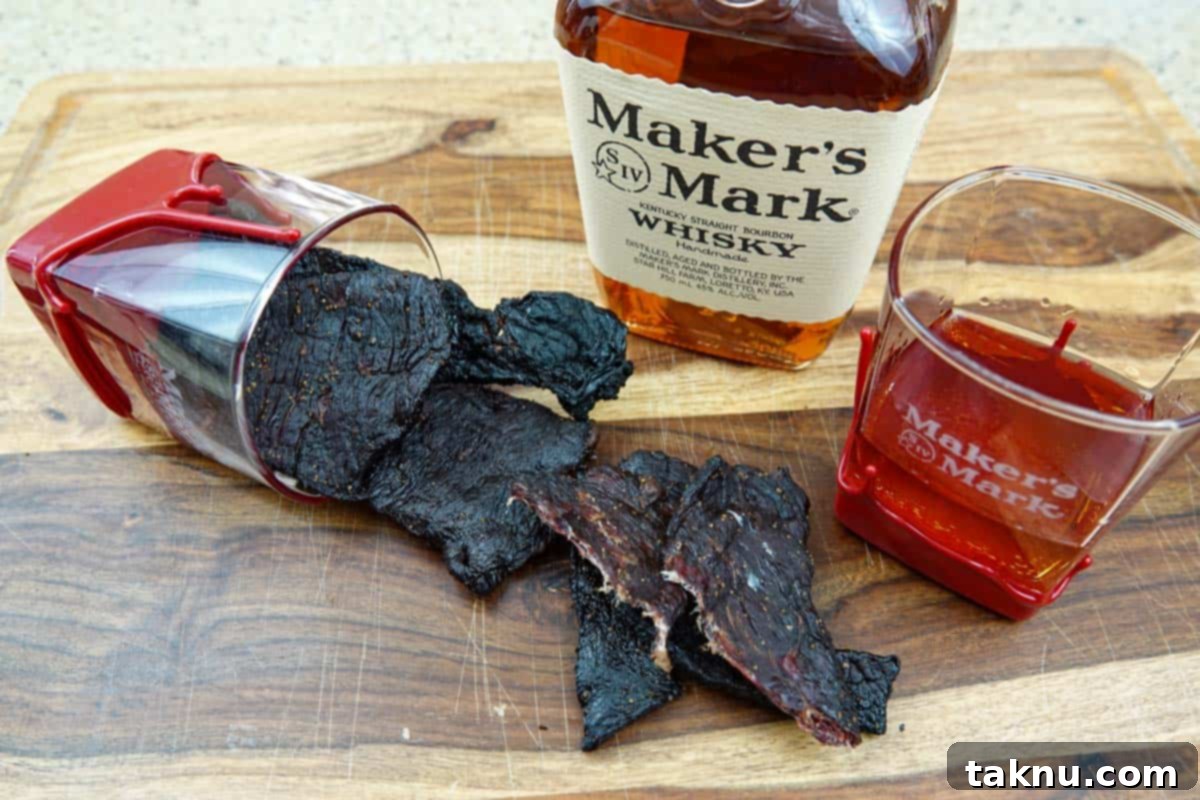
Kentucky Bourbon Beef Jerky: The Ultimate Homemade Recipe
Pin Recipe
Ingredients
Lean Meat
- 1 lb Beef Top Round or Venison
Marinade
- ¼ cup bourbon
- 1 teaspoon hickory liquid smoke (hickory (Wrights brand))
- 1 teaspoon molasses
- 2 tablespoon brown sugar
- 1 teaspoon cracked black pepper
- 2 tablespoon soy sauce
- 2 tablespoon worcestershire sauce
- ¼ teaspoon Prague Powder #1 (curing salt – Optional)
Equipment
Instructions
- Carefully trim all visible fat from your chosen beef cut. For easier and more consistent slicing, place the beef in the freezer for about 1 to 2 hours until it is partially frozen and firm.
- While the beef is firming up in the freezer, prepare your flavorful marinade. Combine the bourbon, hickory liquid smoke, Prague Powder #1 (if using), molasses, brown sugar, cracked black pepper, soy sauce, and Worcestershire sauce in a blender. Blend thoroughly until all ingredients, especially the sugars, are fully dissolved and well combined.
- Remove the partially frozen beef from the freezer. Using a very sharp knife, slice the meat into strips approximately ¼” thick. Slice with the grain of the meat for a chewier jerky, or against the grain for a more tender chew. If you prefer, gently tenderize the sliced strips with a meat mallet. Alternatively, for perfectly even strips and less effort, consider using a
Jerky Slicer.
- Place the sliced beef into a large ziplock bag or a non-reactive container. Pour the prepared bourbon marinade over the meat, ensuring all strips are fully coated. Seal the bag (or cover the container) and marinate in the refrigerator for 6 to 24 hours, allowing the flavors to deeply penetrate the meat.
- Once the marination is complete, remove the meat from the refrigerator. Strain the beef strips through a colander to remove any excess liquid marinade. You can also gently pat them dry with paper towels to ensure optimal drying.
- Now it’s time to dry your jerky. This can be done using a dehydrator, oven, or smoker. For this recipe, a dehydrator was used, set at 160 degrees for approximately 6 hours. Arrange the strips on trays, leaving space for air circulation.
- Test for doneness by removing a piece, allowing it to cool to room temperature (about 5 minutes), then bending it in half. The jerky is perfectly finished when it bends and cracks, but does not break completely in half. It should be firm and pliable, with no soft spots.
Pro Tips
- Slice the meat at ¼” thickness for best results and even drying. Partially freeze the meat before slicing to make this easier.
- Use a Jerky Slicer if you are making a lot of beef jerky; it will ensure consistent thickness and save time.
- Pork can also be used when making this jerky recipe. Opt for lean cuts like pork loin or tenderloin for excellent results.
Nutrition
You Might Also Enjoy These Jerky Resources:
- Discover the Best Cuts of Beef for Jerky
- Mastering Beef Jerky with a Dehydrator
- Comprehensive Guide: How Long Does Beef Jerky Stay Good?
- Find the Best Dehydrator for Making Beef Jerky