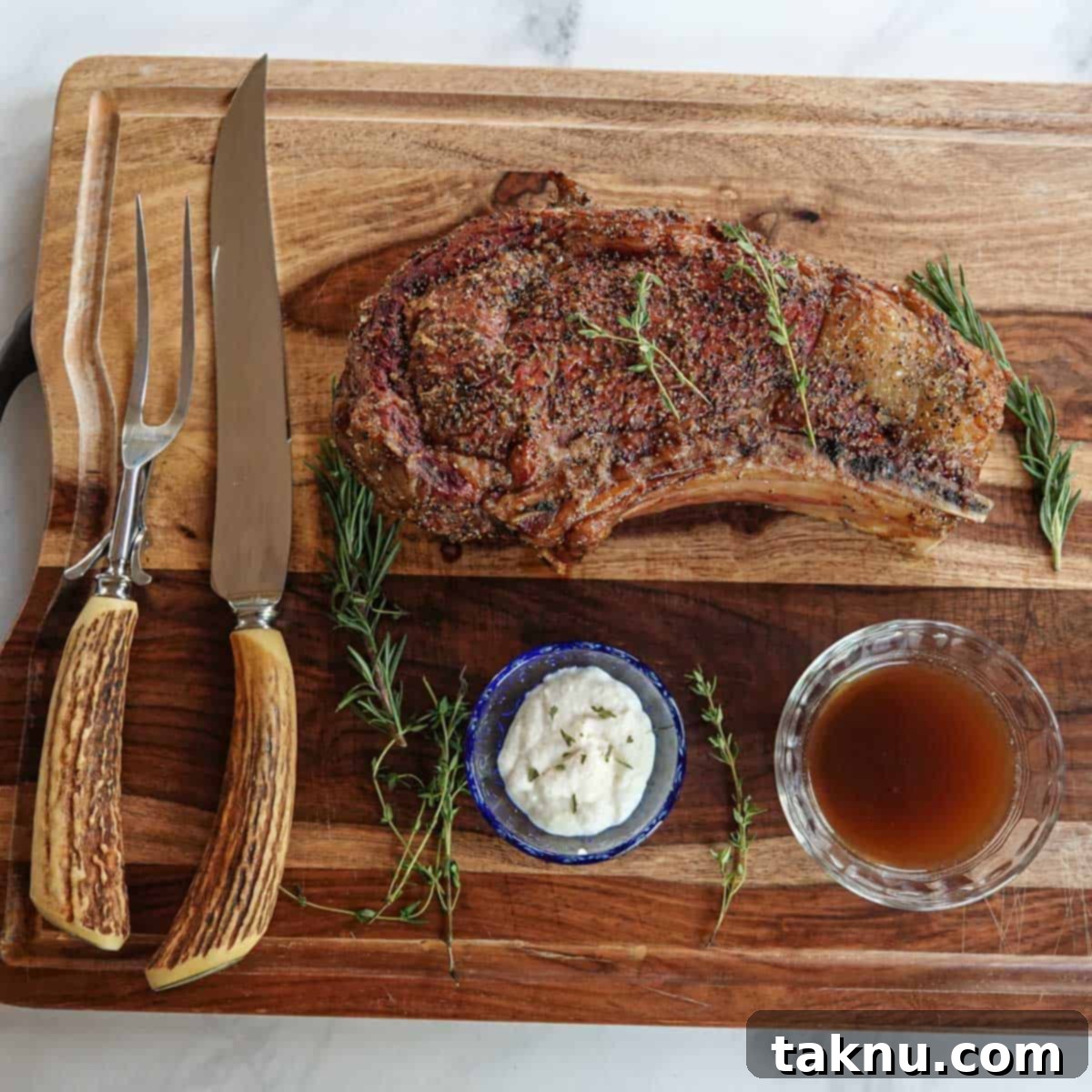
The Ultimate Guide to Smoking Prime Rib: Perfecting Your Holiday Roast
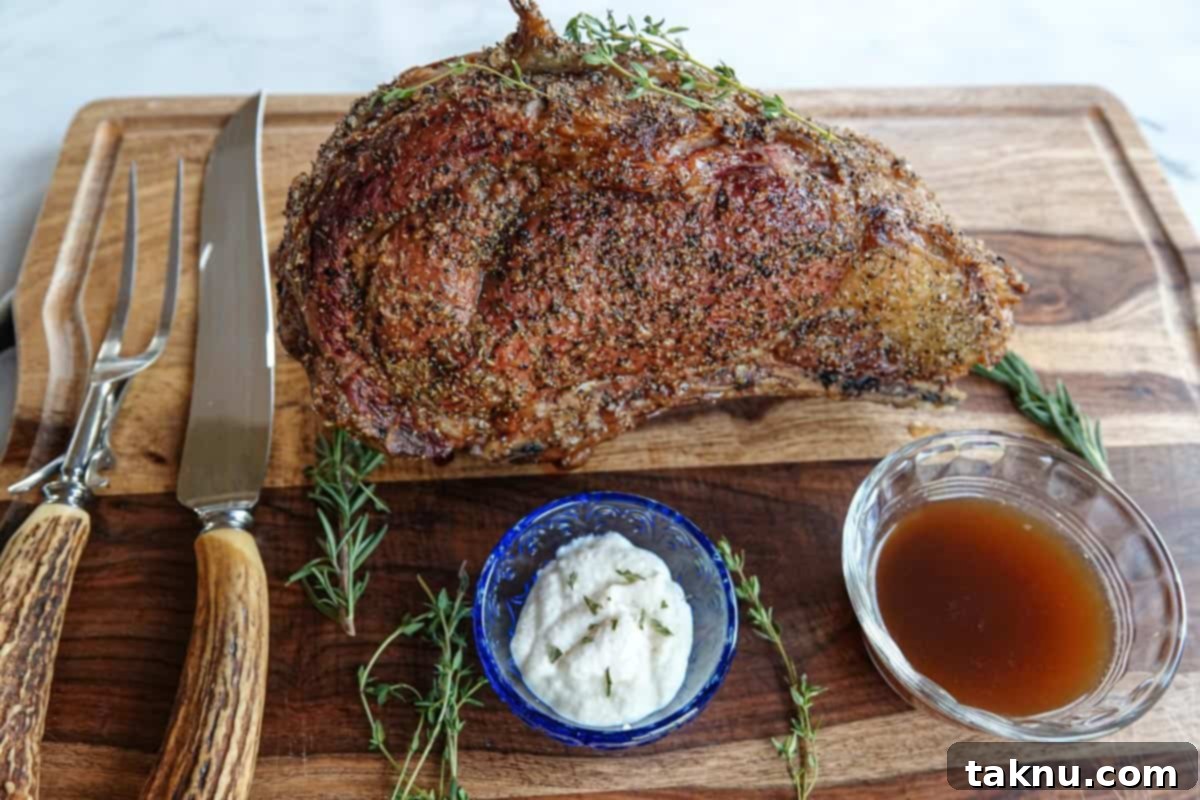
There is truly nothing quite as spectacular as a perfectly smoked prime rib. This magnificent centerpiece, with its rich, beefy flavor infused with aromatic smoke, makes any meal an extraordinary occasion. Paired with classic sides like creamy mashed potatoes, zesty horseradish sauce, and a savory au jus for dipping, it’s a culinary masterpiece that promises to impress your family and friends. Get ready to ignite your smoker and embark on a journey to create this succulent showstopper!
[feast_advanced_jump_to]
Why Smoked Prime Rib is a Culinary Masterpiece
While a prime rib roast is undeniably delicious when simply baked in the oven, introducing the nuanced flavors of natural wood smoke elevates this already exquisite cut of beef to an entirely new dimension. Smoking imparts a deep, earthy aroma and a beautiful pink smoke ring that is visually stunning and incredibly flavorful. By keeping the seasoning straightforward and allowing the quality of the meat and the subtle smoke to be the stars, this smoked prime rib recipe ensures a truly unforgettable dining experience that goes beyond traditional roasting.
The slow smoking process at a consistent low temperature also contributes to a remarkably tender and juicy interior, as the connective tissues gently break down over several hours. This method offers a more uniform cook from edge to edge compared to high-heat roasting, resulting in less gray, overcooked meat and more of that perfect medium-rare blush throughout the roast.
Selecting the Perfect Prime Rib Roast
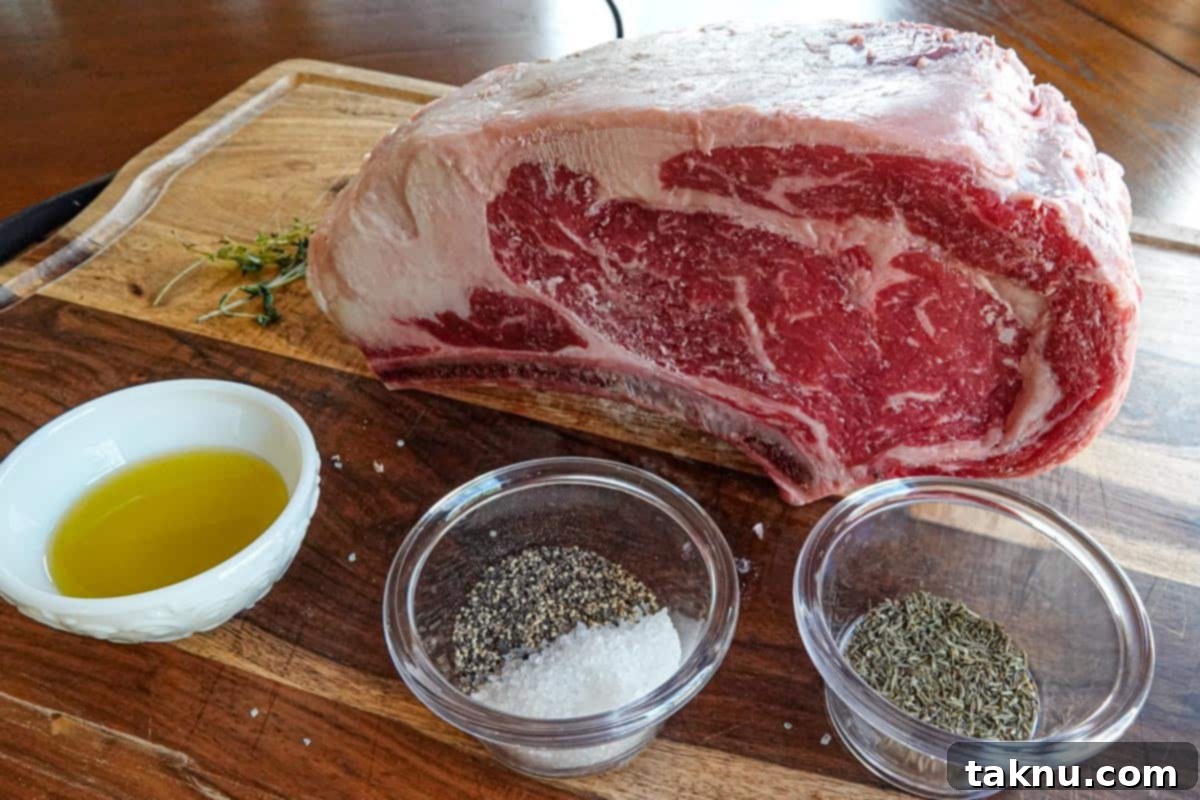
The journey to a perfect smoked prime rib begins with selecting the right cut of meat. A prime rib roast, also known as a standing rib roast, is cut from the primal rib section of the cow, specifically from ribs six through twelve. This is the same area from which the popular and flavorful ribeye steak is cut, making it inherently tender and rich in marbling.
Understanding Beef Grades: Prime vs. Choice
When you see “prime rib” on the menu, it refers to the cut of meat, not necessarily its USDA beef grade. It’s crucial to understand the difference between beef grades as they significantly impact the flavor and tenderness of your roast. The USDA grades beef based on its marbling (intramuscular fat) and the animal’s maturity:
- USDA Prime: This is the highest grade, boasting abundant marbling which translates to exceptional tenderness, juiciness, and flavor. Prime roasts are typically found in high-end restaurants and specialty butcher shops.
- USDA Choice: This is the most common grade found in grocery stores. It still offers good quality with less marbling than Prime, but remains very tender and flavorful. Most home cooks will find Choice prime rib more than satisfactory.
- USDA Select: This grade has the least marbling, resulting in a leaner and potentially less tender roast. While still beef, it might not provide the melt-in-your-mouth experience desired for a special occasion prime rib.
For the best results with your smoked prime rib, aim for a USDA Prime or Choice grade. Don’t hesitate to ask your butcher about the beef grading of their rib roasts. Most local grocery stores or butchers will carry rib roasts and are commonly cut to order, allowing you to specify the weight you need.
Bone-in or Boneless?
Prime rib roast is available in both bone-in and boneless varieties, and each has its proponents:
- Bone-in: Many chefs believe the bones add flavor and act as a natural rack, protecting the meat during cooking and providing insulation. They also make for a more impressive presentation. The bones are easily trimmed before or after cooking if you prefer boneless servings.
- Boneless: This option is easier to carve and can sometimes cook a bit more uniformly. If you choose boneless, you might want to tie the roast with butcher’s twine to help it hold its shape during smoking.
Ultimately, both bone-in and boneless roasts can produce a fantastic finished product. The choice often comes down to personal preference for flavor, presentation, and ease of carving.
How Much Prime Rib to Buy?
Planning a dinner party and wondering what size prime rib roast to purchase? A good rule of thumb is to calculate approximately 1 pound of uncooked prime rib per person. This generous estimate accounts for the bone (if bone-in) and provides ample servings, with potential for delicious leftovers. So, if you’re hosting a dinner with 8 people, an 8-pound prime rib roast would be ideal.
Mastering the Art of Smoked Prime Rib
I’m going to guide you step-by-step through the process of smoking the perfect prime rib. This method is guaranteed to yield a roast that will be the absolute highlight of any celebration, be it Christmas, New Year’s, a special anniversary, or simply an important gathering that calls for an exceptional meal!
Preparation is Key: Prepping Your Prime Rib
Proper preparation is essential for a prime rib that smokes beautifully and tastes incredible. Most prime rib roasts you purchase will already be trimmed to about ¼” of fat along the outside. If yours has a thicker fat cap, you’ll want to use a sharp fillet knife to carefully trim it down. It’s important not to remove all the fat; the fat cap renders during smoking, basting the meat and contributing immensely to its succulent flavor and moisture. Aim for a consistent ¼-inch thickness.
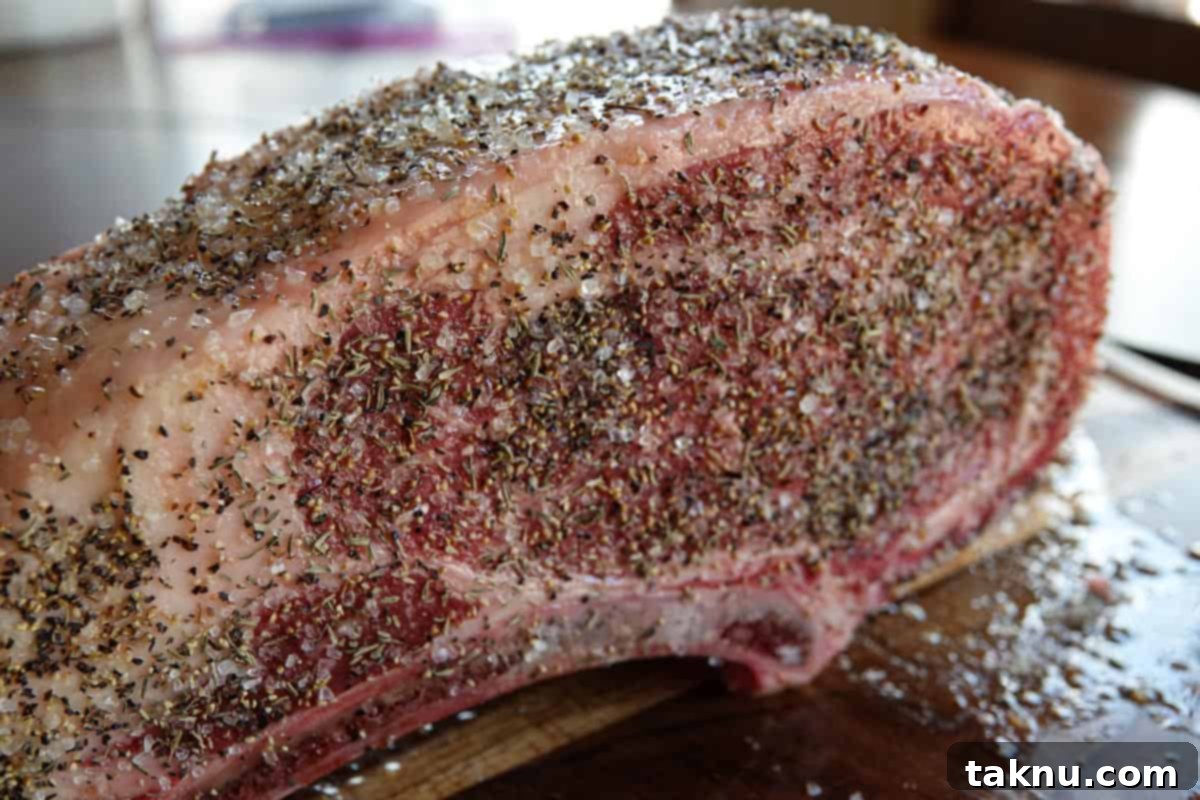
For seasoning prime rib, I advocate for simplicity to allow the natural, rich beef flavor to truly shine. Here’s my preferred method:
- Binder: Begin by applying a light coating of olive oil or yellow mustard to all sides of the roast. This acts as a binder, helping the seasoning adhere evenly to the meat. Don’t worry, you won’t taste the mustard in the final product; it simply helps create a beautiful crust.
- Generous Seasoning: Liberally sprinkle the entire roast with a 50:50 mixture of coarse kosher salt and freshly cracked black pepper. The coarse grind provides texture and flavor.
- Aromatic Touch: For an extra layer of subtle flavor and an appealing visual, add a little fresh or dried thyme to the seasoning blend. Rosemary can also be a wonderful addition.
Ensure the roast is seasoned thoroughly on all sides, including the ends. For best results, season your prime rib several hours, or even up to 24 hours, before smoking. This allows the salt to penetrate the meat, enhancing its flavor and juiciness (a process known as dry brining). Place it uncovered in the refrigerator after seasoning to help develop a drier surface, which promotes a better crust during searing.
The Smoking Process: Low and Slow Perfection
Maintaining a consistent temperature of 225°F (107°C) in your smoker is the optimal approach for imparting a deep, desirable smoke flavor into the prime rib. This low and slow cooking method also ensures a tender, juicy interior. As a general guideline, expect your prime rib to take approximately 30-40 minutes per pound when smoking at this temperature. For instance, a 6-pound prime rib roast will typically require about 3 to 4 hours to smoke.
***Important Note on Timing: While cooking time per pound is a good estimate, it’s crucial to understand that larger roasts (over 9 pounds) often don’t proportionally increase in cooking time. The maximum amount of time a large prime rib roast should take is generally around 6-7 hours. This is because once the meat reaches a certain internal temperature, the rate of cooking slows down, regardless of further size. Always cook to internal temperature, not just by time.
Searing Before Smoking (Initial Sear)
One method to achieve a beautiful crust on your smoked prime rib is to sear it *before* smoking. This technique helps to lock in some juices and creates a flavorful exterior early in the cooking process.
- Method: Preheat your oven to a high temperature, around 450°F (232°C). Line a baking sheet with aluminum foil for easy cleanup. Place the prime rib roast, bone-side down, directly on the prepared baking sheet.
- Execution: Sear the roast in the hot oven for about 15-20 minutes. This high heat will quickly form a delectable brown crust.
- Transition: After searing, immediately transfer the prime rib to your preheated smoker to continue cooking at 225°F (107°C) until it reaches the desired internal temperature.
Reverse Searing After Smoking (The Smoker’s Choice)
The reverse sear method is widely favored by smoking enthusiasts because it maximizes smoke penetration and allows for more precise temperature control for doneness. With this technique, you smoke the meat first at a low temperature, and then finish it with a high-heat sear at the very end.
- Method: Smoke the prime rib at 225°F (107°C) until its internal temperature reaches about 10-15°F (5-8°C) below your desired final doneness (e.g., if you aim for 130°F, pull it at 115-120°F).
- Execution: Remove the roast from the smoker and tent it loosely with foil. Increase your smoker’s temperature (or preheat your oven) to 450-500°F (232-260°C). Once the high temperature is reached, place the rib roast back on the grill grates or in the oven.
- Finish: Sear for several minutes, rotating the roast as needed, until a beautiful, deeply browned crust has formed and the internal temperature reaches your target doneness. This method results in a more pronounced smoke flavor as the exterior isn’t sealed off by a crust during the initial smoking phase.
Achieving Perfect Doneness: Internal Temperature Guide
The key to a perfectly cooked prime rib is monitoring its internal temperature. Most modern pellet smokers come equipped with integrated meat probes that plug into the smoker, providing a constant, real-time temperature reading. If your smoker doesn’t have one, investing in an inexpensive but reliable digital meat thermometer is a crucial step for consistent results. Insert the probe into the thickest part of the roast, avoiding any bones.
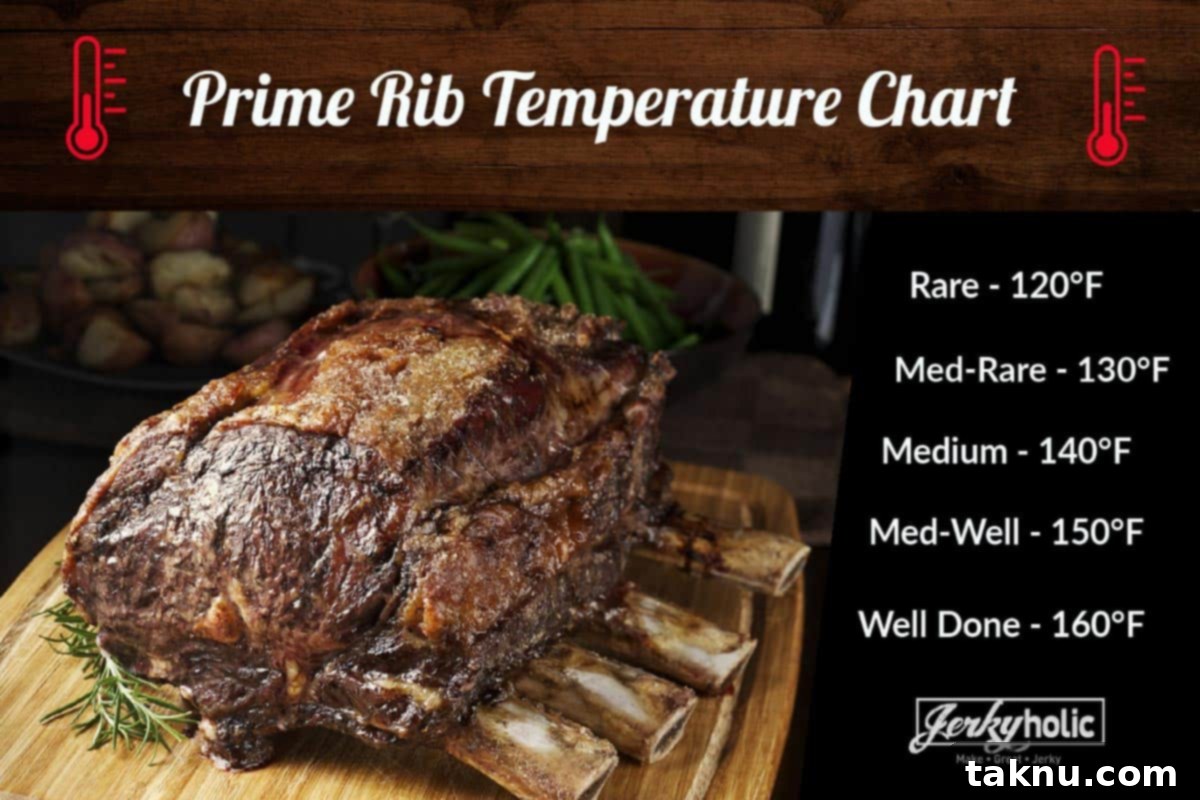
Here’s a guide to desired doneness levels for prime rib:
- Rare: 120-125°F (49-52°C) – Very red, cool center.
- Medium-Rare: 130-135°F (54-57°C) – Red, warm center (most recommended for prime rib).
- Medium: 135-140°F (57-60°C) – Pink, warm center.
- Medium-Well: 140-145°F (60-63°C) – Slightly pink center.
- Well-Done: 150°F+ (66°C+) – Little to no pink. (Not recommended for prime rib as it can become dry).
I typically prefer to pull the roast from the smoker when it reaches 130°F (54°C) if I’ve seared it before smoking. If I am using the reverse sear method, I remove it at around 120°F (49°C) to allow for the final high-heat sear to bring it up to the perfect medium-rare. Remember that the internal temperature will continue to rise by 5-10 degrees (known as “carryover cooking”) during the resting period.
Once your prime rib reaches the desired temperature, remove it from the smoker and immediately transfer it to a large cutting board. Tent it loosely with aluminum foil and allow it to rest for at least 20-30 minutes. This resting period is crucial; it allows the muscle fibers to relax and the juices to redistribute evenly throughout the roast, ensuring every slice is incredibly moist and flavorful. Skipping this step will result in juices running out onto your cutting board instead of staying in the meat.
Expert Slicing Techniques for Prime Rib
After the crucial resting period, it’s time to carve your magnificent smoked prime rib. The way you slice it can impact presentation and portion size. There are two primary methods for slicing a rib roast:
Method 1: Slicing Between the Bones (Bone-in Servings)
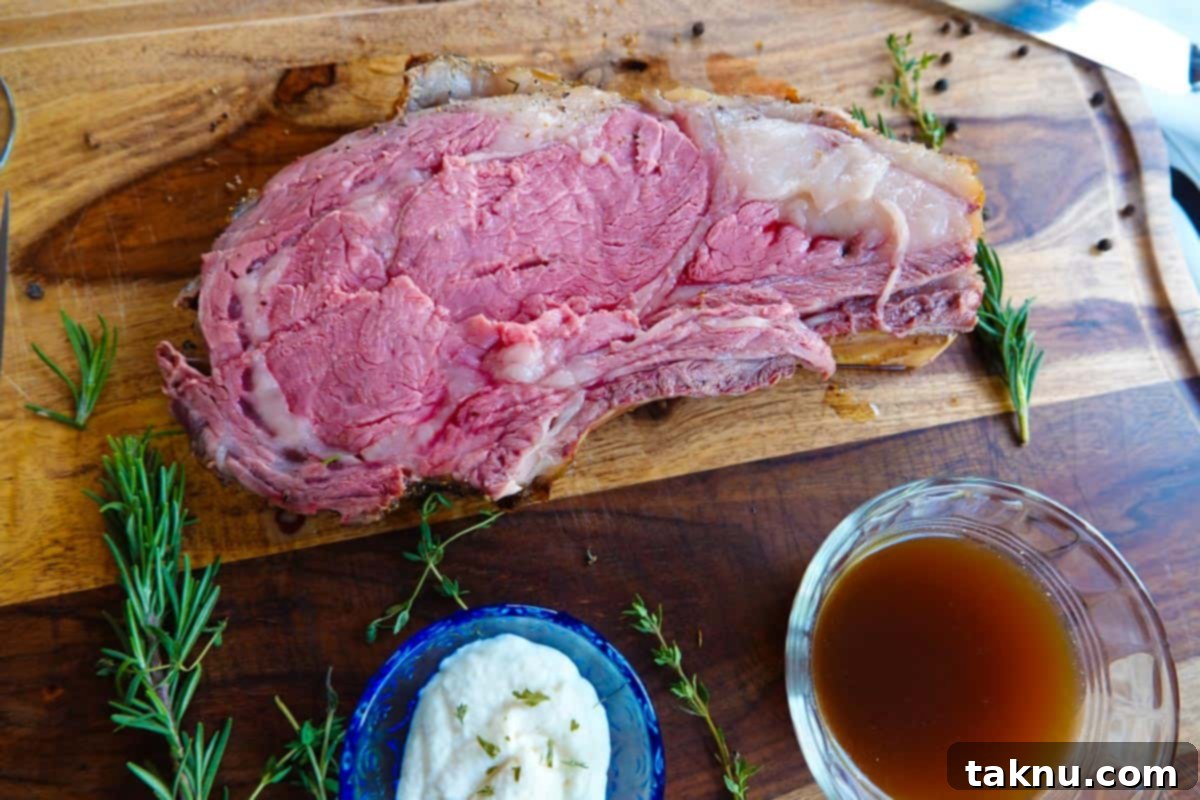
If you cooked a bone-in prime rib and your guests appreciate a hearty, bone-attached portion, this is the way to go. Stand the rib roast upright on its rib bones on the cutting board. Using a long, sharp carving knife, slice downward between each bone. This will yield large, impressive 1 to 1.5-inch thick cuts of beef, with each serving including a bone. This method is particularly popular for a rustic, traditional presentation.
Method 2: Removing Bones for Boneless Servings
For those who prefer boneless individual slices, or if you plan to save the bones for making stock, this method is ideal. Begin by placing the roast with the rib bones facing upwards on the cutting board. Using a large, long, and very sharp knife, carefully run it just above the top of the bones, separating the entire rib section from the meat in one clean cut. Once the bones are separated, you can set them aside (for discarding or future use). The boneless roast can then be sliced into individual pieces of your desired thickness, typically ranging from ½-inch to 1 ½-inches, depending on preference. This method allows for more control over portion size and easier eating.
Choosing Your Smoker
The type of smoker you use will influence your process slightly, but the goal remains the same: consistent low temperature and quality smoke. I personally use an RT-590 Recteq pellet smoker for smoking prime rib, which offers excellent temperature control and ease of use. However, any reliable smoker will do the job beautifully:
- Pellet Smokers: Brands like Recteq and Traeger are popular for their “set it and forget it” convenience, precise temperature regulation, and consistent smoke production from compressed wood pellets. They are an excellent choice for beginners and experienced pitmasters alike.
- Stick Burners (Offset Smokers): These traditional wood-burning smokers require more active management of the fire and wood, but they offer the most authentic, rich smoke flavor. They are favored by purists.
- Electric Smokers: Often budget-friendly and easy to use, electric smokers produce a consistent temperature, though the smoke flavor might be milder than charcoal or pellet smokers.
- Charcoal Smokers: Kamado-style grills or Weber Smokey Mountain (WSM) are versatile and can achieve excellent smoke flavor with charcoal and wood chunks.
Regardless of your smoker type, always preheat it to a stable 225°F (107°C) before placing your prime rib inside. Additionally, ensure your grates are clean to prevent sticking and transfer of old flavors.
Wood Selection for Smoked Prime Rib
The type of wood you use for smoking significantly impacts the final flavor profile of your prime rib. For delicate cuts like prime rib, a milder wood is often preferred to complement, rather than overpower, the rich beef flavor.
- Applewood: My personal favorite for prime rib. It offers a sweet, fruity, and very mild smoke flavor that beautifully enhances the beef without being too strong.
- Cherry Wood: Similar to apple, cherry provides a mild, fruity smoke and can also impart a gorgeous reddish hue to the meat’s exterior.
- Pecan Wood: Offers a nutty and slightly sweet flavor, more robust than apple or cherry but generally milder than hickory.
- Oak Wood: A classic choice for beef, oak provides a medium, earthy smoke flavor that is strong enough to stand up to prime rib without being overwhelming.
Avoid overly strong woods like mesquite for prime rib, as their intense flavor can easily overshadow the delicate nuances of the roast.
The Essential Accompaniments for Prime Rib
While smoked prime rib is a star on its own, certain staple condiments and side dishes are practically mandatory to complete the ultimate dining experience. These pairings enhance the flavors and textures, creating a symphony for the palate.
Creamy Horseradish Sauce
Ah, horseradish! That pungent, sinus-clearing condiment is a classic and indispensable pairing for prime rib. Its sharp, spicy kick beautifully cuts through the richness of the beef, creating a delightful contrast. You can typically find it in two forms:
- Creamy Horseradish: This is the most popular choice, offering a milder, creamier texture and flavor, often mixed with sour cream, mayonnaise, or crème fraîche. It provides a pleasant zing without overwhelming the taste buds. You can buy excellent creamy horseradish ready-made.
- Prepared Horseradish (Raw): This is straight grated horseradish root preserved in vinegar, offering a much more intense and fiery flavor. For those who love a serious kick!
Rich Au Jus
A savory au jus is another non-negotiable accompaniment. This thin, flavorful gravy, made from the natural drippings of the meat, is perfect for drizzling over slices of prime rib or for dipping. It adds moisture and an extra layer of beefy goodness.
- Easiest Method: The simplest way to prepare a delicious au jus is by using a high-quality gravy or au jus packet, readily available in the gravy aisle of most local grocery stores. Just follow the package instructions, and you’ll have enough flavorful dipping sauce for everyone without any fuss.
- Homemade (from drippings): If you want to make it from scratch, collect the drippings from your roasting pan (if you seared in the oven, or from the smoker drip pan). Deglaze the pan with a bit of red wine or beef broth, then thicken slightly if desired and season to taste.
Perfect Side Dishes for Smoked Prime Rib
Beyond the essential condiments, the right side dishes complete the prime rib feast. The goal is to choose sides that complement the richness of the meat without competing with it.
- Mashed Potatoes: Nothing pairs better with prime rib than creamy, fluffy mashed potatoes. Whether you prefer a simple garlic mashed potato or something like these Herb Garlic Mashed Potatoes, they provide a comforting and absorbent base for the au jus.
- Roasted Asparagus: A bright, slightly crisp green vegetable offers a wonderful counterpoint to the rich beef. Roasted asparagus is a fantastic choice, simple to prepare, and visually appealing. Other green vegetable options include green bean casserole, sautéed spinach, or Brussels sprouts.
- Yorkshire Pudding: A traditional British accompaniment, these savory popovers are perfect for soaking up the delicious au jus.
- Creamed Spinach: Another rich and classic side that complements the beef beautifully.
- Dinner Rolls: Warm, crusty dinner rolls are always a welcome addition for sopping up any remaining sauces.
Expand Your Smoking Horizons: More Delicious Recipes!
Loved smoking your prime rib? The world of smoked meats is vast and incredibly rewarding. If you’re looking to try your hand at more incredible smoked dishes, here are some fantastic recipes to consider for your next culinary adventure:
- Smoked Spatchcock Chicken (Crispy Skin)
- Smoked Baby Back Ribs (Tender & Juicy)
- Perfectly Smoked Steak (Ribeye)
- Tender Smoked Pork Butt (Pork Shoulder)
Smoked Prime Rib
Pin Recipe
Ingredients
- 8 lbs Prime Rib Roast
- 2 tablespoon olive oil
- 2 tablespoon kosher salt
- 2 tablespoon black pepper (coarse)
- 1 tablespoon thyme (dried or fresh)
Equipment
Instructions
- Trim the prime rib fat cap to about ¼-inch thickness. Rub the roast generously with olive oil or mustard as a binder on all sides. Evenly sprinkle with the mixture of kosher salt, coarse black pepper, and thyme. For best flavor, let it rest refrigerated, uncovered, for 4-24 hours.
- Preheat your smoker to a stable 225°F (107°C). Place the roast, bone-side down (if applicable), directly on the smoker grates. Smoke until the internal temperature reaches 10-15°F (5-8°C) shy of your desired final doneness (e.g., 115-120°F for medium-rare). This typically takes about 30-40 minutes per pound, though larger roasts over 9 lbs might not exceed 6-7 hours total. Monitor temperature closely with a reliable meat thermometer.
- Once the target temperature is reached for smoking, carefully remove the prime rib from the smoker and tent it loosely with foil. Increase your smoker’s temperature (or preheat your oven) to 450-500°F (232-260°C) for the reverse sear. Once the high temperature is ready, place the roast back on the grill or in the oven and sear for several minutes, rotating as needed, until a rich, brown crust forms and the internal temperature reaches your desired doneness (refer to the temperature chart in the post above).
- Remove the prime rib from the heat and allow it to rest, tented with foil, on a cutting board for 20-30 minutes. This critical step allows the juices to redistribute for maximum tenderness and moisture. After resting, carve the roast into 1-inch (or desired thickness) steaks and serve immediately with your favorite accompaniments.
- (Alternative for Searing Before Smoking): If you chose to sear in an oven *before* smoking, place the seasoned roast bone-side down on a baking sheet in a pre-heated 450°F (232°C) oven on the bottom rack for 15-20 minutes. Then, transfer directly to your preheated 225°F (107°C) smoker and smoke until your desired internal temperature is reached. Allow to rest for 20-30 minutes before carving.
Pro Tips
- Moisture with a Water Pan: If you’re using a stick burner or charcoal smoker, place a water pan in the smoker. This helps maintain humidity, keeping the meat moist. It is generally not necessary when using a pellet smoker.
- The Essential Rest: Always rest the meat for 20-30 minutes before slicing. This allows the juices to redistribute throughout the roast, ensuring every bite is moist and tender. If you cut too early, the juices will simply run out onto your cutting board.
- Bones Management: You have options with the bones: remove them before smoking and tie them back to the roast for aesthetics (and untie before serving), remove and discard them completely before smoking, or leave them in and remove them just before serving. Any method works and will not significantly affect the final result of the roast’s doneness or flavor.
- Don’t Rush the Smoke: Resist the urge to frequently open your smoker lid. “If you’re lookin’, you ain’t cookin’!” Each time you open the lid, you lose heat and smoke, extending cooking time and potentially impacting smoke penetration.
- Probe Placement: For the most accurate temperature reading, insert your meat probe into the thickest part of the roast, being careful to avoid touching any bones, as bones heat up faster than meat and can give a false reading.
Nutrition
Frequently Asked Questions About Smoked Prime Rib
The optimal temperature range for smoking prime rib is between 225°F (107°C) and 250°F (121°C). This low and slow approach allows the prime rib to absorb plenty of delicious smoke flavor without drying out or cooking too quickly. While lower temperatures are possible, this range provides a great balance of smoke penetration and reasonable cooking time.
Absolutely not! Applying a light layer of yellow mustard (or Dijon) to your prime rib serves as an excellent binder for the seasonings, helping them adhere to the meat and form a beautiful crust. During the smoking process, the mustard flavor completely cooks off, leaving no discernible taste in the finished roast. It’s a low-calorie binder that performs exceptionally well. Olive oil can also be used as a binder.
For prime rib, a milder fruit wood is generally recommended to complement its rich beefy flavor rather than overpower it. My top choice is applewood, which imparts a subtle, sweet, and fruity smoke that pairs perfectly with beef. Cherry and pecan wood are also excellent choices for a similar mild flavor profile. Avoid stronger woods like mesquite or hickory unless you prefer a very intense smoke flavor, which can sometimes mask the prime rib’s natural taste.
Yes, absolutely! While bone-in prime rib is traditional, boneless prime rib smokes beautifully and can be easier to carve. If you’re using a boneless roast, consider tying it tightly with butcher’s twine at 1-2 inch intervals. This helps the roast maintain a uniform shape during the long smoking process, promoting even cooking and a more attractive presentation.
Resting the prime rib is one of the most critical steps, and it should never be skipped. After cooking, the meat’s juices are concentrated in the center. Resting allows these juices to redistribute throughout the entire roast, resulting in a more tender, moist, and flavorful final product. A minimum of 20-30 minutes of resting, loosely tented with foil, is recommended for prime rib.