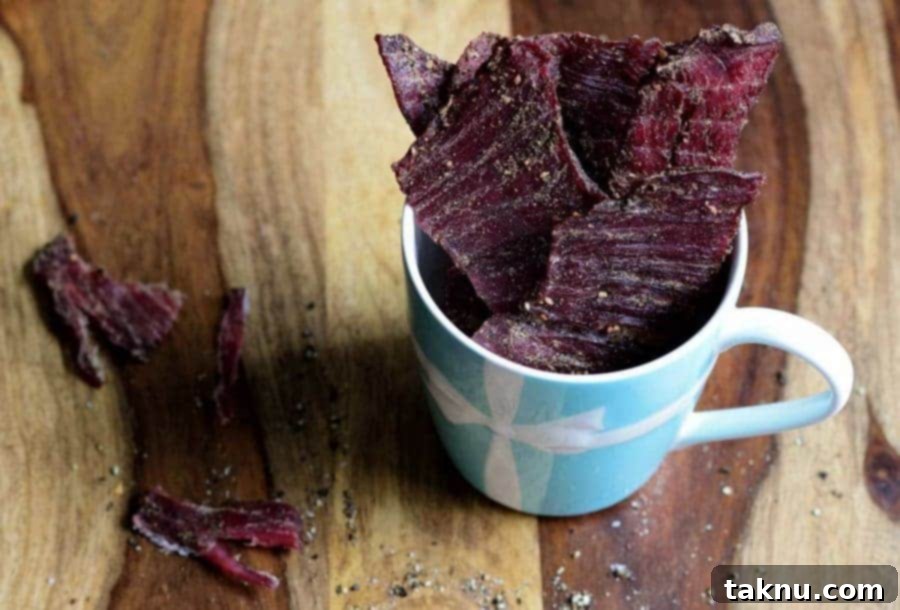
Homemade Lemon Peppered Beef Jerky: Your Ultimate Recipe for Zesty, Spicy Perfection
Prepare your taste buds for an unforgettable journey! This peppered beef jerky isn’t just a snack; it’s an explosion of flavor that balances savory spices with a delightful, zesty kick. Forget bland, store-bought jerky – this homemade version offers a depth of flavor and a texture that will leave you craving more. Perfectly seasoned with a blend of classic black pepper and vibrant lemon pepper, each strip delivers a harmonious balance of spice and citrus. Get ready to impress yourself and everyone who tries a piece of this truly amazing, spicy beef jerky!
[feast_advanced_jump_to]
Mastering the Meat: Slicing for Perfect Jerky Texture
The foundation of exceptional beef jerky lies in how you prepare your meat. Start by selecting a lean cut of beef, such as a top round or venison, which works wonderfully for this recipe. Thoroughly trim all visible exterior fat from the roast. This step is critical because fat spoils much faster than meat, significantly reducing the shelf life of your finished peppered beef jerky. Removing as much fat as possible now will ensure your delicious homemade jerky stays fresh and enjoyable for longer.
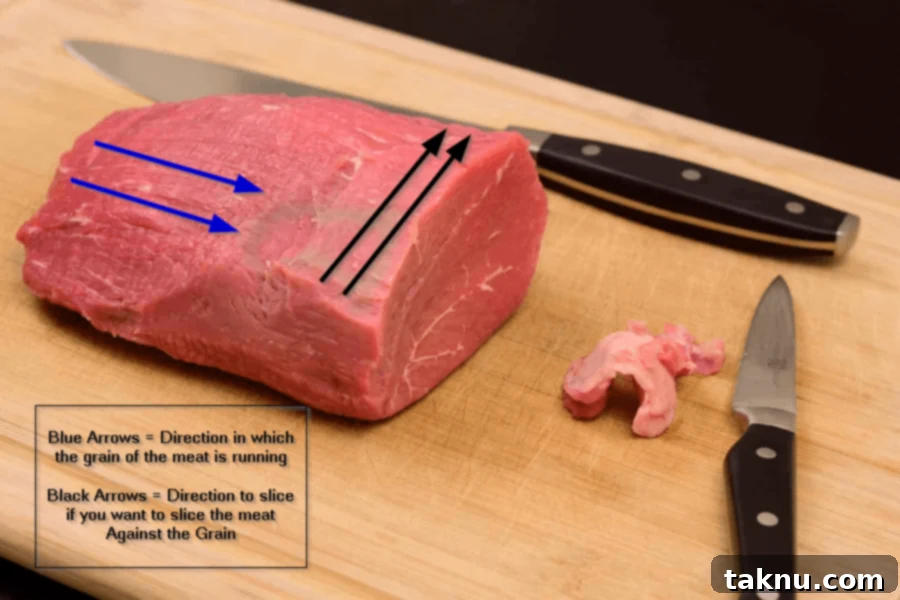
For a more tender chew, slice the meat against the grain. If you prefer a chewier jerky, you can opt to slice with the grain. The image above clearly illustrates how to identify the direction of the meat fibers (the grain), guiding you to make the perfect cut. To make slicing easier and more precise, partially freeze your roast for about 1-2 hours before cutting. This firms up the meat, allowing for cleaner, more uniform strips. Alternatively, a jerky slicer can provide consistent results, saving you time and effort.
Hint: The visible lines running through the meat indicate the direction of the grain. To achieve tender jerky, make your cuts perpendicular to these lines. For a chewier texture, slice parallel to the grain.
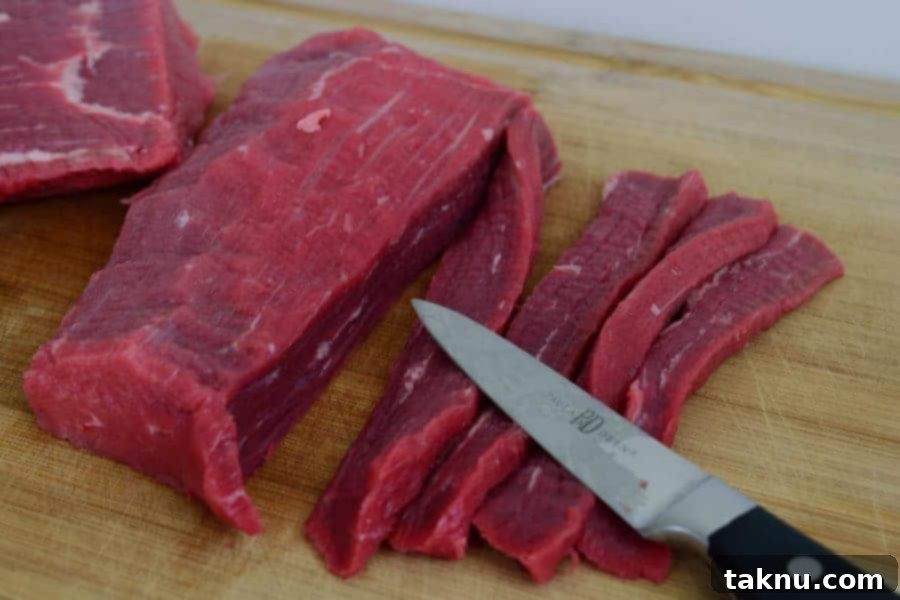
The ideal thickness for your peppered beef jerky strips ranges from ⅛” to ¼”. Thinner strips will dry faster and have a crispier texture, while thicker strips will offer a more substantial, meatier bite. You can experiment to find your preferred thickness, whether you like delicate, thin pieces or “elephant ear” style jerky, which are wider but still thinly sliced for a unique experience.
Crafting the Perfect Peppered Jerky Seasoning
The heart of this recipe lies in its exceptional seasoning blend. Lemon pepper is a true star here, a versatile spice that I absolutely adore in various dishes, from chicken to fish. But let me tell you, it transforms beef jerky into something extraordinary! The bright, zesty notes from the lemon perfectly complement the bold spice of the pepper, creating an incredibly satisfying flavor profile that sets this jerky apart.
In addition to the lemon pepper, we amplify that authentic peppery flavor by incorporating extra black pepper. This combination ensures a robust, spicy depth without being overwhelming. We then round out the marinade with other essential jerky seasonings, carefully selected to create a truly delicious and well-balanced jerky that’s bursting with savory goodness. This carefully crafted blend is what makes this a standout peppered beef jerky recipe.
Key Ingredients for Our Zesty Jerky Marinade
- Black Pepper: Provides the classic, pungent peppery heat.
- Lemon Pepper: Adds a bright, citrusy zest and another layer of pepper flavor.
- Sea Salt: Essential for curing, enhancing flavor, and preservation.
- Garlic Powder: Contributes a savory, aromatic depth.
- Onion Powder: Offers a subtle sweetness and savory base.
- Coriander: Introduces a warm, slightly citrusy, and earthy note.
- Curing Salt (Prague Powder #1): Crucial for food safety and extending shelf life.
- Beef Broth (or cold water): Forms the liquid base of the marinade, infusing flavor and moisture.
Marinating for Intense Flavor
Marinating is where your peppered beef jerky truly develops its deep, intense flavors. This crucial step allows the spices to penetrate the meat, ensuring every bite is bursting with taste. In a bowl or a resealable ziplock bag, combine all the dry seasoning ingredients mentioned above with the liquid (cold water or beef broth). Mix everything thoroughly until all the spices are well distributed and dissolved.
Hint: Ensure the curing salt (Prague Powder #1) is added along with the rest of the ingredients. It plays a vital role in preventing bacterial growth and enhancing the jerky’s color and flavor.
Once your marinade is ready, add the prepared beef strips. Use your hands to mix and massage the meat, ensuring every single strip is completely coated in the flavorful marinade. Beef strips have a tendency to stick together, so consistent mixing is essential to guarantee even seasoning penetration throughout. The more contact each piece has with the marinade, the richer the final flavor will be.
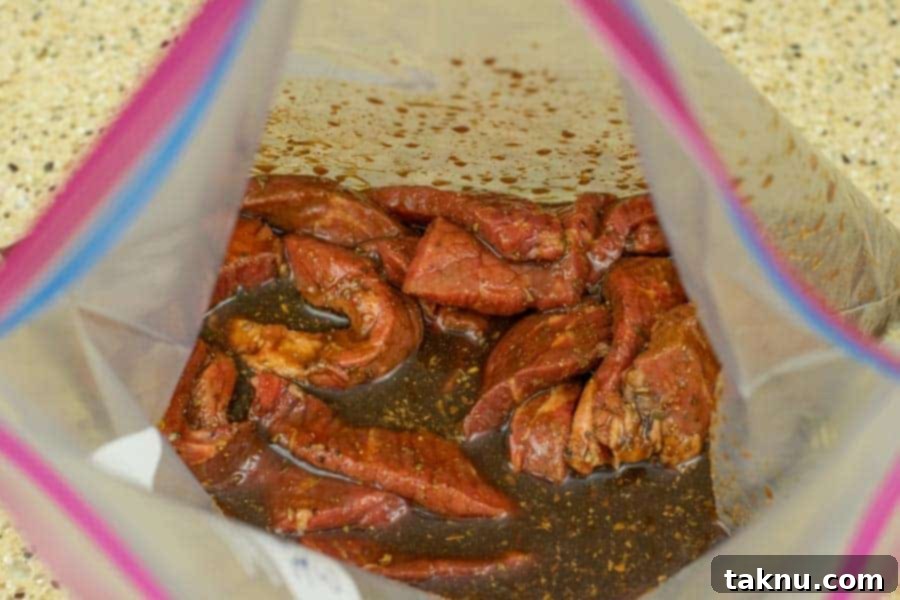
I highly recommend using a large, heavy-duty ziplock bag over a bowl for marinating. A bag requires less marinade to fully submerge the meat, and you can easily manipulate the bag to ensure the seasonings evenly coat all surfaces of the beef. This efficient method guarantees maximum flavor absorption.
Once the meat is thoroughly mixed with the marinade, seal the bag (or cover the bowl) and refrigerate for a minimum of 8 hours, and ideally up to 24 hours. The longer you allow this peppered beef jerky to marinate, the deeper and more complex the flavors will become. Patience during this stage is truly rewarded with an exceptionally tasty product.
Drying the Jerky to Perfection
After the marinating process is complete, it’s time to prepare your jerky for drying. Remove the marinated beef from the refrigerator and transfer it to a colander to drain any excess liquid. Next, lay out several layers of paper towels on a clean surface. Carefully place the jerky strips on the paper towels in a single layer, ensuring they don’t overlap.
The goal here is to gently pat dry the jerky strips, removing any excess marinade from the surface of the meat. Do NOT wipe the marinade off, as this could remove the precious seasonings. Instead, lightly pat each strip to absorb surface moisture. This step is crucial for achieving the correct texture and preventing steaming during the drying process, which can lead to uneven drying and a less desirable finish.
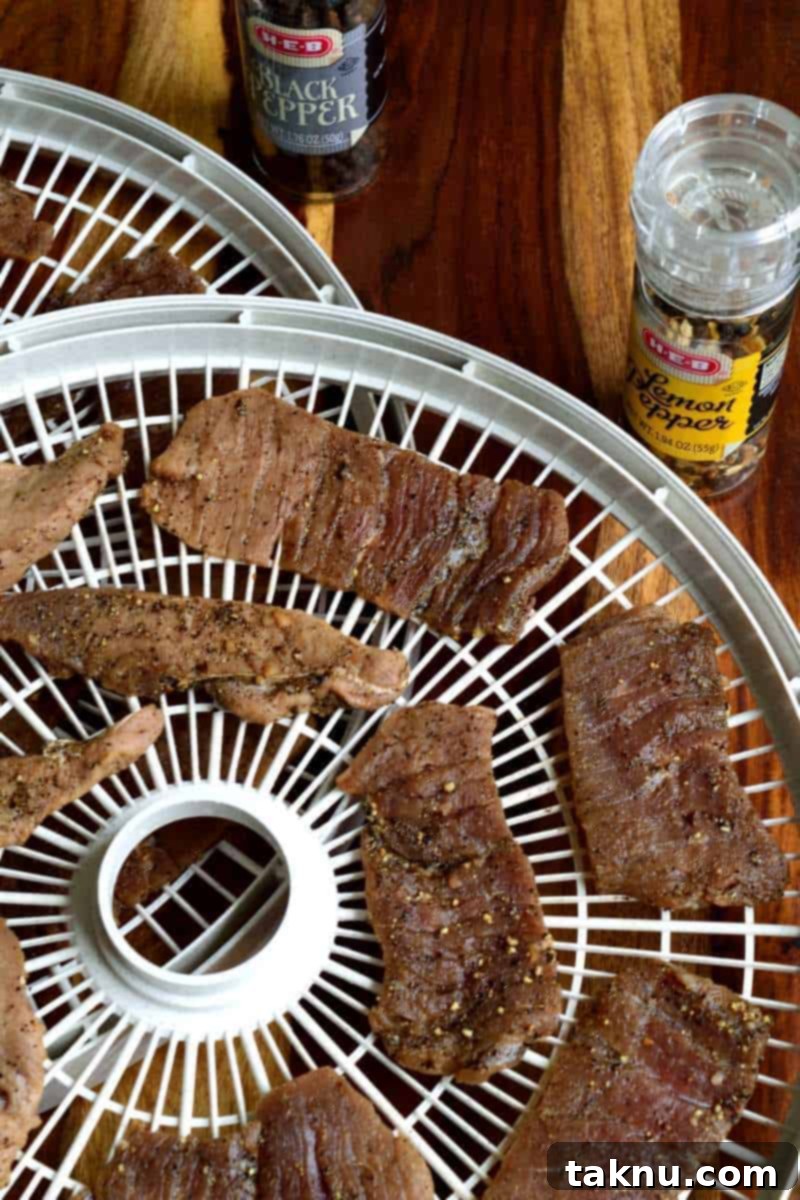
Once patted dry, arrange the jerky strips on your dehydrator trays. Make sure to leave a small amount of space between each piece of meat. Proper spacing is essential for optimal air circulation, which ensures even and efficient drying. Overcrowding the trays can lead to longer drying times and inconsistent results.
Set your dehydrator to its highest temperature setting, typically between 165-175°F (74-79°C). The drying process will usually take anywhere from 4 to 6 hours, depending on the thickness of your jerky strips, your dehydrator model, and ambient humidity. Begin checking your jerky around the 4-hour mark, and then every 30-60 minutes thereafter, to monitor its progress and prevent over-drying.
How to Know When Your Jerky is Perfectly Done
The true secret to making perfect homemade jerky is knowing precisely when it’s finished drying. The most common pitfall for jerky makers is over-drying, which results in brittle, hard, and less flavorful jerky. We’ll guide you through the simple steps to avoid this common mistake and achieve that ideal chewy texture.
Begin testing your jerky once it has been in the dehydrator for at least 4 hours. This is your initial checkpoint. At this point, remove a single piece of jerky from the dehydrator and allow it to cool down to room temperature for 2-3 minutes. Cooling is vital because hot jerky is much more pliable, which can trick you into thinking it’s not done yet.
Once cooled, bend or rip the end of the jerky piece. A perfectly dried piece of jerky should bend without breaking completely in half. It should crack and show white fibers within the meat but remain intact as one piece. This “bend test” is your primary indicator of doneness.

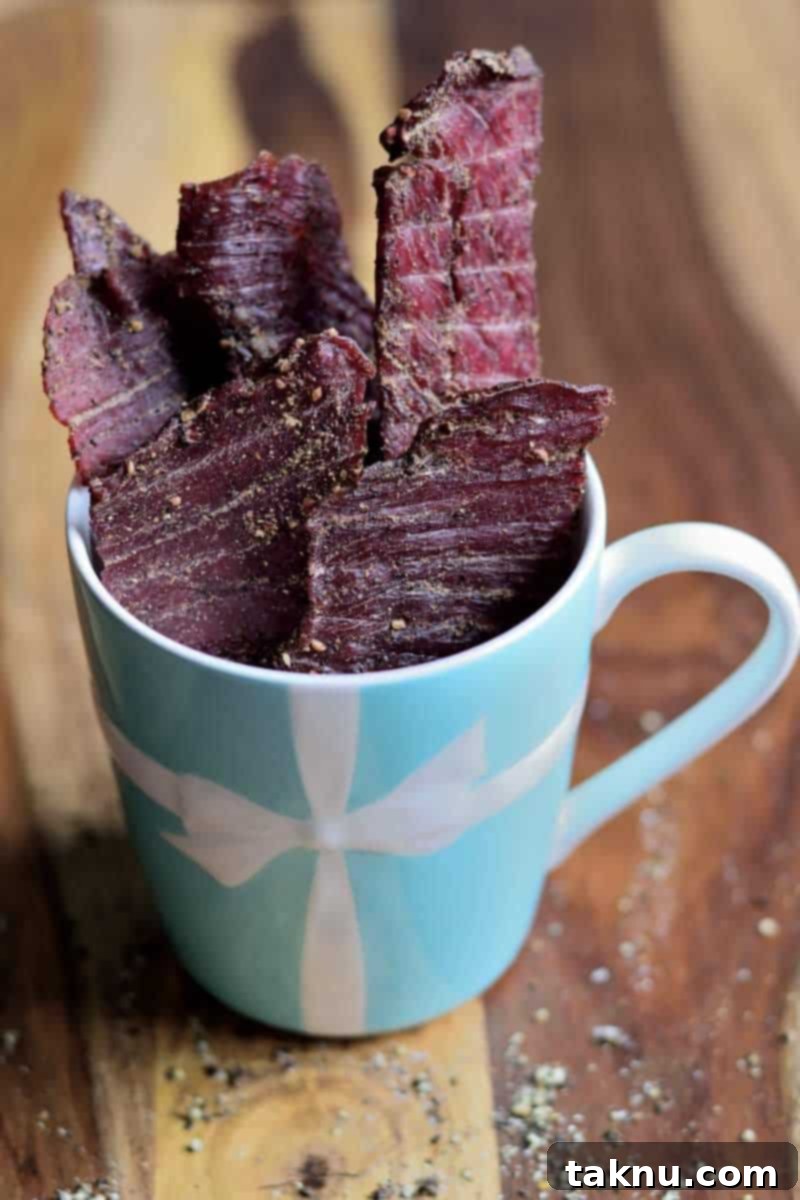
Observe the internal structure of the meat, looking for distinct white fibers, as clearly visible in the picture above. This visual confirmation, coupled with the bend test, confirms that your peppered beef jerky has reached its ideal state of doneness. If your jerky bends without cracking or breaking, and lacks these visible fibers, continue drying it for another hour and re-test, repeating the cooling process.
Top Tip: Always, always allow your jerky sample to cool for 2-3 minutes before performing the bend test. Testing hot jerky is the single biggest reason people overdry their jerky, making it too hard and dry. This small waiting period will save your batch!
Proper Storage for Lasting Freshness
Once your peppered beef jerky has finished drying, remove all the strips from the dehydrator trays. Allow the jerky to cool completely to room temperature, which typically takes about an hour. It’s important not to store warm jerky, as this can create condensation and promote spoilage.
For optimal freshness and to extend its shelf life, store your homemade jerky in airtight containers. Resealable ziplock bags are a good choice, as are vacuum-sealed bags. When stored in a cool, dark place away from direct sunlight, homemade jerky will typically remain fresh for 2-3 weeks. For even longer storage, you can refrigerate it for several months or freeze it for up to a year, though its texture might change slightly after freezing and thawing. Proper storage ensures you can enjoy your delicious peppered beef jerky for as long as possible. For more comprehensive guidance on preserving your jerky, be sure to visit my dedicated page on Jerky Storage.
Explore More Jerky Recipes and Essential Tips:
- The Art of Slicing Meat for Beef Jerky
- Jerkyholic’s Original Ground Beef Jerky Recipe
- How to Make Delicious Beef Jerky in a Dehydrator
- Easy Beef Jerky Recipe (Classic Original Flavor)
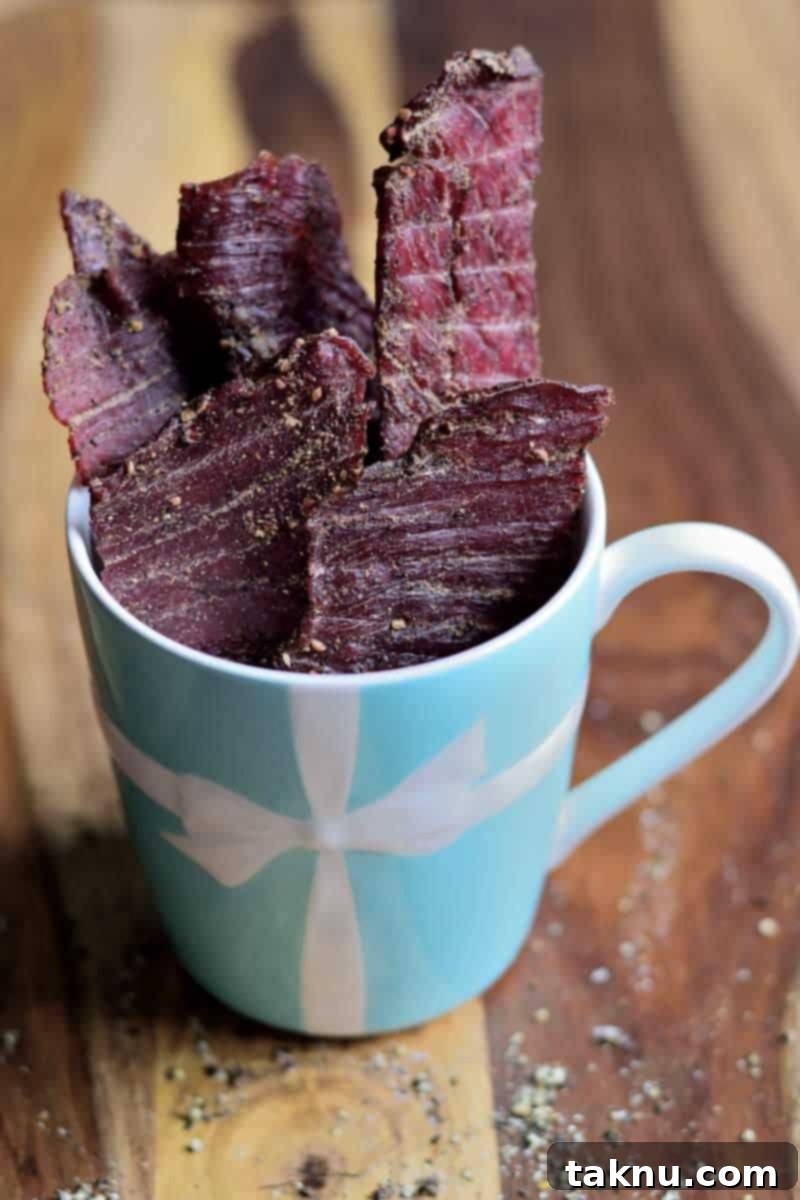
Zesty Lemon Peppered Beef Jerky Recipe
Pin Recipe
Ingredients
For the Lean Meat
- 1 lb Beef Top Round or Venison
For the Zesty Marinade
- ½ cup cold water or beef broth
- 1 ½ teaspoon ground black pepper
- 1 teaspoon sea salt
- 1 teaspoon lemon pepper
- ½ teaspoon coriander
- ¼ teaspoon garlic powder
- ¼ teaspoon onion powder
- ¼ teaspoon Prague Powder #1 (curing salt)
- ¼ teaspoon corn syrup solids (optional, helps with moisture retention)
Equipment You’ll Need
Step-by-Step Instructions
- Begin by trimming all visible fat from your chosen beef cut. For easier and more even slicing, place the beef in the freezer for about 1 to 2 hours until it’s partially frozen and firm.
- While the meat is chilling, prepare your flavorful marinade. In a medium-sized bowl or a large resealable ziplock bag, combine the Prague Powder #1, corn syrup solids (if using), coriander, garlic powder, onion powder, sea salt, black pepper, lemon pepper, and cold water or beef broth. Stir or shake vigorously until all ingredients are thoroughly combined.
- Remove the partially frozen beef from the freezer. Using a sharp knife or a dedicated jerky slicer, slice the meat into consistent ¼” thick strips. For tender jerky, slice against the grain. For a chewier texture, slice with the grain.
- Add the sliced beef strips to your prepared marinade, ensuring every piece is fully coated. Massage the meat to distribute the marinade evenly. Seal the bag or cover the bowl and marinate in the refrigerator for 8-24 hours. The longer the marination, the richer the flavor.
- After marinating, remove the meat from the refrigerator and drain it in a colander. Then, lay the jerky strips on paper towels and pat them dry to remove excess surface marinade. Do not wipe off the seasonings.
- Arrange the jerky on your dehydrator trays, leaving space for air circulation. Dry the jerky at 165-175°F (74-79°C) for 4-6 hours until it passes the bend test (bends without breaking, revealing white fibers). This recipe specifically used a dehydrator for approximately 5 hours at 145°F, but drying times may vary. Alternatively, you can dry in a smoker or a conventional oven.
Pro Tips for the Best Jerky
- Slicing with the grain of the meat will result in a chewier jerky, while cutting against the grain yields a more tender product.
- Curing salt is vital for food safety and significantly extends the shelf life of your finished jerky. Do not omit it.
- If you’re using a dehydrator or oven and desire a smoky flavor, consider adding a dash of liquid smoke to your marinade for an authentic taste.
- Always cool a test piece of jerky to room temperature before performing the bend test to get an accurate reading of its doneness.
Nutrition Information
For more in-depth guidance on various methods to dry your delicious beef jerky, visit my comprehensive page: Jerky Making Methods.