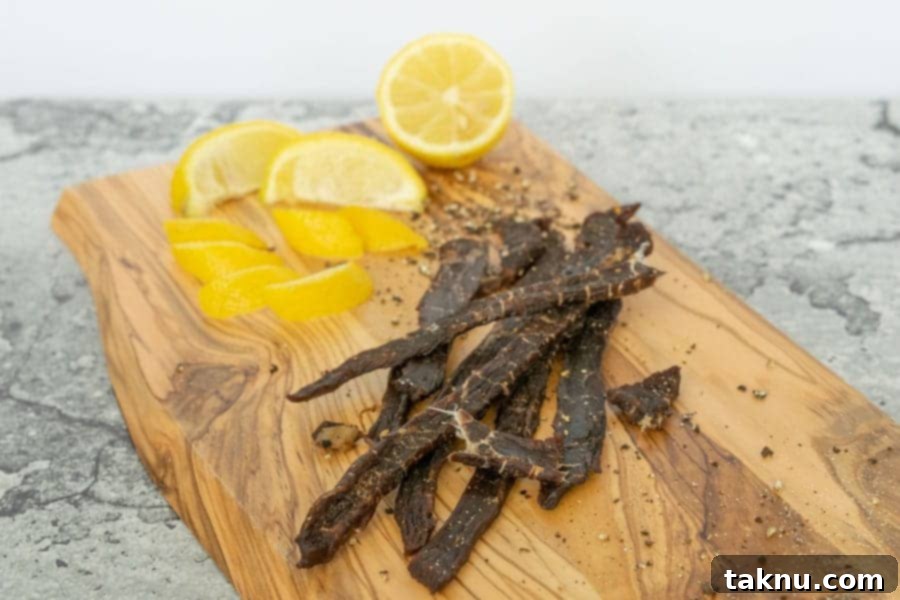
Mastering Homemade Lemon Pepper Beef Jerky: A Zesty & Savory Delight
There’s something inherently satisfying about homemade beef jerky. The chewy texture, the rich flavor, and the knowledge that you crafted it yourself are unmatched. While lemon pepper is a flavor profile often associated with fresh seafood, like those delicious speckled trout fillets from the Laguna Madre, its bright, zesty, and subtly spicy notes translate wonderfully to beef jerky. Prepare to discover a truly addictive snack that might just rival your favorite grilled fish experience.
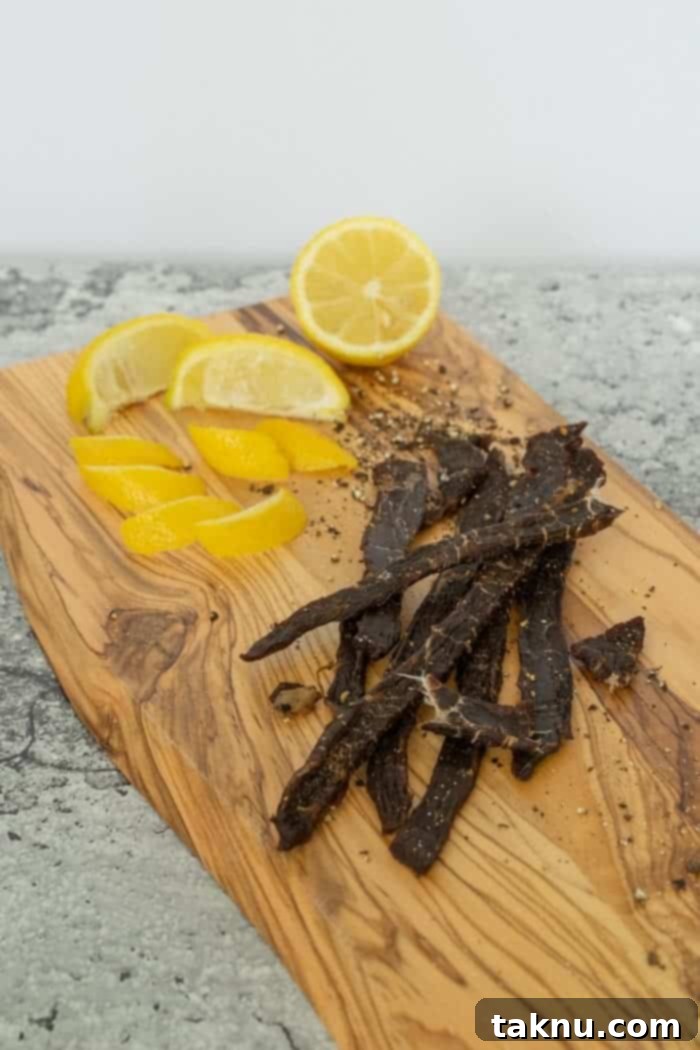
Original Post Date: June 10th, 2015 *Recipe updated with more pictures and step by step instructions*
This lemon pepper beef jerky recipe consistently delivers a fantastic batch of incredibly flavorful jerky. It strikes the perfect balance between the tangy brightness of lemon and the warm kick of black pepper, all while being surprisingly easy to make. The key ingredient, lemon pepper seasoning, is readily available at any grocery store, making this a convenient and approachable recipe for jerky enthusiasts of all levels.
Choosing and Slicing the Perfect Beef for Jerky
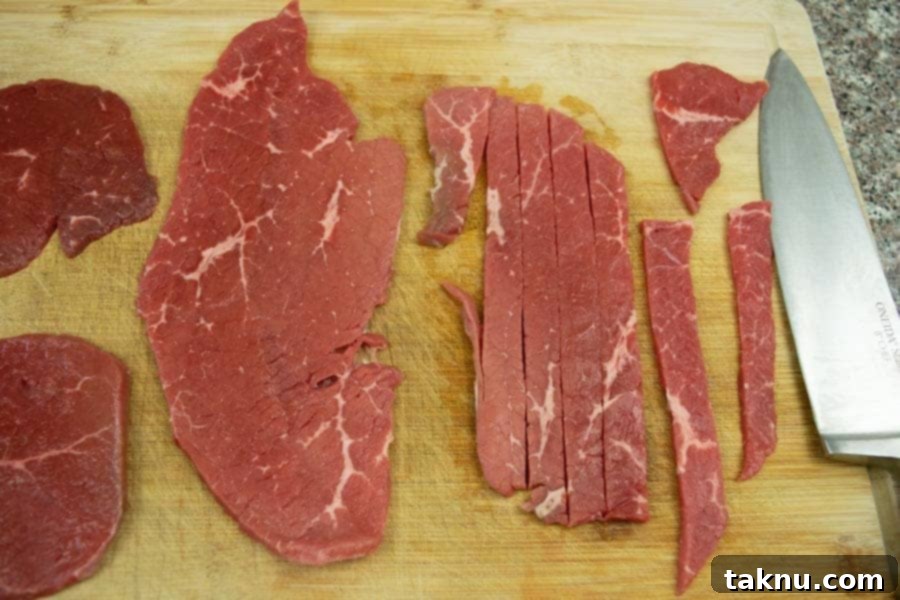
The foundation of great jerky starts with the right cut of beef and proper slicing. For this recipe, I took a small shortcut, which I highly recommend if you’re looking to save time: I purchased beef top round that was already thinly sliced from my local butcher. This saved me a significant step and allowed me to jump straight into preparation!
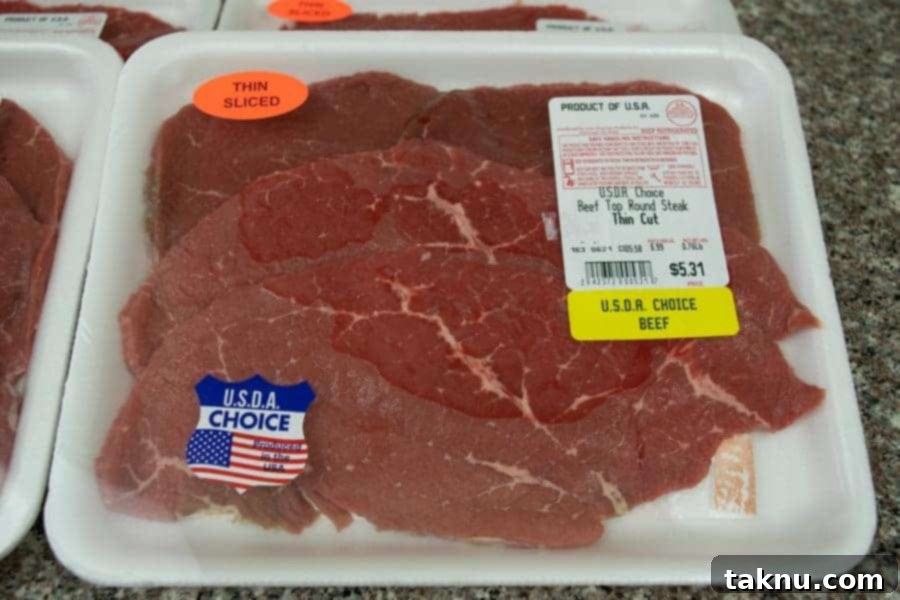
The pre-sliced pieces were approximately ⅛th of an inch thick, which is ideal for jerky. All that was left to do was to cut them into uniform 1-inch wide strips using a sharp knife. Uniformity is crucial for even drying, ensuring all your jerky pieces finish at the same time.
If you prefer to start from a whole cut of beef, or can’t find pre-sliced options, a Beef Eye of Round roast is an excellent choice due to its leanness. For a comprehensive guide on selecting the best cuts of meat for beef jerky, along with detailed explanations, be sure to click here and explore our extensive list!
Prepping Your Beef: Trimming and Slicing Techniques
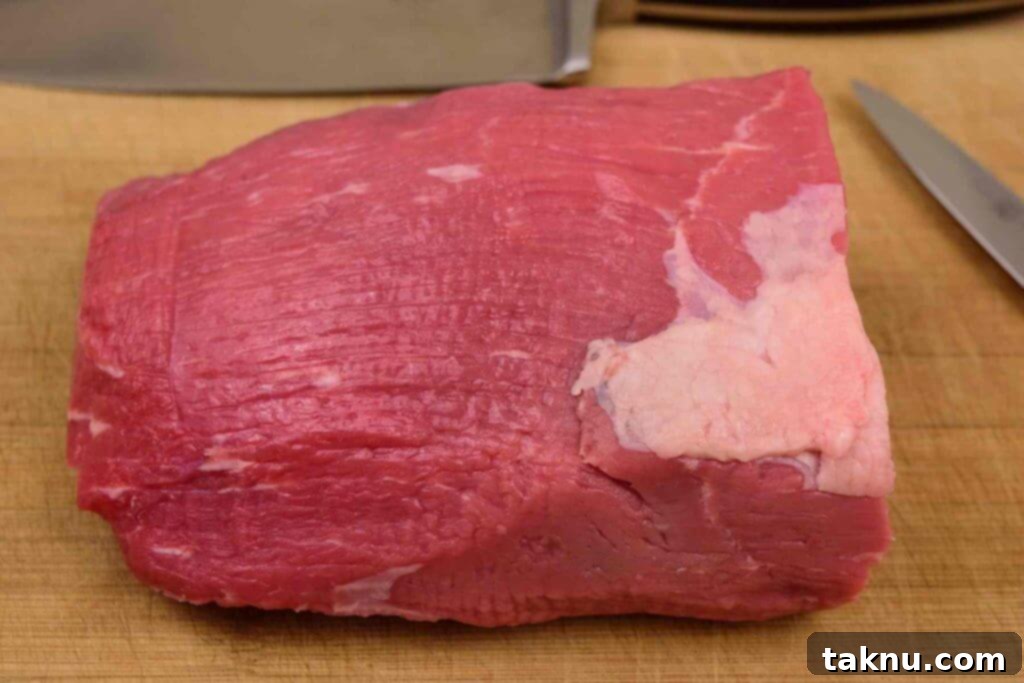
The very first and arguably most critical step when preparing any meat for jerky is to meticulously trim away all visible fat. Fat spoils significantly faster than lean meat, which means any fat left on your beef strips will drastically reduce the shelf life of your jerky. Look for any white marbling or pockets of fat, as seen in the picture below, and trim them off thoroughly before you begin slicing. This attention to detail ensures your jerky remains shelf-stable and delicious for longer.
When it comes to slicing, you have a choice that impacts the final texture of your jerky. Slice the meat with a very sharp knife either **with the grain** for a tougher, more traditional chewy jerky, or **against the grain** for a more tender and easier-to-eat jerky. Experiment with both to discover your personal preference.
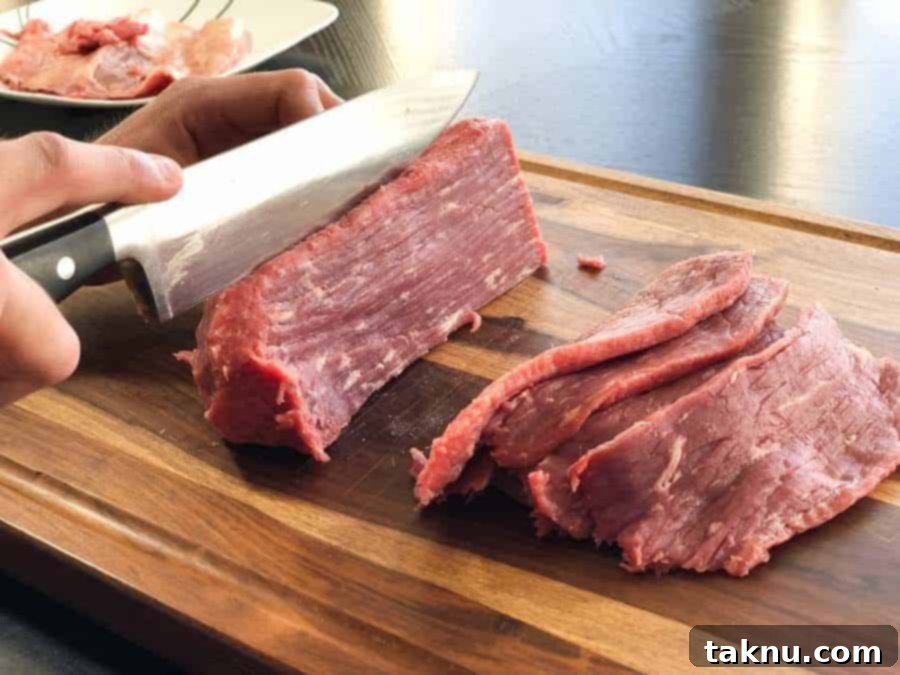
To ensure uniform drying, strive to slice even strips, ideally between ⅛” and ¼” in thickness. A handy trick to make slicing easier and achieve cleaner cuts is to wrap your roast in plastic wrap and partially freeze it for 1-2 hours. This firms up the meat, making it much more manageable to slice thinly and consistently.
While I didn’t use it for this particular batch (thanks to pre-sliced meat!), a jerky slicer is an incredibly valuable piece of equipment for consistently achieving perfectly even strips. If you plan on making jerky frequently, it’s a worthwhile investment.
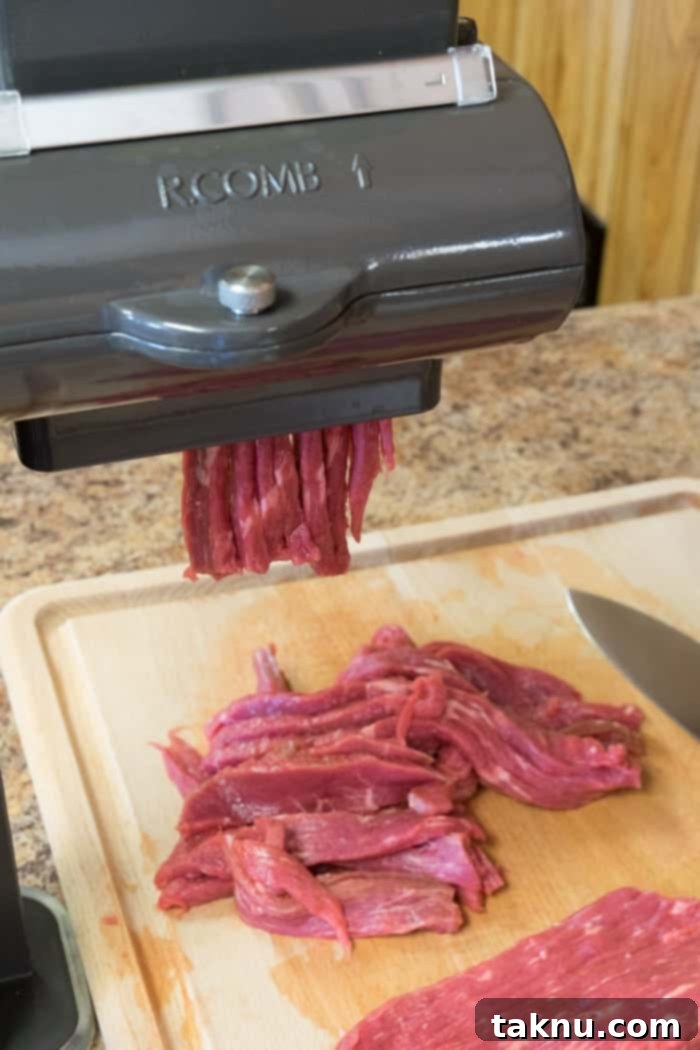
Are you unsure about identifying the grain of the meat? Or do you require more detailed instructions on advanced slicing techniques for jerky? I’ve compiled a dedicated resource page on Slicing Meat for Jerky, where you can find **EVERYTHING** you need to know to master the art of preparing your beef for the best jerky possible.
Crafting the Perfect Lemon Pepper Marinade
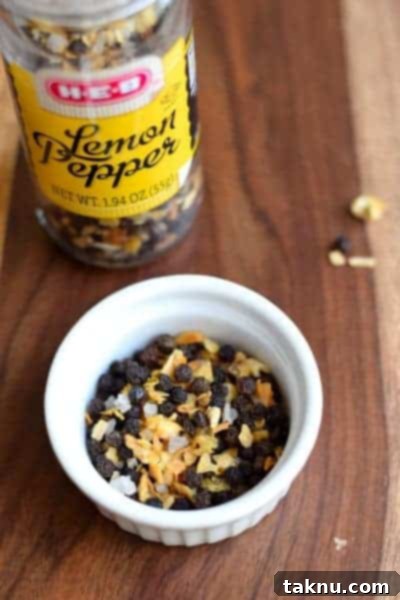
My palate often gravitates towards jerky with a bit of a kick, and this lemon pepper jerky fits that preference beautifully. It’s not overpoweringly spicy, but it offers a delightful, subtle warmth that perfectly complements the bright citrus notes. The primary peppers in this recipe are the lemon pepper seasoning itself and a touch of black pepper. Combine these with savory garlic, a hint of salt, and a robust soy sauce, and you’ve got a marinade that creates an incredibly delicious batch of jerky just begging to be devoured!
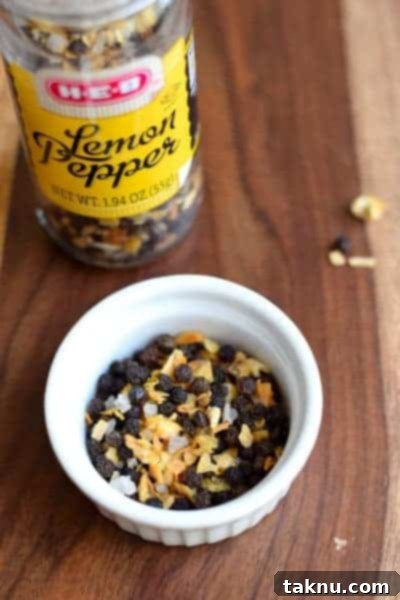
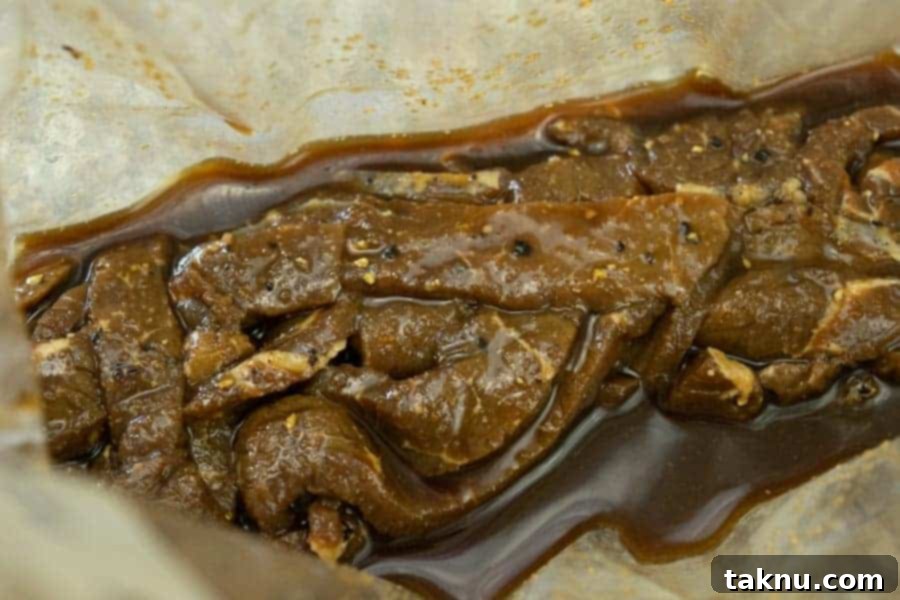
To begin, simply mix all the marinade ingredients thoroughly in a bowl or a large resealable plastic bag. Once combined, add your perfectly sliced beef strips. It’s crucial to ensure every piece of meat is evenly coated in the marinade. If using a bag, massage it gently; if using a bowl, stir well, making sure no dry spots remain. This ensures consistent flavor penetration throughout your jerky.
Related Page: Dozens of Great Tasting Jerky Recipes – Click Here
Once marinated, place the meat in the refrigerator and allow the flavors to meld for 6 to 24 hours. Generally, the longer the meat marinates, the more intense and developed the flavor will be. **A crucial food safety tip:** Always marinate your meat in the refrigerator. Never marinate at room temperature, as this can lead to bacterial growth and spoilage. Safety first for delicious jerky!
The Drying Process: Dehydrator, Oven, or Smoker
After your beef strips have soaked up all that wonderful flavor from the marinade, it’s time to prepare them for drying. First, strain any excess marinade using a colander. For this particular batch, I allowed the beef to marinate for a full 22 hours before straining, truly maximizing the flavor absorption. Remember, the longer the marinating process, the more potent and delicious your jerky will be!
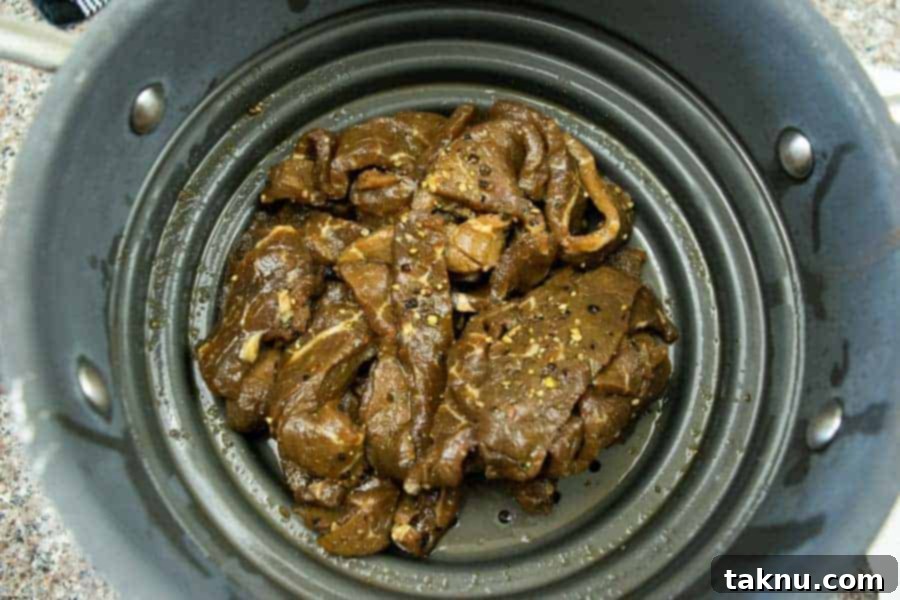
Before transferring the meat to your chosen drying device (dehydrator, oven, or smoker), lay the marinated strips out on several layers of paper towels. Gently pat them dry to remove as much surface moisture and excess marinade as possible. This simple yet effective step serves two important purposes: it significantly speeds up the drying process and prevents your jerky from developing an undesirable ‘sticky’ texture once it’s finished.
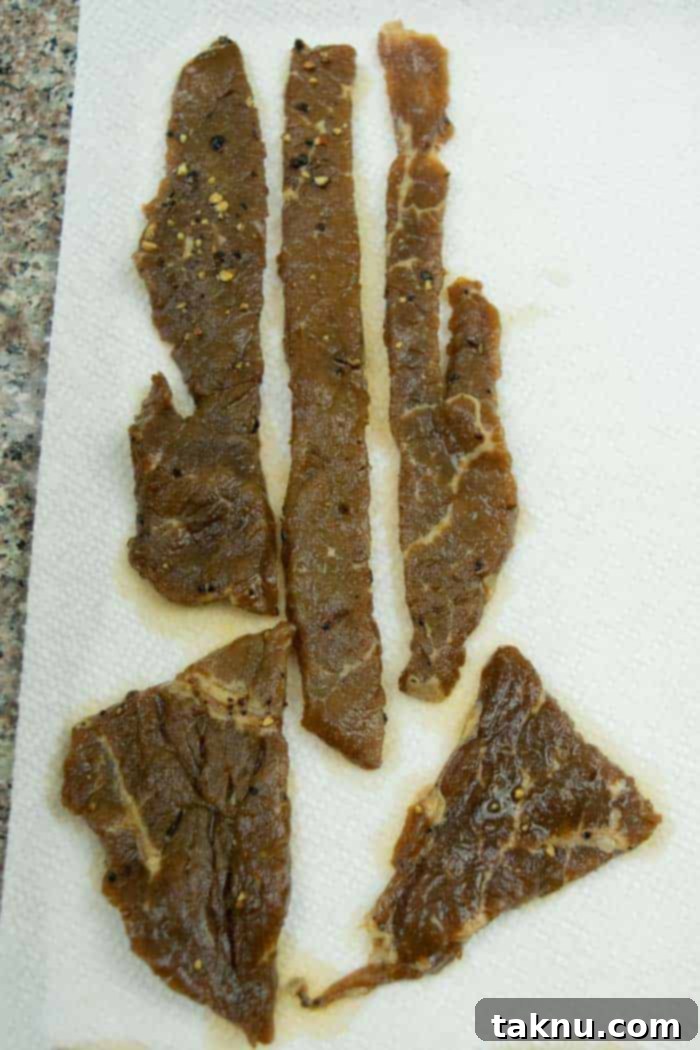
Once patted dry, arrange the strips on your dehydrator trays, oven racks, or smoker grates. Ensure that the pieces are not overlapping or touching, as good airflow is essential for even drying. For comprehensive, in-depth instructions covering various methods for drying your jerky, from dehydrators to ovens and smokers, please visit my dedicated Jerky Making Methods Page.
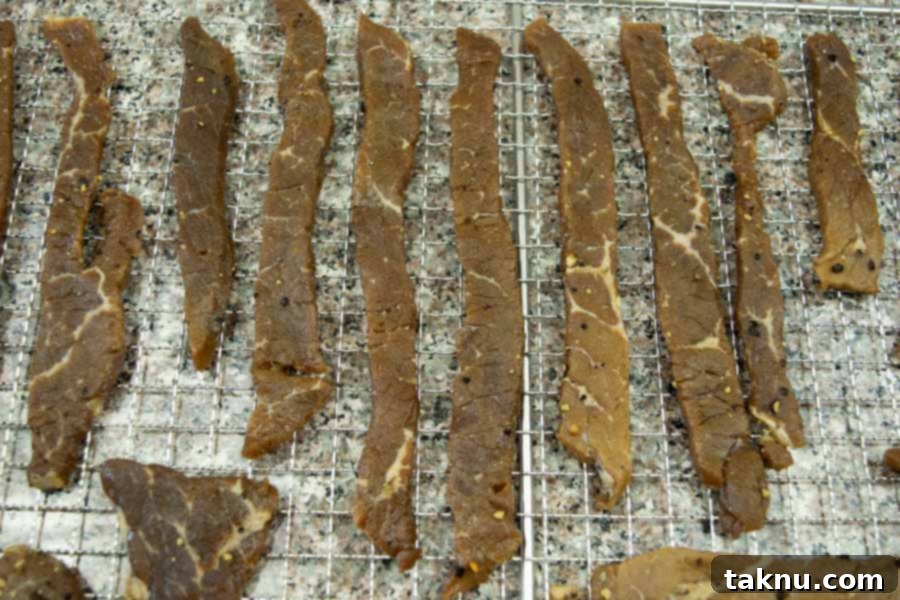
For this recipe, I utilized my reliable Sahara Dehydrator, an excellent piece of equipment for serious jerky makers. As seen below, it efficiently dried the jerky for a total of 4 hours at a consistent temperature of 165°F. While this dehydrator is on the pricier side, its ability to fold down to a third of its size for convenient storage makes it an outstanding option, especially for those with limited kitchen space.
It is critically important to ensure that the meat reaches an internal temperature of 160°F during the drying process to eliminate any potential bacteria, making your jerky safe to consume. The 4 hours at 165°F in my dehydrator effectively achieves this. If your dehydrator does not reach 160°F, you can pre-heat the meat in an oven at 275°F for 10 minutes before drying. For more detailed information on making safe jerky and understanding this vital step, please consult my page on jerky safety.
Related Page: Dehydrator Reviews – Click Here
Testing for Perfection: Knowing When Your Jerky is Finished
The drying time for jerky can vary based on thickness, humidity, and the specific drying method used. Therefore, it’s essential to start testing your jerky for doneness around the 3-4 hour mark of the drying process. To perform the bend test, carefully remove a piece of jerky from your dehydrator, oven, or smoker and allow it to cool to room temperature for about 5 minutes. Cooling is important because jerky will firm up as it cools.
Once cooled, bend the jerky in half. Properly dried jerky should bend and crack, but it should not cleanly break into two pieces. You will also notice distinct white fibers visible within the meat, especially when a piece is torn in half. These fibers are a good indicator that the moisture content is reduced to the appropriate level.
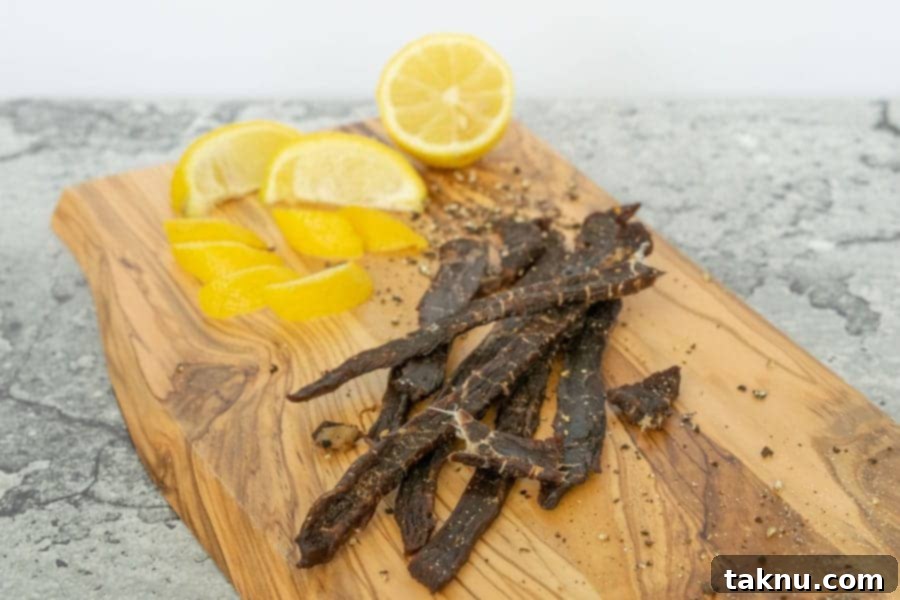
If the jerky doesn’t pass the bend test – meaning it’s still too soft, pliable, or breaks cleanly – continue drying it for another hour and then repeat the cooling and bending process. Most jerky I make is typically finished within 4-6 hours when using a dehydrator or oven. If you’re using a smoker, the drying time can extend to 6-9 hours. However, if you pre-heat the meat in an oven before drying, the overall drying time can be significantly reduced, sometimes to as little as 2.5 hours.
The ingredients for this lemon pepper jerky are straightforward and widely available. One ingredient you absolutely should not omit is water in the marinade. The water plays a crucial role in two ways: it helps to cut through and balance the salty taste, and it thins out the potent flavor of the soy sauce, preventing it from overpowering the other delicate spices. As someone who isn’t a fan of excessively soy-flavored jerky, you’ll find water featured prominently in many of my recipes. I firmly believe it mellows the stronger tastes, allowing the unique notes of lemon pepper, garlic, and black pepper to truly shine through.
Storing Your Homemade Jerky for Maximum Freshness
Once your delicious lemon pepper jerky is perfectly dried and cooled, proper storage is key to maintaining its freshness and extending its shelf life. To make your jerky last as long as possible, using curing salt (such as Prague Powder #1) in your marinade can be highly beneficial, as it acts as a preservative. Beyond that, keeping your jerky in air-tight containers is paramount.
For the best results, consider storing your jerky in vacuum-sealed bags. This method removes oxygen, which is the primary enemy of freshness, greatly extending the jerky’s longevity. If vacuum sealing isn’t an option, heavy-duty resealable freezer bags or glass jars with tight-fitting lids stored in a cool, dark place will also work well. For a comprehensive guide on various storage techniques and steps you can take to maximize the shelf life of your homemade jerky, be sure to check out my dedicated page on storing jerky!
Pro Tips for Unforgettable Lemon Pepper Jerky
- **Save Time with Pre-sliced Beef:** Opt for already sliced beef roast from your butcher to significantly cut down on prep time.
- **Boost Shelf Life with Curing Agents:** Incorporate curing salt (Prague Powder #1) or celery juice powder into your marinade to extend the freshness and safety of your jerky.
- **Maximize Flavor with Longer Marination:** For the most intense and deeply infused flavor, aim to marinate your beef strips closer to the 24-hour mark.
- **Elevate Flavor with Freshly Ground Lemon Pepper:** Whenever possible, choose lemon pepper seasoning in a grinder over pre-finely ground versions. Freshly ground spices always deliver superior flavor and aroma.

For even more in-depth directions and visual guides on how to dry your jerky using various methods, visit my comprehensive page: Jerky Making Methods, or simply click on the insightful pictures below.
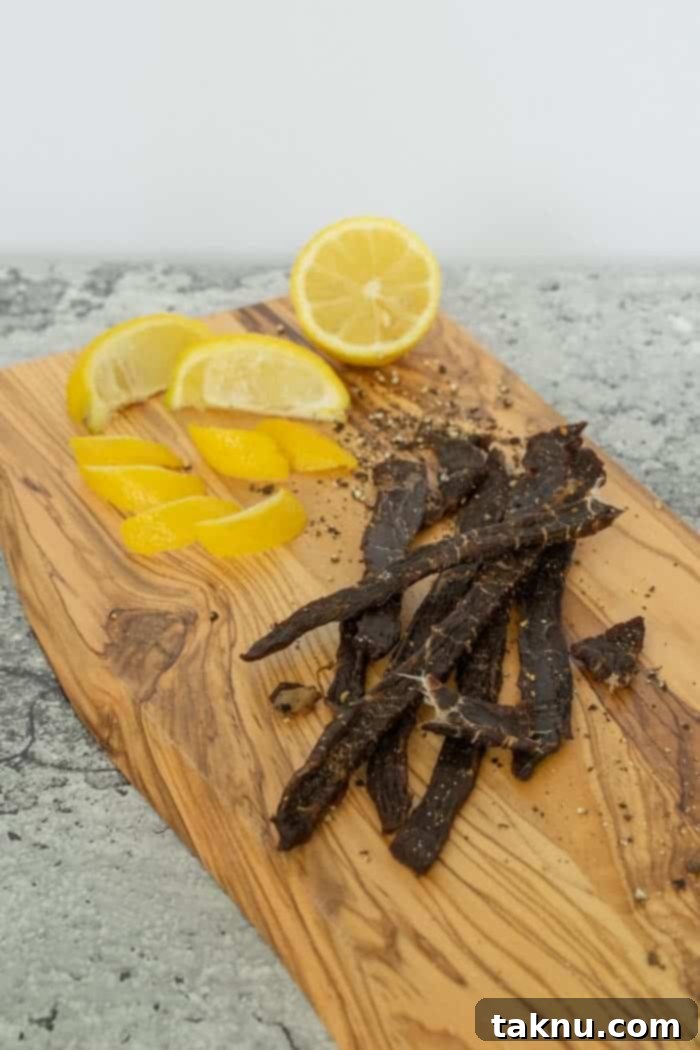
Lemon Peppered Jerky
Pin Recipe
Ingredients
Lean Beef
- 1 lb beef top round
Marinade
- ¾ teaspoon black pepper
- ½ teaspoon garlic powder
- ¾ teaspoon lemon pepper
- ½ teaspoon salt
- ¼ cup soy sauce
- ¼ cup water
Optional
- ¼ teaspoon Curing Salt (Prague Powder #1)
Equipment
Instructions
- Pick a lean cut of beef and trim all visible fat. After trimming the fat, place the meat in the freezer for an hour or two to partially freeze. If purchasing already sliced beef as I did, skip the freezing step.
- While the meat is in the freezer, combine and mix the soy sauce, water, black pepper, garlic powder, lemon pepper, and salt in a medium size bowl or ziplock bag.
- Remove meat from the freezer and slice against the grain between ⅛” – ¼” in thickness and 1″ wide.
- Add sliced beef to the mixture and marinate for 6-24 hours in the refrigerator.
- After the meat has finished marinating, remove from refrigerator and pat dry with paper towels.
- Dry with your favorite jerky making method. A dehydrator was used when making this recipe. The slices were placed on dehydrator racks so they were not overlapping or touching. Dried for 4 hours at 165 degrees.
- Jerky will be finished when it bends and cracks, but does not break in half. Allow to cool for several hours before storing in air tight containers.
Pro Tips
- Buy already sliced beef roast to avoid slicing yourself. It saves time!
- Use curing salt or celery juice powder to extend the life of the jerky
- Marinate closer to 24 hours for the most intense flavor
- Find lemon pepper in a grinder instead of previously finely ground for better flavor
Nutrition
Tried this recipe?Let us know how it was!
Need more detailed, step-by-step guidance on how to make perfect jerky using an oven, a dehydrator, or a smoker? Elevate your jerky-making skills by visiting my comprehensive page: Jerky Making Methods to transform into a true jerky-making pro!
You Might Also Like These Essential Jerky Resources: