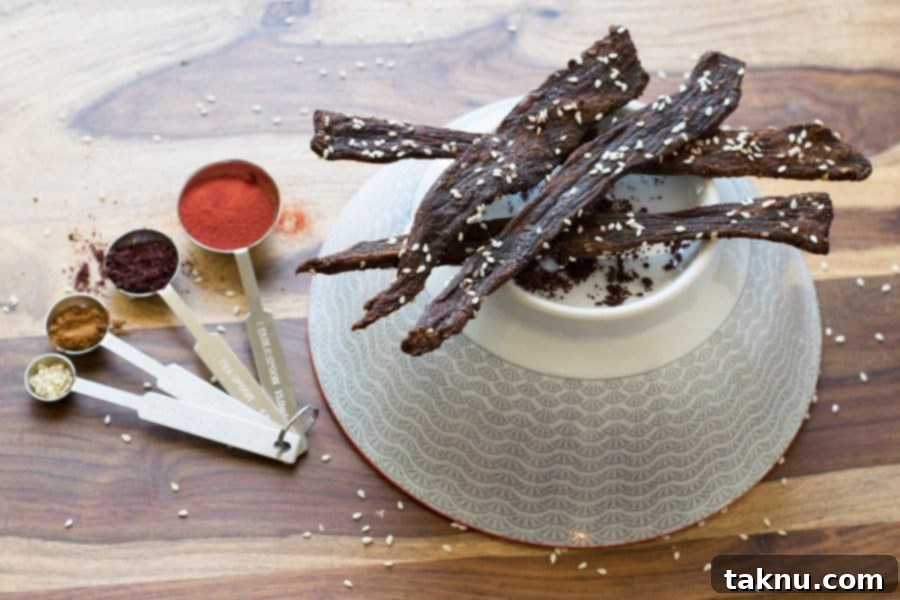
Homemade Silk Road Beef Jerky: A Tangy Sumac and Spice Adventure
Embark on a culinary journey with our exquisite Silk Road Beef Jerky recipe, where ancient trade routes inspire modern flavor. While the historical Silk Road connected diverse cultures from Europe to China, facilitating the exchange of goods and ideas, our recipe draws its unique character from a star ingredient originating closer to the Mediterranean: Sumac. This vibrant, tangy spice lends an exotic and irresistible twist to traditional beef jerky, transforming it into a gourmet snack that’s both familiar and wonderfully novel.
You might be wondering about the connection between Sumac and the Silk Road. It’s true that Sumac itself wasn’t a primary commodity traded along the entire length of the Silk Road in the same way silk or spices from further east were. However, the Mediterranean region, from where Sumac hails, was indeed a vital hub for trade, forming the western nexus of these vast networks. So, while not a direct trade item on the deepest parts of the route, the spirit of global culinary exploration and the allure of unique ingredients from different corners of the world perfectly encapsulate the essence of the Silk Road. And since I already have a “Mediterranean Jerky” recipe, naming this tangy creation “Silk Road Beef Jerky” felt like a natural, evocative fit. It’s a testament to how simple connections can spark delicious inspirations!
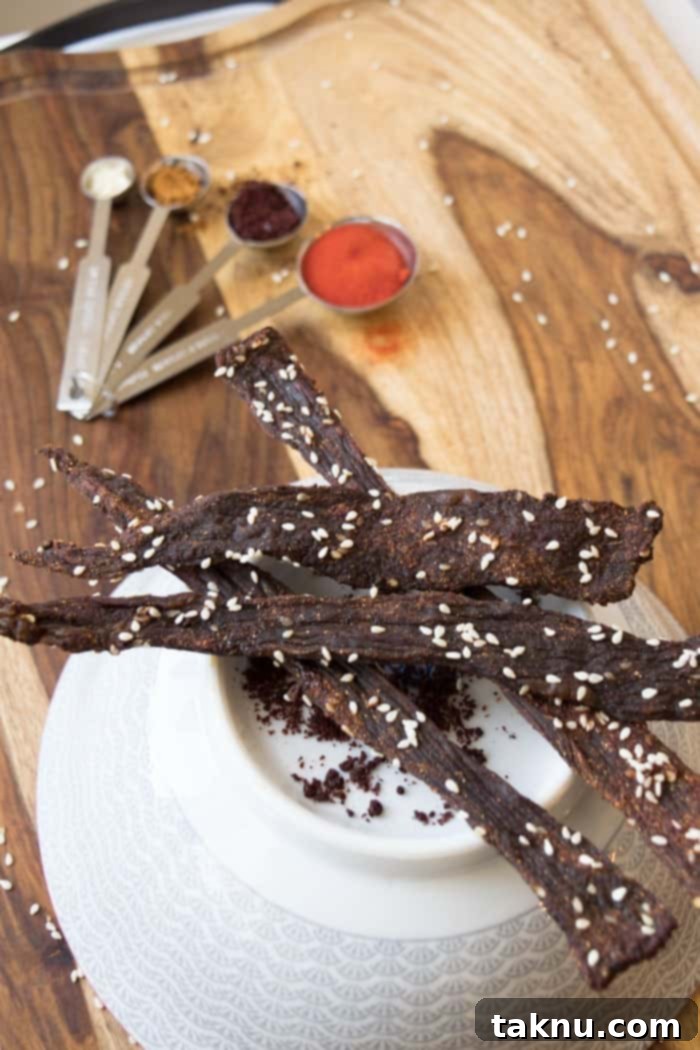
Discovering Sumac: The Star of Our Jerky
As highlighted, Sumac is undeniably the star ingredient that elevates this beef jerky beyond the ordinary. This beautiful, deep red spice is derived from the dried and ground berries of the Sumac shrub, typically found across the Middle East and parts of the Mediterranean. Its flavor profile is wonderfully distinctive: intensely tangy, with a bright, lemony zest and a subtle hint of fruitiness, but without the harshness often associated with lemon juice. It’s primarily used in its ground form, perfect for sprinkling over dishes or incorporating into marinades like ours. If you haven’t cooked with Sumac before, prepare to be amazed by its fantastic ability to brighten and enhance flavors! I sourced my Sumac from a local spice shop in Boulder, but it’s readily available. You can easily find high-quality Sumac on Amazon or at specialty spice stores near you.
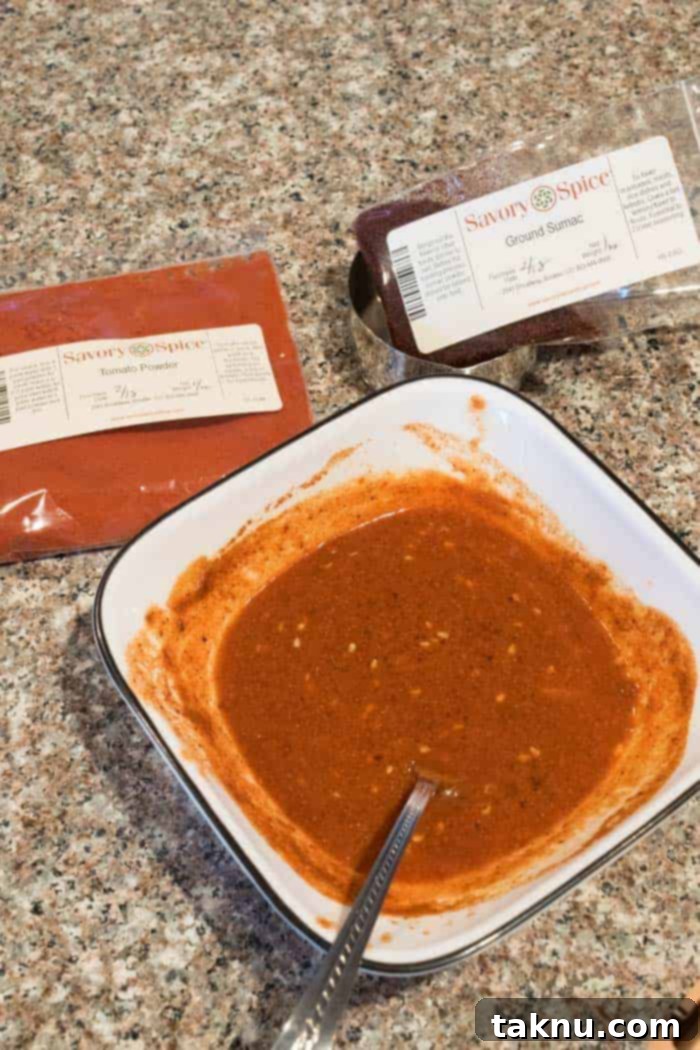
Beyond its incredible flavor, Sumac also boasts a rich history of use in traditional medicine and a strong antioxidant profile, making it a healthy addition to your spice rack. Its vibrant color also adds a beautiful visual appeal to the jerky, hinting at the bold flavors within.
Complementing the Sumac, this recipe also incorporates tomato powder. Often overlooked, tomato powder is a secret weapon in many marinades, offering a concentrated burst of umami and a subtle sweetness that balances the tanginess of the Sumac. It deepens the overall flavor without making the jerky taste overtly like tomatoes. You can typically find tomato powder at well-stocked spice shops or, of course, purchase it online. If you can’t find tomato powder, a small amount of tomato paste could be a last-resort substitute, but be mindful of its moisture content and adjust the water in the marinade accordingly.
Preparing Your Meat for the Best Jerky
The foundation of any great beef jerky lies in the quality and preparation of the meat. For this Silk Road Beef Jerky, we recommend using lean cuts such as Beef Eye of Round or Venison. These cuts have minimal fat, which is crucial for jerky, as fat can turn rancid quickly and reduce the shelf life of your finished product. Begin by meticulously trimming all visible fat from your chosen cut of meat. To make slicing easier and more precise, partially freeze the beef for about one to two hours. This firms up the meat, allowing for cleaner, more uniform slices. Uniformity in thickness is key to ensuring that all your jerky strips dry evenly at the same rate, preventing some pieces from becoming over-dried and brittle while others remain too moist.
Once the meat is partially frozen, it’s time to slice. You have a choice: slice a quarter-inch thick against the grain for a more tender, easy-to-chew jerky, or slice with the grain for a chewier, more traditional jerky texture. I personally opted to slice with the grain using my Jerky Slicer, which delivered that satisfying, resilient chew I often look for in homemade jerky. Whichever method you choose, consistency is paramount for an optimal drying process.
Marinating for Maximum Flavor
The marinade is where the magic truly happens for our Silk Road Beef Jerky. While your meat is chilling in the freezer, prepare the flavorful marinade. In a bowl or a large, sealable plastic bag (ziplock bags work great for even coating and minimal cleanup), combine the sea salt, cinnamon, half of the sesame seeds (reserving the other half for topping later), ground coriander, garlic powder, ground sumac, tomato powder, lemon juice, and cold water. If you prefer, and for an added layer of safety and preservation, you can also include a quarter teaspoon of curing salt. This blend of spices creates a complex aroma that promises the delightful flavors to come.
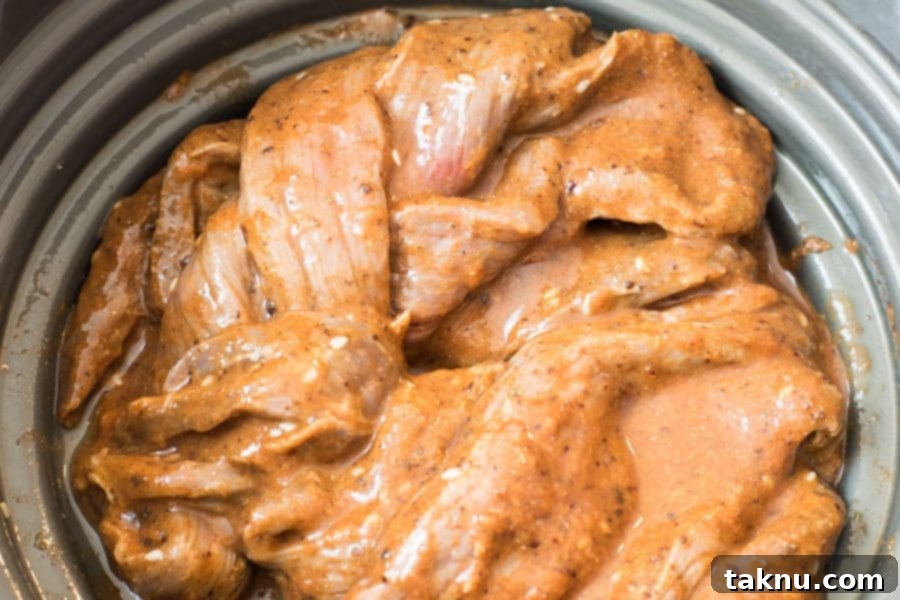
Once your beef is sliced, add the strips to the prepared marinade. Ensure all pieces are thoroughly coated. Seal the bag or cover the bowl and refrigerate for 8 to 24 hours. A longer marinating time allows the flavors to deeply penetrate the meat, resulting in a more intense and satisfying taste in the final jerky. During this time, the acidic components of the lemon juice and sumac also help to tenderize the meat slightly, contributing to a better texture.
The Drying Process: From Marinade to Mouth-Watering Jerky
After the marinating period is complete, remove the meat from the refrigerator. It’s crucial to remove any excess liquid before drying. Transfer the marinated beef strips to a colander and allow them to drain thoroughly. Following this, pat each strip dry with paper towels. This step is vital for two reasons: it removes any lingering surface moisture that could hinder the drying process or lead to uneven drying, and it helps the topping sesame seeds adhere better. At this point, sprinkle the remaining half teaspoon of sesame seeds over the pat-dried strips. These sesame seeds not only add a delightful nutty flavor but also contribute to a beautiful, appetizing appearance.
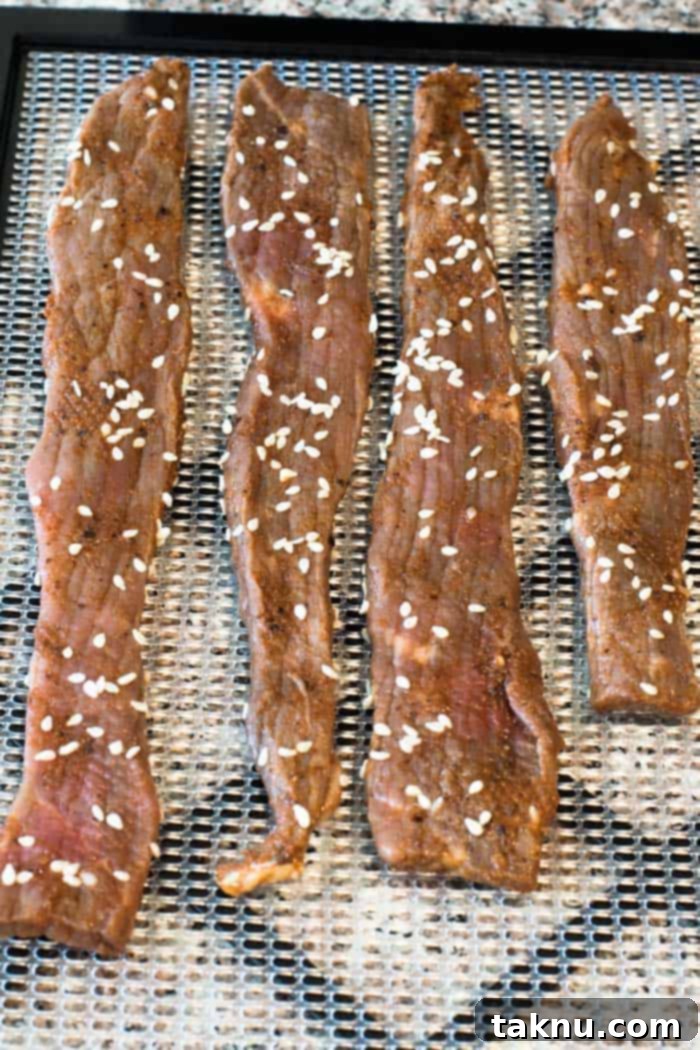
Now, it’s time to dry your jerky. While various methods exist, using a dehydrator is one of the most consistent and recommended approaches. I placed my marinated and seasoned beef strips onto the trays of my reliable Excalibur Dehydrator and dried them for approximately 4 hours at a temperature of 165°F (74°C). The exact drying time can vary depending on your dehydrator model, the thickness of your meat slices, and your desired level of dryness. It’s always best to check your jerky periodically.
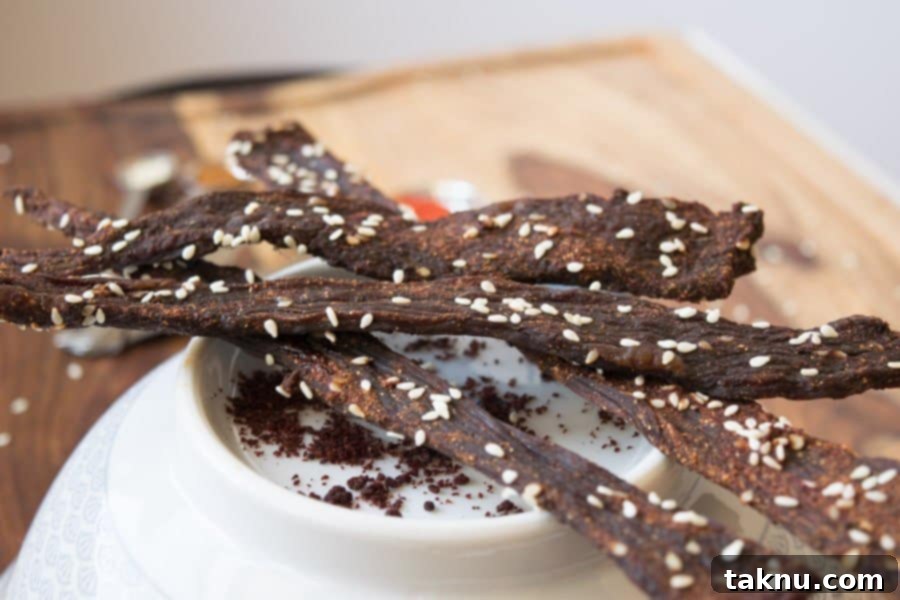
The jerky is finished when it reaches the perfect texture: it should be firm, yet pliable. When bent, it should crack but not break completely in half. It should not feel wet or spongy. Properly dried jerky is shelf-stable and delicious.
The Unforgettable Flavor of Silk Road Beef Jerky
The moment of truth arrives when you taste your freshly made Silk Road Beef Jerky. And let me tell you, this batch turned out absolutely delicious! The flavor profile is a magnificent balance of tangy and tart, with Sumac truly stealing the show, infusing each bite with its signature lemony brightness. This vibrant tang is beautifully complemented by a subtle, warming hint of cinnamon, which rounds out the flavor experience, making it incredibly satisfying and moreish. This jerky is definitely a keeper!
While the tomato powder contributes to the overall depth and umami, its flavor isn’t overtly dominant. If you are a particular fan of tomato notes and wish for them to be more pronounced, you might consider adding a slightly larger quantity of tomato powder to the marinade next time. However, as is, the combination creates a uniquely savory, tangy, and subtly sweet jerky that’s perfect for snacking, hiking, or simply enjoying whenever a craving strikes. This Silk Road Beef Jerky is truly a culinary delight!
For more in-depth directions on how to perfectly dry your jerky, visit my dedicated page Jerky Making Methods, or simply click on the helpful images below for guides on specific equipment.
Silk Road Beef Jerky
Pin Recipe
Ingredients
Lean Meat
- 1 lb Beef Eye of Round or Venison
Ingredients
- ½ teaspoon sea salt
- ½ teaspoon cinnamon
- ½ teaspoon sesame seeds
- ½ teaspoon ground coriander
- 1 teaspoon garlic powder
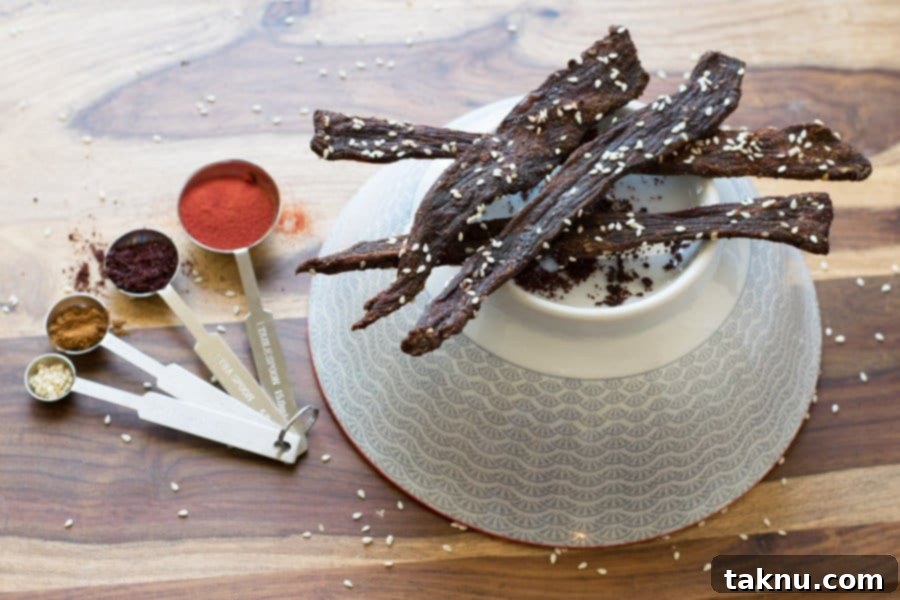
- 2 teaspoon ground sumac
- 2 teaspoon tomato powder
- 1 tablespoon lemon juice
- ½ cup cold water
- ¼ teaspoon curing salt (optional)
Topping
- ½ teaspoon sesame seeds
Equipment
Instructions
- Trim all visible fat from the beef and place it in the freezer for an hour or two to partially freeze, making it easier to slice.
- While the meat is in the freezer, combine all marinade ingredients (sea salt, cinnamon, ½ tsp sesame seeds, ground coriander, garlic powder, ground sumac, tomato powder, lemon juice, cold water, and optional curing salt) in a bowl or a large, resealable bag. Remember to save the other ½ tsp of sesame seeds for later.
- Remove the meat from the freezer and slice it into ¼-inch thick strips. Slice against the grain for a more tender, easy-to-chew jerky, or slice with the grain for a chewier texture. (I personally did not fully freeze the jerky and used my Jerky Slicer, cutting with the grain for a chewier result).
- Add the sliced beef to the marinade mixture in the ziplock bag or bowl. Ensure all the meat strips are thoroughly coated. Marinate in the refrigerator for 8-24 hours for optimal flavor infusion.
- Once the meat has finished marinating, remove it from the refrigerator and drain off any excess marinade using a colander. Pat the strips thoroughly dry with paper towels to prepare them for drying. Sprinkle the remaining ½ teaspoon of sesame seeds evenly over the dried strips.
- Dry the jerky using your favorite jerky making method. I utilized my Excalibur Dehydrator, drying the jerky for 4 hours at 165°F (74°C).
- The jerky is perfectly finished when it bends and cracks but does not break completely in half. It should be firm but still pliable.
Nutrition
You Might Also Like These Essential Jerky Making Guides:
Best Cuts of Beef for Jerky: A Comprehensive Guide
Choosing the right cut of meat is fundamental to making exceptional beef jerky. This guide dives deep into the best options, explaining why certain cuts are superior for flavor, texture, and longevity. Learn about lean muscle groups and how they contribute to a perfect jerky.
How to Make Beef Jerky with a Dehydrator: Step-by-Step Instructions
Dehydrators offer a consistent and efficient way to make delicious homemade jerky. This detailed guide walks you through every step of the process, from preparing your meat to monitoring drying times, ensuring a perfectly dried and flavorful batch every time.
The Best Dehydrator for Making Beef Jerky: A Buyer’s Guide
Invest in the right equipment for your jerky-making adventures. This guide reviews top dehydrator models, discussing features, capacity, and performance to help you choose the best dehydrator to suit your needs and budget.
Slicing Meat for Beef Jerky: Techniques for Perfect Strips
Achieving uniform slices is crucial for even drying. This guide provides expert tips and techniques for slicing meat, whether you’re using a knife, a slicer, or even a specialized jerky gun, ensuring your jerky dries perfectly and consistently. Discover the difference between cutting with and against the grain for various textures.