Sweet & Savory Oven Beef Jerky: Your Guide to Perfect Brown Sugar Beef Jerky
There’s something uniquely satisfying about homemade beef jerky, and this brown sugar rendition is an absolute showstopper. The rich, savory essence of beef perfectly harmonizes with the deep, molasses-like sweetness of brown sugar, creating a flavor profile that’s simply irresistible. This oven beef jerky isn’t just a snack; it’s an experience, a delightful treat that consistently garners rave reviews. You might find yourself needing to strategically hide a stash, or it will vanish within moments of hitting the table!
This exceptional recipe originates from the acclaimed “Sausage and Jerky Makers’ Bible,” a treasured resource among my collection of jerky-making literature. It’s a recipe I wholeheartedly endorse – a definite keeper! The subtle, yet impactful, sweetness infused by the brown sugar transforms this meat treat into something truly special, a sentiment enthusiastically shared by my family. Let’s dive into the details of crafting this fan-favorite jerky right in your own kitchen.
[feast_advanced_jump_to]
Crafting the Perfect Marinade: The Secret to Irresistible Flavor
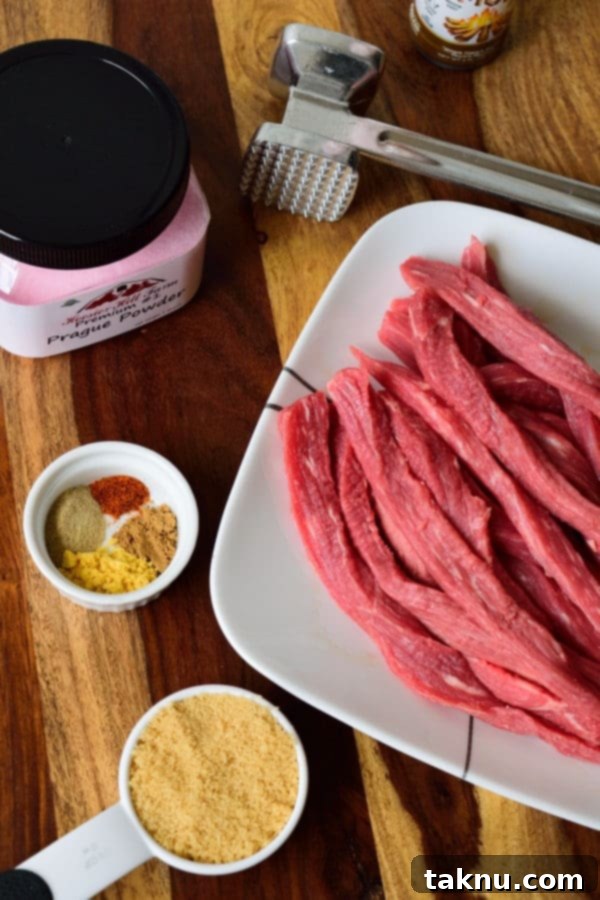
The magic of this jerky lies in its meticulously balanced marinade. While brown sugar provides the star sweetness, a symphony of other spices elevates the flavor profile. Coriander contributes a warm, citrusy note, while cayenne pepper adds a gentle kick of heat that awakens the palate without overpowering the sweetness. White pepper offers a milder, earthier pungency, and mustard powder rounds out the blend with its distinctive tangy undertones. Together, these ingredients create a complex yet smooth sweet-and-savory taste that makes this jerky truly unforgettable.
The purpose of a marinade goes beyond just flavor. It also tenderizes the meat slightly and helps in the preservation process, especially when curing salts are included. The extended marination period allows the flavors to deeply penetrate the beef, ensuring every bite is bursting with taste. If you’re keen to explore other fantastic jerky marinades for your oven, be sure to try our Ultimate Beef Jerky Recipe. It’s another excellent option for those seeking bold and delicious jerky flavors.
Selecting and Slicing Your Meat for Optimal Jerky Texture
The foundation of great beef jerky starts with selecting the right cut of beef. Lean cuts are paramount, as excess fat can turn rancid quickly, significantly reducing the jerky’s shelf life. For this particular recipe, I opted for beef eye of round, a consistently lean and flavorful choice. However, many other cuts are also suitable. For a comprehensive guide and a complete list of recommended options, explore the best cuts of meat for making beef jerky.
Once you’ve chosen your lean cut, proper slicing is the next critical step. When preparing this jerky, I sliced the beef eye of round roast with the grain of the meat. This method yields a more traditional, chewy jerky texture, which many enthusiasts prefer. The longer fibers create resistance, making each piece a satisfying chew.
Conversely, if your preference is for a more tender jerky that’s easier to bite through, you should slice the meat against the grain. This severs the muscle fibers, resulting in a less chewy, almost melt-in-your-mouth experience. To help you master this technique and understand the nuances of slicing for different textures, I’ve dedicated a detailed page to slicing meat for beef jerky, providing all the tips and tricks you’ll need.
For easier and more consistent slicing, a helpful tip is to partially freeze your chosen cut of beef for about 1 to 2 hours before slicing. This firms up the meat, allowing for cleaner, more uniform ¼-inch strips. Whether you use a sharp knife or a dedicated jerky slicer, consistent thickness is key to even drying.
Combining Flavors: Preparing Your Delicious Brown Sugar Jerky Marinade
Once your meat is perfectly sliced, it’s time to create the flavor base. In a large bowl or a robust Ziplock bag, combine all the marinade ingredients. Whisk them thoroughly to ensure the brown sugar dissolves and the spices are evenly distributed. This step is crucial for achieving a homogenous flavor throughout your jerky.
Next, add your prepared meat strips to the marinade. If using a Ziplock bag, seal it tightly and massage the bag to ensure every single strip of beef is thoroughly coated. For a bowl, stir the meat and marinade vigorously. This even distribution is vital for the finished oven beef jerky to have a consistent flavor in every piece, preventing bland spots and ensuring maximum taste saturation.
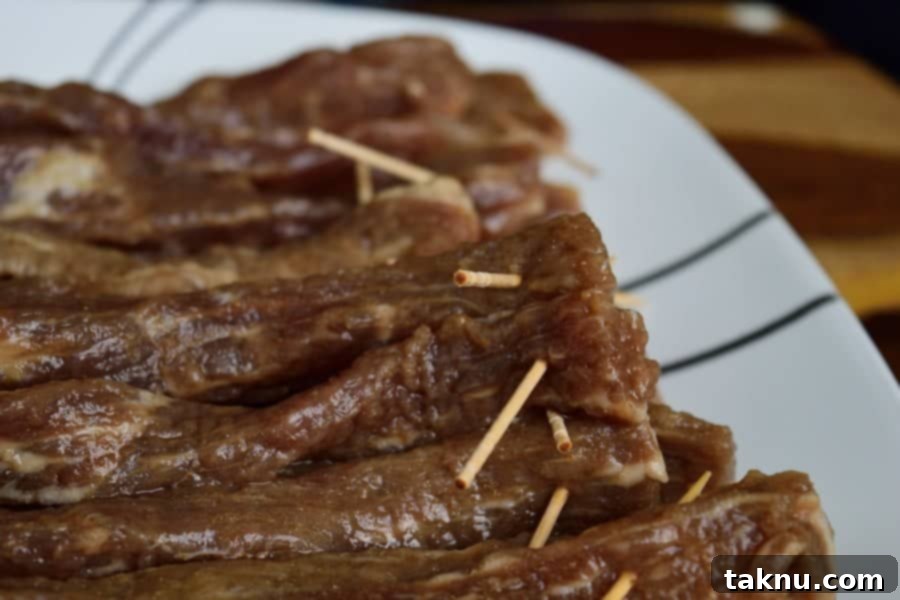
Allow the meat to marinate in the refrigerator for a minimum of 6 hours to allow the flavors to truly infuse. For an even richer, deeper flavor, marinating for 22-24 hours is highly recommended. The longer the meat soaks, the more pronounced and complex the taste will be. After the marinating period, remove the meat strips from the refrigerator. Strain them in a colander to remove excess liquid, then pat them dry thoroughly with paper towels. Removing external moisture helps the jerky dry more efficiently and prevents steaming in the oven.
Drying Your Jerky: Oven Method Mastery
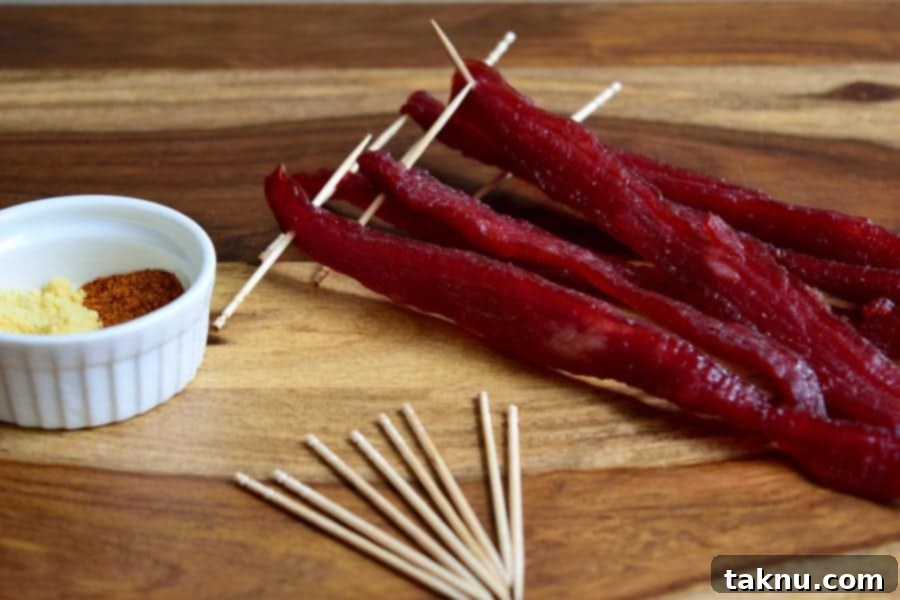
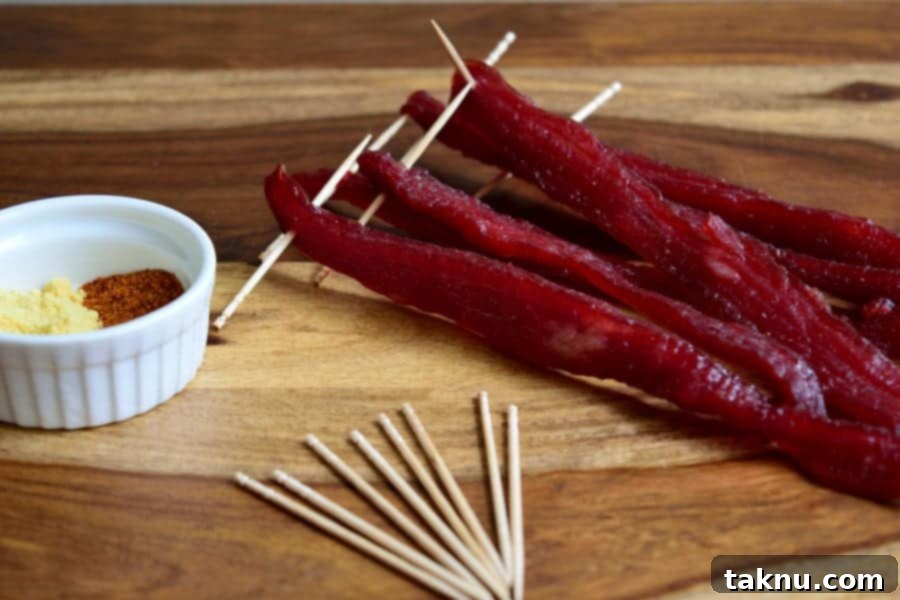
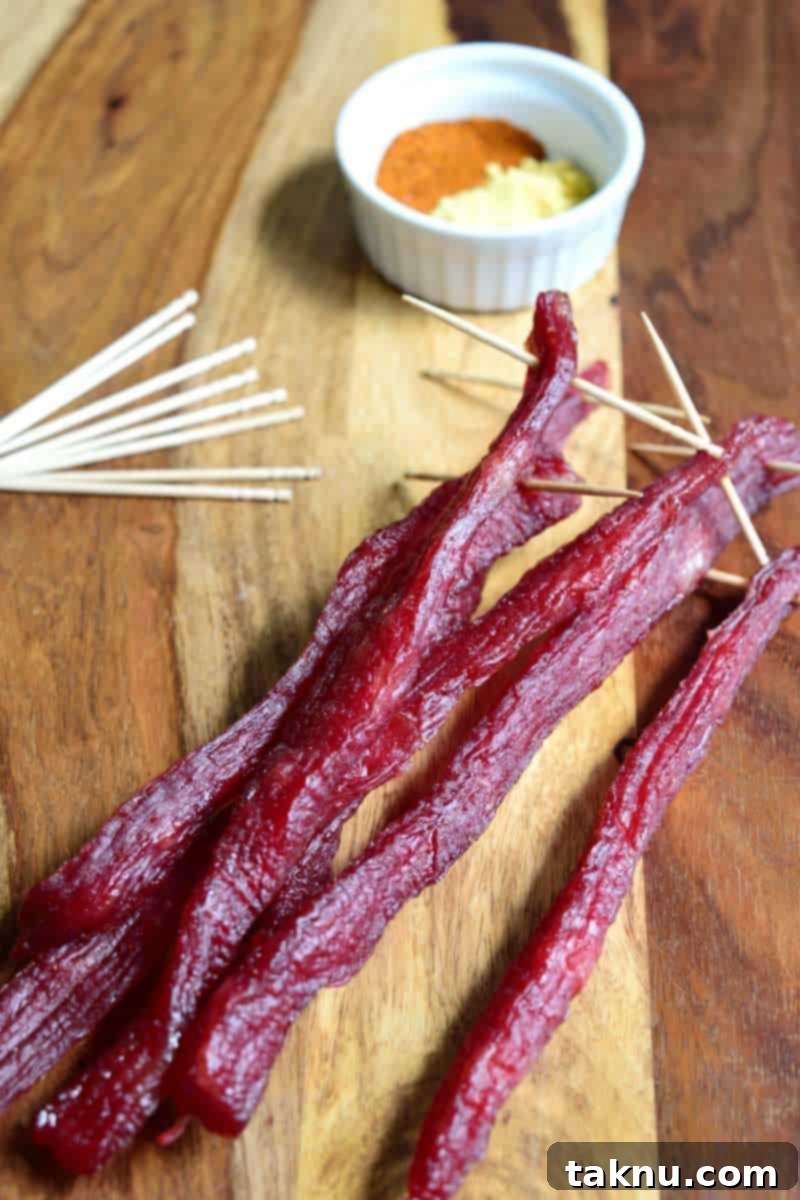
Now comes the dehydrating or “baking” phase, where the magic truly happens. You have a couple of excellent options for arranging your jerky in the oven. One popular technique is to pierce one end of each strip with a toothpick and hang them from your oven grates. This method ensures optimal airflow around each piece, promoting even drying.
Alternatively, you can lay the strips flat on cooling racks that are placed on top of oven trays. This method is often preferred for larger batches or if you don’t have suitable hanging space. Both techniques are highly effective in producing wonderfully flavored oven beef jerky. For this particular batch, I chose to hang the jerky, and it worked exceptionally well. To simplify cleanup, I recommend placing a sheet of aluminum foil on the bottom rack of your oven to catch any drips of marinade or fat that may render out during the drying process.
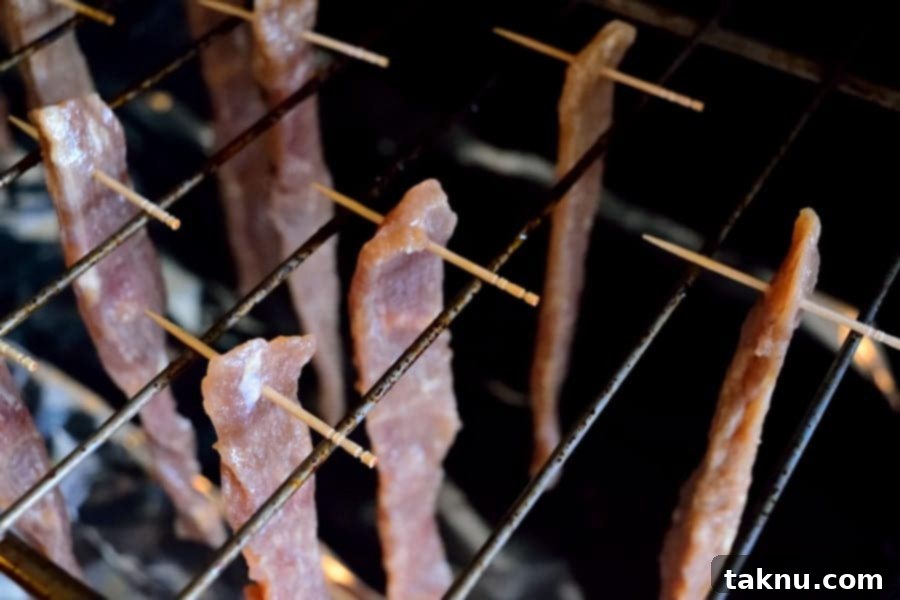
The drying time will vary depending on your oven and the thickness of your jerky, but this particular batch baked for approximately 7 hours to achieve complete dryness at my oven’s lowest setting of 170°F (77°C). Generally, setting your oven temperature between 170°F (77°C) and 200°F (93°C) will yield the best results for baking beef jerky. Crucially, remember to prop the oven door open slightly with a wooden spoon. This small gap allows moisture to escape continuously, preventing the jerky from steaming and ensuring it properly dehydrates.
Throughout the drying process, it’s a good idea to rotate your racks occasionally and check on the jerky, especially after the initial few hours. This ensures even drying across all pieces and prevents any from over-drying or remaining too moist.
The Bend Test: Knowing When Your Jerky is Perfectly Done
Determining when your oven beef jerky is perfectly finished is key to achieving the ideal texture and ensuring its longevity. You should start testing for doneness around the 3-4 hour mark, especially for thinner pieces. To perform the “bend test,” carefully take a piece of your newly made brown sugar beef jerky from the oven and allow it to cool to room temperature for about 5 minutes. Cooling helps it firm up and gives an accurate representation of its final texture.
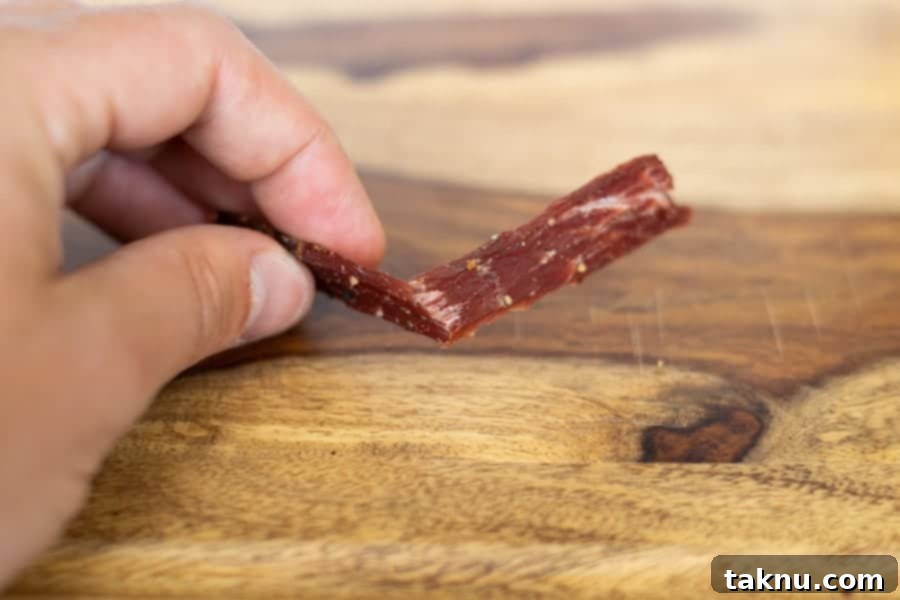
The perfect jerky should bend easily and crack, but it should not break completely in half. If it snaps cleanly, it’s likely over-dried. If it feels rubbery and doesn’t crack at all, it needs more drying time. As you bend it, you should also observe white fibers appearing within the meat. These fibers become more visible when a piece is ripped or bent in half, indicating that the meat has properly dehydrated and the collagen has broken down. Continue drying and testing until all your jerky pieces meet this criteria.
Proper Storage for Extended Freshness
Once your delicious brown sugar beef jerky is perfectly dried and cooled, proper storage is essential to maintain its freshness and extend its shelf life. To ensure your jerky lasts as long as possible, especially outside of refrigeration, incorporating curing salt (like Prague Powder #1) into your recipe is highly beneficial. Curing salt helps inhibit bacterial growth and contributes to the jerky’s characteristic flavor and color. Always store homemade jerky in airtight containers, such as Ziplock bags or vacuum-sealed pouches, to prevent moisture absorption and exposure to air.
I’ve compiled a comprehensive resource on storing beef jerky, detailing various methods and steps you can take to maximize its shelf life, whether you plan to consume it quickly or keep it for an extended period.
Not a fan of curing salts? Not to worry, you absolutely can omit this ingredient if you prefer. Many of the recipes I create intentionally do NOT call for curing salt. However, it is crucial to understand that without curing salt, food safety becomes even more critical. When omitting curing salt, you must ensure that the internal temperature of the meat reaches at least 160°F (71°C) at some point during the drying process to effectively prevent the growth of harmful bacteria. This is particularly important for oven-dried jerky, where consistent heat application is easier to control.
*Please note: Leaving the curing salt out of the recipe will likely alter both the visual appearance and the subtle flavor profile of this jerky, as curing salts contribute to a specific cured taste and reddish hue.
Pro Tips for Jerky Making Success
Achieving consistently great jerky involves a few key practices:
- Curing Salt Benefits: As mentioned, using curing salt significantly extends the shelf life of your jerky, allowing it to remain fresh for several weeks outside the refrigerator. It’s a reliable preservative for long-term storage.
- Lean Meat for Longevity: Always opt for the leanest cuts of meat available. Fat not only compromises the jerky’s texture but also drastically reduces its storage duration, as fat spoils much faster than dehydrated muscle tissue.
- Non-Stick Preparation: If you’re using cooling racks to dry your jerky, a light spray with a non-stick cooking spray (like Pam) can prevent the meat from sticking, making it much easier to remove once dried and simplifying cleanup.
- Even Thickness: Strive for uniformly sliced meat strips. Inconsistent thickness leads to uneven drying, resulting in some pieces being over-dried and brittle, while others remain too moist.
- Airflow is Key: Whether hanging or laying flat, ensure there’s ample space between each jerky strip to allow for proper air circulation. Overcrowding can lead to steaming instead of drying.
- Rotate for Consistency: If using multiple oven racks, rotate them periodically (e.g., every 2-3 hours) to ensure all pieces dry evenly, as oven temperatures can vary.
Explore More Jerky Making Adventures
Inspired to try more homemade jerky? There’s a whole world of jerky making to explore! Whether you prefer other drying methods or different meat types, we have guides to help you expand your jerky horizons:
- How to Make Beef Jerky in a Dehydrator
- How to Make Beef Jerky in a Smoker
- How to Make Ground Beef Jerky
Brown Sugar Beef Jerky
Pin Recipe
45
minutes
9
hours
7
hours
45
minutes
Snack
Beef Jerky
Beef Jerky
Sweet
5
210
kcal
Will
Prevent your screen from going dark
Ingredients
Lean Meat
-
1
lb
Eye of Round or Venison
Marinade
-
½
cup
cold water -
1 ½
teaspoon
pickling salt -
⅛
teaspoon
cayenne pepper -
¼
teaspoon
coriander
(ground) -
¼
teaspoon
liquid smoke
-
½
teaspoon
white pepper -
½
teaspoon
dry mustard powder -
¼
cup
brown sugar -
¼
teaspoon
Prague Powder #1
(curing salt)
Instructions
- Trim all visible fat from the beef and place in freezer for an hour or two to partially freeze. This makes slicing much easier and more uniform.
- While the meat is chilling in the freezer, combine the pickling salt, Prague Powder #1 (if using), cayenne pepper, coriander, liquid smoke, white pepper, dry mustard powder, brown sugar, and cold water in a medium size bowl or a large Ziplock bag. Mix well until all ingredients are fully incorporated and the brown sugar is dissolved.
- Remove the meat from the freezer. Slice it into ¼-inch strips. For a chewier jerky, slice with the grain. For a more tender jerky, slice against the grain. Alternatively, use a Jerky Slicer for perfectly even strips without the need for freezing.
- Gently tenderize the beef strips with a tenderizing mallet. This helps to break down muscle fibers slightly, preventing the finished jerky from becoming too tough and allowing the marinade to penetrate deeper.
- Add the sliced and tenderized beef to the prepared marinade. Ensure all meat strips are fully coated. Marinate in the refrigerator for a minimum of 6 hours, and ideally for 18-24 hours, for best flavor absorption.
- After the marinating process is complete, remove the meat from the refrigerator. Strain the strips in a colander to remove excess marinade, then meticulously pat them dry with paper towels. This step is crucial for efficient drying.
- Dry your jerky using your preferred method: a Dehydrator, Smoker, or Oven. For this recipe, an oven was used, drying the jerky for approximately 7 hours at a constant temperature of 170°F (77°C). Remember to prop the oven door open with a wooden spoon to allow moisture to escape and promote proper dehydration.
Pro Tips
- For an even more intense and savory flavor, consider replacing half or all of the cold water in the marinade with high-quality beef broth.
- Utilizing curing salt (like Prague Powder #1) in your marinade is highly recommended as it will significantly extend the shelf life of your jerky and provide a traditional cured taste and color.
- Always make sure to use a wooden spoon or similar utensil to keep the oven door slightly ajar throughout the drying process. This crucial step allows moist air to escape, which is essential for proper dehydration and preventing the jerky from steaming.
- Making oven jerky, especially in the colder months, is a fantastic way to not only create a delicious snack but also to help gently keep your house warm and infuse it with enticing aromas!
- If using cooling racks directly in the oven, a light spray of non-stick cooking spray will prevent the jerky from sticking as it dries.
Nutrition
Calories:
210
kcal
|
Carbohydrates:
10
g
|
Protein:
24
g
|
Fat:
6
g
|
Saturated Fat:
2
g
|
Cholesterol:
70
mg
|
Sodium:
735
mg
|
Potassium:
216
mg
|
Sugar:
10
g
|
Vitamin A:
20
IU
|
Vitamin C:
0.2
mg
|
Calcium:
15
mg
|
Iron:
2.3
mg
Tried this recipe?
Let us know how it was!
Crafting your own brown sugar beef jerky at home is a rewarding experience that yields a snack far superior to store-bought options. With a perfect balance of sweet and savory, this recipe is sure to become a staple in your jerky-making repertoire. Enjoy the process, savor the aroma, and most importantly, delight in every chewy, flavorful piece!