Mastering Duke’s Original Beef Jerky: A Comprehensive Guide to Crafting This Beloved Recipe at Home
Every now and then, a serendipitous stroll through the grocery store aisles can lead to unexpected culinary adventures. Just yesterday, while navigating the familiar paths of a prominent Texas supermarket – a local favorite widely recognized for its exceptional quality and selection, particularly by those who call the Lone Star State home – my usual route took an interesting turn. Typically, I head straight for the chip aisle, grabbing a bag of pretzels that have become my go-to snack. This particular aisle also happens to house an extensive selection of beef jerky, a section I usually pass without a second glance, given my passion for crafting homemade versions.
However, this time, something caught my eye. Among the myriad of commercial jerky brands, a distinct package stood out: Duke’s Beef Jerky. I had certainly seen the brand before, perhaps on other shelves or during online browsing, but I had never actually committed to trying it. The packaging, with its rustic appeal and a narrative hinting at a classic, “good ol’ boy” tradition, was undeniably inviting. It exuded an authenticity that appealed to my own appreciation for traditional jerky making. Intrigued, I decided to make an impulse purchase, tucking a bag of Duke’s Original into my cart.
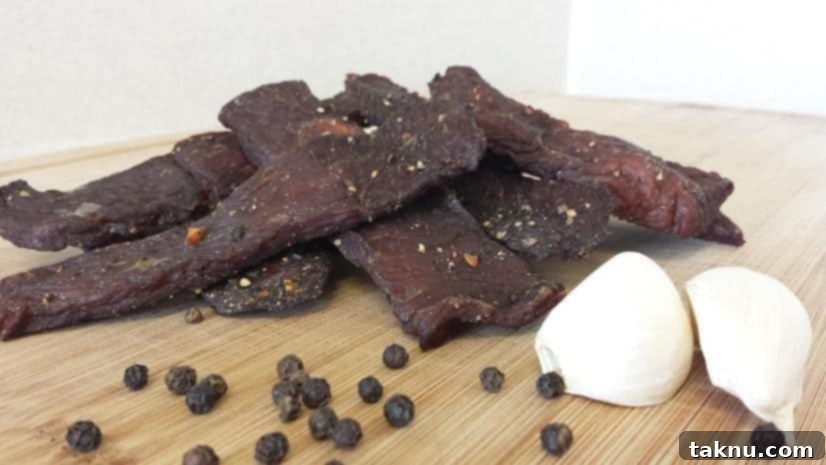
Now, I know what many of you might be thinking: why would someone who meticulously crafts their own jerky at home buy a commercial product? The answer is simple and twofold. Firstly, I’m always on the lookout for fresh inspiration. Exploring different commercial jerky offerings allows me to sample a wide array of flavors, textures, and curing techniques. Each bag can spark a new idea, a different spice blend, or an innovative drying approach. My usual go-to sources for inspiration are often local and artisanal – think county fairs, bustling farmers’ markets, roadside stands, or small-batch producers encountered during travels. But occasionally, a larger brand like Duke’s can also provide valuable insights into popular tastes and successful flavor profiles.
Secondly, it’s about continuous learning. Understanding what makes a commercial jerky successful, from its initial flavor to its chew and shelf life, helps me refine my own recipes and methods. It’s a comparative study, if you will, enabling me to benchmark my homemade creations against established industry standards and popular consumer preferences.
The Unexpected Discovery: Duke’s Shares Their Secret Recipe
Upon tasting Duke’s Original Beef Jerky, I was genuinely impressed. It was indeed “good.” So good, in fact, that it prompted me to visit their website, hoping to find more information about the brand, its origins, or perhaps other product variations. What I stumbled upon, however, was far more intriguing and utterly surprising: Duke’s had published the recipe for their original beef jerky right there on their site. This is a rare and commendably transparent move for any company, let alone one with a popular product. Typically, businesses guard their signature recipes with fierce secrecy, fearing that sharing them would empower customers to replicate the product at home and diminish future sales.
I imagine their rationale might be that the effort involved in making jerky from scratch deters most people, ensuring continued commercial sales. And for many, that assumption holds true. However, for dedicated jerky enthusiasts like myself, this revelation was an open invitation, a challenge even. The thought of recreating a beloved commercial jerky in my own kitchen, with the added satisfaction of knowing exactly what goes into it, was irresistible. As someone who genuinely loves the entire process of jerky making, from selecting the perfect cut of meat to the final drying stage, I immediately set about acquiring the necessary ingredients.
The original recipe on their site called for a substantial seven pounds of meat. For my initial experimental batch, I decided to scale it down significantly, preparing just one pound of beef and adjusting the marinade ingredients proportionally. This approach allowed for a manageable test run without committing to a large quantity right away. The link to their full recipe, along with a printable version for your convenience, is included later in this post.
Crafting Duke’s Original: My Homemade Jerky Experience
Choosing Your Method: Dehydrator vs. Smoker
For this particular batch, I opted to use my dehydrator. My current living situation in an apartment, which lacks the convenience of a garage, makes setting up and cleaning my smoker on short notice quite an undertaking. Given my tight schedule before heading to work, the dehydrator offered a quick and efficient solution. As a result, for that characteristic smoky flavor, I incorporated a dash of hickory liquid smoke into the marinade. While liquid smoke is a convenient substitute, it’s worth noting that using an actual smoker will impart a depth of flavor that’s hard to fully replicate otherwise.
The original Duke’s recipe also mentions observing the jerky for a distinctive red hue after 3-4 hours in a smoker. This “smoke ring” effect is common when using a curing agent, such as Prague Powder #1 (curing salt), which helps preserve the meat and gives it that pinkish tint. However, with the ingredients listed in Duke’s recipe (and my scaled-down version), without an explicit curing salt, it’s highly unlikely you’ll achieve that distinct red color. Don’t worry if your jerky doesn’t turn red; focus instead on the texture and internal dryness for proper doneness.
Ingredients and Marination: The Heart of the Flavor
The beauty of Duke’s Original recipe lies in its balanced simplicity. It combines classic savory elements with a touch of sweetness and subtle spice. To prepare, first select a lean cut of beef, such as sirloin tip, and meticulously trim away all visible fat. Fat tends to go rancid quickly, shortening the shelf life of your jerky, so this step is crucial. Partially freezing the meat for an hour or two makes it significantly easier to slice into uniform pieces, ideally between ⅛” to ¼” thick, against the grain. Slicing against the grain ensures a more tender, less chewy final product.
While your meat is firming up in the freezer, prepare the marinade. The combination of soy sauce, salt, brown sugar, black pepper, onion powder, hickory liquid smoke, and minced garlic creates a harmonious blend of flavors. Whisk these ingredients thoroughly in a bowl until the brown sugar is fully dissolved. Once your beef is sliced, add it to the marinade, ensuring every piece is well coated. The recommended marinating time is 6-24 hours in the refrigerator. I generally aim for at least 12-18 hours to allow the flavors to deeply penetrate the meat, resulting in a more robust and satisfying jerky.
Drying and Finishing: Patience is Key
After marination, remove the beef strips and pat them thoroughly dry with paper towels. This step is often overlooked but is critical for efficient drying and preventing a “steamed” texture. Lay the strips out on your dehydrator trays, ensuring they don’t overlap, to allow for optimal airflow. If using a smoker, arrange them on racks, again, without overcrowding.
The drying process itself will vary depending on your equipment, the thickness of your meat, and ambient humidity. In a dehydrator, this typically takes 6-8 hours or more at a temperature of around 150-160°F (65-70°C). When using a smoker, maintain a low temperature, ideally between 160-180°F (70-80°C), and aim for a consistent, light smoke. The jerky is done when it’s firm, pliable, and bends without breaking cleanly in half. It should crack when bent but not snap, and there should be no moisture visible when you tear a piece.
The Verdict: A Taste of Homemade Excellence
The results of this homemade Duke’s Original Beef Jerky experiment were, simply put, pretty fantastic. It never ceases to amaze me how a few simple ingredients, combined with the process of drying meat, can unlock such a complex and satisfying array of tastes and textures. This versatility and the sheer variety of flavor possibilities are precisely why I fell in love with beef jerky and why I decided to create this blog – to share these culinary discoveries with fellow enthusiasts.
The homemade version of Duke’s Original captured the essence of the commercial product, but with a freshness and depth that only a homemade batch can provide. The balance of savory and sweet, with that subtle garlic and onion undertone, was spot on. It reaffirmed my belief that while commercial products are convenient, there’s an unparalleled satisfaction in making your own.
Your Turn: Make Your Own Duke’s Original Beef Jerky!
I wholeheartedly encourage you to give this recipe a try. Whether you’re a seasoned jerky maker or a curious beginner, the process is incredibly rewarding. So, dust off your smoker, fire up your dehydrator, or even utilize your oven, and prepare a batch of Duke’s Original Beef Jerky. The effort is minimal compared to the delicious, protein-packed snack you’ll create.
For those interested in exploring the original source and perhaps other offerings from the brand, I’ve included a direct link to Duke’s website here: Duke’s Original Beef Jerky Recipe.
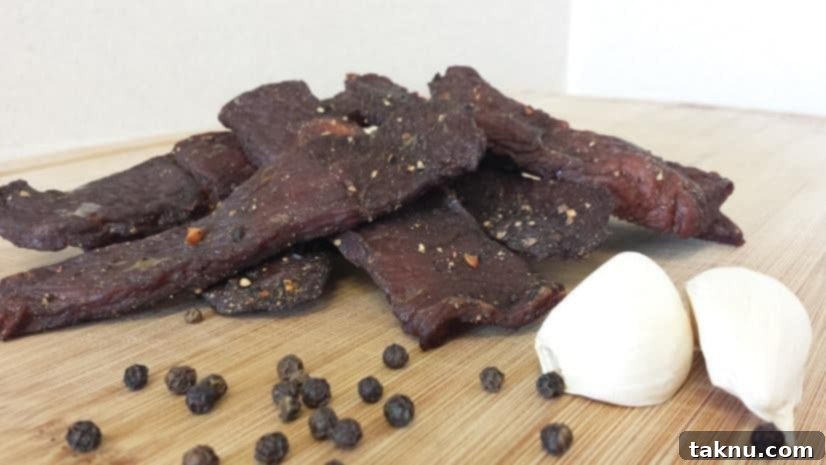
Duke’s Original Jerky Recipe
Pin Recipe
Ingredients
Lean Beef:
- 1 lb sirloin tip
Marinade:
- ¼ cup soy sauce
- 1 teaspoon salt
- 2 tablespoon brown sugar
- 1 teaspoon black pepper
- ¼ teaspoon onion powder
- 1 tablespoon liquid smoke (hickory)
- 1 clove garlic (minced)
Optional
- ¼ teaspoon Curing Salt (Prague Powder #1)
Instructions
- Prepare the Beef: Choose a lean cut of beef, such as sirloin tip, and meticulously trim away all visible fat. For easier, uniform slicing, place the meat in the freezer for about 1-2 hours until it’s partially firm but not frozen solid.
- Mix the Marinade: While the meat is chilling, combine the soy sauce, salt, brown sugar, black pepper, onion powder, liquid smoke, and minced garlic in a medium-sized bowl or container. Stir the mixture diligently until the brown sugar has completely dissolved, ensuring a consistent flavor.
- Slice the Meat: Remove the partially frozen meat from the freezer. Using a sharp knife or a meat slicer, slice the beef against the grain into uniform strips, ideally between ⅛” to ¼” in thickness. Consistency in thickness is key for even drying.
- Marinate: Add the sliced beef to the prepared marinade. Ensure all meat strips are thoroughly coated. Cover the container and refrigerate for 6-24 hours. For maximum flavor penetration, an overnight marination (12-18 hours) is often recommended.
- Prepare for Drying: After marinating, remove the meat from the refrigerator. Lay the strips on paper towels and pat them thoroughly dry. Removing excess moisture will significantly speed up the drying process.
- Dry the Jerky: Arrange the dried meat strips on your preferred jerky making equipment (dehydrator, smoker, or oven). Ensure no pieces are overlapping to allow for even airflow and drying. A dehydrator was utilized for this specific recipe, typically set at 150-160°F (65-70°C).
- Check for Doneness & Store: The jerky is finished when it is firm, pliable, and bends without breaking completely in half. It should crack but not snap, and there should be no visible moisture. Allow the jerky to cool completely for several hours at room temperature before storing it in airtight containers or vacuum-sealed bags.
Nutrition
Tips for Smoker Enthusiasts
If you’re fortunate enough to have a smoker at your disposal, I highly recommend using it for this recipe. The authentic smoke flavor achieved through real wood chips is truly unparalleled. In this case, you can omit the hickory liquid smoke from the marinade entirely. Instead, use approximately 1 cup of hickory wood chips. Remember to soak your wood chips in water for at least 30 minutes before adding them to your smoker. This ensures they smolder and produce a consistent, clean smoke rather than burning too quickly. Maintain a low smoking temperature, typically between 160-180°F (70-80°C), for the duration of the drying process. The combination of slow drying and genuine wood smoke will yield a jerky with exceptional flavor and texture, closely mimicking the depth of taste found in traditionally smoked meats.
Making your own beef jerky, especially when inspired by a reputable brand like Duke’s, is a highly satisfying endeavor. It’s an opportunity to control ingredients, experiment with flavors, and enjoy a fresh, wholesome snack crafted right in your own kitchen. Happy jerky making!