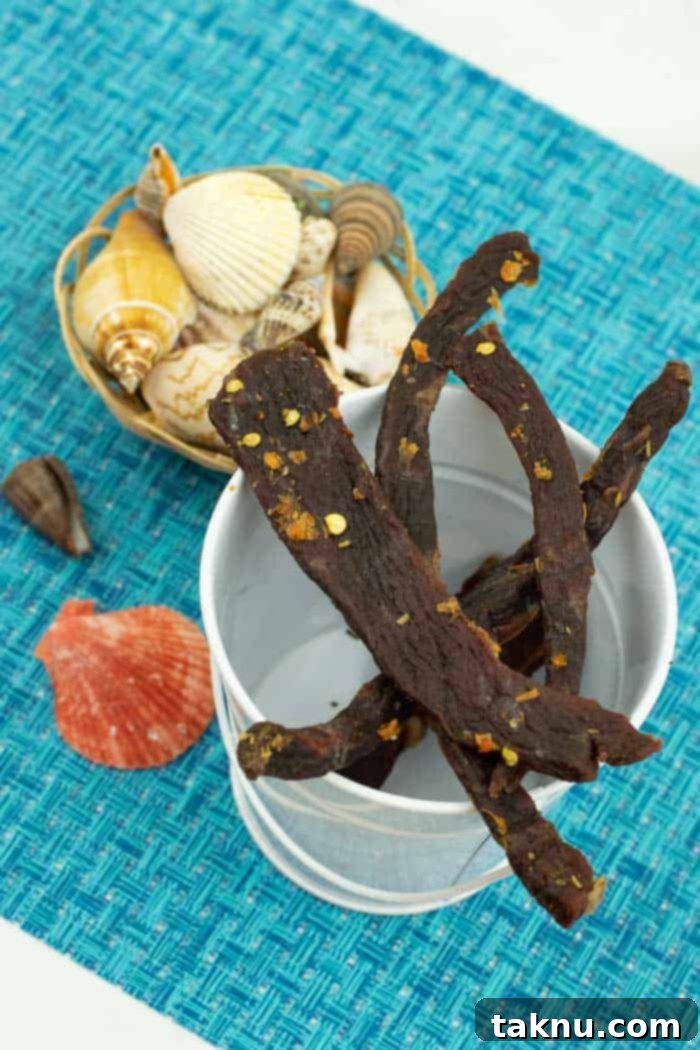
Glo’s Fiery Bahamian Habanero Beef Jerky: The Ultimate Homemade Recipe Guide
Embark on a culinary adventure with this intensely flavorful and satisfyingly spicy beef jerky recipe, inspired by one of the most unforgettable hot sauces I’ve ever tasted. My journey began in the sun-drenched Bahamas, where a remarkable woman named Glo crafted a hot sauce so profoundly potent and flavorful, it left an indelible impression on my palate. That exquisite blend of heat and nuanced flavor became the driving force behind this fantastic beef jerky creation. This recipe aims to replicate that vibrant, spicy intensity, balancing it with savory notes and a subtle sweetness, transforming simple beef into an extraordinary snack that truly stands out.
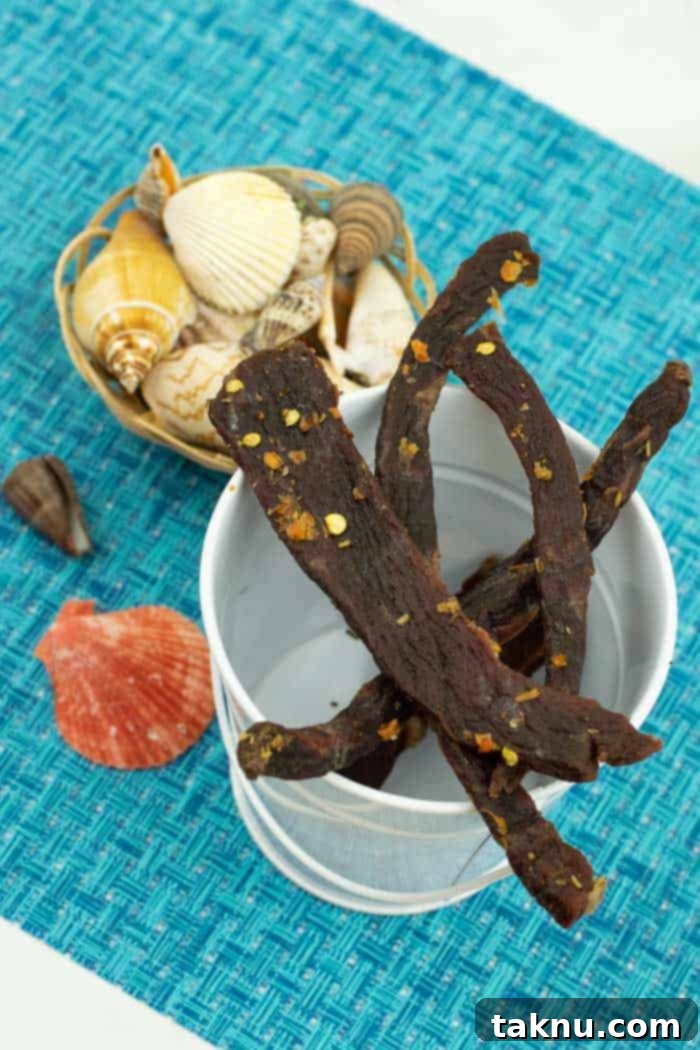
Selecting and Slicing Meat for Perfect Jerky
The foundation of exceptional beef jerky lies in the careful selection and preparation of your meat. The very first step is crucial: choosing a lean cut of beef. For this particular recipe, a beef bottom round was utilized, a prime choice known for its leanness and robust flavor, making it ideal for jerky. However, the world of jerky-making offers a variety of excellent options. If you’re looking to explore other cuts or understand why certain types of beef work best, you can find a complete list and detailed insights into the best cuts of meat for making beef jerky by clicking here!
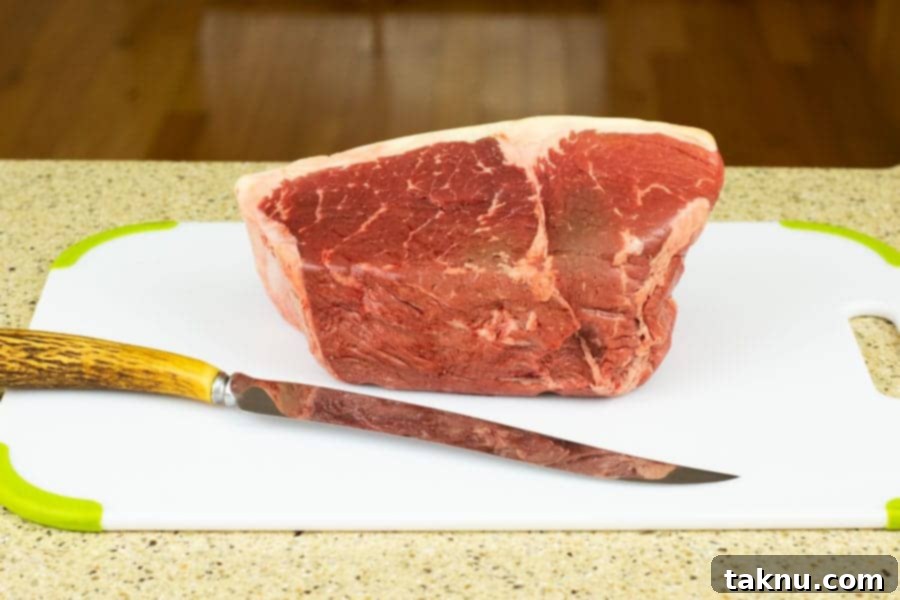
Once you’ve selected your beef, the second critical step involves meticulously trimming all visible fat. This seemingly small detail plays a significant role in the quality and longevity of your finished jerky. Trimming the beef now is absolutely essential as it will help the jerky last considerably longer when finished and stored. Fat, unlike muscle, tends to spoil much faster, leading to a drastically reduced shelf life for your homemade jerky once it’s dried and packaged. Therefore, take your time and remove as much of that fat as humanly possible at this stage!
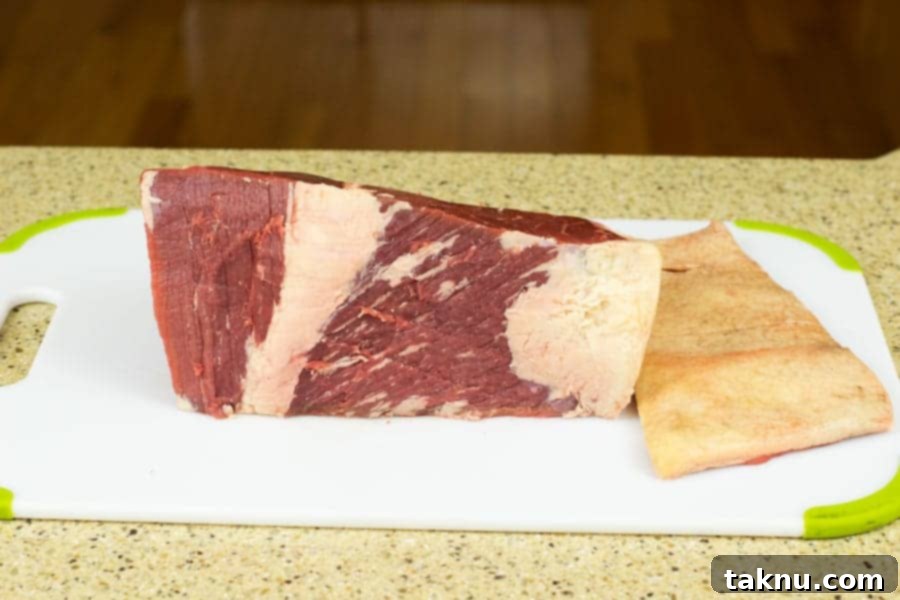
Fat spoils faster than the meat itself, ultimately resulting in a shorter shelf life for your delicious snack. This is why thorough fat removal is non-negotiable for high-quality, long-lasting jerky. So, ensure you get all the fat off that you can before proceeding to the next step!
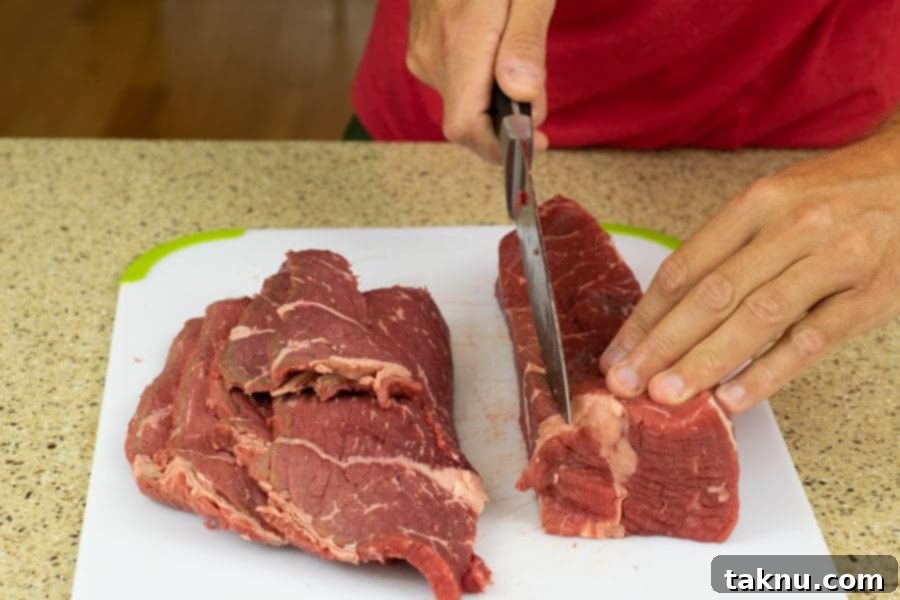
After trimming, it’s time to slice the beef into strips. You can customize the size of your strips to your personal preference, but a ¼″ thickness is widely considered ideal for achieving a satisfying bite and optimal drying. The direction in which you slice the meat—with or against the grain—will significantly impact the final chewiness of your jerky. Slicing against the grain results in a more tender, easier-to-chew jerky, while slicing with the grain produces a tougher, more traditional chewy texture. The way the jerky is sliced has a profound effect on the consistency and enjoyment of the finished product. Given the importance of this step, I’ve compiled extensive information on slicing meat for jerky. When you’re ready to delve deeper, be sure to check out my comprehensive slicing jerky page to learn everything you need to know, from techniques to grain orientation.
While I didn’t personally use it for this specific batch, a dedicated jerky slicer is an incredibly valuable piece of equipment that can revolutionize your jerky-making process by helping you achieve consistently even strips. This uniformity is key for even drying and a professional-looking finished product.
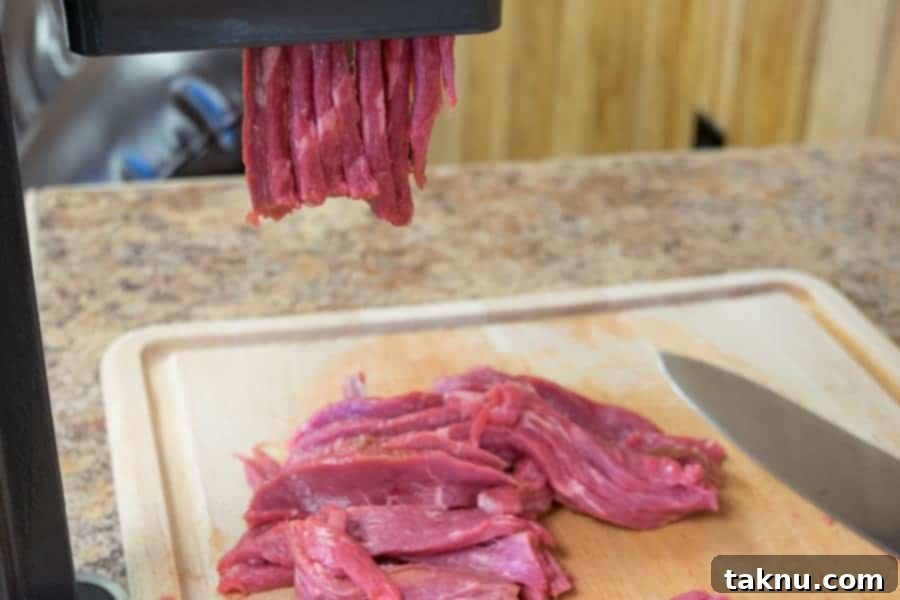
Reader Comment: “Invest in a Weston Jerky Slicer….Been using this unit for years. Makes great ¼″ thick slices that look like nice thick bacon strips.” – Dan
Crafting the Fiery Jerky Marinade
The heart of this recipe, and what truly sets it apart, is its spicy, vibrant marinade. To achieve a genuinely spicy jerky, it’s paramount to incorporate very hot peppers. The original Bahamian hot sauce that inspired this recipe famously used elusive goat peppers. While these peppers are prized for their unique heat and flavor, they are notoriously difficult to source outside of specific regions.
Given that goat peppers bear a striking resemblance to both habaneros and scotch bonnet peppers in terms of heat level and fruity undertones, I opted to go with readily available habaneros. Habanero peppers offer a fantastic balance of intense heat and a distinct fruity aroma, making them a perfect substitute to capture that Bahamian essence. Best of all, they are easily found in virtually every supermarket across the country, ensuring accessibility for all home jerky makers. Now, let’s dive into making this exceptional marinade that will infuse your beef with an explosion of flavor.
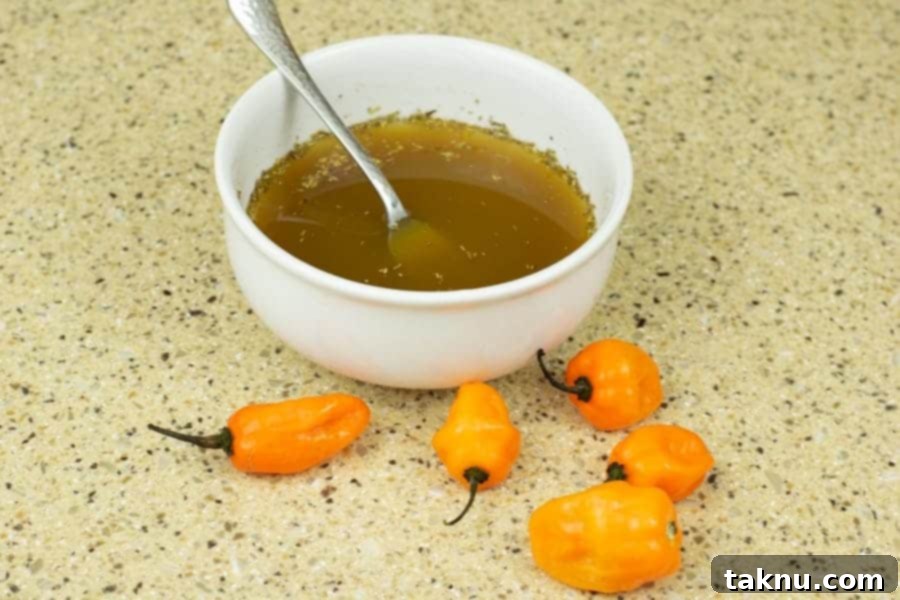
To begin, combine all the marinade ingredients, excluding the peppers initially, in a bowl or, ideally, a blender. Since this recipe calls for using whole peppers, a blender is by far the most effective way to fully incorporate them into the marinade, ensuring that their fiery essence and complex flavors are evenly distributed throughout the mixture. This step is crucial for achieving a consistent and powerful spicy kick in every bite of jerky.
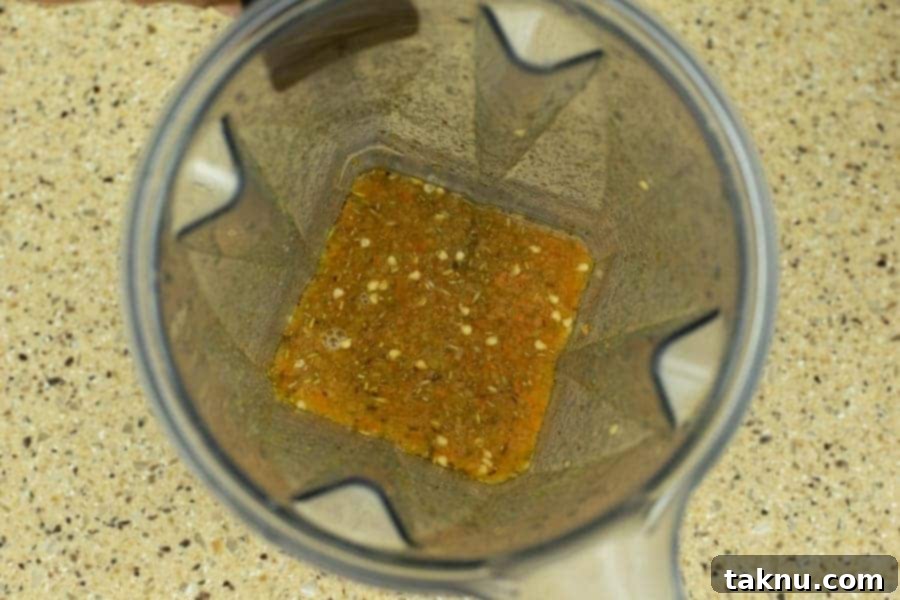
Next, add the whole habanero peppers (after removing their stems) to the other marinade ingredients inside a powerful Vitamix blender. The high-speed blending action is key here; blending the peppers truly enhances the flavor and spiciness of the jerky exponentially! It breaks down the pepper walls, releasing their capsaicin and aromatic compounds more thoroughly than simply mincing, ensuring maximum flavor infusion into the meat.
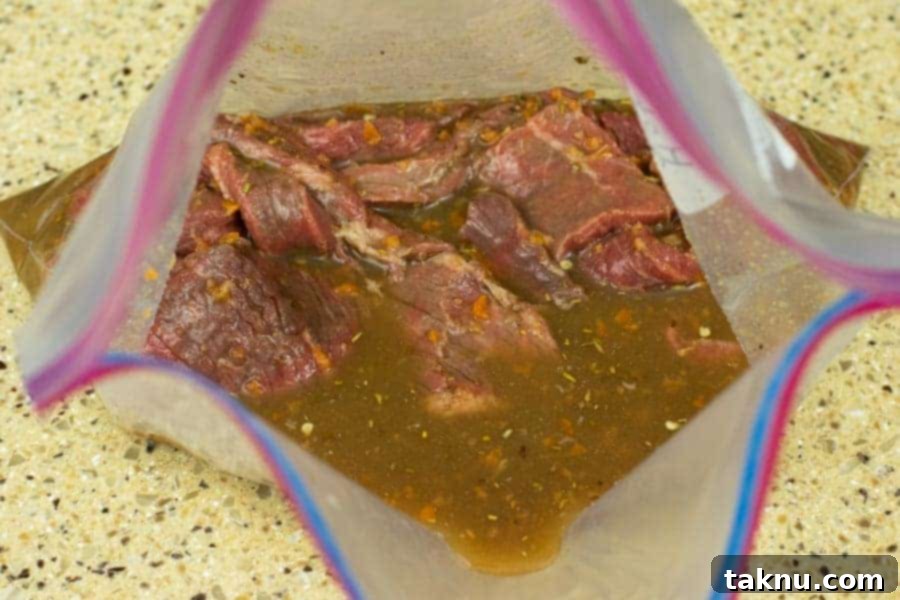
Once your marinade is perfectly blended, place the previously sliced beef strips into a sturdy ziplock bag. Pour the vibrant, aromatic marinade over the beef, ensuring all the strips are submerged and coated. Seal the bag, pressing out as much air as possible, and place it in the refrigerator to marinate for a duration of 6 to 24 hours. During this time, remember to mix or massage the bag several times to further ensure that the beef strips are evenly coated with the marinade. This diligent mixing guarantees that every single piece of finished jerky will boast a consistent, delicious flavor profile, from the first bite to the last. For those occasions when time is of the essence, modern solutions exist. These convenient vacuum marinating machines are highly effective, significantly cutting down marinating time. With one of these, you can achieve results comparable to a 12-hour traditional marinade in as little as half an hour. That’s a game-changer for impatient jerky enthusiasts!

RELATED PAGE: DOZENS OF GREAT TASTING JERKY RECIPES – CLICK HERE
The Art of Drying Your Homemade Jerky
Once the meat has absorbed all the wonderful flavors from the marinade, typically after 6 to 24 hours (this batch was marinated for a full 20 hours to maximize flavor intensity), it’s time for the next crucial phase: preparing for drying. First, strain any excess marinade from the beef strips using a colander. Following this, meticulously pat the strips dry with paper towels. The longer the marinade process, the more intense and deep the flavor the jerky will have! This step of removing excess moisture is more important than many realize.
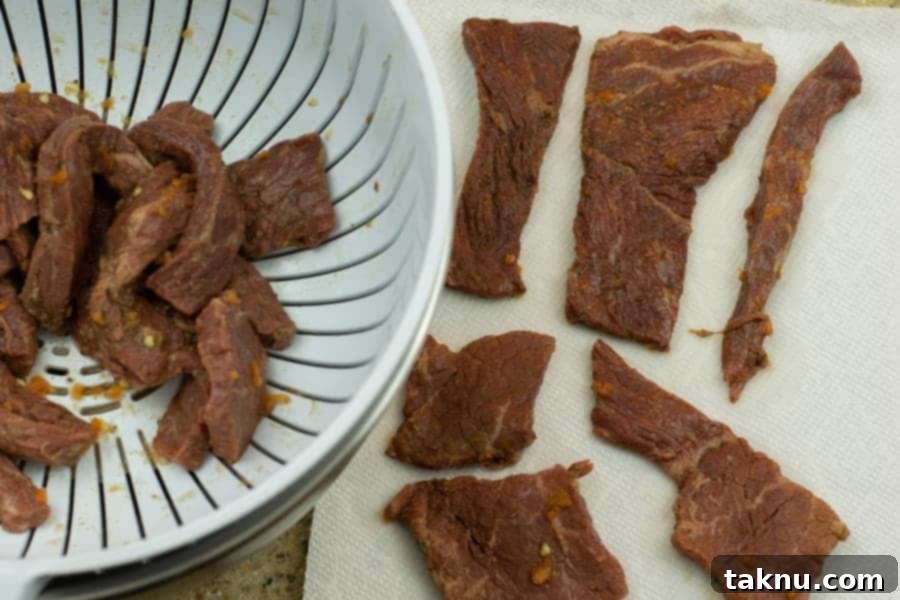
Patting the meat thoroughly with paper towels accomplishes several important things. It effectively removes any residual surface marinade, which in turn significantly speeds up the overall drying process. Moreover, this critical step helps to prevent that undesirable “sticky” or tacky feel that can sometimes occur on finished jerky if too much marinade remains on the surface. A dry surface allows for better air circulation and a more consistent dehydration.
For this specific beef jerky recipe, a reliable Nesco Gardenmaster Dehydrator was employed. My personal experience has led me to truly appreciate Nesco dehydrators. They are not only highly effective at their core function but are also very reasonably priced and built to last a considerable amount of time, making them an excellent investment for any serious jerky enthusiast.
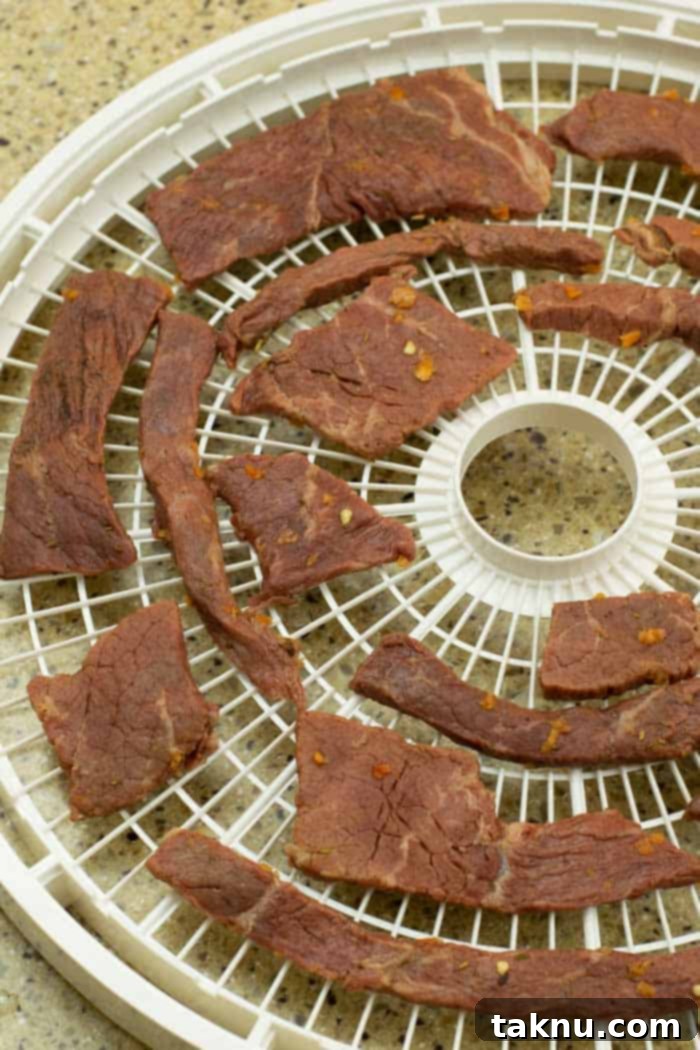
When arranging the marinated beef strips on your dehydrator trays (or oven racks, or smoker grates), ensure that you leave ample space between each piece. This deliberate spacing is vital for proper air circulation, which is the cornerstone of even and efficient drying. Good airflow ensures that each jerky strip dehydrates uniformly, preventing some pieces from drying out too quickly while others remain too moist.
Mastering the Test for Perfectly Finished Jerky
Knowing exactly when your jerky is finished drying is an art that comes with practice, but there are clear indicators to guide you. While the jerky is actively drying, you should begin to test for doneness starting at approximately the 3-4 hour mark, depending on your chosen drying method and the thickness of your strips. To perform the test accurately, take a single piece of jerky out of the dehydrator, oven, or smoker and allow it to cool completely for at least 5 minutes to reach room temperature. This cooling period is absolutely critical, as the jerky will naturally harden slightly as it cools. Failing to allow a piece to cool before testing can easily lead to over-drying the entire batch, resulting in brittle and unappealing jerky.
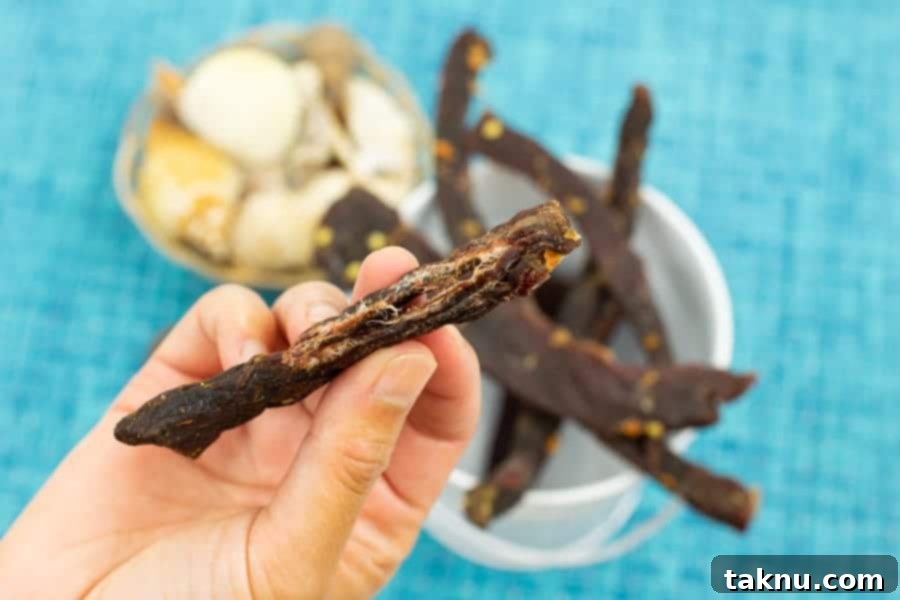
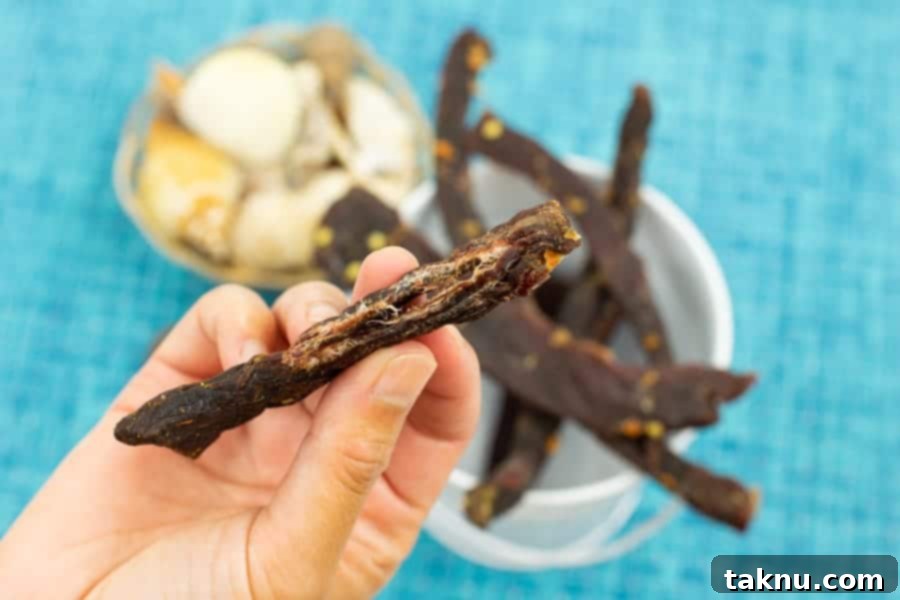
Once cooled, bend the jerky in half. A perfectly finished piece should bend and crack, but crucially, it should not snap completely in half. As you bend or rip a piece, you will also observe white fibers visible within the meat. These fibers become particularly prominent and easily visible when a piece is torn or bent in half, as depicted in the image above. This fibrous appearance is a strong indicator of proper dehydration. For this particular recipe, the jerky reached its ideal finished state after 4 ½ hours in the dehydrator. Generally, when using a dehydrator or an oven, about 90% of the jerky I make is typically finished within a 4-6 hour timeframe. If you are utilizing an electric smoker, the drying time usually extends to 6-9 hours. It’s worth noting that if you employ a technique of pre-heating the meat in the oven before dehydrating, the overall drying time can be significantly reduced, sometimes to as little as 2.5 hours, making for a much quicker turnaround.
Optimal Storage for Extending Beef Jerky Shelf Life
Once your delectable batch of Glo’s Fiery Habanero Beef Jerky is perfectly dried, proper storage is paramount to ensure its longevity and maintain its exquisite flavor and texture. To make the jerky last as long as possible, incorporating curing salt (such as Prague Powder #1) during the marinating process can be incredibly beneficial, as it aids in preservation. Beyond that, the key to extended shelf life lies in keeping the jerky in airtight containers. I have dedicated an entire page to the subject of storing beef jerky, outlining comprehensive steps and best practices you can take to ensure your homemade jerky enjoys an extended shelf life, remaining fresh and delicious for as long as possible. This includes tips on various storage methods and identifying signs of spoilage.
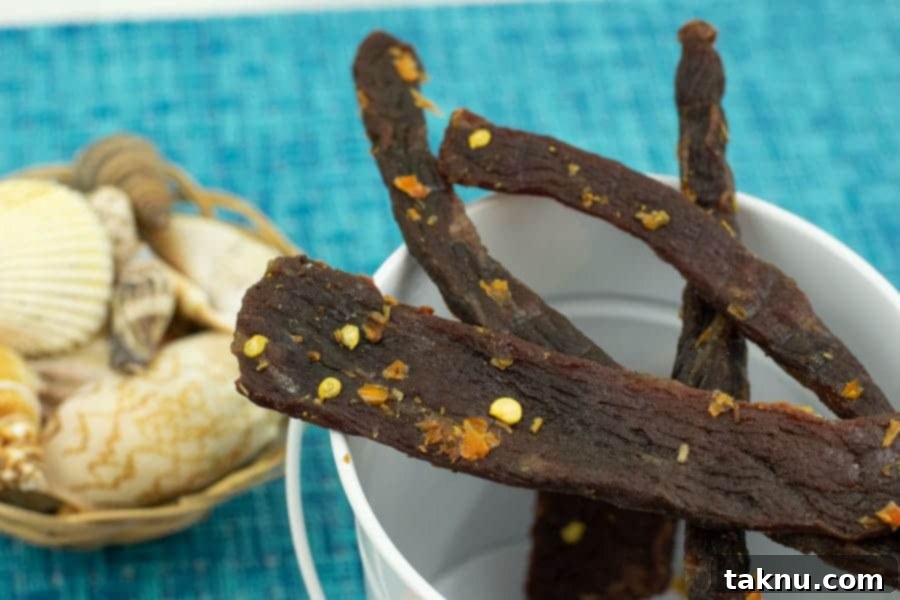
So, let’s talk about the exciting part: how this particular batch of jerky turned out! The results were nothing short of spectacular – amazingly spicy and beautifully sweet. My wife, who isn’t typically inclined towards intensely spicy jerky, offered a fantastic endorsement, describing it as a “spicy savory sweet treat.” This is high praise indeed! The vibrant heat from the habaneros was perfectly balanced by the natural sweetness of the apple juice, which imparted a fresh, crisp bite that made each piece incredibly addictive. The complex spices, reminiscent of Bahamian cuisine, added layers of savory depth, resulting in a jerky that is truly a flavor revelation – an exquisite blend that dances on the taste buds.
Old Pro Tips:
- Two habaneros provided a delightful, balanced spice level for this recipe. If you’re a true heat seeker and desire an intensely spicy jerky, consider adding three habanero peppers to the marinade.
- When using liquid smoke, always opt for brands that do not contain filler ingredients. High-quality options, such as Wright’s Liquid Smoke, offer a pure, authentic smoky flavor without any unwanted additives.
- Should you be unable to find habaneros, or if you prefer a slightly different flavor profile, Scotch bonnet peppers or goat peppers can be excellent substitutes, as they offer a similar heat level and fruity notes.
- For optimal freshness and to significantly extend the shelf life of your homemade jerky, always store it in ziplock bags or, even better, vacuum seal it. For more in-depth information and advanced techniques on proper storage, make sure to check out my dedicated page on Storing Jerky.

For more in-depth directions on how to dry your beef jerky, visit my pages with IN-DEPTH instructions on each jerky making method:
-Jerky in a dehydrator
-Jerky in a smoker
-Jerky in an oven
Glo’s Hot Pepper Beef Jerky
Pin Recipe
Ingredients
Lean Meat
- 1 lb Beef Bottom Round or Venison
Marinade
- 2 habanero (stem removed)
- 1 cup apple juice
- 1 teaspoon onion powder
- 1 teaspoon garlic powder
- ¼ cup apple cider vinegar
- 1 ½ teaspoon sea salt
- ¼ teaspoon allspice
- ¼ teaspoon cloves
- ¼ teaspoon curry powder
- ¼ teaspoon rosemary
Optional
- ¼ teaspoon Curing Salt (Prague Powder #1)
- 1 teaspoon liquid smoke (hickory)
Instructions
- Trim all visible fat from the beef and place in freezer for an hour or two to partially freeze.
- While the meat is in the freezer, combine marinade ingredients in a blender and blend until the ingredients are fully mixed. Transfer to a bowl or ziplock bag.
- Remove the meat from the freezer and slice ¼” strips against the grain for an easy chew. Cut with the grain for a more chewy jerky. Visit my page on slicing jerky for more information. You can also use a Weston Jerky Slicer when making this recipe.
- Add sliced beef to the mixture in a ziplock bag or bowl and marinate for 6-24 hours in the refrigerator.
- After the meat has finished marinating, remove from refrigerator and strain excess marinade and pat dry the beef strips with paper towels
- Dry with a Dehydrator, Smoker, or in an Oven. I used my Nesco Dehydrator and dried for 5 hours at 165F.
- The jerky is finished when it bends and cracks, but does not break in half.
Pro Tips
Old Pro Tips:
- 2 habaneros was a nice spice, add 3 for a REALLY spicy jerky
- Use liquid smoke that does not include filler ingredients, such as Wright’s Liquid Smoke
- Scotch bonnet or goat peppers can be substituted for the habaneros
- Store in ziplock bags or vacuum seal for longer storage. Check out my page on Storing Jerky for more information.