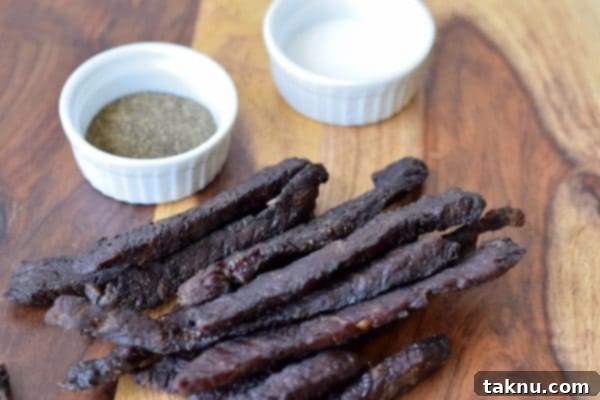
Irresistible Sweet Coconut Jerky: Your Ultimate Guide to a Flavorful Homemade Snack
Embark on a culinary adventure with this unique Sweet Coconut Jerky recipe, a delightful blend of rich flavors that will tantalize your taste buds. The harmonious marriage of the delicate sweetness from coconut sugar and the robust saltiness of soy sauce creates an exceptional jerky experience unlike any other. This particular recipe, which I initially discovered and adapted from a fantastic food blog, weedemandreap, quickly became a must-try. While my version isn’t an exact replica, it stays true to the spirit of the original, offering a wonderfully balanced sweet and savory profile. You’ll find a direct link to the original inspiration at the bottom of this page, should you wish to explore it further.
Choosing the Perfect Beef Cut for Your Homemade Jerky
One of the most critical decisions when making homemade jerky is selecting the right cut of beef. On a recent grocery trip, I decided to experiment with a cut I don’t typically use for jerky: beef sirloin tip steak. While it’s known for its flavor, it tends to have a slightly higher fat content than my preferred lean cuts. My philosophy was, “What’s there to lose?” in the pursuit of jerky perfection. This experience, however, offered valuable insights. The sirloin tip steak, despite its potential, made the jerky a little greasier than ideal throughout the drying process and in its final form. I consistently patted the beef strips dry with paper towels during dehydration, but the fat content continued to release moisture, resulting in a somewhat oily texture – not quite the dry, chewy jerky I typically aim for. For this reason, I will likely opt for leaner cuts in future batches of sweet coconut jerky, recommending alternatives like top round or eye of round for a more classic jerky texture.
Preparing the Meat: From Steak to Perfect Strips
The sirloin steak I purchased was roughly ½ inch thick. To achieve the optimal thickness for jerky, which allows for thorough drying and a pleasant chew, I wrapped the steak tightly in plastic wrap. Using a meat mallet, I tenderized the steak meticulously, pounding it down until it reached a uniform ¼ inch thickness. This tenderizing step is crucial not only for reducing drying time but also for breaking down muscle fibers, ensuring a more tender end product.
After tenderizing, the meat was ready for slicing. I carefully cut the beef against the grain into strips approximately one inch wide. Slicing against the grain is vital as it shortens the muscle fibers, making the jerky easier to chew and preventing it from becoming overly tough. Uniform thickness and width are also key to ensuring even drying, leading to a consistent batch of delicious homemade jerky.
Crafting the Irresistible Sweet Coconut Marinade
The magic of this sweet coconut jerky truly lies in its marinade. It’s a beautifully balanced concoction designed to infuse maximum flavor into every strip of beef. The marinade consisted of several key ingredients: soy sauce, coconut sugar, liquid smoke, apple cider vinegar, salt, and pepper. Each component plays a vital role:
- Soy Sauce: Provides the fundamental savory, umami base and essential saltiness. It also contributes to the rich, dark color of the jerky.
- Coconut Sugar: This is the star of the “sweet” in Sweet Coconut Jerky. Unlike refined white sugar, coconut sugar offers a caramel-like sweetness with a hint of warmth, complementing the savory notes beautifully.
- Liquid Smoke (Hickory): Imparts a deep, smoky flavor without the need for a smoker, adding an extra layer of complexity that is characteristic of traditional jerky.
- Apple Cider Vinegar: Adds a touch of acidity, which helps tenderize the meat further and brightens the overall flavor profile.
- Salt & Pepper: Classic seasonings that enhance all other flavors and provide a foundational savory kick.
The beef strips were submerged in this flavorful marinade and left to marinate for a generous 14 hours. This extended marination period allowed the flavors to deeply penetrate the meat, resulting in a vibrant, dark color imparted by the soy sauce and liquid smoke, and a thorough infusion of the sweet and savory notes.
The Intrigue of Coconut Sugar
When I first encountered coconut sugar for this recipe, I confess I had an assumption: you would think that coconut sugar would be white, right? NOPE, it is brown! This was actually my first time using coconut sugar in any recipe, and I was genuinely surprised by its rich, caramel-like brown hue. It’s an interesting fact, and as the old saying goes (especially if you’re a guy who grew up in the 80s, referencing G.I. Joe!), knowing is half the battle. This natural brown color comes from the sap of the coconut palm, which is boiled and dehydrated, retaining its natural minerals and slight molasses-like flavor, making it a unique and often preferred alternative to highly refined sugars.
The Dehydration Process: Achieving the Perfect Jerky Texture
After their extensive marination, the beautifully dark and flavorful beef strips were ready for the dehydrator. But first, to ensure optimal drying and prevent excessive greasiness (especially given the sirloin tip steak), I thoroughly patted them dry with paper towels to remove any excess marinade. This step is particularly important for achieving that ideal jerky texture and preventing a sticky surface.
The strips were then carefully arranged on the trays of my dehydrator. The drying process began at 160°F (71°C) for 3 ½ hours. This initial higher temperature is crucial for food safety, rapidly bringing the meat to a temperature that kills potential bacteria. Following this, the temperature was reduced to 90°F (32°C) for another 2 ½ hours to complete the drying and achieve the desired texture without overcooking. As mentioned earlier, due to the higher fat content of the sirloin tip steak, I continued to pat the jerky dry with paper towels periodically throughout the drying process to absorb any rendered fat and prevent it from becoming too moist or oily.
The Delicious Outcome: A Flavorful Jerky Experience
The result of this careful preparation and drying was truly rewarding: a very good, highly flavorful jerky! The sweet and salty notes from the coconut sugar and soy sauce beautifully complement each other, creating a snack that is incredibly addictive. While this recipe is aptly named “Sweet Coconut Jerky,” it’s important to note that the coconut sugar doesn’t impart a distinct coconut flavor. Instead, it offers a deep, nuanced sweetness that perfectly balances the savory elements. This jerky delivers a unique taste profile that stands out from more traditional jerky recipes. My slight alterations to the original blog recipe proved successful, producing a batch of homemade jerky that was both delicious and satisfying.
For those interested in exploring the original source of inspiration, you can find the link here:
Visit weedemandreap’s homemade beef jerky recipe.
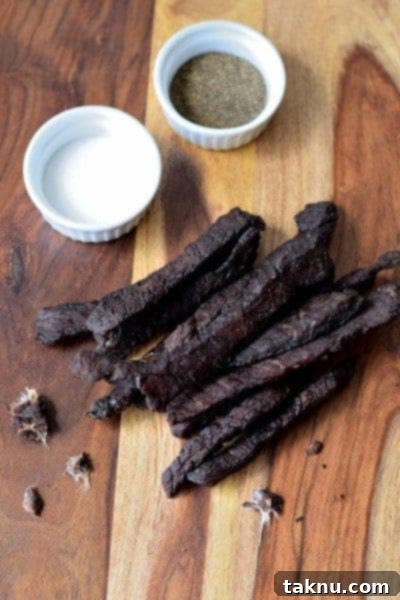
Sweet Coconut Jerky
Pin Recipe
Ingredients
Lean Meat
- 1 lb Beef Sirloin Tip Steak or Venison
Marinade
- ¼ cup soy sauce
- 2 tablespoon coconut sugar
- 1 teaspoon liquid smoke (Hickory)
- 1 teaspoon apple cider vinegar
- 1.5 teaspoon table salt
- 1 teaspoon pepper
Optional
- ¼ teaspoon Curing Salt (Prague Powder #1)
Equipment
Instructions
- Wrap the sirloin steak in plastic and pound with a mallet until reaching ¼ inch in thickness.
- Slice against the grain making strips about 1 inch in width. You can also use a Jerky Slicer to achieve evenly sliced strips.
- Combine and mix soy sauce, coconut sugar, liquid smoke, apple cider vinegar, salt, and pepper in a medium size bowl or ziplock bag.
- Marinate the strips of beef in the refrigerator for 6-24 hours
- After marinating, pat dry beef strips on paper towels to remove any excess marinade
- Place on dehydrator with space between beef to allow airflow
- Dry for 3.5 hours at 160 degrees then for another 2 hours or as needed at 90 degrees. Check meat periodically to not over dry the jerky. (pat dry jerky while cooking if needed)
- Jerky will be done when it bends and cracks, but does not break in half.
Nutrition