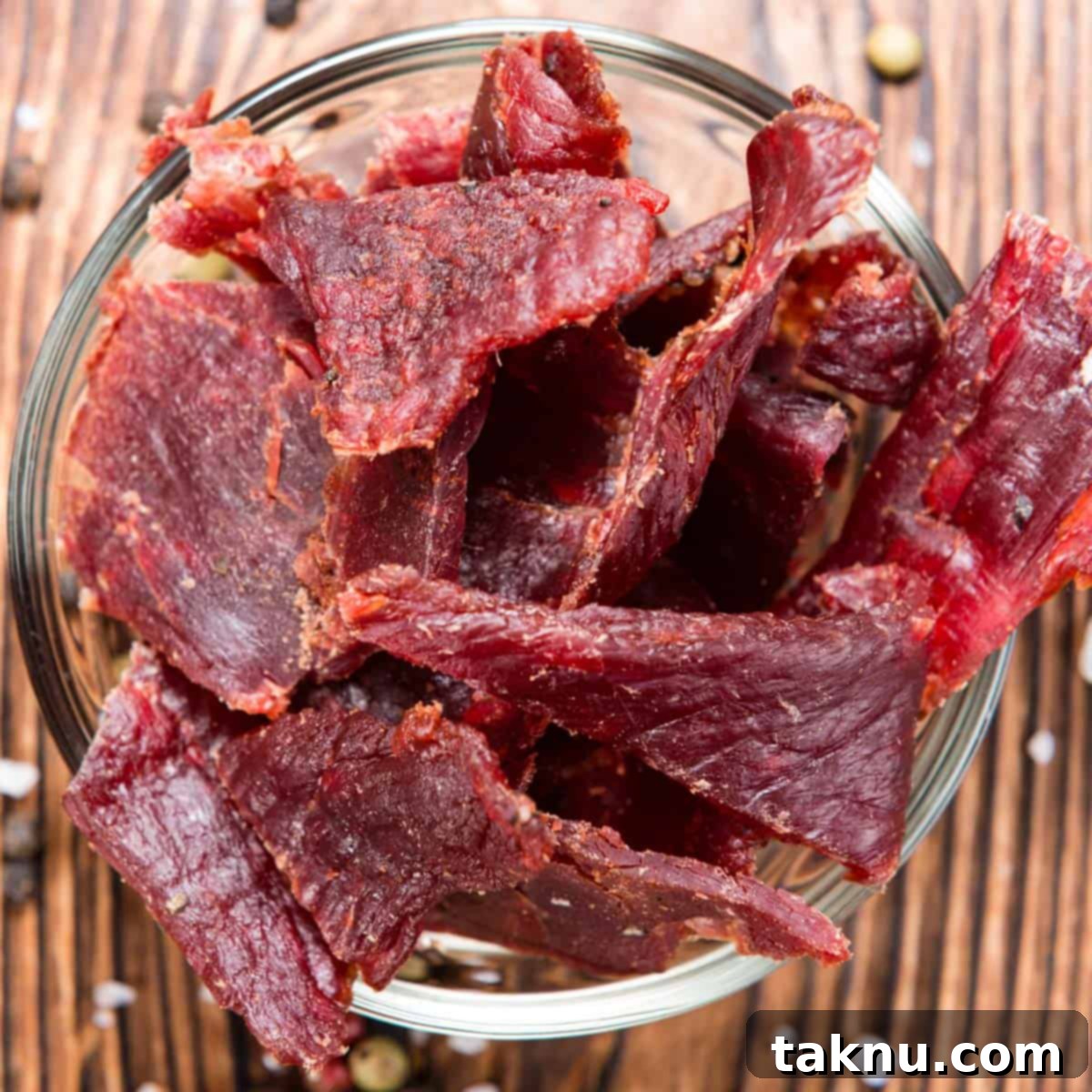
Ultimate Habanero Beef Jerky Marinade: Crafting Spicy Homemade Jerky
Prepare to elevate your jerky game with the Ultimate Habanero Beef Jerky Marinade, truly the last and only jerky recipe you’ll ever need! This exceptional blend combines the fiery kick of fresh habanero peppers with the perfect balance of savory and sweet notes, creating an unforgettable flavor profile that stands above all others. The robust spiciness from the habaneros, coupled with the subtle yet distinctive brininess of sea salt, ensures every bite is a thrilling experience. Get ready to embark on a journey to craft the most delicious, perfectly textured, and intensely flavored homemade beef jerky imaginable. This recipe isn’t just about heat; it’s about a harmonious blend that will make your taste buds sing.

[feast_advanced_jump_to]
📋 Why This Habanero Beef Jerky Recipe Works Wonders
This recipe consistently delivers an outstanding jerky experience because it masterfully balances intense heat with a rich, foundational flavor. Beneath the exhilarating spice of the habaneros lies a complex profile enhanced by carefully selected ingredients. The granulated sugar provides a crucial counterpoint, tempering the habanero’s heat and preventing it from becoming overpowering, while also contributing to the caramelization during the drying process. Meanwhile, Worcestershire sauce adds a deep umami and savory depth that truly elevates the beef, ensuring the jerky isn’t just spicy, but incredibly flavorful and satisfying. This synergistic blend creates a jerky that is both boldly hot and wonderfully complex, hitting all the right notes for any spice enthusiast. If you, like me, appreciate a good spicy kick and the unique fruity notes of habanero peppers, this beef jerky recipe will undoubtedly become your go-to.
Video Guide: How to Make Perfect Beef Jerky
🔪 Slicing the Meat for Optimal Jerky Texture
The foundation of outstanding beef jerky begins with selecting and preparing the right cut of beef. For this Habanero Beef Jerky recipe, it’s crucial to start with a lean cut to ensure superior flavor absorption and a longer shelf life. Excess fat can turn rancid quickly, diminishing the quality and longevity of your homemade jerky. Focusing on lean cuts means more meat, less waste, and a healthier snack.
Best Lean Cuts for Homemade Jerky
When choosing your beef, aim for cuts with minimal marbling. These varieties are ideal for jerky because they dry consistently and offer a desirable texture. Here are some of the top recommendations:
- Beef Eye of Round Roast: A classic choice, very lean and holds shape well.
- Top (London Broil) & Bottom Round Roast: Excellent lean options that are often more affordable.
- Flank Steak: Known for its distinct grain, offering a great chewy texture.
- Sirloin Tip: A lean and tender cut, great for a less aggressive chew.
- Ground Beef (10% fat or less): If you prefer a softer, ground jerky consistency, ensure it’s extra lean.
While I often use Beef Eye of Round for its consistent leanness and texture, you can explore a comprehensive guide on the best cuts of meat for homemade beef jerky for more options and detailed information.
Precise Slicing Techniques for Ideal Jerky
The initial step in preparing your meat for this spicy habanero jerky is meticulous trimming. Before you begin slicing, it’s imperative to remove all visible fat from your chosen cut of beef. This white fat, as seen in the image below, must be completely trimmed away. Fat spoils much faster than muscle tissue, so eliminating it now is key to maximizing the shelf stability and overall quality of your finished jerky. The cleaner the trim, the longer your delicious homemade jerky will last without refrigeration.
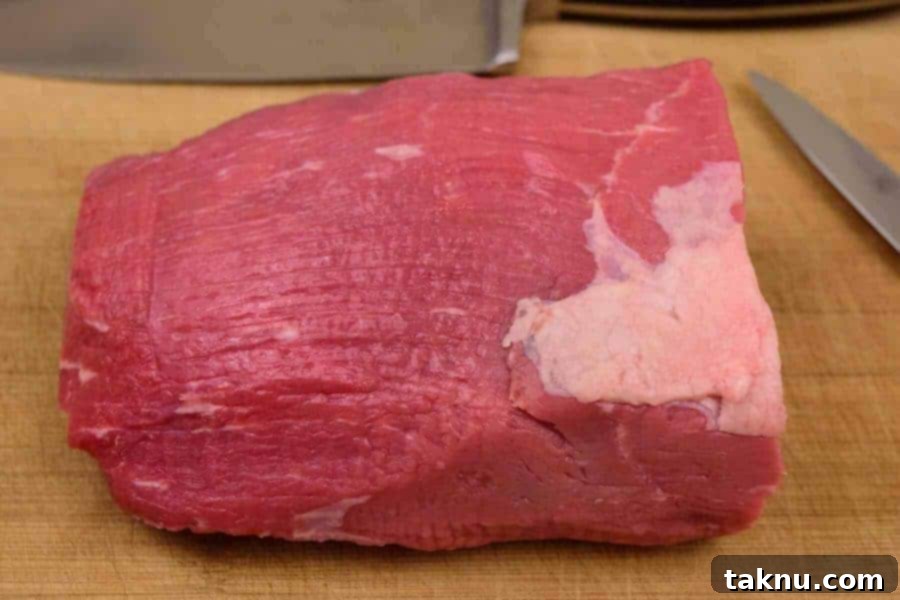
Once trimmed, your slicing direction will determine the final texture of your jerky – whether you prefer it chewy or tender. This is a crucial decision that impacts the entire eating experience.
- For a Chewier Jerky: Slice ¼-inch wide strips with the grain of the meat. This method results in longer, tougher fibers that require more effort to chew, delivering that classic, rugged jerky experience.
- For a More Tender Jerky: Slice ¼-inch wide strips against the grain of the meat. Cutting across the muscle fibers shortens them, yielding a jerky that is easier to bite into and more tender.
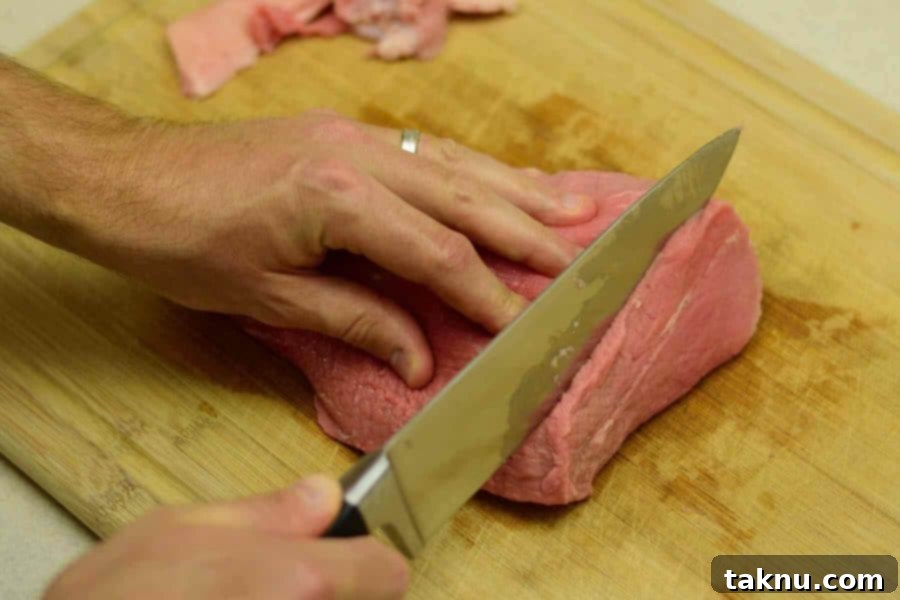
Regardless of your preferred texture, aim for consistently even, thin slices. Uniform thickness is paramount for even drying, ensuring all your jerky strips are finished at the same time and have a consistent texture. Achieving this precision is easiest with a very sharp knife. For an even smoother slicing process:
- Wrap the roast tightly in plastic wrap and partially freeze it for 1-2 hours. This firms up the meat, making it much easier to slice into uniform strips without tearing.
For more detailed insights, including a step-by-step video demonstrating how to achieve the perfect beef jerky slices, be sure to visit my dedicated Slicing Meat for Jerky Page.
The Advantage of a Jerky Slicer
While I didn’t use one for this particular Habanero Beef Jerky batch, a jerky slicer is an absolutely invaluable piece of equipment for consistently achieving perfectly even strips. This specialized tool simplifies the slicing process dramatically, making it easier for anyone, regardless of knife skills, to produce uniform jerky every time. Most models conveniently clamp onto your kitchen counter, providing a stable and efficient platform for effortless slicing.
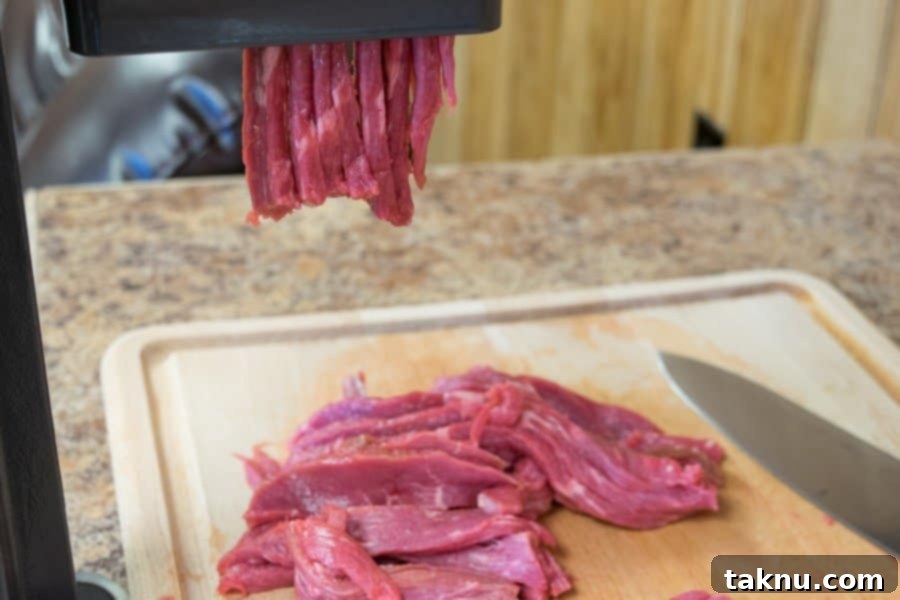
Butcher Assistance: A Smart Slicing Solution
If slicing the meat yourself seems daunting, don’t worry – there’s an easy solution! Your local butcher is often happy to help. Simply ask them to use their professional meat slicer to cut your eye of round roast into precise ⅛-inch thick strips. Most butchers are accommodating and will provide this service, saving you time and ensuring perfectly uniform slices for your homemade habanero jerky.
🧂 Crafting the Ultimate Habanero Beef Jerky Marinade
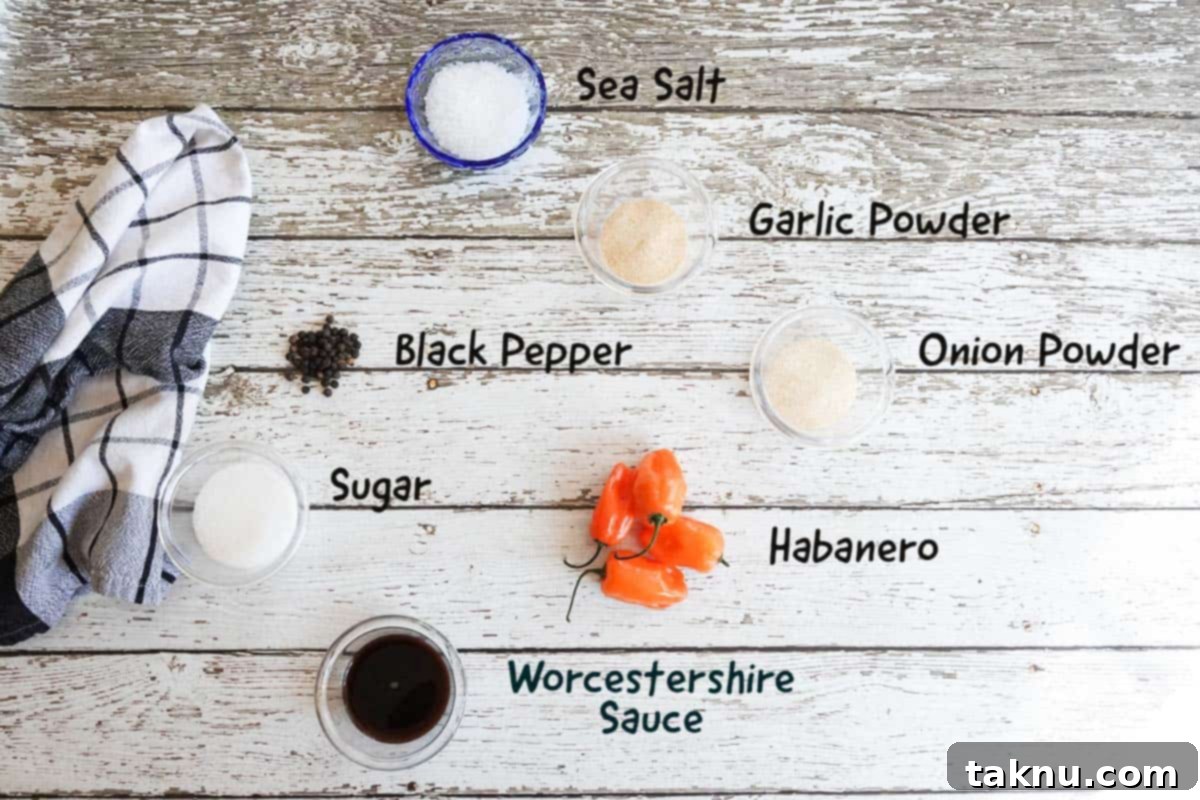
The secret to this incredible Habanero Beef Jerky lies in its rich and flavorful marinade, a dynamic blend of spices and fresh peppers that truly stands out. This marinade features a curated selection of ingredients designed to deliver both heat and depth:
- Garlic Powder: For a foundational aromatic warmth.
- Granulated Sugar: Balances the heat and aids in a desirable caramelized finish.
- Sea Salt: Provides essential seasoning and helps draw out moisture for optimal drying.
- Onion Powder: Adds another layer of savory aroma and flavor.
- Fresh Cracked Black Pepper: A classic spice that offers a subtle bite and enhances overall taste.
- Worcestershire Sauce: Delivers a deep, umami-rich complexity.
- Fresh Habanero Peppers: The star of the show, providing vibrant heat and a unique fruity undertone.
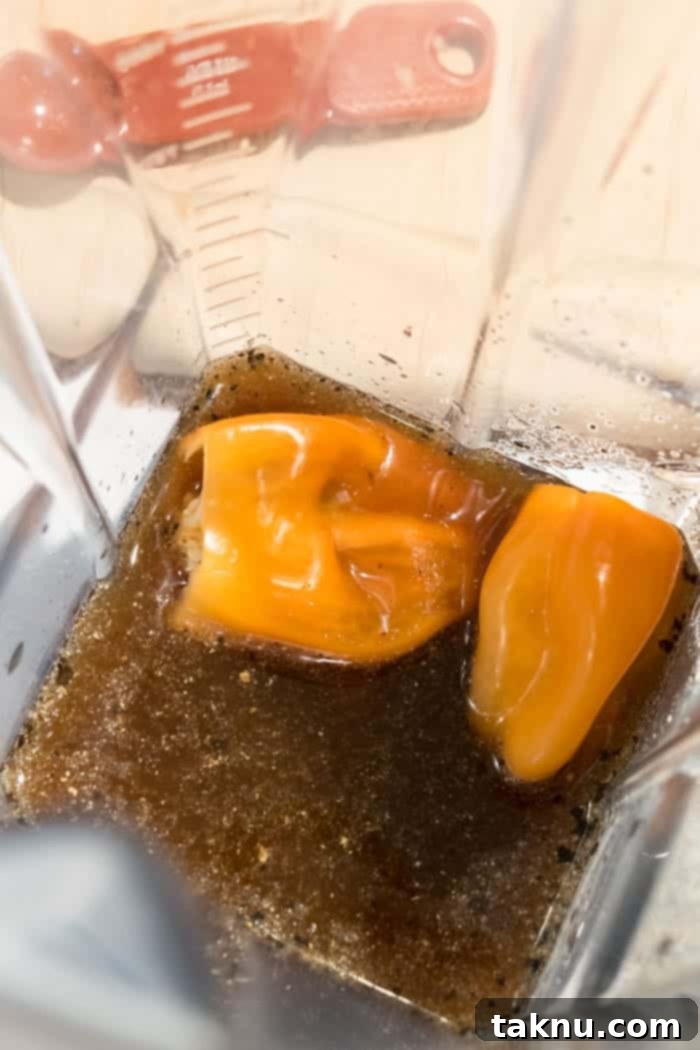
To create this potent marinade, simply combine all the dry and wet ingredients listed on the recipe card below into a blender. Crucially, add the fresh habanero peppers whole (after removing the stems, and wearing gloves!).
Readers Tip: For an even more intense and savory flavor profile, consider substituting ⅓ cup of the cold water with ⅓ cup of high-quality soy sauce. This addition will boost the saltiness and umami, taking your jerky to the next level of deliciousness.
Blend the mixture thoroughly until the habanero peppers are completely pulverized and seamlessly incorporated into the marinade. This ensures that their fiery essence and fruity notes are evenly distributed, infusing every piece of beef with consistent, bold flavor.
Once your marinade is perfectly blended, it’s time to introduce the beef. Marinating is where the magic truly happens, allowing the flavors to penetrate deep into the meat fibers.
- Carefully combine your evenly sliced beef strips with the prepared habanero jerky marinade. You can do this in a large bowl, ensuring all pieces are submerged, or preferably, in a sturdy ziplock bag. I highly recommend using a ziplock bag as it allows for a more efficient and complete coating of each meat strip with less marinade.
- Throughout the marinating process, which should last between 6 and 24 hours in the refrigerator, make sure to mix or massage the bag several times. This simple step ensures that every single piece of beef receives an even distribution of the fantastic spicy, savory, and sweet flavors from the marinade.
- For this particular recipe, I found that an 18-hour marination period yielded the most flavorful results, allowing ample time for the rich, spicy essence of the habaneros and other ingredients to fully permeate the beef strips, guaranteeing a deeply infused and satisfying jerky experience.
⏲️ Dehydrating Your Habanero Beef Jerky to Perfection
After your beef has absorbed all the incredible flavors of the habanero marinade, the next critical step is preparing it for drying. This stage is essential for achieving the right texture and ensuring efficient dehydration.
First, carefully strain the marinated jerky strips in a colander to remove any excess liquid marinade. Following this, lay the strips on a clean paper towel and gently pat them dry. This crucial step removes even more surface moisture, which significantly helps to speed up the overall drying process and promotes a better, more consistent texture in the final product. Eliminating excess marinade prevents the jerky from simply steaming, allowing it to dehydrate properly.
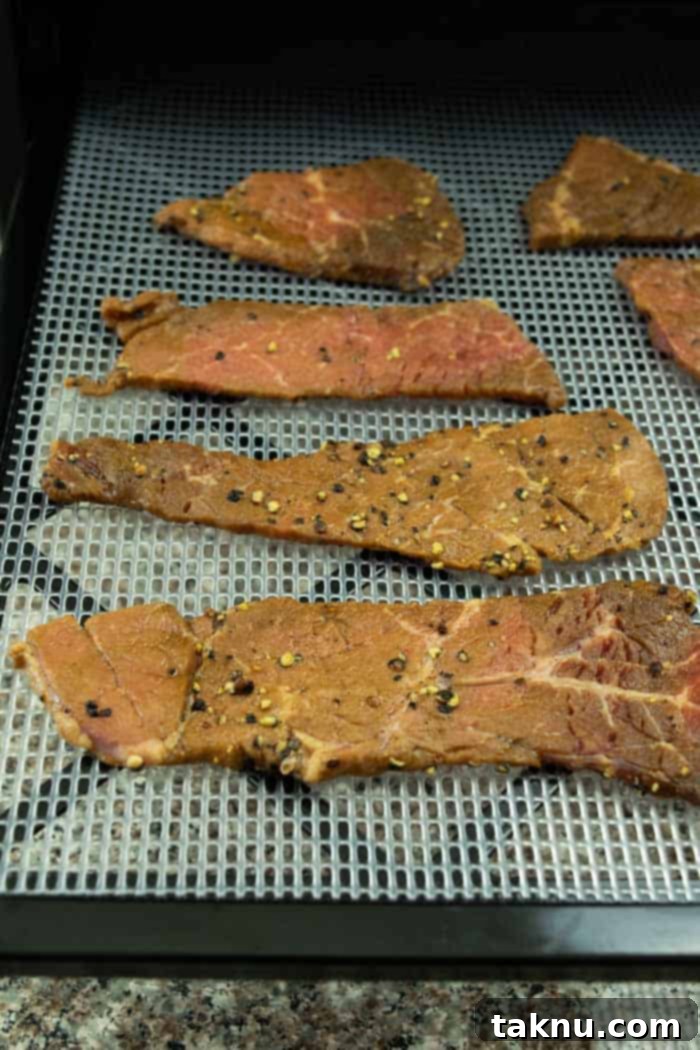
Once patted dry, transfer your seasoned beef strips to your chosen drying apparatus. Whether you’re using dehydrator trays, oven racks, or smoker racks, ensure they are arranged in a single layer with adequate space in between each piece. While I personally opt for a dehydrator for consistent results, rest assured that you can achieve fantastic jerky using an oven or a smoker as well.
Dehydrator Method: Consistency and Ease
Dehydrators offer an incredibly efficient and relatively inexpensive way to make high-quality beef jerky at home. These appliances come in a wide range of prices, from basic models around $50 to more advanced units costing upwards of $500. For those just starting out, the Nesco Snackmaster is an excellent entry-level dehydrator, typically available for under $100, providing reliable performance without breaking the bank.
When loading your dehydrator, arrange the habanero beef strips in a single layer on each tray. Critically, ensure there is ample space between each piece of meat. This strategic placement allows for optimal airflow to circulate around every strip, which is vital for quick, even drying and preventing moisture pockets. Improper spacing can lead to uneven drying and potentially compromise the jerky’s quality.
For this recipe, I achieved perfect results using my Excalibur Dehydrator. I dried the jerky for an initial 3 hours at 165°F (74°C), followed by 1 hour at 145°F (63°C). It is absolutely essential to ensure the meat reaches an internal temperature of 160°F (71°C) at some point during the drying process to effectively kill any potential bacteria and ensure food safety. The 3 hours at 165°F in the dehydrator reliably achieves this critical internal temperature.
Smoker Method: Infusing Rich Smoky Flavor
Smoking beef jerky is a fantastic way to impart an unparalleled depth of flavor, adding a savory, aromatic dimension that perfectly complements the habanero heat. While smokers represent a more significant investment compared to dehydrators, their versatility extends far beyond jerky, making them a worthwhile addition to any outdoor cooking enthusiast’s arsenal. You can smoke a vast array of meats, vegetables, and more.
When smoking your habanero jerky, maintain a consistent temperature range between 180°F (82°C) to 200°F (93°C). The smoking process typically takes between 3 to 5 hours, but this can vary significantly based on your specific smoker type, external ambient temperature, and the thickness of your meat slices. Begin checking the meat for doneness after approximately 3 hours. For comprehensive details and expert tips on mastering smoked jerky, refer to my dedicated page on How to Make Beef Jerky in a Smoker.
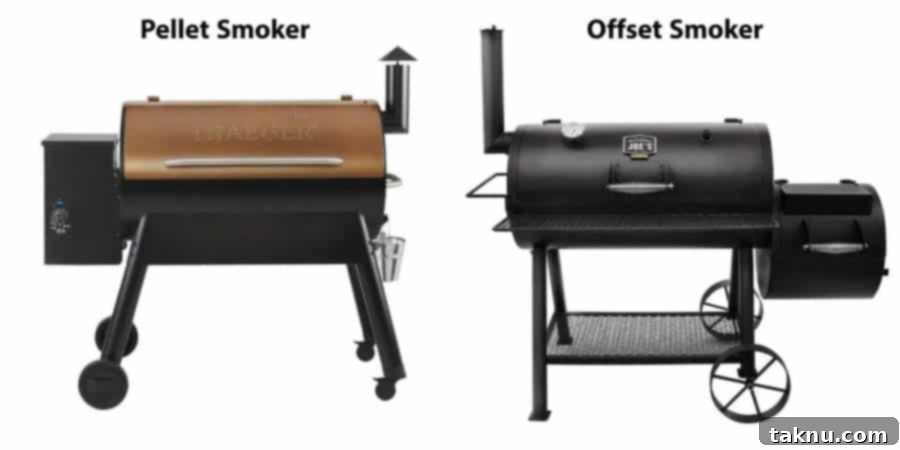
Pellet Smoker: Convenience Meets Flavor
I frequently rely on a pellet smoker for the majority of my jerky making due to its remarkable convenience and precision. These modern smokers are incredibly user-friendly, maintaining temperatures within a tight 5-degree window. This eliminates the need for constant fire stoking and temperature monitoring, allowing you to achieve consistent results with minimal effort. Beyond jerky, pellet smokers excel at crafting other delicious smoked dishes such as tender baby back ribs, perfectly cooked prime rib, and juicy burgers.
Traditional Smoker: The Authentic Smoke Experience
For purists seeking the most authentic and deep smoke flavor, a traditional offset smoker is unmatched. While it demands a bit more attention and hands-on management than a pellet grill, the rich, nuanced smoky essence it imparts to beef jerky and other smoked meats is truly unparalleled. If you relish the process of tending a fire, enjoying a beverage, and mastering the art of low-and-slow cooking, then a traditional smoker like the Oklahoma Joe’s Smoker might just be your ideal choice for crafting exceptional smoked habanero jerky.
Oven Method: Accessible Homemade Jerky
For those without a dehydrator or smoker, your kitchen oven provides the most accessible and least expensive way to create delicious, spicy beef jerky using this fantastic marinade. Since most homes are already equipped with an oven, you likely possess all the necessary tools to churn out incredible homemade jerky without any additional investment.
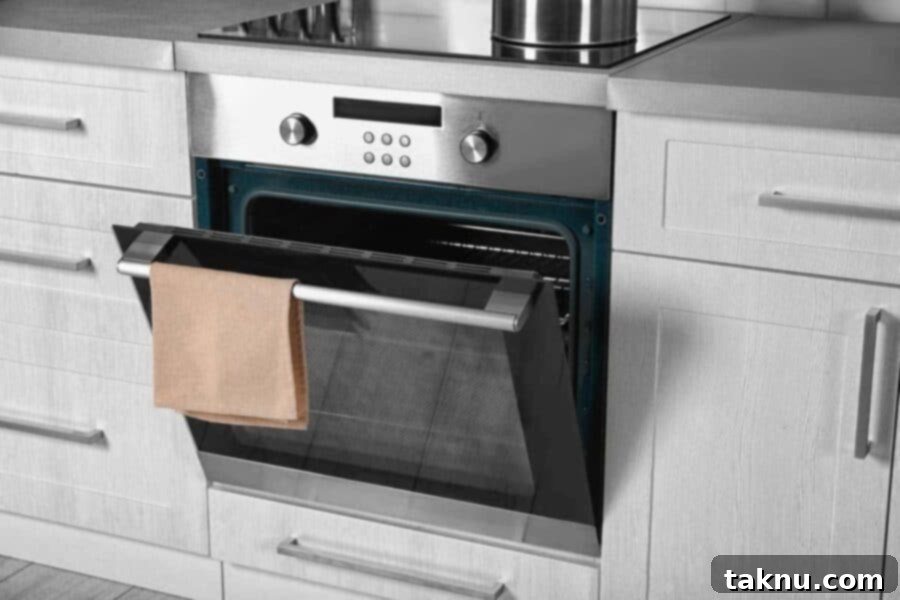
To use your oven effectively for jerky, arrange the marinated beef strips on a cooling rack placed atop a baking sheet. This setup allows for air circulation around the jerky. Crucially, prop the oven door open with a wooden spoon or similar heat-proof object. This small gap is vital as it allows moisture to continuously escape the oven, preventing the meat from baking or cooking and instead facilitating proper dehydration. Line the baking sheet with aluminum foil for incredibly easy cleanup afterward.
Set your oven to its lowest possible temperature, typically ranging from 170°F (77°C) to 200°F (93°C). Dry the jerky for approximately 3 to 6 hours, checking periodically for doneness. For more in-depth instructions and tips on how to master oven-made jerky, please visit my dedicated How to Make Jerky in an Oven page.
🌡️ Testing for Optimal Dryness: Knowing When Your Jerky is Done
Determining when your homemade habanero beef jerky is perfectly dry is more about feel and texture than adhering strictly to a specific drying time. The precise duration can fluctuate significantly due to several factors: the drying method you employ (dehydrator, oven, or smoker), the initial thickness of your meat strips, your geographical location (altitude and humidity play a major role), and even the specific model and efficiency of your drying equipment.
Before you conduct any tests to check for doneness, it is absolutely crucial to remove a piece of jerky from your oven, dehydrator, or smoker and allow it to cool completely to room temperature for several minutes. Skipping this cooling step is a common mistake; a warm piece of jerky will feel pliable and appear unfinished, often leading to unnecessary further drying and an ultimately over-dried, brittle product.
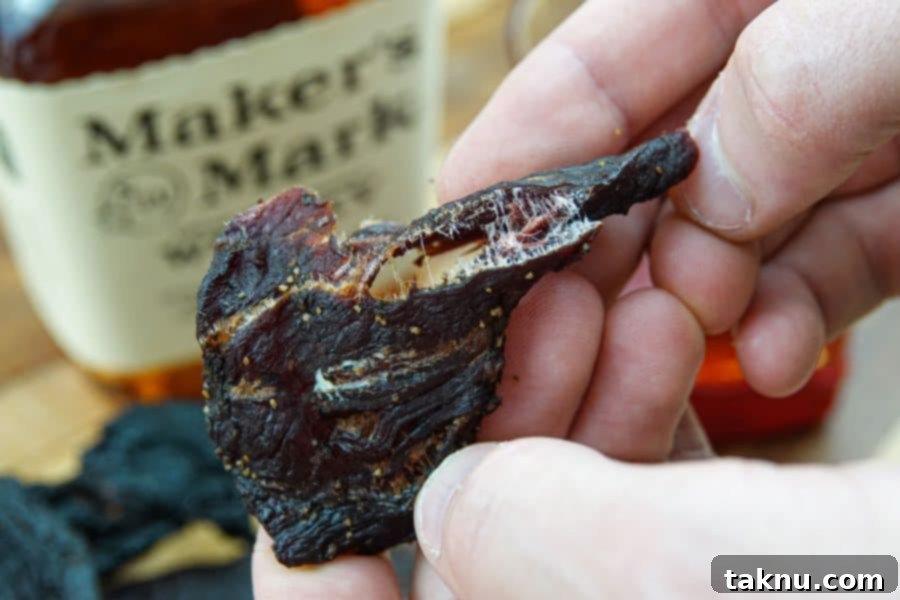
- Once cooled, bend a piece of jerky. It should bend and crack, but crucially, it should not break cleanly in half.
- When bent, you should observe distinct white fibers appearing within the meat. This visible fibrous separation is a tell-tale sign that the jerky has reached its ideal state of dryness and is ready to enjoy.
The image below shows a piece of my Kentucky Bourbon Beef Jerky undergoing this very test. Notice the clear visibility of the white fibers within the bent meat – this is precisely what you’re looking for, indicating perfect doneness and peak deliciousness!
🥡 Storing Your Homemade Habanero Jerky for Freshness
Proper storage is key to maximizing the shelf life and maintaining the quality of your homemade habanero beef jerky. Incorporating curing salt into your marinade, also known as pink curing salt or Prague powder #1, significantly helps in preventing bacterial growth and enhancing preservation. Always store your jerky in airtight containers to further extend its freshness.
- Up to 1 Week: For short-term storage, keep your jerky in ziplock bags. Store them in a cool, dark place away from direct sunlight, such as a pantry or cabinet.
- Up to 1 Month: To extend freshness for up to a month, store the jerky in ziplock bags or, ideally, vacuum seal it. If you’ve used curing salt in the marinade, storing it in the refrigerator will provide optimal preservation during this period.
- 2 Months or Longer: For extended storage, vacuum sealing is highly recommended. Combined with the use of curing salt, your jerky can be safely stored in the refrigerator for several months or even in the freezer for even longer periods, maintaining its quality and flavor for many months.
I’ve compiled a detailed guide on storing homemade jerky, offering comprehensive steps and essential tips to ensure your delicious beef jerky remains fresh and safe for as long as possible. Make sure to check it out for more in-depth information!
💭 Frequently Asked Questions About Habanero Beef Jerky
Absolutely, yes you can! When using ground meat for this habanero jerky recipe, it’s vital to choose a lean ground beef with 10% fat or less. The only modification needed is to simply omit the water from the marinade. All other ingredients and steps can remain the same, allowing you to create a delicious ground beef version of this spicy jerky.
Not at all! While habaneros provide a fantastic spicy kick and unique flavor, you have complete flexibility. You can substitute them with any other type of chili pepper to achieve a different heat level or flavor profile. For those who prefer a non-spicy jerky, you can decide to leave the peppers out entirely, which will result in a more classic, original-flavored beef jerky. Feel free to customize the spice level to your preference!
No, curing salt is not strictly required, but it is highly recommended. Curing salt plays a significant role in extending the shelf life of the finished jerky by inhibiting bacterial growth, and it also contributes to that classic reddish color and distinct cured taste. If you choose not to use curing salt, it’s crucial to ensure the finished beef jerky reaches an internal temperature of 160°F (71°C) to kill any potential bacteria. Be aware that without curing salt, the final product will likely have a different appearance and flavor profile.
👨🏽🍳 Old Pro Tips: Perfecting Your Habanero Beef Jerky
- Trim All Fat Thoroughly: For the longest-lasting and highest-quality jerky, meticulously trim all visible fat from your meat. This prevents rancidity and ensures a superior texture.
- Use Fresh Habaneros: Opt for fresh habanero peppers for the most vibrant flavor and potent heat. Always remember to cut off the stem from each pepper before blending. Adjust the spice level to your preference: 0 peppers for no spice, 1 pepper for a mild kick, 2 for a medium heat, and 3 or more for a truly HOT experience!
- Blend for Even Flavor: Utilize a blender to fully incorporate the habanero peppers and all other marinade ingredients. This creates a smooth, homogenous marinade that ensures every strip of jerky receives an even distribution of spice and flavor.
- Wear Gloves: When handling spicy peppers like habaneros, always wear protective gloves. The capsaicin can cause intense irritation if it comes into contact with your skin or eyes.
- Add Liquid Smoke (If Not Smoking): If you’re not using a smoker for your jerky, adding a teaspoon of liquid smoke to the marinade can impart a wonderful, smoky aroma and flavor, mimicking the traditional smoking process.
📖 Dive Deeper: Explore More Jerky-Making Resources
- Best Meat for Beef Jerky (+Video)
- Slicing Meat for Beef Jerky
- Jerkyholic’s Original Ground Beef Jerky
The Ultimate Habanero Beef Jerky Marinade
Pin Recipe
1 hour
4 hours
5 hours
Beef Jerky, Snack
American
Beef Jerky
Spicy
5
184
kcal
Will
Prevent your screen from going dark
Ingredients
Lean Meat
-
1 lb Eye of round
Marinade
-
1 ¼ teaspoon sea salt -
½ teaspoon onion powder -
½ teaspoon garlic powder -
1 teaspoon cracked black pepper -
2 teaspoon granulated sugar -
2 whole habaneros (3 if extra hot is wanted, stems removed) -
2 tablespoon worcestershire sauce -
¾ cup cold water -
¼ teaspoon curing salt (optional, for extended shelf life and traditional color)
Equipment
Instructions
- Thoroughly trim all visible fat from the beef roast. For easier and more precise slicing, wrap the meat tightly in plastic wrap and place it in the freezer for 1 to 2 hours until partially frozen.
- While the meat is chilling in the freezer, prepare your vibrant habanero marinade. Combine all marinade ingredients, including the fresh habanero peppers (stems removed, and wearing gloves), in a blender. Blend until the peppers are finely chopped and fully incorporated, creating a smooth and consistent marinade. Transfer the blended marinade to a large bowl or a sturdy ziplock bag.
- Remove the partially frozen beef from the freezer. Using a very sharp knife or a jerky slicer, cut the meat into ¼-inch thick strips. For a more tender jerky, slice against the grain; for a chewier texture, slice with the grain. Ensure slices are uniform for even drying.
- Add the sliced beef to the marinade in the ziplock bag or bowl. Ensure all meat strips are fully coated. Marinate in the refrigerator for 8 to 24 hours, mixing or massaging the bag periodically to guarantee even flavor distribution.
- Once marinating is complete, remove the meat from the refrigerator. Strain the jerky strips in a colander to drain excess marinade, then lay them on paper towels and pat dry thoroughly to remove any surface moisture. This step aids in faster and more even drying.
- Arrange the jerky strips in a single layer on your dehydrator trays, oven racks, or smoker racks, leaving sufficient space between each piece for optimal air circulation. For a dehydrator, I recommend using an Excalibur Dehydrator and drying for 3 hours at 165°F (74°C), followed by 1 hour at 145°F (63°C). Ensure the internal temperature reaches 160°F for food safety.
- Test for doneness by removing a piece and letting it cool to room temperature. The jerky is perfectly finished when it bends and cracks but does not break completely in half. You should also see white fibers visible within the bent meat.
Pro Tips
- Adjust Spice: Omit Habaneros entirely if you prefer a non-spicy jerky, or increase the quantity for extra heat.
- Hygiene First: Always wash your hands thoroughly before and after handling raw meat to prevent contamination.
- Achieve Smooth Marinade: Make sure to use a blender to fully incorporate all ingredients, especially the peppers, for a uniform and potent marinade.
- Personalize Heat: Feel free to adjust the amount of habanero peppers to perfectly match your desired spice level, from mild to extreme.
Nutrition
Serving: 0.15lb
|
Calories: 184kcal
|
Carbohydrates: 4g
|
Protein: 24g
|
Fat: 6g
|
Saturated Fat: 2g
|
Cholesterol: 70mg
|
Sodium: 683mg
|
Potassium: 268mg
|
Sugar: 2g
|
Vitamin A: 40IU
|
Vitamin C: 6.6mg
|
Calcium: 13mg
|
Iron: 2.6mg
Tried this recipe?
Let us know how it was!